博客

  • 5.2-magnitude tremor in Milwaukee Trench shakes northeastern Dominican Republic

    5.2-magnitude tremor in Milwaukee Trench shakes northeastern Dominican Republic

    On a Thursday evening, a 5.2-magnitude seismic event rattled wide swathes of the Dominican Republic, triggering immediate social media posts from startled residents across the country. Fortunately, local authorities have confirmed that the tremor left no injuries, no major structural damage, and posed zero risk of a tsunami following the incident.

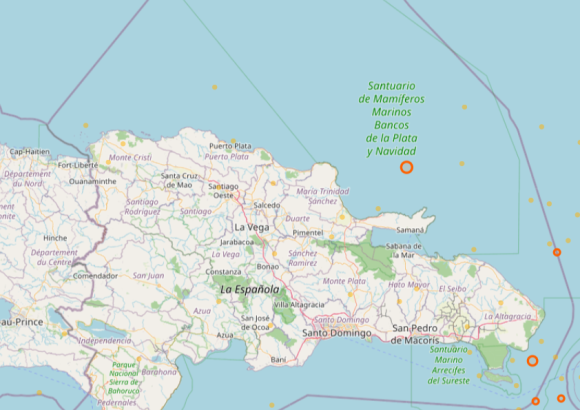
    According to geological reports, the earthquake initiated at 10:42 p.m. local time, with its epicenter positioned in the Milwaukee Trench, a geologically active fault zone sitting north of the Mona Passage. Precise geographic positioning places the epicenter roughly 196 kilometers east of the town of Miches, and 142 kilometers to the northeast of the popular tourist destination Punta Cana. Preliminary geological assessments indicate the quake originated at a relatively shallow depth of 10 kilometers below the ocean floor.

    Within minutes of the tremor being felt, residents across multiple Dominican Republic regions took to social media platforms to describe their experiences, with many reporting shaking that was noticeable enough to cause alarm but not severe enough to prompt widespread evacuations or damage to infrastructure.

    The Milwaukee Trench, which sits between the Dominican Republic and Puerto Rico, is a well-documented active seismic zone. Because of its consistent tectonic activity, the area is continuously monitored by geological agencies to track seismic shifts and assess potential earthquake risk for surrounding population centers and coastal communities.

  • Club Calero to sue JetBlue after canceled flight disrupts U.S. sports trip

    Club Calero to sue JetBlue after canceled flight disrupts U.S. sports trip

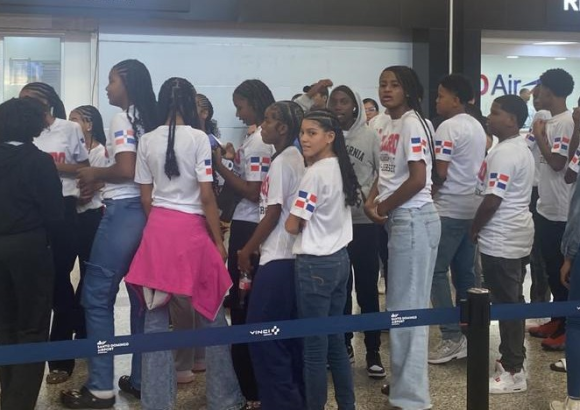
    A 38-person youth sports delegation from the Dominican Republic’s Club Calero, based in Villa Duarte, has been left stranded at Las Américas International Airport after U.S.-based carrier JetBlue scrapped a scheduled flight bound for New Jersey without warning or explanation as of Thursday. The group, made up of 31 young athletes and seven adult chaperones, arrived at the Santo Domingo airport as early as 3:00 a.m. to check in for the trip, which was planned as part of an official cross-border sports exchange program hosted by New Jersey local authorities.

    For months, the club and its athletes had worked to make the journey a reality. After receiving a formal invitation from a New Jersey municipal government, Club Calero raised roughly 1.95 million Dominican pesos to cover every detail of the trip: airfare, custom team uniforms, travel documentation, pre-trip and in-trip lodging, meals, and other logistical costs. Months of coordinated fundraising by athletes, their families and community members had gone into securing the funds to give the young competitors this once-in-a-lifetime opportunity.

    When the flight cancellation was announced, the delegation was forced to wait out hours of uncertainty at the airport with no clear timeline for rebooking or explanation of why the flight had been cut. Club Calero president Andrés Liberato called the situation “regrettable and unjustifiable” in statements to local media, emphasizing that the unplanned disruption has already robbed the young athletes of their chance to compete in the planned exchange tournament.

    Beyond the dashed hopes for the young competitors, Liberato noted the cancellation has resulted in substantial, irreversible financial losses for the community-driven club. All the months of preparation and fundraising have effectively gone to waste due to JetBlue’s last-minute change of plans.

    In response to the disruption, Club Calero has formally announced it will move forward with legal action against JetBlue, seeking full compensation for both the significant financial losses and the emotional distress the cancellation has caused the young athletes and their supporting community. Two Dominican government oversight bodies, Pro Consumidor (the national consumer protection agency) and the Dominican Ombudsman’s Office, have already stepped in to launch an inquiry into the incident. The agencies will investigate whether JetBlue violated the passengers’ legal rights and determine the full extent of the airline’s responsibility for the stranding.

    As of Thursday, JetBlue had not issued any public statement addressing the cancellation, shared the cause of the disruption, or provided an updated timeline for when the stranded delegation will be able to depart for the United States.

  • Nine injured after Caribe Tours bus catches fire near Jarabacoa

    Nine injured after Caribe Tours bus catches fire near Jarabacoa

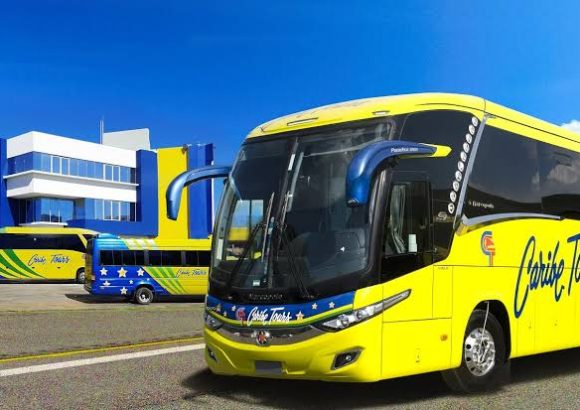
    On a Thursday afternoon on the Jarabacoa–La Vega highway in the Dominican Republic’s La Vega province, a sudden vehicle incident disrupted the daily commute when a Caribe Tours passenger bus erupted in flames. Emergency management officials confirmed that nine people on board suffered only minor injuries, an outcome that prevented what could have been a far deadlier tragedy.

    The blaze broke out at approximately 5:02 p.m. local time in the Ercilia Pepín neighborhood, close to the local landmark commonly called Las Costillitas. At the time of the ignition, the bus, registered as unit 942, was operating its scheduled route from La Vega heading toward the mountain town of Jarabacoa, carrying a full load of passengers.

    In the chaotic moments after the fire was first spotted, quick-acting passengers and the driver coordinated a rapid evacuation of the vehicle before flames could consume the entire bus and trap people inside. Emergency response teams from the Dominican Republic’s National Emergency and Security System 9-1-1 were dispatched to the scene immediately after receiving distress calls. Medics provided on-site first aid to all injured individuals, and after confirming that all injuries were non-life-threatening, the medical team released all nine patients after completing their treatment.

    Authorities released the names of eight of the nine injured people publicly: Wilson Ortiz, Francisca Javi Ortiz, Ana María Ortiz, Algelis Rivera, Ana Peralta, Manuel Ortiz, Jensi Alonzo, and Ramón Durán. No further information on the identity of the ninth injured passenger has been released as of the latest update.

    Firefighters assigned to the Buena Vista Fire Department also arrived promptly to contain the emergency. Crews worked efficiently to put out the fully developed blaze, and successfully stopped the fire from spreading to adjacent vegetation or nearby structures, limiting the overall damage from the incident.

  • Dominican Republic recalls envoy from Nicaragua after Ortega’s controversial statements

    Dominican Republic recalls envoy from Nicaragua after Ortega’s controversial statements

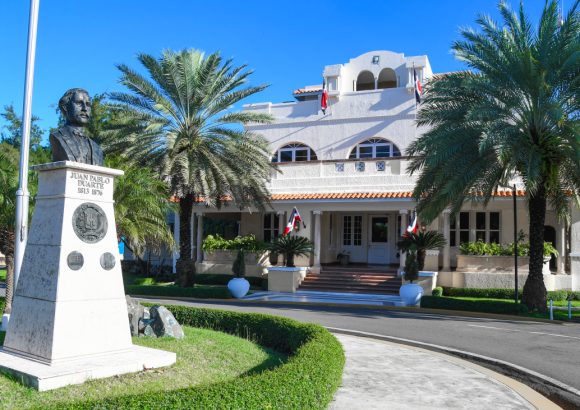
    Diplomatic tensions have flared between Central American and Caribbean nations after the Dominican Republic ordered its top envoy to Nicaragua back to the country for urgent consultations. The unprecedented move came directly in response to incendiary comments made by Nicaraguan President Daniel Ortega, who publicly declared earlier this month that his country would never again host elections that could allow opposition groups to seize power.

    The recall decision, formally greenlit by Dominican President Luis Abinader and publicly announced by the Dominican Ministry of Foreign Affairs (MIREX), frames Ortega’s remarks as a direct violation of core democratic values and binding agreements that underpin the Inter-American system. In an official statement released to the press, MIREX anchored its position in the foundational text of the Inter-American Democratic Charter, reminding the regional community that Article 1 enshrines the inalienable right of all peoples of the Americas to live under democratic governance. It added that all regional governments carry a non-negotiable responsibility to advance and protect that right.

    The Dominican foreign ministry issued its strongest possible condemnation of Ortega’s comments, arguing that the remarks completely disregard the fundamental right of the Nicaraguan people to select their own leaders through regular, free, impartial, transparent and competitive electoral processes.

    In its formal statement, the Dominican government emphasized that no sitting governing administration has the legitimate authority to strip ordinary citizens of their voting rights, nor to unilaterally abolish elections — the core mechanism that enables peaceful transfers of power in democratic systems. The government called on Nicaraguan state officials to walk back their controversial stance, and to immediately take steps to guarantee full political rights, basic fundamental freedoms, and the holding of democratic elections in the country.

    The statement closed by reaffirming the Dominican Republic’s longstanding unwavering commitment to upholding democracy, universal human rights and the rule of law across the region, noting these principles are shared collective obligations for all member states of the Inter-American system.

    Ortega first made the divisive comments during an official commemoration of the 47th anniversary of the Sandinista Revolution held on July 19. The Nicaraguan president explicitly stated that the country would abandon electoral processes that could open the door for opposition groups to take control of government. Just 24 hours after Ortega’s initial remarks, Gustavo Porras, president of Nicaragua’s National Assembly, attempted to clarify the administration’s position, saying that elections would continue under a revised constitutional framework. Porras claimed the new framework is intended to block foreign interference in Nicaraguan internal affairs and bar individuals he labeled “traitors to the homeland” from participating in the political process.

  • Airbnb supports Dominican Republic vacation rental registry

    Airbnb supports Dominican Republic vacation rental registry

    In Santo Domingo, global short-term vacation rental platform Airbnb has announced its full readiness to cooperate with Dominican government bodies throughout the upcoming public consultation process for new sector rules. The company has publicly welcomed the introduction of a new host registry, framing the measure as a meaningful milestone that will boost both transparency and safety across the country’s fast-growing vacation rental industry.

    Beyond backing the registry initiative, Airbnb is calling on Dominican policymakers to craft regulatory frameworks that account for the distinct operating model of digital sharing platforms. The firm stresses that a one-size-fits-all approach would be inappropriate, urging regulators to draw a clear line between small-scale individual hosts who list spare or secondary properties, and large traditional hotel operations that run full-scale commercial accommodation businesses.

    Airbnb’s policy position makes clear that any new rules governing the sector should meet three core criteria: they must be inclusive of all stakeholders, proportionate to the risks and scale of different types of operators, and free of unnecessarily burdensome red tape that would stifle growth for small providers. The platform added that it would prefer any permanent regulatory regime to be enacted through formal legislation passed by the Dominican National Congress, to create a clear, long-term operating framework for the sector.

    The company also used the announcement to highlight the significant positive economic contribution short-term vacation rentals make to the Dominican economy. According to Airbnb, the sector puts direct, steady income into the pockets of thousands of Dominican families, and provides critical customer flow that supports small local businesses ranging from restaurants and tour operators to local craft producers across the entire country.

    Finally, Airbnb reaffirmed its long-term commitment to working collaboratively with the Dominican Ministry of Tourism (MITUR) to co-develop regulations that deliver shared benefits for all parties. The company said aligned rules will not only lift transparency standards across the tourism sector but also strengthen the overall industry, deliver tangible economic gains to local communities, and protect the Dominican Republic’s standing as one of the most competitive and popular travel destinations in the Caribbean.

  • Boy, 5, dies after vehicle veers off road in Vieux Fort

    Boy, 5, dies after vehicle veers off road in Vieux Fort

    A devastating single-vehicle accident in Vieux Fort’s Il Pirata neighborhood on Wednesday afternoon has cut short the life of a five-year-old boy, leaving local residents, educational leaders and the child’s family grappling with unexpected grief.

    According to official updates from the Saint Lucia Fire Service, emergency response crews were dispatched to the crash site shortly after 2:45 p.m., following urgent reports of a vehicle that had veered off the roadway and collided with a stationary tree. When first responders arrived at the scene, they discovered four people trapped or injured in the wreckage: one adult male, one adult female, and two young boys.

    Medical teams on site immediately provided urgent care to the two adult passengers, who sustained non-life-threatening injuries in the collision. Of the two children, one suffered significant head trauma, while the second child was found without detectable vital signs at the scene. All four casualties were transported by emergency medical services to a local hospital for continued evaluation and treatment, but the five-year-old could not be revived.

    Local news outlet St. Lucia Times has confirmed the identity of the deceased child as Kervil Lawrence, a kindergarten student enrolled at Piaye Combined School. News of his sudden passing has sent ripples of shock across the close-knit local community, where friends, classmates, teachers and family members have begun mourning the loss of a young life taken far too soon.

    As of the latest updates, the specific circumstances that led to the vehicle leaving the road remain unclear. Law enforcement and transport safety officials have launched a formal investigation to determine the cause of the crash, with preliminary findings expected to be released in the coming days.

  • Derde helft WK 2026: Noorwegen dient formele klacht in bij FIFA over opheffing Balogun-schorsing

    Derde helft WK 2026: Noorwegen dient formele klacht in bij FIFA over opheffing Balogun-schorsing

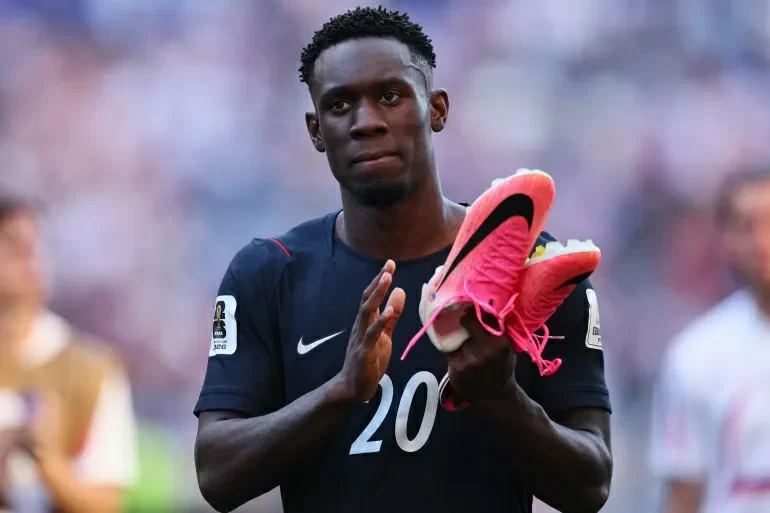
    A growing controversy over political interference in World Cup rule enforcement is rocking global football, after the Norwegian Football Federation (NFF) confirmed plans to submit a formal ethics complaint to FIFA over the governing body’s decision to overturn a mandatory suspension for United States forward Folarin Balogun. NFF President Lise Klaveness says the unprecedented reversal, which came after direct lobbying from U.S. President Donald Trump, threatens the fundamental integrity of the sport and cannot be swept under the rug.

    The dispute traces back to Balogun’s red card during the United States’ World Cup round-of-16 match against Bosnia and Herzegovina. Under standard FIFA competition rules, a straight red card carries an automatic one-match suspension, which would have forced Balogun to miss the U.S.’s subsequent quarter-final clash against Belgium. That suspension was scrapped entirely by FIFA following direct personal outreach from Trump to FIFA President Gianni Infantino, who pushed for the ruling to be revised because the U.S. leader claimed Balogun had not committed a foul deserving of ejection.

    Klaveness, who secured the NFF presidency in 2022, argued that bending football’s core rules to accommodate the demands of a sitting head of state sets a dangerous precedent for the entire sport. “When you bend rules like this, you start down a slippery slope that puts the entire game at risk,” she told reporters, adding that the NFF’s governing board is fully behind the formal complaint to FIFA’s Ethics Committee. She also criticized the process behind the reversal: the decision was made by a single member of FIFA’s disciplinary committee without full consultation from the entire panel, at a time when an extremely powerful external voice was pressing for a specific outcome. Klaveness noted that avoiding this kind of concentrated, unvetted decision-making is critical when high-stakes controversy is already involved, calling the lack of collective input a fundamental error.

    Norway is far from alone in its condemnation of FIFA’s action. European football governing body UEFA has labeled the reversal of Balogun’s suspension “unprecedented and incomprehensible,” warning that it directly undermines the integrity of the entire World Cup tournament. The Royal Belgian Football Association (KBVB) has already filed its own appeal against FIFA’s ruling, and has publicly expressed disappointment over the total lack of transparency in how the decision was reached.

    Trump has publicly confirmed he reached out to Infantino to request a review of the red card, doubling down on his claim that the call against Balogun was incorrect. This is not the first time the NFF has clashed with FIFA over ties to Trump: the federation previously criticized FIFA’s decision to award its inaugural Peace Prize to the U.S. president, a move that drew widespread global pushback from the football community.

    Klaveness emphasized that the issue cannot be dismissed out of hand, as coaches, players and fans around the world have already recognized that this kind of external interference strikes too close to the core of fair competition. “It is a threat to the game when fundamental rules of play are compromised,” she said. “Trying to sweep this under the rug will not work. We need open, honest communication and recognition that this ruling was shaped by external influence without following proper procedural process.”

    Beyond the Balogun controversy, Klaveness also used the moment to criticize a recent proposal from South American football confederations to expand the World Cup from its current 48-team format to 64 teams. Norway, which returned to the World Cup for the first time in 28 years this edition and reached the quarter-finals before falling to England, has demonstrated that smaller federations can compete successfully under the 48-team structure, Klaveness said. Expanding to 64 teams so soon is neither reasonable nor in the best interest of global football, she argued, noting that opening debates about further expansion now, when pushed by powerful interests, will only create widespread distrust across the sport. Klaveness added that the World Cup should not place additional strain on domestic football leagues and continental confederations beyond the burden they already carry for the current tournament format.

    Norway’s 2026 World Cup run is widely viewed as a successful comeback for the nation’s men’s national team, despite their quarter-final exit at the hands of England.

  • Tense Senate Exchange Erupts Between Williams Grant and Parker

    Tense Senate Exchange Erupts Between Williams Grant and Parker

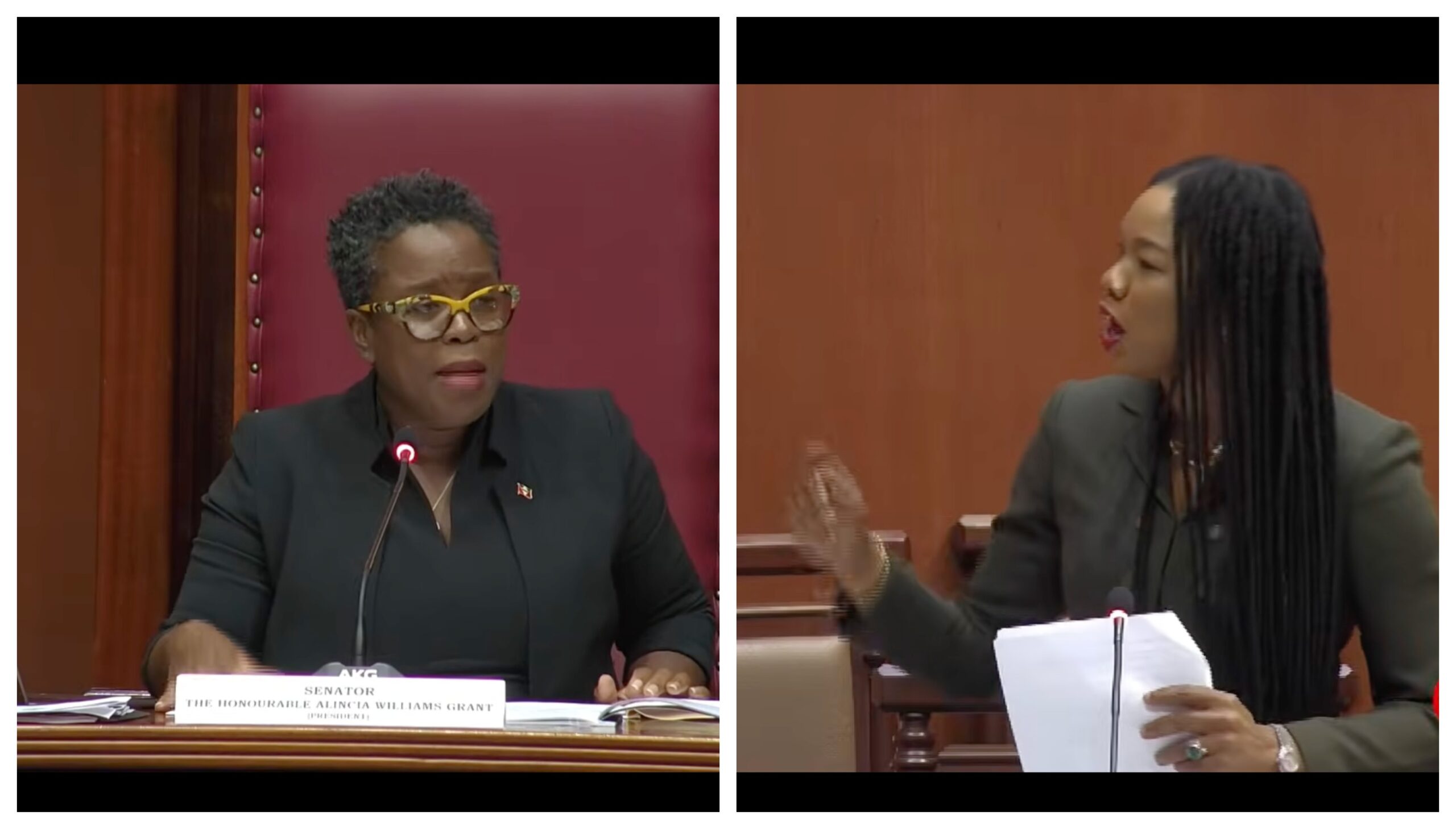
    A sharp public dispute has broken out in the upper chamber of Antigua and Barbuda’s parliament, pitting Senate President Alincia Williams-Grant against opposition legislator Malaka Parker over claims of systemic unfair treatment during floor debates.

    Parker opened the confrontation last week, leveling a direct allegation that the Senate’s presiding officer had deliberately refused to intervene when government senators repeatedly interrupted her remarks while she held the floor. The opposition senator told the chamber that she had consistently maintained proper decorum, allowing government representatives to deliver their full remarks without disruption, yet faced coordinated interruptions every time she rose to contribute to discussions.

    “From the very first sitting of this session, every single time I stand to speak in this honorable House, I face a chorus of interruptions, and I have received no protection from the chair,” Parker stated during the tense exchange.

    Williams-Grant immediately pushed back forcefully against the claims, rejecting the accusation of negligence entirely. The Senate president argued that Parker herself had often joined back-and-forth exchanges with government side senators, rather than adhering to formal procedure that requires all remarks to be directed through the chair.

    “You cannot lay this accusation at my door,” Williams-Grant told the chamber. “Light back-and-forth debate is an established part of our parliamentary process. If you require my intervention to stop disruption, you must formally request that protection. You cannot simply claim that I have failed to protect you.”

    Williams-Grant emphasized that she has consistently provided procedural protection to every senator, regardless of party affiliation, when it is properly requested, calling Parker’s claims “uncalled for and completely untrue.”

    The exchange also included a moment of correction over parliamentary etiquette, after Parker opened her remarks with the informal phrasing “Madam President, let me tell you something.” Williams-Grant cautioned Parker on the improper address, prompting the opposition senator to immediately apologize and adjust her language to align with chamber rules.

    The disagreement continued as Parker acknowledged that the two held differing interpretations of proper Senate procedure, a framing Williams-Grant rejected outright. The Senate president reiterated that the onus falls on any legislator facing excessive disruption to formally request the chair’s intervention, rather than expecting unprompted action.

    “If interruptions become too much and you need protection, you simply alert me, and I will put a stop to it,” Williams-Grant said. She added that on previous occasions, Parker had chosen to engage directly with senators on the government side of the chamber instead of routing all comments through the chair, a departure from standard protocol.

    As the presiding officer, Williams-Grant noted that disagreements with her rulings are an unavoidable part of the role, but her decisions are final within the chamber. “I will make statements and I will issue rulings that not everyone will agree with, and that is perfectly acceptable. I am the final arbiter in this chamber,” she said.

    After the full exchange, Parker wrapped up the disagreement and confirmed she would adjust her approach moving forward. “Thank you for your clarification on this matter,” Parker said. “I will act accordingly going forward,” before resuming her interrupted presentation.

  • LETTER: The Gray’s Green Community : One Aim, One Community, One Destiny …

    LETTER: The Gray’s Green Community : One Aim, One Community, One Destiny …

    In a public letter submitted for publication, community member Alex has offered reflection on the recently concluded presidential election at Gray’s Green United Inc., opening with formal congratulations to newly elected leader Mr. Cranston on his electoral win. The race, which ended in one of the tightest results in the organization’s recent history, saw Cranston secure victory over opponent Ms. Taryn Nicholas by only a razor-thin margin. Despite Cranston’s win at the ballot box, Alex argues that Nicholas should view her own performance as a victory in its own right, given the steep political uphill battle she faced throughout the campaign.

    Nicholas competed against two high-profile opponents for much of the race: incumbent outgoing president Mr. Shaw and challenger Cranston. Shaw’s last-minute exit from the campaign upended the race entirely: after dropping out, Shaw threw his full organizational and personal support behind Cranston, redirecting all of his existing base of backers to his rival’s campaign. That combined bloc of support, Alex notes, ultimately pushed Cranston across the finish line to claim the narrow win.

    Alex acknowledges that the outcome is disappointing for Nicholas and her supporters, but frames the result as an inherent part of the democratic process, urging Nicholas not to be discouraged by the tight loss. Over her years of involvement with the community, Nicholas has already compiled an impressive record of tangible contributions to Gray’s Green, and Alex stresses that she has ample opportunity to continue that important work whether she takes on an official role or contributes independently.

    Looking ahead to the new term, Alex calls on Cranston to recognize the value of partnering with Nicholas, pointing to her demonstrated leadership potential and deep knowledge of the community’s needs that can strengthen efforts to advance local development. With Cranston set to begin his second term in office, all eyes are now on the incoming leadership team to deliver on promised improvements, including the long-awaited development of Keithley Sheppard Park.

    Alex echoes the community’s long-held unifying motto: “One Aim, One Community & One Destiny,” which intentionally embraces every member of Gray’s Green, regardless of political affiliation. Projects that serve the public good, from park development to other community initiatives, should never be framed as the sole legacy of any single politician or faction. Instead, meaningful progress depends on the combined effort of all community members, working together under the guidance of the elected leadership team to build a better future for everyone.

  • OP-ED: The Commonwealth’s greatest prize lies beyond the Games

    OP-ED: The Commonwealth’s greatest prize lies beyond the Games

    As dawn breaks over Glasgow’s iconic red-sandstone cityscapes this week, the Scottish hub has once again welcomed the entire Commonwealth family. Over 56 member nations have sent their elite athletes and passionate supporters to converge on the city, kicking off two weeks of world-class athletic competition that will draw the attention of millions of sports fans across the globe. While athletes like Dominica’s Thea La Fond-Gadson chase coveted gold medals on the playing fields, leaders across the bloc are already looking beyond the closing ceremony to a far bigger prize that could transform livelihoods for all 2.7 billion people across the Commonwealth: unlocking the untapped economic potential of its cross-border network to boost inter-member trade, investment and private enterprise.

    The Commonwealth’s unique shared history has gifted the bloc natural advantages for commercial collaboration. Most member states share a common working language, overlapping legal frameworks, similar government institutions and robust diaspora connections that cut the cost of doing business. Data shows that trade between Commonwealth members is already 21% cheaper than trade between comparable non-member countries, translating to a 20% higher total trade volume on average. Spanning every inhabited continent, the bloc ranges from the world’s largest democracy India, the second most populous country on Earth, to tiny island nations like Nauru. More than 60% of the Commonwealth’s population is under 30, and the bloc is home to many of the world’s fastest-growing economies. Yet despite this unmatched scale and youthful dynamism, the Commonwealth remains one of the most underutilized economic networks in the modern global order.

    This underperformance does not need to be permanent. This coming November, heads of government from across the bloc will gather in Antigua and Barbuda for the biennial Commonwealth Heads of Government Meeting (CHOGM). Where the 2024 Commonwealth Games celebrates the shared cultural and social bonds that unite the 56 nations, this year’s summit will focus on turning those bonds into tangible economic gains for ordinary citizens. Unlike previous summits that have centered primarily on shared values and social goals, the 2024 CHOGM will place trade and investment at the core of its policy agenda unapologetically.

    Critics often question the Commonwealth’s relevance in 21st century global politics, arguing that the bloc offers little value beyond the quadrennial games. But current global shifts make the Commonwealth’s unique strengths more important than ever. Over the past five years, the global geopolitical order has shifted dramatically: long-standing multilateral frameworks are fraying, rising protectionism is undermining free trade, and large universal international institutions are increasingly gridlocked by great power competition. In this new environment, trust between trading partners has become an even more valuable commodity than before.

    In periods of global stability, businesses can prioritize expanding into new, untested markets. But in times of geopolitical uncertainty and economic volatility, partners seek out trusted, familiar relationships to anchor their operations. No other global network offers as many of these trusted connections as the Commonwealth. As a voluntary association, the bloc is united not by shared geography or political blocs, but by compatible institutions and commercial norms. This familiarity, built and reinforced over decades of regular collaboration, fosters the trust that businesses need to invest and grow.

    Conventional economic policy has long prioritized regional trading blocs, arguing that geographic proximity cuts transport costs, shortens supply chains and simplifies cross-border production coordination. But geography alone cannot create trust. Recent geopolitical shocks, from the COVID-19 pandemic to regional armed conflicts, have demonstrated that even neighboring blocs can face crippling breakdowns in cooperation and trust.

    Crucially, deeper Commonwealth economic integration does not require undermining existing regional blocs. The bloc can work alongside existing regional groups: leaders note that the Commonwealth can remove cross-bloc trade barriers while remaining fully supportive of regional organizations such as the Caribbean Community (CARICOM) that serve critical local needs.

    Even with shared institutional advantages, unnecessary policy frictions still hold back inter-Commonwealth trade. To unlock growth, member states should work to reduce remaining tariffs where possible, align technical standards and regulatory requirements across markets, streamline customs clearance processes, and make it easier for entrepreneurs, investors and skilled professionals to move between Commonwealth markets to do business.

    Removing existing barriers is only the first step. Leaders must also build on the existing “Commonwealth Advantage” to create a denser, more interconnected commercial network. This means matching institutional investors with high-potential infrastructure and development projects across the bloc, building pipelines of investment-ready projects that de-risk cross-border investment, fostering integrated Commonwealth supply chains in future-focused industries from renewable energy to digital technology, and creating common digital trade standards to streamline e-commerce across markets.

    Many of these policy priorities are already supported by existing Commonwealth initiatives, but progress has been held back by a lack of coordinated political will from member states. The key measure of success for this year’s CHOGM will not be new announcements or lofty statements, but renewed commitment from leaders to turn these existing plans into action.

    The Commonwealth should not only enter global public consciousness once every four years when the Games open. Its greatest impact should be felt every day between competitions, in the new jobs created for young people, the small and medium businesses that expand across borders, and the new economic opportunities opened to communities across every one of the 56 member nations.