博客

  • 5G at last!

    5G at last!

    KINGSTON, Jamaica — Telecommunications firm Flow has ushered in a new era of digital connectivity for Jamaica by officially activating the country’s first commercial 5G mobile network, bringing faster data downloads, more reliable call quality, and enhanced network performance to thousands of local consumers already holding 5G-compatible devices.

    In a public announcement made Thursday, the provider confirmed that the 5G infrastructure is already live across five major population centers: Kingston, Portmore, Spanish Town, May Pen, and the country’s popular North Coast. Combined, these initial coverage areas reach approximately 70 percent of Jamaica’s total population, putting next-generation connectivity within reach of a majority of the public right from launch.

    The expansion will not stop at the initial rollout, Flow confirmed: six additional communities spanning Mandeville, Santa Cruz, Black River, Savanna-la-Mar, Bull Bay, and Morant Bay are scheduled to connect to the new 5G network before the end of the current calendar month, extending access to even more Jamaican households and businesses.

    Thursday’s launch caps off months of intensive network modernization work across the island, backed by a total investment of more than $74 million U.S. dollars. Of that total, more than $50 million has been allocated to core mobile network upgrades, with the remaining $24 million invested in acquiring critical 5G spectrum licenses to support the new service.

    Speaking at the official launch ceremony, Stephen Price, Vice President and General Manager of Flow Jamaica, emphasized that the 5G rollout is far more than an incremental upgrade to internet speeds for consumers.

    “We have the technology. We have the people. We have the talent. And we are at this intersection of all these three things which will augur well for the future of Jamaica. Flow, Liberty Business will take you there. 5G is a game changer for businesses and ordinary citizens in Jamaica and we are deeply committed to enabling this future,” Price told attendees.

    He went on to outline the new network’s enhanced features beyond faster data, including support for Voice over Wi-Fi and Voice over LTE calling, as well as upgraded backup systems at mobile tower sites. These improvements are designed to boost overall network reliability and resilience, especially during public emergencies and unexpected power outages when consistent connectivity is most critical.

    Price also tied the 5G launch directly to Jamaica’s long-term national goals to grow its digital economy and integrate emerging technologies across all sectors of society. “We have seen the growing ambition across our government, businesses, entrepreneurs, and young innovators who want to build, create, and compete globally,” he added.

    Daryl Vaz, Jamaica’s Minister of Telecommunications, joined in welcoming the milestone, framing the launch as a critical leap forward in strengthening the country’s national technology infrastructure.

    “The rollout of 5G marks a pivotal point where that vision takes concrete form. The government has made digital transformation a top priority. We have introduced digital IDs, streamlined government processes, and explored emerging technologies to ensure Jamaica benefits from modern infrastructure,” Vaz said.

    Vaz noted that 5G technology is poised to unlock new economic and social opportunities across a wide range of key sectors, from education and healthcare to small business and public administration, while driving widespread innovation and accelerating long-term national economic growth.

    With this commercial launch, Flow becomes the first telecommunications provider in Jamaica to offer public 5G services to consumers and businesses. The company projects that the new network will deliver mobile download speeds more than three times faster than the fastest services previously available in Jamaica’s local telecommunications market.

  • Government fiscal plan includes US$10 increase on airline tickets

    Government fiscal plan includes US$10 increase on airline tickets

    SANTO DOMINGO — Facing ongoing global economic volatility and mounting pressure to shore up shaky public finances, the Dominican government has unveiled a sweeping package of fiscal adjustments that includes a proposed $10 surcharge on commercial airline tickets, a change that stands to reshape the trajectory of the nation’s most critical economic engine: tourism.

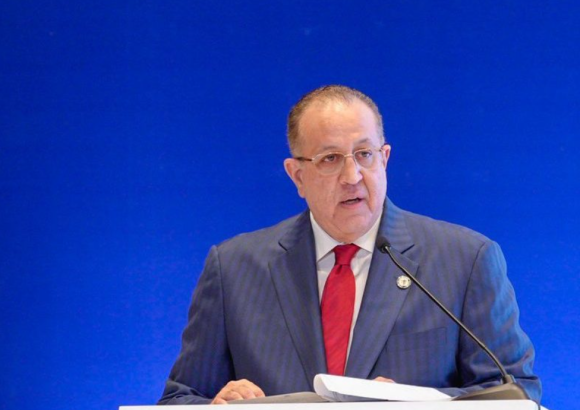
    The full set of policy adjustments, branded under the official heading “Measures for Economic Growth and Mitigation of the International Crisis,” was presented to a gathering of media leaders by Magín Díaz, the country’s Minister of Economy and Finance. Before the package can take effect, it must secure a vote of approval from the Dominican National Congress, and it forms the core of the administration’s broader push for fiscal consolidation across multiple high-revenue sectors.

    Beyond the proposed airline ticket fee, the package includes a series of targeted tax increases for both individuals and corporations. The existing tax on paper checks and electronic bank transfers would rise from 0.15% to 0.20%, while large domestic enterprises with annual revenues topping 1 billion Dominican pesos would face a temporary 30% corporate income tax rate for a three-year period. For high-earning individual taxpayers, the plan creates a new top 27% income tax bracket for anyone reporting monthly income over 400,000 Dominican pesos, a change that officials project will impact only a small fraction of the country’s total taxpayer base.

    Of all the provisions in the package, the $10 airline ticket surcharge has emerged as the most closely scrutinized, due to tourism’s outsize role in the Dominican national economy. The country ranks among the top tourist destinations in the Caribbean, drawing millions of international visitors primarily via air travel each year. Independent industry analysts have warned that even a modest increase in ticket prices could alter potential travelers’ destination choices, eroding the country’s competitive edge against neighboring Caribbean travel hubs that have not enacted similar travel-related fees.

    For the Dominican Republic, tourism is far more than a niche industry: it is the single largest source of private-sector employment, drives a substantial share of overall national economic activity, and generates the majority of the country’s annual foreign exchange earnings. As the proposal moves through the legislative process, tourism industry stakeholders across the country are tracking congressional deliberations closely, preparing to model how the surcharge could impact annual visitor arrivals and ripple through connected sectors from hospitality to local transportation.

    Administration officials have defended the full package of measures, arguing that new revenue streams are critical to shoring up public finances and maintaining broad economic stability at a time of persistent global uncertainty. They emphasize that the plan is intentionally structured to place the majority of new tax burden on high-income individuals, large corporate entities, and specific high-margin sectors, rather than spreading the cost across low- and middle-income households. Along with the air ticket surcharge, the package also includes new and increased taxes on financial transactions, large corporations, electronic cigarettes, casinos, and commercial gambling operations. The full proposal will soon be formally submitted to the public and congress as part of the government’s overarching strategy to sustain domestic economic growth and counteract headwinds from the ongoing international economic downturn.

  • Oncology Society urges early screening to combat prostate cancer in Dominican men

    Oncology Society urges early screening to combat prostate cancer in Dominican men

    In Santo Domingo, marking World Prostate Cancer Day, the Dominican Society of Medical Oncology (SDOM) has launched a urgent public appeal, calling on Dominican men to prioritize routine preventive screening and break down deep-rooted cultural stigmas that currently hinder early diagnosis of the nation’s most prevalent male cancer.

    SDOM President Ángela Cabreja underlined the life-saving importance of catching the disease in its earliest stages. Official data from the organization shows that when prostate cancer remains localized to the prostate gland, the five-year survival and cure rate tops 99%. Despite this promising statistic, Cabreja noted that a large share of patients only pursue medical care after the cancer has progressed to an advanced, harder-to-treat stage, a trend directly tied to cultural stigma around men’s health and preventive testing.

    New figures from the Global Cancer Observatory paint a stark public health picture for the Dominican Republic: the country logs roughly 4,918 new prostate cancer diagnoses annually, and sees around 2,120 deaths linked to the disease each year. This places the Dominican Republic among the nations with the highest prostate cancer incidence rates across the Latin American and Caribbean region. Medical specialists have outlined key modifiable and non-modifiable risk factors for the disease, including advancing age, a family history of prostate cancer, inherited genetic mutations such as BRCA1 and BRCA2, excess body weight, sedentary lifestyles, and diets heavy in processed and saturated fats.

    To guide public action, SDOM has outlined clear screening guidelines: all men aged 50 and older, as well as men 45 and older with a family history of the disease, should schedule annual urological check-ups. Oncological specialists recommend combining two complementary screening tools: the prostate-specific antigen (PSA) blood test and a digital rectal exam, emphasizing that neither test can adequately replace the other for comprehensive early detection.

    SDOM also acknowledged that recent medical advances in prostate cancer treatment have dramatically improved patient outcomes and reduced the severity of treatment side effects in recent years. Even with these treatment gains, however, the organization reiterated that preventive care and early diagnosis remain the single most effective tools to reduce mortality from the disease. The society reaffirmed its ongoing commitment to expanding public awareness, increasing access to timely screening, and guaranteeing all Dominican prostate cancer patients access to high-quality, evidence-based care.

  • World Cup kicks off with co-hosts Mexico taking early advantage

    World Cup kicks off with co-hosts Mexico taking early advantage

    The largest FIFA World Cup in history got underway Thursday at Mexico City’s iconic Estadio Azteca, with co-host nation Mexico grabbing an early lead against South Africa in the tournament’s opening match in front of a packed crowd of 80,000 spectators. Striker Julian Quinones netted the first goal of the expanded 48-team event in just the ninth minute, capping an early spell of Mexican dominance on a pitch that previously hosted the final matches of the 1970 and 1986 World Cups.

    This edition of the world’s biggest sporting event makes history as the first co-hosted by three North American nations: the United States, Mexico, and Canada. Stretching across nearly six weeks of competition, the tournament will conclude with the final match on July 19 in New Jersey, with industry projections forecasting total revenue will hit a staggering record $13 billion by the end of the event.

    Before the first kickoff, the official opening ceremony entertained fans packed into the legendary Azteca stadium, with global music superstars Shakira, a Colombian icon, and Nigerian hitmaker Burna Boy taking the stage to perform the tournament’s official anthem “Dai Dai” to the delight of the crowd. However, the celebratory mood outside the stadium was marred by chaotic scuffles, as crowds of supporters pushed and shoved while attempting to access the official central fan zone in Mexico City.

    The opening of on-pitch action comes as a much-needed reset for FIFA, the global governing body of football, which has faced intense backlash in the lead-up to the tournament over a number of controversies. Most prominent has been sharp criticism of the exorbitant ticket pricing, with some premium packages topping $30,000. Additional controversy has erupted over entry restrictions tied to U.S. President Donald Trump’s hardline immigration policies, which have already resulted in a high-profile referee, Iranian team officials, and multiple fans being denied entry to the United States for the tournament.

    Appearing in Mexico City one day before the opening match, FIFA President Gianni Infantino delivered a passionate defense of the tournament’s organization and pushed back against growing criticism of both visa issues and ticket costs. Addressing the ticket pricing controversy, Infantino noted that the governing body had introduced a limited number of $60 entry-level tickets in response to public outcry, arguing that this base price and the tournament’s average ticket cost (which he said sits below $500) are lower than comparable entry prices for playoff rounds of major American sports leagues.
    Infantino also sought to downplay the controversy surrounding Somali referee Omar Artan, who was denied entry to the U.S. after landing in Miami. U.S. authorities claim Artan has ties to suspected terrorist organization members, and FIFA has already confirmed he will not participate in any matches during the tournament. Calling the outcome “unfortunate,” Infantino said FIFA does not control all border entry decisions, adding that the organization had done all it could to resolve the situation ahead of the tournament.

    In a surprising show of solidarity just one day after Artan’s entry denial, European football’s governing body UEFA announced it would retain Artan as the referee for its 2025 European Super Cup match between Paris Saint-Germain and Aston Villa, scheduled for August. UEFA President Aleksander Ceferin emphasized that the decision was an intentional show of respect for Artan and his proven officiating skills, which earned him the prestigious nomination, noting that “football is made to connect people.”

    Infantino also defended FIFA’s handling of Iran’s participation in the tournament, amid ongoing military tensions between the U.S. and Iran that led many to question whether the Iranian national team would be allowed to compete. Infantino framed Iran’s presence at the event as a major success for FIFA, noting that while geopolitical challenges made participation complicated, no other organization could have secured Iran’s place at the tournament in such circumstances.

    The FIFA chief also faced questions over his widely publicized close relationship with Trump, but he did not shy away from praising the U.S. president’s role in bringing the tournament to North America. Infantino stated bluntly that without Trump’s engagement and direct involvement, organizing a World Cup on U.S. soil would have been simply impossible. Trump confirmed Wednesday that he plans to attend multiple World Cup matches during the tournament, though he declined to share specific details about which games he will attend.

    The second match of the tournament’s opening day is scheduled for later Thursday in Guadalajara, where South Korea will face off against the Czech Republic. Heading into the tournament, pre-game odds list Spain, France, and England as the top overall favorites to lift the trophy, while defending champions Argentina are led by 38-year-old legend Lionel Messi, who will look to guide his side to back-to-back World Cup titles.

  • Shakira and Burna Boy warm up spectators in World Cup opening ceremony

    Shakira and Burna Boy warm up spectators in World Cup opening ceremony

    MEXICO CITY – The 2026 FIFA World Cup, the first expanded 48-team edition of the global football tournament, kicked off Thursday with a star-studded opening ceremony at Mexico City’s iconic Estadio Azteca, where A-list performers energized a capacity crowd before the tournament’s opening match between co-host Mexico and South Africa. But the celebratory mood outside the historic stadium turned chaotic, as overcrowding and pre-existing security barriers sparked scuffles among thousands of fans gathered at the city’s central official fan zone.

    Regarded as one of the most legendary football venues on the planet, Estadio Azteca – which hosted the World Cup final in both 1970 and 1986, and recently completed major renovations to accommodate this year’s tournament – welcomed 80,000 spectators for the opening ceremony. The event opened with choreographed dance routines centered around a massive replica of the FIFA World Cup Trophy, paired with dazzling fireworks displays that lit up the Mexico City night sky.

    The ceremony’s highlight came when Colombian global pop icon Shakira and Nigerian Afro-fusion star Burna Boy took the stage to perform *Dai Dai*, the 2026 World Cup’s official tournament anthem, drawing thunderous roars from the standing crowd. Additional performances from Colombian reggaeton star J Balvin and world-renowned Italian tenor Andrea Bocelli ramped up excitement ahead of kickoff, with fans inside the stadium expressing nothing but enthusiasm for the historic event. “It’s already a party in Mexico,” 40-year-old attendee Ingrid Orozco told reporters. Nineteen-year-old fan Gustavo Ramírez echoed the sentiment, simply saying, “It’s amazing.”

    This 2026 World Cup makes history as the first tournament co-hosted by three North American nations: Mexico, the United States, and Canada. Across the three countries, the tournament will stage a record 104 matches, with the final scheduled to take place July 19 at MetLife Stadium in East Rutherford, New Jersey.

    While the celebration inside Estadio Azteca went off without a hitch, chaos erupted just hours before kickoff at the official public fan zone in Mexico City’s central Zócalo plaza, when thousands of fans converged to watch the opening match on a giant outdoor screen. Access to the viewing area had already been restricted by heavy metal barriers erected in the days before the tournament to block protesting teachers from entering the plaza, creating major bottlenecks as crowds surged forward to get in.

    City officials struggled to regain control of the crowded entrance, with one staff member shouting through a megaphone: “Stop pushing and shoving, there are children here, you’re like animals!” Some frustrated fans threw water bottles and yelled insults at law enforcement officers, though many continued to chant in support of Mexico’s national team amid the disorder. Twenty-five-year-old fan Javier Maciel summed up the widespread frustration, saying, “There could have been better organisation.”

    Local government officials quickly took to social media to announce the Zócalo fan zone had reached full capacity, and urged thousands of arriving fans to relocate to alternate viewing plazas across the city. The unrest is tied to ongoing protests by Mexican teachers who have been demonstrating in the capital for weeks to demand higher wages. Mexican President Claudia Sheinbaum had originally been scheduled to attend the opening match viewing at the Zócalo fan zone, but confirmed she was unlikely to appear after days of disruptive protests in the area.

  • Trial looms for Leoda Bradshaw after plea discussions crumble

    Trial looms for Leoda Bradshaw after plea discussions crumble

    KINGSTON, Jamaica — A high-profile double murder case involving the infant daughter of a sitting Jamaican parliamentarian and the child’s mother has moved a step closer to trial after last-minute plea bargain negotiations fell apart Thursday at the Jamaican Supreme Court.

    Accused Leoda Bradshaw, a former culinary specialist with the United States Navy, had signaled through her legal team earlier Thursday that she was prepared to enter a guilty plea to non-capital murder charges, a classification laid out under Section 2(2) of Jamaica’s Offences Against the Person Act. This section of the statute carves out non-capital murder as any unlawful killing that does not fall into the narrow category of capital murder — which includes contract killings and murders committed during terrorist acts. Unlike capital murder convictions, which carry a mandatory death sentence in Jamaica, a conviction on non-capital murder gives judges discretion to hand down either a life sentence or a fixed multi-year prison term, with a mandatory 15-year minimum period that must be served before an inmate is eligible for parole.

    Despite Bradshaw’s willingness to accept a guilty plea to the reduced charges, prosecution and defense teams failed to reach a binding agreement that would have resolved the case without a full public trial. The collapse of these talks clears the path for the high-profile proceeding to move forward through the court system. A plea and case management hearing has already been scheduled for June 24, where judicial officers will finalize pre-trial logistics and, critically, set an official start date for the trial.

    Bradshaw is not the only accused in the case. She faces a total of eight criminal charges: two counts each of conspiracy to commit murder, conspiracy to kidnapping, kidnapping, and capital murder. She is jointly charged alongside her cousin Roland Balfour, alleged gunman David Smith, and Bjorn Black. All three of her co-accused have already entered guilty pleas in the case and are currently serving their court-ordered sentences.

    The case dates back to September 9, 2023, when 27-year-old Toshyna Patterson and her 10-month-old daughter Serayah Paulwell — the child of prominent Jamaican parliamentarian Phillip Paulwell — were reported missing. According to official prosecution filings, the pair were abducted and transported to the remote Warieka Hills area of St Andrew parish, where they were fatally shot before their bodies were burned to cover up the crime.

  • Two homicide suspects captured in Haiti and returned to Dominican Republic

    Two homicide suspects captured in Haiti and returned to Dominican Republic

    In a landmark demonstration of transnational law enforcement coordination, Dominican security forces, backed by Haitian government agencies and INTERPOL, have apprehended two fugitives wanted over a high-profile homicide in the Dominican province of Barahona earlier this year. The arrests were executed in the Haitian border community of Anse-à-Pitre, capping off a weeks-long joint investigation spearheaded by the Criminal Investigations Department (DICRIM) under the Dominican Southern Regional Police Directorate.

    The two captured suspects, identified locally as Deivi Mora and Marlon Mariano Severino, had been the subject of an active arrest warrant — No. 589-01-2024-AJ-01030 — issued in connection with the January 17, 2024 killing of 35-year-old Joel Fernando Cuevas Medina. According to official case details, Cuevas Medina succumbed to multiple gunshot wounds during a violent incident that unfolded in Villa Central, a municipality within Barahona province. Both Mora and Severino are permanent residents of Barahona and fled across the border into Haiti shortly after the shooting to avoid capture.

    Immediately following their apprehension, the pair were transported via air back to Dominican territory, where they are now set to face formal judicial proceedings. In a public statement following the operation, Dominican National Police officials highlighted that the successful capture was not a matter of luck, but the product of consistent, methodical investigative work and unprecedented levels of close information sharing between the three participating law enforcement bodies.

    Senior security officials from both countries have underscored that this operation is far more than a single case resolution: it serves as tangible proof of the commitment of Dominican and Haitian authorities to tackling cross-border criminal activity and closing avenues for impunity for serious crimes. Following their transfer, the two suspects were turned over to the Dominican Public Prosecutor’s Office to undergo the full legal process established under the country’s judicial framework.

  • Visa rejection dashes World Cup hopes of Ivory Coast and Senegal fans

    Visa rejection dashes World Cup hopes of Ivory Coast and Senegal fans

    ABIDJAN, Ivory Coast – A wave of U.S. visa denials has shattered the dreams of hundreds of soccer fans from Ivory Coast and Senegal who planned to travel to North America to cheer on their national teams at the 2026 FIFA World Cup, leaving football communities across both West African nations reeling from disappointment.

  • US imposes sanctions on Cuban state-owned oil company

    US imposes sanctions on Cuban state-owned oil company

    In a sharp escalation of economic pressure on Havana, the United States unveiled new sanctions Thursday targeting Cuba’s central state-owned energy enterprise, Union Cuba-Petroleo (CUPET), the entity that controls nearly all of the Caribbean nation’s crude extraction, refining and fuel distribution networks.

    U.S. Secretary of State Marco Rubio said in an official statement that the designation was rooted in claims that key CUPET assets were illegally seized from U.S. property holders decades ago. The sanctioning action imposes a full ban on any financial dealings between the firm and all U.S. persons and entities, cutting off another critical lifeline for Cuba’s already collapsing energy sector.

    This latest move builds on a series of aggressive policy shifts the Trump administration has pursued against Cuba since earlier this year. Back in January, shortly after a U.S.-backed military operation ousted Venezuelan leader Nicolas Maduro from power, the Trump administration cut off all remaining oil shipments from Venezuela, which had been Cuba’s primary crude supplier for years. Since that order, only one Russian-flagged oil tanker has successfully delivered fuel to the island, amid repeated U.S. threats to sanction any third country that provides economic or energy assistance to Cuba.

    Trump has openly framed his administration’s policy as an effort to end more than 60 years of communist governance in Cuba, and has repeatedly claimed that the island nation—located just 93 miles off the coast of Florida—poses an acute national security threat to the U.S. Just this week, he even raised the prospect of a full U.S. “takeover” of the country of 9.6 million people.

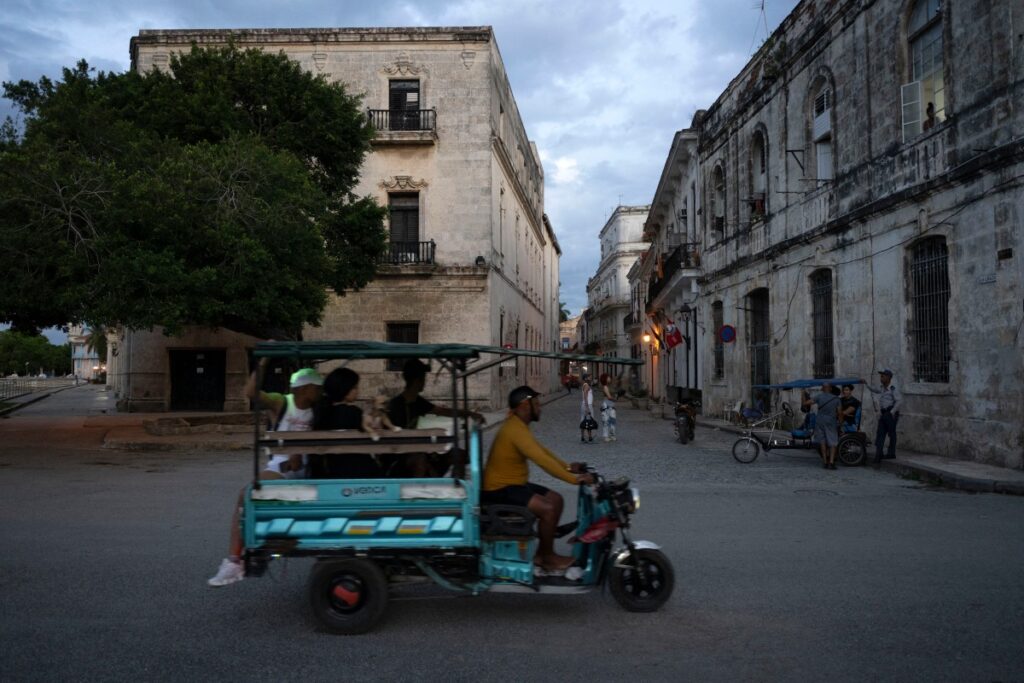
    Even before Thursday’s new sanctions, the longstanding U.S. trade blockade and expanded restrictions on firms doing business with Cuban state entities had already pushed Cuba into its worst economic and energy crisis in 30 years. Cuban officials confirmed Wednesday that the U.S. oil restrictions have already disrupted United Nations humanitarian operations, blocking the delivery of 170 containers of critical aid supplies to the island. In recent days, residents of the capital city of Havana have endured rolling blackouts that leave parts of the city without electricity for up to 30 consecutive hours, and shortages of basic necessities including food, clean running water and prescription medicine have grown increasingly severe across the country.

  • Liscensed firearm holder found dead after being wanted for girlfriend’s murder

    Liscensed firearm holder found dead after being wanted for girlfriend’s murder

    KINGSTON, Jamaica — A developing criminal investigation in Jamaica has taken a grim turn, after the primary suspect in a high-profile murder probe was discovered dead in the St Ann community of Brown’s Town, with law enforcement officials pointing to an apparent self-inflicted gunshot wound as the cause of death.

    The deceased has been formally identified as 50-year-old Maurice Alphanso Fennel, a licensed firearm holder who lists a Cambridge, St James address as his permanent residence.

    Sources with access to the investigation speaking to Observer Online confirm that Fennel was the lead person of interest for investigators assigned to the Jamaica Constabulary Force’s Manchester Division, who were probing the murder of a missing woman. Law enforcement alleges Fennel was in a romantic relationship with the victim prior to her disappearance.

    According to accounts from local residents connected to the case, Fennel first arrived in Brown’s Town around 9:00 p.m. on Wednesday, and took up temporary accommodation with a pair of local friends he had visited on multiple occasions in the past.

    In the hours before his body was found, the suspect reportedly sent farewell messages via text to both personal friends and members of his church community, explicitly stating that he planned to take his own life.

    When first responders arrived at the scene following the discovery of Fennel’s body, they recovered his licensed Glock pistol near his remains. While unconfirmed as of Thursday afternoon, multiple reports have emerged that search teams also located the remains of the missing murdered woman at a separate location early Thursday morning.

    Local law enforcement has not yet released an official statement confirming the discovery of the second body, and says more details will be released to the public as the investigation continues.