博客

  • MICAL MP urges gov’t to deliver cheaper power

    MICAL MP urges gov’t to deliver cheaper power

    In a speech during the House of Assembly debate on the 2026/2027 national budget, J. Leo Ferguson, the recently elected Free National Movement (FNM) MP for the MICAL constituency, has publicly expressed growing frustration over the slow pace of progress in the southern Bahamian island group he represents. Comprising Mayaguana, Inagua, Crooked Island, Acklins and Long Cay, MICAL has long grappled with systemic energy and infrastructure challenges that Ferguson says continue to hold back residents and economic growth.

    Ferguson highlighted that nearly all power across the constituency is generated by expensive diesel, leaving local households and small businesses facing some of the highest electricity rates in the entire Bahamas. Daily unplanned power outages are a persistent reality, forcing low-income families to choose between basic necessities and basic comfort, while sky-high energy costs have choked off potential private investment and prevented existing local businesses from expanding.

    While the MP threw his support behind the national government’s planned policy to roll out solar microgrids across the Bahamas’ Family Islands — a solution he called practical to cut reliance on costly diesel generation, reduce household utility bills, and boost energy resilience during hurricane season — he pressed for faster implementation. MICAL is already included on the government’s list of communities set to receive the renewable energy systems, but Ferguson demanded clarity on when residents will actually see tangible results, arguing the initiative is needed urgently, not years down the line.

    Beyond renewable energy, Ferguson outlined a range of additional economic and community benefits that expanded solar infrastructure could unlock for MICAL. Cheaper energy would lower operating costs for small local businesses, support the growth of the constituency’s burgeoning eco-tourism sector, and create new local jobs through training programs for solar panel installation and maintenance, he said.

    The first-term MP also turned his attention to the long list of unfulfilled infrastructure promises made to MICAL in previous national budgets. While he acknowledged that the current budget allocates planned funding for key projects including road repairs, clinic upgrades, airport modernization, drainage improvements and new administrative buildings, he noted that dozens of previously announced projects across the constituency remain either unfinished or have yet to break ground.

    Speaking on behalf of MICAL residents, Ferguson rejected the idea of empty political promises, echoing the words of his predecessor V Alfred Gray to urge the government: “fix it.” He called for urgent investments in a wide range of community-critical infrastructure, including reinforced seawalls, improved docking facilities, upgraded fishing stations, enhanced public water systems, more reliable telecommunications services, and upgraded hurricane shelters to protect residents during storm season.

    Ferguson also raised two longstanding local employment issues: delayed contract payments to small local government contractors, and the large number of long-term temporary contract workers in the constituency who have never been granted permanent, pension-eligible positions in public service.

    To further stimulate economic growth and retain local population, Ferguson laid out a series of additional policy proposals. He called for targeted tax relief on essential consumer goods, the creation of a VAT-free trade zone for the southern Bahamian islands, expanded technical and vocational training programs through the Bahamas Technical and Vocational Institute (BTVI), and increased government support for the constituency’s core local industries: traditional fishing, general tourism and eco-tourism.

    Ferguson closed by emphasizing that targeted investment in improved infrastructure and lower energy costs is critical to reversing steady population decline across MICAL’s islands. By expanding opportunity and lowering the cost of living, the government can give residents a tangible reason to stay in their home communities rather than relocating to more developed islands, he argued, urging the government not to write off MICAL as a region to abandon, but to recognize it as a place worthy of long-term investment.


  • U.S. State Department revokes visas in global effort to curb birth tourism

    U.S. State Department revokes visas in global effort to curb birth tourism

    WASHINGTON, D.C. — The U.S. Department of State has ramped up a sweeping enforcement campaign against the controversial practice of “birth tourism,” announcing that it has revoked hundreds of non-immigrant tourist visas across the globe in recent weeks as part of a broader push to curb what officials frame as misuse of longstanding U.S. citizenship rules.

    Under existing U.S. immigration regulations, foreign nationals cannot be approved for visitor visas if their core reason for entering the country is to give birth, a practice designed to let their children secure automatic U.S. citizenship via the 14th Amendment’s birthright citizenship principle. Senior department officials clarified that the updated enforcement push does not introduce new legal barriers; instead, it strengthens decades-old existing rules by giving consular officers expanded authority to reject visa applications when they suspect an applicant’s primary travel goal is childbirth, or when the applicant has intentionally hidden details of their pregnancy during the application process.

    For context, birth tourism describes the widespread practice of expectant parents traveling to the U.S. specifically to give birth on American soil, which grants their children birthright citizenship. While the practice itself remains technically legal under current U.S. law, federal authorities have connected a subset of active birth tourism operations to organized immigration fraud rings that facilitate misrepresentation and circumvent visa screening protocols. Official federal estimates suggest that between 2016 and 2024, roughly 80,500 births in the U.S. involved foreign women who entered the country temporarily for the sole purpose of giving birth, making up approximately 0.24% of all total births recorded across the country during that eight-year window.

    To date, the intensified crackdown has already yielded measurable results. Consular teams based in Europe have flagged more than 400 suspected birth tourism-linked cases since the start of 2024, while one major U.S. diplomatic mission in North Africa has canceled more than 100 active visas connected to organized birth fraud schemes. Department leaders have been careful to emphasize that a pregnancy alone is never sufficient grounds for an automatic visa denial. The central focus of the new enforcement guidelines, they say, is on whether applicants provide full, transparent information about the purpose of their trip, rather than penalizing expectant travelers who have other legitimate reasons for visiting the U.S.

    This stricter, more proactive approach to birth tourism is part of a broader expansion of U.S. visa screening protocols that now permit consular officers to weigh a wider range of factors that could signal a traveler would become an undue burden on U.S. public health and social services. Immigration policy analysts note that the debate over birth tourism is deeply intertwined with larger national conversations about the future of birthright citizenship, and the current crackdown could carry far-reaching implications for immigrant families already residing in the United States, reshaping long-standing policy debates around immigration and citizenship in the years ahead.

  • KSAMC must use increased allocations to fix parish council roads, says Morgan

    KSAMC must use increased allocations to fix parish council roads, says Morgan

    KINGSTON, Jamaica — A sharp political clash has erupted over municipal road maintenance funding in Jamaica’s capital region, with a senior cabinet minister calling out the head of the Kingston and St Andrew Municipal Corporation (KSAMC) for longstanding hypocrisy in his complaints about resource shortages.

    Robert Morgan, Minister without Portfolio with responsibility for Works, has publicly pushed back against KSAMC Chairman Andrew Swaby following the body’s recent announcement of a hike in annual divisional allocation funds. Under the new adjustment, urban divisions will see their allocations rise from the previous $10 million to $13 million, while rural divisions within the KSAMC’s jurisdiction will receive $13.5 million, a notable increase from prior levels.

    In an official statement released this week, Morgan argued that this very funding adjustment lays bare the contradiction at the heart of Swaby’s repeated public grievances. For months, the mayor has centered his public messaging on blaming insufficient funding for the poor state of parish-managed roads, but Morgan points out that the KSAMC has long held the legal authority to increase these allocations on its own.

    “The mayor cannot continue to lament the condition of roads while failing to fully use the resources and authority available to the KSAMC,” Morgan stated in his remarks. “This recent increase confirms that the corporation can do more for parish council roads, drains, mitigation works and emergency interventions. He has more money at his disposal than his predecessor ever did, yet he has failed to deliver on the key commitments he made to voters before taking office as Mayor.”

    Morgan also highlighted a longstanding imbalance in responsibility for road repairs, noting that the central government-run National Works Agency (NWA) has been forced to carry a disproportionate share of the workload fixing roads that officially fall under municipal oversight.

    While the Jamaican central government remains open to collaborative work with the KSAMC to improve infrastructure for local residents, Morgan emphasized that collaboration cannot require the national government to absorb all the cost while municipal resources go underutilized. “The KSAMC must use its increased allocations to repair and maintain the roads under its control,” he said. “That is core to their mandate.”

    Morgan further pointed to a key historical context that undercuts Swaby’s position: back in 2020, when Swaby served as a local councillor before becoming mayor, he seconded a formal resolution calling for exactly this kind of increase in divisional allocations from the Parochial Revenue Fund, to specifically fund road and drain upgrades.

    “He understood the importance of higher divisional allocations then. The question is why it has taken this long for the same urgency to be reflected in the Corporation’s own decisions,” Morgan added.

    To address growing public confusion, Morgan is also calling for full transparency from the KSAMC around how municipal road funds have been spent to date. Residents across Kingston and St Andrew have a right to clear information on which projects are prioritized, how allocations are distributed, and when scheduled repair works will be completed, he argued. “No one knows how these funds are spent right now. Jamaicans deserve to know,” Morgan said.

  • SERHA urges Jamaicans to give blood and save lives this World Blood Donor Day

    SERHA urges Jamaicans to give blood and save lives this World Blood Donor Day

    KINGSTON, Jamaica – As the global community prepares to mark World Blood Donor Day on June 14, 2026, Jamaica’s South East Regional Health Authority (SERHA) has launched a public appeal urging local residents to become regular voluntary blood donors to replenish the country’s critically low national blood reserves. Hospitals across the region are facing steadily rising demand for blood products to support life-saving emergency care and routine medical interventions, prompting health officials to call on community members to step forward and contribute to this public health priority. Donations ensure that vulnerable patients can access the critical care they require at the moment they need it most, officials emphasized. As a core part of SERHA’s long-term strategy to strengthen national blood stockpiles, two large-scale public blood donation drives have been scheduled over the coming weeks to make participation accessible for community members across the region. The first drive will be hosted by Spanish Town Hospital on Saturday, June 20, 2026, running from 9:00 a.m. to 3:00 p.m. at the facility’s on-site Blood Collection Centre. The second drive is set to take place at Victoria Jubilee Hospital on Wednesday, July 1, 2026, operating from 9:00 a.m. to 4:00 p.m. in the hospital’s main parking lot. SERHA officials outlined the wide range of medical scenarios that rely on a steady supply of donated blood. It is an indispensable resource for patients undergoing complex surgical procedures, trauma patients injured in accidents, expectant mothers experiencing life-threatening complications during childbirth, people undergoing cancer treatment, and individuals managing chronic blood-related illnesses. Health leaders stress that just one single blood donation has the potential to save multiple lives, and consistent donations are the only way for hospitals to maintain an adequate supply to respond to unexpected surges in demand during public health emergencies or mass casualty events. Dr. Jacqueline Wright-James, Senior Medical Officer at Spanish Town Hospital, highlighted that maintaining a consistent, reliable pool of regular voluntary donors is foundational to a well-functioning public health system. “You never know when you or a member of your family may need an emergency blood transfusion, so there is no reason to wait to register as a donor,” Wright-James explained. “Regular donors fill an irreplaceable role that guarantees hospitals are fully prepared to handle emergencies and meet ongoing patient care needs.” Wright-James also used the campaign to address widespread misconceptions that have discouraged many potential donors from participating, reassuring the public that the entire donation process is strictly safe, minimally invasive, and even offers small health benefits to donors. “A common myth holds that donating blood leaves donors feeling weak long-term, but this is completely untrue,” she noted. “The human body rapidly replaces the volume of fluid and red blood cells that are donated, so donors can return to their normal daily activities with full strength and function almost immediately. Donation even comes with unexpected perks for donors: it includes a free pre-donation health screening, can help reduce excess iron buildup in the bloodstream, and even burns a small number of calories as the body works to regenerate the donated blood supply.” To help community members determine their eligibility before arriving at a drive, SERHA has published clear guidelines for potential donors. People qualify to give blood if they are between 16 and 60 years of age, weigh more than 110 pounds, have well-managed controlled high blood pressure, and are in generally good health and feeling well on the day of their scheduled donation.

  • WATCH: Body of missing Mandeville pharmacy technician found in St Elizabeth

    WATCH: Body of missing Mandeville pharmacy technician found in St Elizabeth

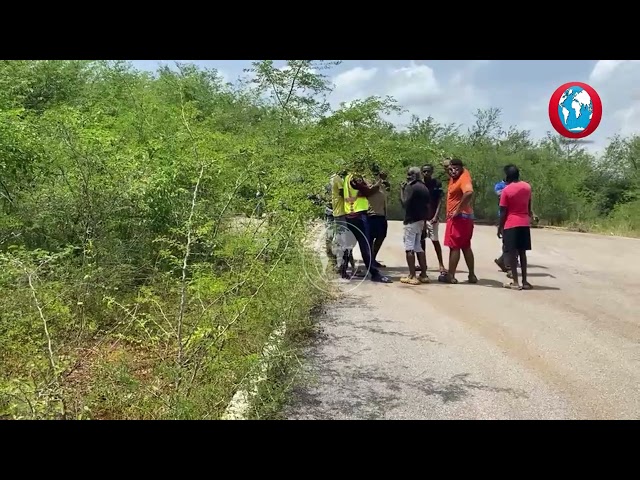
    In southwestern Jamaica, a weeks-long community search for a missing local woman has come to a grim close, as the body of 40-year-old Kedecia Mcleod was recovered early Thursday morning in the Pepper community of St Elizabeth. Mcleod, a practicing pharmacy technician who resided in Allison District, Bombay, Manchester, had been unaccounted for and officially listed as missing since Tuesday, June 9.

    According to initial law enforcement accounts, the discovery was made by ordinary passersby traveling through the rural St Elizabeth area, who stumbled upon the remains and alerted authorities shortly after. In the hours following the recovery, dozens of local residents from nearby communities gathered at the discovery site, many of whom had assisted in voluntary search efforts over the two days Mcleod was missing.

    Official missing person filings detail that Mcleod was last documented leaving her workplace at approximately 1:11 p.m. on the Tuesday she disappeared. At the time of her last sighting, she was wearing identifiable clothing: a white blouse, a light grey sweater, brown trousers, and a pair of white slip-on shoes. As of the initial reporting, law enforcement has not released further details regarding the cause or circumstances of Mcleod’s death, and investigations remain ongoing. On-the-ground video footage of the scene was captured by local journalist Kasey Williams.

  • El Nino is back, but its effects vary widely

    El Nino is back, but its effects vary widely

    PARIS, France – In a formal announcement Thursday, the U.S. National Oceanic and Atmospheric Administration (NOAA) has confirmed the arrival of El Niño, the warm phase of the naturally occurring tropical Pacific climate cycle that is closely tied to rising global temperatures and widespread disruptive weather patterns across the planet.

    El Niño forms as part of a seesawing fluctuation in Pacific Ocean surface temperatures and trade wind patterns that originates across the tropical Pacific, but its ripple effects can alter weather patterns thousands of miles from its source, amplifying the risk of extreme events ranging from severe drought to catastrophic flooding.
    While climate scientists emphasize that no two El Niño events are identical, and a strong event – which current forecasts project for this cycle – does not guarantee specific extreme outcomes, it significantly shifts the probability of such impacts toward higher risk.

    To understand El Niño’s global reach, it is first necessary to break down how the pattern alters baseline atmospheric and oceanic conditions. During an El Niño cycle, trade winds that normally blow westward across the tropical Pacific weaken, allowing warm surface water that typically accumulates near Indonesia to shift eastward toward the coasts of South America. This eastward shift of warm water pulls patterns of evaporation, cloud formation and rainfall along with it, reshaping seasonal weather across every continent.

    ### Impacts Across the Asia Pacific
    For much of the Asia Pacific, this shift translates to drier-than-average conditions and elevated drought risk. El Niño is known to suppress the South Asian summer monsoon, a critical weather system that delivers the seasonal rainfall that sustains agricultural production and livelihoods for hundreds of millions of people across India and the broader Indian subcontinent.

    Australia faces particularly elevated risks: the continent typically experiences above-average temperatures during El Niño, increasing the likelihood of severe drought, prolonged heatwaves and destructive wildfires. Eastern Australia most often sees the most significant rainfall deficits, while the northern Australian wet season tends to start later than normal. One small silver forecast for the continent is a reduced risk of tropical cyclone activity during the cycle. Some of the most severe droughts in Australia’s modern recorded history have been tied to past El Niño events, though researchers reiterate that even strong cycles do not always deliver below-average rainfall across the whole country.

    ### Effects on African Weather Patterns
    El Niño’s impact on Africa is split across regions. Parts of the Horn of Africa typically see above-average rainfall during El Niño cycles, but most of southern, western, central and eastern Africa faces a high risk of drier-than-normal conditions that escalate drought vulnerability.
    Last month, the World Meteorological Organization (WMO) warned of a high probability of below-average rainfall during the critical June-to-September growing season rainy period across a swathe of East Africa, including South Sudan, Uganda, Ethiopia, Djibouti, most of Eritrea, Sudan, and western and coastal Kenya. The most recent 2023-2024 El Niño cycle brought southern Africa its most severe drought in over 100 years, leaving an estimated 61 million people across the region in need of life-saving humanitarian assistance, according to data from the Food and Agriculture Organization.

    ### Shifting Extremes Across the Americas
    Across the Americas, El Niño again brings divergent impacts depending on region. Parts of western South America, including coastal Peru and Ecuador, typically see well above average rainfall during strong El Niño events, raising the risk of catastrophic flooding and deadly landslides. The 2023-2024 El Niño cycle was already linked to severe deadly flooding in southern Brazil in 2024.
    By contrast, northern Brazil – including large swathes of the Amazon rainforest – faces drier-than-average conditions that increase the risk of severe drought and out-of-control wildfires.
    For the United States, El Niño shifts the North Pacific jet stream southward, leading to stormier, wetter and snowier conditions across the southern U.S. during the winter months. The U.S. West Coast also sees an elevated risk of high-tide coastal flooding during El Niño cycles.
    The pattern also alters hurricane activity across both major ocean basins. Stronger upper-level winds in the Atlantic inhibit tropical cyclone development, leading NOAA forecasters to already project a below-normal Atlantic hurricane season this cycle. However, the extra warm surface water from El Niño fuels more tropical cyclone activity across the central and eastern Pacific during the Northern Hemisphere summer.

    ### El Niño’s Role in Global Temperature Records
    El Niño events typically reach their peak strength around December, when the abnormally warm surface waters across the tropical Pacific reach their maximum geographic extent. However, the ocean releases this stored heat into the atmosphere gradually, meaning the biggest impact on global average temperatures often occurs in the year after El Niño first develops.
    Many of the hottest years on record – including 1998, 2010, 2016, 2023 and 2024 – have either occurred alongside major El Niño events or followed in their wake. Speaking to Agence France-Presse, multiple climate scientists projected that 2027 is likely to surpass 2024 as the hottest year ever recorded globally, driven in large part by the warming influence of this newly declared El Niño cycle.

  • Author uses Judas’s story to inspire personal transformation

    Author uses Judas’s story to inspire personal transformation

    For two millennia, Judas Iscariot has stood as history’s most reviled figure, his name a global byword for treachery and betrayal after he handed Jesus Christ over to authorities for just 30 pieces of silver. Now, a first-time Christian author is upending centuries of conventional wisdom with a provocative new take on the infamous disciple, framing his story as a mirror for the internal moral struggles that all people face.

    Paloma Price, a South Florida-based practitioner of Christianity originally raised in Portmore, St Catherine, spent three years crafting her debut book *Learning From Judas*, which hit shelves in April. Long passionate about writing but never having pursued it as a professional career, Price says the project was born from divine direction. According to Price, God prompted her with a probing question: “Who is a son of perdition?” That inquiry launched her into months of deep research focused on how people who are seen as righteous can lose their moral direction, eventually leading her to the figure that has puzzled biblical scholars for centuries.

    Unlike traditional interpretations that paint Judas as a one-note villain, Price’s work reframes him not as a distant, one-dimensional figure from ancient scripture, but as a reflection of the conflicting internal battles every person navigates. The book invites readers to confront the parts of themselves that long for God’s will but repeatedly resist the path God lays out. Drawing together spiritual revelation, psychological reflection, and actionable practical guidance, *Learning From Judas* guides readers toward deeper self-awareness, emotional healing, and alignment with the divine plan Price argues God has for each person’s life.

    Price explains that Judas emerged as the ideal subject to illustrate a critical lesson: when people refuse to let truth reshape their character and choices, the damage can become irreversible. The author emphasizes that her work is not a text focused on condemnation of Judas or any reader; instead, it is an open invitation to personal transformation. Her core hope for audiences is that after engaging with the book, they will leave with greater compassion for their own failures, clearer insight into their inner world, and the courage to confront the subtle internal forces that drive their choices. For Price, examining the story of Judas is ultimately a journey of self-discovery: confronting the betrayal and moral struggle embodied by the infamous disciple is how people come to better understand themselves and realign their lives with God’s purpose.

  • Police found dead after being wanted for girlfriend’s murder

    Police found dead after being wanted for girlfriend’s murder

    KINGSTON, Jamaica — In a shocking development that has rocked Jamaica’s law enforcement community, a serving officer with the Jamaica Constabulary Force (JCF) — identified as the prime suspect in an ongoing murder probe — has been discovered dead in Brown’s Town, St Ann. Investigators preliminary assessments point to a self-inflicted gunshot wound as the cause of death.

    The deceased officer has been named as 50-year-old Alphanso Fennel, who listed a Cambridge, St James, residential address. According to sources familiar with the case who spoke to Observer Online, Fennel had recently been reassigned to the Major Organised Crime & Anti-Corruption Agency, a specialized unit tasked with tackling serious organized crime and public corruption across the island.

    At the time of his death, Fennel was the subject of a murder investigation led by the JCF’s Manchester Division. The case centers on a missing woman who investigators confirm Fennel was romantically linked to.

    Witness accounts outline that Fennel arrived in Brown’s Town around 9:00 pm Wednesday, and was staying with local friends — a couple who he had visited on multiple previous occasions. In the hours before his body was found, Fennel sent a series of goodbye messages to his personal contacts and a church group he was part of, explicitly stating he intended to take his own life.

    When first responders reached the scene, they recovered Fennel’s issued Glock service pistol alongside his body. Unconfirmed reports emerging from the investigation Thursday morning also indicate that search teams have located the remains of the missing woman who was at the center of the murder probe.

    Law enforcement officials have not yet released an official statement confirming the discovery of the woman’s body, and additional details are expected to be made public as the investigation progresses.

  • USDA delegation visits Dominican Republic to strengthen African swine fever prevention

    USDA delegation visits Dominican Republic to strengthen African swine fever prevention

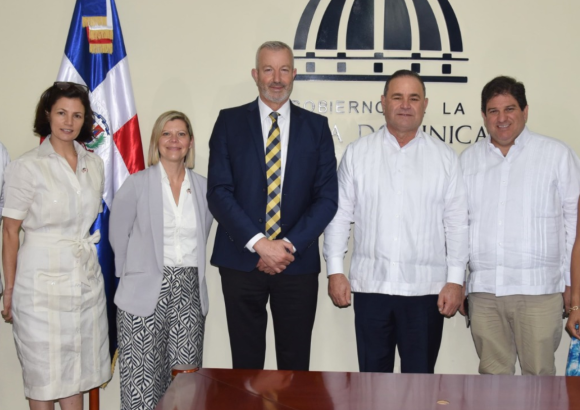
    In a high-level working meeting held in Santo Domingo, Francisco Oliverio Espaillat, the Dominican Republic’s Minister of Agriculture, hosted a delegation from the United States Department of Agriculture’s Animal and Plant Health Inspection Service (APHIS) to advance technical collaboration on three core priorities: strengthening national animal health systems, safeguarding domestic food security, and rolling out more effective prevention measures against transboundary livestock diseases, most notably African Swine Fever (ASF).\n\nASF, a highly contagious viral disease that is fatal to domestic pigs and has no widely available vaccine, has spread across multiple regions globally in recent years, posing severe threats to livestock industries and food supply stability. The gathering offered Dominican and U.S. regulatory officials a platform to review the latest progress of the National Swine Biosecurity Program, an innovative effort launched by the Dominican Republic that stands as a pioneering model for disease control across the Americas.\n\nConversations between the two delegations centered on actionable next steps to upgrade key parts of the country’s ASF defense framework. Participants zeroed in on enhancing cross-regional disease surveillance networks, refining evidence-based prevention protocols, reinforcing rapid emergency response capabilities for potential outbreaks, and expanding the scope of bilateral partnership to better support the long-term growth and stability of the Dominican Republic’s entire livestock sector.\n\nAbel Madera, Director General of the Dominican Republic’s Livestock Division, outlined key milestones the program has already hit. To date, more than 630 pig farms have enrolled in the initiative, accounting for 82 percent of the country’s total technified pig production inventory. The program has also delivered on a major structural goal: the establishment of a nationwide, standardized biosecurity certification system. So far, 27 commercial pig operations have earned full certification, and none of these properties have ever recorded an ASF case.\n\nSenior authorities from both sides emphasized that the program has done more than just reduce immediate outbreak risk. It has also significantly bolstered the Dominican Republic’s in-country technical capacity and expanded its network of trusted international public health and agriculture partnerships. These gains, officials noted, have helped the country emerge as a critical regional bulwark stopping ASF from spreading further into the Caribbean and broader Latin American region.\n\nBoth delegations closed the meeting by reaffirming their shared commitment to sustained investment in targeted biosecurity measures. They agreed that ongoing investment is essential to mitigate risks linked to high-risk practices, including unregulated animal movement, inadequate transportation biosecurity protocols, and the ongoing challenges faced by small-scale, less technologically advanced farming operations across the country.

  • Google launches AI-driven search features for football fans worldwide

    Google launches AI-driven search features for football fans worldwide

    As the countdown to the 2026 FIFA World Cup, one of the most anticipated global sporting events, draws to a close, tech giant Google has rolled out a major overhaul to its search engine infrastructure, designed to deliver an elevated experience for football supporters across every continent. At the heart of this upgrade is Google’s cutting-edge artificial intelligence assistant, Gemini, which is primed to respond instantly to fan queries, deliver up-to-the-minute match statistics and generate in-depth analytical insights throughout the tournament.

    Reports from technology outlet Wired reveal that Gemini’s capabilities extend far beyond just data delivery. The AI tool has been equipped with creative functionality that lets fans craft custom content ranging from original football-themed songs and viral memes to personalized cartoons and custom visual graphics. This feature is built to fuel engagement across social media platforms, keeping fans interacting with the tournament long after the final whistle of each match blows.

    The integration of Gemini into the 2026 World Cup comes as part of a newly announced strategic partnership between Google and the tournament’s defending champions, Argentina, a collaboration that will put the AI tool on display both during on-pitch action and behind the scenes. Per Wired’s reporting, the Gemini logo will be prominently featured on Argentina’s official training kits throughout the tournament, making the AI’s presence visible to fans and media worldwide.

    Beyond fan-facing features, Gemini will also play a key operational role for the Argentine side. The AI will be tasked with analyzing the national team’s tactical plays, overall form, on-pitch performance and collective and individual player statistics. Both Argentine players and the coaching staff will be granted direct access to specialized Gemini AI models, enabling them to break down game footage in granular detail, dissect opposing team strategies, and draw actionable insights from opponent performance data to inform game plans.