博客

  • Shantae Foreman finishes second in long jump at NCAA championships

    Shantae Foreman finishes second in long jump at NCAA championships

    The second day of the 2024 NCAA Division 1 Outdoor Track and Field Championships delivered a string of stunning upsets, personal bests, and historic records at Eugene Oregon’s iconic Hayward Field on Thursday, headlined by a once-in-a-generation 100-meter run from University of Georgia’s Adejah Hodge.

    The British Virgin Islands Olympian left spectators and competitors stunned as she crossed the 100m semi-final finish line in a blistering 10.63 seconds with a legal +0.9 m/s wind reading. The time not only smashed her previous personal best of 10.77 seconds set in April, it also elevated her position as the world’s top-ranked 100m sprinter this season, and broke both the collegiate and championship meet records. The prior mark of 10.75 seconds, set by American star ShaCarrie Richards in 2019, stood for five years before Hodge’s historic run. The result also ranks Hodge’s performance as the fifth-fastest women’s 100m in history globally.

    In the women’s long jump, Clemson University’s Shantae Foreman pulled off one of the day’s biggest personal breakthroughs to claim a surprise second-place finish. The Jamaican athlete jumped 6.69 meters, with a +0.2 m/s wind reading, an massive improvement of 22 centimeters over her previous outdoor personal best of 6.47 meters. That mark, which Foreman had matched twice before — first at the 2021 World Athletics U20 Championships in Nairobi, Kenya, and again at the NCAA East Regional just two weeks prior — was left far behind, and Foreman’s new jump catapults her into the top 10 all-time for Jamaican women in the event. Now, she enters Saturday’s triple jump competition as the overwhelming pre-event favorite to claim the national title.

    Multiple other athletes from Caribbean nations competing for U.S. collegiate programs earned spots in upcoming finals through strong semi-final showings. University of Florida’s Gabrielle Matthews turned in a rare double qualification, advancing to both the women’s 100m and 200m finals after impressive performances. In the 100m, Matthews clocked 11.02 seconds (+0.6 m/s) to secure her spot, behind Florida State University’s Shenese Walker who ran 10.94 seconds (+0.3 m/s). Texas’s Carleta Bernard just missed out on a finals spot, finishing with a 11.17 second run that left her outside qualification.

    In the 200m semi-finals, Matthews continued her strong form by lowering her own personal best to 22.22 seconds (+1.7 m/s) to take second place behind Hodge, chopping 0.19 seconds off her prior top mark of 22.41 seconds.

    University of Georgia’s Dejanae Oakley, the current world leader in the women’s 400m, put on a dominant display in the 400m heats, cruising to a win in her semi-final heat with a 49.93 second clocking. The result secured her place as the top qualifier heading into Saturday’s final, where she will look to improve on her second-place finish at the 2023 championships.

    In the women’s 100m hurdles, Ohio State’s Janela Spencer clocked a season’s best 12.77 seconds (+1.2 m/s) and Texas Tech’s Tonie-Ann Forbes ran 12.86 seconds in the same wind conditions to secure their spots in the final. Clemson’s Oneka Wilson just missed out on qualification, crossing the line in 12.93 seconds (+1.0 m/s). In the day’s only field event for other competing athletes, Purdue University’s Britannie Johnson placed 20th overall in the women’s shot put with a throw of 16.02 meters.
  • Fire destroys businessplace, house in Westmoreland

    Fire destroys businessplace, house in Westmoreland

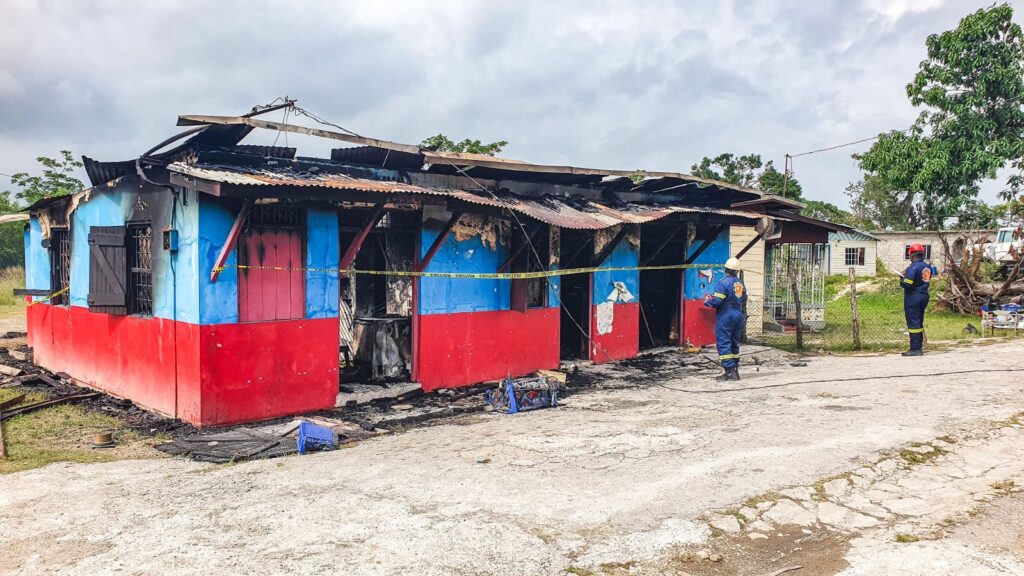
    On a Thursday morning just before 10 a.m., an out-of-control fire swept through a commercial building and connected private residence in the Big Bridge community of Westmoreland Parish, Jamaica, leaving a local small business owner with nothing after years of hard work and a recent rebuilding effort. The origin of the blaze remains undetermined as investigators from the Jamaica Fire Brigade continue to comb through the charred remains of the property.

    Two fire response units from the nearby Savanna-la-Mar Fire Station were dispatched to the scene after emergency calls came in, confirmed O’Neill Kerr, District Officer for Investigation with the Jamaica Fire Brigade. No lives were lost in the incident, though a small number of people sustained minor injuries while attempting to extinguish the fire before first responders arrived.

    The business lost in the fire is a neighborhood variety store operated by a local woman who identified herself only as Sharon. The shop stocked a wide range of daily essentials for community members, from plumbing hardware and personal hair care products to household detergent, groceries and beverages. Sharon recalled the moments she discovered the fire, explaining that she first spotted flames spreading through the middle section of the building, wedged between a residential stove and a refrigerator. She had just been retrieving bottled products from the back storeroom when she noticed the smoke and fire, she said. Immediately after making the discovery, she alerted her husband, who was speaking with a friend at the front of the store. By the time he reached the fire’s starting point, the entire space between the two appliances was already fully engulfed in flames.

    Sharon and her husband, assisted by a neighboring resident who joined the fight from the back of the property, attempted to put out the blaze themselves before firefighters could arrive. The group disconnected a water pipe from a large on-site water tank to access water, passing buckets of water to Sharon’s husband, who was inside the building battling the spread. However, the fire grew too quickly for their efforts to make a meaningful difference.

    For Sharon, the destruction comes as an especially devastating blow, following recent hardship that she had only just started to recover from. After a recent hurricane passed through the region, her shop was burglarized, with thieves taking nearly all of her inventory and assets. She had spent time and resources rebuilding the business, restocking the store just one day before the fire, on Wednesday, because she prioritizes keeping goods available for her regular customers. Even worse, she had purchased a brand new point-of-sale software system less than a week before the fire, and that new equipment was also destroyed in the blaze. All of her personal belongings, including her mobile phone, purse, and important identity documents such as her driver’s license and passport, were inside the connected dwelling when the fire hit, meaning she now faces the lengthy process of replacing every critical document. With four children between the ages of 8 and 17 to support, Sharon says the total loss represents a crippling setback that has left her struggling to process her emotions.

    Kerr told reporters that in the immediate aftermath of the fire, investigators are still in the early stages of their work, and it is too soon to confirm the exact cause of the blaze. Fire investigation teams have already been deployed to the site to collect evidence and assess the scene, he said, and work is ongoing to pinpoint what sparked the fire. Kerr added that officials have also not yet been able to calculate the total monetary value of the losses from the blaze, as the assessment process is still in its early phases.

    This report was contributed by Anthony Lewis.

  • Larimar City signs partnership with TK Elevator for residential and hotel developments

    Larimar City signs partnership with TK Elevator for residential and hotel developments

    In a major milestone for one of the Caribbean’s most ambitious smart urban development projects, CLERHP’s Larimar City & Resort initiative based in Punta Cana, Dominican Republic has formalized a strategic partnership with global mobility leader TK Elevator (TKE) and local Dominican firm JCQ Ingeniería en Ascensores. This collaboration will deliver custom vertical mobility solutions for all planned segments of the massive mixed-use complex, spanning residential neighborhoods, hospitality venues, and commercial spaces.

    The partnership unites two complementary players in the elevator and accessibility space: TK Elevator, a world-leading provider of next-generation elevator and urban mobility technology, and JCQ Ingeniería en Ascensores, TKE’s officially authorized distributor and installation specialist in the Dominican Republic. From the outset, the alliance has been aligned to advance the core mission of Larimar City & Resort: building a cutting-edge modern urban hub that meets global benchmarks for innovation, public safety, construction quality, and environmental sustainability.

    Juan Andrés Romero, who serves dual roles as president of developer CLERHP and CEO of the Larimar City & Resort project, emphasized that the new agreement underscores the project’s longstanding commitment to partnering with industry-leading firms with global recognition. By integrating TKE’s industry-leading mobility technology with JCQ’s deep local market expertise and on-the-ground experience, the partnership strengthens Larimar City’s core goal of establishing itself as a gold standard for forward-thinking urban development across the entire Caribbean region.

    The cross-company agreement was coordinated through CLERHP’s internal Purchasing, Logistics, and Fleet Department. Pedro Alcalá Ruiz, the department’s manager, stressed that seamless, efficient vertical mobility is a non-negotiable foundation for building a comfortable, fully accessible environment for both future residents and visiting tourists. He framed reliable mobility infrastructure as a foundational component of the smart city’s overall design and functional capabilities, rather than an afterthought in development planning.

    With a global footprint spanning more than 100 countries, TK Elevator brings decades of specialized experience delivering mobility solutions to residential, hospitality, and large-scale infrastructure projects across the globe. The addition of TKE and JCQ to the project’s growing roster of strategic partners not only expands Larimar City’s professional network but also reinforces its overarching vision of delivering a high-caliber, technology-first urban destination that attracts investment and visitors from across the world.

  • MIREX launches book documenting Dominican diplomacy on Haiti crisis

    MIREX launches book documenting Dominican diplomacy on Haiti crisis

    On a recent official event held in Santo Domingo, the Dominican Ministry of Foreign Affairs (MIREX) unveiled a new authoritative publication that chronicles the nation’s targeted diplomatic push to rally global backing for Haiti amid its spiraling political, security, and humanitarian collapse. Titled *Dominican Diplomacy in the Face of the Haitian Crisis 2024-2026: More Speeches and Key Writings*, this volume marks the second installment in an ongoing series tracking the Dominican government’s response to the instability spilling across its shared border with Haiti. The launch ceremony was opened by Vice President Raquel Peña, and followed by a substantive panel discussion featuring leading legal scholars and veteran diplomatic practitioners.

    Co-edited by three top Dominican diplomatic figures — Foreign Minister Roberto Álvarez, Deputy Foreign Minister Rubén Silié, and career diplomat Anselmo Muñiz — the compilation brings together a full range of primary materials from the 2024-2026 period. These include official speeches, formal diplomatic correspondence, multilateral resolutions, and records of on-the-ground diplomatic initiatives that the Dominican Republic has pursued to shine a sustained international spotlight on Haiti’s crisis and secure tangible support for security and stabilization efforts.

    Speaking at the book’s launch, Foreign Minister Álvarez outlined that the nation’s approach to the Haitian crisis has been rooted in the good-neighbor policy articulated by President Luis Abinader. He emphasized that Dominican leadership began sounding alarm bells about the growing risks in Haiti long before the full scale of the collapse gained widespread recognition from the global community. For most major world powers, Haiti’s crisis ranks as just one of many pressing global challenges, Álvarez noted, but for the Dominican Republic, it is an issue of existential national security that stands as the country’s top foreign policy priority.

    A key throughline highlighted in the publication is the unprecedented cross-partisan national consensus that has shaped Dominican policy toward Haiti. The book documents how three former Dominican presidents — Leonel Fernández, Hipólito Mejía, and Danilo Medina — have joined the current administration in coordinated international advocacy on the issue. It also lays out the tangible contributions the Dominican Republic has already made to multinational security missions operating in Haiti, ranging from logistical backing and financial assistance to medical support. Beyond direct contributions, the text details the consistent work Dominican diplomats have done to ensure the Haitian crisis remains a core item on the agendas of major multilateral bodies and key global partner nations.

  • Environment Ministry advances plan to strengthen park ranger corps

    Environment Ministry advances plan to strengthen park ranger corps

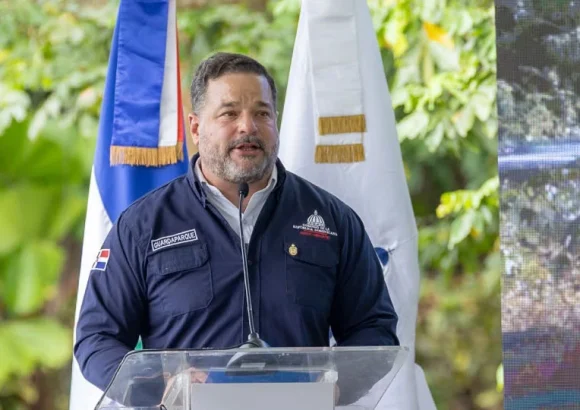
    In a landmark move to boost national conservation efforts, the Dominican Republic’s Ministry of Environment and Natural Resources has announced a sweeping investment initiative designed to strengthen the country’s park ranger service, which safeguards the nation’s ecologically critical protected areas. The comprehensive package includes salary hikes, new operational equipment, and expanded professional training programs, all targeted at elevating the quality of natural resource protection across the country.

    The announcement was made during an official event headed by Dominican Vice President Raquel Peña, where Environment Minister Paíno Henríquez outlined the core terms of the new Dignity Program for the National Park Rangers Corps. Under the program, every active park ranger will receive a RD$5,000 monthly base salary increase, a long-overdue adjustment aimed at addressing substandard working conditions for the frontline conservation workers who protect the nation’s forests, watersheds, coastal ecosystems, and rich biodiversity.

    Beyond compensation improvements, the investment delivers a full suite of new operational tools for ranger patrols: 150 all-terrain motorcycles for remote area access, 1,500 standardized uniforms, 300 two-way communication radios to connect dispersed patrol teams, and 75 secure firearms storage units. To step up anti-poaching and illegal deforestation surveillance, the Environment Ministry purchased 400 service firearms, with an additional 300 units donated by the country’s Ministry of Defense and Ministry of Interior and Police. For the first time in Dominican history, park rangers will be officially licensed to carry and use these firearms during active duty, a change that addresses longstanding safety risks faced by rangers confronting armed illegal resource extractors.

    Minister Henríquez emphasized that rangers bear responsibility for protecting more than a quarter of the Dominican Republic’s total land area, which falls under the protected areas system. He stressed that the reform is far more than a one-time equipment upgrade, adding that it includes formal skills training, official professional certification, and ongoing professionalization programs. These measures are designed to ensure all rangers carry out their duties in line with strict standards for operational safety, ethical responsibility, and respect for human rights.

    Government officials characterize the Dignity Program as one of the largest single investments the Dominican state has ever made in its environmental protection workforce. The national government projects that the reforms will modernize the country’s environmental management framework, reinforce ongoing conservation work, and strengthen the long-term preservation of the Dominican Republic’s unique natural heritage for coming generations.

  • ‘Wait and see’ ‘wait and see’ says Walker

    ‘Wait and see’ ‘wait and see’ says Walker

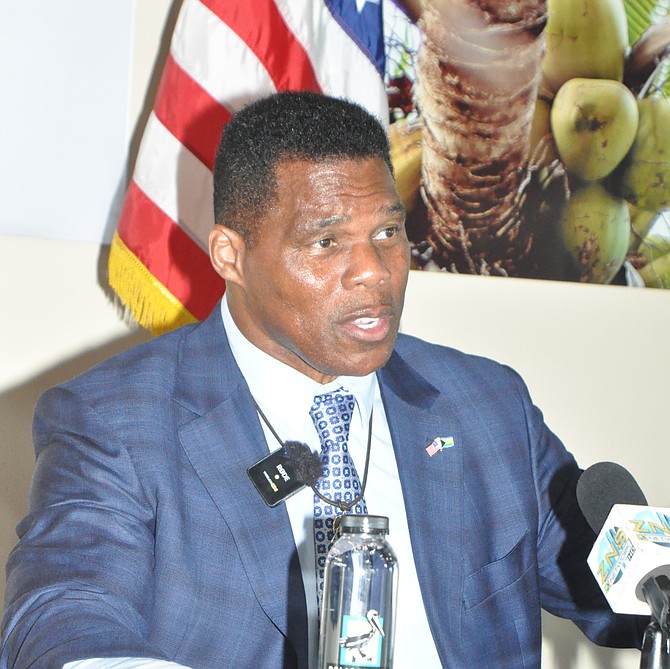
    A high-stakes diplomatic and political standoff has emerged in The Bahamas after the nation’s top House official brushed off damning allegations contained in a U.S. federal criminal complaint, drawing a measured but firm response from the U.S. ambassador to the country. Speaking to reporters on Grand Bahama this week, U.S. Ambassador Herschel Walker pushed back against House Speaker Patricia Deveaux’s characterization of the accusations against Bahamian national Eric Gardiner and an unnamed senior Bahamian politician as nothing more than “frivolous and malicious gossip,” telling the public to “wait and see” how the ongoing investigation unfolds.

    Walker emphasized that the case remains an active, open investigation, noting that premature commentary risks unfairly prejudicing either side of the proceedings. “It is funny because people say things like that, but you know it’s an open investigation, and I think people know when it is an open investigation, you just wait and see what’s going to happen,” Walker told reporters. “You really don’t want to say anything about it because you don’t want to hurt either side.”

    Contrary to claims that the allegations are baseless gossip, the accusations are part of a formal criminal filing in the Southern District of New York — one of the most high-profile federal court jurisdictions in the United States, where prosecutors regularly handle complex, high-stakes cases involving transnational drug trafficking, public corruption, organized crime, and major financial fraud.

    Gardiner, the primary defendant named in the complaint, was taken into U.S. custody shortly after a plane crash off Florida’s coast on May 12, which coincided with The Bahamas’ general election. The small aircraft, traveling between Abaco and Grand Bahama, carried 12 people total, and Gardiner was one of 11 who survived the crash. Court records show investigators recovered $30,000 in cash inside a cross-body bag marked with the name of a senior Bahamian politician, only identified in court documents as “Politician 1.”

    Tensions flared earlier this week when Deveaux blocked Opposition Leader Michael Pintard from tabling documents related to the U.S. criminal complaint in the House of Assembly, moving to block any parliamentary debate of the allegations entirely by labeling them malicious and unsubstantiated.

    Walker reiterated his longstanding policy of declining to comment on active law enforcement probes, saying public speculation before investigators conclude their work risks spreading unsubstantiated misinformation. “That’s why I don’t really comment on things like that because being an open investigation, who knows? And we don’t want to just put things out there that is just not true,” he said.

    The core allegations laid out by federal prosecutors paint a picture of deep infiltration of drug trafficking operations into Bahamian political circles. Prosecutors claim Gardiner, who goes by the alias “Player,” was a key figure in a Bahamas-based cocaine trafficking network that sourced bulk narcotics from Colombia and other South American countries for smuggling into the U.S. He is formally charged with conspiring to import no less than five kilograms of cocaine into the U.S., and is accused of acting as a foreign supplier for a Georgia-based drug trafficking ring, coordinating the movement of multiple-kilogram cocaine shipments from The Bahamas into South Florida.

    Most explosively, the criminal complaint alleges that undercover Drug Enforcement Administration agents, posing as members of a Mexican drug cartel, met with the senior unnamed Bahamian politician directly inside the House of Assembly building to negotiate a plan to ship cocaine through The Bahamas en route to the U.S. According to investigators’ accounts, the politician agreed to use their position to facilitate the smuggling operation in exchange for regular cash payments.

  • FNM takes DEA ‘Politician 1’ allegations to police

    FNM takes DEA ‘Politician 1’ allegations to police

    Political tensions in The Bahamas have reached a new boiling point this week after opposition lawmakers formally called on national police to launch a full, urgent investigation into explosive drug trafficking allegations laid out in a US federal court affidavit. The sworn document, filed in the United States District Court for the Southern District of New York, links an unnamed Bahamian political figure, referenced only as “Politician-1”, to a $30 million cocaine trafficking conspiracy.

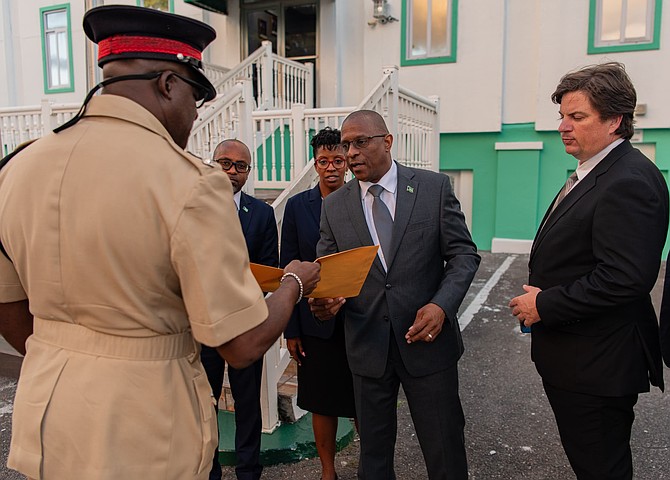
    In an official letter dated June 11, addressed to Police Commissioner Shanta Knowles and copied to National Security Minister Myles Laroda and Attorney General Wayne Munroe, Opposition Leader Michael Pintard called for an “urgent and comprehensive investigation” into every detail of the allegations. The request was co-signed by every opposition member of the House of Assembly, confirming unified opposition push for accountability.

    The affidavit centers on Jonathan Eric Gardiner, who is also known by the alias “Player”, and outlines a startling claim: in October 2024, Politician-1 met with an undercover Drug Enforcement Administration (DEA) source and a pilot inside The Bahamas’ Parliament building to negotiate details of a cocaine shipment moving from Colombia, through The Bahamas, and ultimately to the United States. The allegations also suggest that the criminal network received protection and support from politicians, public officials, and members of Bahamian security and law enforcement agencies.

    Pintard laid out clear mandates for the proposed investigation, calling on police to work alongside national security bodies and international partners to first unmask the identity of Politician-1, then probe whether any elected official or public servant facilitated the alleged criminal activity, and finally uncover any complicity among law enforcement or security personnel that enabled the trafficking network. Beyond the drug trafficking claims, Pintard also called for full investigations into linked money laundering activities, suspicious financial flows, and hidden beneficial ownership structures tied to the alleged criminal enterprise.

    The request also extends to a full audit of government contracts, concessions, and financial dealings connected to Gardiner’s construction firm, Top Notch Builders Limited, and all of its affiliated entities. Public records already confirm that Top Notch Builders was awarded high-profile public contracts for two major projects: the Obadiah Wilchcombe Complex in Grand Bahama and the Renaissance at Carmichael housing development on New Providence.

    In the letter, Pintard emphasized the gravity of the claims, noting that the allegations are set out in a sworn court document, making them a critical threat to national security. “These allegations, as presented in a sworn complaint before a U.S. federal court, raise profound national security concerns and, if substantiated, would represent a serious breach of public trust, the rule of law, and the integrity of public institutions,” he wrote.

    Pintard added that urgency, independence, and full transparency are non-negotiable, given the potential damage to The Bahamas’ international reputation and public faith in national governance. “The public must be assured that no individual – regardless of position – is above the law, and that all allegations of criminal conduct touching public office are investigated thoroughly and impartially,” the letter concluded.

    This formal request marks the latest escalation from the opposition Free National Movement, which has pushed the allegations to the top of national political debate this week. Tensions flared earlier in the House of Assembly, after Speaker Patricia Deveaux blocked multiple attempts by Pintard to table documents related to the US court filing, sparking heated verbal exchanges between government and opposition lawmakers.

    So far, the Office of the Prime Minister has responded that the governing administration will request official information from US authorities, and that local law enforcement agencies will launch their own internal inquiries into the claims.

  • Xenophobic violence in South Africa fuels World Cup backlash across Africa

    Xenophobic violence in South Africa fuels World Cup backlash across Africa

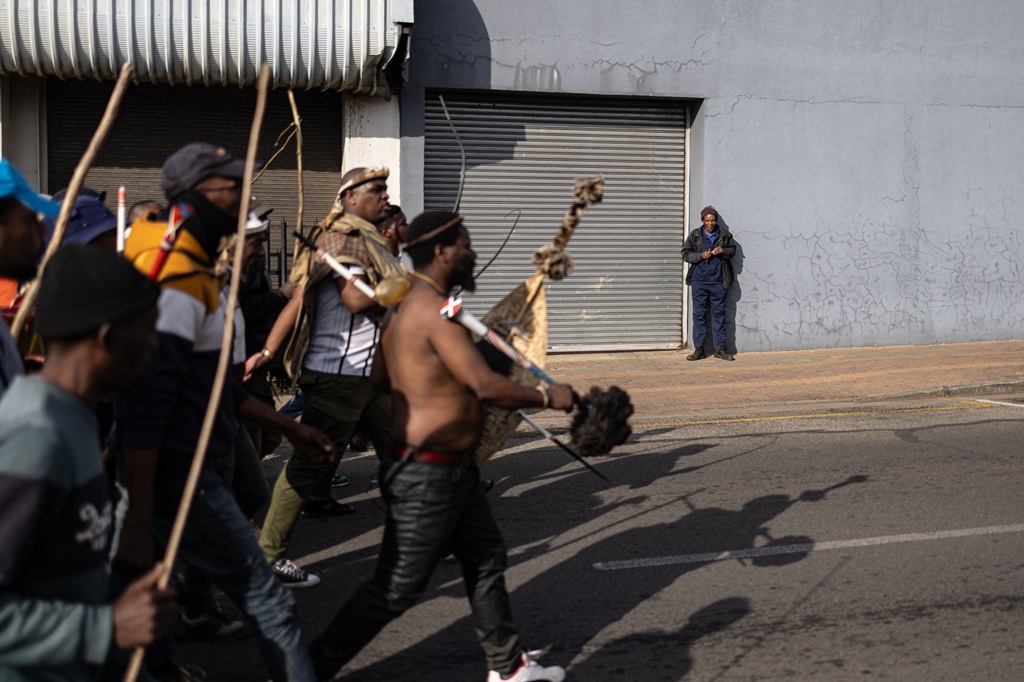
    Long-simmering tensions over xenophobic violence against African migrants in South Africa boiled over into the global football spotlight this week, as fans from across the continent turned a World Cup group stage match into a platform to protest deadly attacks on foreign nationals. For months, South Africa has been roiled by violent anti-immigrant demonstrations targeting migrant workers from other African nations, with locals accusing foreign residents of displacing native workers in the country’s tight labor market. The unrest has already claimed two confirmed lives—both Mozambican citizens, aged 27 and 43—forced hundreds of vulnerable migrants to abandon their homes and flee for safety, and unleashed a wave of hateful xenophobic rhetoric across South African social media platforms.

    The flashpoint for continental pushback came on Thursday, when South Africa kicked off its 1970 World Cup campaign against co-host Mexico at Mexico City’s Estadio Azteca. Far from seeing the match as an opportunity for African football solidarity, fans from across the continent gathered in the stands and online to openly back Mexico, turning their frustration with South Africa’s anti-migrant violence into visible, public protest.

    One viral post from Gambian football outlet Gamfoot Transfers shared footage of a group of fans who identified themselves as Nigerians outside the stadium, all decked out in Mexico’s iconic national team kit, nicknamed El Tri. “We are Mexicans today!” one supporter declared to the camera. The post’s caption made clear the political motivation behind the unexpected show of support: “Today many Africans are supporting Mexico, not necessarily because they have a special connection with Mexico, but because of the frustration and anger over how some African brothers and sisters have been treated in South Africa.”

    Inside the stadium, additional footage captured Congolese fans chanting pro-Mexico slogans in Spanish, declaring “Congo hermano, ya eres mexicano” — “Congo brother, you are already Mexican” — and “Viva Mexico!” while waving Mexican flags alongside their Congolese banners. Other social media content shared in the wake of the match included lighthearted but pointed trolling of South Africa, including jokes blending African and Hispanic names to mark the cross-continental alliance against xenophobia.

    The current wave of violence accelerated after a citizen-led anti-immigration group focused on undocumented migration issued an ultimatum earlier this month, ordering all foreign nationals without formal residency status to leave South Africa by the June 30 deadline. South African President Cyril Ramaphosa has pushed back against the unauthorized campaign, stating publicly that only official government agents have the authority to enforce immigration law. At the same time, Ramaphosa has acknowledged that the economic grievances driving anti-immigrant sentiment among South Africans “deserve to be heard, and they deserve to be addressed,” a stance that has drawn criticism from migrant advocates and other African nations.

    To date, many African governments have moved quickly to evacuate their citizens from the violence rather than engage in high-level diplomatic pressure to resolve the crisis. Ghana, Mozambique, Malawi and Nigeria have already organized repatriation flights for hundreds of their nationals who fled the unrest, leaving empty homes and abandoned communities in affected South African areas.

    Mexico went on to defeat South Africa 2-0 in the Thursday match, a result that was celebrated far beyond North American borders by fans across the African continent, turned political by months of unresolved anti-migrant violence that has split what is often framed as pan-African solidarity.

  • South Korea defeat Czechs to make strong World Cup start

    South Korea defeat Czechs to make strong World Cup start

    GUADALAJARA, Mexico – In an opening Group A clash full of missed opportunities and late drama, South Korea kicked off their 2026 FIFA World Cup journey with a tense 2-1 victory over the Czech Republic on Thursday, as second-half substitute Oh Hyeon-gyu netted the decisive winner deep in the second half.

    Tipped by many as a contender to progress from the group stage, Son Heung-min’s side controlled the tempo and carved out scoring chance after scoring chance in the opening 45 minutes, but failed to turn their dominant possession into a breakthrough. The Tottenham Hotspur winger was at the heart of most of South Korea’s attacking threat: he sent one powerful effort soaring over the crossbar early on, then produced a blistering solo run that saw him cut inside to the left, evade two tight Czech marking challenges, and drag his final attempt just wide of the post.

    A far-from-sold-out stadium crowd watched as the tightly contested match turned on its head just after halftime. Against the run of play, the Czechs broke the deadlock through Ladislav Krejci, who rose unmarked at the near post to plant a powerful header beyond Korean goalkeeper Kim Seung-gyu, giving his side an unexpected lead against the run of play.

    South Korea’s persistent pressure finally paid off in the 67th minute, when Hwang In-beom drew level with a cleverly crafted equalizer. The midfielder faked a shot to throw off his marker and the Czech goalkeeper, before gently lifting the ball over Matej Kovar into the back of the net to level the score.

    The Czech thought they had re-taken the lead shortly after, only for their effort to be ruled offside by match officials, in a call that turned the tide of the game permanently. Hwang, who had already found the back of the net, turned provider for the winner just 13 minutes before full time, delivering a pinpoint cross from the right flank that Oh slotted home cleanly to put South Korea ahead.

    As the final whistle blew on a frantic final 10 minutes of play, a relieved Son Heung-min dropped to the turf in celebration, his side having secured all three points despite an hour of wasted chances. Up next for South Korea is a high-stakes clash against co-hosts Mexico on June 18, who kicked off their own campaign with a comfortable 2-0 win over South Africa earlier the same day. The Czech Republic will face South Africa in Atlanta on the same matchday, looking to bounce back from their opening defeat to get their tournament back on track.

  • Anti-migrant violence leaves even South Africans living in fear

    Anti-migrant violence leaves even South Africans living in fear

    Along the sun-scorched southern coast of South Africa, the informal Giyani settlement in Mossel Bay now bears the brutal scars of a wave of targeted violence that has pitted neighbor against neighbor, killed three people, and forced hundreds to flee their homes. What started as growing anti-migrant sentiment, stoked by a months-long campaign against undocumented foreign nationals, has exploded into open bloodshed, spilling over into neighboring coastal communities and sending waves of panic across the region.

    Walking through the settlement today, visitors are met with a landscape of charred, blackened remains of torched shacks, gutted structures stripped clean by looters, and skeletal frames of abandoned homes being dismantled by locals looking to seize the empty plots. On the flimsy wooden doors of a handful of surviving dwellings, a crude graffiti message marks them as off-limits to attackers: “I’m taken, Xhosa” — a signal that the home belongs to a member of South Africa’s Xhosa ethnic group, and should be spared.

    Even South African natives not belonging to the Xhosa group now find themselves targeted, caught up in the spreading unrest. A 30-something South African woman, too afraid to share her name but showing her official South African identity document to an AFP reporter, described how she was ordered to leave her corrugated metal shack just days after the initial violence broke out. Attackers falsely accused her of living with a Shangaan man, another South African ethnic group seen as an outsider by local attackers. “They said they don’t care about IDs,” she explained, her voice trembling. “Now it seems like nobody is safe. A lot of my neighbours, they are citizens, they just ran.”

    In total, 55 homes have been completely destroyed in the unrest, which erupted after a public protest targeting foreign nationals, who attackers falsely claim are stealing local jobs. In the days following the initial violence, locals told reporters that abandoned homes left empty by fleeing residents are dismantled daily, their materials taken and plots repossessed by local people.

    Official data from South Africa’s border management authority confirms that nearly 600 Mozambicans have fled Mossel Bay and crossed back into their home country since the violence began. Nearly a week after the worst of the clashes, around 100 foreign nationals from Malawi, Mozambique, and Zimbabwe remain crowded into a local community hall, their belongings piled around them, under constant police guard. Joining them are 17 South African natives from the northern province of Limpopo, who also face targeting because they speak Tsonga and are not ethnically Xhosa.

    “Seventeen South Africans were chased away from their house,” explained Ernest Sithole, who has been coordinating support for displaced people at the community hall since Sunday. He added that all those displaced spoke Tsonga, the majority language of their home province.

    The violence has already claimed three lives. Two Mozambican nationals, aged 27 and 43, were killed in the initial outbreak of unrest — making them the first known foreign casualties in a months-long national wave of anti-migrant sentiment that has seen mass protests across the country and a flood of xenophobic hate speech on social media. A 19-year-old South African Tsonga man was also stabbed to death the same night. While police have so far refused to officially link his killing to the anti-migrant and ethnic tensions, his stepfather is adamant the murder was a targeted attack.

    “I understand they killed my son because of a tribal war,” Steve Winston Kamwendo told AFP, standing beside his stepson’s coffin ahead of the young man’s burial in Limpopo.

    The violence comes after a citizen-led group opposing irregular migration recently issued a public ultimatum ordering all undocumented foreign nationals to leave South Africa by the June 30 deadline. In response, several African nations including Ghana, Mozambique, Malawi, and Nigeria have already repatriated hundreds of their citizens who chose to flee the growing hostility.

    Mossel Bay, long viewed as one of South Africa’s quieter coastal towns in the Western Cape province, has become the flashpoint for the worst violence to date, and the unrest has already spread to neighboring communities. Municipal authorities confirm that around 400 displaced foreign nationals are now sheltering in community centers in the towns of Kleinmond, Gansbaai, and Stanford, roughly 155 miles east of Mossel Bay. In Gansbaai, just one morning last week, around 100 local residents went door-to-door through the town’s informal settlement, issuing a blunt warning to all African-born foreigners: leave the town by the end of June, regardless of whether you hold valid documentation to live in South Africa.