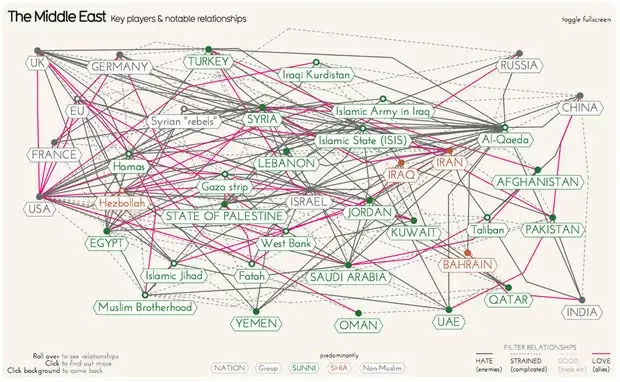
As the United States and Iran work to hold together a tenuous, newly reached ceasefire, active bombardment has not ceased across the Middle East – and this time, the violence is unfolding not in Iran or the U.S., but in Lebanon. Despite international calls for de-escalation and emerging diplomatic frameworks, Israel has continued its air strikes across Lebanese territory, with the global community remaining largely passive in the face of continued violation of emerging peace commitments. Parallel to this, Iran has oscillated between opening and closing the Strait of Hormuz, the world’s most critical chokepoint for global oil trade, in a move that underscores the tense balancing act between diplomatic outreach and strategic escalation in the region. While much of the global discourse focuses on geopolitical red lines drawn in military manoeuvres and diplomatic agreements, the actual defining line of this crisis is the daily suffering of ordinary civilians trapped in the crossfire.
分类: world
-

Vietnam and Cuba strengthen relations
On a diplomatic visit to Cuba this Sunday, Vietnam’s Foreign Minister Le Hoasi Trung, who also serves as a member of the Political Bureau of the Central Committee of the Communist Party of Vietnam, has delivered a clear message of unwavering solidarity: Vietnam will stand with Cuba, regardless of the prolonged economic siege imposed by the United States government.
Le’s trip to the Caribbean island included stops at two of the most prominent bilateral cooperation projects, the Mariel Special Development Zone (ZEDM) and a joint rice production initiative in Pinar del Río province, designed to assess ongoing progress and strengthen economic ties between the two longstanding partners.
The Vietnamese delegation’s first stop was ViMariel S.A., a fully foreign-owned Vietnamese firm that has operated in Cuba since 2019 and holds the sole 50-year concession for ZEDM’s industrial park development. Ana Teresa Igarza Martínez, General Director of the special development zone, noted that Vietnam already holds the title of the country with the second-largest business footprint within the enclave.
Le explained that the visit grew directly out of agreements reached by the party and state leaders of both nations in 2024, created to give officials a first-hand look at how Vietnamese enterprises are performing across multiple key sectors of Cuba’s economy. These sectors span from manufacturing, agri-food production, consumer goods including disposable diapers and detergents, and renewable energy development, to trade, finance and banking. With Cuba’s National Assembly having recently passed a suite of economic reforms aimed at revitalizing foreign investment and supporting existing businesses, Igarza emphasized that both sides must continue deepening collaborative work to capitalize on these new opportunities.
Reaffirming the fraternal bond between the two peoples, Le made clear that Vietnam’s commitment to Cuba remains unshaken by external pressure. “The Vietnamese people are driven by brotherhood, and we will never abandon Cuba despite the siege imposed by the United States government,” he stated. He also reiterated Vietnam’s commitment to expanding investment where it is most needed, creating new opportunities for Vietnamese entrepreneurs while supporting Cuba through its current challenging economic context.
Huona Nauyen, Office Head and Business Manager of ViMariel S.A., outlined the scope of the company’s work in ZEDM: the 50-year concession grants ViMariel the right to plan, invest in, construct, manage and operate industrial park infrastructure across nearly 300 hectares of land in the Artemisa province enclave, as the firm moves forward with its expansion plans.
After concluding his visit to ZEDM, Le and his delegation traveled to Pinar del Río to inspect the bilateral rice production project that has become a model of successful agricultural cooperation between the two nations. As of 2026, more than 900 hectares of land have already been planted this growing season, with yields exceeding initial expectations and planting work continuing. Le praised the high quality of Pinar del Río’s soils, noting that Vietnamese technical partners already achieved strong yields in 2025 on far less fertile land.
Yamilé Ramos Cordero, First Secretary of the Provincial Party Committee in Pinar del Río, told the visiting delegation that the province holds additional high-quality arable areas that could be incorporated into the joint project, saying local authorities are deeply interested in expanding the successful initiative. Alongside touring growing fields at multiple development stages, including plots already being harvested, Le visited the on-site industrial processing complex where the rice, destined for Cuban domestic consumption, is prepared. He commended the high quality of the finished grain produced through the partnership.
Even as the U.S. economic blockade continues to exert severe pressure on Cuba’s economy and disrupt cross-border projects, the rice initiative has kept moving forward, with local and Vietnamese partners finding workarounds for every challenge that has arisen, according to Telce González Morera, Cuba’s Deputy Minister of Agriculture. González Morera added that a smaller-scale similar project is already operating in Cuba’s Granma province, but the Pinar del Río initiative remains the most advanced and well-established, having operated for a longer period. “They had a successful campaign last year, and the current one is progressing well, with planting and harvesting yields above the national average, becoming more efficient every day, and forging stronger relationships with producers,” he noted.
The visit underscores the deep, longstanding historical and political ties between Vietnam and Cuba, and reaffirms both nations’ commitment to expanding mutually beneficial economic cooperation even amid external pressure.
-
Iran ceasefire deal confirms military might doesn’t work
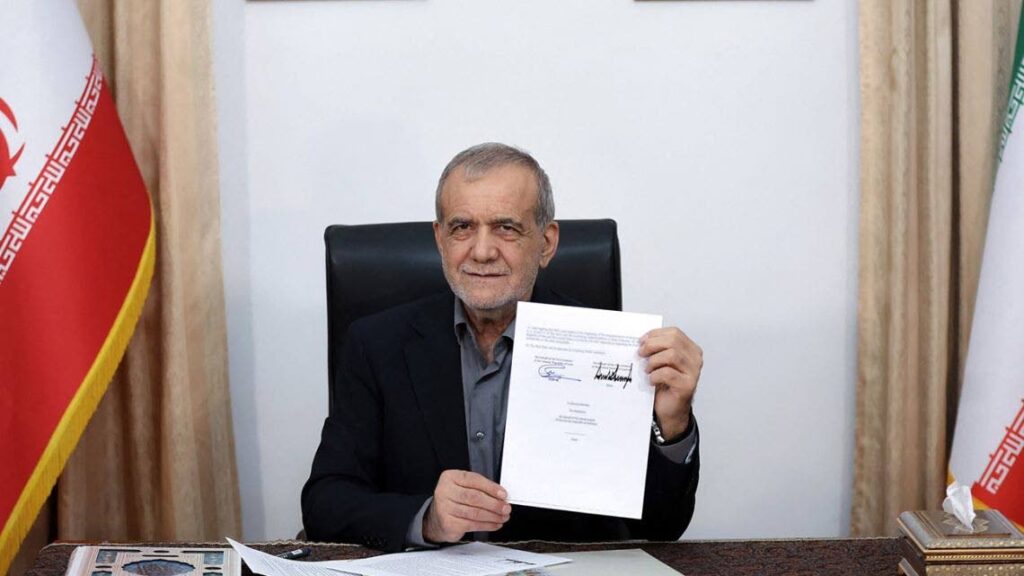
Four months after former US President Donald Trump and Israeli Prime Minister Benjamin Netanyahu launched a full-scale military campaign against Iran with sweeping maximalist goals, a 14-point preliminary memorandum of understanding (MoU) signed June 17 has formally ended the devastating conflict, leaving the core ambitions of the US-Israeli coalition in tatters and marking a defining turning point in Persian Gulf geopolitics.
At the outbreak of hostilities on February 28, the two leaders laid out unambiguous, far-reaching war aims: the total elimination of Iran’s nuclear and ballistic missile programs, the forced end of Tehran’s support for regional allied groups including Hezbollah, the Houthis and Hamas, and a complete regime change in Iran. Today, the text of the ceasefire agreement stands in stark contradiction to the bombastic, overconfident rhetoric that launched the war.
Few international analysts predicted the outcome now unfolding, notes Arshin Adib-Moghaddam, professor of global thought and comparative philosophies and co-director of the Centre for AI Futures at SOAS University of London, who authored this analysis. Adib-Moghaddam counts himself among the small group that foresaw this result: as early as 2012, he publicly warned that no military campaign could succeed in curbing Iran’s nuclear program, adding that US officials already knew this fact and had explicitly warned Israel of the same outcome.
In the opening weeks of the conflict, after waves of intense airstrikes targeted more than 900 locations across Iran, both Trump and Netanyahu repeatedly claimed the Islamic Republic’s military infrastructure had been irreparably broken. Trump repeatedly insisted victory was imminent, falsely asserting that Iran had “nothing left in a military sense.” He promised that US forces would “destroy their missiles and raze their missile industry to the ground” completely, and called on the Iranian public to rise up against their government, framing the conflict as a path to guaranteed regime change. Netanyahu echoed these claims, positioning the war as a once-in-a-generation opportunity to forcibly redraw the Middle East’s geopolitical landscape to suit Israeli and Western interests.
But on-the-ground developments and declassified intelligence quickly exposed these claims as baseless hubris. While Iran sustained heavy structural damage to infrastructure, the country retained its full strategic depth, adapted quickly by dispersing critical military equipment, and launched sustained retaliatory missile and drone strikes across the region against coalition assets. Far from collapsing the Iranian government, the external attack unified the population and strengthened the country’s state institutions, hardening public and elite resistance to foreign coercion.
The terms of the signed MoU make clear that Washington ultimately entered negotiations with Tehran as an equal sovereign power, not a victor dictating surrender terms to a defeated enemy. On three core pillars, the agreement directly reverses the original war aims of the US-Israeli coalition.
First, the framework legally binds the United States to respect Iran’s full territorial integrity and to abstain from any interference in Iran’s internal affairs. For an administration that spent months demanding regime change, this clause serves as a formal legal recognition of the Islamic Republic’s legitimacy and permanence, echoing the 1981 Algiers Accords, in which the US committed to non-intervention and the unfreezing of Iranian assets in exchange for the release of American hostages held after the 1979 revolution. Facing the reality of an intact, fully functional Iranian government, Trump dramatically reversed his rhetoric at the recent G7 summit, claiming “I never cared about regime change” and describing Iran’s negotiation team as “rational, strong, and smart.”
Second, the MoU requires the immediate lifting of the US naval blockade on Iran, the implementation of emergency US Treasury waivers to allow the full resumption of Iranian crude oil exports, the unfreezing of up to $100 billion in Iranian assets that had been restricted under US sanctions, and the creation of a $300 billion international reconstruction fund to support Iran’s post-war economic recovery. This outcome confirms what long-term analysis of Iranian resilience has repeatedly shown: economic blockades and pressure campaigns ultimately fail when paired with Iran’s asymmetrical regional deterrence capabilities. As Adib-Moghaddam argued as early as 2011 on Al Jazeera, sanctions, coercive diplomacy and even full-scale war cannot break Iran: Iranian society is deeply connected globally, and its state and economy are far more agile than Western policymakers have consistently assumed. Tehran’s long-stated threat to close the Strait of Hormuz, the world’s most critical energy chokepoint, also proved a far more potent deterrent than US and Israeli leaders were willing to acknowledge.
Most notably, the MoU is striking for what it omits entirely. There is no requirement for Iran to dismantle its ballistic missile program, and no clause mandating that Iran sever its ties to regional allied groups. The ceasefire also explicitly applies to “all fronts,” requiring an end to hostilities in Lebanon – a major concession that puts Netanyahu in a difficult position, as he has previously vowed to maintain an Israeli security zone in southern Lebanon.
For the global order, this agreement marks a profound structural shift in Middle Eastern politics. By launching a high-intensity military campaign and failing to achieve even one of their core stated goals – neither destroying Iran’s core military capabilities nor toppling its government – the US and Israel have inadvertently demonstrated the clear limits of Western military power in the region. No amount of propaganda from pro-war lobbying groups or opposition factions can alter this on-the-ground reality.
The world is rapidly shifting toward a more distributed non-polar order, one that has moved beyond the post-Cold War Western-dominated system. The US-Iran MoU will stand as a historic marker: a moment when the rhetoric of unchallenged superpower power gave way to the practical necessity of diplomatic negotiation and accommodation with a sovereign, resilient state. Adib-Moghaddam notes that this long-predicted shift is now a concrete reality, and hopes regional and global policymakers will finally learn the lessons of this ill-fated war.
-
Argentina assists more than 100 citizens affected by fire at Viva Wyndham Dominicus Beach
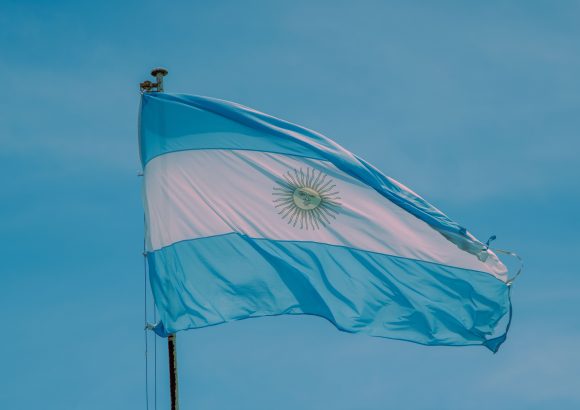
BUENOS AIRES – A devastating blaze that tore through a popular beach resort in the Dominican Republic has left one tourist dead and dozens of international travelers displaced, prompting Argentina’s government to launch emergency support for more than 100 of its citizens caught in the disaster. According to an official release from Argentina’s Foreign Ministry, the country has mobilized its consular network to assist affected Argentine nationals following the fire at the Viva Wyndham Dominicus Beach resort in Bayahibe.
The inferno ignited Friday at the coastal tourist spot, fueled by dry thatched roofs that covered multiple common areas of the property. The construction material allowed the flames to spread rapidly across sections of the resort before emergency crews could fully contain the blaze, which has since been fully extinguished. At the time the fire broke out, the resort was welcoming roughly 1,690 guests from across the globe, resulting in mass evacuation efforts to move visitors out of harm’s way.
Tragically, local authorities have confirmed one fatality linked to the incident: 45-year-old Italian tourist Francesca Valentino, who died from smoke inhalation caused by the blaze. For surviving guests, many lost all personal possessions and critical official documentation, including passports and identification cards, in the fire.
Argentine consular representatives have partnered directly with Dominican law enforcement and emergency agencies to streamline support for affected Argentine travelers. When required, the team is processing and issuing emergency travel documents to help citizens whose original identification was destroyed in the fire. Argentine officials have publicly extended gratitude to the Dominican government for its rapid response to the emergency and its continued cross-border collaboration to support impacted international visitors.
Evacuated guests have been moved to alternate lodging across the region to ensure they have safe shelter for the remainder of their trips. Many have been relocated to the adjacent Viva Wyndham Dominicus Palace resort, while other displaced visitors have been placed in available hotel rooms across Bayahibe and the nearby coastal town of Miches. Recovery and cleanup operations remain ongoing at the fire-damaged property as authorities continue their preliminary investigation into the exact cause of the blaze.
-
Twee gezochte Brazilianen na internationale samenwerking uitgezet uit Suriname
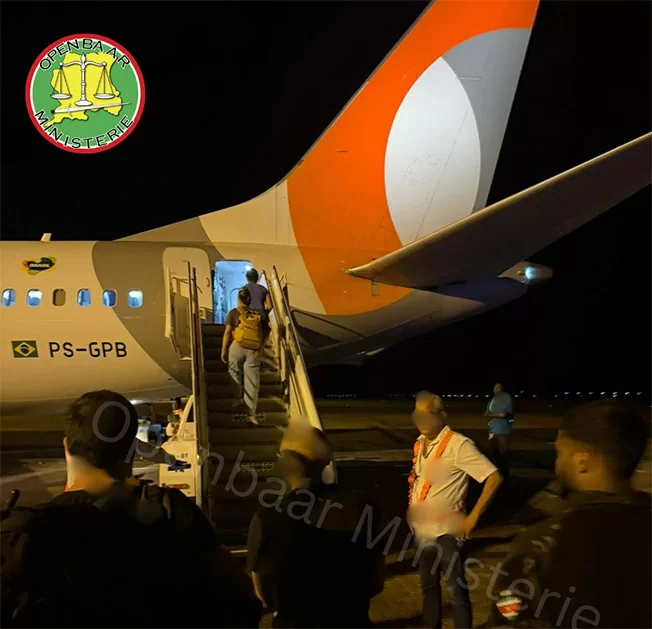
In a landmark demonstration of cross-border law enforcement cooperation, two Brazilian suspects tied to the notorious Brazilian criminal organization Comando Vermelho (Red Command) have been located, expelled from Suriname, and immediately arrested upon their return to Brazil, authorities confirmed on June 21.
The joint operation kicked off after Brazil’s Federal Police notified Suriname’s security agencies that the two high-profile fugitives were hiding within Suriname’s borders. Following a coordinated information exchange between the two countries’ law enforcement bodies, Suriname’s Directorate of National Security (DNV) and Justice Intervention Team (JIT) successfully tracked down the pair. Suriname authorities then formally deported the suspects back to Brazil, where Brazil’s Federal Police took them into custody moments after their plane landed.
The two men are facing a raft of serious criminal charges in Brazil, including involvement in international drug trafficking, illegal firearms trafficking, money laundering, and membership in a designated organized criminal group. This coordinated deportation and arrest is part of Brazil’s ongoing Operation Red Fox, a major investigation targeting a transnational criminal network focused on cross-border illegal activity. According to Brazilian investigative authorities, the suspects were core members of a network dedicated to moving and concealing illicit proceeds from a range of criminal enterprises. The laundered funds were then used to purchase illegal firearms, ammunition, and narcotics to fuel further criminal activity across borders.
Investigative records show that between 2020 and 2025, more than 153 million Brazilian reals flowed through bank accounts controlled by one of the suspects. Investigators have confirmed that this sum is wildly disproportionate to any documented legal income the suspect has reported, strongly indicating the funds are the proceeds of organized crime.
Suriname’s Public Prosecutor’s Office has reaffirmed the country’s unwavering commitment to rooting out and combating transnational organized crime. “Suriname will never be a safe haven for international criminals or criminal organizations,” the office stated in an official release, underscoring the country’s dedication to regional security cooperation.
-

MSF suspends operations at the Isaïe Jeanty maternity hospital in Haiti
A deepening humanitarian crisis is unfolding in Haiti’s most densely populated urban neighborhood after international medical aid organization Doctors Without Borders (Médecins Sans Frontières, MSF) announced the full suspension of life-saving services at the Isaïe Jeanty Maternity Hospital, a key healthcare facility serving the Cité Soleil area of Port-au-Prince. The shutdown, which took effect on the morning of June 19, comes after more than a week of escalating violent clashes between rival armed groups that have turned the surrounding district into a combat zone.
Tensions began to spike on the night of June 13-14, when open fighting erupted across three adjacent neighborhoods: Belekou, Fort-Dimanche, and Quai Jérémie. The violence quickly spilled over into the Chancerelles neighborhood, where the MSF-supported maternity hospital is located. Stray gunfire has repeatedly struck the hospital’s outer walls, sending waves of panic through the local population and forcing hundreds of residents to flee their homes in search of safety. By the evening of June 15, more than 100 displaced people, the majority women and children who escaped the fighting, had taken shelter within the hospital compound, where MSF teams were able to provide them with clean drinking water. One of those displaced was a woman who suffered a leg wound from a stray bullet while on hospital grounds; MSF medics provided immediate on-site treatment, while additional casualties from the clashes were treated at MSF’s separate medical facility in the Tabarre district of the capital.
Local authorities were the first to suspend their operations at the site on the morning of June 16, after fighting intensified further. MSF teams remained on location for three additional days, working with reduced staffing to deliver emergency care, stabilize injured and pregnant patients, and arrange transfers to other functioning medical facilities across Port-au-Prince. As the security situation continued to deteriorate, however, MSF made the difficult decision to evacuate all remaining staff and shut down all hospital activities permanently for the time being.
Speaking on the suspension, Nicolas Tessier, MSF’s Head of Mission in Haiti, described the impossible conditions medical teams had been working under. “We have tried to provide a minimum level of lifesaving support to people with a reduced team and limited capacity,” Tessier explained. “We treated several women who managed to reach the maternity hospital despite the insecurity, including one who gave birth to twins. But today we can no longer continue: the hospital is riddled with bullet holes, our teams are exhausted, and it has become extremely difficult for ambulances to refer patients and find facilities able to receive them.”
The shutdown of the facility has pushed an already catastrophic healthcare situation in Cité Soleil over the edge. The neighborhood is home to roughly 300,000 residents, and even before the latest wave of violence, access to comprehensive sexual and reproductive healthcare was already extremely limited across the area. Thousands of pregnant women had already been forced to deliver babies at home in unsafe, unsanitary conditions, dramatically raising their risk of life-threatening obstetric complications. With the Isaïe Jeanty hospital now closed, access to such care has become virtually non-existent, leaving local women with almost no viable options to get safe medical treatment.
This is not the first time MSF has been forced to halt services in the area due to gang violence. Back in May, the organization suspended operations at its general hospital in Cité Soleil, located just a few kilometers from the maternity facility. As gang-related violence continues to spread and security conditions worsen across the region, the entire local healthcare system is now at risk of total collapse. MSF has issued an urgent call for armed groups to respect international humanitarian law, protect civilian lives and infrastructure, and allow medical teams unimpeded access to treat people in desperate need of care.
-

Puerto Plata Dominican Republic Navy assists 4 people of different nationalities in Atlantic waters
In a coordinated early-morning rescue operation on Saturday, June 20, the Dominican Republic Navy safely extracted four stranded mariners from disabled recreational watercraft off the country’s northern Caribbean coast, following an urgent distress alert relayed by an international commercial cargo ship. The group of travelers, holding citizenship from the United States, the Bahamas, and the Dominican Republic, had set out from the Turks and Caicos Islands bound for Ocean World, a popular marine attraction in Puerto Plata, traveling aboard one small recreational boat and three personal jet skis before their vessels developed critical navigation issues that left them adrift in open water.
After the recreational craft lost propulsion and became stranded, the crew of the Liberian-flagged merchant tanker STOLT ACER first located the group at their reported geographic coordinates, then issued an urgent request for additional assistance to Dominican maritime authorities. Promptly activating established international maritime search-and-rescue protocols, Dominican naval command dispatched surface vessels to the distress site to complete the transfer of the four stranded travelers from the merchant ship to Navy rescue craft.
Naval personnel safely brought all four survivors ashore at the Ocean World facility in Puerto Plata, where they were immediately transferred to the Dominican National Emergency and Security System 9-1-1 for routine preventive medical check-ups. None of the rescued travelers reported serious injuries following the incident.
Following the successful operation, Dominican Navy leadership highlighted that the mission underscores the service’s ongoing commitment to protecting human life in maritime areas under the country’s jurisdiction, maintaining constant surveillance of territorial waters, and upholding global maritime safety standards for all seafarers, regardless of nationality or vessel type.
-
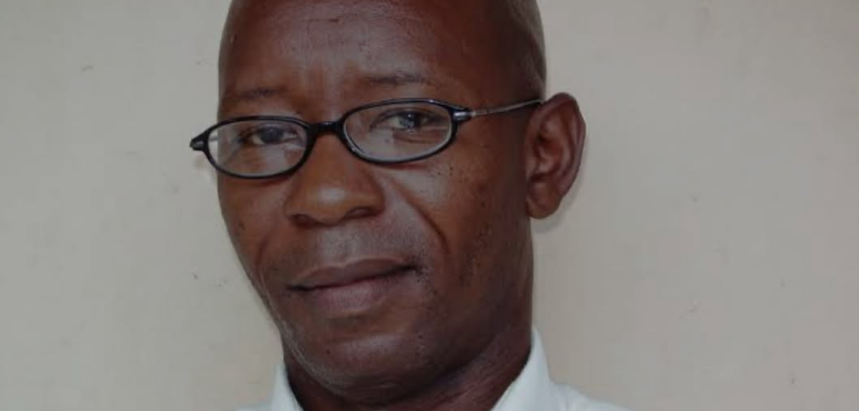
Leading Cuba dissident denounces ‘violence’ during detention
HAVANA, Cuba – As Cuba grapples with its most severe economic downturn in modern history, a prominent opposition activist has emerged as the focal point of escalating tensions between government security forces and pro-democracy organizers, ahead of the fifth anniversary of the island nation’s largest post-revolutionary public uprising.
Manuel Cuesta Morua, who leads the Council for the Democratic Transition in Cuba (CDTC), a group pushing for democratic governance reforms, confirmed to international reporters that he was held by state security agents for multiple hours Saturday. In an interview, he said the incident marked the first time he faced “substantial violence” at the hands of authorities in several years, a shift he linked to growing anxiety within the government over potential new unrest.
Cuba’s current economic crisis has been deepened by two major external pressures: a five-month-old United States oil embargo and a broad suite of US economic sanctions that have prompted most foreign investors to exit the country. The fallout has been acute for ordinary Cubans, who now face widespread shortages of basic necessities including fuel, food potable water and prescription medication. Skyrocketing inflation has pushed consumer prices to unaffordable levels for many households, while extended power outages – some lasting as long as 40 hours in some regions – have amplified public frustration with the communist-led government.
Unlike many of his previous detentions that took place at official police facilities, Cuesta Morua was taken to an isolated, undeveloped area outside Havana, according to a statement from the CDTC. The organization said the activist was subjected to death threats and deliberate physical attacks during his detainment, with the entire encounter marked by what observers describe as unusual nervousness from the security agents involved. He was specifically accused of organizing and encouraging citizens to join public demonstrations on July 11, the anniversary of the 2021 anti-government protests that shook the Cuban administration.
The 2021 protests were an unprecedented moment of mass public discontent in the decades following Fidel Castro’s 1959 revolution, sparked by widespread anger over the collapsing economy and widespread scarcity. The government’s crackdown on the uprising left one protester dead, dozens injured, and hundreds of activists and participants arrested. While authorities have released a number of political detainees over the past year amid ongoing US diplomatic pressure, dozens more remain imprisoned on politically motivated charges.
In recent months, small scattered acts of public dissent have already begun to emerge across the island. With fuel shortages leaving garbage trucks unable to collect waste, many neighborhoods have seen uncollected trash pile up, and residents have held informal nighttime protests where they bang pots in protest or set fire to accumulated waste.
Against this backdrop of rising tension, the Cuban government has moved to implement sweeping policy changes aimed at pulling the country out of crisis and easing international pressure. On Thursday, Cuban lawmakers approved a broad package of free-market reforms designed to expand the role of the private sector and incentivize foreign investors to return to the island. The reforms mark a significant shift in the country’s economic model, as the administration seeks to address the systemic gaps that have fueled public anger in recent years. Still, security forces remain on high alert, bracing for potential mass unrest on the protest anniversary amid widespread public anger over ongoing hardship.
-
Russia strikes St. Kitts and Nevis-registered vessel in Black Sea, injuring 3 crew members – WIC News
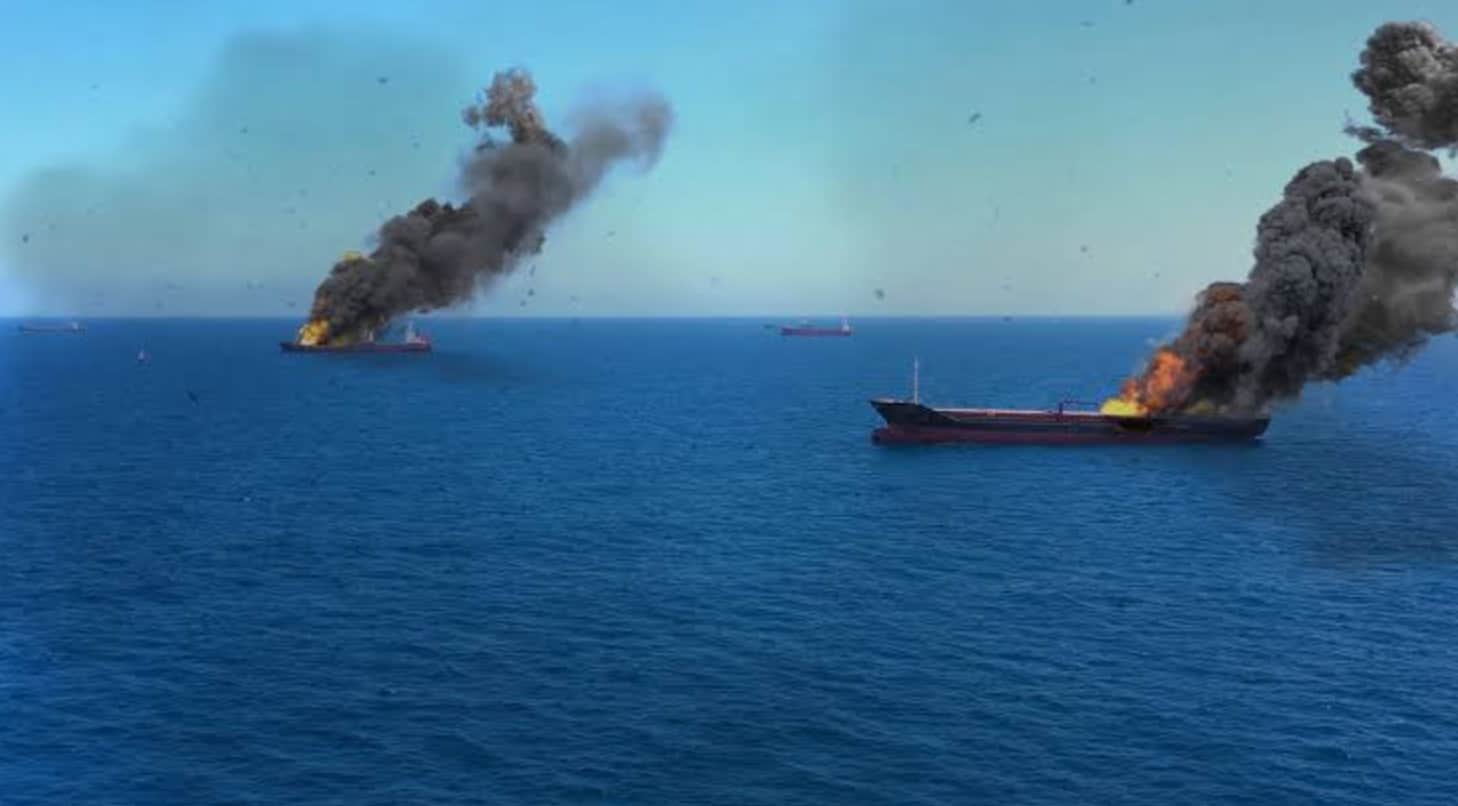
In the latest escalation of targeted attacks against civilian maritime traffic in Ukraine’s Black Sea corridor, Russian drones struck two foreign-flagged cargo ships on June 19, leaving one crew member dead and five others injured, Ukrainian officials confirmed. The attack has renewed international alarm over Moscow’s campaign to disrupt global grain trade and undermine freedom of navigation in the key waterway.
One of the targeted vessels was registered in Panama, and the other flies the flag of St. Kitts and Nevis. According to Oleksii Kuleba, Ukraine’s Deputy Prime Minister for Restoration and Minister for Development of Communities and Territories, the attack on the Panamanian-registered ship killed one crew member and wounded two more. The St. Kitts and Nevis-flagged vessel also sustained direct damage from the strike, leaving three of its crew members injured. Both ships were en route to a port in the Greater Odesa region to load grain for export when the drone attack occurred, per official details released by Ukrainian authorities.
The strike ignited an onboard fire and knocked out critical navigation systems on the attacked vessels, though neither ship sank. Emergency response teams dispatched a patrol vessel to assist the damaged craft, and both have since resumed their voyages. Oleh Kiper, head of the Odesa Oblast Military Administration, emphasized that the incident is part of a broader, sustained Russian offensive against civilian shipping operating near Ukraine’s internationally recognized Black Sea maritime corridor.
“This attack underscores the ongoing threat Russia poses to civilian shipping, legitimate international trade, freedom of navigation, and global food security,” Kiper stated, adding that port operations in the region have continued under heightened security protocols following the strike.
For Kuleba, the June 19 attack is fresh evidence that Moscow is deliberately targeting critical infrastructure that supports global food supplies. “This is yet another proof that Russia is waging a war against freedom of navigation, international trade, and global food security,” Kuleba told Ukrainian state news agency Ukrinform. He called on the international community to formally classify these targeted attacks on civilian merchant vessels, crews and humanitarian export infrastructure as acts of terrorism, noting that the world cannot normalize the targeting of innocent civilian sailors by Russian forces.
“Civilian crews, merchant ships, and the maritime infrastructure that supports humanitarian and export routes are under the sights. But such crimes should receive a clear international assessment – terrorism. The world cannot get used to civilian sailors becoming targets for Russian weapons,” Kuleba added.
This latest incident fits a clear pattern of repeated Russian attacks on civilian maritime routes in the Black Sea, stretching back months. Since the outbreak of full-scale war in Ukraine, commercial vessels, grain shipments and port infrastructure in the region have faced consistent targeting. Just last month, Russian forces carried out multiple similar attacks: on May 18, a Russian Shahed drone struck a Chinese-flagged vessel in the corridor, just days before Russian President Vladimir Putin’s scheduled visit to Beijing. Eleven days later, on May 29, Russian drones hit three additional foreign-flagged ships in the same waterway. On June 8, a Russian attack on two Maritime Search and Rescue Service boats on a humanitarian mission left multiple casualties.
The targeting of a St. Kitts and Nevis-registered vessel has sparked particular concern for the small Caribbean nation, whose open ship registry hosts thousands of internationally operating commercial vessels that sail across global trade routes.
-

OAS : Accelerate efforts for security and stability in Haiti
Diplomatic talks between senior Haitian government officials and representatives of the Organization of American States have wrapped up this week with a shared commitment to speed up efforts to bring long-term security and stability back to the crisis-battered Caribbean nation. The meeting, held at Haiti’s Ministry of Foreign Affairs, was hosted by Haitian Foreign Minister Raina Forbin, who received Alberto Fohrig, the OAS Special Representative to Haiti. Fohrig was joined on the visit by Catherine Pognat, the OAS Country Representative for Haiti.
During the discussion, Minister Forbin outlined the core priority actions advanced by Prime Minister Fils-Aimé’s transitional administration. These priorities center on three critical goals: reversing widespread insecurity, rebuilding weakened state institutions, and preparing to hold national elections that meet international standards of being free, inclusive, transparent and credible. Beyond institutional and electoral priorities, Forbin also stressed the non-negotiable importance of three additional priorities: supporting the reintegration of vulnerable youth into Haitian society, addressing the deepening national humanitarian crisis, and fully restoring constitutional order to the country.
A major focal point of the talks was advancing the implementation of the OAS’s pre-existing strategic roadmap for Haiti. Forbin pushed for the formalization of a clear, binding implementation timeline for the roadmap, while reaffirming Haitian authorities’ long-standing commitment to ongoing collaboration with the hemispheric organization. She emphasized that the ultimate goal of this partnership is to turn agreed-upon policy commitments into tangible, measurable outcomes that directly improve the lives of ordinary Haitian citizens. Both sides left the meeting aligned on the urgent need to speed up all ongoing work to restore lasting security and stability across Haiti.
Representatives from the OAS welcomed the concrete progress the Haitian government has already made on its core priorities, and reiterated that the organization stands ready to continue supporting Haitian efforts across three key areas: security sector strengthening, democratic governance building, and the development of a functional electoral process.
The meeting also created space to explore the critical role that religious leaders and grassroots civil society organizations can play in advancing peace, encouraging civic responsibility, and mending fractured social cohesion across Haiti. Forbin shared detailed outcomes from the recently concluded National Conference of Religious Leaders for Peace, Stability, and Civic Responsibility, alongside outlining the next steps for the ongoing initiative.
In closing, Forbin praised the OAS for its unwavering commitment to Haiti amid the country’s ongoing challenges, and reaffirmed the Haitian government’s dedication to maintaining close, productive cooperation with all of its international partners as it works to pull the nation out of crisis.