分类: world

  • Mohameds hire Florida lawyer, objects to US Ambassador’s comments on case

    Mohameds hire Florida lawyer, objects to US Ambassador’s comments on case

    A high-stakes extradition battle centered on two Guyanese billionaire businessmen has taken a new turn this week, as the pair accused of multiple financial crimes by U.S. prosecutors have retained a prominent Florida-based international lawyer to defend their interests.

    Nazar “Shell” Mohamed and his son Azruddin Mohamed have been fighting U.S. extradition since an 11-count indictment charging them with wire fraud, mail fraud, and money laundering was unsealed in October 2025. This week marked the first confirmation that the pair has brought on a U.S.-based legal representative: Peter A. Quinter, an international law specialist and shareholder at the prominent Florida firm Gunster.

    For months, the Mohameds have focused their efforts on opposing extradition in Guyanese courts, with Azruddin Mohamed confirming to Demerara Waves Online News back in March 2026 that the legal team would not address the U.S. indictment until domestic proceedings are resolved. “We want to get this case here sorted out first and then we’ll think about that one over there,” he told the outlet at the time, adding that negotiations over U.S. legal representation had been ongoing for weeks.

    As of Wednesday, Quinter had not yet entered an official appearance in the U.S. court system for the case, but he has already moved to push back against recent public comments from U.S. Ambassador to Guyana Nicole Theriot. In a formal letter dated April 17, 2026, Quinter objected to remarks Theriot made during a recent interview on the SOURCES platform, arguing that a sitting U.S. ambassador should not comment on or attempt to influence active judicial proceedings in a host country.

    Last month, Theriot publicly defended the U.S. government’s extradition request, saying the decision to pursue the Mohameds was rooted in solid, irrefutable evidence. “We do it because we have hard, unequivocal evidence against a person. Why would we take on a case we don’t think we’re going to win? That’s just a waste of the US taxpayers’ money. So we firmly believe that they’re guilty of the crimes that they’re being indicted for,” she stated.

    Quinter countered that Theriot’s public declaration of the pair’s guilt violates both the Vienna Convention on Diplomatic Relations and the United Nations Universal Declaration on Human Rights. He reminded the ambassador that the Vienna Convention requires diplomatic mission heads to respect the domestic laws and judicial processes of their host country, noting that the extradition challenge is currently active before Guyana’s courts.

    The attorney also emphasized that the Mohameds, along with their company Mohamed’s Enterprise and all linked personnel facing prosecution in Guyana, are guaranteed the right to a fair trial under international human rights law. He specifically cited Article 7 of the Universal Declaration, which enshrines equality before the law and equal protection for all, and Article 10, which guarantees every person the right to a full, fair public hearing before an independent, impartial tribunal when facing criminal charges.

  • Russia Launches Massive Drone and Missile Strike on Ukraine, Killing 18

    Russia Launches Massive Drone and Missile Strike on Ukraine, Killing 18

    Just days after a limited 32-hour Orthodox Easter ceasefire initiated by Moscow, Russia has unleashed one of the most extensive combined drone and missile assaults on Ukrainian territory in 2026, leaving at least 18 people dead — including one child — and wounding more than 100 others across multiple regions, Ukrainian national and local authorities confirmed to CNN on Thursday.

    According to reports from Ukraine’s State Emergency Service and local administrative bodies, the 118 recorded injuries came as Russian projectiles destroyed and damaged dozens of civilian residential buildings, igniting large blazes in communities across the country. The Ukrainian Air Force documented that over the 24-hour period ending early Thursday morning, Russian forces launched a staggering 659 unmanned aerial drones alongside 44 conventional and ballistic missiles. The assault was carried out in sequential waves, with strikes hitting major Ukrainian population centers including the capital Kyiv, Kharkiv in the northeast, the southern Black Sea port of Odesit, central Dnipro, and southeastern Zaporizhzhia.

    Ukrainian Foreign Minister Andrii Sybiha characterized the large-scale attack as a deliberate act of terrorism against civilian populations. He noted that the assault deployed nearly 700 aerial assets alongside dozens of ballistic and cruise missiles, with civilian infrastructure and residential areas serving as the primary targets, in an official post published to the social platform X. Sybiha also classified the attack as a clear war crime, stressing that all individuals responsible for planning and carrying out the assault must be held legally accountable for their actions.

    In Kyiv, the assault claimed four lives, among them a 12-year-old boy whose remains were recovered from the rubble of a fully collapsed residential building. The State Emergency Service recorded at least 48 injuries in the capital alone. A chief executive of a local Kyiv construction firm confirmed that one strike detonated within close proximity of an under-construction residential complex, wounding six on-site workers, two of whom remain in critical condition and were undergoing emergency surgery as of Thursday.

    Regional casualty reports confirm three fatalities and 34 injuries in the central Ukrainian city of Dnipro, while at least one civilian was killed in the southeastern Zaporizhzhia region. Ukrainian President Volodymyr Zelensky issued a formal condemnation of the attack in the hours after the barrage, accusing the Kremlin of doubling down on its commitment to full-scale war. He emphasized that the unprovoked overnight assault on civilian targets proves Moscow does not qualify for any easing of the international sanctions imposed over its full-scale invasion of Ukraine, and confirmed reports of fatalities in Odesa, Kyiv and Dnipro.

    The attack marks a rapid end to the temporary ceasefire that Putin announced ahead of Orthodox Easter, a 32-hour pause in hostilities that came in response to an earlier proposal for a holiday ceasefire put forward by Zelensky.

  • CDB approves US$346,000 grant to strengthen CDEMA disaster response capabilities

    CDB approves US$346,000 grant to strengthen CDEMA disaster response capabilities

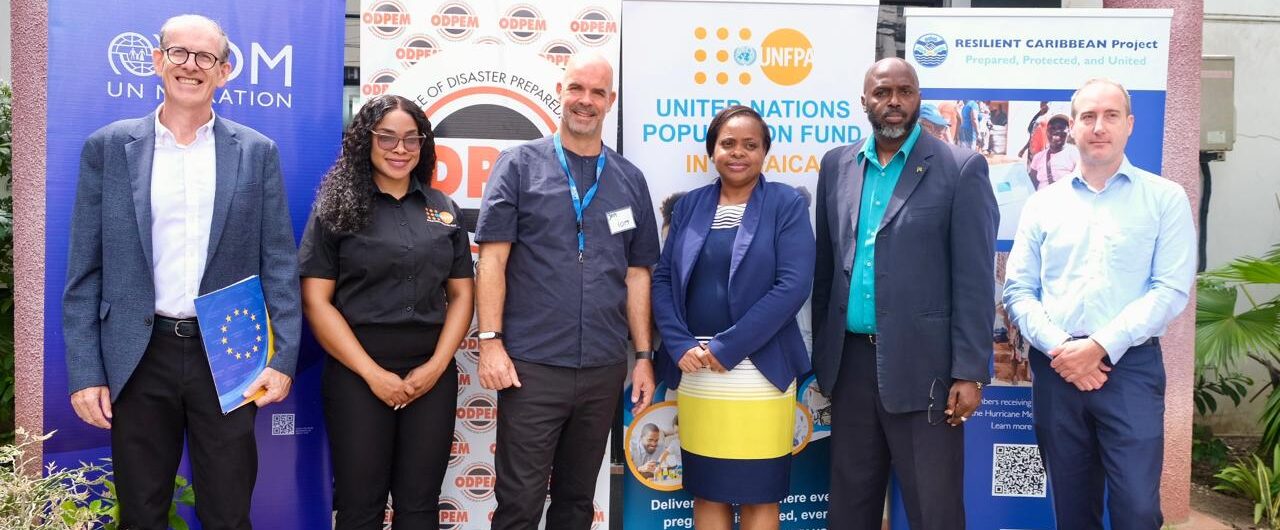
    BRIDGETOWN, Barbados — As climate change amplifies the frequency and intensity of extreme weather events across the Caribbean’s vulnerable island nations, the Caribbean Development Bank (CDB) has greenlit a $346,000 technical assistance grant to the region’s leading disaster coordination body, the Caribbean Disaster Emergency Management Agency (CDEMA). The funding will underwrite a full institutional assessment designed to boost CDEMA’s capacity to support Caribbean countries at every stage of disaster management, from pre-event preparedness through post-disaster recovery.

    As the specialized disaster risk management agency of the Caribbean Community (Caricom), CDEMA coordinates cross-regional responses to climate and natural disasters that often impact multiple small island nations simultaneously. With the new grant, the agency will bring on board independent specialist consultants to conduct a deep-dive review of its current organizational structure, internal operating systems, and staffing framework. The review process will deliver actionable, practical recommendations to streamline CDEMA’s operations, improve long-term organizational sustainability, and adapt the agency to the rapidly growing climate and disaster risk landscape shaping the region. Key findings from the assessment will guide future institutional reforms and strengthen CDEMA’s ability to unify regional response efforts.

    CDB Projects Director O’Reilly Lewis emphasized the urgency of the investment in a press statement released Friday. “Climate change is driving more intense natural hazards across the Caribbean, and that reality places growing demands on regional disaster management systems,” Lewis explained. “CDEMA is integral to how countries prepare for and respond to emergencies, and this technical assistance will help ensure the agency has the right structure, skills and systems to deliver on its mandate today and into the future.”

    The grant is disbursed through the Caribbean Action for Resilience Enhancement (CARE) Programme, which receives core funding from the European Union under the Intra-African Caribbean Pacific European Union Natural Disaster Risk Reduction Programme. Fiona Ramsey, European Union Ambassador to Barbados, the Eastern Caribbean States and the Organisation of Eastern Caribbean States (OECS), reaffirmed the bloc’s commitment to Caribbean climate resilience.

    “The European Union is proud to support the Caribbean Disaster Emergency Management Agency in this important effort to strengthen regional disaster risk management,” Ramsey said. “As climate-related challenges intensify, enhancing CDEMA’s institutional capacity is essential to safeguarding lives, livelihoods and sustainable development across the Caribbean.”

    Ramsey added that the initiative aligns with the renewed partnership priorities between the Caribbean bloc and the EU, agreed during talks between former Caricom Chair and Barbados Prime Minister Mia Mottley and European Commission President Ursula von der Leyen. “This initiative reflects the European Union’s enduring commitment to its partnership with the Caribbean… Together, we are advancing a shared vision of resilience through a reliable partnership,” she noted.

    The upcoming consultancy will cover three core components: a full organizational audit, a skills and competency gap analysis to pinpoint unmet critical needs, and the development of a detailed actionable reform plan, including proposals for an updated organizational structure. In a nod to inclusive institutional development, the review will also assess existing human resource policies through a gender equality lens, resulting in a formal gender policy and operational strategy that covers all stages of employment, from hiring and retention to promotion and compensation.

    CDEMA Executive Director Elizabeth Riley called the assessment a transformative milestone in the agency’s ongoing development. “Under Strategic Objective 4 of our 2022–2027 Strategic Plan, we are committed to transforming CDEMA into a stronger, more agile and technically driven organisation, equipped with the skills and systems required to meet the growing complexity of disaster risk management in the Caribbean,” Riley said.

    She emphasized that the partnership with the EU and CDB represents a turning point for the agency: “We are proud to partner with the European Union and the Caribbean Development Bank on this game-changing initiative, which will modernise our organisational structure and enhance our capacity to serve Participating States with excellence, innovation, and impact.”

    This institutional assessment marks the opening phase of a broader multi-partner reform agenda designed to secure CDEMA’s long-term operational and financial stability. Its outcomes will also inform parallel efforts led by the World Bank to establish a Multi-Source Trust Fund that will provide predictable, long-term financing for the agency. Combined, these initiatives will strengthen CDEMA’s ability to deliver on its full disaster management mandate across all four core domains: mitigation, preparedness, response, and recovery.

    Implementation of the EU-funded, CDB-administered technical assistance project is scheduled to launch in May 2026. The initiative is fully aligned with CDB’s newly adopted 10-Year Strategic Plan for 2026–2035, which identifies strengthening regional institutional capacity as a critical catalyst for building climate resilience, accelerating inclusive economic growth, and advancing sustainable development across the Caribbean region.

  • Haiti, Dominican Republic to reopen direct air links in May

    Haiti, Dominican Republic to reopen direct air links in May

    In a significant step toward mending cross-border ties, the neighboring Caribbean nations of Haiti and the Dominican Republic have jointly announced that direct air travel between the two countries will resume in May. This development comes more than two years after the Dominican Republic shut down its airspace to flights originating from Haiti, a decision driven by rapidly worsening gang violence across the border.

    The two countries, which share the island of Hispaniola, laid out their shared vision for the resumption in an official joint statement released Friday. They emphasized that restoring direct air connections will act as a catalyst to revitalize bilateral economic cooperation and strengthen overall diplomatic relations between the two neighbors.

    Haiti, long recognized as the poorest nation in the Western Hemisphere, has grappled with a catastrophic, years-long security crisis that has paralyzed much of the country. Armed gangs currently exert control over the vast majority of Port-au-Prince, Haiti’s capital, where regular reports of horrific violence including targeted murders, sexual assault, and high-profile kidnappings have become a grim daily reality. The widespread instability prompted Dominican authorities to close their airspace to all passenger and cargo flights departing from Haiti in March 2022 (correcting the original timeline reference error in input), a move that deepened existing tensions between the two states.
    Relations between Haiti and the Dominican Republic have remained strained for years, even beyond the airspace closure. Currently, Dominican authorities are in the process of constructing a 174-kilometer (108-mile) reinforced concrete barrier along the countries’ shared 380-kilometer (236-mile) border, a project designed to curb irregular migration and cross-border criminal activity that has further complicated bilateral ties.

  • Nevis Participates in High-level Geothermal Dialogue Ahead of Global Sustainable Islands Summit 2026

    Nevis Participates in High-level Geothermal Dialogue Ahead of Global Sustainable Islands Summit 2026

    As the 2026 Global Sustainable Islands Summit (GSIS) approaches, a three-member delegation from St. Kitts and Nevis, including Naftalie Errar, Project Coordinator at the Nevis Electricity Company (NEVLEC) and lead for Nevis’ transformative Geothermal Energy Project, is participating in a high-level regional geothermal study tour across Portugal. The trip, organized under the European Union’s landmark Global Gateway initiative, has sparked growing international attention on Nevis’ emerging potential to become a trailblazer for geothermal power across the Caribbean.

    The study visit kicked off in Lisbon with opening strategic discussions headlined by Portugal’s Secretary of State for Energy, Jean Barroca, bringing together senior energy officials from across the Caribbean. Participating island nations include Dominica, Grenada, St. Lucia, Saba, St. Vincent and the Grenadines, alongside St. Kitts and Nevis. Key regional governing bodies — the Organisation of Eastern Caribbean States (OECS), the Caribbean Centre for Renewable Energy and Energy Efficiency (CCREEE), and the Caribbean Electric Utility Services Corporation (CARILEC) — are also represented at the event, underscoring the widespread regional commitment to advancing accessible, scalable clean energy solutions for small island states.

    After wrapping up initial talks in Lisbon, the full delegation will travel to the Azores archipelago, stopping at the islands of São Miguel and Terceira for on-site engagement with local geothermal plant operators and energy institutions. These hands-on sessions are designed to give Caribbean stakeholders firsthand insight into proven geothermal operations, covering critical topics from grid integration strategies and sustainable resource management to innovative financing structures and risk mitigation frameworks.

    For Nevis, the lessons from the Azores hold particularly high stakes. Like most small Eastern Caribbean island nations, Nevis grapples with a constrained national power grid, some of the highest electricity costs in the world, and acute vulnerability to global energy market shocks. The Azores, a Portuguese island archipelago that has successfully integrated geothermal energy into its local energy system, offers a tested, economically viable model that aligns directly with Nevis’ unique geographic and energy challenges.

    Insights gained from the study tour will directly shape Nevis’ ongoing work to move its geothermal project from the development phase into full-scale commercial power generation. For the island, the project is far more than an energy infrastructure investment: it represents a cornerstone for long-term energy independence, downward pressure on household electricity costs, and strengthened overall economic resilience.

    The Portugal study visit will culminate at the GSIS 2026, set to take place April 20–22 in Gran Canaria, Spain, where delegation members will join a high-profile EU-Caribbean roundtable focused on expanding energy and infrastructure partnerships. The roundtable will create critical connections between Caribbean energy decision-makers and European public and private sector stakeholders, opening doors to new financing opportunities, tested policy frameworks, and targeted implementation support for regional geothermal projects.

    As global momentum accelerates around equitable sustainable development for small island states, Nevis has emerged as an active, forward-thinking leader through its geothermal ambitions and consistent participation in high-level international climate forums. Beyond the tangible benefits for Nevis residents, the island’s geothermal project has the potential to serve as a replicable blueprint for renewable baseload power across the Caribbean. If successful, it could also lay the groundwork for expanded cross-island energy collaboration, including the future export of surplus clean power to neighboring island nations.

  • Essed heeft tekst gereed voor eerherstel en excuses aan 8-decemberslachtoffers

    Essed heeft tekst gereed voor eerherstel en excuses aan 8-decemberslachtoffers

    On April 16, attorney Hugo Essed, who represents the relatives of victims of Suriname’s 8 December Murders, laid out the full terms of a landmark legal claim filed against the Surinamese state, in an interview with local outlet StarNieuws. The claim explicitly codifies the terms of state rehabilitation and formal apologies that the victims’ families have long demanded, including the exact wording of the required public statement and the media outlets through which it must be published.

    At the core of the demand is a formal state acknowledgment that the executed victims were wrongfully accused, never participated in any alleged countercoup, and were entirely innocent of any wrongdoing that justified being stripped of their lives, Essed explained. He noted that the specific identity of the state representative delivering the apology is not a critical sticking point for the families — as long as the apology comes from an official representative of the Surinamese government. As a precedent, he pointed to the 2006 formal apology delivered to relatives of victims of the Moiwana massacre by the late former president Ronald Venetiaan.

    Essed rejected speculation that the timing of the claim’s public emergence was deliberately coordinated to coincide with the current ruling National Democratic Party (NDP) administration, dismissing the idea as unfounded speculation. He explained that the timeline was not politically manipulated: legal preparations for the civil claim could only begin after the Surinamese Court of Justice concluded the final phase of criminal proceedings in the case with a conviction in 2023. Compiling the required documentation and coordinating with the victims’ families, who are scattered across multiple different countries, required extensive time and work, pushing the claim’s filing to late 2025. The claim was formally submitted to the court all the way back in December 2025, but Essed criticized the slow pace of Suriname’s judicial processing for the delay in public updates. He also emphasized that all substantive legal arguments in the case will be presented exclusively to the court, rather than tried through public media engagement.

    The attorney also addressed public criticism of the size of the compensation demand outlined in the claim. The filing requests €500,000 in tangible damages and €750,000 in intangible damages per affected family, as well as 250,000 Surinamese dollars per family to cover legal and court fees. It also includes a demand for a daily penalty of 500,000 Surinamese dollars per family for every day the state fails to comply with any eventual court ruling in the case. Essed pushed back against claims that the compensation figure is excessive, arguing that when you calculate the full lifetime income the victims’ families have lost over the decades since the murders, the requested amount may actually be lower than the full calculated loss. Most importantly, he noted, the intangible harm of losing a loved one in an extrajudicial killing can never be fully quantified in financial terms. While the final ruling on the claim rests entirely with the court, Essed said the core priority for the families is not the compensation itself, but the long-delayed official exoneration of their loved ones and a formal state apology for the injustice done.

    Essed concluded by saying he remains optimistic about the outcome of the case, stressing that the victims’ relatives are fully within their legal rights to pursue this long fight for accountability and justice.

  • Authorities seize 151 cocaine packages off Baní coast

    Authorities seize 151 cocaine packages off Baní coast

    In a coordinated multi-agency anti-narcotics operation off the Caribbean coast of the Dominican Republic, authorities have confiscated 151 packages of cocaine and taken two suspects into custody, marking a significant blow to regional drug trafficking networks operating in the area.

    The interdiction effort was centered in waters south of Baní, the main city in Peravia province, and led by the Dominican National Drug Control Directorate (DNCD). The operation kicked off after intelligence analysts received credible tip-offs about an unregistered suspicious vessel that had entered the country’s exclusive maritime territory. To maximize the operation’s chance of success, DNCD brought in cross-service support from the Dominican Navy, Air Force, national intelligence units, and the Public Ministry, deploying coordinated assets across air, sea and land domains.

    Several nautical miles off the Baní coast, interception units tracked and stopped a high-speed “go-fast” boat, a vessel type commonly used by drug traffickers for rapid smuggling runs. On board, teams found two Dominican national crew members, who were taken into immediate custody. Alongside the 151 bales of cocaine, investigators also seized the 32-foot smuggling vessel itself, along with bulk fuel containers, encrypted communication gear, multiple mobile phones, and GPS navigation devices specifically configured for covert maritime smuggling routes.

    In the aftermath of the interception, senior law enforcement officials noted that there is evidence to suggest the crew may have jettisoned additional drug packages into the open ocean before being intercepted. Search and recovery teams are currently conducting extended sweep operations along the nearby Peravia coastline to locate any discarded contraband. Formal investigations are still ongoing to map out the full smuggling network behind the shipment, which intelligence officials believe is connected to larger trafficking groups that move cocaine produced in South America through Caribbean transit routes toward North American and European markets.

    The seized cocaine has already been transferred to national forensic institutions to undergo purity and weight testing to confirm the total seizure volume. The two arrested suspects remain in official judicial custody as investigators continue to build their case against the broader criminal organization.

  • IMF MD calls for greater collaboration within CARICOM to tackle climate challenges

    IMF MD calls for greater collaboration within CARICOM to tackle climate challenges

    At the 2026 Spring Meetings of the International Monetary Fund and World Bank held in Washington D.C., IMF Managing Director Kristalina Georgieva has issued a urgent call for deeper regional collaboration among CARICOM member states to confront the growing dual crises of climate vulnerability and economic instability that disproportionately threaten small island developing nations in the Caribbean.

    The Caribbean region, which accounts for a tiny fraction of global greenhouse gas emissions, now bears an unfair and heavy burden of climate change impacts, with extreme weather events growing both more frequent and more destructive in recent years. Recent hurricane seasons have left a trail of destruction across multiple nations: Jamaica was hit by two hurricanes in 2025, one of which reached the powerful Category 5 strength, while the 2024 Atlantic hurricane season caused widespread devastation to St. Vincent and the Grenadines, Grenada and its dependent territories.

    These climate-driven shocks are compounded by mounting external pressures linked to global geopolitical shifts. Most Caribbean economies are heavily dependent on imported energy and food, and the ongoing conflict involving Iran has driven global oil and commodity prices back to the elevated levels seen at the height of the COVID-19 pandemic, putting new strain on already fragile regional government budgets and household finances. Beyond climate and energy pressures, small island states across the Caribbean and Pacific also face disproportionate harm from global supply chain disruptions, as they are positioned at the end of most major supply networks where disruptions are felt most sharply.

    Georgieva noted that the IMF has already responded to acute climate crises in the region, pointing to emergency financing the fund provided to Jamaica following its 2025 hurricane strikes, delivered as part of a coordinated international response alongside the World Bank, Inter-American Development Bank and CAF development bank. She credited the Jamaican government, led by its prime minister, for successfully coordinating international support to maximize impact on the ground.

    In her remarks, the IMF chief highlighted that the institution itself is shifting its policy approach to prioritize climate resilience for vulnerable nations. She outlined that Caribbean states can strengthen their shock preparedness through targeted investments in climate-resilient infrastructure, building larger fiscal buffers to absorb sudden disaster costs, and expanding access to climate risk insurance mechanisms. Georgieva specifically praised Jamaica as a regional leader in adopting climate insurance tools, which allowed the country to speed up its disaster response and recovery following recent extreme weather events.

    Emphasizing the path forward, Georgieva argued that deeper regional integration and coordinated action across CARICOM is the most effective strategy to address these overlapping challenges. Small island nations often cannot access affordable climate risk insurance or negotiate better economic terms on their own, but collective action can unlock significant benefits, she explained. Beyond improving climate resilience, increased regional collaboration can also open new pathways to sustainable, long-term economic growth that strengthens the long-term viability of small island economies.

    “This is one good news that I see in the Caribbean and across the world: regional cooperation, regional integration,” Georgieva told reporters, adding that the IMF remains committed to supporting these collective efforts moving forward. “Learning from each other, taking precautionary measures together, but also finding opportunities to strengthen growth—working in a way that enhances the viability of their economies. This is a very positive development. We have been supporting it, and we will continue to support them.”

  • Bendes onder druk in Haïti, maar dreiging houdt aan

    Bendes onder druk in Haïti, maar dreiging houdt aan

    For months, armed, powerful criminal gangs have held swathes of Haiti’s capital Port-au-Prince in a violent grip, extorting communities, carrying out mass kidnappings, and terrorizing civilians. A new United Nations expert report released this week finds that while coordinated anti-gang operations have managed to slow the gangs’ rapid territorial expansion across the capital, the overall security threat in the Western Hemisphere’s poorest nation remains as severe and unpredictable as ever.

    The report, published Tuesday by a panel of experts monitoring UN Security Council sanctions on Haiti, notes that stepped-up security operations, supported by drone strikes and local self-defense groups, have pushed gang factions back from several key areas in central Port-au-Prince. But the assessment warns that these hard-won gains remain deeply fragile and unevenly distributed across the city. Without sustained, coordinated pressure on criminal networks, the report cautions, all recent progress could be erased in a short period of time.

    Gangs currently control most of Port-au-Prince’s urban territory, and have become infamous for widespread systemic violence including routine murders, sexual assault, and mass kidnapping for ransom. In response to intensified security operations and targeted drone strikes, the report finds, gang leaders – the majority of whom remain at large – have adapted their behavior, becoming far more discreet to avoid targeting. Most have cut back on public appearances and halted active activity on social media to reduce their exposure to counter-gang operations.

    Increased pressure in central Port-au-Prince has also pushed many gang factions to relocate their core criminal operations to outlying rural and semi-urban areas on the capital’s periphery, where they face far less resistance from security forces and can continue illegal activity with minimal interference. This shift has forced Haitian security units to reposition their personnel and resources to respond to the new threat, weakening their ability to hold and stabilize territory that has already been reclaimed from gang control.

    Beyond shifting their operational hubs, gangs have tightened their grip on key infrastructure that touches nearly every Haitian household: remittance processing facilities, which handle the critical flow of money sent home by Haitians living abroad that makes up a large share of the country’s total household income. Criminal groups have also increasingly carried out extortion and kidnapping-for-ransom schemes while disguised as police officers, allowing them to operate with greater impunity and trick civilians into cooperating.

    The report also documents the staggering human cost of the year-long anti-gang campaign, which has been supported by private military contractors. Between March 2025 and January 2026 alone, UN High Commissioner for Human Rights Volker Türk recorded 5,519 total conflict-related deaths across Haiti, with at least 3,497 of those fatalities occurring during active anti-gang operations. Casualties have been reported on all sides, including both gang members and innocent civilian bystanders caught in the crossfire.

    Worryingly, the report adds, gangs have even turned the civilian harm from drone strikes and security operations to their advantage, leveraging public anger to consolidate local influence. Many gangs have provided financial aid to civilians who suffered property damage or lost family members during security operations, building local support and strengthening their social control over affected communities. The report also highlights a disturbing upward trend in the recruitment of child soldiers, who are deployed directly in frontline combat and used as human shields against security forces during operations.

  • «unsustainable food inflation» says the Governor of the BRH

    «unsustainable food inflation» says the Governor of the BRH

    Against the backdrop of the 2026 IMF and World Bank Spring Meetings held in Washington D.C., Ronald Gabriel, Governor of the Bank of the Republic of Haiti (BRH), has delivered a stark wake-up call to the global community on the cascading crises facing the world’s most vulnerable economies. Joining delegations from Haiti’s central bank and Ministry of Economy and Finance for a slate of high-level talks, including the G24 Ministerial Meeting, Gabriel used his address to highlight the escalating structural challenges pushing marginalized nations like Haiti to the brink.

    Gabriel opened his remarks by commending the G24 Secretariat for its ongoing work, before emphasizing that the overlapping crises facing low-income and fragile states are no longer temporary shocks – they have become a permanent structural reality shaping daily life for millions. The ripple effects of new global conflicts on energy and food markets, he argued, have exacerbated deep pre-existing vulnerabilities that many vulnerable nations have never been able to address. For these countries, global shocks are not abstract economic data points: they translate directly to skyrocketing food costs that households cannot afford, shrinking room for governments to fund critical public services, and rapidly declining quality of life for the populations most exposed to instability.

    Compounding these pressures, Gabriel added, are shifting global trade dynamics, increasingly restrictive migration policies, and a dramatic drop in international development assistance – resources that many fragile nations depend on to keep basic services running, even as their need grows more urgent. Haiti, he noted, stands as a devastating case in point. Already grappling with severe internal structural weaknesses, the Caribbean nation is now bearing the full brunt of these overlapping external shocks, putting at risk the limited economic and social progress the country has managed to make through years of extraordinary hardship.

    Gabriel went on to outline two core institutional reforms that he says are essential to addressing the growing crisis. First, he called for the immediate completion of the 16th General Review of Quotas at the IMF, arguing that adequate, fairly distributed resources are a non-negotiable prerequisite for the institution to effectively meet the actual needs of all its member states. Second, he pushed for truly inclusive multilateral governance, urging accelerated negotiations to expand representation for fragile states in global decision-making bodies. Amplifying the voice of vulnerable nations, he argued, would allow for the creation of targeted, innovative policy tools that are tailored to their unique structural vulnerabilities – a change that conflict-burdened nations cannot afford to delay.

    Closing his address, Gabriel emphasized that the global community must move beyond symbolic declarations of support for vulnerable states and deliver concrete, operational commitments to multilateral action. For nations like Haiti facing cascading crises, the time for talk has passed: the world must act now.