分类: world

  • Black Box from fatal La Romana plane crash to be sent to U.S. for analysis

    Black Box from fatal La Romana plane crash to be sent to U.S. for analysis

    Investigation into a deadly private plane crash that claimed two American pilots’ lives in the Dominican Republic’s eastern city of La Romana has entered a critical new phase: the flight data recorder recovered from the wreckage is now in official custody, and will be shipped to the United States for detailed technical analysis, according to the Dominican Republic’s Aviation Accident Investigation Commission (CIAA).

    The June 7 crash, which occurred shortly after the aircraft departed on a private international flight bound for Texas, killed both crew members on board. The aircraft, registered as N318JF and classified as a GALX-model business jet, was operated by U.S.-based Aibonito Aviation LLC. The two victims — 39-year-old lead pilot Erick Javier Diago and 34-year-old co-pilot Rudy Ghazal — were both seasoned aviation professionals with years of industry experience.

    CIAA President Pedro Alberto Peña confirmed the progress of the investigation in remarks to local media, noting that the flight recorder — widely known by its common nickname the “black box” — is the single most important piece of evidence investigators have to uncover the root cause of the disaster. “The black box is already in our possession and remains under official custody,” Peña stated.

    Peña explained that the decision to send the device to the United States for analysis stems from a lack of specialized on-site equipment needed to safely extract and interpret the data stored on the recorder. To date, CIAA officials have not released a formal timeline for the transfer, as the agency continues to work through coordination logistics with U.S. technical bodies that will conduct the analysis. Local aviation industry leaders, including the Dominican Council of Captains, have publicly called for the U.S. National Transportation Safety Board (NTSB) to take lead oversight of the full investigation.

    Investigators across both agencies are hopeful that the data recovered from the black box will allow them to reconstruct the aircraft’s final minutes of flight, pinpoint mechanical, environmental, or human factors that contributed to the crash, and deliver a clear, authoritative finding on what caused the fatal incident.

  • Trinidad and Tobago reports missing Dominican aircraft; international search protocols activated

    Trinidad and Tobago reports missing Dominican aircraft; international search protocols activated

    A multi-national search and rescue operation is underway in the Eastern Caribbean after a small Dominican-registered aircraft vanished from radar screens earlier this month, triggering the highest level of international aviation emergency alert.

    The aircraft in question is a Beechcraft BE-58P, identified by registration number HI-1145, which is owned by Dominican agroindustrial firm JM Espinosa Agroindustria, SRL. The alert originated from the Area Control Centre based at Piarco, Trinidad and Tobago, when air traffic controllers lost both radar tracking and radio communication with the aircraft. Following this loss of contact, the facility formally notified the Search and Rescue division of the Dominican Institute of Civil Aviation and initiated emergency procedures aligned with standards set by the International Civil Aviation Organization (ICAO). These standard protocols eventually led controllers to declare a DETRESFA distress phase, the most severe alert category reserved for aircraft confirmed or suspected to be facing imminent grave danger.

    Flight logs from the Integrated Aeronautical Management System (SIAGA) outline the aircraft’s final weeks of activity. The plane first departed Punta Cana International Airport in the Dominican Republic on May 16, heading for Canouan Island Airport located in St. Vincent and the Grenadines. After arriving at its destination, the aircraft completed multiple short regional flights: on June 10, it conducted a short out-and-back trip departing from and returning to Canouan, and two days later, it took off on a 30-nautical-mile local hop between airfields within St. Vincent and the Grenadines, departing from the capital Kingstown.

    It was after this June 12 departure from Kingstown that contact with HI-1145 was permanently lost. Ever since, Dominican civil aviation authorities have been collaborating closely with regional aviation bodies and international rescue partners to coordinate search efforts and gather information on the aircraft’s possible location. As of the latest update, the investigation into the aircraft’s disappearance remains open, with search teams continuing to comb through potential areas of interest in the Eastern Caribbean.

    The incident has become a focal point for the Caribbean aviation industry, as the activation of full ICAO emergency protocols and the sustained multi-agency search effort highlight the cross-border coordination required to respond to missing aircraft incidents in the region.

  • Fidel Castro’s legacy celebrated in France on his centenary

    Fidel Castro’s legacy celebrated in France on his centenary

    A moving commemorative evening honoring Fidel Castro, the historic Commander-in-Chief of the Cuban Revolution, brought together pro-Cuba solidarity groups, Cuban diplomatic representatives, and partnership organizers in France recently.

    Attendees included representatives of two prominent pro-Cuba organizations, the Entre Amigos Collective and Juntos X Cuba Channel, diplomatic staff from the Cuban Embassy in France, and Manuel Pascual, president of the Cuba Cooperation France Association, alongside dozens of Latin American community members and Cuba solidarity activists.

    The evening opened with a public screening of the documentary *Minifundio Nazareno*, a work that chronicles Fidel Castro’s groundbreaking pilot livestock development initiative launched decades ago. The project marked one of Castro’s early efforts to expand Cuba’s domestic agricultural capacity, and it relied on the close partnership of French agronomist Andre Voisin, who went on to make Cuba his permanent home until his death in Havana in December 1964. Voisin remains buried on the island to this day, a lasting testament to the cross-border collaboration that defined the initiative.

    Following the screening, participants joined a thematic roundtable discussion organized specifically to pay tribute to Castro’s legacy. The conversation brought together perspectives from Latin American community leaders and long-time supporters of Cuba’s right to self-determination, reflecting on the revolutionary leader’s decades-long impact on Cuba and the broader Global South.

    Complementing the discussion and documentary, a curated photo gallery was open to all attendees, tracing key milestones across every phase of Castro’s life, from his early revolutionary activities to his tenure leading the Cuban people.

    In her remarks during the event, Cuban Consul Alisbel Hechevarria extended sincere gratitude to the global and French solidarity community for their unwavering support for Cuba. She used the platform to denounce the recent tightening of the decades-long U.S. economic embargo and oil blockade against the island, measures that have created widespread additional hardship for ordinary Cuban citizens. Despite mounting pressure, Hechevarria reaffirmed the Cuban people’s unbreakable resolve, emphasizing that they will never surrender their sovereignty or independence.

    The evening concluded with the official inauguration of the pop-up “Marcha con Fidel” bar, where guests were invited to sample a range of thematically named specialty beverages. These included “Comandante” rum, a custom “Fidel” cocktail, limited-edition “Ordene” beer brewed exclusively for the commemorative event, and the signature “Cuba va” (Cuba Advances) cocktail, a nod to the island’s persistent progress in the face of external pressure.

  • Antiguan-Born Pastor Questioned After 60 Pounds of Suspected Cannabis Seized at Airport

    Antiguan-Born Pastor Questioned After 60 Pounds of Suspected Cannabis Seized at Airport

    A major drug seizure at Antigua and Barbuda’s primary international gateway has led authorities to a 54-year-old US pastor with local roots, who is now cooperating with law enforcement as the investigation unfolds.

    The incident unfolded on Saturday, June 13, when Dean Robert Gould landed at V.C. Bird International Airport aboard American Airlines flight AA2579. As Gould cleared airport processing, members of the Antigua and Barbuda Police Service’s canine narcotics unit flagged two unmarked duffel bags registered under Gould’s name for secondary screening. The K9 unit’s alert led officers to discover the suspected cannabis hidden within the luggage, which clocked in at a total weight of 59.5 pounds – just shy of the 60-pound mark.

    Law enforcement officials have estimated the seized narcotics have a street value of 357,000 Eastern Caribbean dollars, a significant haul for local anti-drug operations. Gould, who was born in Antigua and Barbuda but holds United States citizenship, was immediately taken into police custody to undergo formal questioning. As of the latest update from authorities, the pastor is set to be formally arraigned on criminal charges on the following Monday, with law enforcement continuing to piece together details of the suspected smuggling operation.

    Local police have not yet released additional information about whether the pastor was acting alone or as part of a larger drug trafficking network, confirming only that investigations are ongoing.

  • LISTEN: PM Envisions ‘Peace Beach’ as Place for Conflict Resolution and Environmental Learning

    LISTEN: PM Envisions ‘Peace Beach’ as Place for Conflict Resolution and Environmental Learning

    Antigua and Barbuda is advancing an innovative coastal development project at Barnacle Point that merges public recreation, environmental restoration, conflict mediation and national commemoration, Prime Minister Gaston Browne announced during his weekly radio address Saturday. Dubbed “Peace Beach,” the initiative marks the nation’s 366th public beach and is on track to be substantially finished in time for the 2026 Commonwealth Heads of Government Meeting (CHOGM), which the country will host in November.

    The unconventional project grew from a practical sustainability solution: when dredging work for the West Indies Oil Company’s liquefied natural gas terminal produced large volumes of excavated material, project planners opted to repurpose the sediment rather than incur the high cost of transporting it offshore for disposal. A portion of the material is being used to build out new beachfront land adjacent to Barnacle Point, turning construction waste into a valuable public asset.

    For Browne, the project carries deep personal meaning: the name “Peace Beach” honors both his long-standing commitment to global peace and his daughter, who shares the name. Beyond its function as a public coastal space, Browne outlined a unique role for the site: a neutral gathering place where parties with unresolved conflicts can come together to negotiate settlements in a tranquil, open setting.

    A centerpiece of the development is a custom-engineered artificial reef system, designed not just to boost tourism but to reverse decades of marine ecosystem decline driven by climate change. Reef modules for the structure are currently being fabricated in the United States, with shipping scheduled to begin within the next one to two weeks and arrival in Antigua expected shortly after.

    Unlike haphazard rock placements often used for rudimentary artificial reefs, this system is built to scientific specifications, with purpose-built openings and crevices tailored to attract and support a diverse range of marine species, including coral, sponges, lobsters, and native reef fish. Once installed, the reef will also act as a hub for coral restoration work, expanding on similar conservation projects already operating successfully on Barbuda. With most of Antigua and Barbuda’s natural coral reefs degraded by climate-driven bleaching, Browne emphasized that the artificial reef is a key step in restoring and enhancing the nation’s damaged marine environments.

    The beachfront surrounding Peace Beach will be landscaped with native coconut palms, sea grapes, and large almond trees, which Browne has dubbed “peace trees.” The site will also serve as an open-air educational resource for local youth, giving students hands-on opportunities to study marine ecosystems and learn about conservation firsthand.

    A second phase of development is planned for the site, contingent on additional fundraising: the concept includes a monument to Antigua and Barbuda’s national heroes, featuring sculptures of the figures seated together around a communal table, symbolizing collaboration and shared national identity.

    Notably, the entire project is primarily funded by donations from Browne’s own family, as a public gift to the nation that combines recreation, environmental stewardship, and national heritage. When Antigua and Barbuda welcomes international delegates for CHOGM 2026, Peace Beach will be among the sites showcased to visitors. Browne pointed out that King Charles III, who is known for his long-standing advocacy for environmental sustainability, will be in attendance, and the project will serve as a demonstration of Antigua and Barbuda’s commitment to conservation and nature-based climate solutions.

    This initiative is one of multiple marine restoration projects across the twin-island nation: a similar artificial reef program has already been deployed on Barbuda, where it is boosting marine biodiversity and reinforcing natural coastal protection. On the ground at Barnacle Point, work is already well underway, with heavy equipment currently leveling the site in preparation for landscaping and reef installation.

  • Statement on the Passing of Dr. Shelly-Ann Cox, Chief Fisheries Officer of Barbados, by the Executive Director of the Caribbean Regional Fisheries Mechanism (CRFM)

    Statement on the Passing of Dr. Shelly-Ann Cox, Chief Fisheries Officer of Barbados, by the Executive Director of the Caribbean Regional Fisheries Mechanism (CRFM)

    The Caribbean regional fisheries sector is in mourning following the sudden death of Dr. Shelly-Ann Cox, Barbados’ widely respected Chief Fisheries Officer, announced in an official statement from the Executive Director of the Caribbean Regional Fisheries Mechanism (CRFM) on 14 June 2026. On behalf of the entire CRFM Secretariat, Dr. Marc Williams, CRFM Executive Director, extended heartfelt condolences to Cox’s family, friends, professional colleagues, and all members of Barbados’ fishing community as they navigate this period of profound loss.

    Over the course of her decades-long, distinguished career, Dr. Cox demonstrated unwavering commitment, sharp expertise, and relentless passion in her service to both Barbados and the broader Caribbean region. In her leadership role as Chief Fisheries Officer, she drove transformative progress across core priorities for the sector: advancing science-backed sustainable fisheries management frameworks, building greater social and economic resilience for small-scale fishing communities, championing ethical, long-term stewardship of shared marine resources, and fostering collaborative regional action on pressing challenges facing Caribbean fisheries and aquaculture. Her steady leadership, deep institutional knowledge, and principled commitment earned her widespread respect and admiration from peers across the Caribbean and in global fisheries circles.

    Dr. Cox’s impact extended far beyond the territorial waters of her home country. Through her active participation in leading regional fisheries initiatives and close collaborative partnerships with the CRFM and other regional and international organizations, she helped shape inclusive policies and impactful programs that have strengthened regional fisheries governance, improved regional food and nutrition security, and lifted the livelihoods of thousands of small-scale fisherfolk and seafood industry workers across the Caribbean. Her perspective consistently carried weight in regional policy discussions, and her lifelong dedication to the sustainable development of the Caribbean fisheries sector has left an enduring legacy that will continue to benefit generations to come, according to Dr. Williams.

    In the wake of this immense loss, the entire CRFM community has joined the people of Barbados in mourning the death of a fierce, steadfast advocate for fishing communities. “They can find comfort in the extraordinary impact she achieved during her lifetime, and in the countless lives she touched through her dedicated public service,” Dr. Williams added. The CRFM joins Barbados in honoring Dr. Cox’s life of service, dedicated to advancing the fisheries sector and improving the well-being of all Caribbean people. May her soul rest in peace.

  • FLASH: The Inspector General of the PNH, his wife and his 6-year-old daughter kidnapped

    FLASH: The Inspector General of the PNH, his wife and his 6-year-old daughter kidnapped

    In a brazen act of violence that has shaken Haiti’s already unstable security landscape, a top Haitian law enforcement and defense official was abducted alongside his family last week in a zone officially marked as high-security, marking the most high-profile kidnapping of a senior government figure in the country in years.

    On June 11, 2026, Inspector General James Boyard of the Haitian National Police (PNH) — who also serves as Chief of Staff to Haiti’s Minister of Defense and is a widely respected senior security expert — was intercepted by a heavily armed gang contingent on the highway connecting the Port-au-Prince neighborhoods of Bourdon and Lalue. The kidnappers did not stop at seizing Boyard; they also took his wife and 6-year-old daughter, who holds United States citizenship, according to confirmation from the Associated Press.

    Haitian police investigative sources have linked the abduction to the Ti Bwa gang, a violent faction led by Christ-Roi Chéry, who operates under the alias “Chrisla”. Shortly after the kidnapping, the perpetrators issued a ransom demand for the safe return of the three hostages, though the exact sum requested has not been disclosed to the public. To date, Haiti’s Ministry of Defense has declined to issue any public statement or share details of ongoing response operations, a standard practice in high-stakes kidnapping cases designed to protect hostage lives and prevent disruption to sensitive negotiation or rescue efforts.

    Security analysts warn the abduction exposes alarming weaknesses in Haiti’s security framework and the growing boldness of armed gangs that control large swathes of the country. “A person of this rank usually receives significant police protection,” noted Diego Da Rin, an Haiti-focused analyst with the International Crisis Group. In his assessment, the successful kidnapping in a designated high-security zone points to extensive pre-planning and almost certainly required inside complicity from someone within Boyard’s own security detail.

    Da Rin added that gangs deliberately target two groups in high-value kidnappings: public officials and individuals with dual nationality, a strategy that serves two key goals. First, it allows gangs to demand far larger ransom payments. Second, it creates pressure on government authorities to hold off on offensive operations against gang-held territories where hostages are commonly held, giving the factions more breathing room to consolidate power.

    In recent weeks, Haitian security forces launched a major raid on Village de Dieu, a strategic territory controlled by the 5 Segond gang led by Johnson André — widely known as “Izo,” one of the most powerful and notorious gang leaders in Haiti. Da Rin confirmed that gangs have a history of moving high-profile kidnapping victims to hideouts within Village de Dieu, raising questions about whether Boyard and his family are being held there.

    This abduction comes amid a surging wave of kidnappings and gang violence that has crippled daily life across Haiti. In just three months between December 2025 and February 2026, at least 267 people were kidnapped across the country, according to recent United Nations data, with the majority of victims being adult men. Recent high-profile targets have included Haitian investigative journalists and foreign missionaries, demonstrating that gangs do not limit their attacks to private citizens and have increasingly targeted individuals connected to the Haitian government and international community.

  • Gunmen abduct senior security official in Haiti’s capital

    Gunmen abduct senior security official in Haiti’s capital

    Haiti’s already fragile security landscape has been jolted by the high-profile abduction of one of the country’s top law enforcement and defense officials, multiple sources confirm. James Boyard, who holds three critical roles — cabinet director for Haiti’s Ministry of Defense, inspector general of the Haitian National Police, and a leading security analyst — was taken captive by armed assailants this week, an anonymous source with direct knowledge of the incident told the Associated Press Saturday.

    The kidnapping marks the most high-ranking official abduction in the gang-plagued Caribbean nation in recent memory. Local reporting indicates Boyard was seized on Thursday in Bourdon, a neighborhood in the capital Port-au-Prince long regarded as one of the few relatively secure areas in the city. Currently, an estimated 70% of Port-au-Prince falls under the control of Viv Ansanm, a powerful unified gang coalition that the United States formally designated as a foreign terrorist organization in May 2025.

    A trained political scientist, Boyard has been at the center of two of Haiti’s most critical national security efforts: leading initiatives to rebuild the country’s national armed forces and conducting institutional assessments of the Haitian National Police to guide long-overdue reform. As of Saturday, no group had claimed responsibility for the abduction, and there was no public confirmation of whether the kidnappers have demanded a ransom payment.

    Diego Da Rin, a senior analyst with the International Crisis Group, pointed out that a senior official of Boyard’s standing would typically be assigned a significant personal security detail. This, he argued, suggests the kidnapping was carefully planned and likely involved insider collaboration from someone within Boyard’s own security team.

    Da Rin added that kidnappings are increasingly encroaching on the pockets of Port-au-Prince that were once considered safe havens from gang activity. He detailed common tactics used by assailants, including gang members disguising themselves in police uniforms to stop drivers under the guise of official law enforcement operations.

    The analyst noted that gangs have increasingly shifted their targeting strategy in recent months, focusing on public officials and individuals with dual nationality. This shift, he explained, serves two key gang objectives: securing larger ransom payments to fund their operations, and applying political pressure to discourage Haitian police from launching offensive operations against gang-controlled territories where kidnapping victims are often held.

    In recent weeks, Haitian security forces have launched a crackdown on Village de Dieu, a stronghold controlled by the 5 Segond gang led by Johnson Andre — widely known by his alias “Izo,” one of the most powerful gang leaders in the country. Da Rin confirmed that gangs have recently been transferring many kidnapping victims to this contested territory.

    High-profile abductions in Haiti have previously targeted foreign missionaries and local Haitian journalists. Latest UN data on kidnapping trends in the country shows that 267 abductions were reported between December 2025 and February 2026, the majority of which involved male victims. For the full year of 2025, 1,268 kidnappings were recorded, representing a nearly 40% drop from the 2,058 cases reported in 2024.

  • Minister Samuda to attend 11th Our Ocean Conference in Kenya

    Minister Samuda to attend 11th Our Ocean Conference in Kenya

    In a move that underscores Jamaica’s longstanding dedication to global ocean protection and climate action, Jamaica’s Minister of Water, Environment and Climate Change Matthew Samuda will embark on a trip to coastal Kenya next month to take part in a landmark global environmental summit. From June 16 to 18, Samuda will join hundreds of international leaders and stakeholders in Mombasa and Kilifi counties for the 11th iteration of the Our Ocean Conference (OOC11), the first time this critical global gathering will be hosted on African soil.

    Organized around the unifying theme “Our Ocean, Our Heritage, Our Future,” this year’s conference brings together heads of state, senior policymakers, leading marine scientists, and private and civil society stakeholders from across the globe. The core mission of the three-day event is to accelerate tangible, actionable progress on three interconnected priorities: protecting vulnerable ocean ecosystems, boosting coastal communities’ ability to withstand climate change impacts, and building an inclusive, sustainable blue economy that benefits both people and the planet.

    In an official statement released by Jamaica’s Ministry of Water, Environment and Climate Change, the department outlined that Samuda’s attendance is far more than a diplomatic gesture—it is a clear reflection of Jamaica’s unwavering commitment to environmental stewardship and cross-border cooperation on global climate and ocean challenges. As a Small Island Developing State (SIDS) on the frontlines of climate change and sea-level rise, Jamaica has long emerged as a leading voice for stronger global collaboration and increased targeted investment in marine protection. The country has consistently pushed for frameworks that not only safeguard critical ocean habitats but also generate equitable, long-term economic opportunities for the coastal communities that depend on healthy marine ecosystems for their livelihoods.

    During his time at the conference, Samuda is scheduled to take part in a series of high-level plenary discussions focused on global ocean governance, as well as hold bilateral meetings with other ministers and stakeholder representatives. These engagements will center on strengthening international collaborative frameworks and showcasing the progress Jamaica has already made in advancing effective ocean governance and innovative environmental management practices.

    The statement reaffirmed that the Jamaican government remains fully committed to advancing domestic policies that protect the country’s rich natural resources, while continuing to contribute meaningfully to global collective efforts to tackle the climate crisis and preserve the long-term health of the world’s shared oceans.

  • US-Iran peace deal announced with ‘permanent’ end to military action

    US-Iran peace deal announced with ‘permanent’ end to military action

    After more than three months of open conflict that roiled global energy markets and raised fears of a wider regional war, a landmark peace agreement between the United States and Iran has been reached, Pakistani Prime Minister Shehbaz Sharif, who led the mediation effort, announced Sunday. The deal mandates an immediate and permanent halt to all military operations across every active front, including the ongoing confrontation in Lebanon between Israel and Iran-aligned Hezbollah.

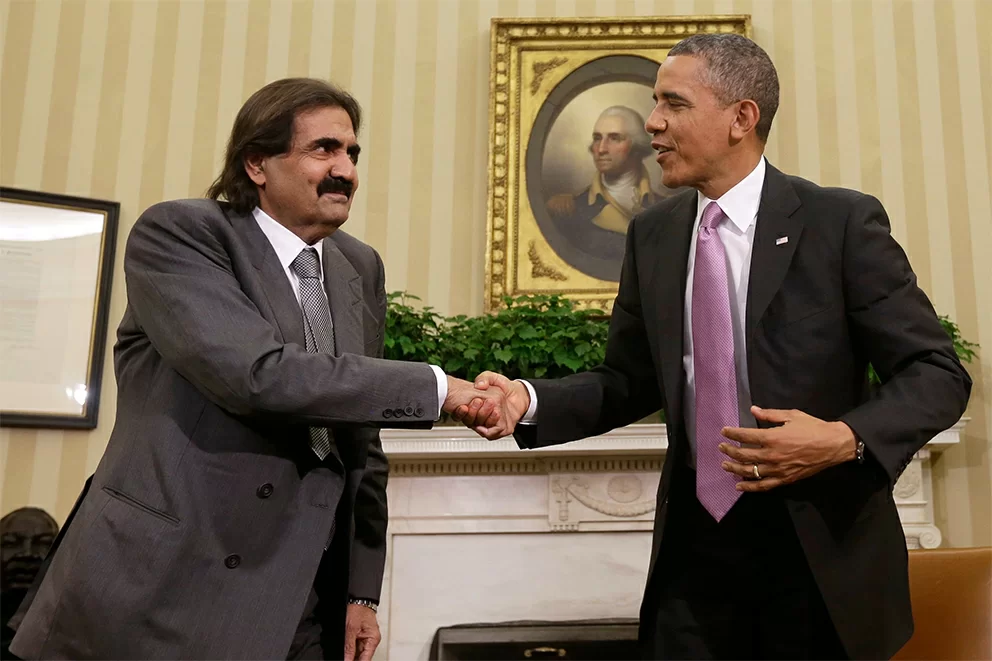
    Sharif confirmed the breakthrough in an official post on X, stating that the agreement is fully finalized and a formal signing ceremony is scheduled to take place on June 19 in Switzerland. He extended gratitude to both American and Iranian negotiating teams for choosing diplomatic dialogue over continued confrontation, and also acknowledged the supportive mediation roles played by leaders from Qatar, Saudi Arabia, and Turkey in facilitating the talks.

    Shortly after Sharif’s announcement, US President Donald Trump – marking his 80th birthday on Sunday – issued his own official confirmation of the deal. In his statement, Trump announced he had authorized the full reopening of the Strait of Hormuz to commercial shipping and the immediate lifting of the US naval blockade that had been imposed on Iranian ports in response to Iran’s earlier closure of the strategic waterway. “Ships of the World, start your engines. Let the oil flow!” Trump said in the address.

    The road to Sunday’s announcement was marked by last-minute turbulence that nearly derailed the agreement. Just hours before the confirmation, an Israeli airstrike targeting Hezbollah strongholds in the suburbs of Beirut – an action Iran had warned would derail diplomatic progress – left Tehran refusing to issue a formal confirmation of the deal and declined to share a clear timeline for finalizing an agreement. Earlier Sunday, Trump himself publicly blamed Israel for the delay, saying the uncoordinated strike had pushed back progress on the agreement.

    This is not the first time an Israeli strike on Beirut’s southern suburbs has disrupted ceasefire efforts. A similar attack earlier this year triggered a sharp escalation: Iran responded with a massive barrage of retaliatory missiles, and Israel launched follow-up strikes, breaking a weeks-long quiet that had held since April.

    Tehran has consistently maintained that any final peace agreement must address the parallel conflict in Lebanon, where Israel has waged a months-long military campaign against Hezbollah, the Iranian-backed militant group. The current round of conflict erupted in late February, when US and Israeli forces launched joint strikes on Iranian targets. Iran retaliated with attacks on Israel and regional US allies, and effectively shut down all commercial ship traffic through the Strait of Hormuz – the world’s most critical chokepoint for global oil and natural gas supplies, which carries roughly a fifth of the world’s daily oil consumption. In response, the US imposed a full naval blockade on traffic entering and exiting Iranian ports, escalating the economic and military standoff.