分类: world

  • Familie Ramdat Misier verontwaardigd over diefstal borstbeeld en vraagt om snel ingrijpen

    Familie Ramdat Misier verontwaardigd over diefstal borstbeeld en vraagt om snel ingrijpen

    Paramaribo, Suriname – The family of Lachmipersad Frederik “Fred” Ramdat Misier, the former head of state of Suriname who passed away, has voiced intense outrage over the theft of his bronze bust from its public pedestal along Grote Combéweg. In an official letter addressed to current Surinamese President Jennifer Simons, the family is calling for immediate, decisive intervention from national law enforcement and governmental authorities to resolve the case.

    Crafted by renowned local artist Erwin de Vries, the bust was forcibly ripped from its mounted base and stolen sometime between the evening of April 11 and the morning of April 12, according to initial official reports. Local law enforcement has already launched a full criminal investigation into the incident, though no suspects have been named publicly as of yet.

    For the Ramdat Misier family, the theft extends far beyond the loss of a single piece of public art. They frame the act as a deliberate insult to the dignity not only of the former president, but of the entire Republic of Suriname. The bust has long stood as a central public symbol of the nation’s commitment to constitutional governance, the rule of law, and unbroken national continuity, carrying deep cultural and political meaning for Surinamese society.

    Beyond this specific incident, the family has also raised alarm over what they identify as a growing pattern of targeted thefts of national monuments across Paramaribo’s historic city center. These repeated thefts, they argue, systematically erode Suriname’s irreplaceable cultural heritage and erode the collective historical memory that binds the nation together.

    In their formal appeal to the Simons administration, the family is demanding that authorities deploy all available resources to three core priorities: recover the stolen bust as quickly as possible, return it to its original public pedestal, and track down all individuals responsible for the theft to hold them accountable through the national judicial system.

    The family closed their letter by stating they hold an expectation that law enforcement and government leaders will treat this high-profile case as a top law enforcement and cultural priority for the nation.

  • Blokkade van Straat van Hormuz legt wereldwijde olietoevoer lam

    Blokkade van Straat van Hormuz legt wereldwijde olietoevoer lam

    On Sunday, all commercial shipping traffic through the strategically critical Strait of Hormuz came to a complete standstill after Iran reasserted full control over the key waterway, escalating tensions just days ahead of the expiration of a fragile ceasefire between Tehran and Washington. The narrow strait, which connects the Persian Gulf to the Gulf of Oman, is the linchpin of global energy supply chains, and the sudden shutdown has sent fresh waves of uncertainty through global oil and natural gas markets already roiled by two months of open conflict between Iran and the United States.

    The collapse of temporary transit access came with a swift reversal from Iranian authorities. Just one day earlier, Tehran had announced it would temporarily allow unimpeded shipping passage through the strait, but walked back that commitment after accusing the U.S. of violating the existing ceasefire by maintaining its own naval blockade of Iranian commercial ports. Shortly after the reversal, at least two Indian-flagged commercial vessels reported coming under fire while attempting to traverse the waterway. Data from global ship tracking systems confirms that by early Sunday morning, no commercial traffic was moving through the 21-mile wide strait, leaving hundreds of vessels stranded on both sides of the choke point.

    This escalation comes amid eight weeks of open conflict that began on February 28, when joint U.S. and Israeli airstrikes targeted Iranian military and nuclear infrastructure. The war has killed thousands of people and already sent shockwaves through global energy markets. Before the outbreak of hostilities, roughly 20 percent of the world’s daily crude oil supply transited the strait, making any disruption a major risk for global economic stability.

    Peace talks mediated by Pakistan have continued, despite the rising tensions. Last week, the first direct negotiations between Iranian and U.S. delegations in decades took place in Islamabad, wrapping up without a breakthrough agreement even as both sides acknowledged limited progress. Iranian chief negotiator Mohammad Baqer Qalibaf has stated that recent discussions with U.S. counterparts moved forward on some key points, but deep disagreements remain over two core issues: the future of Iran’s nuclear program and sovereignty over the Strait of Hormuz. Neither side has released detailed public information about the current status of negotiations, which are set to resume ahead of the ceasefire’s expiration on Wednesday.

    Additional security has been deployed at the Islamabad hotel hosting the talks, though measures are less stringent than during the first round of negotiations. The core sticking point in nuclear discussions remains the length of a proposed freeze on Iranian nuclear activities: U.S. negotiators have proposed a 20-year moratorium on enrichment and related development work, while Iran is only willing to agree to a three- to five-year pause.

    Top Iranian leaders have doubled down on their hardline stance in recent days. Ayatollah Mojtaba Khamenei declared that the Iranian Navy is fully prepared to inflict “new bitter defeats” on what Tehran labels as regional aggressors. U.S. President Donald Trump has labeled Iran’s blockade of the strait “nuclear extortion” and renewed threats of large-scale military action if a long-term comprehensive agreement is not reached before the ceasefire expires.

    The escalating crisis has already spilled over into diplomatic relations with third countries. New Delhi summoned Iran’s ambassador to protest the shooting of Indian commercial vessels, a rare public rebuke from a country that has long maintained economic and diplomatic ties with Tehran. U.S. Central Command has confirmed it continues to enforce its own naval blockade of Iranian ports, but declined to offer any comment on the latest escalation in the strait.

    While global oil prices saw a minor dip earlier last week amid hopes that shipping would resume, the shutdown has erased those early gains, and the market remains on edge heading into the week. Hundreds of commercial vessels and tens of thousands of crew members remain stranded in the Gulf region, stuck waiting for a resolution that would clear the strait for transit. With the fragile ceasefire set to expire and negotiations still deadlocked on core issues, the next three days are expected to be a critical turning point for both regional stability and the future of the global energy market.

  • Canadian tourist killed, 13 injured in Mexico pyramid shooting

    Canadian tourist killed, 13 injured in Mexico pyramid shooting

    On a Monday midday at one of Mexico’s most celebrated and heavily visited historical landmarks, a violent shooting outbreak left one Canadian national dead and 13 other people injured, according to official Mexican law enforcement and government statements. The incident unfolded at the Teotihuacan archaeological site, a 2,000-year-old pre-Aztecan pyramid complex located just outside of Mexico City in central Mexico, drawing millions of global tourists every year.

    Cristobal Castaneda, security secretary for the Mexico State where the UNESCO-recognized site is located, confirmed that the unidentified gunman — whose nationality remains unconfirmed by authorities — took their own life immediately after opening fire on crowds of visitors. Of the 13 injured people, six suffered direct gunshot wounds and required transport to local medical facilities for treatment. The wounded group includes a Canadian woman, a Colombian adult and child, one Brazilian national, and two American citizens. An additional seven people sustained injuries during the chaotic rush to evacuate to safety; those injuries were treated on-site by emergency responders, and this group counts one Russian, one Colombian, one Brazilian, and four American citizens among its numbers.

    Footage captured by AFPTV from the scene shows a body covered in a white shroud being carried down the steps of one of the site’s famous ancient pyramids, a stark image that underscores the violence that disrupted what is normally a peaceful cultural attraction. Responding state law enforcement personnel quickly secured the area, seizing a handgun, a knife, and a cache of unused ammunition from the site before organizing a full evacuation of all remaining tourists.

    Tourism data shows the ancient pyramid city welcomed more than 1.8 million visitors in 2025 alone, cementing its status as a core pillar of Mexico’s cultural tourism economy. The shocking shooting comes less than two months before the 2026 FIFA World Cup, a massive international sporting event co-hosted by Mexico, the United States, and Canada that is expected to draw hundreds of thousands of foreign visitors to Mexican tourist sites across the country.

    Global and Mexican political leaders have quickly responded to the violence. Canadian Foreign Minister Anita Anand labeled the attack a “horrific act of gun violence” in a public post on the social platform X. Mexican President Claudia Sheinbaum also issued a public statement, ordering a full, exhaustive investigation into the incident and confirming that she had deployed additional federal and local personnel to the site to support emergency response efforts and assist affected visitors. “What happened today in Teotihuacan deeply pains us,” Sheinbaum wrote in her post on X.

  • Japan warns of ‘huge’ earthquake after powerful tremor

    Japan warns of ‘huge’ earthquake after powerful tremor

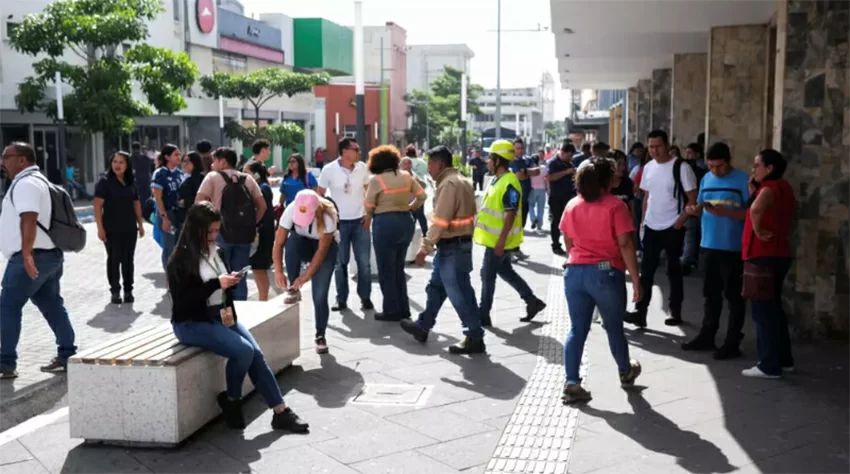
    On Monday, Japanese public officials activated a special national warning after a powerful undersea earthquake shook the country’s northern coast, triggering initial tsunami alerts and leaving the nation bracing for the possibility of a far larger seismic event in the coming period.

    The 7.7-magnitude quake struck at 4:53 pm local time (0753 GMT) in the Pacific Ocean off the coast of Iwate Prefecture, Japan’s northern region. Seismologists initially assessed the event as a 7.4-magnitude temblor, before upgrading the reading first to 7.5 and ultimately settling on a 7.7 rating. Despite the significant strength of the quake, which was powerful enough to sway high-rise structures in Tokyo, hundreds of kilometers away from the epicenter, there have been no immediate reports of major structural damage or critical injuries, according to Japan’s top government spokesperson.

    In an official statement, the Japan Meteorological Agency confirmed that the probability of a subsequent massive earthquake measuring magnitude 8.0 or higher in the region is now elevated compared to typical baseline risk levels. The unexpected seismic activity prompted quick action from national authorities, who issued public guidance to residents across the affected northern zone.

    Speaking at a televised briefing, a senior Cabinet Office official acknowledged that there is no definitive certainty that another major quake will strike. Even so, the official emphasized that all local residents must prioritize personal disaster preparedness, under the core principle that individual responsibility plays a critical role in protecting personal safety during seismic emergencies. Chief Cabinet Secretary Minoru Kihara later reaffirmed the lack of early reports of serious harm during a separate press conference, as authorities continue to monitor seismic activity across the region closely.

  • Tourism-dependent countries to be most impacted by Middle East conflict, IMF warns

    Tourism-dependent countries to be most impacted by Middle East conflict, IMF warns

    Amid the ongoing military conflict in the Middle East that has sent global energy prices soaring, the International Monetary Fund (IMF) has flagged that tourism-reliant Caribbean economies are at the highest risk of severe economic disruption from the shock, according to Nigel Chalk, director of the IMF’s Western Hemisphere Department. Speaking from Washington, Chalk laid out the structural vulnerabilities that make this group of nations particularly exposed: already elevated public debt levels, extremely limited fiscal room to maneuver, and a long-standing status as large net energy importers — even after years of investments in renewable energy transition across the region. A key additional layer of uncertainty that the IMF is closely monitoring is the indirect impact of higher energy costs on global air travel and tourist demand, two critical pillars of economic activity for most Caribbean island nations. The outlook for the region already reflects divergent growth trajectories across different economic groups, the IMF confirmed in its latest projections released late last week. Overall, the 15-nation Caribbean Community (Caricom) bloc is set to post mixed growth results over the 2026–2027 forecast period. Aggregate average growth for the entire bloc is projected to hit 5.7% in 2026 and 8.6% in 2027, driven by strong performance from regional commodity exporting nations, which are forecast to see growth as high as 19.1% over the two-year window. In stark contrast, tourism-dependent economies will see far softer expansion, averaging just 0.9% growth in 2026 and 2.2% in 2027, while non-tourism dependent smaller economies are projected to grow between 7.9% and 11.3% across the two years. Breaking down projections for individual island nations, Jamaica and Grenada are both expected to contract by 1.2% in 2026 before rebounding to 3.1% growth in 2027. Antigua and Barbuda is forecast to grow 2.6% and 2.4% respectively over the two years, while The Bahamas will see growth dip slightly from 2.1% in 2026 to 1.9% in 2027. Barbados is projected to record growth of 2.5% and 2.2%, Belize 2.2% and 2.1%, and Dominica 3.1% and 2.8%. St Kitts and Nevis will see a small uptick from 2% in 2026 to 2.5% in 2027, while St Lucia will see growth decline from 2% to 1.7%, and St Vincent and the Grenadines will drop from 3% to 2.7%. Chalk noted that a number of Caribbean governments have already implemented policy measures to soften the blow of rising oil costs for consumers and businesses. Many countries have pre-existing price smoothing mechanisms that prevent the full brunt of global energy price increases from being passed through to domestic consumers immediately, buying critical time for economies to adjust. However, the IMF is cautioning against the permanent expansion of general energy subsidies, a common policy response to price shocks that Chalk says carries significant long-term risks. Broad energy subsidies are inherently untargeted, he explained, with the largest benefits accruing to wealthier households rather than the low-income groups that need support most. Beyond distributional concerns, the volatile trajectory of global oil prices triggered by the Middle East conflict makes open-ended subsidy commitments extremely risky: if prices continue to climb, the fiscal cost of these subsidies could quickly spiral to unsustainable levels, worsening the region’s already stretched public balance sheets. Instead, the IMF advises Caribbean nations to allow market pricing mechanisms to work, encouraging households and businesses to adjust energy demand gradually, which reduces overall pressure on national economies while avoiding long-term fiscal risks. Turning to the question of regional migration to the United States, Chalk said the IMF does not expect the current economic headwinds to trigger a large sudden wave of northbound migration from the Caribbean. He noted that the broader region holds relatively solid economic fundamentals with limited near-term risk of a severe broad-based downturn, which removes a key driver of mass migration. While acute migration challenges persist for specific troubled nations such as Venezuela and Haiti, there is no indication at this stage that a sudden, large-scale migration push from the Caribbean to North America is on the horizon, he added.

  • Mexico, Spanje en Brazilië steunen Cubaanse soevereiniteit

    Mexico, Spanje en Brazilië steunen Cubaanse soevereiniteit

    A gathering of left-wing political leaders from across the globe held in Barcelona on Saturday has drawn international attention, after three major regional heads of state issued a joint statement sounding the alarm over the deepening humanitarian crisis in Cuba while reaffirming unwavering support for the Caribbean island’s territorial sovereignty and self-determination.

    Claudia Sheinbaum, President of Mexico, Pedro Sánchez, Prime Minister of Spain, and Luiz Inácio Lula da Silva, President of Brazil, co-authored the statement, which explicitly pushed back against the sustained pressure campaign led by U.S. President Donald Trump that aims to force regime change in Havana. The three leaders committed their administrations to expanding existing humanitarian assistance programs to Cuba to help alleviate ongoing hardship on the island.

    In their formal statement, the trio emphasized that any sustainable resolution to Cuba’s current challenges must center the fundamental right of the Cuban people to shape their own future in full autonomy. They also issued a clear warning against actions that violate established international law as outlined in the United Nations Charter, a direct reference to Washington’s unilateral coercive measures against Havana.

    The United States has maintained a sweeping trade embargo against Cuba since the Cold War era, but the Trump administration has drastically escalated economic and political pressure on the island in recent months. Since January, Washington has banned all imports of Venezuelan crude oil, and has threatened to impose harsh secondary sanctions on any third-party countries that continue to supply fuel to Cuba. This pressure campaign has already triggered severe fuel shortages and widespread rolling power outages across Cuba, exacerbating existing humanitarian struggles.

    Trump has also ramped up rhetorical aggression against Cuban President Miguel Díaz-Canel, recently suggesting that the U.S. could launch military intervention in Cuba once the ongoing U.S.-Israel-Iran conflict is resolved.

    During the Barcelona summit, Spanish Prime Minister Sánchez delivered a sharp rebuke of right-wing populist movements and growing attacks on multilateralism, stopping short of naming Trump directly. The U.S. president responded within hours via social media, attacking Spain for its refusal to allow the U.S. to use Spanish military bases for regional operations and criticizing Madrid’s alleged insufficient defense spending.

    Despite mounting international pressure from Washington, Díaz-Canel maintained a defiant stance during a Thursday address marking the 65th anniversary of Cuba’s socialist revolution. He warned the Cuban public of the rising risk of foreign military aggression and stressed the nation’s obligation to maintain full defensive preparedness to protect its sovereignty.

  • Haiti : Important meeting between Minister Paulemon and the Caribbean Development Bank

    Haiti : Important meeting between Minister Paulemon and the Caribbean Development Bank

    Against the backdrop of the 2026 IMF and World Bank Spring Meetings, a high-stakes strategic meeting unfolded between Haiti’s top planning official and leadership from the Caribbean Development Bank (CDB), marking a key step forward in the Caribbean nation’s push for coordinated international support amid ongoing stabilization efforts.

    On April 16, Sandra Paulemon, Haiti’s Minister of Planning and External Cooperation, sat down with a CDB delegation headed by bank President Daniel Best to outline the Haitian government’s core national priorities and map out pathways to deepen bilateral development cooperation. The gathering underscores Port-au-Prince’s formal commitment to streamlining external assistance delivery and building durable, mission-aligned partnerships that directly advance Haiti’s long-term sustainable development goals.

    During the discussions, Minister Paulemon praised the CDB for the impact and relevance of its existing work across Haiti. She outlined the Haitian government’s immediate on-the-ground priorities, noting that authorities are rolling out targeted frameworks and community-focused projects to cut widespread poverty, support the safe return of displaced households, and help vulnerable communities reestablish dignified living conditions. In laying out this work, Paulemon emphasized that meaningful progress depends on robust technical and financial backing from international partner institutions.

    Paulemon reaffirmed the three non-negotiable priorities laid out in Haiti’s National Pact for Stability and the Organization of Elections: restoring widespread security across the country, driving inclusive economic and social recovery, and successfully organizing national elections. She stressed that all international development interventions must be closely aligned with these national priorities to deliver meaningful, measurable change for Haitian people.

    For the CDB, the delegation presented a full update on its current portfolio in Haiti, which totals nearly $200 million in active projects, including roughly $50 million in newly approved funding commitments. President Best reaffirmed the bank’s long-standing commitment to supporting Haiti’s development, and made clear the institution intends to expand its footprint through high-impact, community-centered projects that address the country’s most pressing needs.

    CDB leadership also expressed strong support for the Haitian government’s three priority agenda, noting the bank is ready to scale up assistance to advance these goals. The institution’s overarching aim is to maximize the effectiveness of its support to contribute directly to Haiti’s stabilization and long-term sustainable growth. Moving forward, Best added, the CDB plans to expand its work in building Haiti’s economic, social, and environmental resilience, while also boosting the country’s domestic productive capacities — with a particular focus on the critical agricultural and energy sectors.

    Minister Paulemon for her part pushed for a more robust, results-focused partnership between Haiti and the CDB, outlining key priorities including expanded access to low-interest concessional financing and grants, targeted budget support to shore up government operations, investment in institutional capacity building for Haitian public agencies, and the creation of faster, more flexible funding disbursement processes that cut red tape for on-the-ground project delivery.

    In a move to build local expertise, the CDB delegation also announced plans to hire dozens of young Haitian professionals across key priority sectors including agriculture, education, and energy, to strengthen national institutional capacity and embed local leadership in the bank’s development work across the country.

    By the end of the meeting, both sides reached a consensus to hold a follow-up gathering in May 2026. That upcoming session will include a detailed breakdown of upcoming projects, formal confirmation of priority intervention sectors, and a review of projected funding amounts to be secured for Haiti’s development agenda.

  • Nederland activeert eerste fase van energiecrisisplan

    Nederland activeert eerste fase van energiecrisisplan

    The Netherlands is set to put into motion the first phase of its contingency energy crisis plan starting Monday, according to reports from Dutch national news agency ANP, which cited anonymous government sources in a Saturday briefing. This activation marks the first time the pre-approved emergency framework has been deployed since it was drafted in 2022, following Russia’s full-scale invasion of Ukraine that upended global energy markets and triggered a continent-wide energy crisis across Europe.

    As of Saturday, official government spokespersons had not issued an immediate on-the-record confirmation or comment on the planned activation to independent media outlets.

    Under the structure of the multi-phase emergency plan, triggering the first phase indicates that fuel markets are currently experiencing disruption, but no immediate supply shortages are being recorded across the country. In this initial stage, national energy regulators and market watchdogs will ramp up continuous, close monitoring of supply and pricing dynamics across all fuel and energy segments. At the same time, national government agencies and private sector energy stakeholders will coordinate preparations to respond quickly if market conditions worsen in the coming weeks.

    The move comes just one day after Dutch Prime Minister Rob Jetten announced on Friday that the cabinet would unveil a new package of measures on Monday to offset rising energy costs for households and commuters. Early indications suggest the support package will include targeted tax benefits for private vehicle owners, though current planning does not include a cut to national fuel excise duties, multiple sources familiar with the plan have confirmed.

    Officials have framed the activation of the emergency energy plan as a proactive step to address persistent pressures on global and regional energy markets, and to limit the spillover impact of ongoing global geopolitical and economic developments on domestic energy supply security across the Netherlands.

  • Iranian Gunboats Fire on Tanker as Tensions Escalate in Strait of Hormuz

    Iranian Gunboats Fire on Tanker as Tensions Escalate in Strait of Hormuz

    Escalating geopolitical friction in one of the world’s most critical energy chokepoints boiled over on Saturday, after Iranian gunboats fired on a commercial tanker attempting to traverse the Strait of Hormuz, while a second merchant vessel reported being hit by a projectile, multiple maritime sources confirmed to CNN.

    The hostile confrontations came just days after Iran’s military reinstated sweeping navigation restrictions across the strategic waterway, a move Tehran justified by citing repeated “breaches of trust” by the United States in ongoing diplomatic negotiations. This latest escalation has already thrown global maritime traffic into disarray: public vessel tracking data shows dozens of oil tankers have either altered their course to avoid the strait or remained anchored in nearby waters, grinding movement through the key corridor to a near halt in some areas.

    Diplomatic relations between Tehran and Washington remain near a breaking point, even as backchannel talks continue. Recent negotiations mediated by Pakistan have put new U.S. proposals on the table, which Iranian officials confirm are currently under review by Tehran’s leadership. U.S. President Donald Trump acknowledged that talks are progressing in public remarks, but made clear his administration’s growing frustration, warning that Washington would not accept what he called “Iranian blackmail” over control of the waterway.

    Iranian diplomatic sources have suggested a second round of direct negotiations could convene as early as Monday, though no U.S. officials have stepped forward to confirm the timeline. Core disagreements over navigation rights, sanctions relief, and regional security remain unaddressed, leaving the future of talks uncertain.

    In a revealing new development, a senior Iranian government official told CNN that Tehran is also considering implementing a new fee system for commercial vessels: ships that pay the required charge will receive priority passage through the strait, while vessels that refuse to comply will face extended, arbitrary delays. More than 20% of the world’s daily crude oil and refined petroleum product shipments pass through the 21-mile-wide strait, meaning any prolonged disruption to navigation risks sending shockwaves through global energy markets, driving up fuel prices for consumers and businesses worldwide.

  • Israel vows to level homes in Lebanon, counter threats with ‘full force’

    Israel vows to level homes in Lebanon, counter threats with ‘full force’

    BEIRUT, LEBANON – Just three days into a fragile 10-day truce that halted weeks of intense cross-border conflict between Israeli forces and Iran-aligned Hezbollah, Israel has confirmed it has ordered its military to operate with full force against perceived imminent threats in southern Lebanon, and continues carrying out house demolitions in border communities that Israel claims were used as militant outposts by Hezbollah. The unilateral operations have thrown the already uncertain durability of the ceasefire into question, leaving displaced Lebanese residents divided over whether to return to their war-scarred hometowns or remain farther north.

    The ceasefire, which came into force on Friday, marked the first major pause in fighting that erupted on March 2 between the two sides, a conflict that has claimed nearly 2,300 lives in Lebanon and forced more than one million people from their homes. Even before the truce took effect, it followed the first high-level direct talks between Lebanese and Israeli officials in decades, raising tentative hopes for a long-term de-escalation. Those hopes have been dampened, however, by Israel’s ongoing military activity along the border.

    Israeli Defense Minister Israel Katz announced Sunday that he and Prime Minister Benjamin Netanyahu had issued formal orders for the Israel Defense Forces (IDF) to maintain full operational freedom on both the ground and in the air, even during the ceasefire period. “This order stands to protect our soldiers deployed along the Lebanon border from any emerging threat,” Katz said. The instructions also mandate the military to demolish any booby-trapped structures or roadways, and raze all residential homes in border contact villages that Israel says functioned exclusively as Hezbollah terror outposts.

    Lebanon’s state-run National News Agency (NNA) confirmed Sunday that demolition operations were already advancing across multiple southern border towns that saw heavy fighting prior to the ceasefire. In Bint Jbeil, a community located just three miles from the Israeli border that was the site of some of the worst clashes, the outlet reported that Israeli forces were continuing to destroy what remained of damaged and abandoned residential properties a full day after initial demolitions began. Demolitions and controlled detonations were also underway in the border towns of Mais al-Jabal and Deir Seryan, while the town of Kunin came under Israeli artillery shelling Sunday, according to NNA.

    Over the weekend, the IDF announced it had established a so-called “Yellow Line” buffer zone in southern Lebanon, a security arrangement modeled on the same separation line Israel has enforced in the Gaza Strip between areas under its control and territory held by Hamas. On Sunday, the military released an official map marking its new forward defense line and a wide red zone stretching the entire length of the Israel-Lebanon border, where it says operations will continue to dismantle Hezbollah’s military infrastructure and eliminate threats to Israeli communities in northern Israel.

    The continued Israeli military activity during the truce has drawn sharp condemnation from the international community. Turkish Foreign Minister Hakan Fidan denounced the operations Sunday as deliberate “Israeli expansionism,” accusing Israel of working to create a permanent “fait accompli” on the ground that alters the border status quo even before formal ceasefire negotiations can move forward.

    The situation on the ground for displaced Lebanese residents remains deeply fragmented. On Sunday, AFP correspondents across southern Lebanon documented mixed movements: in the village of Srifa, some residents who had fled the fighting were seen moving their belongings – including mattresses and household appliances – back into their homes. In Dibbine, a resident inspected the severe damage his home sustained during weeks of combat, while other families retrieved only essential belongings from their properties before heading back north out of the conflict zone. Many residents remain openly skeptical that the 10-day truce will hold, choosing to wait for further diplomatic progress before committing to returning permanently.

    Lebanese military officials announced incremental progress in restoring basic connectivity to the south over the weekend: a key road connecting the city of Nabatiyeh to the Khardali area has been reopened, and the Burj Rahal-Tyre bridge has been partially reopened for traffic. Israeli airstrikes targeted most bridges across the Litani River, which runs roughly 30 kilometers north of the Israeli border, cutting off most of southern Lebanon from the rest of the country for weeks prior to the truce.

    Diplomatic efforts to solidify the ceasefire are set to advance this week, with French President Emmanuel Macron set to host Lebanese Prime Minister Nawaf Salam in Paris on Tuesday. The French presidency said the meeting is intended to reaffirm France’s full commitment to upholding the current truce and supporting Lebanon’s full territorial integrity. Macron will also press Lebanese authorities to hold accountable those responsible for a deadly attack on United Nations Interim Force in Lebanon (UNIFIL) peacekeepers on Saturday, which killed one French service member and injured three others. Both France and UNIFIL have blamed Hezbollah for the attack, a claim the militant group has formally denied.

    Before heading to Paris, Salam will first travel to Luxembourg on Tuesday to meet with European Union foreign ministers to discuss the crisis, according to the prime minister’s office.