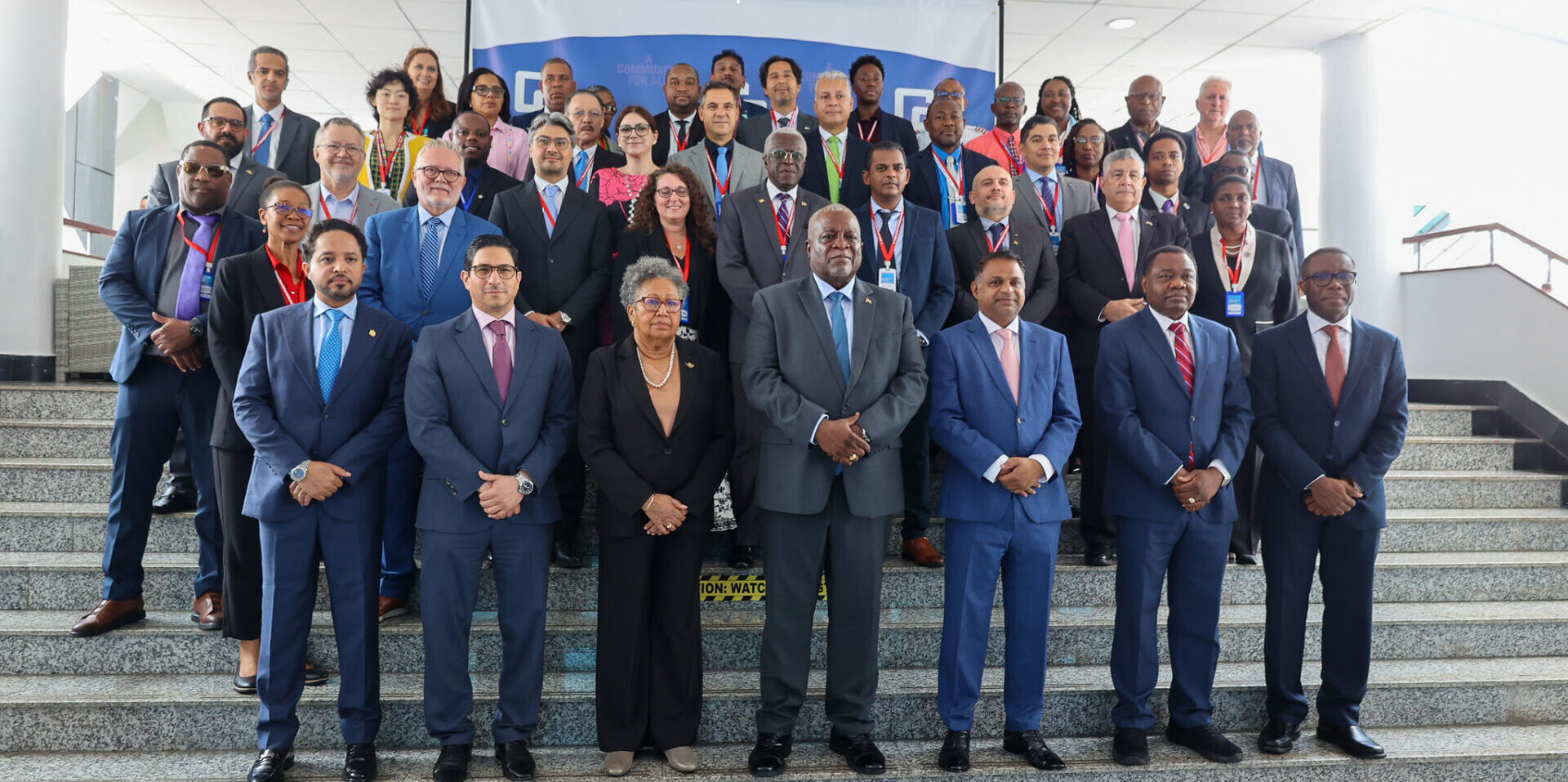
Against a backdrop of growing global regulatory demands and persistent resource constraints, Caribbean nations have received a clear call to translate decades of talk about regional aviation cooperation into a tangible, actionable system for pooling expertise, sharing resources, and dividing collective responsibility. The push for concrete progress came during a one-day regional aviation symposium held in Georgetown, Guyana, which brought together more than 70 senior representatives from across the region and key global aviation stakeholders to map out a path forward for strengthening regional flight safety.
Organized jointly by the CARICOM Secretariat and the International Civil Aviation Organization (ICAO), and hosted by the Government of Guyana and the Guyana Civil Aviation Authority at the Arthur Chung Convention Centre, the symposium centered on the theme “Strengthening Caribbean Aviation Safety: Regional Cooperation, Resilient Oversight and Sustainable Capacity Development.” A core focus of the gathering was the Caribbean Aviation Safety and Security Oversight System (CASSOS), a CARICOM-specific body created to help small member states meet rigorous international aviation standards that are often unmanageable for small national administrations to maintain independently.
During the event, participants conducted a detailed review of the draft CASSOS Roadmap and Action Matrix, a strategic plan extending to 2035 that addresses key priorities including long-term financial and operational sustainability for national civil aviation authorities, harmonization of cross-border regulatory frameworks, expansion of air transport services under the existing Multilateral Air Services Agreement, clear implementation timelines, sustainable financing structures, and ongoing performance monitoring.
A broad range of stakeholders contributed perspectives to the discussion, from major international and regional partners including ICAO, the European Union Aviation Safety Agency, the United States Federal Aviation Administration, Transport Canada, and the United Kingdom, which outlined their ongoing and future support for regional safety cooperation, to representatives from commercial airlines, private sector aviation entities, and national revenue authorities, who brought critical industry-focused insights to the table.
Opening ceremony speakers emphasized a fundamental, often overlooked inequity in global aviation regulation: Caribbean nations are bound by the exact same international safety obligations as much larger, more economically powerful countries, despite operating with far smaller administrative bodies and severely constrained financial and human resources. Retired Brigadier Mark Phillips, Prime Minister of Guyana, underscored the implicit trust that passengers place in regional aviation systems, regardless of their size.
“A passenger may never see an inspection record or know the name of the controller guiding a flight. That passenger has every right to expect that the work has been done. Our responsibility is to make that confidence deserved,” Phillips told attendees.
Deodat Indar, Guyana’s Minister of Public Utilities and Aviation, doubled down on the call for urgent action, arguing that the region has spent too long treating regional cooperation as a distant goal rather than a core operating principle. “The decision before us is whether regional cooperation will remain an aspiration or become the operating principle of Caribbean aviation. Let us choose action,” Indar said.
CARICOM Secretary-General Dr. Carla Barnett framed regional cooperation not as an option, but a necessity, driven by mounting regulatory requirements, rapid technological change, persistent workforce shortages, and ongoing financial pressure. She also emphasized that reliable air connectivity is the backbone of economic and social life for the Caribbean’s small island and low-lying coastal states, underpinning critical sectors from tourism and trade to investment, supporting emergency disaster response, maintaining cross-border family connections, and advancing broader regional integration goals.
Luis Fernando Fiallos, ICAO’s Regional Director for South America, addressed common concerns that regional cooperation arrangements would undermine national sovereignty, clarifying that collective action actually strengthens member states’ ability to meet their obligations. “Under the Chicago Convention, ultimate responsibility for safety oversight rests with each sovereign State. Yet regional arrangements do not diminish sovereignty; they reinforce it,” Fiallos explained.
William Ashby, a representative from the Caribbean Development Bank, closed out key opening remarks by reiterating the core challenge the region faces: meeting stringent global safety standards when operating with limited specialized technical capacity and small, fragmented national aviation markets that make independent investment in infrastructure and training economically unviable.