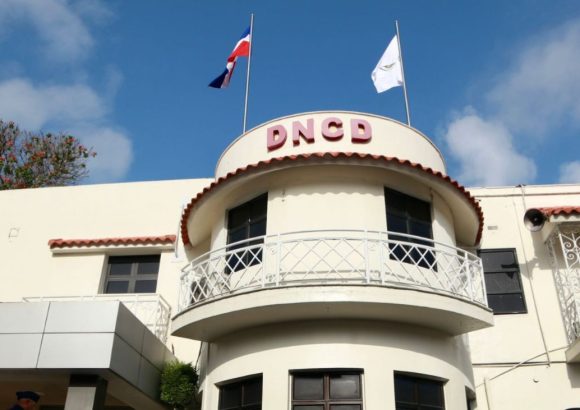
A joint law enforcement operation led by U.S. authorities has resulted in federal charges against two active-duty agents from the Dominican Republic’s National Drug Control Directorate (DNCD), who stand accused of agreeing to smuggle what they thought was 35 kilograms of cocaine for illicit financial gain. The case, which unfolded across the Dominican Republic and ended with an arrest in South Florida, highlights ongoing collaboration between U.S. and Caribbean law enforcement to root out corruption within anti-narcotics agencies.
The two defendants have been publicly identified as Deny Manuel Sepulveda De Leon, a DNCD second lieutenant and commander of the agency’s investigation unit, and Oliver Guevara Rodriguez, a rank-and-file DNCD agent. Both were taken into custody on September 28 at Miami International Airport, where law enforcement officers executed a federal arrest warrant that had been approved by a U.S. court earlier that same month.
Court documents, specifically an affidavit filed by agents with the U.S. Drug Enforcement Administration (DEA), lay out the sequence of the undercover investigation that led to the charges. According to the affidavit, Sepulveda had actively sought out avenues to earn unreported, illegal income, when a confidential informant working with DEA investigators reached out to him as part of the staged sting operation. The informant presented Sepulveda with a proposal: move 35 kilograms of cocaine that was allegedly linked to a Colombian drug trafficking organization, in exchange for significant compensation.
As part of the deal, Sepulveda was initially promised five kilograms of cocaine as payment for the smuggling job. Based on prevailing street prices for cocaine in both Miami and the Dominican Republic, that payment would have amounted to roughly $57,600 U.S. dollars. Instead of the full cocaine payout, the affidavit notes that Sepulveda received an initial cash advance of $3,000 U.S., followed by a second payment equal to approximately $4,000 U.S. that was converted to Dominican pesos.
Critically, the entire transaction was a simulated law enforcement operation: the 35 kilograms of cocaine the agents transported was actually a simulated replacement, with no illegal narcotics involved. On August 29, roughly a month before their arrest, Sepulveda traveled to the Dominican city of Barahona in an unmarked DNCD-owned vehicle, with Guevara behind the wheel. Once the pair arrived, the confidential informant placed a suitcase holding the 35 kilograms of simulated cocaine into the vehicle’s trunk, according to the official account.
After completing the drive from Barahona to the Dominican capital of Santo Domingo, the two agents met the informant at a local gas station to complete the handoff. Before the transfer could happen at the gas station, Sepulveda spotted a vehicle he deemed suspicious, and ordered Guevara to drive to a nearby public park instead. It was at the park that the suitcase holding the simulated cocaine was moved from the DNCD vehicle to the informant’s car, the court documents state.
The DEA affidavit also includes details from a recorded conversation between Sepulveda and the confidential informant. During the discussion, the informant asked Sepulveda specifically about Guevara’s role in the plot, and whether Guevara could be trusted to keep the operation quiet. Sepulveda allegedly replied that while he typically handled smuggling jobs alone, he had full confidence in Guevara’s trustworthiness, and that he was comfortable sending Guevara to complete related tasks on his behalf. The recorded conversation served as key evidence supporting the conspiracy charges against both men.
Following the completion of the staged operation, investigators moved to take the pair into custody when they traveled to Miami, leading to their arrest at Miami International Airport in late September. The pair now face federal prosecution in Florida for their alleged role in the conspiracy.