分类: world

  • IMF MD calls for greater collaboration within CARICOM to tackle climate challenges

    IMF MD calls for greater collaboration within CARICOM to tackle climate challenges

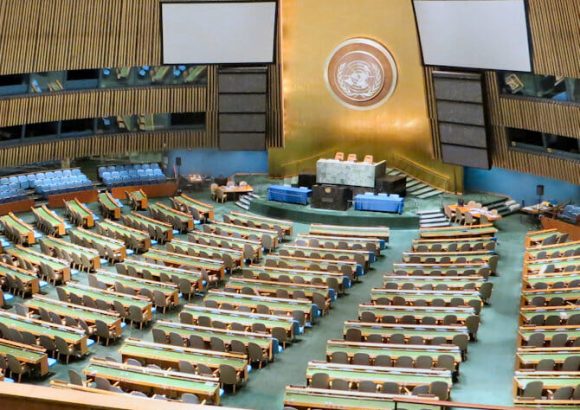
    At the 2026 Spring Meetings of the International Monetary Fund and World Bank held in Washington D.C., IMF Managing Director Kristalina Georgieva has issued a urgent call for deeper regional collaboration among CARICOM member states to confront the growing dual crises of climate vulnerability and economic instability that disproportionately threaten small island developing nations in the Caribbean.

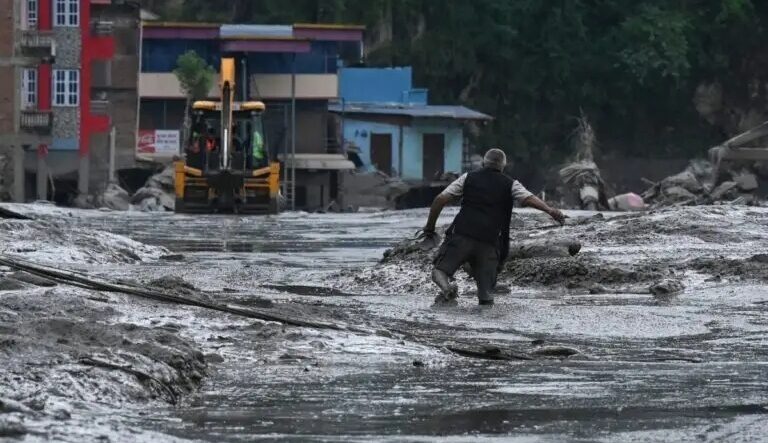
    The Caribbean region, which accounts for a tiny fraction of global greenhouse gas emissions, now bears an unfair and heavy burden of climate change impacts, with extreme weather events growing both more frequent and more destructive in recent years. Recent hurricane seasons have left a trail of destruction across multiple nations: Jamaica was hit by two hurricanes in 2025, one of which reached the powerful Category 5 strength, while the 2024 Atlantic hurricane season caused widespread devastation to St. Vincent and the Grenadines, Grenada and its dependent territories.

    These climate-driven shocks are compounded by mounting external pressures linked to global geopolitical shifts. Most Caribbean economies are heavily dependent on imported energy and food, and the ongoing conflict involving Iran has driven global oil and commodity prices back to the elevated levels seen at the height of the COVID-19 pandemic, putting new strain on already fragile regional government budgets and household finances. Beyond climate and energy pressures, small island states across the Caribbean and Pacific also face disproportionate harm from global supply chain disruptions, as they are positioned at the end of most major supply networks where disruptions are felt most sharply.

    Georgieva noted that the IMF has already responded to acute climate crises in the region, pointing to emergency financing the fund provided to Jamaica following its 2025 hurricane strikes, delivered as part of a coordinated international response alongside the World Bank, Inter-American Development Bank and CAF development bank. She credited the Jamaican government, led by its prime minister, for successfully coordinating international support to maximize impact on the ground.

    In her remarks, the IMF chief highlighted that the institution itself is shifting its policy approach to prioritize climate resilience for vulnerable nations. She outlined that Caribbean states can strengthen their shock preparedness through targeted investments in climate-resilient infrastructure, building larger fiscal buffers to absorb sudden disaster costs, and expanding access to climate risk insurance mechanisms. Georgieva specifically praised Jamaica as a regional leader in adopting climate insurance tools, which allowed the country to speed up its disaster response and recovery following recent extreme weather events.

    Emphasizing the path forward, Georgieva argued that deeper regional integration and coordinated action across CARICOM is the most effective strategy to address these overlapping challenges. Small island nations often cannot access affordable climate risk insurance or negotiate better economic terms on their own, but collective action can unlock significant benefits, she explained. Beyond improving climate resilience, increased regional collaboration can also open new pathways to sustainable, long-term economic growth that strengthens the long-term viability of small island economies.

    “This is one good news that I see in the Caribbean and across the world: regional cooperation, regional integration,” Georgieva told reporters, adding that the IMF remains committed to supporting these collective efforts moving forward. “Learning from each other, taking precautionary measures together, but also finding opportunities to strengthen growth—working in a way that enhances the viability of their economies. This is a very positive development. We have been supporting it, and we will continue to support them.”

  • Bendes onder druk in Haïti, maar dreiging houdt aan

    Bendes onder druk in Haïti, maar dreiging houdt aan

    For months, armed, powerful criminal gangs have held swathes of Haiti’s capital Port-au-Prince in a violent grip, extorting communities, carrying out mass kidnappings, and terrorizing civilians. A new United Nations expert report released this week finds that while coordinated anti-gang operations have managed to slow the gangs’ rapid territorial expansion across the capital, the overall security threat in the Western Hemisphere’s poorest nation remains as severe and unpredictable as ever.

    The report, published Tuesday by a panel of experts monitoring UN Security Council sanctions on Haiti, notes that stepped-up security operations, supported by drone strikes and local self-defense groups, have pushed gang factions back from several key areas in central Port-au-Prince. But the assessment warns that these hard-won gains remain deeply fragile and unevenly distributed across the city. Without sustained, coordinated pressure on criminal networks, the report cautions, all recent progress could be erased in a short period of time.

    Gangs currently control most of Port-au-Prince’s urban territory, and have become infamous for widespread systemic violence including routine murders, sexual assault, and mass kidnapping for ransom. In response to intensified security operations and targeted drone strikes, the report finds, gang leaders – the majority of whom remain at large – have adapted their behavior, becoming far more discreet to avoid targeting. Most have cut back on public appearances and halted active activity on social media to reduce their exposure to counter-gang operations.

    Increased pressure in central Port-au-Prince has also pushed many gang factions to relocate their core criminal operations to outlying rural and semi-urban areas on the capital’s periphery, where they face far less resistance from security forces and can continue illegal activity with minimal interference. This shift has forced Haitian security units to reposition their personnel and resources to respond to the new threat, weakening their ability to hold and stabilize territory that has already been reclaimed from gang control.

    Beyond shifting their operational hubs, gangs have tightened their grip on key infrastructure that touches nearly every Haitian household: remittance processing facilities, which handle the critical flow of money sent home by Haitians living abroad that makes up a large share of the country’s total household income. Criminal groups have also increasingly carried out extortion and kidnapping-for-ransom schemes while disguised as police officers, allowing them to operate with greater impunity and trick civilians into cooperating.

    The report also documents the staggering human cost of the year-long anti-gang campaign, which has been supported by private military contractors. Between March 2025 and January 2026 alone, UN High Commissioner for Human Rights Volker Türk recorded 5,519 total conflict-related deaths across Haiti, with at least 3,497 of those fatalities occurring during active anti-gang operations. Casualties have been reported on all sides, including both gang members and innocent civilian bystanders caught in the crossfire.

    Worryingly, the report adds, gangs have even turned the civilian harm from drone strikes and security operations to their advantage, leveraging public anger to consolidate local influence. Many gangs have provided financial aid to civilians who suffered property damage or lost family members during security operations, building local support and strengthening their social control over affected communities. The report also highlights a disturbing upward trend in the recruitment of child soldiers, who are deployed directly in frontline combat and used as human shields against security forces during operations.

  • «unsustainable food inflation» says the Governor of the BRH

    «unsustainable food inflation» says the Governor of the BRH

    Against the backdrop of the 2026 IMF and World Bank Spring Meetings held in Washington D.C., Ronald Gabriel, Governor of the Bank of the Republic of Haiti (BRH), has delivered a stark wake-up call to the global community on the cascading crises facing the world’s most vulnerable economies. Joining delegations from Haiti’s central bank and Ministry of Economy and Finance for a slate of high-level talks, including the G24 Ministerial Meeting, Gabriel used his address to highlight the escalating structural challenges pushing marginalized nations like Haiti to the brink.

    Gabriel opened his remarks by commending the G24 Secretariat for its ongoing work, before emphasizing that the overlapping crises facing low-income and fragile states are no longer temporary shocks – they have become a permanent structural reality shaping daily life for millions. The ripple effects of new global conflicts on energy and food markets, he argued, have exacerbated deep pre-existing vulnerabilities that many vulnerable nations have never been able to address. For these countries, global shocks are not abstract economic data points: they translate directly to skyrocketing food costs that households cannot afford, shrinking room for governments to fund critical public services, and rapidly declining quality of life for the populations most exposed to instability.

    Compounding these pressures, Gabriel added, are shifting global trade dynamics, increasingly restrictive migration policies, and a dramatic drop in international development assistance – resources that many fragile nations depend on to keep basic services running, even as their need grows more urgent. Haiti, he noted, stands as a devastating case in point. Already grappling with severe internal structural weaknesses, the Caribbean nation is now bearing the full brunt of these overlapping external shocks, putting at risk the limited economic and social progress the country has managed to make through years of extraordinary hardship.

    Gabriel went on to outline two core institutional reforms that he says are essential to addressing the growing crisis. First, he called for the immediate completion of the 16th General Review of Quotas at the IMF, arguing that adequate, fairly distributed resources are a non-negotiable prerequisite for the institution to effectively meet the actual needs of all its member states. Second, he pushed for truly inclusive multilateral governance, urging accelerated negotiations to expand representation for fragile states in global decision-making bodies. Amplifying the voice of vulnerable nations, he argued, would allow for the creation of targeted, innovative policy tools that are tailored to their unique structural vulnerabilities – a change that conflict-burdened nations cannot afford to delay.

    Closing his address, Gabriel emphasized that the global community must move beyond symbolic declarations of support for vulnerable states and deliver concrete, operational commitments to multilateral action. For nations like Haiti facing cascading crises, the time for talk has passed: the world must act now.

  • The UN releases $140 million in emergency aid to help more than 1 million people in Haiti

    The UN releases $140 million in emergency aid to help more than 1 million people in Haiti

    As Haiti’s catastrophic humanitarian collapse accelerates to unprecedented levels, the United Nations has approved the release of $140.5 million in urgent emergency funding to deliver life-saving support to more than 1 million vulnerable Haitians. The intervention comes as official data confirms that more than half of the Caribbean nation’s total population now requires critical assistance, with widespread gang violence, crippling food insecurity, and mass forced displacement pushing millions of families to the edge of survival.

    Nicole Boni Kouassi, the UN Humanitarian Coordinator for Haiti, emphasized that the newly allocated funding will address the most immediate needs across the country, covering core services from food assistance and clean drinking water to emergency healthcare and temporary shelter. A key focus of the intervention will be targeted support for at-risk and marginalized groups: this includes protection services for women and children vulnerable to gender-based violence, medical and mental health care for survivors of sexual assault, nutritional treatment for acutely malnourished children, and tailored assistance for people living with disabilities. Funding from the UN Central Emergency Response Fund (CERF) will also keep educational programming running, allowing children to continue learning amid ongoing instability.

    Aid distribution will be prioritized for the hardest-hit regions, identified through a rigorous, data-driven needs assessment. To overcome access barriers that have blocked aid from reaching cut-off communities, a portion of the funding will be allocated to support the UN Humanitarian Air Service and critical logistical operations that allow frontline humanitarian workers to reach isolated populations.

    Current humanitarian data paints a devastating picture of Haiti’s crisis: an estimated 6.4 million Haitians—more than half the country’s total population—require life-saving humanitarian assistance, and nearly 6 million are facing acute food insecurity that puts them on the brink of famine. Escalating gang-related violence has forced nearly 1.5 million people to flee their homes, with half of those displacements recorded in just the last 18 months. This new funding injection not only delivers immediate relief to vulnerable communities but also bolsters the UN’s 2026 Haiti Humanitarian Response Plan, a coordinated initiative that requires a total of $880 million to address the full scale of the unfolding crisis.

    The $140.5 million package is made up of three complementary allocations, all managed by the UN Office for the Coordination of Humanitarian Affairs (OCHA): $121.5 million from the Haiti Humanitarian Fund, $10 million from CERF earmarked for chronically underfunded emergencies, and $9 million from CERF to sustain humanitarian air operations.

    The three funding streams are tightly aligned with broader ongoing humanitarian efforts and other donor initiatives across the country. The Haiti Humanitarian Fund allocation targets 26 hard-hit communes across six priority intervention sectors, while the CERF underfunded emergencies allocation supports specific gap areas including education, support for women and girls who have survived gender-based violence, and civil documentation services that enable Haitians to access basic government and aid services.

    All funding decisions were developed through a context-specific analysis that accounts for ongoing security risks, and aid programming is tailored at the individual commune level to ensure safe, accountable delivery. Enhanced safeguards are in place where security conditions are most volatile to uphold core humanitarian principles and maintain the longstanding commitment to do no harm to affected communities.

    On behalf of the entire humanitarian community operating in Haiti, Kouassi extended gratitude to all donors that have contributed to OCHA’s pooled funding mechanisms. Key 2026 supporters include the United States and Canada, which have backed both the Haiti Humanitarian Fund and CERF, alongside other leading CERF donors the Netherlands, the United Kingdom, Norway, and Denmark.

  • Dominican Republic and Suriname express concern over Haiti crisis

    Dominican Republic and Suriname express concern over Haiti crisis

    SAINT DOMINGO — During a high-stakes official gathering hosted in the Dominican Republic’s capital, foreign ministers Roberto Álvarez of the Dominican Republic and Melvin Bouva of Suriname have jointly raised urgent alarms over the rapidly deteriorating humanitarian and security crisis unfolding in neighboring Haiti, labeling the Caribbean nation’s spiraling insecurity a critical threat to entire regional stability.

    The two top diplomats made their remarks following closed-door bilateral talks, where the dire situation in Haiti took center stage on the meeting’s agenda. Currently, Haitian armed gangs hold de facto control over roughly 90 percent of Port-au-Prince’s metropolitan area, with their territorial influence continuing to spread outward into additional regions of the already fragile country. This sprawling gang dominance has dragged Haiti into one of the deepest periods of instability in its recent history, leaving basic governance and public safety all but collapsed in large swathes of the nation.

    Against this bleak backdrop, Álvarez and Bouva issued a joint appeal to the global community, calling for scaled-up, coordinated action to deliver a comprehensive, long-lasting resolution to Haiti’s crisis. They underlined two non-negotiable pillars of any effective intervention: upholding fundamental human rights for all Haitian people, and directly confronting the violent criminal networks that have usurped state authority across most of the country. The ministers emphasized that delayed or fragmented action will only exacerbate the crisis, with spillover effects that risk destabilizing neighboring countries and the wider Caribbean region.
    Beyond the discussion of Haiti’s emergency, the meeting also marked a milestone in bilateral relations between the Dominican Republic and Suriname. The two countries signed a formal joint declaration that reaffirms their longstanding close ties, and codifies their shared commitment to core democratic values, the rule of law, and universal human rights.

    In addition to the declaration, the two sides reached a series of agreements to deepen collaboration across multiple priority sectors. These include tourism expansion, educational exchanges, cross-border trade, foreign direct investment, energy development, and collective climate action. The cooperation framework is designed to advance shared goals of sustainable development, strengthen national food security, generate new formal employment opportunities, and create a more favorable environment for private sector growth in both nations.

  • Barbados bids to host new global Borrowers’ Platform secretariat

    Barbados bids to host new global Borrowers’ Platform secretariat

    As developing nations rally to challenge a long-unbalanced global financial order they argue is systematically stacked against low-income and vulnerable economies, Barbados has formally thrown its name forward to host the secretariat of the landmark new Borrowers’ Platform. Prime Minister Mia Mottley made the announcement Wednesday during the annual Spring Meetings of the World Bank and International Monetary Fund in Washington D.C., where the initiative was officially launched on the conference’s sidelines.

    First agreed by member states at the 2025 Fourth International Conference on Financing for Development, the Borrowers’ Platform was designed to tackle deep-rooted systemic inequities by strengthening coordination, amplifying collective representation, and delivering targeted technical support for borrowing countries across the Global South. The launch comes at a moment of soaring debt vulnerability across developing economies, with the initiative focused on advancing more responsible debt sustainability practices and pushing for fairer financing outcomes that serve the needs of low-income nations rather than wealthy global stakeholders.

    In her announcement, Mottley emphasized that Barbados’ lived experience with the harms of the existing global financial system makes it the ideal host for the platform’s administrative core. “We make formal our interest as Barbados to host the Secretariat of the Borrowers’ Platform because we have walked it, we have lived it, we are breathing it and we are prepared to continue to advocate for the change in rules and circumstances such that countries can find their way as independent sovereign nations to be able to finance development for their people,” she stated.

    Mottley framed the new platform as a make-or-break step toward correcting systemic failures that disproportionately disadvantage small and economically vulnerable states. She argued that the current global architecture is structured to favor powerful, wealthy nations, leaving low-income countries locked in a cycle of growing inequality: “We have ended up in this position largely because we have a system that does not favour the weak, nor the different. Without reform, global inequalities will continue to widen. The rich are getting richer and the poor are getting poorer.”

    She also pushed back against the dominant global approach to sovereign borrowing, noting that countries facing debt distress are too often penalized rather than supported through structural challenges. “Countries need assistance. They are not begging. They need space. They need assistance,” she said, calling for a far more balanced, human-centered approach to international debt management.

    The platform is designed to deliver tangible benefits to participating nations: it will deepen South-South cooperation, boost global debt transparency, provide customized technical and advisory support to developing economies, and raise the collective voice of borrowing countries in high-stakes global financial governance discussions. Mottley stressed that the initiative must expand rapidly beyond its founding 28 member states and be backed by strong, principled leadership to deliver meaningful change. “I do believe that the chief executive officer ought to be appointed as soon as possible if we are going to see further progress,” she said, adding that the ideal leader would combine “credibility but conscience.”

    Warned that the confluence of overlapping global crises leaves no time for incremental action, Mottley noted “We are running against the clock.” The cumulative shocks of the COVID-19 pandemic, the ongoing war in Ukraine, and escalating geopolitical tensions have already pushed many vulnerable economies to the brink of debt collapse, she explained. For Mottley and the participating developing nations, the platform represents more than a coordination body: it is an opportunity for Global South countries to take ownership of their own financial futures. “We have come not to ask for permission. We have come to execute in the interests of the people whom we have been elected to serve,” she said.

  • Paus Leo roept Kameroen op tot strijd tegen corruptie en vrede in conflictgebieden

    Paus Leo roept Kameroen op tot strijd tegen corruptie en vrede in conflictgebieden

    On a 10-day apostolic tour across four African nations, Pope Leo XIV landed in Cameroon on Wednesday, delivering a forceful, unflinching address to the country’s long-ruling leadership that put urgent global and national issues front and center. Speaking directly to President Paul Biya – who has held presidential power since 1982 – Prime Minister Joseph Dion Ngute, and other top government officials shortly after arriving from Algeria, the Pope demanded urgent action to root out systemic corruption and resolve the decade-long separatist conflict plaguing Cameroon’s English-speaking regions.

  • ‘If I were PM for one term’: Youth share ideas for change

    ‘If I were PM for one term’: Youth share ideas for change

    Across the Caribbean, young people have long been recognized as a transformative force for national progress, bringing fresh perspectives and unconventional solutions to long-standing systemic challenges. To capture what this demographic would prioritize if given the highest executive office, a regional outreach initiative posed a simple question: What would you change if you served a term as prime minister?

    The project gathered input from thousands of young people across the Caribbean, intentionally expanding beyond a single nation’s borders to capture shared regional challenges. Responses were collected via social media platforms and digital community spaces where young people already gather and exchange ideas, with optional anonymity to encourage open, unfiltered feedback from participants who preferred privacy.

    Housing emerged as the most widely cited source of frustration among respondents, with widespread economic barriers including high unemployment and underemployment putting homeownership and affordable rental housing out of reach for a large share of the region’s youth. Participants offered a range of creative, targeted solutions to address this gap. Rany Horne, a native of Saint Vincent and the Grenadines who currently resides in Trinidad, proposed a national land lottery scheme that would reserve plots exclusively for high-achieving graduating students.

    “This would reward academic achievement and provide young people with a tangible asset to start their future,” Horne explained of the proposal, which ties entry into the random draw to proven scholastic success. Meanwhile, Kimberly Mathurin of Saint Lucia called for targeted support for vulnerable households, specifically low-income single-parent families. If she held the office of prime minister, Mathurin would introduce heavily subsidized housing units for this group, covering the majority of monthly rental costs to ease financial strain. For example, on a 900 Eastern Caribbean dollar monthly rent, the government would cover 600 dollars, leaving just 300 dollars for the household to pay.

    A second top priority for participating youth was overhauling public health care, a sector that currently drives widespread medical emigration as Caribbean residents seek higher-quality treatment in higher-income countries in the Global North. Horne proposed an immediate transparency reform: requiring all public hospitals to publish the full unsubsidized cost of every treatment and service alongside the amount the government covers through taxpayer funding. He argued that greater public awareness of how heavily health care is already subsidized would encourage more responsible use of limited public medical resources. Aliyah Albertson, a young Saint Lucian, put forward a more sweeping reform: adopting a national universal healthcare insurance model modeled after Taiwan’s system, which would guarantee access to quality medical care for all residents regardless of their income or social status.

    Youth participants also identified violent and organized crime as a critical drain on regional development, backing up this concern with existing economic data: the International Monetary Fund has repeatedly documented that Caribbean nations divert large shares of public and private capital away from productive investments in education, health care, and infrastructure to cover increased costs for security, policing, and criminal justice operations, placing a direct economic burden on everyday citizens. To address this, Horne proposed a structured policy reform for law enforcement: mandatory periodic rotation of police officers between different districts and stations, which he argues would reduce opportunities for corruption and the development of overly close ties between officers and local criminal networks, while improving overall police accountability. He also called for increased staffing at national ports and border entry points to crack down on illegal smuggling of contraband that fuels organized criminal activity. Going beyond policing, a participant who identified only as Harvey argued that long-term crime reduction requires proactive investment in at-risk youth: “More youth programs, sports mentorship and job pathways, when young men have direction and income, crime drops naturally.”

    Public transportation is another long-standing vexing issue across Caribbean island nations, where unreliable, fragmented service turns daily commuting into a time-consuming drain that reduces overall economic productivity. Young respondents offered straightforward, actionable fixes for this problem. An anonymous participant from Saint Lucia proposed expanding government-owned public bus systems, a model that already operates successfully in some parts of the region. Under this system, buses run on fixed schedules from centralized terminals, allowing commuters to plan their trips reliably. However, participants noted that any transportation reform would require complementary investments: Harvey called for upgrades to road infrastructure, more consistent vehicle reliability, and expanded broadband access across rural areas to support new digital scheduling and ticketing services.

    Finally, youth participants prioritized expanding and diversifying employment opportunities across the region’s small island developing states, where unemployment rates remain persistently high and many economies rely on a narrow set of traditional industries. Harvey argued that unlocking new job opportunities requires investing in underdeveloped creative industries and niche markets that align with young people’s skills.

    “Too many people rely on limited sectors,” he said. “I’d push hard to grow creative industries like photography, music, digital content and tech services, and small businesses. That means funding young entrepreneurs, cutting red tape, and making it easier to start and run a business. Someone with a camera or a skill shouldn’t struggle to turn it into real money.”

    Harvey also emphasized that job growth requires fundamental education reform to equip young people with the skills they need to succeed in these growing sectors. “Education reform, not just academics, but real-life skills, such as financial literacy, entrepreneurship, and digital skills, should be added,” he explained. “School should prepare you to earn, not just pass exams. I’d also strengthen trade programs so being a skilled electrician, mechanic, or builder is just as respected and as profitable as other fields.”

    In sum, the collective feedback from participating youth across the Caribbean makes clear that the demographic wants governments to prioritize the needs of ordinary citizens over the political interests of international partners, political allies, or connected elites. While young people are still largely underrepresented in executive and legislative office across the region, they are eager to contribute thoughtful, solutions-oriented ideas to the national and regional policy discourse.

  • CARICOM urged to strengthen regional unity, implement strategy, to mitigate effects of war in Middle East

    CARICOM urged to strengthen regional unity, implement strategy, to mitigate effects of war in Middle East

    As global geopolitical instability continues to escalate, policymakers across the Caribbean region have received an urgent call to coordinate bold, collective action to counter spillovers from ongoing conflict in the Middle East. The appeal was delivered by Dr. Wendell Samuel, Acting Assistant Secretary-General of the Caribbean Community (CARICOM), during a virtual policy forum hosted on April 10, co-organized by the Food and Agriculture Organization (FAO) of the United Nations.

    During the discussion, which centered on the far-reaching impacts of Middle East tensions on nations across Latin America and the Caribbean, Dr. Samuel emphasized that forward-looking, coordinated strategy, rather than fragmented national action, is the only path to effectively counter emerging global shocks. “This moment calls for strategic thinking and regional solidarity,” he told attendees. “The decisions we take now will determine not only how CARICOM navigates this crisis, but how prepared we are for future global disruptions. Resilience, cooperation, and shared responsibility must guide our response.”

    The forum centered heavily on the region’s unique vulnerabilities to external shocks, particularly in three critical areas: food security, domestic agricultural systems, and overall macroeconomic stability. Though the Caribbean sits thousands of miles from the Middle East, Dr. Samuel noted that the region’s highly open, trade-reliant economies leave it deeply exposed to disruptions in global energy, food, and supply chain networks. He added that long-standing structural weaknesses have amplified this risk: the region remains heavily dependent on imports for core necessities including food, fuel, agricultural fertilizers, and commercial shipping services, leaving it acutely sensitive to price swings and supply interruptions driven by geopolitical tension.

    Dr. Samuel, who also leads the Economic Integration, Innovation and Development Directorate at the CARICOM Secretariat, confirmed that regional officials have already developed a preliminary draft response framework to address these risks. Outlined as a comprehensive policy matrix, the draft framework maps direct links between external global disruptions and targeted national and regional policy actions. It lays out a clear sequence and priority for interventions, balancing near-term stabilization efforts to address immediate price and supply pressures with longer-term structural reforms designed to boost regional resilience and reduce systemic risk over time. A core tenet of the framework is its requirement for coordinated action across all CARICOM member states.

    The draft framework will next be submitted for review to CARICOM’s Ministers of Agriculture, who will deliberate on its final adoption and outline a roadmap for implementation. In laying out core priorities for the region’s response, Dr. Samuel called for deeper cross-border collaboration on three foundational fronts: coordinated public and private procurement, integrated regional transportation networks, and better collective management of strategic commodity reserves to buffer against supply shocks.

    He also underscored the urgent need for accelerated investment in renewable energy infrastructure, alongside intentional investment to restructure and strengthen regional food systems to reduce import dependence. Strengthened cross-border policy coordination, he argued, will allow the region to mount faster, more effective collective responses when external pressures emerge. Finally, he flagged targeted investment to strengthen regional institutions focused on food security monitoring and macroeconomic tracking as a critical, underaddressed need for the region.

    Dr. Samuel stressed that the economic risks stemming from the current conflict are not abstract hypothetical concerns. Rising price inflation, skyrocketing food costs, and growing pressure on strained government budgets are already emerging as pressing challenges across the region, he said, requiring immediate policy intervention. Only by clearly understanding the specific channels through which global shocks impact Caribbean economies, he concluded, can the region mount practical, coordinated responses to reduce harm and build long-term stability.

  • Below-Normal Hurricane Season? El Niño May Change That, Here’s Why

    Below-Normal Hurricane Season? El Niño May Change That, Here’s Why

    As the 2026 Atlantic hurricane season approaches, Belize’s National Meteorological Service (NMS) has released an early projection calling for slightly below-normal storm activity across the region — but forecasters are sounding a clear note of caution, warning that a developing moderate-to-strong El Niño event, with a non-negligible chance of a rare “super El Niño”, could upend expectations and leave communities vulnerable to unexpected extreme weather.

    The World Meteorological Organization (WMO) confirms that global forecast models put the probability of El Niño developing in the coming months at over 60%. What is more, current climate data suggests roughly a one-in-four chance that this event will strengthen into a super El Niño, one of the most powerful classifications of this natural climate phenomenon.

    To contextualize the risk, El Niño is a cyclical global climate pattern driven by abnormal warming of surface waters across the central and eastern Pacific Ocean. This shift in ocean temperatures disrupts large-scale atmospheric wind patterns and jet stream trajectories, triggering far-reaching shifts in rainfall and temperature distributions across every continent. The phenomenon can bring crippling drought to some regions while sparking catastrophic flooding in others, and major El Niño events have been repeatedly tied to record-breaking global heatwaves, widespread crop failures, systemic water shortages, and unprecedented swings in extreme weather.

    For Belize and the broader Caribbean basin, El Niño’s characteristic impact actually works to suppress hurricane formation in most cases. NMS chief meteorologist Ronald Gordon explained that the pattern typically generates increased vertical wind shear across the Atlantic, a atmospheric condition that tears apart developing storm systems and prevents them from intensifying into full hurricanes. That dynamic is the core reason behind the NMS’s early projection of a slightly slower-than-average 2026 hurricane season.

    However, Gordon emphasized that this lower baseline risk does not eliminate the threat entirely — and he urged Belizean residents to avoid complacency in the face of the forecast. “As we always say, ‘Don’t study those numbers, because just one hurricane could impact us and be very bad,’” Gordon noted. “So, again, reminding citizens to be alert, be aware, and be prepared.”

    History bears out this warning: even in the quietest hurricane seasons, individual storms can rapidly intensify as they move across warm Atlantic waters, leaving coastal communities with little time to prepare and often causing catastrophic damage.

    What makes this year’s forecast particularly tense for climate scientists is the confluence of factors that could push the approaching El Niño into super strength. Current ocean temperature readings and long-term climate trends are aligning in a pattern that favors extreme strengthening. When combined with decades of human-caused global warming that has already raised baseline ocean and atmospheric temperatures, a super El Niño could shatter existing global heat records and exacerbate extreme weather events across the globe far beyond Belize’s borders.

    For local officials in Belize, the key takeaway from this mixed forecast is a simple one: preparation matters more than prediction. Seasonal projections can shift dramatically as new climate data emerges, and even a suppressed hurricane season driven by El Niño still carries significant risk for coastal, low-lying nations like Belize.