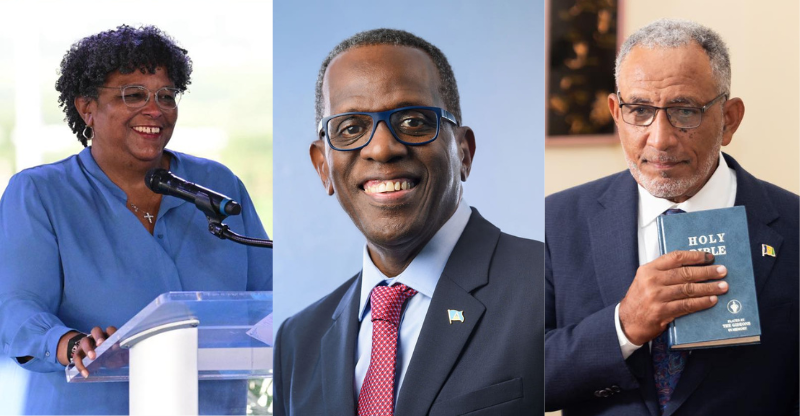
Across the Caribbean, young people have long been recognized as a transformative force for national progress, bringing fresh perspectives and unconventional solutions to long-standing systemic challenges. To capture what this demographic would prioritize if given the highest executive office, a regional outreach initiative posed a simple question: What would you change if you served a term as prime minister?
The project gathered input from thousands of young people across the Caribbean, intentionally expanding beyond a single nation’s borders to capture shared regional challenges. Responses were collected via social media platforms and digital community spaces where young people already gather and exchange ideas, with optional anonymity to encourage open, unfiltered feedback from participants who preferred privacy.
Housing emerged as the most widely cited source of frustration among respondents, with widespread economic barriers including high unemployment and underemployment putting homeownership and affordable rental housing out of reach for a large share of the region’s youth. Participants offered a range of creative, targeted solutions to address this gap. Rany Horne, a native of Saint Vincent and the Grenadines who currently resides in Trinidad, proposed a national land lottery scheme that would reserve plots exclusively for high-achieving graduating students.
“This would reward academic achievement and provide young people with a tangible asset to start their future,” Horne explained of the proposal, which ties entry into the random draw to proven scholastic success. Meanwhile, Kimberly Mathurin of Saint Lucia called for targeted support for vulnerable households, specifically low-income single-parent families. If she held the office of prime minister, Mathurin would introduce heavily subsidized housing units for this group, covering the majority of monthly rental costs to ease financial strain. For example, on a 900 Eastern Caribbean dollar monthly rent, the government would cover 600 dollars, leaving just 300 dollars for the household to pay.
A second top priority for participating youth was overhauling public health care, a sector that currently drives widespread medical emigration as Caribbean residents seek higher-quality treatment in higher-income countries in the Global North. Horne proposed an immediate transparency reform: requiring all public hospitals to publish the full unsubsidized cost of every treatment and service alongside the amount the government covers through taxpayer funding. He argued that greater public awareness of how heavily health care is already subsidized would encourage more responsible use of limited public medical resources. Aliyah Albertson, a young Saint Lucian, put forward a more sweeping reform: adopting a national universal healthcare insurance model modeled after Taiwan’s system, which would guarantee access to quality medical care for all residents regardless of their income or social status.
Youth participants also identified violent and organized crime as a critical drain on regional development, backing up this concern with existing economic data: the International Monetary Fund has repeatedly documented that Caribbean nations divert large shares of public and private capital away from productive investments in education, health care, and infrastructure to cover increased costs for security, policing, and criminal justice operations, placing a direct economic burden on everyday citizens. To address this, Horne proposed a structured policy reform for law enforcement: mandatory periodic rotation of police officers between different districts and stations, which he argues would reduce opportunities for corruption and the development of overly close ties between officers and local criminal networks, while improving overall police accountability. He also called for increased staffing at national ports and border entry points to crack down on illegal smuggling of contraband that fuels organized criminal activity. Going beyond policing, a participant who identified only as Harvey argued that long-term crime reduction requires proactive investment in at-risk youth: “More youth programs, sports mentorship and job pathways, when young men have direction and income, crime drops naturally.”
Public transportation is another long-standing vexing issue across Caribbean island nations, where unreliable, fragmented service turns daily commuting into a time-consuming drain that reduces overall economic productivity. Young respondents offered straightforward, actionable fixes for this problem. An anonymous participant from Saint Lucia proposed expanding government-owned public bus systems, a model that already operates successfully in some parts of the region. Under this system, buses run on fixed schedules from centralized terminals, allowing commuters to plan their trips reliably. However, participants noted that any transportation reform would require complementary investments: Harvey called for upgrades to road infrastructure, more consistent vehicle reliability, and expanded broadband access across rural areas to support new digital scheduling and ticketing services.
Finally, youth participants prioritized expanding and diversifying employment opportunities across the region’s small island developing states, where unemployment rates remain persistently high and many economies rely on a narrow set of traditional industries. Harvey argued that unlocking new job opportunities requires investing in underdeveloped creative industries and niche markets that align with young people’s skills.
“Too many people rely on limited sectors,” he said. “I’d push hard to grow creative industries like photography, music, digital content and tech services, and small businesses. That means funding young entrepreneurs, cutting red tape, and making it easier to start and run a business. Someone with a camera or a skill shouldn’t struggle to turn it into real money.”
Harvey also emphasized that job growth requires fundamental education reform to equip young people with the skills they need to succeed in these growing sectors. “Education reform, not just academics, but real-life skills, such as financial literacy, entrepreneurship, and digital skills, should be added,” he explained. “School should prepare you to earn, not just pass exams. I’d also strengthen trade programs so being a skilled electrician, mechanic, or builder is just as respected and as profitable as other fields.”
In sum, the collective feedback from participating youth across the Caribbean makes clear that the demographic wants governments to prioritize the needs of ordinary citizens over the political interests of international partners, political allies, or connected elites. While young people are still largely underrepresented in executive and legislative office across the region, they are eager to contribute thoughtful, solutions-oriented ideas to the national and regional policy discourse.