By Simon Stiell, Executive Secretary of UN Climate Change
As the leader of the United Nations’ climate action body, I have spent years advocating for the critical necessity of transitioning away from fossil fuels to clean energy systems. Today, that argument is no longer mine to make alone: the ongoing global fossil fuel energy crisis, amplified by escalating geopolitical conflict, is making the case for renewables more forcefully than any advocacy ever could — and that is especially true for vulnerable regions like the Caribbean.
The ongoing war in the Middle East has laid bare a harsh, unavoidable reality: global dependence on fossil fuels erodes national sovereignty and undermines energy security at its core. It leaves the price of food, household monthly budgets, corporate profit margins, and entire national economies completely vulnerable to sudden geopolitical shocks. In an increasingly volatile global order where power politics dominates international relations, the economic and social costs of remaining reliant on foreign fossil fuels are skyrocketing beyond control.
This latest conflict has triggered what the International Energy Agency has described as the most severe threat to global energy security the world has ever seen. Constrained oil and natural gas supplies have sent global energy prices soaring, and a wave of crippling inflation has followed in its wake. Working families and businesses of every size now face sharply higher utility and operational costs that strain budgets already stretched thin.
The ripple effects of this crisis are being felt across every continent. The World Food Programme projects that the conflict will push global hunger to unprecedented record levels by the end of this year. Food insecurity is expected to rise by 21% across West and Central Africa, 17% in East and Southern Africa, 24% across Asia, 16% in Latin America and the Caribbean, and 14% in the Middle East and North Africa.
Even amid this widespread disruption, a deeply misguided argument persists: some policymakers and industry leaders claim the solution to the current energy crisis is to slow the global transition to renewable energy, and instead double down on fossil fuels — the very root cause of the current turmoil. This position flies in the face of basic economic logic and common sense. As geopolitical instability continues to grow, repeated episodes of volatile energy prices will become the norm, not the exception. Sustained dependence on fossil fuels will lock nations into a permanent cycle of lurching from one crisis to the next with no end in sight.
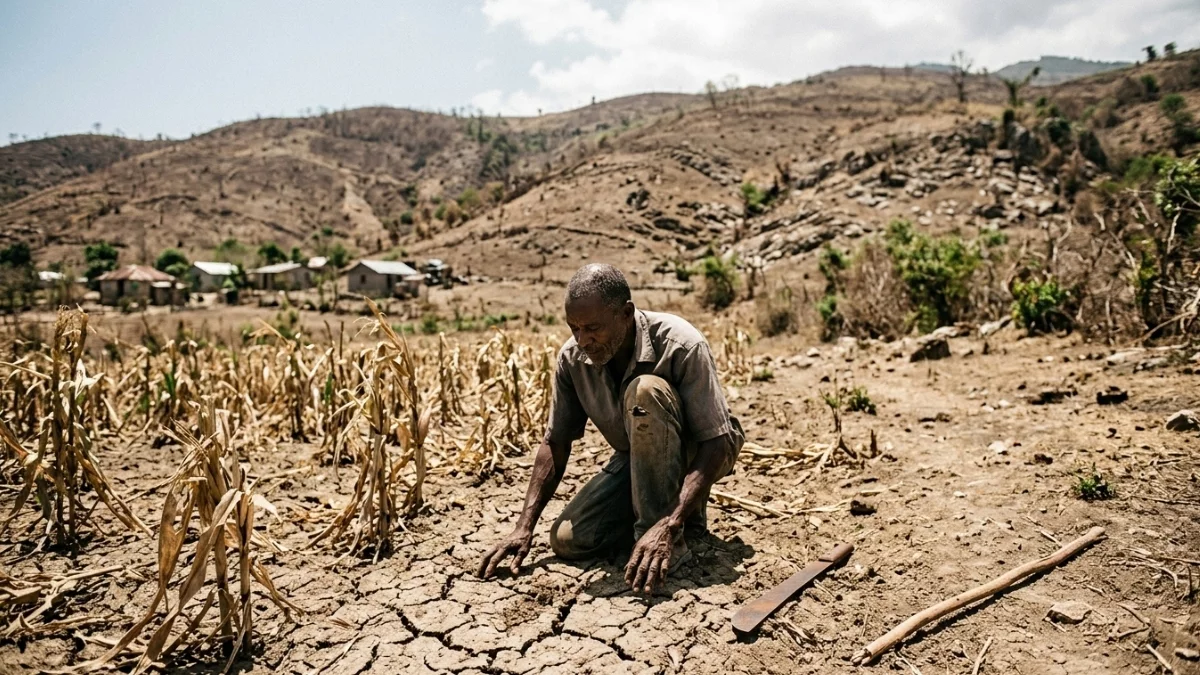
Prolonged fossil fuel dependence also guarantees continued global temperature rise, which supercharges extreme climate disasters including catastrophic hurricanes, prolonged droughts, destructive wildfires, and devastating floods. Today, these events already destroy millions of lives every year and cause trillions in economic damage across the globe. For example, when Hurricane Melissa made landfall in Jamaica in October 2025, the World Meteorological Organization confirms the storm killed 45 people in Jamaica, another 46 in neighboring Haiti, displaced more than one million people across all affected Caribbean nations, and caused an estimated $8.8 billion in total economic losses. If global emissions continue to rise unchecked, these events will only grow more frequent and more severe. Yet despite this clear harm, fossil fuels still receive trillions of dollars in global government subsidies every year.
Crucially, there is a proven, accessible solution that addresses both the ongoing climate crisis and the economic volatility caused by fossil fuel dependence: accelerating the global transition to decentralized clean energy systems. In this framework, wind and solar power supply the bulk of electricity, supported by modernized transmission grids and utility-scale energy storage, while clean technologies such as electric vehicles replace carbon-intensive polluting alternatives.
Unlike fossil fuels, which rely on long, vulnerable supply chains and vulnerable geopolitical chokepoints like the Strait of Hormuz, sunlight and wind are abundant and universally accessible. Renewable energy allows nations to take back control of their energy sectors and their economic stability, insulating domestic markets from global geopolitical turmoil. Beyond energy security, the transition creates high-quality local jobs, cuts toxic air pollution, improves public health outcomes, boosts social and political stability, and delivers long-term lower energy costs. Today, onshore and offshore wind and solar power are already the cheapest sources of new electricity generation in nearly every country on Earth.
Many nations have already begun to capitalize on these benefits, building out renewable capacity to protect their populations from both energy price volatility and climate disasters. But vulnerable developing economies, which face the greatest risk from both crises and have the least capacity to adapt, are not receiving the investment they need. Last year, global investment in clean energy reached $2 trillion — twice the amount invested in fossil fuels — but only a tiny fraction of that capital flowed to the low-income and developing nations that need it most.
This imbalance must be corrected as a matter of urgency. Wealthier nations and the multilateral international financial institutions they govern have a direct self-interest in channeling affordable climate finance to developing nations to speed their clean energy transitions. A truly global energy shift delivers shared benefits for every country, rich and poor alike.
In our interconnected global economy, climate disasters that disrupt global supply chains are a major driver of inflation in every country, regardless of income level. But through coordinated international climate cooperation, nations can build a stable alternative to the power politics that currently dominate global affairs.
UN Climate Change works every day to support this global cooperation. Our annual UN Climate Change Conferences, known as COPs, have already delivered transformative global progress: collective commitments through the COP process have roughly halved the projected end-of-century global temperature rise, transformed global energy market dynamics, and supported nations to build climate resilience. But the scale of the crisis demands far faster action, and we must ensure a just transition that supports workers and communities that have historically relied on fossil fuel industries for employment and economic growth.
The faster nations move to scale up clean energy and build resilience, the greater the benefits for all people, and the climate cannot afford delays. That is why UN Climate Change has increasingly prioritized turning non-binding national climate commitments into tangible, on-the-ground outcomes that improve lives for billions of people across the globe. At COP30 held in Brazil last year, member states committed $1 trillion to investment in grid modernization and energy storage to build the foundation for 21st century clean energy systems. This year’s COP31, hosted in Türkiye, will build on that progress to advance the transition across every sector and region.
Today’s global geopolitical turmoil could not make the urgency of this work clearer. International climate cooperation is the most effective cure for the chaos we are currently living through. Clean energy and climate resilience are not optional luxuries — they are essential pillars of national security and economic stability, precisely because of the growing instability we face across the globe.
*This op-ed is attributed to Simon Stiell, Executive Secretary of UN Climate Change. NOW Grenada does not take responsibility for contributor opinions or content.*