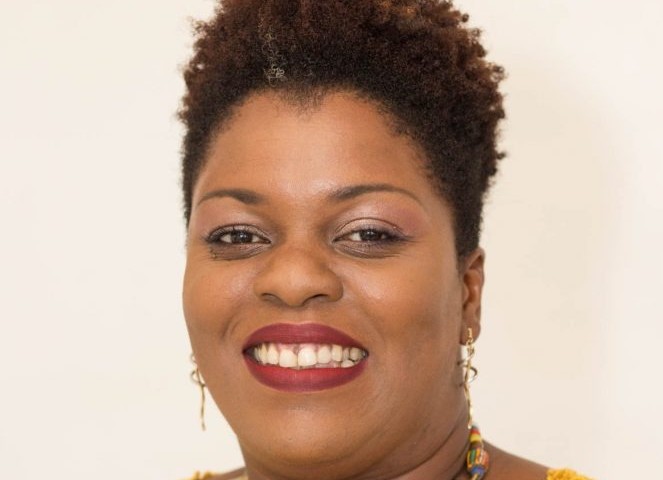
The entire Caribbean media community, led by nations Dominica and Antigua and Barbuda, is grieving the passing of Marcella André, a pioneering broadcaster, communications entrepreneur, and beloved mentor whose life and work shaped regional media and empowered generations of emerging professionals.
André’s story was deeply tied to one of the Caribbean’s most devastating modern natural disasters. Born in Dominica, she was just five years old when Hurricane David tore across the island in 1979, destroying infrastructure, displacing thousands, and permanently altering the course of her young life. What was meant to be a temporary evacuation to neighboring Antigua and Barbuda became the foundation of a decades-long career that bridged the two island nations and left an indelible mark on the entire region.
Though she built her professional legacy in Antigua and Barbuda, André never lost her connection to her Dominican roots, and often spoke openly about the complex emotional experience of building a life between two identities, two homes, and two families. In her viral 2018 TEDxAntigua talk titled *Displacement Breeds Discovery*, she reflected candidly on the loss, uncertainty, and disorientation that followed the storm that uprooted her, revealing how she ultimately turned that trauma into a source of purpose and resilience. Her core message — that displacement does not equal defeat — resonated deeply with countless Caribbean people who have faced similar experiences of migration, disaster displacement, and post-crisis rebuilding.
“Looking back at the seemingly disjointed parts of my story allows me to create positive meaning,” André shared in that talk, a line that would become a defining mantra for her life and work.
André’s professional journey spanned more than three decades across both nations. In the 1990s, she held a role at the Dominica Broadcasting Corporation, before rising to become one of the most recognizable voices in Antigua and Barbuda’s private media sector, where she spent more than 15 years as a broadcaster, producer, and media personality with the Observer Media Group and Observer Radio. Her distinctive commanding voice, sharp intellect, and natural ability to connect with audiences earned her widespread respect across the regional industry, and she stood among the group of professionals who drove a transformative era of growth for private broadcasting in Antigua and Barbuda. She worked closely alongside the late Observer Media Group founder Winston Derrick, whom she counted as both a mentor and a friend, and later penned a moving tribute to his legacy after his passing.
Beyond her work in broadcasting, André built a successful regional communications firm, NIA Comms, founded on the core principle of “Purpose plus Excellence.” The full-service consultancy provided a wide range of services to clients across the Caribbean and beyond, including public relations, marketing strategy, event management, social media support, and professional capacity-building training. A sought-after motivational speaker, master of ceremonies, and moderator, she led countless high-profile government, corporate, cultural, and educational events across the region, known for her ability to balance warmth and humor with the authority and professionalism required to steer major gatherings.
André’s greatest passion, however, was lifting up other women and young emerging professionals. In 2020, she partnered with fellow communications specialist Jamilla Kirwan to launch the NIA Mentor Award, an initiative that provides a selected female entrepreneur in Antigua and Barbuda with both EC$7,000 in financial grants and a full year of one-on-one mentorship from seven accomplished regional women business leaders. The program grew out of André’s core belief that true empowerment requires more than inspirational words — it demands practical support, intentional guidance, and intentional creation of opportunity for marginalized groups. She also was a dedicated advocate for Caribbean performing arts, serving as Antigua and Barbuda’s country director for the Caribbean Performing Arts Federation and contributing as both an organizer and performer to regional cultural initiatives.
For the Eastern Caribbean, André’s life was more than a personal success story — it was a reflection of the deep, interconnected familial, cultural, and historical ties that bind the region’s small island nations. She was a fully integrated member of Antigua and Barbuda’s professional and cultural community, while remaining a proud daughter of Dominica, known widely as the Nature Isle. She often drew on her own experience as a displaced child to encourage others to turn hardship into growth, and stands as a powerful example of the immense impact that Dominican diaspora members contribute across the Caribbean.
Tributes poured in across the region this week, with colleagues, mentees, and community leaders remembering André for her unmistakable voice, bold unapologetic personality, and unwavering commitment to excellence. Articulate, fearless, and generous with her knowledge, she prioritized lifting up emerging communications professionals and new entrepreneurs, dedicating countless hours to helping others build confidence and realize their potential.
Her passing is described as a profound loss for three communities: for Dominica, it is the loss of an accomplished native daughter whose influence stretched far beyond the island’s borders; for Antigua and Barbuda, it is the loss of a leading communications figure who shaped the nation’s media, business, cultural, and community development sectors; for the wider Caribbean, it is the loss of a regional leader whose life embodied resilience, reinvention, and the transformative power of purpose-driven communication.
Though her iconic voice that informed, motivated, and inspired so many has fallen silent, those who knew her note that André’s legacy will live on through the hundreds of professionals she trained, the entrepreneurs she mentored, and the countless lives she touched across her 46-year life. As of press time, details surrounding her passing and formal funeral arrangements have not yet been released to the public. Heartfelt condolences have been extended to André’s family, friends, colleagues, and the broader media and communications community across the Caribbean. May she rest in eternal peace.