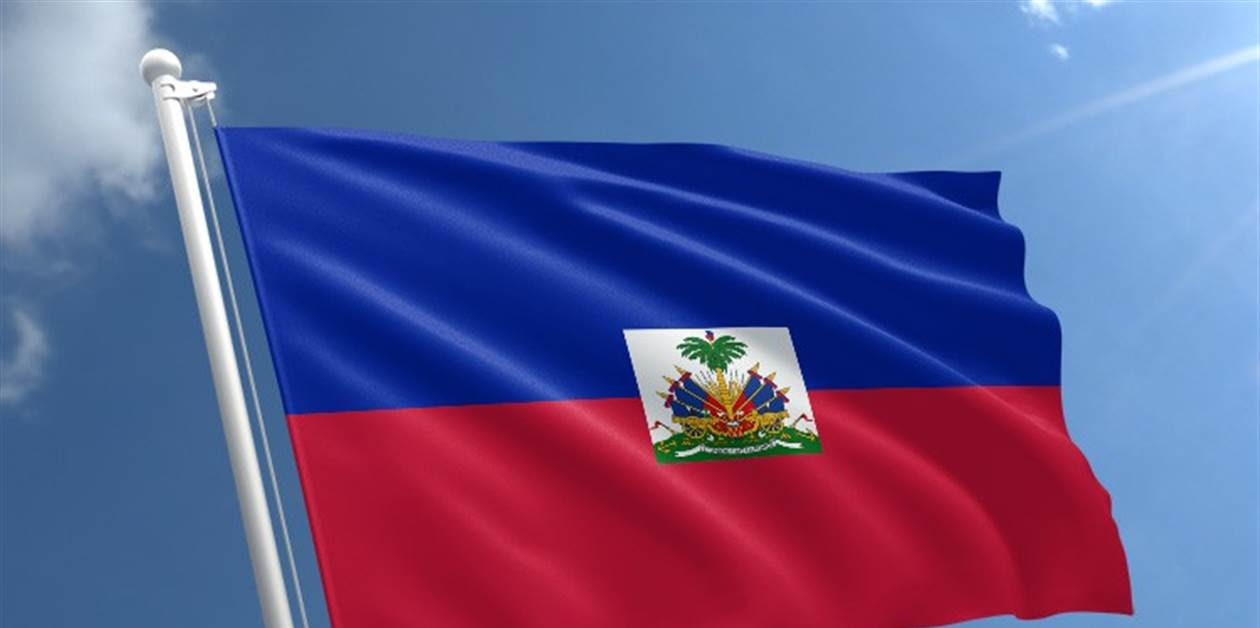
Human Rights Watch has called for the United Nations Security Council to urgently authorize a comprehensive international peacekeeping mission in Haiti to address the escalating violence fueled by criminal factions. The organization stresses the critical need for adequate funding, personnel, and robust human rights protections to ensure the mission’s effectiveness. Criminal groups have expanded their control beyond Port-au-Prince, intensifying violence in previously safer regions and severely disrupting access to essential services and humanitarian aid. The UN has reported over 3,137 fatalities in the first half of 2025, with nearly 1.5 million people displaced and half the population facing severe food insecurity. Currently, the Security Council is considering transforming the Kenyan-led Multinational Security Support (MSS) mission into a more robust ‘Gang Suppression Force’ (GSF). The MSS, operational since June 2024, has been hindered by insufficient resources and personnel. Nathalye Cotrino, a senior researcher at Human Rights Watch, emphasized the urgency, stating, ‘Time is running out to stop Haiti from falling entirely into the hands of abusive criminal groups.’ She urged the UN to ensure any new force is properly staffed, funded, and equipped with human rights safeguards. The proposed GSF would comprise up to 5,500 personnel, including police, military, and civilians, and operate independently or alongside the Haitian National Police. A new UN Support Office in Haiti (UNSOH) would oversee the GSF, providing logistical and technical support. Human Rights Watch warned that without adequate resources and human rights protections, the GSF risks repeating the MSS’s shortcomings. The organization also called for strict vetting procedures, comprehensive human rights training, and an independent accountability mechanism involving Haitian civil society. Cotrino concluded, ‘It has been two years since Haitian authorities asked for international help, and so far, that help has fallen far short.’
分类: world
-

Small islands seek big changes; AOSIS urges legal application of SIDS’ special circumstances
In a landmark move during the 2025 United Nations General Assembly (UNGA), leaders of the Alliance of Small Island States (AOSIS) issued a historic declaration advocating for the recognition of the ‘Special Circumstances of Small Island Developing States (SIDS)’ as a principle of international law. Established in 1990, the 39-member alliance emphasized the urgent need for global acknowledgment of the unique challenges faced by small island nations, spanning the Caribbean, Pacific, African, Indian Ocean, and South China Sea regions. The declaration builds on long-standing efforts to address issues such as climate change, economic vulnerability, and environmental risks through international policies and frameworks. Dominica’s President, H.E. Sylvanie Burton, echoed these sentiments in her UNGA speech, calling for greater autonomy and support for small island territories. The declaration calls for concrete legal, financial, and institutional actions, including easier access to non-debt-creating financial aid, meaningful participation in global decision-making, and protection from disproportionate environmental and economic risks. Palau’s President Surangel Whipps Jr. highlighted the importance of recognizing these vulnerabilities, stating that treating small islands like larger nations undermines their ability to thrive and contradicts the international community’s pledge to leave no one behind. Belize’s Prime Minister John Briceño expressed strong support, calling the declaration a powerful affirmation of SIDS’ unique challenges. AOSIS leaders are urging the UN, international organizations, and financial institutions to integrate these principles into global frameworks, particularly those addressing climate change, biodiversity, pollution, and ocean governance. The declaration warns that failure to act could weaken fairness, undermine international efforts, and limit small islands’ participation in global decision-making.
-

Antigua and Barbuda Highlights Ocean Protection Efforts on World Maritime Day
As the world commemorates World Maritime Day on the last Thursday of September, Antigua and Barbuda’s Department of Marine Services and Merchant Shipping (ADOMS) is taking center stage in international maritime governance. This year’s theme, “Our Ocean, Our Obligation, Our Opportunity,” set by the International Maritime Organization (IMO), underscores the urgent need to safeguard marine ecosystems amidst escalating global threats. ADOMS, in collaboration with the Permanent Mission to the United Nations, is actively engaged in three pivotal multilateral initiatives: the BBNJ Agreement, the Global Plastics Treaty, and IMO-led efforts to reduce greenhouse gas emissions from shipping. As a Small Island Developing State (SIDS), Antigua and Barbuda faces disproportionate risks from climate change, including rising sea levels and extreme weather events. Despite minimal contributions to global emissions, the nation has emerged as a leader in advocating for equitable and ambitious environmental policies. The BBNJ Agreement, adopted in 2023, focuses on conserving biodiversity in areas beyond national jurisdiction, while the Global Plastics Treaty aims to address plastic pollution across its lifecycle. Concurrently, the IMO is advancing strategies to decarbonize the shipping industry, targeting net-zero emissions by 2050. These efforts highlight the interconnectedness of ocean governance and the critical role of international cooperation in addressing environmental challenges. Antigua and Barbuda’s commitment to multilateral diplomacy and environmental justice underscores its dedication to securing a sustainable future for the world’s oceans.
-

Prime Minister Gaston Browne Calls for Island-Led Investment and Partnership at Family Offices for Sustainable Development Summit
Prime Minister Gaston Browne of Antigua and Barbuda delivered a compelling address at the Family Offices for Sustainable Development (FOSD) Summit, emphasizing the need for global investors to pivot from viewing Small Island Developing States (SIDS) as vulnerable entities to recognizing them as valuable partners in sustainable development. Speaking to an international audience of family offices, philanthropy leaders, and diplomats, Browne highlighted the urgent challenges faced by SIDS, including climate threats and mounting debt burdens, while urging a shift in perception, power, and resources. Browne outlined three critical shifts necessary to transform ambition into action: recognizing SIDS as innovation hubs rather than aid recipients, moving from temporary aid to sustainable investment, and operationalizing solutions through the newly established SIDS Centre of Excellence. He positioned Antigua and Barbuda as the custodian of the Antigua and Barbuda Agenda for SIDS (ABAS), a framework designed to accelerate resilience, unlock sustainable investment, and strengthen sovereignty in data, finance, and diplomacy. Browne called on family offices and institutional investors to align their portfolios with ABAS principles, bring technology and expertise to the SIDS Centre of Excellence, and champion financial instruments that unlock private capital for resilience, blue and green growth, and inclusive development. ‘The choices made in this room will echo for generations,’ Browne concluded, inviting partners to invest in shared prosperity and planetary security.
-
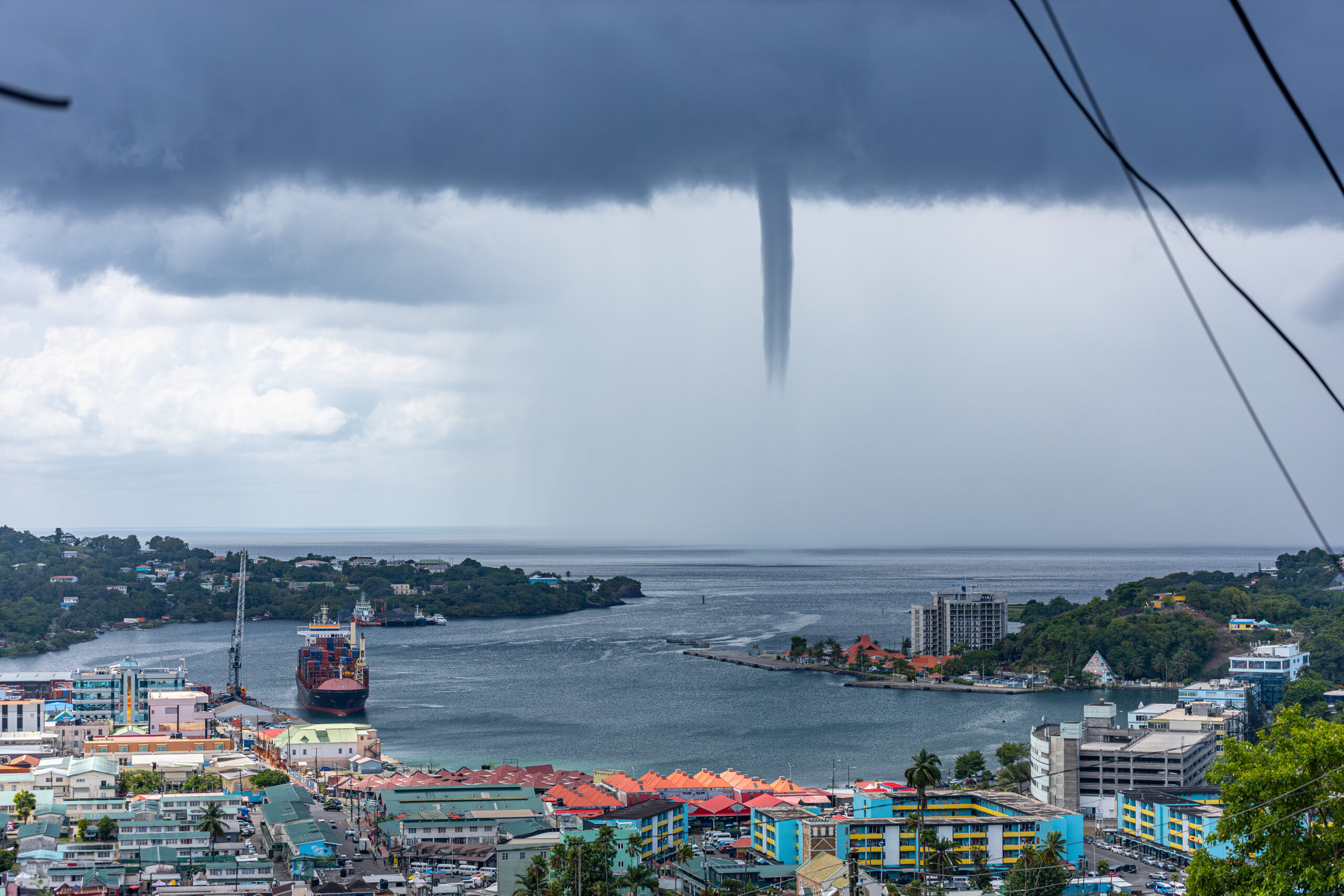
Waterspout spotted off Saint Lucia’s northwestern coast
On September 25, at approximately 1:50 p.m., a dramatic waterspout was observed over the sea near the northwestern coast of Saint Lucia. The funnel-shaped cloud, visible from multiple locations including the Castries city center, sparked awe and curiosity among onlookers. Bystanders quickly captured photos and videos, which rapidly circulated on social media, with some expressing amazement and concern. One individual exclaimed, “Oh my God, oh no! This is amazing,” while another remarked, “At first I thought it was a tornado, especially with the gloomy weather. But it looked pretty cool.”
According to the Saint Lucia Meteorological Services, the waterspout remained offshore and eventually dissipated without making landfall. Acting Director Vigil Saltibus confirmed that the phenomenon posed no threat to coastal communities or infrastructure. However, she emphasized that waterspouts can be hazardous to small vessels and become dangerous if they move ashore. Saltibus reassured the public that current conditions do not indicate an immediate risk of recurrence but advised fishing vessels and recreational boaters to remain vigilant. The meteorological services continue to monitor the atmosphere closely and will provide updates if conditions change, ensuring residents remain informed and safe.
-

Barbadians traveling to Europe will soon need to provide biometric data
Starting October 2025, Barbadians traveling to Europe will encounter significant changes in entry requirements as the European Union rolls out its new digital border management systems. The European Commission has announced the implementation of the Entry/Exit System (EES) on October 12, 2025, which will mandate non-EU nationals, including Barbadians, to provide biometric data—a facial image and four fingerprints—at the border for short stays of up to 90 days within a 180-day period. This data will be securely stored for three years, replacing the traditional passport stamping process. The EES is expected to be fully operational across 29 European countries by April 10, 2026. Additionally, Barbadians and other visa-exempt travelers will need to obtain travel authorization through the European Travel Information and Authorization System (ETIAS), set to launch in late 2026. The ETIAS application, costing €20, will be valid for three years or until the traveler’s passport expires, with exemptions for those under 18 or over 70. The European Commission has initiated a public awareness campaign, providing resources such as brochures, infographics, and videos to help travelers understand the new requirements. Officials emphasize that these measures aim to streamline travel processes while urging travelers to prepare in advance to avoid disruptions. For more details, Barbadians are encouraged to visit the official EU travel website.
-

Skerrit on new Contour flights: You asked, we delivered, now fill those seats
Dominica has achieved a significant milestone in its aviation history with the introduction of its first nonstop flights to St. Thomas and San Juan, operated by Contour Airlines. Prime Minister Roosevelt Skerrit, speaking at the official welcome ceremony, emphasized the importance of this new service, which fulfills a long-standing request from residents of St. Thomas for direct connectivity to Dominica. The flights will operate between Cyril E. King Airport in St. Thomas and Douglas–Charles Airport in Dominica, with additional routes linking Dominica to Luis Muñoz Marín International Airport in San Juan, Puerto Rico. Skerrit urged travelers to prioritize these flights to ensure their sustainability, stating, ‘Contour Airlines is here to stay, but their success depends on us filling those seats.’ Acting Tourism Minister Chekira Lockhart-Hypolite highlighted the broader implications of this development, noting that it enhances Dominica’s global connectivity and supports its tourism-driven economy. ‘This service is more than a new flight; it’s a step toward a more inclusive and interconnected Dominica,’ she said. Ben Munson, President of Contour Airlines, expressed optimism about the service’s potential, citing strong initial bookings and the strategic importance of these routes in bridging Dominica with key markets in the Caribbean and North America. The flight schedule includes three weekly nonstop services to St. Thomas and four weekly flights to San Juan, marking a new era of accessibility and opportunity for Dominica.
-
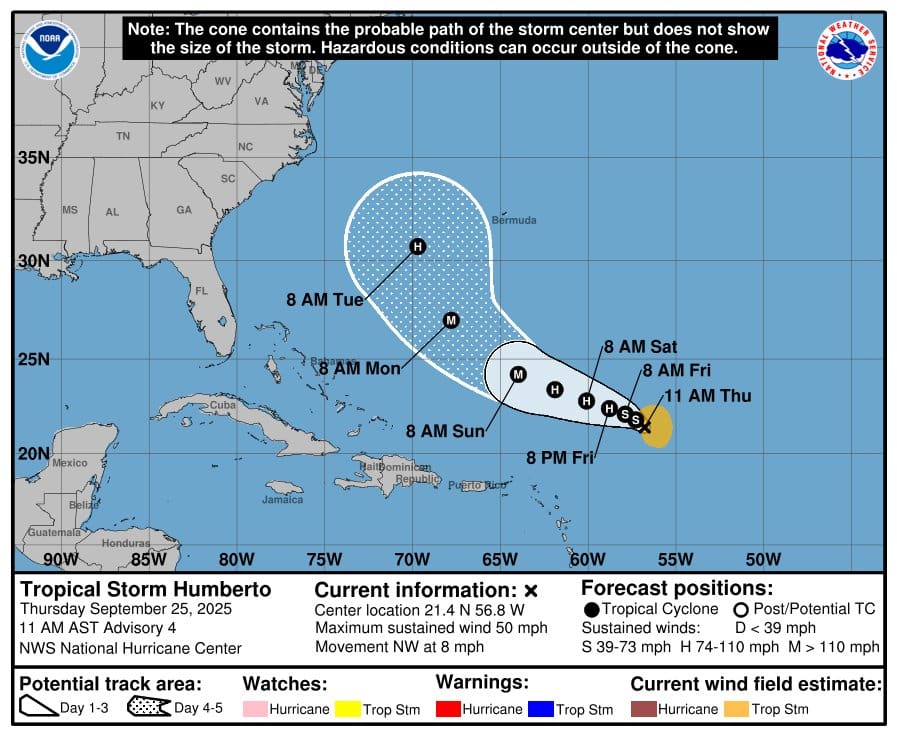
Met Office to continue to monitor Humberto
Tropical Storm Humberto, currently situated over the central Atlantic, is rapidly gaining strength and is projected to escalate into a hurricane within the next 24 hours, according to the latest updates from meteorologists. As of 11 a.m. AST on Thursday, the National Hurricane Center reported the storm’s position at latitude 21.4 North, longitude 56.8 West, approximately 465 miles east-northeast of the northern Leeward Islands. Humberto is advancing northwest at a speed of 8 mph, with maximum sustained winds nearing 50 mph. Forecasters anticipate the storm will continue to intensify as it traverses the warm Atlantic waters, potentially reaching hurricane status by Friday. Despite its growing strength, Humberto currently poses no immediate threat to land, and no coastal watches or warnings have been issued. The Antigua and Barbuda Meteorological Service, in coordination with the National Hurricane Center, is closely monitoring the storm’s trajectory. The central pressure of the storm was recorded at 1004 mb (29.65 inches). Authorities are urging residents to remain vigilant and stay informed as the Atlantic hurricane season reaches its peak.
-

Assata Shakur, wanted Black Liberation Army member, dies in Cuba
Assata Shakur, a prominent figure in the Black Liberation Army (BLA) and a convicted murderer in the 1973 killing of a New Jersey state trooper, has passed away in Cuba at the age of 78. Shakur, also known as Joanne Chesimard, was found guilty of first-degree murder for the death of Trooper Werner Foerster during a shootout on the New Jersey Turnpike. In 1979, after serving two years of a life sentence, she escaped from a New Jersey prison with the assistance of fellow BLA members and sought refuge in Cuba, where she was granted asylum by then-President Fidel Castro. Her presence in Cuba has been a persistent source of tension between the Cuban and U.S. governments. Shakur remained a high-profile fugitive, securing a permanent place on the New Jersey state police’s most wanted list and later becoming the first woman on the FBI’s most wanted terrorists list. According to the Cuban Ministry of Foreign Affairs, she died in Havana due to health complications and advanced age. Shakur’s life was marked by her activism against sexism and racism prior to her conviction, making her a polarizing figure—condemned by law enforcement yet revered by certain activist groups.
-
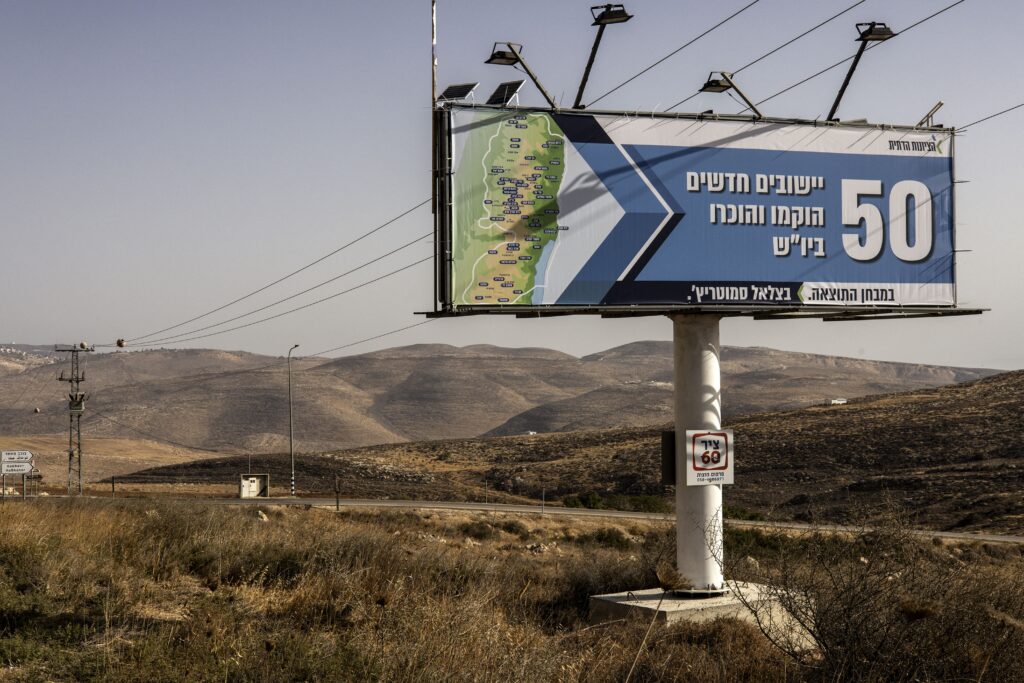
UN identifies 158 firms linked to Israeli settlements
The United Nations has unveiled an updated version of its contentious database detailing companies engaged in activities within Israeli settlements. Released on Friday, the list now includes 158 firms from 11 countries, with major corporations such as Airbnb, Booking.com, Motorola Solutions, and Trip Advisor retaining their positions. However, several companies, including Alstom and Opodo, have been removed from the non-exhaustive database. The majority of the listed companies are based in Israel, with others hailing from Canada, China, France, Germany, Luxembourg, the Netherlands, Portugal, Spain, the United Kingdom, and the United States. The UN report urges these companies to address the adverse human rights impacts associated with their operations. UN High Commissioner for Human Rights Volker Turk has condemned Israel’s settlement policies in the occupied West Bank as a war crime, emphasizing the responsibility of businesses to ensure their activities do not contribute to human rights abuses. The database, initially created in 2020 in response to a Human Rights Council resolution, has faced significant criticism from Israel and its allies, including the United States. The latest update introduces 68 new companies while removing seven that are no longer involved in the specified activities. The UN has clarified that the listing process is not judicial or quasi-judicial, but the initiative remains highly contentious.