分类: world

  • Croatian woman detained at Las Américas Airport over cocaine smuggling

    Croatian woman detained at Las Américas Airport over cocaine smuggling

    DOMINICAN REPUBLIC – In a significant interdiction operation, a Croatian citizen has been apprehended by the National Drug Control Directorate (DNCD) in collaboration with the nation’s Public Ministry. The arrest is directly connected to a major narcotics seizure at Las Américas International Airport (AILA).

    The individual, identified as 44-year-old Ivana Ljubek, was intercepted by law enforcement in the departure terminal. The arrest, executed under warrant No. 2026-AJ0010503, occurred as she was preparing to board an international flight destined for Frankfurt, Germany.

    Investigative findings indicate Ljubek’s alleged involvement with a prior incident this month, where a 21-year-old male Croatian national was detained. The earlier arrest followed the discovery of 14 packages of cocaine, expertly concealed within a backpack, during a routine airport security screening.

    Authorities are now pursuing an expanded investigation to uncover potential connections to a sophisticated international drug trafficking syndicate. Preliminary evidence suggests the network may be actively recruiting couriers from diverse nationalities to facilitate the transport of illicit substances to key destinations, including the United States and European nations. The Dominican Republic is suspected of being utilized as a critical transit hub for these operations, pointing to a potentially vast multinational criminal structure.

    Following her detention, Ljubek has been formally placed under the jurisdiction of the Permanent Attention Court to undergo legal proceedings. The DNCD and the Public Ministry have jointly reaffirmed their unwavering commitment to intensifying counter-narcotics operations and combating the pervasive threat of transnational organized crime.

  • Cuba Postpones Annual Habanos Cigar Festival Amid Fuel Crisis

    Cuba Postpones Annual Habanos Cigar Festival Amid Fuel Crisis

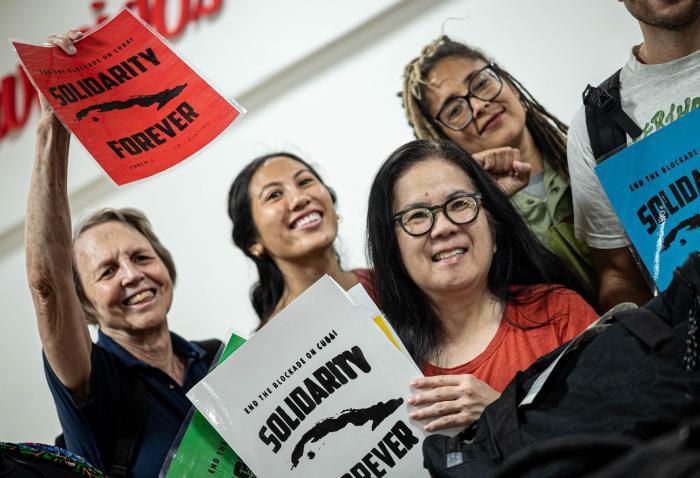
    Cuba has indefinitely delayed its internationally renowned Habanos Cigar Festival due to a severe fuel shortage crisis that has plunged the nation into economic turmoil. The organizing committee announced the postponement on Saturday, citing the country’s “complex economic situation” exacerbated by the longstanding U.S. trade embargo.

    The five-day festival, originally scheduled for late February in Havana, typically attracts over 1,300 participants from approximately 70 countries. The prestigious event features exclusive cigar tastings, factory tours, plantation visits, and a high-profile auction of premium cigars considered among the world’s finest.

    Cuba’s current energy crisis has resulted in power outages lasting up to 18 hours in some regions, severely impacting hospitals, water pumping stations, and essential services. The fuel shortage has also affected aviation capabilities, prompting several international airlines to suspend or reduce flights to the island. The United Kingdom and other nations have subsequently issued travel advisories against non-essential visits to Cuba.

    Cuban authorities attribute the crisis to the seizure of oil shipments from Venezuela, their longtime ally and primary fuel supplier, combined with the enduring U.S. economic, commercial, and financial blockade that has been in effect since 1960 following Fidel Castro’s revolution. No alternative date has been proposed for the rescheduling of the festival, which represents a significant blow to Cuba’s international tourism and premium tobacco industry.

  • 40 kampen ontmanteld in Royal Hill–Redi Bergi; spanningen bij aanvang

    40 kampen ontmanteld in Royal Hill–Redi Bergi; spanningen bij aanvang

    Surinamese authorities have initiated a major security operation targeting illegal mining activities in the sensitive region between New Koffiekamp and the Rosebel Gold Mine. On Saturday, a joint task force comprising elements from the Suriname Police Corps and the National Army launched ‘Operation Clean Sweap’ to dismantle unauthorized mining camps in the Redi Bergi area.

    The multi-agency operation involved specialized units including RBT-Central, base police, Central Surveillance, the Mobile Unit, the National Army’s Riot Team, and a dedicated Task Force. During the initial phase of the operation, security forces encountered resistance from local community members and traditional authorities.

    Approximately 20-25 villagers, supported by some traditional leaders, erected a barricade using heavy equipment near the so-called lever past New Koffiekamp. The barrier remained in place for approximately twenty minutes before security personnel employed tactical de-escalation measures to dismantle it without major incident.

    Police Public Relations confirmed that despite continued temporary resistance from other villagers, the situation was contained without serious confrontations between the mixed security unit and local residents. Some protesters eventually dispersed from the location voluntarily.

    The operation resulted in the dismantling of forty illegal mining camps thus far. Authorities have declared their intention to continue the clearance operation until the entire concession area of Zijin Mining, the Chinese company operating the Rosebel Gold Mine, is completely cleared of unauthorized mining activities.

  • Illegale landingsbaan en semi-duikboot in aanbouw ontdekt in Witagron

    Illegale landingsbaan en semi-duikboot in aanbouw ontdekt in Witagron

    In a significant counter-narcotics operation, Surinamese authorities have dismantled a sophisticated drug trafficking infrastructure in the Witagron region. During a specialized reconnaissance mission on February 12, 2026, a joint task force comprising members of the Judicial Intervention Team (JIT) and Directorate of National Security (DNV) discovered an illicit airstrip alongside multiple established camps.

    The operation, initially intended to map unauthorized landing strips in the interior, uncovered far more extensive criminal operations than anticipated. Security personnel encountered a complex network containing approximately 15,000 liters of diesel fuel, an arsenal of weapons and ammunition, various all-terrain vehicles, and substantial quantities of cash in multiple currencies.

    The financial seizure included Colombian pesos, US dollars, Surinamese dollars, Venezuelan bolivars, and Brazilian reais, indicating the transnational nature of the criminal enterprise. Most notably, authorities discovered a partially constructed self-propelled semi-submersible vessel (SPSS) – a sophisticated naval craft designed specifically for covert drug transportation. Based on its dimensions, the vessel potentially could transport over 10 metric tons of cocaine.

    Law enforcement apprehended six individuals during the three-day operation: three Colombian nationals and three Surinamese citizens, with arrests occurring on February 12, 13, and 14. Several armed Colombian suspects managed to evade capture during the initial raid. The Public Prosecution Service’s Unit Public Relations has confirmed that manhunt operations for these fugitives are currently underway.

  • Ghana seeks to extradite Russian accused of filming sexual encounters with women

    Ghana seeks to extradite Russian accused of filming sexual encounters with women

    Ghanaian authorities have initiated formal proceedings to secure the extradition of a Russian national accused of covertly recording intimate encounters with women and disseminating the footage across social media platforms without obtaining consent. The individual, identified in both Ghana and Russia as a self-proclaimed ‘pick-up artist’ and online blogger in his thirties, had traveled to the African nation specifically to secretly document his interactions with women. The illicit recordings were allegedly captured using a pair of smart sunglasses equipped with a camera, which he then used to circulate the private footage online. A preliminary investigation conducted by Ghanaian officials suggests the suspect has likely departed the country. In response, Ghana’s Technology Minister has summoned the Russian ambassador to address the serious allegations. This case presents a significant diplomatic challenge, as Russia maintains a policy of not extraditing its citizens, except under extreme circumstances. Social media reports indicate this individual may have been distributing similar non-consensual footage involving women in Ghana and Kenya for several years, suggesting a pattern of predatory behavior across multiple jurisdictions.

  • Brand in olieraffinaderij in Havana verergert Cubaanse brandstofcrisis

    Brand in olieraffinaderij in Havana verergert Cubaanse brandstofcrisis

    A significant fire erupted at the Nico Lopez oil refinery in Havana Bay on Friday, threatening to intensify Cuba’s ongoing energy crisis as the nation grapples with a US-imposed fuel blockade. While the blaze originated in a storage warehouse rather than near critical oil tanks, the incident highlighted the country’s precarious energy situation.

    Cuban authorities confirmed the fire has been fully extinguished with no casualties reported. The Ministry of Energy and Mines stated that operations at the facility have returned to normal while investigations continue into the cause. The incident occurred near two oil tankers docked in Havana harbor, though the flames did not spread to adjacent areas.

    This industrial accident compounds Cuba’s severe economic challenges, particularly its dependence on imported fuel. The nation historically relied on Venezuelan oil imports, but these shipments ceased following last month’s abduction of Venezuelan leader Nicolás Maduro by US forces. President Donald Trump’s recent executive order further enables trade tariffs against any country supplying oil to the island nation.

    The fuel shortage has triggered widespread power outages across Cuba, disrupting public transportation and forcing reductions in hospital staffing. Educational institutions have limited operations, government employees work four-day weeks, and some hotels have temporarily closed.

    UN Secretary-General Antonio Guterres recently warned of potential humanitarian collapse in Cuba without immediate energy assistance. The arrival of two Mexican naval vessels carrying over 800 tons of humanitarian aid to Havana on Thursday underscores the growing international concern.

    Maritime tracking experts report no foreign fuel tankers have reached Cuban ports in weeks, leaving the country capable of producing only one-third of its total fuel requirements domestically. Cuban Vice Foreign Minister Carlos de Cossio accused the US of implementing “collective punishment” against the Cuban people, stating that fuel shortages damage transportation, healthcare, education, power generation, food production, and overall living standards.

    Mexican President Claudia Sheinbaum has criticized Washington’s oil restrictions as “unjust” while advocating for renewed dialogue between Cuba and the United States.

  • U.S. Says Three Killed in Caribbean Strike on Suspected Narco-Trafficking Vessel

    U.S. Says Three Killed in Caribbean Strike on Suspected Narco-Trafficking Vessel

    In a decisive maritime security operation, U.S. Southern Command (SOUTHCOM) confirmed the elimination of a suspected narco-terrorist vessel in Caribbean waters on Friday. The military action resulted in three fatalities among individuals identified as operatives for designated terrorist organizations engaged in narcotics trafficking.

    The operation, executed under the ongoing framework of Operation Southern Spear, employed a precision kinetic strike against the target vessel. According to official statements from SOUTHCOM, the action was initiated following comprehensive intelligence verification that confirmed the vessel’s active involvement in drug trafficking along established narcotics smuggling corridors.

    Joint Task Force Southern Spear, the operational unit responsible for the engagement, conducted the mission without sustaining any casualties or injuries to U.S. military personnel. The command’s announcement emphasized the targeted nature of the operation while maintaining operational security protocols regarding the specific location, vessel identification, and identities of the deceased individuals.

    This strategic intervention represents the latest development in continued U.S. efforts to disrupt transnational criminal networks that utilize maritime routes for narcotics transportation. The Caribbean region remains a critical focus area for counter-narcotics operations due to its strategic position along major trafficking routes between South America and North American markets.

    SOUTHCOM has indicated that additional operational details regarding the targeted organizations remain classified at this time, with further information pending ongoing assessment and investigation procedures.

  • Cooperation : DINEPA meeting at the Cuban Embassy in Haiti

    Cooperation : DINEPA meeting at the Cuban Embassy in Haiti

    In a significant diplomatic engagement aimed at bolstering infrastructure development, Théophil Ostinvil, Director General of Haiti’s National Directorate of Drinking Water and Sanitation (DINEPA), convened with Cuban Ambassador Ricardo Garcia Nápoles at the Cuban Embassy in Haiti on February 14, 2026.

    The high-level discussions centered on enhancing bilateral cooperation in critical water and sanitation services, with particular emphasis on knowledge transfer and capacity building. Both parties conducted a comprehensive review of existing collaborative achievements while identifying strategic priorities for future joint initiatives.

    A cornerstone of the dialogue involved developing a structured capacity-building program leveraging Cuba’s technical expertise to strengthen DINEPA’s operational capabilities. This initiative aims to support Haiti’s sustainable development goals in water infrastructure management through specialized training and skill development programs for Haitian water sector professionals.

    Additionally, the meeting served as a platform to address administrative considerations pertaining to current collaboration mechanisms between DINEPA and Cuban technical experts working within Haiti’s water sector. The discussions reflected both nations’ commitment to streamlining operational frameworks for enhanced efficiency.

    This diplomatic engagement underscores Haiti’s ongoing efforts to strengthen international technical partnerships that directly contribute to improving water, sanitation, and hygiene (WASH) infrastructure, ultimately benefiting Haitian communities through improved access to essential services.

  • Cubanen: ‘Mexico heeft ons niet in de steek gelaten’

    Cubanen: ‘Mexico heeft ons niet in de steek gelaten’

    In a significant geopolitical development, two Mexican vessels carrying critical humanitarian supplies have docked in Havana’s port, providing relief to Cubans grappling with severe shortages exacerbated by US-imposed oil sanctions. The Papaloapan and its companion ship began unloading pallets of aid on Thursday as grateful residents watched the operation with visible emotion.

    Ediberto Rodriguez, a 65-year-old Havana resident, expressed profound appreciation for Mexico’s solidarity, characterizing the assistance as “an unforgettable gesture from a true ally.” He noted that Mexico “did not abandon us despite pressure from a world power like the United States.”

    Mexican President Claudia Sheinbaum confirmed during a press conference that additional support would follow once the ships return to Mexico. “We are sending various forms of assistance and support,” Sheinbaum stated. “Today the ships arrive. When they return, we will send more help of a different nature.” The president emphasized Mexico’s commitment to facilitating dialogue between Cuba and the United States while prioritizing respect for Cuban sovereignty.

    The humanitarian mission occurs against the backdrop of escalating energy shortages that have pushed Cuba toward a potential crisis point. Since January, the Trump administration has intensified efforts to restrict oil shipments to the island nation, severely compromising energy infrastructure and essential services. These measures represent the latest chapter in longstanding sanctions dating back to the Cold War era.

    United Nations officials have raised alarms about the deteriorating situation. Stéphane Dujarric, spokesperson for UN Secretary-General António Guterres, warned that without adequate oil supplies, conditions on the island could worsen dramatically or even collapse. Chronic power outages have become commonplace, while fuel shortages threaten the delivery of basic necessities.

    Washington’s oil embargo followed controversial US military operations targeting Venezuela, Cuba’s primary ally and oil supplier. By severing economic ties between Caracas and Havana, the US administration aims to increase pressure on the Cuban government.

    Notably, the United States announced $6 million in humanitarian assistance this month, though officials specified that distribution would occur through Catholic Church channels rather than Cuban government institutions.

    While Mexican aid provides immediate relief, the situation underscores the profound impact of sanctions on civilian populations and essential services. The coming weeks will prove critical in determining whether further escalation of the humanitarian crisis can be prevented.

  • Saint Lucia, Micronesia trade marine conservation solutions

    Saint Lucia, Micronesia trade marine conservation solutions

    In a groundbreaking transoceanic partnership, the Caribbean nation of Saint Lucia and the Pacific islands of Micronesia have launched a strategic knowledge exchange to combat shared environmental threats. The BE-CLME+ Micronesia Challenge Twinning Initiative has created a vital platform for these small island developing states to address escalating climate risks through collaborative marine conservation approaches.

    During an intensive week-long dialogue, government officials and marine experts exchanged innovative methodologies for sustainable ocean governance and community-based fisheries management. The initiative specifically focused on strengthening economic systems that simultaneously preserve marine ecosystems—a dual approach known as the blue economy framework.

    Saint Lucian delegates presented their comprehensive blue economy agenda, demonstrating how marine conservation directly correlates with affordable protein security, livelihood sustainability, and national development objectives. Meanwhile, Micronesian representatives shared their unique traditional governance models, emphasizing centuries-old customary tenure systems that maintain community stewardship of marine resources.

    A Micronesian participant explained during presentations: ‘While we’ve adapted to westernized systems, we maintain robust traditional practices through chiefly hierarchies and familial structures. Our community boundaries and leadership systems form a cohesive framework that inherently supports sustainable marine management.’

    The exchange revealed critical insights about community engagement methodologies. Participants identified that effective conservation projects require integrating local communities during planning phases rather than presenting pre-designed initiatives. This participatory approach ensures greater project effectiveness and community ownership.

    Deputy Chief Fisheries Officer Thomas Nelson characterized the exchange as transformative, noting that it ‘reinforces the principle that collective action is essential in addressing common challenges related to ocean governance, food security and climate change.’ The Ministry of Agriculture confirmed the initiative aligns with Saint Lucia’s national priorities while strengthening institutional capacity and promoting people-centered resource management through enhanced international cooperation.