分类: world

  • Air Europa flights from Havana to Madrid make refueling stop in Dominican Republic

    Air Europa flights from Havana to Madrid make refueling stop in Dominican Republic

    European carrier Air Europa has implemented significant operational changes to its Cuba-Spain route amid growing aviation fuel shortages in Havana. The airline confirmed that flights from José Martí International Airport to Madrid will now require technical refueling stops in Santo Domingo, Dominican Republic, during Tuesday through Friday operations.

    The temporary measure addresses critical fuel supply limitations at Cuba’s main international gateway. While all flights remain operational, the additional refueling stop will result in adjusted schedules and extended travel times. Air Europa emphasized that these disruptions stem from circumstances beyond its control and extended apologies to affected passengers for resulting inconveniences.

    Simultaneously, Iberia Airlines has activated a flexible fare policy permitting travelers with existing Cuba bookings to voluntarily modify their itineraries. The Spanish carrier has not confirmed any flight cancellations or permanent route suspensions despite the deteriorating fuel situation.

    This aviation crisis emerges from Cuba’s severe energy shortages that have intensified throughout 2024. The Cuban government previously alerted international airlines about dwindling aviation fuel reserves, attributing the scarcity to longstanding U.S. oil embargo restrictions. The communist-ruled island nation continues to grapple with cascading effects of energy austerity measures that impact transportation networks, economic activity, and social stability.

    Recent weeks have witnessed the implementation of strict emergency protocols as Cuban authorities struggle to manage severely constrained fuel imports. The aviation sector represents the latest casualty in an escalating crisis that has prompted concerns about the country’s capacity to maintain international connectivity.

  • As glaciers melt, the world’s hidden water banks are at risk

    As glaciers melt, the world’s hidden water banks are at risk

    The world’s glaciers, often described as nature’s frozen water banks, are disappearing at an alarming rate, threatening the water security of nearly two billion people globally. According to QU Dongyu, Director-General of the United Nations Food and Agriculture Organization, these critical ice formations sustain some of the planet’s most vital river systems including the Indus, Nile, Ganges, and Colorado rivers.

    The accelerated retreat of glaciers—with five of the past six years marking the most rapid disappearance on record—is already triggering immediate environmental hazards including flash floods, glacial lake outbursts, and landslides. More concerning still is the long-term prospect of permanent water source disappearance, which will fundamentally undermine agricultural production from mountain communities to downstream breadbasket regions.

    Mountain regions, covering over a quarter of the Earth’s land surface and home to 1.2 billion people, are warming faster than the global average. Communities from the Andes to the Himalayas are already experiencing shorter snow seasons, erratic water runoff, and diminished crop yields. Many glaciers have reached or will soon reach ‘peak water’—the point of maximum meltwater runoff—within the next two to three decades, after which flows will enter permanent decline.

    The crisis extends beyond physical resources to cultural erosion. For Indigenous Peoples across Asia, Latin America, Africa, and the Pacific, glaciers represent sacred elements whose disappearance undermines centuries-old traditions, rituals, and cultural heritage.

    In response, the United Nations has declared 2025 the International Year of Glaciers’ Preservation, calling for coordinated global action. Effective solutions require innovative approaches including sustainable agricultural techniques such as terrace farming, agroecology, and crop diversification—practices long employed by mountain communities. Projects in Kyrgyzstan, India, and Peru demonstrate promising adaptation methods, from artificial glacier construction to natural filtration systems addressing water quality deterioration.

    However, current responses remain fragmented. Comprehensive solutions demand bold policy shifts, increased investment in water infrastructure, enhanced climate finance mechanisms, and strengthened cross-border cooperation—particularly crucial since glacier-fed rivers often span multiple countries. The international community must address this critical nexus between water security, agricultural sustainability, and climate resilience before these frozen reservoirs vanish completely.

  • How does the blockade affect Cuban children?

    How does the blockade affect Cuban children?

    The devastating human impact of the United States’ six-decade economic embargo against Cuba is being felt most acutely by the nation’s most vulnerable population—children with disabilities. Current reports reveal that 538 essential wheelchairs, both electric and conventional, remain unavailable for Cuban children with motor disabilities due to blockade restrictions.

    At the Solidaridad con Panamá special education school in Havana, which serves as a rehabilitation center for disabled youth, the consequences of American policy are visibly crippling. Approximately one hundred children were absent from classes recently when three buses failed to arrive—a direct result of transportation shortages caused by the economic siege.

    Medical crises are escalating among this vulnerable population. Children with cerebral palsy and progressive muscular dystrophy are experiencing deteriorated mobility because botulinum toxin medications, primarily manufactured in the United States, cannot be reliably acquired. This therapeutic shortage has caused relapses with seizures and loss of walking ability in multiple cases.

    Beatriz Roque Morales, Cuba’s National Director of Special Education, detailed how the embargo has forced systemic adaptations: ‘The conditions we have faced for many years, gradually worsening, have compelled us to readjust basic resources in special education schools to maintain quality.’ The crisis affects 331 specialized institutions across the island nation.

    The technological isolation extends to educational materials. Braille book production remains prohibitively expensive without access to specialized printers that could efficiently reproduce tactile texts. Teacher development has similarly suffered, with limited access to international platforms that share the latest rehabilitation techniques and research.

    Parent Ained García Díaz, whose daughter has cerebral palsy, expressed the collective anguish: ‘We fight for these children to have better quality of life. It’s hard for parents, schools, and teachers when essential resources don’t reach us.’

    Despite these challenges, the resilience within Cuba’s special education community remains remarkable. Esther de La O Ochoa, former director of the Solidaridad con Panamá school, emphasized the dedication of educators who persevere through power outages and transportation difficulties: ‘We continue ensuring that children’s smiles are not erased.’

    The spirit of resistance is embodied by students like ‘Pelusa,’ a 13-year-old without both hands who declares herself ‘the most intrepid girl’ at her school. Her confidence in Cuba’s unity against external pressure reflects the revolutionary ethos that continues to sustain the nation’s most vulnerable through unprecedented challenges.

  • PNH : Miragoâne, Monitoring of the construction of the future Nippes departmental police station (video)

    PNH : Miragoâne, Monitoring of the construction of the future Nippes departmental police station (video)

    A coalition comprising the United Nations Development Programme (UNDP-Haiti), the Japanese government, and the Haitian National Police (PNH) has conducted a comprehensive field assessment of the ongoing construction of a new departmental police headquarters in Miragoâne, Nippes department. This inspection marks a pivotal development in Haiti’s ongoing security enhancement initiatives.

    The regional law enforcement coordination center is being constructed at a strategic junction connecting four key departments: Grand’Anse, South, Southeast, and West. This geographical positioning establishes the facility as an essential operational nexus for coordinating PNH activities across Haiti’s Greater South region.

    The multimillion-dollar project receives technical implementation support from UNDP, financial backing from Japan, and will be operationally managed by Haitian law enforcement authorities. The facility will feature advanced infrastructure and modern equipment specifically designed to enhance operational coordination, improve response efficiency, and strengthen law enforcement capabilities throughout the region.

    This construction project forms an integral component of UNDP’s broader “Support Program for the Haitian National Police” initiative in Haiti. The comprehensive program aims to reinforce institutional governance structures, professionalize recruitment and training protocols, enhance operational capacities, and intensify efforts against organized criminal networks and gang-related violence that have plagued the nation.

  • US forces seize ship in Indian Ocean that fled Caribbean blockade

    US forces seize ship in Indian Ocean that fled Caribbean blockade

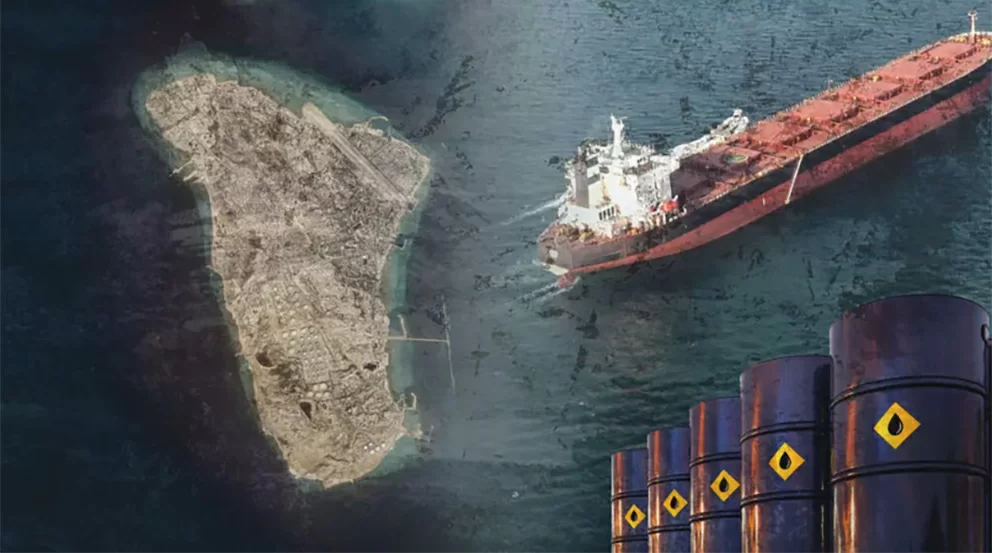
    WASHINGTON (AFP) — In a dramatic long-range maritime enforcement operation, US military forces have successfully intercepted and seized an oil tanker in the Indian Ocean that was attempting to evade President Trump’s sanctioned vessel blockade. The Pentagon confirmed Monday that the Aquila II was boarded without incident during overnight operations.

    The vessel had been operating in violation of the established US quarantine of sanctioned ships in the Caribbean region before attempting to flee. Pentagon officials stated on social media platform X that the tanker ‘ran, and we followed,’ emphasizing the determined pursuit across ocean basins. The operation was documented with video footage showing US special operations forces fast-roping from helicopters onto the tanker’s deck.

    This seizure marks the eighth such enforcement action since President Trump’s December directive establishing a blockade against oil vessels traveling to and from Venezuela. It represents the second instance where US forces have pursued a sanctioned vessel beyond the Caribbean region, following last month’s apprehension of a Russia-linked tanker in the North Atlantic after a similar chase originating near Venezuela.

    The Washington administration has significantly increased naval presence in the Caribbean, conducting multifaceted operations including drug interdiction missions, tanker seizures, and the controversial operation targeting Venezuela’s socialist leader Nicolás Maduro. Despite these high-profile seizures, captured vessels constitute only a minimal fraction of the estimated 800-strong global ‘dark fleet’ of sanctioned ships operating worldwide, as noted by Rear Admiral David Barata of the US Coast Guard in recent congressional testimony.

  • Air Canada suspends Cuba flights citing airport fuel shortage

    Air Canada suspends Cuba flights citing airport fuel shortage

    MONTREAL — Air Canada, the nation’s flagship carrier, has announced an immediate suspension of all commercial flights to Cuba effective Monday, citing a critical shortage of aviation fuel at the island’s airports that has jeopardized operational safety. The airline confirmed in an official statement that commercially available jet fuel is projected to become entirely unavailable at Cuban aviation facilities starting February 10th.

    The decision comes amid a severe energy crisis in Cuba, which industry analysts attribute to intensified geopolitical pressures and economic sanctions. In response to the service suspension, Air Canada has initiated a special repatriation operation, deploying aircraft without passengers to Cuban destinations specifically to retrieve Canadian travelers currently stranded in the country.

    This development represents the most significant disruption to Canadian-Cuban air connectivity in recent history, potentially affecting thousands of travelers during the peak winter travel season. Aviation authorities are monitoring the situation closely as other international carriers serving Cuban routes evaluate their operational contingencies amid the escalating fuel availability crisis.

  • UN worried at situations in Haiti and Cuba

    UN worried at situations in Haiti and Cuba

    The United Nations has expressed profound alarm over a dramatic escalation in gender-based violence across Haiti, revealing an estimated 8,000 reported cases in the past year—marking a 25 percent surge compared to the previous period. UN Secretary-General’s spokesperson Stéphane Dujarric emphasized that due to significant underreporting, this figure represents merely a fraction of the actual incidents.

    Dujarric detailed the horrific conditions facing survivors, noting that attacks frequently occur within overcrowded displacement sites where emergency care remains severely limited. Only 30 percent of survivors manage to receive critical assistance within the crucial 72-hour window, substantially increasing risks of sexually transmitted infections and unintended pregnancies. Chronic underfunding has further crippled support systems, leaving victims without access to legal assistance, child protection services, or safe shelter.

    To address this humanitarian emergency, the UN and its partners are seeking $24 million in funding to implement comprehensive prevention and response measures targeting 1.5 million people with medical, psychological, and support services.

    Concurrently, the International Organization for Migration (IOM) is intensifying efforts to monitor water quality in Port-au-Prince’s displacement camps to prevent cholera outbreaks. With support from the European Union’s Civil Protection & Humanitarian Aid Delegation, displaced families are participating in practical simulations to strengthen safe water practices.

    Separately, the UN expressed growing concern over Cuba’s deteriorating fuel shortages and their cascading effects on critical services. The scarcity has disrupted clean water delivery, medical care, food distribution, and other essential aid, particularly in regions devastated by Hurricane Melissa last October. There are additional concerns that airport operations could be compromised, further hampering relief efforts.

    The UN team in Cuba previously launched a $74 million action plan last November to support national recovery efforts for the more than two million people affected by Hurricane Melissa. However, with only 23 percent of required funding secured, the organization issued an urgent call for additional resources to ensure aid reaches vulnerable populations.

  • Tremors felt in Inagua after 5.8-magnitude Cuba quake

    Tremors felt in Inagua after 5.8-magnitude Cuba quake

    Residents across the southern Bahamas islands experienced mild seismic activity early Sunday morning following a significant earthquake near eastern Cuba. The 5.8-magnitude tremor, which struck at approximately 7:00 AM local time, originated just 49 kilometers southeast of Baracoa in Cuba’s Guantánamo Province at a shallow depth of 15 kilometers.

    According to the Bahamas Department of Meteorology, which coordinated with both the Pacific Tsunami Warning Center and the United States Geological Survey, the seismic event posed no tsunami threat to the Bahamian archipelago. Preliminary assessments indicated that light to moderate shaking was potentially felt in the southern islands, including Inagua and Acklins, as well as in the Turks and Caicos Islands.

    Inagua Island Administrator Quenna Gibson, though absent from the district during the incident, received multiple accounts from residents who reported distinct vibrations. Assistant Superintendent of Police Kelly Kemp described experiencing bed shaking and residential vibrations, with similar reports from Chief Councillor Palacious and other community members. Despite the widespread sensations, no injuries or significant structural damage were officially documented.

    Local resident and district council member George O. Harris recounted being alerted by neighbors moments after the tremors began. One neighbor dramatically described being jolted awake by moving furniture, initially mistaking the phenomenon for ‘evilness’ before recognizing it as seismic activity. Harris noted the appearance of new cracks around doorframes in older buildings but confirmed no serious damage to government facilities or local infrastructure, including his Coast FM radio station compound.

    Meteorological officials have advised residents to maintain normal activities while remaining alert for potential aftershocks, though none are expected to be significant. The public is encouraged to report any unusual observations through official channels for ongoing monitoring.

  • OP-ED: As glaciers melt, the world’s hidden water banks are at risk

    OP-ED: As glaciers melt, the world’s hidden water banks are at risk

    The world’s glaciers, often described as nature’s frozen water banks, serve as critical lifelines for nearly two billion people globally. These immense ice formations sustain some of Earth’s most vital river systems—including the Indus, Nile, Ganges, and Colorado—which provide essential irrigation for agriculture, drinking water for communities, and power for electricity generation. However, accelerating climate change is triggering an unprecedented glacial retreat that threatens water, food, and livelihood security on a planetary scale.

    Scientific observations reveal that five of the past six years have witnessed the most rapid glacier melting ever recorded. Mountainous regions, which cover over a quarter of the world’s land surface and host 1.2 billion inhabitants, are warming at rates exceeding the global average. This thermal increase is producing immediate environmental hazards including flash floods, glacial lake outbursts, avalanches, and landslides. More concerning still is the long-term prospect of permanent glacial disappearance, which would fundamentally alter hydrological cycles that have persisted for millennia.

    The phenomenon of ‘peak water’—the point at which glacial meltwater reaches maximum output before declining—is already occurring or expected within coming decades for many glaciers. From the Andes to the Himalayas, communities report shortened snow seasons, erratic water flows, and diminished agricultural yields. In Peru, shrinking glaciers have directly reduced crop production, while Pakistan faces disruptions to traditional planting cycles due to unreliable snowmelt.

    Beyond practical survival concerns, glacial loss carries profound cultural implications. For Indigenous communities across Asia, Latin America, Africa, and the Pacific, glaciers represent sacred elements of their heritage. Their disappearance erodes centuries-old traditions, rituals, and cultural identities tied to mountain landscapes.

    In response to this crisis, the United Nations has designated 2025 as the International Year of Glaciers’ Preservation. The Food and Agriculture Organization (FAO), mandated to lead related observances, emphasizes that effective solutions require integrated approaches combining emission reduction, improved water management, and adaptive agricultural practices. Traditional techniques such as terrace farming, agroecology, and crop diversification—perfected by mountain communities over generations—offer valuable models for sustainable adaptation.

    Innovative preservation initiatives are already demonstrating promise. In Kyrgyzstan, FAO-supported projects construct artificial glaciers that store over 1.5 million cubic meters of ice for summer irrigation. India’s Ladakh region employs automated ice reservoirs to capture and preserve winter water, while Peruvian communities implement natural filtration systems to address water quality issues caused by mineral exposure from retreating glaciers.

    Despite these efforts, experts warn that current global responses remain fragmented and insufficient. Addressing the glacier-water-agriculture nexus demands coordinated policy alignment, increased climate financing, cross-border cooperation, and enhanced monitoring systems. As population growth escalates water demand while glacial supplies diminish, the preservation of these frozen ecosystems becomes increasingly synonymous with safeguarding humanity’s future.

  • More Than 2,300 Refugees Now Living in Belize

    More Than 2,300 Refugees Now Living in Belize

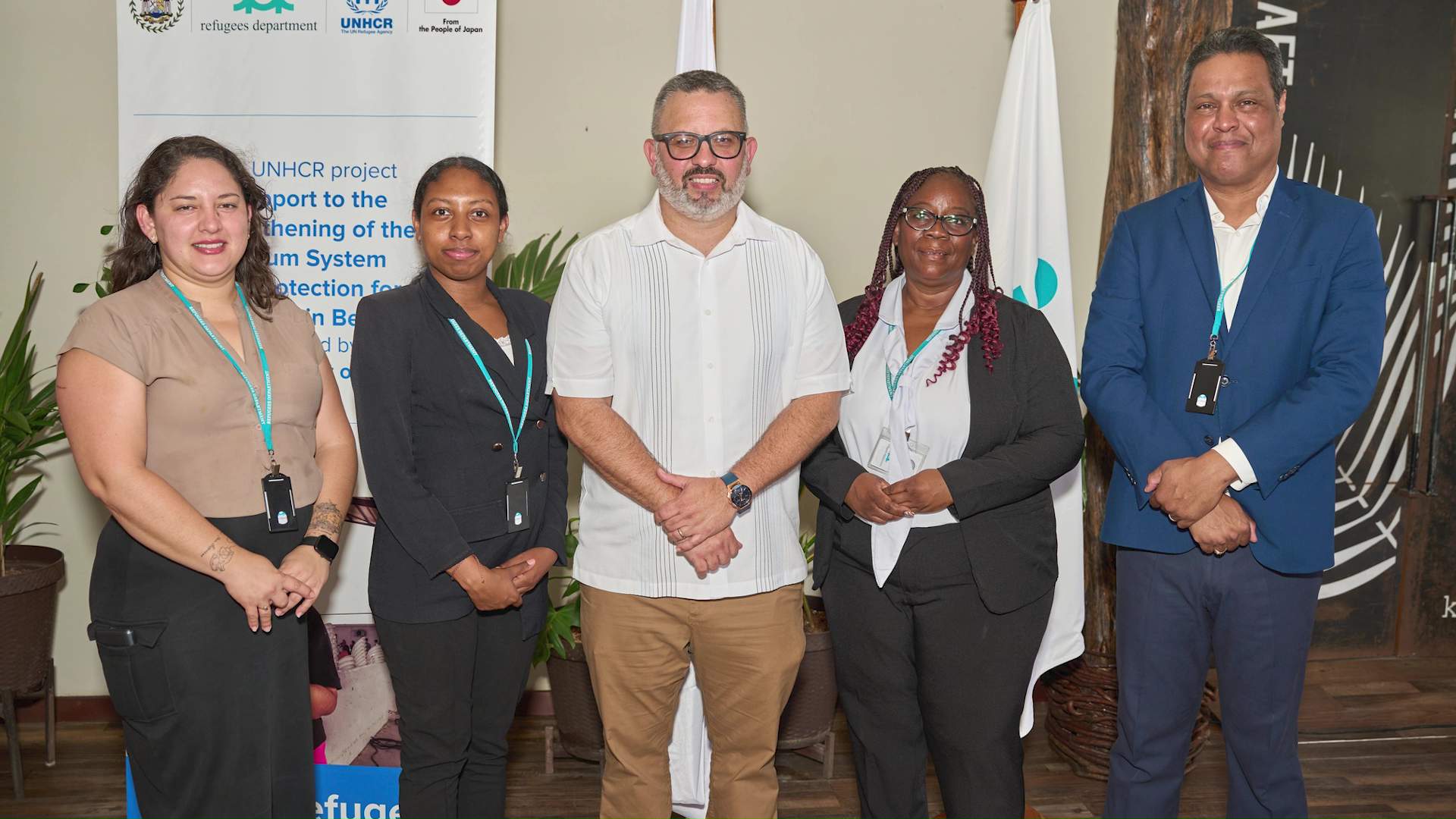
    Belize has emerged as a critical humanitarian sanctuary in Central America, currently providing refuge to 2,361 individuals fleeing violence and instability across the region. Official statistics reveal that the majority of these refugees and asylum-seekers originate from neighboring nations including El Salvador, Honduras, and Guatemala.

    The most recent quarterly data from October to December 2025 indicates a steady flow of displaced persons, with the national Refugees Department processing 45 new asylum applications during this period. Concurrently, 58 individuals received essential legal assistance and counseling services through the collaborative efforts of the United Nations High Commissioner for Refugees (UNHCR).

    Belize’s commitment to international protection standards stems from its longstanding adherence to the 1951 Refugee Convention. The nation’s humanitarian framework is formally established through its national Refugees Act, which provides the legal foundation for refugee rights and protections.

    UNHCR maintains an active partnership with the Belizean government, focusing on three key areas: strengthening the country’s asylum processing system, enhancing access to fundamental rights, and facilitating social integration programs. This cooperation includes direct funding for technical assistance and specialized training for personnel within both the Refugees Department and the Refugee Eligibility Committee.

    Beyond immediate protection concerns, the international agency advocates for legislative reforms to address potential statelessness issues. UNHCR additionally collaborates with various government ministries to ensure refugee populations can access essential national services including healthcare, education, and social welfare programs.