分类: world

  • Singapore retains its position as the world’s most powerful passport

    Singapore retains its position as the world’s most powerful passport

    The 2026 Henley Passport Index reveals a stark and growing global mobility divide, with Singapore maintaining its position as the world’s most powerful passport (192 visa-free destinations) while Afghanistan remains at the bottom (24 destinations). This 168-destination gap represents the largest disparity since the index began twenty years ago, significantly widening from the 118-destination difference recorded in 2006.

    Asian nations continue to dominate the upper rankings, with Japan and South Korea sharing second place (188 destinations), followed by several European countries in third (186 destinations). The United Arab Emirates emerges as the most improved passport over the past two decades, climbing 57 places to fifth position through sustained diplomatic engagement.

    The United States has returned to the top ten after briefly dropping out in late 2025, but this recovery masks a concerning long-term decline. Both the US and UK have experienced their steepest annual losses in visa-free access, with the US falling six places over twenty years and the UK dropping four places since 2006. This erosion of mobility rights reflects broader geopolitical shifts and domestic political volatility.

    Conversely, China has demonstrated remarkable progress, rising 28 places over the past decade to reach 59th position with access to 141 visa-free destinations. This improvement coincides with China’s strategic pivot toward openness as a diplomatic tool, granting visa-free access to 77 nationalities—31 more than the United States.

    The report highlights concerning policy developments that may further restrict global mobility. US Customs and Border Protection proposals could effectively end visa-free travel for citizens of 42 allied nations through extensive data collection requirements. Simultaneously, EU visa reforms are creating additional barriers for African travelers, with rejection rates increasing from 18.6% to 26.6% between 2015 and 2024.

    These developments have accelerated demand for alternative residence and citizenship options, with application volumes increasing by 28% in 2025 alone. Americans now represent the largest market seeking additional mobility rights, reflecting growing concerns about political instability and restricted global access.

  • Wat we weten over de dodelijke anti-regimeprotesten in Iran…

    Wat we weten over de dodelijke anti-regimeprotesten in Iran…

    Iran has been engulfed by nationwide demonstrations for two weeks, with protests initially sparked by economic grievances rapidly escalating into violent anti-regime confrontations. The unrest, marked by significant casualties and widespread arrests, represents one of the most substantial challenges to Iran’s theocratic government in recent years.

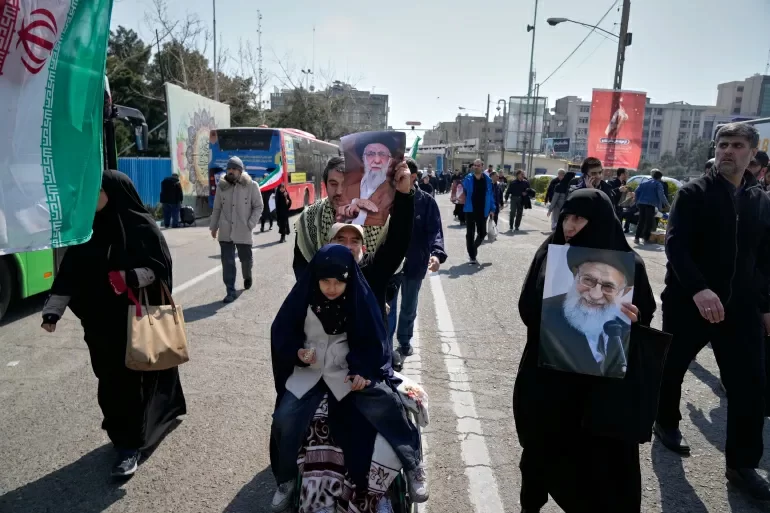
    The protests originated in late December among Tehran merchants before spreading across all 31 provinces. What began as demonstrations against economic deterioration—including currency collapse and soaring prices—quickly transformed into broader opposition against the regime itself. Protesters have been documented burning images of Supreme Leader Ayatollah Ali Khamenei, while some have expressed support for exiled Crown Prince Reza Pahlavi.

    Iran’s economic crisis has been exacerbated by multiple factors. Since the reimposition of UN sanctions in September due to Iran’s nuclear program, the Iranian rial has entered freefall, currently trading at over 1.4 million to the US dollar. This economic pressure was compounded by a twelve-day war in June involving Israeli offensives and US airstrikes on nuclear sites. Recent price hikes for subsidized gasoline—previously among the world’s cheapest fuels—and anticipated food price increases following the central bank’s elimination of preferential exchange rates for most goods have further inflamed public anger.

    The government response has been characterized by severe measures. Authorities have shut down communication and internet networks, making independent verification of events challenging. According to the Human Rights Activists News Agency, the protests have resulted in over 544 fatalities and approximately 10,600 arrests.

    Geopolitically, Iran’s regional influence has suffered significant setbacks. The ‘Axis of Resistance’—Tehran’s coalition of allied countries and militias—has been weakened by conflicts throughout the region. Israel decimated Hamas in the Gaza war, Hezbollah lost leadership figures, and Syria’s President Bashar al-Assad fell in December 2024 after years of conflict. Iran-backed Houthi rebels in Yemen have also been heavily targeted by Israeli and American airstrikes.

    International reactions have added complexity to the situation. President Trump warned that the US would respond ‘very hard’ if the regime violently suppresses peaceful demonstrators—a warning given additional context following the capture of Venezuelan leader Nicolás Maduro, a Tehran ally. Meanwhile, China remains a significant purchaser of Iranian oil but provides no overt military support, similar to Russia, which utilizes Iranian drones in the Ukraine conflict but offers limited other assistance.

    The nuclear dimension continues to loom large. While Iran maintains its nuclear program is peaceful, increased uranium enrichment and reduced cooperation with the UN’s International Atomic Energy Agency (IAEA) have raised suspicions. The IAEA director warns that Iran could produce sufficient material for approximately ten nuclear weapons should it decide to militarize its program. US intelligence agencies believe Iran hasn’t yet initiated a nuclear weapons program but is preparing to rapidly build one if desired.

    This crisis occurs within the broader context of strained US-Iran relations dating to the 1979 Islamic Revolution, which transformed Iran from a key American ally under Shah Mohammad Reza Pahlavi to a theocratic state under Ayatollah Khomeini. The relationship has oscillated between hostility and diplomacy, highlighted by the 2015 nuclear agreement from which the US unilaterally withdrew in 2018, reigniting regional tensions.

    Iran now confronts a multidimensional crisis testing its political stability, regional influence, and international relationships, with developments being closely monitored worldwide.

  • Antigua and Barbuda’s Energy Minister Elected IRENA Vice President for Latin America and Caribbean

    Antigua and Barbuda’s Energy Minister Elected IRENA Vice President for Latin America and Caribbean

    In a significant development for Caribbean representation in global energy governance, Antigua and Barbuda’s Energy Minister Melford Nicholas has attained the prestigious position of Vice President for Latin America and the Caribbean at the International Renewable Energy Agency (IRENA). This election occurred during IRENA’s 16th Assembly convened in Abu Dhabi, positioning the small island nation in a senior decision-making capacity within the influential international organization.

    Minister Nicholas utilized the platform to articulate the acute energy challenges confronting Small Island Developing States (SIDS). In his national address, he revealed that Antigua and Barbuda remains disproportionately reliant on imported fossil fuels, with fuel expenses constituting approximately 67% of all utility revenues. This economic vulnerability underscores the urgent necessity for transition to sustainable alternatives.

    During high-level discussions with IRENA Director-General Francesco La Camera, Nicholas championed accelerated deployment of renewable energy solutions across SIDS nations. The dialogue centered on strategic investment frameworks, international partnerships, and developing climate-resilient energy infrastructure capable of withstanding environmental disruptions.

    Nicholas emphasized the critical need for enhanced access to concessional financing mechanisms and customized risk-mitigation instruments specifically designed for small island economies. He highlighted ongoing international support, including a hybrid solar project in Barbuda funded by the United Arab Emirates, alongside contributions from the United Kingdom, New Zealand, and the CARICOM Development Fund.

    The minister’s leadership was further demonstrated as he presided over a ministerial-level session, solidifying Antigua and Barbuda’s influential role in shaping global renewable energy policy and reinforcing the nation’s commitment to sustainable energy transition.

  • Social : 2010 Earthquake : Rain of Messages

    Social : 2010 Earthquake : Rain of Messages

    Sixteen years after the catastrophic earthquake that devastated Haiti on January 12, 2010, the nation united in solemn remembrance of one of the most tragic events in its history. Senior government officials, international partners, and institutions across the country paid heartfelt tribute to the thousands of lives lost while emphasizing resilience and continued reconstruction efforts.

    Prime Minister Alix Didier Fils-Aimé led the national commemoration, stating: “The nation bows before the memory of the lives lost and shares the grief of the bereaved families. Mourning remains, but so does hope. Together, let’s commit to building a strong Haiti, founded on peace, stability, and solidarity.”

    Members of the Presidential Transitional Council echoed this sentiment. Councillor Leslie Voltaire highlighted the “exemplary strength and dignity of the Haitian people” during the disaster, while Council President Fritz Alphonse Jean called for reflection on “building a new Haiti.”

    The Haitian National Police honored dozens of officers who perished during rescue operations. Acting Commander-in-Chief André Jonas Vladimir Paraison commended those who “perished while providing assistance to those in need” and called for continued efforts toward “a better Haiti, in peace and security.”

    Port-au-Prince City Hall described how the earthquake “remains etched in the heart of Port-au-Prince and in the memory of all the Haitian people,” noting that “in our grief, we learned to stand tall.”

    The international community demonstrated sustained solidarity with Haiti. The French Embassy expressed “sincere thoughts of solidarity to the families of the victims,” while the Canadian Embassy commended “the remarkable resilience of the Haitian people.” The European Union reaffirmed its “profound and unwavering solidarity,” and the United Nations Integrated Office in Haiti paid tribute to both Haitian victims and UN colleagues lost in the disaster.

    The State University of Haiti (UEH) called the anniversary “an opportunity to meditate and reflect together on the best paths to take to build a nation,” emphasizing the need to work “with the forces of nature and the specific circumstances of our society.”

    From distant diplomatic posts, including the Haitian Embassy in Vietnam, officials joined in commemorating the tragedy that “forever marked national history” while recognizing the “resilience, national and international solidarity, and ongoing commitment to reconstruction.”

  • Politic : 2010 Earthquake : Official Ceremony

    Politic : 2010 Earthquake : Official Ceremony

    Haiti’s highest governmental authorities gathered at the National Palace on Champ de Mars for a poignant memorial ceremony marking the 16th anniversary of the catastrophic January 12, 2010 earthquake. The devastating 7.3 magnitude tremor, which lasted merely 35 seconds, resulted in 222,570 fatalities, 300,572 injuries, and left 1.6 million citizens homeless according to official statistics.

    Laurent Saint Cyr, President pro tempore and Coordinator of the Presidential Transitional Council (CPT), led the commemorative events alongside Prime Minister Alix Didier Fils-Aimé. The ceremony assembled key national figures including government ministers, Vladimir Paraison (Acting Director General of the Haitian National Police), Lieutenant General Derby Guerrier (Commander-in-Chief of the Armed Forces), military high command officials, and senior public administration leaders.

    The solemn gathering symbolized the nation’s renewed dedication to strengthening unity, advancing sustainable reconstruction efforts, and enhancing Haiti’s resilience against future challenges. In a gesture of national respect and remembrance, President Saint Cyr laid a ceremonial wreath honoring the earthquake victims.

    Addressing the nation, Saint Cyr emphasized the transformative power of collective memory: “On this Day of Remembrance, let’s commit ourselves together never to forget, to better prepare ourselves, to unite around the common good, and to build a safer, more united, and more resilient country. May the memory of the victims illuminate our choices and inspire our collective action.” The transitional leader powerfully declared Haiti’s capacity for renewal, stating the nation “can, must, and will rise again” through responsible collective action.

    Prime Minister Fils-Aimé echoed these sentiments, acknowledging the enduring grief while emphasizing hopeful reconstruction: “The Nation bows before the memory of the lives lost and shares the grief of the bereaved families. Mourning remains, but so does hope. Together, let us commit to building a strong Haiti founded on peace, stability, and solidarity.”

    The ceremony represented a significant demonstration of governmental solidarity with victims’ families and the broader Haitian population, reinforcing institutional commitments to national recovery and future preparedness.

  • Venezuelans in Antigua Condemn Article Portraying Narco-Dictator Maduro Positively

    Venezuelans in Antigua Condemn Article Portraying Narco-Dictator Maduro Positively

    Venezuelan nationals residing in Antigua and Barbuda have launched a formal condemnation against a recently published article which they allege presents a grossly distorted and favorable image of President Nicolás Maduro’s administration. In a publicly circulated statement, the expatriate community expressed profound dismay at the characterization of Maduro as a ‘good man’ portrayed through an anti-imperialist lens and as a victim of circumstance—a narrative they assert starkly contradicts the actual suffering endured by millions of Venezuelans both domestically and internationally.

    The group emphasized that credible journalism must be rooted in truth, stating unequivocally that the article’s perspective ‘does not represent us as Venezuelans.’ They referenced the widespread protests that erupted across Venezuela mere months ago, where citizens demanded international assistance to overthrow what they label a dictatorial and repressive regime. Similar gatherings of despair were observed in Antigua, with Venezuelans congregating in local churches to pray for the removal of their leader.

    Furthermore, the statement challenged the article’s credibility by citing extensively documented human rights abuses under Maduro’s government. These include the systematic imprisonment of dissidents, the operation of notorious detention and torture facilities like El Helicoide, and the catastrophic failure of public infrastructure and essential services. The authors highlighted the tragic exodus of over nine million Venezuelans fleeing economic collapse and political persecution, questioning how such well-established evidence could be overlooked.

    Written from a position of exile, the communique described the original article as ‘deeply painful’ and accused it of whitewashing a regime responsible for widespread persecution, forced displacement, and the dismantling of democratic frameworks. The group concluded by dismissing the piece as not journalism, but rather outright disinformation.

  • U.S. ICE Detains Caribbean Nationals in Major Operation Targeting Violent Criminal Migrants

    U.S. ICE Detains Caribbean Nationals in Major Operation Targeting Violent Criminal Migrants

    The United States Department of Homeland Security has announced a significant enforcement operation resulting in the detention of numerous criminal migrants described by officials as the ‘worst of the worst.’ The operation, conducted by Immigration and Customs Enforcement (ICE) agents, specifically targeted individuals with convictions for severe offenses including sexual assault of minors, human trafficking, and violent assaults.

    According to DHS Assistant Secretary Tricia McLaughlin, the operation successfully removed ‘pedophiles, violent thugs, and human traffickers’ from American communities. The detained individuals included nationals from multiple Caribbean nations, with Jamaican citizens featuring prominently among those apprehended.

    Specifically identified were Jamaican nationals Duane Alando Spence, convicted of aggravated battery causing great bodily harm in Miami, and Marvin McGregor, found guilty of third-degree murder, firearms possession, and recklessly endangering another person in Philadelphia County, Pennsylvania.

    The enforcement action extended beyond Jamaican nationals to include other foreign citizens. Brett Archer, a Barbadian national, was arrested following his conviction for assault in Brooklyn, New York. The operation also captured Randolfo Agusto Diaz-Cabrera and Desiderio Marte Vargas, both citizens of the Dominican Republic, convicted of second-degree sexual conduct against a child and attempted murder with unlawful weapon possession, respectively. Cuban nationals Duniesky Eugenio Delgado-Gazo and Yusney Figueroa Arguelles were also detained for convictions including aggravated assault and robbery with a firearm.

    McLaughlin emphasized that under the direction of President Donald Trump and Homeland Security Secretary Kristi Noem, ICE is prioritizing the identification and removal of criminal illegal aliens who pose significant threats to public safety. The agency reports that approximately 70% of its current arrests involve undocumented immigrants with existing charges or convictions in the United States.

    Looking toward future enforcement efforts, McLaughlin announced ambitious expansion plans, stating: ‘In 2026, with a 120 percent increase in manpower, ICE is unleashed to arrest even more criminal illegal aliens and get them out of our country.’

  • LETTER TO THE EDITOR: Dominica’s strategic path – from vulnerable outpost to onenationalpark nation

    LETTER TO THE EDITOR: Dominica’s strategic path – from vulnerable outpost to onenationalpark nation

    In a bold vision for national transformation, Dominica stands at a crossroads between dependency and sustainable sovereignty. Recent geopolitical shifts in U.S. relations—including revised visa bonds, migration protocols, and security arrangements—have exposed the vulnerability of Caribbean nations when overly reliant on single international partners. This dependency simultaneously impacts education, healthcare, tourism, and family connections, compelling Dominica to reconsider its developmental framework.

    The island nation already possesses the foundational elements for a revolutionary approach: the UNESCO World Heritage Site Morne Trois Pitons National Park exemplifies the volcanic landscapes and biodiversity that could form the basis of an integrated conservation economy. The critical choice facing Dominica is whether to elevate its ‘Nature Island’ identity from mere slogan to organizing principle for economic and diplomatic strategy.

    Concrete steps already demonstrate this vision’s viability. The establishment of the world’s first sperm whale reserve extends environmental stewardship from mountains to marine ecosystems. Simultaneously, organic farming practices enhance food security while strengthening the nation’s ‘clean and green’ brand for export markets. These initiatives create pathways for premium tourism, scientific research, and value-added agricultural exports.

    A comprehensive conservation model would implement strict environmental regulations, establish no-go zones, and prioritize low-impact, high-value economic activities. Such transformation would necessitate fundamental changes in waste management, construction standards, agricultural practices, and transportation infrastructure, including phasing out pesticides, single-use plastics, and fossil fuel vehicles.

    Geopolitically, this approach positions Dominica advantageously. Located between French territories Martinique and Guadeloupe, the island could leverage institutional connections to Paris and Brussels while attracting climate finance from Canada and European nations seeking credible biodiversity partnerships. The strategy would also engage China’s infrastructure capabilities without creating substitute dependencies, instead insisting on stringent environmental and social safeguards across all partnerships.

    The Citizenship by Investment (CBI) program requires fundamental restructuring to align with this vision. Rather than treating citizenship as a commodity, a reformed CBI could attract ecologically-conscious investors through transparency, residency requirements, and mandatory investments in conservation projects. Similarly, major infrastructure developments—including the international airport, marina, and cable car—must undergo rigorous environmental impact assessments and community consultation processes.

    Geothermal energy development represents the paradigm’s perfect embodiment: harnessing volcanic resources for near-total renewable electricity generation while reinforcing Dominica’s climate-resilient identity. This approach recognizes that pristine watersheds and forests constitute strategic economic assets in an increasingly water-scarce world.

    Crucially, the Kalinago people must be central to this transformation as cultural guardians and knowledge-holders. Their traditional practices of restrained land use offer invaluable guidance for sustainable development, making their inclusion fundamental to any credible conservation model.

    This comprehensive strategy would require implementing unified land-use and marine spatial plans, expanding protected areas, and aligning all sectors—tourism, agriculture, fisheries, energy, and infrastructure—under a coherent vision. It represents not a short-term plan but a 20-50 year commitment to building an economy resilient enough to maintain genuine sovereignty through diversified partnerships and environmental stewardship.

    Ultimately, Dominica’s unique combination of intact ecosystems, small population, and living indigenous culture provides a narrow window for transformational change. By embracing whole-island conservation as its developmental cornerstone, the nation could achieve unprecedented economic mobility through eco-tourism, sustainable agriculture, and community-based enterprises while securing its position in the international community as a model of climate resilience and environmental integrity.

  • Damage to Jamaica’s forests by Melissa up to 100 per cent in some areas – Samuda

    Damage to Jamaica’s forests by Melissa up to 100 per cent in some areas – Samuda

    Jamaica’s ecosystem has sustained catastrophic damage from Hurricane Melissa, with forest destruction reaching near-total levels in certain regions. Environmental Minister Matthew Samuda presented alarming data to the House of Representatives revealing that the hurricane created a devastating west-to-northwest path of destruction across the island during its November-December impact period.

    The most severe devastation occurred in forests situated on steep slopes with shallow soil foundations, where damage assessments recorded 76% to 100% destruction. The hurricane’s fury manifested through complete canopy elimination, mature trees torn from their roots, shattered trunks, and significant slope destabilization. Particularly distressing was the impact on disturbed broadleaf forests, which suffered degradation across 42,000 hectares—representing over 30% of all documented damage.

    Secondary forests, which had been recovering from previous human-induced damage, experienced substantial setbacks with urban tree coverage declining by more than 26%. The environmental catastrophe extended to coastal regions where mangrove ecosystems, vital for shoreline protection, endured nearly 24% degradation.

    In crucial mangrove complexes spanning Trelawny, St James, Hanover, St Elizabeth and Westmoreland, approximately 90% of trees displayed evidence of uprooting, canopy destruction, or severe defoliation. These structural damages have immediate consequences for coastal protection mechanisms, aquatic habitat preservation, and carbon storage capacity.

    In response to this ecological crisis, the Jamaican government has prioritized mangrove restoration within its national recovery strategy. Targeted replanting initiatives are underway in Parottee and other vulnerable wetlands, employing scientifically-proven species and techniques designed to stabilize shorelines and accelerate natural regeneration processes.

  • At least 100 children killed in Gaza since ceasefire—UN

    At least 100 children killed in Gaza since ceasefire—UN

    GENEVA—United Nations officials revealed on Tuesday that a minimum of 100 children have perished in Gaza during what has been described as a tenuous ceasefire period over the past three months. According to UNICEF spokesperson James Elder, who addressed reporters from Gaza City, the casualties include approximately 60 boys and 40 girls killed by various military actions including airstrikes, drone attacks, tank shelling, and live ammunition.

    The figures, while alarming, are believed to be conservative estimates. Gaza’s health ministry officials have reported an even higher toll of 165 children among 442 total fatalities during the same period. Additionally, seven children have died from exposure to cold weather conditions since the beginning of the year, according to Zaher Al-Wahidi, Director of the Computer Department at the Ministry of Health.

    Elder emphasized that these deaths occurred against a backdrop of more than two years of conflict that has created unimaginable hardships for Gaza’s youth. ‘They still live in fear,’ he stated. ‘The psychological damage remains untreated, and it’s becoming deeper and harder to heal the longer this goes on.’

    The situation has been further exacerbated by Israel’s recent suspension of 37 international aid agencies from accessing Gaza—a move previously described by the UN as ‘outrageous.’ Elder stressed that blocking humanitarian organizations effectively means blocking life-saving assistance for vulnerable populations.

    Despite UNICEF’s efforts to increase aid delivery to the densely populated territory since October, the spokesperson noted that current levels remain insufficient to meet overwhelming needs. The destruction of nearly 80 percent of Gaza’s buildings, as recorded by UN data, has created a humanitarian crisis of staggering proportions.

    Elder raised concerns about the restrictions on international NGOs and foreign journalists, questioning whether these measures aim to limit scrutiny of the suffering endured by Gaza’s children.