分类: world

  • Olieprijzen stijgen door vastgelopen VS-Iran vredesgesprekken

    Olieprijzen stijgen door vastgelopen VS-Iran vredesgesprekken

    Global energy markets faced fresh upward pressure on oil prices Monday, as stalled peace negotiations between the United States and Iran pushed benchmark crude to a near three-week high, just as a new independent report revealed global military expenditure climbed to its highest level in 16 years last year.

    Brent crude, the global benchmark for oil prices, jumped more than 2% to settle at $107.97 per barrel on Monday, its highest point recorded since mid-March. Market analysts attribute the sharp rally primarily to the breakdown of diplomatic talks between Washington and Tehran, which has extended existing uncertainty over energy export supplies from the Middle East. Persistent tensions around the Strait of Hormuz — a strategic chokepoint through which roughly 20% of global oil supplies pass daily — remain a core driver of elevated price risk, with ongoing regional conflict pushing Asian liquefied natural gas (LNG) prices far above pre-war levels already.

    The sudden price surge has compounded existing inflation concerns among investors and policymakers, coming just ahead of a week packed with high-stakes monetary policy meetings from major central banks around the world. Traders have now largely priced out any expectations of interest rate cuts this year, as higher energy costs are expected to keep core inflation stickier than previously projected, prolonging tight monetary conditions.

    In a separate report released Monday, the Stockholm International Peace Research Institute (SIPRI) announced that global military spending rose 2.9% in 2025 to reach $2.89 trillion, marking the 11th consecutive annual increase. Total global military expenditure now accounts for 2.5% of global gross domestic product, the highest share recorded since 2009.

    Despite a 7.5% drop in U.S. military outlays in 2025 — driven primarily by the pause in new military aid funding for Ukraine — the United States remains the world’s largest military spender by a wide margin, with total expenditure hitting $954 billion last year. SIPRI analysts emphasize that the 2025 drop is almost certainly temporary: U.S. Congress has already approved a $1 trillion+ military budget for 2026, with projections indicating spending could rise to as much as $1.5 trillion by 2027.

    European military spending recorded the most dramatic regional growth last year, jumping 14% to $864 billion. The increase is largely fueled by the ongoing war in Ukraine, as NATO member states across the continent have ramped up defense budgets to boost collective security. Both Russia and Ukraine also substantially increased their own defense outlays in 2025, marking the fourth full year of open conflict between the two nations.

    By contrast, both Israel and Iran recorded slight drops in military spending last year. Israel’s expenditure fell 4.9% following a partial de-escalation of conflict in Gaza, while Iran recorded a 5.6% drop — its second consecutive annual decline in military outlays.

  • “There are more of us who love and defend Cuba”

    “There are more of us who love and defend Cuba”

    Kicking off its multi-stop tour of Cuba’s southeastern region on April 27, 2026, the second annual May Day International Solidarity Convoy has brought tangible aid and heartfelt global support to local communities across Granma, Santiago de Cuba and Guantánamo provinces. Made up of pro-Cuba activists and supporters from Italy, France, the United States, Mexico, and Cuban expatriate communities living abroad, the convoy’s 10-day itinerary combines aid deliveries, cultural visits, and direct engagement with local residents to highlight global opposition to the decades-long U.S. blockade against the island nation.

    The delegation’s first stop was Santiago de Cuba’s University of Medical Sciences, where members met with institutional leadership, faculty, and students. In remarks to the gathering, Michele Curto, president of the Italian Agency for Cultural and Economic Exchange with Cuba and director of the joint venture BioCubaCafé, reaffirmed the international community’s unwavering commitment to the Cuban people amid ongoing external pressures. “We have come to reaffirm our commitment to the noble Cuban people, who are now under constant threat,” Curto stated, adding later that a growing global movement of Cuba supporters stands with the island: “There are many more of us who love and defend Cuba; you are not alone, and we will prevail.”

    The meeting became an emotional reunion for many in attendance. Dr. Abel Tobías Suárez Olivares, rector of the University of Medical Sciences, recalled his own deployment to Turin, Italy, as part of Cuba’s international medical brigade that responded to the crisis at the height of Europe’s COVID-19 pandemic. Ileana Núñez, a Cuban soprano who has resided in Italy for decades, was also on hand for the gathering – she had served as a translator and liaison between Dr. Suárez and local patients when the brigade worked in Italy’s COVID-19 red zones. The reunion unfolded as a warm exchange of hugs and shared memories, with Dr. Suárez emphasizing the transformative impact of the convoy’s visit: “Your visit shows that we are not alone in this battle and that solidarity is always capable of breaking the blockade.”

    Beyond the exchange of experiences, the convoy has organized a large shipment of targeted solidarity aid for Cuban health and education institutions, including life-saving medications, critical medical equipment, school supplies, and photovoltaic solar panels. The first donations were officially handed over Thursday to the University of Medical Sciences and Santiago de Cuba’s Antonio Vegues César South Children’s Hospital. Juan Carlos Vaillant Despaigne, delegate of the Cuban Institute of Friendship with the Peoples in Santiago, called the gesture far more than a material contribution: “We deeply appreciate this gesture, which goes beyond the material and touches our souls.”

    Following the Santiago opening events, delegation members traveled by bus to key stops across the region, with the explicit goal of connecting directly with Cuban communities most impacted by the U.S. blockade. One of the early stops was the historic Santa Ifigenia Cemetery, where the international delegates paid tribute to Cuba’s most iconic national figures: they honored founding father Carlos Manuel de Céspedes, national mother Mariana Grajales Cuello, national hero José Martí, and former Commander-in-Chief Fidel Castro Ruz, who is credited with building lasting bridges of friendship between Cuba and the global community.

    In Matahambre, a town that suffered severe damage from Hurricane Melissa in October 2025, the convoy delivered solar panels to the local Family Doctor and Nurse Clinic to ensure the facility can maintain consistent operations amid ongoing energy challenges. The delegation also dropped off new teaching materials for the town’s elementary school and sports equipment for the local basic secondary school, taking time to interact with students and educators during the visit.

    Curto, who leads the cross-border coffee initiative BioCubaCafé, met with local coffee growers in the region to discuss their work. Many of these smallholder producers cultivate coffee using sustainable agroecological practices, and they have recently benefited from new government policies designed to boost the traditional export sector. Curto’s meeting offered an opportunity to hear first-hand about the ongoing challenges producers face due to the tightened U.S. blockade, which restricts access to imported farm machinery and critical fertilizers.

    Further stops along the tour included the Porfirio Valiente Polyclinic in Alto Songo, where delegates observed how the facility delivers consistent patient care even amid widespread shortages caused by the blockade. One local general practitioner noted that while the facility faces supply constraints, it retains its most valuable asset: “the powerful human capital, so professional and shaped by the Revolution.” The convoy also delivered medications and medical consumables to the Emilio Bárcenas Rural Hospital in Segundo Frente, a mountainous municipality. Opened in 1961, the hospital provides urgent care, emergency services, and inpatient care to the local rural population. The tour wrapped up its first week with a meeting with local agricultural producers, who detailed the widespread economic harm caused by the intensification of the U.S. blockade.

    As the convoy continues its journey through southeastern Cuba through the end of the week, organizers say the initiative remains focused on two core goals: delivering critical support to communities in need, and demonstrating that global solidarity continues to transcend political divisions to stand with the Cuban people.

  • Na ziekteverzuim werken luchtverkeersleiders volgens normaal schema

    Na ziekteverzuim werken luchtverkeersleiders volgens normaal schema

    A sudden, widespread shutdown of air operations at Suriname’s busiest international gateway last weekend has pulled back the curtain on decades of unresolved systemic issues plaguing the country’s air traffic control sector, just as the nation prepares for an expected oil-driven economic boom next year.

    On Saturday, the control tower at Johan Adolf Pengel International Airport was left completely unstaffed after multiple air traffic controllers called in sick, bringing nearly all flight activity to a standstill. Normal operations only resumed Sunday as controllers returned to their scheduled shifts, according to the Suriname Air Traffic Controllers Association (SATCA).

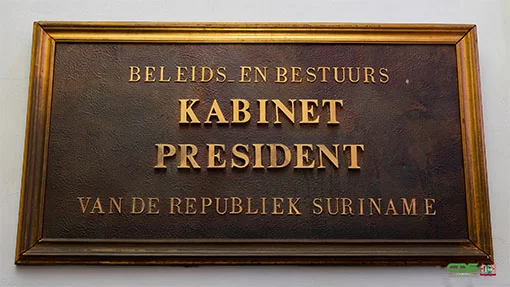
    SATCA has repeatedly emphasized that the incident was not a deliberate strike or organized work stoppage, but rather the inevitable outcome of a chronic understaffing crisis that left no available backup personnel to cover unexpected absences. In a statement released Sunday morning, the Presidential Cabinet confirmed that the situation had been normalized following direct intervention by Suriname President Jennifer Simons, and a formal meeting between the president and SATCA leadership has been scheduled for Monday to address the root causes of the crisis.

    Tensions have been building for months between air traffic controllers and Transport, Communication and Tourism Minister Raymond Landveld, whom SATCA no longer trusts to negotiate meaningful reforms. Landveld delegated all discussions on controller concerns to a special negotiation commission, but SATCA reports the commission has not held any substantive contact with the association since February 26, and failed to deliver any actionable solutions to address long-standing grievances. This stalemate led SATCA to demand direct talks only with the president, a request Simons has agreed to grant.

    A key flashpoint in the dispute is a recent policy change that cut the maximum monthly overtime hours for controllers from 60 to 30, which eliminated all available backup shift coverage that relied on overtime work. Beyond staffing, SATCA is also demanding the president address severe wage inequality within the Aviation Authority’s operational divisions, a long-running imbalance that has driven a steady brain drain from the sector.

    Years of excessive workloads and perceived undercompensation have pushed dozens of experienced controllers to leave the profession entirely for other opportunities. Two controllers have retrained to become commercial pilots for foreign carriers, while many others have left Suriname altogether to take up aviation roles abroad with better pay and working conditions.

    Industry observers note that these challenges are not new: the Suriname air traffic control sector has struggled with persistent underperformance and understaffing for decades. Even basic safety protocols are regularly breached, the association confirms: a prohibited operating model called Single Person Operation, where only one controller plus a single assistant handle all air traffic duties during a shift, is now common practice rather than a rare exception.

    As Suriname prepares for a major oil boom projected to start next year, experts warn the brain drain crisis is only set to worsen, repeating a pattern already seen in neighboring Guyana, which faced similar staffing shortfalls after its own oil sector expansion. Already, the trend of skilled controllers leaving is accelerating, and without urgent reforms, the country will be unable to meet growing air traffic demand tied to the incoming energy boom.

    President Simons has acknowledged the scope of the crisis, stating that a structural, long-term solution is needed. She has confirmed that the problem extends far beyond just filling empty staffing slots, and that addressing wage inequality and upgrading outdated, aging air traffic control equipment will also be key priorities in the upcoming talks.

  • Situation report on the crisis in Haiti (January-March 2026)

    Situation report on the crisis in Haiti (January-March 2026)

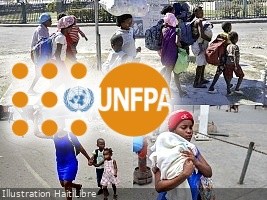
    Three months into 2026, Haiti’s humanitarian catastrophe continues to deepen, as brutal gang violence leaves large swathes of the country uninhabitable and pushes millions of vulnerable people into displacement. Hard-hit regions including the Artibonite and Central departments, as well as the densely populated Port-au-Prince metropolitan area, have seen widespread destruction of residential property, alongside sharp spikes in kidnapping and sexual violence. Current data confirms that roughly 1.4 million Haitians have been forced to abandon their homes to seek safety, while thousands more have been killed since the crisis escalated. Amidst the collapsing security environment, the United Nations Population Fund (UNFPA) and its local implementing partners have remained on the ground to deliver life-saving sexual and reproductive health (SRH) services, while stepping up efforts to prevent and respond to gender-based violence (GBV) that disproportionately impacts women and adolescent girls. Between January and March 2026, the agency delivered critical SRH care to 7,470 vulnerable people, and ran GBV intervention and support programs that reached 5,580 survivors and at-risk community members. To meet the immediate hygiene and health needs of displaced women and girls, UNFPA also distributed 2,792 dignity kits, and supplied 100 inter-agency reproductive health kits to local health facilities and non-governmental organizations, enough to cover the care needs of 5,489 people across crisis-hit regions. To scale up these life-saving operations and meet the rapidly growing demand for services across the country in 2026, UNFPA has launched a $32.8 million emergency funding appeal. However, as of the end of March 2026, the agency has only received $1.8 million in donations since the start of the year – less than 5.5% of the total funding required. With humanitarian needs worsening by the day and violence continuing to displace more Haitian families, the UN body has warned that additional urgent funding is critical to ensure women and girls retain access to essential health care and protection services that are already on the brink of collapse.

  • Paus Leo waarschuwt voor oorlog, plundering van aarde en gebruik van kernenergie

    Paus Leo waarschuwt voor oorlog, plundering van aarde en gebruik van kernenergie

    On the 40th anniversary of the Chernobyl nuclear disaster, Pope Leo XIV delivered a sharp, wide-ranging address criticizing armed conflict, the exploitation of Earth’s natural resources, and the unregulated risks of nuclear power, speaking from the Vatican during his weekly Sunday address following the Angelus prayer.

    The 1986 Chernobyl accident, still recognized as the worst nuclear catastrophe in human history, occurred on April 26 when a safety test gone wrong triggered an explosion at the Chernobyl Nuclear Power Plant’s fourth reactor. A massive cloud of radioactive material spread across much of Europe, leaving a devastating and long-lasting legacy: it caused thousands of excess cancer cases and other chronic health conditions, forced tens of thousands of residents to permanently abandon their homes, and left the vast majority of the surrounding region uninhabitable to this day.

    This year’s global commemorations of the disaster are taking place against a uniquely tense backdrop, as the ongoing four-year conflict between Ukraine and Russia has sparked widespread, persistent fears that fighting near Ukraine’s existing nuclear facilities could spark a second catastrophe on par with the 1986 disaster.

    In his address, Pope Leo framed the Chernobyl accident as a permanent warning to global conscience about humanity’s reckless pursuit of increasingly powerful, unregulated technologies. He called for wisdom and accountability to guide policy decisions at every level of governance, saying, “I hope that at all decision-making levels, wisdom and responsibility will always prevail, so that atomic energy can always be deployed to support life and peace.”

    Drawing on the day’s Gospel reading, which centers on the metaphor of a thief who steals sheep, Pope Leo argued that “thieves” who rob the world of a peaceful future take many forms. Beyond open conflict and resource exploitation, he named consumerism-driven superficial lifestyles, systemic prejudice, and harmful ideologies as additional threats to collective well-being. “And let us also not forget those thieves who, by plundering the earth, waging bloody wars, or nurturing evil in whatever form, take from all of us the chance for a future of peace and serenity,” he added.

    Pope Leo, the first American to hold the papacy, has drawn sharp criticism from former U.S. President Donald Trump for his increasingly forceful public stances against war and authoritarian rule, a conflict that has drawn global attention to the Vatican’s evolving role in contemporary international politics.

  • Flood warnings due to heavy rainfall, extended for Dominica’s coasts; shelters open in Atkinson, Antrizle

    Flood warnings due to heavy rainfall, extended for Dominica’s coasts; shelters open in Atkinson, Antrizle

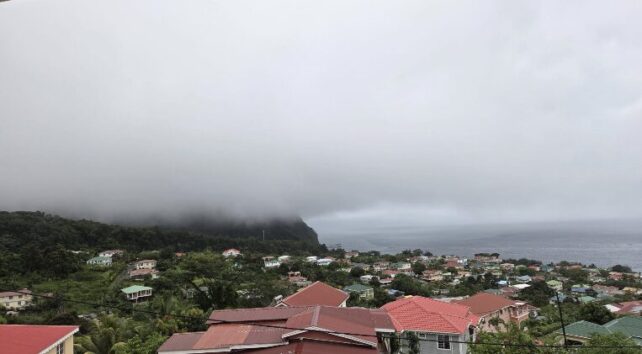
    The Caribbean island nation of Dominica remains on high flood alert Thursday, with emergency officials extending warnings for both its eastern and western coastlines as a persistent rain-bearing weather system continues to pummel the area.

    In a public address, National Security Minister Rayburn Blackmoore called on residents to remain calm while exercising extra caution to avoid harm. He noted that while unpredictable weather is out of human control, individuals can protect themselves by making safe choices about their movements and keeping panic in check. The minister also issued a warning against sharing unvetted alarming flood-related content on social media, pointing out that such posts can trigger acute trauma for residents who still bear psychological scars from devastating past storms including 2015’s Tropical Storm Erika and 2017’s Hurricane Maria, both of which caused widespread destruction and loss of life on the island.

    Blackmoore confirmed that all national emergency response systems have been fully activated to handle the developing situation. Disaster management teams, fire service units, and public works crews have already been deployed across high-risk areas to carry out preliminary damage assessments and prepare for rapid response. “All the systems are in place in terms of response and the audits are being done as to the areas that have been affected and we are ready to go,” Blackmoore said. He also stressed that protecting first responders is a top priority, emphasizing that rescue teams should not be put in unnecessary danger while aiding vulnerable community members.

    Senior Meteorological Officer Marshall Alexander updated the public on rainfall totals, confirming that accumulations have already passed 200 millimeters (8 inches) along Dominica’s eastern coast, while the western coast has recorded more than 50 millimeters (2 inches) of rain. Due to the saturated ground and ongoing precipitation, officials upgraded the western coast’s flood watch to a full flood warning, and extended both warnings to remain in effect until 6 p.m. local time Thursday.

    Alexander explained that the persistent bad weather is being driven by an active trough system positioned over the region, and forecast that moderate to heavy showers and thunderstorms would continue to impact the island for the next several hours. Forecasters expect river and flash flooding to impact low-lying areas on both coasts as the system moves slowly through the area.

    Local authorities are maintaining round-the-clock monitoring of weather conditions, river levels, and flood risks, and have issued targeted guidance for high-risk groups. Farmers, commercial fishermen, and daily commuters are specifically urged to stay updated on official advisories and avoid unnecessary travel through flood-prone areas. The Office of Disaster Management (ODM) additionally announced that two public shelters have been opened in the Kalinago Territory, located in Atkinson and Antrizle, to host residents who need to evacuate their homes for safety.

  • Mexico captures top ally of drug kingpin ‘El Mencho’

    Mexico captures top ally of drug kingpin ‘El Mencho’

    MEXICO CITY – In a major blow to transnational organized crime operating across Mexico, federal and state security forces announced two high-profile arrests Monday: one being a top lieutenant to the deceased founder of the Jalisco New Generation Cartel (CJNG) long marked as a potential successor to the group’s leadership.

    Nemesio Oseguera, universally known by his cartel alias “El Mencho”, died in February from injuries sustained during a firefight with Mexican armed forces in the western state of Jalisco. His death triggered a wave of coordinated violence across the region, including widespread highway blockades and open clashes with security personnel that claimed more than 70 lives.

    According to security analyst David Saucedo, speaking to AFP, Audias Flores Silva – widely nicknamed “El Jardinero” or “The Gardener” – served as El Mencho’s closest confidant and right-hand man in the years leading up to the cartel leader’s death. Citing intelligence from both U.S. and Mexican law enforcement agencies, Saucedo added that Flores Silva was the key architect behind a rare operational alliance between CJNG and the Chapitos, the powerful Sinaloa cartel faction controlled by the family of imprisoned kingpin Joaquin “El Chapo” Guzmán. Regional security think tank Insight Crime had previously named Flores Silva as one of the leading candidates to take control of CJNG following El Mencho’s death.

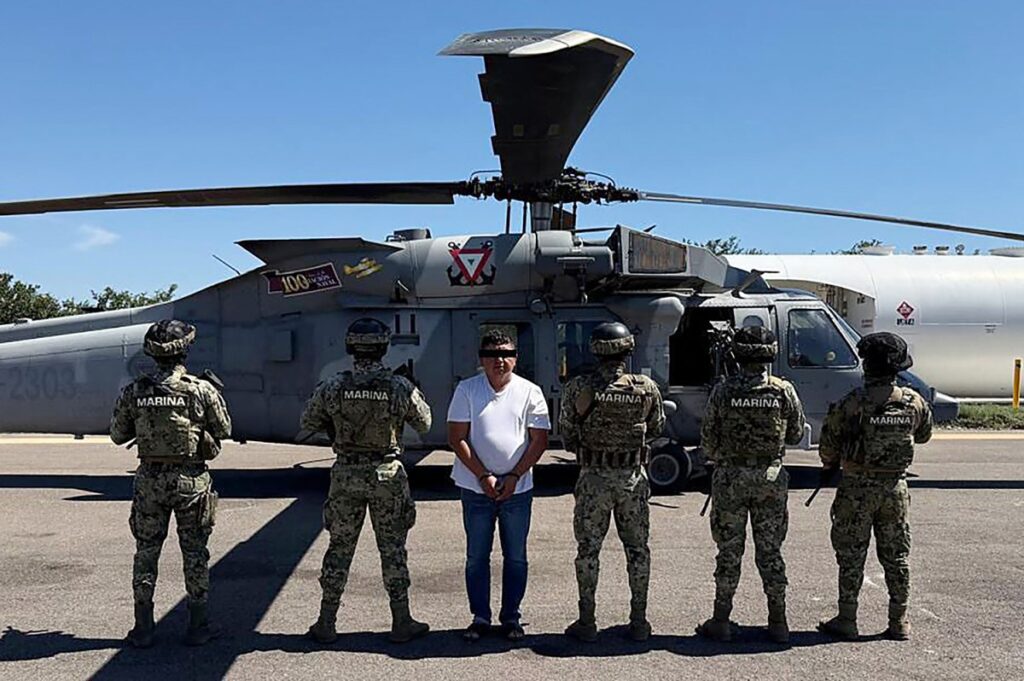
    Mexican Security Secretary Omar Garcia Harfuch confirmed via the social platform X that elite Mexican naval special forces apprehended Flores Silva in the western coastal state of Nayarit. Harfuch also noted that the captured cartel leader is actively sought by U.S. law enforcement, with Washington intending to request his extradition to face charges in American courts.

    In a separate high-value operation staged hours earlier, authorities in the northeastern border state of Tamaulipas announced the arrest of a second senior gang leader: Alexander Benavides Flores, better known by his operational alias “R9”, who served as the head of Los Metros, a key faction of the Gulf Cartel. The Gulf Cartel, once one of Mexico’s most powerful criminal organizations, has been significantly weakened over the past 10 years following a string of leadership arrests.

    Benavides Flores’ capture prompted an immediate retaliatory response from his allies, who erected at least eight blockades on major highways surrounding Reynosa, a northern Mexican border city of roughly 690,000 people that sits directly across the Rio Grande from McAllen, Texas. A spokesperson for Tamaulipas state security confirmed that security forces rapidly moved to reestablish full control over the affected areas, and no injuries were reported during the unrest following the arrest.

    The dual arrests come amid ongoing tensions between the Mexican and U.S. governments over counter-cartel strategy. Former U.S. President Donald Trump has pressured Mexican President Claudia Sheinbaum to ramp up operations against transnational criminal groups, but Sheinbaum has consistently rejected controversial U.S. proposals to deploy American drone strikes or ground troops inside Mexican territory to target cartel operatives.

  • Vluchten hervat na ingrijpen president: verkeerstoren weer operationeel

    Vluchten hervat na ingrijpen president: verkeerstoren weer operationeel

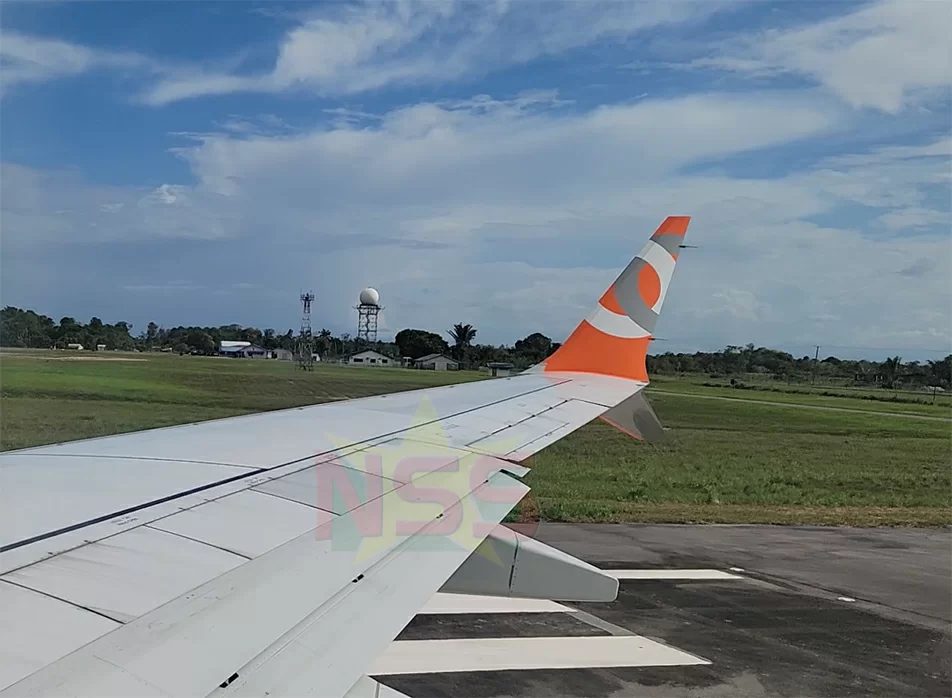
    On April 26, commercial air travel operations fully returned to normal at Johan Adolf Pengel International Airport, Suriname’s primary international gateway, after air traffic control staffing was fully restored in the control tower. The resolution of the service disruption came directly after direct intervention from Suriname’s President Jennifer Simons, following internal unrest among the country’s air traffic control workforce.

    The disruption began after an emergency meeting held by the Suriname Air Traffic Controllers Association (SATCA), where association members raised collective concerns about persistent operational challenges and inequities within the national air traffic control department. In response to these unaddressed issues, participating air traffic controllers temporarily limited their on-duty availability, creating cascading delays and disruptions for both incoming and outgoing commercial flights passing through the country’s busiest airport.

    Weeks prior to the emergency work action, SATCA had submitted an official letter to Suriname’s Ministry of Transport, Communication and Tourism, formally requesting a direct negotiation session with the President’s Cabinet. In the correspondence, the association pushed for a formal, concrete proposal to address long-standing pay and operational inequities across aviation sector frontline teams, alongside a clear, legally binding timeline for implementing any agreed-upon reforms.

    Following the disruption, President Simons confirmed she will host SATCA leadership at her official cabinet offices next Monday to deliberate on the ongoing situation and collaborate on developing a long-term, structural solution to the underlying issues. By midnight following the start of the unrest, full staffing had been restored to the airport’s air traffic control tower, clearing the way for a full return to scheduled flight operations.

  • Jhauw: Luchtverkeersleiding al jaren probleem, maar geen oplossing

    Jhauw: Luchtverkeersleiding al jaren probleem, maar geen oplossing

    Recurring outages of air traffic control services at Suriname’s Johan Adolf Pengel International Airport have triggered fresh, widespread disruptions to regional and international flight operations, forcing multiple commercial carriers to divert incoming and outgoing flights to alternate airports across the Caribbean and South American region. On Saturday, the Dutch flagship carrier KLM was forced to reroute one of its aircraft bound for Suriname to Piarco International Airport in Trinidad and Tobago, where the flight and its crew and passengers were required to overnight in Port of Spain due to the extended flight time incurred by the diversion. Other stranded passengers on diverted flights were forced to lay over indefinitely in neighboring Guyana as the airport remained non-operational for a large portion of the day, with no takeoffs or landings permitted during the service outage.

    Amichand Jhauw, chief executive officer of regional Suriname-based carrier Fly All Ways, has issued harsh public criticism of the ongoing crisis, labeling the air traffic control failures as a deeply rooted, structural problem that has plagued the country’s aviation sector for years. Jhauw noted that critical bottlenecks and staffing gaps in the air traffic control department have been well documented for years, but no meaningful, long-term solutions have been implemented by responsible authorities. “Problems continue to pile up because there is no structured, comprehensive approach to fixing the root causes,” Jhauw explained in an interview with local Surinamese outlet Starnieuws.

    An official Notice to Air Missions (NOTAM) issued by Suriname’s aviation authorities confirms that the temporary suspension of full air traffic control services stemmed from an acute staffing shortage, which forced the airport and surrounding airspace to be downgraded to a lower safety classification that could not support regular commercial operations.

    Jhauw warned that the consequences of inaction stretch far beyond costly flight delays and stranded passengers, stressing that the persistent instability could lead international airlines to permanently re-route flights away from Suriname, a shift that would cause long-term damage to the country’s national revenue. “If carriers decide they no longer want to fly through our airspace, we lose that critical stream of income entirely, and that kind of damage is not easy to repair – it can take years to recover from,” he said.

    Beyond lost revenue, Jhauw added that repeated disruptions are causing lasting reputational harm to Suriname’s aviation sector, and could erode the country’s international safety rating, making it even harder to attract reliable air service in the future. He emphasized that the crisis is particularly alarming because Suriname is almost entirely dependent on air connectivity to link it to the rest of the world, with no overland alternative transportation links such as cross-border rail or major highway connections to neighboring countries. “Aviation is our most important gateway to the world, and we cannot even keep that critical infrastructure operating reliably,” Jhauw said.

    The Fly All Ways CEO also slammed the responsible government agencies for their complete lack of communication and accessibility during the latest outage. He reported that airline operators were unable to reach any responsible officials to coordinate operational adjustments during the crisis, even as the outage triggered immediate operational costs and financial losses for carriers. “Airlines are being forced to absorb unnecessary extra costs with no prospect of compensation from authorities,” Jhauw stressed.

  • Explosie in zuidwest-Colombia eist minstens 14 levens

    Explosie in zuidwest-Colombia eist minstens 14 levens

    On Saturday, a devastating bomb blast ripped through a stretch of the Pan-American Highway in Colombia’s southwestern Cauca region, leaving at least 14 people dead and more than 38 others injured, five of whom are minors. The attack unfolded in the El Tunel area of Cajibio municipality, leaving a scene of chaos: destroyed civilian vehicles scattered across the roadway, debris littering the pavement, and emergency responders rushing to pull casualties from the wreckage, footage from the aftermath shows. Local and national leaders have swiftly condemned the attack as a deliberate act of violence against innocent civilians.

    Cauca Governor Octavio Guzmán labeled the incident an “indiscriminate attack targeting the civilian population” and called on the national government to launch a decisive and sustained response to curb the rising violence. The bombing comes amid a sharp surge in clashes between illegal armed groups fighting to control lucrative drug trafficking routes leading to the key Pacific port of Buenaventura. Over just 48 hours before the blast, the region recorded at least 26 separate violent incidents, including drive-by shootings and a drone attack on a civilian radar installation.

    Colombian President Gustavo Petro did not mince words in blaming the attack, calling the perpetrators “terrorists, fascists, and drug traffickers.” Defense Minister Pedro Sánchez, who was attending a security meeting in nearby Palmira when the explosion occurred, pledged immediate and forceful action against those responsible. “These criminals seek to sow terror among our population, but we will respond with unwavering resolve,” Sánchez stated.

    Colombian security officials have pointed to dissident factions of the former FARC guerrilla group as the primary suspects behind the wave of attacks, specifically identifying a network led by fugitive commander known as “Ivan Mordisco” and the Jaime Martínez faction as the responsible parties. Authorities have offered a reward of more than 1 million dollars for any information that leads to the arrest or capture of these key leaders.

    Francisca Toro, governor of the neighboring Valle del Cauca department, has also called on the national government to immediately deploy additional security forces to the region and step up intelligence operations to rein in the escalating terrorist activity. The Cauca region remains a strategically critical corridor for drug traffickers moving cocaine out of Colombia to consumer markets in Central America and Europe, and the ongoing power struggle between competing armed groups has kept the area in a state of persistent crisis, with civilians increasingly caught in the crossfire.