分类: world

  • China added record wind and solar power in 2025, data shows

    China added record wind and solar power in 2025, data shows

    BEIJING — China’s energy landscape witnessed unprecedented transformation in 2025, with the National Energy Administration reporting simultaneous record-breaking expansions in both renewable infrastructure and fossil fuel capacity. The world’s foremost manufacturing powerhouse added 543 gigawatts of total new energy capacity—equivalent to double Germany’s entire power generation infrastructure—as it navigates competing priorities of industrial growth and environmental commitments.

    The renewable sector achieved remarkable milestones with 315 gigawatts of new solar capacity and 119 gigawatts of wind installations, representing the largest annual additions ever recorded globally. This substantial clean energy deployment increased China’s total installed power generation capacity by 16.1% compared to 2024 levels. Energy analysts noted the physical scale of these installations would approximate 17,000 wind turbines and approximately 500 million solar panels throughout the year.

    However, parallel expansion occurred in thermal power generation, with coal and gas capacity surging by approximately 93 gigawatts—a 75% increase over 2024 additions. This substantial fossil fuel development elevated China’s total thermal power capacity by 6.3%, creating a complex energy landscape where clean energy advances coincide with persistent carbon-intensive infrastructure growth.

    Lauri Myllyvirta, lead analyst at the Centre for Research on Energy and Clean Air, characterized the deployment pace as ‘two wind turbines per hour, and solar panel surface area covering 20 football fields per hour.’ While acknowledging these renewable additions would ‘help replace power generation from fossil fuels well into next year,’ Myllyvirta warned that concurrent coal and gas plant expansions risk creating ‘plummeting utilization rates and new obstacles to clean energy integration.’

    This energy development occurs against China’s stated climate targets: peaking carbon emissions by 2030, reducing them by at least 7% by 2035, and achieving carbon neutrality by 2060. The simultaneous expansion of renewable and fossil fuel capacity reflects the challenges facing the world’s largest greenhouse gas emitter as it balances economic growth demands with environmental responsibilities.

  • Netherlands ‘insufficiently’ protects Caribbean island from climate change — court

    Netherlands ‘insufficiently’ protects Caribbean island from climate change — court

    In a groundbreaking environmental justice ruling with potential global implications, a Dutch court has determined that the Netherlands provides “insufficient” climate protection for its Caribbean territory of Bonaire. The Hague District Court delivered the landmark verdict on Wednesday, finding the Dutch government in violation of human rights for treating Bonaire residents differently from those in the European Netherlands without justification.

    The case was initiated by Bonaire residents collaborating with Greenpeace, who demanded concrete measures to shield the low-lying island from rising sea levels and climate impacts. The court ordered the Netherlands to establish binding interim targets for economy-wide greenhouse gas reductions within 18 months, marking a significant legal development in climate litigation.

    This ruling follows the recent advisory opinion from the International Court of Justice, which stated that states violating climate obligations commit unlawful acts. Legal experts note this case represents the first major test of a state’s mitigation and adaptation ambitions following the ICJ’s precedent-setting opinion.

    Despite the Netherlands’ renowned expertise in water management through its extensive system of barriers and dykes, campaigners argued the same protective measures haven’t been extended to overseas territories. Researchers from Amsterdam’s Vrije Universiteit project that up to one-fifth of Bonaire could be submerged by century’s end without intervention.

    During proceedings, Bonaire’s 27,000 residents shared compelling testimony about their daily climate struggles. Farmer Onnie Emerenciana described how previously habitable areas have become “often unbearable” due to extreme heat and rising waters.

    The court emphasized that climate impacts affect Bonaire sooner and more severely than European Netherlands, making the disparity in protection measures particularly unjust. This case establishes important precedent for climate litigation targeting governments regarding their overseas territories and could influence similar legal actions worldwide.

  • International Civil Aviation Organization Audits Antigua

    International Civil Aviation Organization Audits Antigua

    The Caribbean nation of Antigua and Barbuda has formally initiated a comprehensive audit by the International Civil Aviation Organization (ICAO), marking a pivotal moment for its aviation sector. This evaluation arrives concurrently with a significant restructuring of the nation’s Airport Administration, which includes the imminent appointment of a new Chief Executive Officer and a cadre of trained personnel.

    The audit, conducted through direct engagement and on-site inspections by ICAO experts, is poised to identify critical operational irregularities. The collaborative initiative aims to formulate concrete measures to elevate performance standards, with the primary objective of reinstating the nation’s Category 1 safety status. A longstanding and unique challenge for the country has been the anomalous issue of dual private landownership within the precincts of its international airport—a singular situation among all ICAO member states for over two decades.

    The current administration is now positioned to actively consult with the global aviation authority on a structured, two-step procedure to resolve this landownership impediment. Previously, the government and the Airport Authority had sought ICAO’s guidance on this matter through a formal process known as ‘Registering a difference.’

    The ICAO Audit 2026 is anticipated to bring these pertinent issues to the forefront, enabling effective resolution through expert, real-time counsel. For smaller nations like Antigua and Barbuda, such audits present a vital opportunity to leverage international expertise to bolster the capabilities of local technicians, a collaboration visiting professionals are often eager to provide.

    This process represents a strategic opportunity for the nation to fully align with the core tenets of global aviation: stringent adherence to rules, reinforced regulations, and enhanced operational transparency.

  • Indian community in Antigua and Barbuda marks 77th Republic Day

    Indian community in Antigua and Barbuda marks 77th Republic Day

    The Indian community residing in Antigua and Barbuda has commemorated the 77th anniversary of India’s Republic Day through a ceremonial gathering that emphasized democratic ideals, communal harmony, and cultural legacy. The event saw the convergence of diaspora members, local supporters of India, and special attendees who participated in a flag-raising ritual and deliberated on the day’s profound importance.

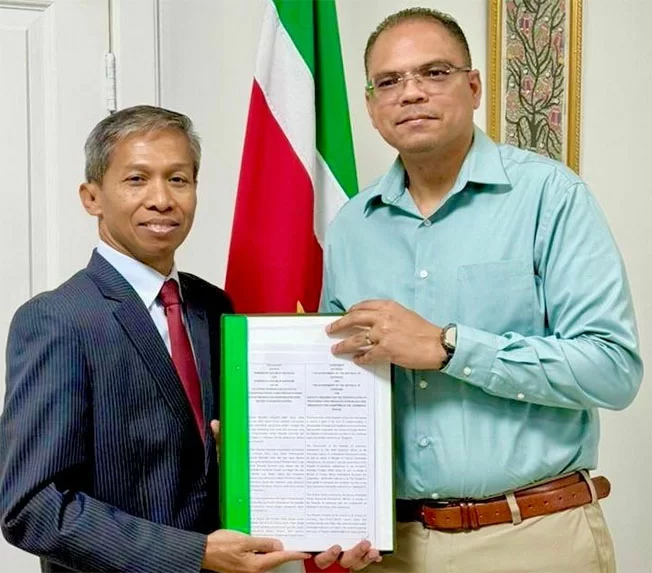
    Republic Day, observed each year on January 26, marks the enactment of India’s Constitution in 1950, which formally designated the nation as an independent, democratic republic. During his address, India’s High Commissioner to Jamaica, Ambassador R. Masakui, emphasized the symbolic weight of the occasion, characterizing it as an opportunity to pay homage to the martyrs of India’s freedom movement and to recommit to the foundational tenets of democracy, justice, and legal governance.

    The ceremony included recitations of earlier statements from Indian dignitaries such as President Droupadi Murmu and Prime Minister Narendra Modi, each of whom underscored the resilience of India’s democratic framework and the nation’s advancements since gaining sovereignty.

    Ambassador Masakui also praised the impactful role played by the Indian diaspora in Antigua and Barbuda, emphasizing their efforts in deepening socio-cultural and economic bonds between the two nations. He urged the community to persist in serving as a conduit for bilateral collaboration, reciprocal esteem, and collective growth.

    India and Antigua and Barbuda have long enjoyed cordial relations, bolstered by interpersonal connections, academic partnerships, and expanding diplomatic dialogue. Global Republic Day observances by overseas Indian communities are widely regarded as platforms not only for celebrating national heritage but also for reinforcing common values within their countries of residence.

  • FLASH : 2 planes hit by bullets, reactions from AAN and OFNAC

    FLASH : 2 planes hit by bullets, reactions from AAN and OFNAC

    Port-au-Prince, Haiti – A severe security breach has shaken Haiti’s aviation infrastructure after two commercial aircraft sustained bullet impacts during their landing maneuvers at Toussaint Louverture International Airport on Sunday, January 26, 2026.

    In an official joint communiqué, the National Civil Aviation Office (OFNAC) and the National Airport Authority (AAN) confirmed that both aircraft, operated by ZED Airlines S.A., came under direct fire while executing their final approach. The alarming incident prompted immediate deployment of emergency and rescue services to the scene.

    Technical assessment teams are currently conducting comprehensive evaluations to determine the full extent of damage and ensure operational safety before authorizing any resumption of flights. National security authorities have been alerted and have launched a full-scale investigation to identify the perpetrators behind this dangerous assault on civilian aviation.

    The aviation authorities vehemently condemned the attack, emphasizing that such acts endanger the lives of passengers and crew members while compromising the security integrity of Haitian airspace. Emergency protocols have been activated to establish a reinforced security system around airport infrastructure.

    This critical incident has resulted in the suspension of all flights through Haiti’s sole operational international connection, significantly impacting vital transportation links including the family reunification program between Haiti and Brazil.

  • Winter storm cancels 89 flights between U.S. and Dominican Republic

    Winter storm cancels 89 flights between U.S. and Dominican Republic

    A severe winter storm sweeping across multiple U.S. states has significantly disrupted air connectivity with the Dominican Republic, causing substantial flight cancellations for consecutive days. Aviation tracking data reveals that adverse weather conditions led to the cancellation of at least 89 flights between the two nations on Monday, marking an escalation from Sunday’s 79 canceled services.

    The most severe operational impacts were concentrated at Boston Logan International Airport, which experienced the brunt of the storm’s disruptions. From this Northeast hub, 22 scheduled flights to Santiago de los Caballeros were canceled alongside seven to Punta Cana, three to Puerto Plata, and three to Las Américas International Airport (AILA). The disruption extends into Tuesday with three preemptive cancellations already recorded—two to New York’s JFK Airport and one to San Juan, Puerto Rico.

    Within the Dominican Republic, Cibao International Airport bore the heaviest impact with 40 suspended flights, primarily originating from Boston, New York, and Newark. Punta Cana International Airport followed with 25 cancellations, while AILA reported 14 and Gregorio Luperón International Airport in Puerto Plata registered eight canceled flights. Aeropuertos Dominicanos Siglo XXI (Aerodom), the airport management company, indicated that normal operations are expected to resume gradually as meteorological conditions in the United States improve. The authority advised affected passengers to directly contact their airlines for real-time flight status updates and travel arrangements.

  • Zed Airlines planes hit by bullets in Haiti

    Zed Airlines planes hit by bullets in Haiti

    A severe escalation of violence has directly targeted Haiti’s critical aviation infrastructure, plunging the nation’s air travel into deeper crisis. The Toussaint Louverture International Airport in Port-au-Prince became the scene of a dangerous attack on Sunday when two commercial aircraft operated by Zed Airlines SA were struck by bullets during their final approach for landing.

    The National Civil Aviation Office (OFNAC) and the National Airport Authority (AAN) issued a joint statement vehemently condemning the act, highlighting its grave implications for both passenger safety and the integrity of Haitian airspace. In immediate response to what it termed a ‘force majeure event,’ Zed Airlines announced an indefinite suspension of all its flight operations into Haiti. The carrier stated this decisive action was mandated by international safety protocols and its legal duty to protect passengers and crew.

    The airline, a key operator on the Haiti-Brazil route, clarified that any future resumption of services is entirely contingent upon comprehensive technical and safety evaluations, directives from aviation authorities, and the findings of ongoing investigations. This incident has starkly revived security concerns surrounding the airport, echoing a similar episode in 2024 that prompted U.S. aviation regulators to suspend carrier flights after multiple gun attacks.

    This attack underscores the extreme volatility and powerful grip of armed gangs that have overwhelmed Haiti’s capital since the 2021 assassination of President Jovenel Moïse. The United Nations reports that relentless gang warfare has resulted in thousands of fatalities and displaced countless more, with significant portions of Port-au-Prince under their control. The targeting of international aviation marks a alarming expansion of the violence, further isolating the embattled Caribbean nation. No casualties have been reported from Sunday’s shooting.

  • Winter Storm Fern strands Bahamians across the US

    Winter Storm Fern strands Bahamians across the US

    A catastrophic winter storm identified as Fern has unleashed unprecedented disruption across the United States, resulting in numerous fatalities and bringing transportation networks to a complete standstill. The severe weather system has generated massive flight cancellations, widespread power outages, and dangerous road conditions, creating a crisis for both residents and international travelers.

    According to flight tracking data from FlightAware, the aviation sector continues to struggle with massive disruptions, with approximately 5,300 flights canceled and over 4,300 delayed by Tuesday afternoon. This follows Sunday’s staggering cancellation of more than 11,400 flights, marking one of the most severe travel disruptions in recent history.

    The storm’s impact extended beyond transportation, with poweroutage.com reporting over 670,000 customers without electricity as freezing temperatures overwhelmed electrical infrastructure. Major metropolitan areas including New York, Philadelphia, Washington, and Dallas experienced complete operational shutdowns at key airport hubs due to freezing precipitation and blizzard conditions.

    Among those most severely affected were Bahamian travelers who found themselves trapped in the travel chaos. Kaylee Roberts, a 22-year-old from New Providence, described her ordeal after traveling to Dallas for a college visit and concert. Her return plans descended into chaos as multiple flight cancellations and inadequate communication from airlines left her stranded at the airport for extended periods without accommodation options or clear information.

    Earl Thompson, another Bahamian national, encountered similar disruptions while traveling to New York for a funeral. His Delta flight was canceled after passengers had already boarded, resulting in hours-long waits to retrieve luggage amid snow-blocked airport access points. Thompson noted that many travelers were forced to sleep at airports while others faced growing panic and frustration.

    The human impact of the storm revealed systemic vulnerabilities in airline emergency response protocols, with travelers reporting insufficient customer support, conflicting information from staff, and inadequate accommodation provisions during weather-related emergencies. While some passengers eventually received compensation such as hotel vouchers for non-weather related delays, the overall response highlighted significant gaps in crisis management procedures.

    Meteorological experts indicate that Winter Storm Fern represents one of the most extensive winter weather events of the season, affecting regions from the Northeast through the Midwest and into southern states typically unaccustomed to such severe winter conditions. The event has prompted questions about infrastructure preparedness and emergency response coordination for extreme weather events affecting international travel corridors.

  • Families of Trinidadian fishermen killed in US missile strike sue US government

    Families of Trinidadian fishermen killed in US missile strike sue US government

    In a significant legal challenge against US military operations, the families of two Trinidadian men killed in a missile strike have filed a wrongful death lawsuit against the US government. The complaint, lodged in the US District Court for Massachusetts on January 27, alleges extrajudicial killing and seeks accountability for what plaintiffs describe as unlawful lethal force.

    The case centers on the deaths of Chad Joseph, 26, and Rishi Samaroo, 41, who were among six civilians killed when a US missile struck their small boat traveling from Venezuela to Trinidad and Tobago on October 14, 2025. According to court documents, the victims were returning to their homes in Las Cuevas when the attack occurred.

    Legal representatives from the American Civil Liberties Union, the Center for Constitutional Rights, and Seton Hall Law School argue the strike was part of a broader pattern of military actions targeting civilian vessels in Caribbean and Pacific waters. The lawsuit claims at least 36 similar strikes have occurred since September 2025, resulting in approximately 125 fatalities.

    Lenore Burnley, Joseph’s mother, and Sallycar Korasingh, Samaroo’s sister, filed the action on behalf of all surviving family members. Burnley described her son as a devoted family man who frequently traveled to Venezuela for fishing and agricultural work to support his wife and three children. Korasingh remembered her brother as a hardworking individual rebuilding his life after completing a 15-year prison sentence.

    The legal action invokes two jurisdictional foundations: the Death on the High Seas Act, which permits lawsuits for deaths occurring in international waters, and the Alien Tort Statute, which allows foreign nationals to seek redress in US courts for severe violations of international human rights law.

    The complaint systematically challenges the legal basis for the strikes, arguing they lack proper congressional authorization and violate both international humanitarian law and US constitutional principles. Legal director Baher Azmy of the Center for Constitutional Rights characterized the killings as ‘absurd and dangerous,’ warning against unilateral state declarations of war to justify lethal force.

    The case has drawn attention to the Trump administration’s maritime security operations, with President Trump and Defense Secretary Pete Hegseth having publicly acknowledged the strikes and released footage of the operations. Notably, US authorities have not publicly identified any of the victims.

    Trinidad’s Foreign Affairs Minister Sean Sobers previously stated the government had no information linking either man to illegal activities, while Attorney General John Jeremie asserted the strikes were consistent with international law based on advice from an unidentified external expert.

    The lawsuit seeks to establish judicial oversight of military actions that plaintiffs argue constitute ‘manifestly unlawful’ killings ordered by highest levels of government. Professor Jonathan Hafetz of Seton Hall Law School warned the case carries profound implications for international legal norms and US standing in the global community.

  • US lawsuit alleges Trinidadian men were unlawfully killed

    US lawsuit alleges Trinidadian men were unlawfully killed

    In a landmark legal action, the families of two Trinidad and Tobago citizens killed in a US military strike have filed a wrongful-death lawsuit against the United States government. The case, lodged in the US District Court for the District of Massachusetts on January 27, challenges the legality of America’s maritime security operations in the Caribbean region.

    The plaintiffs allege that a October 14, 2025 missile attack destroyed a civilian vessel traveling from Venezuela toward Trinidad, resulting in the deaths of all six persons aboard. Among the victims were Chad Joseph, 26, and Rishi Samaroo, 41, both residents of Las Cuevas who their families maintain were returning from legitimate fishing and agricultural work in Venezuela.

    Legal representatives for the families are pursuing compensation under the Death on the High Seas Act and the Alien Tort Statute, contending the strike constituted both wrongful death and extrajudicial killing under international law. The suit invokes the Suits in Admiralty Act to overcome sovereign immunity protections typically afforded to the US government.

    According to court documents, the incident formed part of what plaintiffs describe as an ‘unprecedented’ military campaign initiated in September 2025, involving approximately 36 armed attacks on maritime vessels in Caribbean and eastern Pacific international waters. The lawsuit estimates these operations resulted in roughly 125 casualties.

    The complaint references former President Donald Trump’s public acknowledgment of authorizing the October 14 strike via social media, including shared footage showing a stationary boat being destroyed by munitions. Families maintain neither Joseph nor Samaroo presented any imminent threat, and their vessel was unequivocally civilian in nature.

    US officials have previously defended such strikes as lawful operations within a non-international armed conflict against regional drug cartels. Government representatives have cited a classified Office of Legal Counsel memorandum purportedly supporting this legal position.

    The families’ lawsuit systematically dismantles this justification, arguing drug trafficking does not constitute armed conflict under international humanitarian law. The filing emphasizes that neither victim had documented connections to criminal organizations, noting Trinidadian authorities have publicly stated they possess ‘no information linking Joseph or Samaroo to illegal activities.’

    The legal action seeks not only financial compensation but also accountability for senior officials who authorized the strikes. It represents a significant challenge to the legal frameworks governing maritime security operations and the boundaries of lethal force in counter-narcotics missions.