分类: world

  • Magnitude 3.7 Earthquake Recorded Near Antigua Early Saturday Morning

    Magnitude 3.7 Earthquake Recorded Near Antigua Early Saturday Morning

    A minor seismic event measuring 3.7 on the Richter scale occurred in proximity to the Caribbean nation of Antigua and Barbuda during the early hours of Saturday morning. The earthquake’s epicenter was located near the islands, though precise geographical coordinates remain unspecified in initial reports.

    The tremor, while measurable by seismic instruments, appears to have caused minimal disruption to the twin-island nation. Early indications suggest no significant structural damage or injuries resulting from the geological activity. Earthquakes of this magnitude typically produce noticeable shaking of indoor items and rattling noises but rarely cause substantial damage to well-constructed buildings.

    The Eastern Caribbean region, where Antigua and Barbuda are situated, experiences frequent seismic activity due to its position along the boundary of the Caribbean and North American tectonic plates. This geological setting makes minor tremors a relatively common occurrence throughout the region.

    Local authorities and disaster preparedness agencies routinely monitor such seismic events, though no tsunami warnings were issued following this particular incident. Residents reported feeling mild vibrations but otherwise described the event as passing without major concern.

    The timing of the earthquake—during early morning hours—likely contributed to the limited public reaction, as many residents were asleep when the tremor occurred. Seismologists continue to monitor the region for potential aftershocks, though none have been reported thus far.

  • FLASH : Nearly 6,000 dead and 3,000 injured by 2025 due to insecurity

    FLASH : Nearly 6,000 dead and 3,000 injured by 2025 due to insecurity

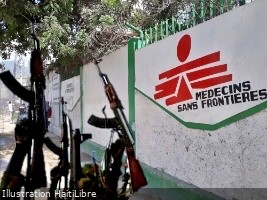
    A stark United Nations assessment has revealed Haiti’s escalating humanitarian catastrophe, with nearly 6,000 fatalities and over 2,700 injuries documented throughout 2025. The comprehensive report from the UN Integrated Office in Haiti (BINUH) details a devastating fourth quarter alone, recording 1,523 killings and 806 injuries between October and December.

    The analysis indicates that criminal gangs maintained persistent control over portions of Port-au-Prince throughout 2025, though law enforcement operations successfully prevented further territorial expansion. These armed groups continued systematic human rights violations including targeted assassinations, widespread kidnappings, extortion networks, property destruction, and child trafficking for criminal exploitation.

    Beyond the capital, rural regions including Artibonite and Centre departments faced indiscriminate assaults as gangs attempted to consolidate power. Agricultural communities suffered particularly severe targeting, with attacks on farmers and their livelihoods triggering mass displacement, economic collapse, and intensified humanitarian needs.

    The report identifies a complex security landscape where approximately 6% of casualties resulted from actions by self-defense groups and participants in the ‘Bwa Kalé’ movement targeting alleged gang collaborators.

    Notably, over 62% of recorded casualties occurred during law enforcement operations, some conducted with support from a private military company employing drone technology and helicopter strikes. This foreign security contractor significantly expanded its operational reach beyond Port-au-Prince and Kenscoff into new territories including Cabaret and Pétion-ville. Airstrikes resulted in at least 32 civilian casualties, including two young girls.

    The UN document further highlights ongoing allegations of summary executions involving police personnel, while noting three officers killed and five wounded during the quarter, alongside one injury within the FRG forces.

  • Have you made plans yet? This is what the weather will be like this weekend

    Have you made plans yet? This is what the weather will be like this weekend

    Meteorological authorities in the Dominican Republic have issued warnings about a significant temperature drop expected to commence this Sunday, with unusually cold conditions predicted to persist for nearly a week across most territories. According to meteorological analyst Jean Suriel, who made the announcement on Friday, this weather phenomenon results from the combined impact of two approaching cold fronts and an extensive polar air mass currently moving toward the Caribbean region.

    The cooling pattern represents indirect effects of winter storms that have recently affected the United States. Suriel indicated that the polar air mass would begin influencing Dominican territory by Saturday night, with the most dramatic temperature decreases anticipated in mountainous regions and the Cibao area. Forecast models suggest possible frost conditions and sub-zero temperatures in elevated zones including Valle Nuevo, Valle del Tetero, Valle de Bao, and Valle de Lilís.

    Current weather patterns show a trough system affecting the nation alongside cold front number 23 positioned north of the Caribbean. Meteorological models indicate potential moderate to heavy rainfall developing this afternoon across northern, northeastern, northwestern, and eastern regions, including the Central Mountain Range.

    While precipitation is expected to diminish Friday as the initial trough moves away, isolated showers may still occur. Saturday forecasts predict partly cloudy conditions with moderate rainfall developing during late afternoon hours in southern and southeastern areas.

    The weather system will intensify Sunday with the approach of cold front number 24 and a new trough system, potentially increasing shower activity throughout morning, afternoon, and evening hours. Meteorological authorities have highlighted concerns about urban flooding potential due to expected significant rainfall accumulation.

  • Enhanced CARICOM integration pivotal for steering through fragmented global trade landscape, says CARICOM Assistant SG

    Enhanced CARICOM integration pivotal for steering through fragmented global trade landscape, says CARICOM Assistant SG

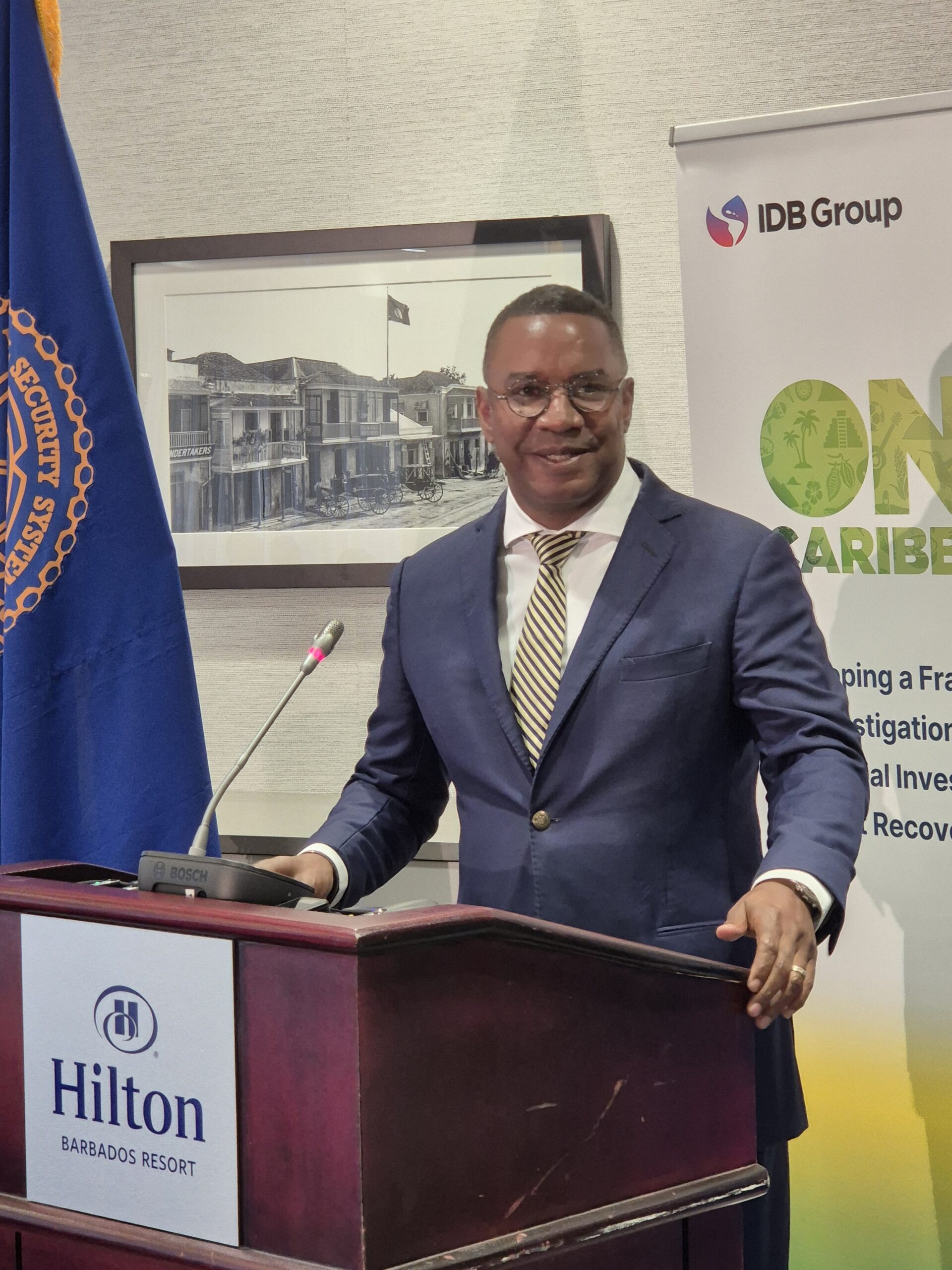
    A senior Caribbean Community (CARICOM) official has declared that strengthening regional integration represents a vital strategic countermeasure against an increasingly volatile and fragmented global trading system. Ambassador Wayne McCook, Assistant Secretary-General for the CARICOM Single Market and Trade, articulated this position during a panel discussion at the World Trade Centre in Georgetown, Guyana, on January 28.

    Addressing the theme “Prospects for International Trade in 2026,” Amb. McCook framed regional cohesion as essential for building resilience. He pointed to recent crises, including the devastating Hurricane Melissa, as emblematic of the dual challenges confronting member states: climate-related existential threats and profound economic vulnerabilities. These domestic pressures are compounded by dramatic shifts in international trade, which the ambassador attributed significantly to an intensified “America First” policy framework that has disrupted Caribbean exports and supply chains through unprecedented tariff measures.

    Characterizing 2025 as a period of exceptional turbulence, McCook cited alarming global trends: an 11% contraction in foreign direct investment in 2024 (marking a second consecutive annual decline) and global trade growth slowing to below 1% in 2025, according to UNCTAD data. Despite this adverse international environment, CARICOM has demonstrated remarkable economic resilience, with community exports surging by 32% between 2023 and 2024 to approximately US$34.7 billion, including an 86% increase in exports to the United States.

    The ambassador highlighted recent initiatives toward complete free movement of people by Barbados, Belize, Dominica, and St. Vincent and the Grenadines as tangible progress toward integration. Looking forward, he proposed a comprehensive 2026 strategy centered on bolstering intra-regional commerce, maintaining international partnerships while diversifying beyond traditional allies, and deepening economic integration. Key to this approach is implementing the CARICOM Industrial Policy and Strategy (CIPS) and the 25×25+5 food security initiative designed to reduce import dependency and promote regional agricultural self-sufficiency.

    “Fundamentally,” McCook concluded, “CARICOM integration should be seen as a strategic response to a shifting global order.”

  • ‘Ghost ship’ runs aground off Sam Lord’s Castle

    ‘Ghost ship’ runs aground off Sam Lord’s Castle

    A derelict cargo vessel, adrift for months as a maritime ghost in the South Atlantic, has finally grounded on a coral reef near Sam Lord’s Castle, Barbados, prompting an extensive inter-agency operation to mitigate environmental risks and secure the ship.

    The MV Christina Debora, abandoned by its crew last year following critical engine failure, was discovered lodged approximately one nautical mile offshore after a local fisherman alerted authorities. Deputy Director of Barbados’ Department of Emergency Management (DEM), Major Robert Harewood, confirmed that initial investigations traced the ship’s origins through digital research, revealing its prolonged unmanned drift across international waters.

    Emergency protocols were immediately activated upon discovery, mobilizing a coordinated response from the Barbados Coast Guard, Barbados Defence Force (BDF), Coastal Zone Management Unit (CZMU), Environmental Protection Department (EPD), Ministry of Health, and Barbados National Energy Company Limited (BNECL). Initial concerns regarding potential oil leaks were dispelled after aerial drone surveillance conducted by the BDF provided critical visual intelligence showing no evidence of hydrocarbon contamination.

    Diver teams from the Coast Guard and CZMU have conducted preliminary assessments of the hull’s integrity to determine viable extraction methods. While the vessel’s internal condition remains unknown due to its prolonged abandonment, health authorities have cleared personnel for boarding operations when necessary.

    The current operational priority involves carefully refloating the vessel from the reef structure and towage to a designated secure location, with final destination discussions ongoing between maritime authorities. Environmental safeguards including absorbent booms and dispersion systems will be deployed during movement operations as precautionary measures against potential leakage.

    Major Harewood explicitly ruled out permitting further drift, acknowledging potential threats to Barbados and neighboring territories. International maritime legal frameworks are being consulted regarding the unusual circumstances of the vessel’s arrival in Barbados’ territorial waters.

  • Deeper CARICOM integration key to navigating fractured global trade order – CARICOM ASG

    Deeper CARICOM integration key to navigating fractured global trade order – CARICOM ASG

    A high-ranking Caribbean Community (CARICOM) diplomat has articulated a compelling vision for enhanced regional integration as a critical defensive mechanism against the escalating fragmentation and unpredictability of international commerce. Ambassador Wayne McCook, Assistant Secretary-General for the CARICOM Single Market and Trade, delivered this strategic assessment during a panel discussion at the World Trade Centre in Georgetown, Guyana, on Wednesday, January 28th.

    Ambassador McCook framed the Caribbean’s current position within the context of recent profound challenges. He specifically referenced the devastating impact of Hurricane Melissa as a stark embodiment of the dual threats confronting member states: the existential danger of climate change and persistent economic vulnerabilities. Simultaneously, he detailed how dramatic transformations in global trade, significantly propelled by an intensified ‘America First’ policy posture, have adversely affected regional exports and disrupted value and supply chains through a series of unprecedented tariff impositions.

    Characterizing the international trade environment of 2025 as ‘truly tumultuous,’ McCook emphasized the resilience and collective ‘oneness’ of CARICOM as indispensable assets for navigating these turbulent conditions. He issued a stark warning that the ongoing erosion of established multilateral trade norms has transitioned from a theoretical risk to a concrete reality, already exerting negative pressure on global investment flows, supply chain stability, and economic growth prospects worldwide.

    Citing data from UN Trade and Development (UNCTAD), he noted an 11% contraction in global foreign direct investment during 2024, representing a second straight year of decline, with further weakening anticipated in 2026. Furthermore, global trade expansion has slowed dramatically, registering below 1% in 2025, amid heightened uncertainty and geopolitical competition that is forcibly reshaping international supply networks.

    In contrast to these daunting global headwinds, CARICOM’s trade metrics have demonstrated notable resilience. The community witnessed a substantial 32% surge in exports, reaching US$34.7 billion between 2023 and 2024, with exports to the United States skyrocketing by 86%. Nevertheless, McCook acknowledged that recent performance data indicates these positive effects have been unevenly distributed across member states.

    The Assistant Secretary-General highlighted recent proactive measures—such as the move toward full free movement of people implemented by Barbados, Belize, Dominica, and St. Vincent and the Grenadines—as tangible evidence of progress toward a more deeply unified community.

    ‘Fundamentally, CARICOM integration should be perceived as a strategic countermeasure to a rapidly evolving global architecture,’ McCook asserted.

    Looking ahead to international trade prospects in 2026, he advocated for a multi-faceted strategy. This approach prioritizes fortifying intra-regional commerce, reinforcing existing international relationships while actively diversifying global partnerships beyond traditional allies, and accelerating economic integration. Cornerstones of this strategy include the CARICOM Industrial Policy and Strategy (CIPS) and the ambitious 25×25+5 food security initiative, which aims to curtail reliance on imported foodstuffs and significantly boost regional agricultural production.

  • Ernstige vorst bedreigt Oekraïense wintergewassen

    Ernstige vorst bedreigt Oekraïense wintergewassen

    Ukrainian agricultural experts and emergency services are issuing urgent warnings as an unprecedented cold front approaches, threatening to devastate the nation’s vital winter wheat crops. Meteorologists predict temperatures will plummet to -30°C (-22°F) across most regions starting February 1st, with the severe cold expected to persist until at least February 4th.

    The impending deep freeze poses what agricultural analytics firm Barva Invest describes as an “extremely dangerous” scenario for winter crops throughout central, northeastern, and eastern Ukraine. Only southern regions are expected to be spared the worst of the cold, though they face their own challenges due to insufficient snow cover.

    Winter wheat represents approximately 95% of Ukraine’s total wheat production, typically sown in autumn and harvested the following summer. These crops yield significantly more than spring varieties but are particularly vulnerable to extreme temperature drops without adequate snow insulation.

    The current crisis compounds existing agricultural challenges. Earlier in January, temperatures already dropped to -20°C, followed by a brief thaw that saw temperatures rise above freezing this week. This pattern of freeze-thaw-freeze creates additional stress on crops beyond what sustained cold would cause.

    Agricultural analysts note that the combination of persistent severe frost and inadequate snow protection could lead to substantial winterkill damage. The situation is especially critical in areas near conflict zones, where farming operations already face significant disruptions. Ukraine’s emergency services continue to monitor the situation through official Telegram channels, advising farmers to implement whatever protective measures remain possible.

  • Antigua and Barbuda has the lowest number of refugees seeking asylum in Caricom

    Antigua and Barbuda has the lowest number of refugees seeking asylum in Caricom

    New data from the UNHCR Refugee Data Finder for 2024, relayed through the IOM Displacement Tracking Matrix, reveals a significant displacement pattern across the Caribbean region, with Jamaica emerging as the epicenter of this humanitarian trend. The island nation has recorded a staggering 11,453 individuals seeking international protection, representing more than 60% of the entire regional total.

    The distribution of asylum seekers and refugees across the Caribbean shows considerable variation. The Bahamas follows distantly with 2,742 cases, while Trinidad and Tobago reports 1,824 individuals seeking protection. Medium-range figures appear in Barbados, Dominica, and Saint Lucia, each recording between 400 and 800 cases. Smaller numbers were documented in St. Vincent and the Grenadines (337) and Antigua and Barbuda (133).

    A critical finding across most Caribbean nations reveals that asylum seekers significantly outnumber those granted formal refugee status. Jamaica’s total of 11,453 includes 9,176 asylum seekers compared to just 2,277 recognized refugees. The disparity is even more pronounced in The Bahamas, where 2,567 asylum seekers contrast with merely 175 refugees granted official status. For the majority of these cases, a final determination on their protection claims remains pending.

    Research identifies multiple complex factors driving Caribbean nationals to seek international protection. Documented motivations include persecution based on LGBTQ+ identity, gang-related violence and threats, and domestic violence situations. While these represent common themes, individual circumstances vary widely across cases, reflecting the diverse protection needs within the region.

  • China executes 11 members of gang who ran billion-dollar criminal empire in Myanmar

    China executes 11 members of gang who ran billion-dollar criminal empire in Myanmar

    In a decisive move against transnational organized crime, Chinese authorities have executed eleven principal members of the infamous Ming family criminal organization. The executions, carried out following final judicial review, mark a significant escalation in Beijing’s campaign against cyberfraud operations based in northern Myanmar.

    The convicted individuals, including key figures Ming Guoping and Ming Zhenzhen, received death sentences in September for a litany of serious offenses including homicide, illegal detention, and large-scale fraud. China’s Supreme People’s Court rejected appeals from two defendants, upholding the original verdicts that culminated in Thursday’s executions.

    For years, the Ming syndicate operated with impunity as part of the ‘four families’ controlling Myanmar’s lawless border regions. Their criminal empire centered on the Crouching Tiger Villa compound in Kokang, where they maintained sophisticated operations involving internet fraud, human trafficking, and drug production. At its peak, the organization exploited approximately 10,000 workers forced to perpetrate international scams.

    The crackdown began in November 2023 when Beijing issued arrest warrants and substantial bounties for family members following years of international pressure and complaints from victims’ families. Ming Xuechang, the family patriarch and former Myanmar parliament member, died by suicide during custody prior to trial.

    According to official reports, the syndicate collaborated with another executed crime boss, Wu Hongming, in activities that resulted in fourteen Chinese citizen deaths. One particularly brutal incident in October 2023 saw four individuals killed during attempted worker transfers from a scam compound.

    The multibillion-dollar scam industry in Southeast Asia, estimated to steal over $43 billion annually, has flourished in Myanmar’s conflict-ridden border areas where armed groups and criminal networks exploit weak governance. China’s foreign ministry has pledged to intensify efforts to eradicate what it characterizes as the ‘scourge of gambling and fraud’ in the region.

  • Vliegtuigongeluk in Colombia eist 15 levens, onder wie politicus

    Vliegtuigongeluk in Colombia eist 15 levens, onder wie politicus

    A domestic flight operated by Colombia’s state airline Satena ended in tragedy Wednesday when a Beechcraft 1900 turboprop aircraft crashed in the mountainous northeastern region near the Venezuelan border, claiming all fifteen lives aboard. The ill-fated aircraft had departed from Cucuta Airport around midday en route to Ocana when air traffic controllers lost contact just twelve minutes after takeoff.

    Among the victims was regional parliament member Diogenes Quintero, who was traveling with members of his political team. The passenger manifesto also confirmed Carlos Salcedo, a congressional candidate preparing for March elections, was aboard the flight. Aviation authorities noted the aircraft’s emergency locator transmitter failed to activate, complicating initial rescue efforts.

    The crash site, located in the El Tarra municipality within the Catatumbo River basin, represents one of Colombia’s most challenging regions—a zone dominated by rugged terrain, extensive coca cultivation, and active presence of armed guerrilla factions including the National Liberation Army (ELN) and dissident groups of the Revolutionary Armed Forces of Colombia (FARC).

    Satena Airlines has launched a full investigation into the accident but has not yet determined the probable cause. Aviation experts suggest the combination of difficult mountainous topography and potentially adverse weather conditions may have contributed to the disaster. Local media footage showed the severely damaged fuselage surrounded by emergency response teams working in the hazardous environment.

    This incident marks one of Colombia’s deadliest aviation accidents in recent years and has raised serious questions about flight safety in remote conflict zones where illegal armed groups maintain strong operational presence.