分类: world

  • Powerful cyclone kills 20 in Madagascar

    Powerful cyclone kills 20 in Madagascar

    ANTANANARIVO, Madagascar—The Indian Ocean island nation of Madagascar is reeling from catastrophic damage after Cyclone Gezani made landfall with devastating force, claiming at least 20 lives and causing widespread destruction. The powerful storm struck the eastern port city of Toamasina on Tuesday with wind velocities reaching 250 kilometers per hour (155 mph), according to the National Office for Risk and Disaster Management (BNRGC).

    Official reports confirm numerous fatalities resulted from structural collapses as the cyclone’s violent winds tore through residential areas. The disaster authority has revised initial figures to indicate 15 individuals remain missing while at least 33 have sustained injuries, with search and rescue operations actively underway.

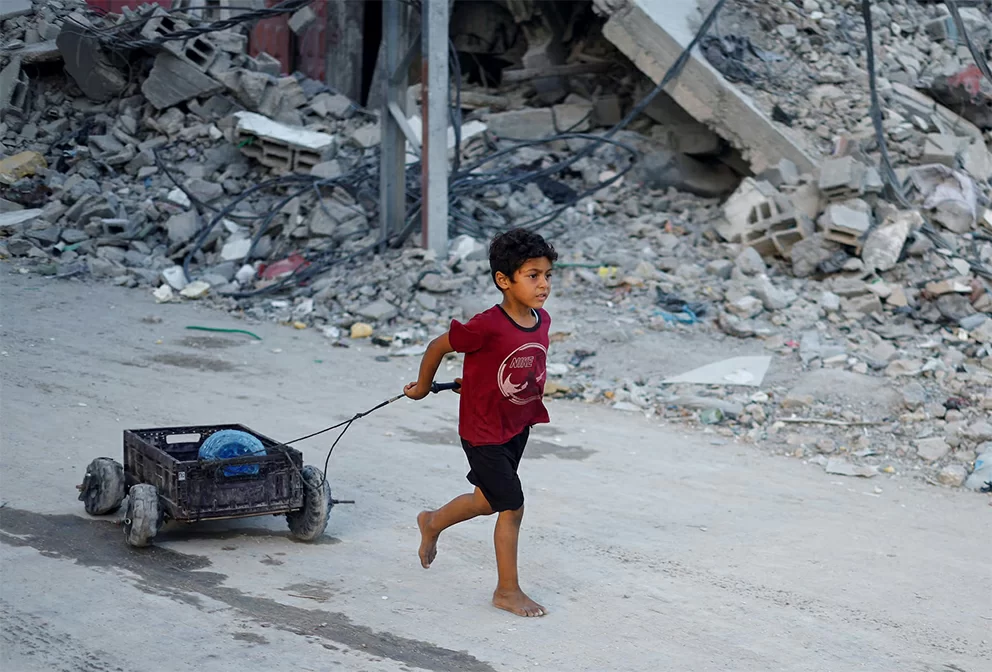
    Drone surveillance footage released by BNRGC reveals extensive flooding throughout Toamasina, a urban center of approximately 400,000 residents located 220 kilometers northeast of the capital. The aerial imagery depicts severely battered infrastructure, with countless buildings stripped of their roofs and streets obstructed by uprooted trees and debris.

    Rija Randrianarisoa, disaster management coordinator for Action Against Hunger, described scenes of total chaos, noting that approximately 90 percent of structures suffered significant roof damage. Road networks have become completely impassable due to fallen trees and scattered sheet metal, severely hampering emergency response efforts.

    The CMRS cyclone monitoring center based on Réunion Island confirmed Toamasina experienced a direct impact from the storm’s most intense quadrant. Meteorological analysts compared Gezani’s landfall intensity to Cyclone Geralda of February 1994, which resulted in approximately 200 fatalities and affected half a million people.

    Madagascar’s current leadership under Colonel Michael Randrianirina, who assumed power in October, has deployed military resources to the disaster zone. The colonel personally toured affected neighborhoods amidst floodwaters and debris, while airport authorities restricted commercial flights to prioritize humanitarian and military operations.

    Although the system has weakened to tropical storm status as it traverses the island, significant flood risks persist. Forecast models indicate the storm may regenerate cyclone strength over the Mozambique Channel, potentially threatening southern Mozambique by Friday evening—a region already grappling with severe flooding throughout this year.

    The southwestern Indian Ocean cyclone season typically extends from November through April, generating approximately twelve annual storms that frequently impact Madagascar and neighboring coastal nations.

  • Gov’t steps up monitoring as Cuban outages disrupt Jamaican students

    Gov’t steps up monitoring as Cuban outages disrupt Jamaican students

    The Jamaican government has escalated its daily monitoring of the deteriorating situation in Cuba, where widespread blackouts are severely disrupting essential services and education. Foreign Affairs Minister Kamina Johnson Smith revealed during a post-Cabinet briefing that concerns are mounting for over 300 Jamaican students facing suspended classes, unreliable online learning, and dwindling access to basic necessities due to Cuba’s severe fuel shortages.

    Minister Johnson Smith detailed that ‘frequent, lengthy and unpredictable electricity interruptions’ are crippling daily life, impacting not only education but also the availability of food, medical supplies, and transportation. The crisis has forced some educational institutions to close for extended periods, while others struggle with virtual instruction hampered by chronic internet failures.

    Of the Jamaican student population in Cuba, 44 are government scholarship recipients while 256 are privately funded. At least 13 private students have already returned home. To enhance coordination, the Foreign Ministry established a dedicated WhatsApp group connecting approximately 320 students with officials in Kingston and the Jamaican Embassy in Havana. This initiative has successfully registered previously undocumented private students, creating comprehensive awareness of all Jamaican students in Cuba.

    The embassy has formally contacted Cuban authorities through diplomatic channels seeking guidance on student facilitation measures, including the critical question of academic transcript availability should students need to transfer institutions. While an official response remains pending, informal advice suggests students must negotiate directly with their individual universities.

    Compounding the crisis, international travel to Cuba faces potential suspension as airlines receive notifications about jet fuel shortages. Air Canada has already announced flight suspensions, prompting Jamaican authorities to advise students to consult with families and prepare for emergency departure if necessary.

    The Jamaican Cabinet is evaluating support mechanisms for scholarship students facing prolonged disruption, while exploring whether local tertiary institutions could accommodate privately funded students seeking transfers. The government maintains continuous communication with students while monitoring the evolving situation closely.

  • Antigua and Barbuda Launches Official Website for CHOGM 2026

    Antigua and Barbuda Launches Official Website for CHOGM 2026

    Antigua and Barbuda has unveiled a comprehensive digital platform to facilitate preparations for the Commonwealth Heads of Government Meeting (CHOGM) 2026. The innovative portal will serve as a central hub for nearly thirty unique accommodation properties and hotels across the island nation, enabling delegates and accredited media to efficiently review lodging options and plan their participation.

    Prime Minister Honourable Gaston Browne emphasized the platform’s significance, stating: “As we prepare to welcome the Commonwealth family in 2026, this digital infrastructure will connect people across regions while providing clear, reliable information. It will simultaneously showcase the beauty, culture, and warm hospitality that define our nation. We anticipate robust engagement with citizens and partners across the Commonwealth as we advance shared priorities.”

    Commonwealth Secretary-General Honourable Shirley Botchwey and Ambassador Dr. Clarence Pilgrim, Head of the CHOGM Task Force, highlighted the platform’s triple functionality. The digital solution will provide timely information to all stakeholders, function as a coordination tool for logistics and accreditation, and showcase Antigua and Barbuda’s readiness to host a globally significant event.

    Dr. Pilgrim noted: “In today’s world, successful international events require strong digital infrastructure. This platform aligns with global best practices and reinforces our commitment to professionalism, transparency, and operational excellence.”

    CHOGM 2026 will convene leaders from the Commonwealth’s 56 member states, representing 2.7 billion people with over 60% under age 29. The gathering aims to advance collective action on sustainable development, climate resilience, economic cooperation, and youth empowerment. The Commonwealth Secretariat supports member countries in building democratic institutions, strengthening governance, and addressing global challenges through a network of more than 80 intergovernmental and civil society organizations.

    Registration and accreditation procedures will be published separately in a subsequent announcement once available.

  • GAIA officials on alert

    GAIA officials on alert

    Authorities at Barbados’ primary aviation hub, Grantley Adams International Airport (GAIA), are currently managing a developing aviation emergency. The incident involves an outgoing flight that was scheduled to depart from the facility, triggering a full-scale emergency protocol.

    Airport representatives, when reached for immediate comment, confirmed their active engagement with the situation but maintained a position of limited disclosure. Stressing the operational priority of managing the event, officials declined to elaborate on the specific nature of the emergency, the aircraft’s destination, or the number of passengers and crew potentially involved.

    The response underscores the stringent safety measures and rapid reaction capabilities employed at major international airports. Such protocols are designed to address a wide spectrum of potential incidents, from technical malfunctions detected prior to takeoff to security concerns. The situation remains fluid, with airport operations likely experiencing disruptions as emergency crews focus on the affected aircraft.

    Further comprehensive details regarding the cause of the emergency and the status of all individuals involved are pending as the official investigation continues. The public and press have been advised to await formal updates from the airport’s crisis communication team.

  • Dominican Pilots Association calls for release of pilot detained in Guinea

    Dominican Pilots Association calls for release of pilot detained in Guinea

    SANTO DOMINGO – The Dominican Republic’s aviation community has launched an urgent international campaign demanding the immediate release of pilot Fabio Nicolás Espinal Núñez, who remains detained in Guinea under controversial circumstances since December despite a court-ordered release.

    The crisis emerged when Espinal Núñez, during an international flight operation, executed a scheduled technical landing for refueling in Guinean airspace. Despite maintaining proper communication with air traffic authorities throughout the maneuver, local military officials subsequently arrested him on allegations of unauthorized landing and airspace violations. Although an appeals court later granted conditional release, Guinean authorities have refused to implement the judicial decision, extending the pilot’s detention indefinitely.

    At a emotionally charged press conference in Santo Domingo, family representatives revealed grave concerns about Espinal Núñez’s deteriorating physical and mental health amid Guinea’s current political climate. International human rights organizations have documented widespread arbitrary detentions and severe civil liberty restrictions under the nation’s military-controlled government.

    Captain Eugenio de Marchena, President of the National Association of Pilots (ANP), condemned the detention as a violation of fundamental aviation protocols. ‘Technical fuel stops are universally recognized procedures governed by international cooperation and good faith principles,’ de Marchena stated. ‘This arbitrary detention sets a dangerous precedent that threatens the entire framework of global civil aviation.’

    The ANP has mobilized a multinational response, urging pilot associations, aeronautical federations, and international aviation bodies to activate emergency mediation channels. Simultaneously, the association has formally petitioned Dominican President Luis Abinader to escalate diplomatic interventions through the Ministry of Foreign Affairs, demanding immediate consular protection and due process guarantees for the detained aviator.

  • Dominican Republic among few countries that improved corruption perception in 2025

    Dominican Republic among few countries that improved corruption perception in 2025

    The Americas have demonstrated negligible advancement in combating systemic corruption throughout 2025, according to the latest Corruption Perceptions Index (CPI) published by Transparency International. The comprehensive assessment of 182 global territories reveals a troubling regional stagnation, with Venezuela and Nicaragua maintaining their positions among the world’s most corrupt nations while the United States recorded its poorest performance in the index’s history.

    The regional evaluation averaged a concerning score of 42 out of 100 possible points across American nations. Transparency International’s analysis indicates a disturbing backward trend, with 12 of the region’s 33 countries experiencing measurable deterioration since 2012. The organization attributes this regression to governmental inaction, the systematic weakening of democratic institutions, and the expanding footprint of transnational organized crime networks. Among the few bright spots, the Dominican Republic (37) and Guyana (40) demonstrated marginal improvements, each gaining a single point in their annual assessment.

    Canada (75), Uruguay (73), and Barbados (68) emerged as regional leaders in transparency standards, though the report cautioned that even these established democracies confront corruption-related violence and limited anti-graft progress. Conversely, Venezuela (10), Nicaragua (14), and Haiti (16) occupied the bottom positions, characterized by authoritarian repression, institutional collapse, and deeply embedded corrupt practices. Venezuela’s performance ranked among the three worst globally, exceeded only by Somalia and South Sudan.

    Particularly alarming was the continued deterioration of the United States, which scored 64 points—marking a one-point decline from the previous year and a substantial 12-point drop since 2015. Transparency International identified assaults on judicial independence, weakened enforcement of anti-corruption legislation, and reductions in international aid programs as primary contributing factors. Throughout the hemisphere, corruption persists in undermining essential public services, constricting civic freedoms, and eroding institutional accountability, generating severe consequences for citizens’ daily living conditions.

  • Cuba voert noodmaatregelen in vanwege brandstoftekort

    Cuba voert noodmaatregelen in vanwege brandstoftekort

    Cuba has enacted urgent fuel conservation measures in response to a crippling US energy blockade that has severely disrupted daily life across the island nation. The Cuban government announced Monday that international airlines would no longer have access to aircraft fuel starting Tuesday, prompting Air Canada to immediately suspend all flights to Cuba.

    The streets of Havana fell unusually quiet as the emergency protocols took effect, designed to preserve rapidly diminishing fuel reserves. In response to what officials describe as economically paralyzing pressure from the Trump administration, the government has implemented reduced work weeks for state enterprises, curtailed school hours, and restricted fuel sales to essential services only.

    Additional austerity measures include the closure of hotels with low occupancy rates and the consolidation of tourists into fewer accommodations. Popular resort destinations such as Varadero and other provincial areas are experiencing hotel shutdowns, according to anonymous tourism industry professionals.

    The fuel shortage has created widespread uncertainty among Cuba’s 9.6 million residents. Public transportation has been drastically reduced, while taxi operators have significantly increased fares. Many citizens now face extended waiting periods for transportation, complicating daily routines and economic activities.

    This latest crisis compounds Cuba’s longstanding economic challenges, which have persisted under a US trade embargo since 1962. The situation deteriorated further when Venezuela—formerly Cuba’s primary oil supplier—ceased deliveries following last month’s US intervention that resulted in the abduction of Venezuelan President Nicolás Maduro. The Trump administration has threatened tariffs against any nation continuing to supply Cuba with petroleum products.

    The looming fuel shortages threaten to trigger large-scale power outages across the island. Officials confirmed Sunday that Cuba cannot refuel long-haul flights for at least one month, severely impacting international connectivity.

    Cuban Foreign Minister Bruno Rodríguez condemned the US blockade as “cruel aggression” designed to break the political will of the Cuban people. While reaffirming Cuba’s openness to dialogue, Rodríguez emphasized that any discussions must occur on Cuba’s own terms.

    Mexico, previously Cuba’s second-largest oil source after Venezuela, has expressed support for Cuba and initiated diplomatic talks with the US to resume oil exports. President Claudia Sheinbaum warned of an impending humanitarian crisis but stated Mexico cannot expose itself to US tariffs. Mexico recently dispatched over 800 tons of humanitarian aid to Cuba.

    The Russian government has also denounced US measures as “suffocating” and is collaborating with Cuba to provide assistance during the crisis.

  • Canadian Alfred Pleil Still Missing, Some Belongings Found

    Canadian Alfred Pleil Still Missing, Some Belongings Found

    Authorities in Punta Gorda, Belize, report significant advancements in the investigation concerning the disappearance of Canadian national Alfred Pleil. The case has entered a critical phase with law enforcement officials confirming the recovery of personal belongings connected to the missing man and the detention of multiple individuals for questioning.

    Assistant Superintendent of Police Stacy Smith, serving as Staff Officer, addressed media representatives on February 9, 2026, acknowledging substantial developments while maintaining the investigation’s sensitive nature. “During the course of that investigation, police had uncovered several items of interest and had detained several persons,” ASP Smith stated during the press briefing.

    Despite these breakthroughs, investigative teams remain guarded regarding specific evidentiary details. Police representatives declined to confirm whether financial instruments such as credit or bank cards were among the recovered possessions. Similarly, authorities refrained from identifying any primary persons of interest currently under scrutiny.

    ASP Smith characterized the investigative progress as “steady” while emphasizing the operational need for discretion. “As it relates to the investigation pertaining to Mr. Pleil, I must advise that it’s an ongoing investigation,” Smith reiterated to journalists, committing to future media updates as developments warrant.

    The case continues to generate significant public interest both locally and internationally, with concerned communities awaiting resolution regarding Pleil’s whereabouts and circumstances surrounding his disappearance.

  • Diaz-Canel thanks Mexico for aid

    Diaz-Canel thanks Mexico for aid

    In a significant display of international solidarity, Mexico has launched a major humanitarian mission to assist Cuba amid ongoing economic challenges. Two vessels, the Papaloapan and Isla Holbox, departed from Veracruz port carrying substantial aid shipments destined for the Cuban people.

    The Mexican Foreign Ministry provided detailed specifications of the relief effort, revealing that the Papaloapan is transporting approximately 536 tons of essential supplies. This shipment includes critical food items such as liquid milk, meat products, cookies, beans, rice, tuna in water, sardines, and vegetable oil, alongside personal hygiene products.

    Concurrently, the Isla Holbox carries a specialized cargo of over 277 tons of powdered milk, addressing specific nutritional needs. Mexican authorities confirmed that both vessels are expected to reach Cuban shores within four days, with additional shipments already planned. More than 1,500 tons of powdered milk and beans remain scheduled for subsequent transport, indicating a sustained support initiative.

    Cuban officials have responded with profound appreciation. Ambassador to Mexico Eugenio Martínez expressed “sincere and profound gratitude to the Government of Mexico, its people, and its President for the material aid sent to the Cuban people.” He characterized the assistance as vital support against what he described as “the consequences of the cruel economic war against Cuba.

    The Cuban Foreign Ministry echoed this sentiment with a formal acknowledgment, simply stating: “Thank you.” This exchange highlights the continuing diplomatic relationship between the two nations and Mexico’s commitment to assisting its Caribbean neighbor during a period of economic difficulty.

  • Mexico Halts Oil to Cuba, Sends Humanitarian Aid Instead

    Mexico Halts Oil to Cuba, Sends Humanitarian Aid Instead

    In a significant diplomatic shift, the Mexican government has officially suspended its oil exports to Cuba while simultaneously dispatching a substantial humanitarian relief mission to address the island nation’s escalating energy crisis. The strategic move appears designed to navigate complex international pressures, particularly from the United States, while maintaining regional solidarity.

    President Claudia Sheinbaum formally announced the suspension, emphasizing that the redirected assistance is exclusively intended for civilian welfare. “Our aid aligns with Mexico’s longstanding tradition of solidarity with Latin American peoples,” Sheinbaum stated, framing the decision within historical regional cooperation frameworks.

    This policy change carries substantial geopolitical weight. Mexico had emerged as Cuba’s primary petroleum supplier following the complete cessation of Venezuelan oil deliveries in December, which resulted from intensified U.S. sanctions. The Washington administration had previously issued warnings that nations facilitating oil transfers to Cuba could face significant trade tariffs and other economic repercussions.

    The humanitarian convoy, which departed from Veracruz port on February 8, represents a comprehensive relief effort. Official manifests indicate the shipment contains 536 metric tonnes of essential commodities including liquid milk, protein sources, shelf-stable carbohydrates, and hygiene products, supplemented by an additional 277 metric tonnes of powdered milk. Mexican authorities project the vessels will complete their journey to Cuban ports within a four-day transit period.

    Concurrently, Cuba’s transportation infrastructure faces critical challenges. Government officials confirmed that aviation fuel shortages have compelled international carriers to suspend refueling operations at all Cuban airports. Intelligence sources cited by EFE news agency indicate that aviation kerosene reserves could be entirely depleted as early as Monday, potentially grounding all international flight operations. Industry analysts project the kerosene supply crisis may persist for a minimum of thirty days, creating substantial disruption to Cuba’s connectivity and tourism economy.