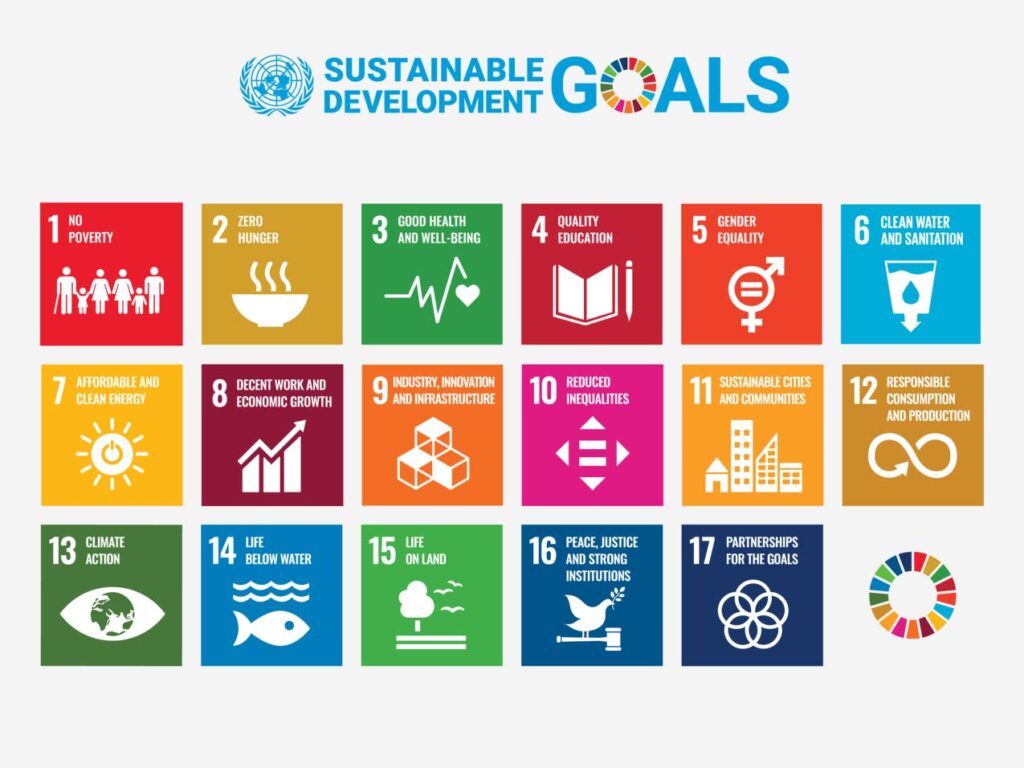
SANTIAGO, Chile — Top stakeholders from across Latin America, the Caribbean and the global community have gathered in the Chilean capital for the ninth iteration of the Forum of the Countries of Latin America and the Caribbean on Sustainable Development, a landmark convening held at a moment of growing concern over rising geopolitical fragmentation and global uncertainty derailing progress toward the United Nations’ 2030 Sustainable Development Goals (SDGs).
Hosted by the Economic Commission for Latin America and the Caribbean (ECLAC), the four-day gathering is set to wrap up on Thursday, with a core mission of forging cross-stakeholder agreements and sharing on-the-ground practical experiences to boost implementation of the 2030 Agenda for Sustainable Development. Attendees include senior government officials from across the region and beyond, representatives from the United Nations system, leaders of international and regional bodies, private sector executives, academic researchers, and civil society organizers, who will join a series of structured dialogues exploring coordinated action at global, regional, and national levels.
With just four years remaining until the 2030 deadline for SDG achievement, ECLAC Executive Secretary José Manuel Salazar-Xirinachs opened the forum with a stark warning: current trends across Latin America and the Caribbean show progress on the SDGs is heading in the wrong direction, demanding urgent redoubling of efforts and strengthened regional and international collaboration to reverse existing gaps and get back on track. New analysis released by ECLAC alongside the forum paints an even grimmer picture than last year’s assessment: at the current pace of progress, only 19% of the region’s SDG targets will be met on time, down from the 23% projected in 2023.
Of the remaining targets, 42% are showing progress toward goals but are moving far too slowly to meet 2030 deadlines, while 39% have either stalled completely or regressed since the 2015 adoption of the 2030 Agenda. ECLAC attributes this worsening outlook to a mix of external global shocks and domestic structural challenges, including eroding institutional capacities, failure to prioritize SDG targets in national policy, limited access to development financing, constrained fiscal space, growing sovereign debt burdens, and most critically, persistently low economic growth across much of the region.
Despite the grim assessment, Salazar-Xirinachs struck a determined tone with delegates, emphasizing that stakeholders across the region retain the agency, resources, and platforms to course-correct. “We are not just passive witnesses of this new era of uncertainty,” he said. “We have agency, assets and tools. We have active platforms, like this forum, and the collective will that brought us all here together.”
He highlighted the broad base of support for sustainable development across sectors, from civil society and youth movements to the private sector, academia, and all levels of government, noting that the multilateral system forged after World War II remains more necessary today than ever, even amid its current challenges. He urged attendees to approach the forum’s deliberations with conviction and a pragmatic sense of what can be achieved, arguing that this perspective does not equate to naivety or ignoring the very real barriers the region faces.
“To move towards development, hope is not enough, but it is a necessary precondition,” Salazar-Xirinachs said. He acknowledged that accelerating SDG implementation is exceptionally difficult in today’s fractured geopolitical context, but stressed that this context is exactly why the work of the forum is so critical. In an increasingly divided world where power politics dominate global relations, he noted that intentional cooperation and collaborative action serve as the most effective counterweight to fragmentation.
Salazar-Xirinachs noted that ECLAC’s daily work consistently demonstrates that the vast majority of global stakeholders are committed to collectively building an inclusive, sustainable future for all. “That is why we must coordinate more and better. Making progress on what is possible, forging pragmatic partnerships and helping others understand that the 2030 Agenda is, in the end, an agenda for transforming societies in order to achieve shared human aspirations: to live better, live in peace, live in a healthy environment, live free of injustice and excessive inequalities,” he said, closing his opening remarks with a call to action: “This is not the time to throw in the towel, but rather to roll up our sleeves and keep working.”
Under-Secretary-General for Economic and Social Affairs at the United Nations Li Junhua echoed many of Salazar-Xirinachs’s observations, noting that Latin America and the Caribbean continues to grapple with long-standing structural constraints, including persistently high inequality and growing vulnerability to climate-related disasters. Even so, he highlighted the region’s important leadership in key areas including social protection policy, building climate resilience, and advancing inclusive development strategies, and praised ECLAC’s foundational role in supporting these efforts through regional cooperation and evidence-based policy guidance.