分类: world

  • CARICOM urged to strengthen regional unity, implement strategy, to mitigate effects of war in Middle East

    CARICOM urged to strengthen regional unity, implement strategy, to mitigate effects of war in Middle East

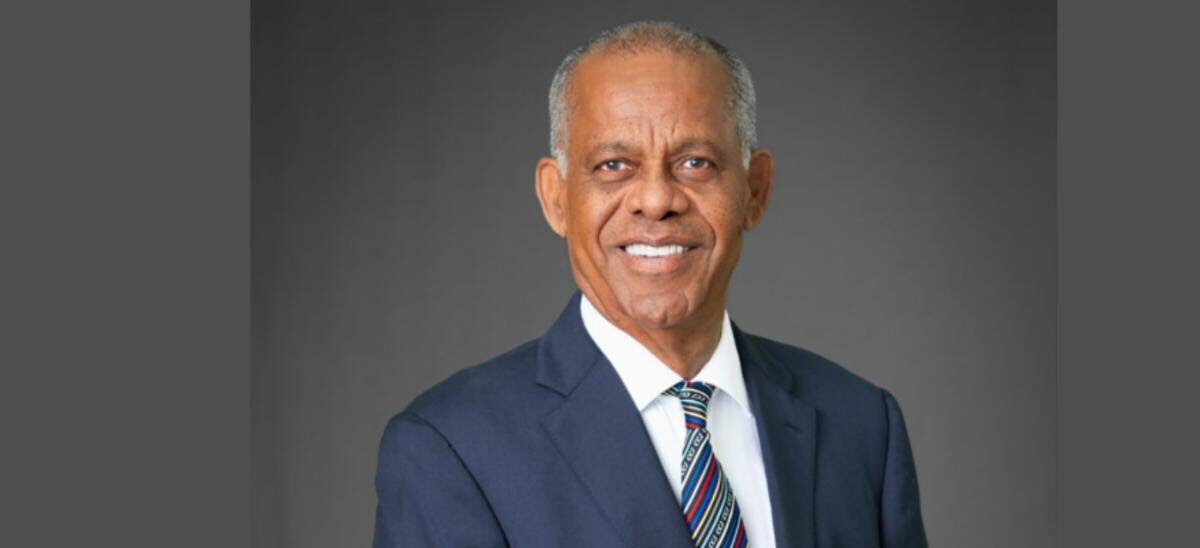
    As global geopolitical instability continues to escalate, policymakers across the Caribbean region have received an urgent call to coordinate bold, collective action to counter spillovers from ongoing conflict in the Middle East. The appeal was delivered by Dr. Wendell Samuel, Acting Assistant Secretary-General of the Caribbean Community (CARICOM), during a virtual policy forum hosted on April 10, co-organized by the Food and Agriculture Organization (FAO) of the United Nations.

    During the discussion, which centered on the far-reaching impacts of Middle East tensions on nations across Latin America and the Caribbean, Dr. Samuel emphasized that forward-looking, coordinated strategy, rather than fragmented national action, is the only path to effectively counter emerging global shocks. “This moment calls for strategic thinking and regional solidarity,” he told attendees. “The decisions we take now will determine not only how CARICOM navigates this crisis, but how prepared we are for future global disruptions. Resilience, cooperation, and shared responsibility must guide our response.”

    The forum centered heavily on the region’s unique vulnerabilities to external shocks, particularly in three critical areas: food security, domestic agricultural systems, and overall macroeconomic stability. Though the Caribbean sits thousands of miles from the Middle East, Dr. Samuel noted that the region’s highly open, trade-reliant economies leave it deeply exposed to disruptions in global energy, food, and supply chain networks. He added that long-standing structural weaknesses have amplified this risk: the region remains heavily dependent on imports for core necessities including food, fuel, agricultural fertilizers, and commercial shipping services, leaving it acutely sensitive to price swings and supply interruptions driven by geopolitical tension.

    Dr. Samuel, who also leads the Economic Integration, Innovation and Development Directorate at the CARICOM Secretariat, confirmed that regional officials have already developed a preliminary draft response framework to address these risks. Outlined as a comprehensive policy matrix, the draft framework maps direct links between external global disruptions and targeted national and regional policy actions. It lays out a clear sequence and priority for interventions, balancing near-term stabilization efforts to address immediate price and supply pressures with longer-term structural reforms designed to boost regional resilience and reduce systemic risk over time. A core tenet of the framework is its requirement for coordinated action across all CARICOM member states.

    The draft framework will next be submitted for review to CARICOM’s Ministers of Agriculture, who will deliberate on its final adoption and outline a roadmap for implementation. In laying out core priorities for the region’s response, Dr. Samuel called for deeper cross-border collaboration on three foundational fronts: coordinated public and private procurement, integrated regional transportation networks, and better collective management of strategic commodity reserves to buffer against supply shocks.

    He also underscored the urgent need for accelerated investment in renewable energy infrastructure, alongside intentional investment to restructure and strengthen regional food systems to reduce import dependence. Strengthened cross-border policy coordination, he argued, will allow the region to mount faster, more effective collective responses when external pressures emerge. Finally, he flagged targeted investment to strengthen regional institutions focused on food security monitoring and macroeconomic tracking as a critical, underaddressed need for the region.

    Dr. Samuel stressed that the economic risks stemming from the current conflict are not abstract hypothetical concerns. Rising price inflation, skyrocketing food costs, and growing pressure on strained government budgets are already emerging as pressing challenges across the region, he said, requiring immediate policy intervention. Only by clearly understanding the specific channels through which global shocks impact Caribbean economies, he concluded, can the region mount practical, coordinated responses to reduce harm and build long-term stability.

  • Below-Normal Hurricane Season? El Niño May Change That, Here’s Why

    Below-Normal Hurricane Season? El Niño May Change That, Here’s Why

    As the 2026 Atlantic hurricane season approaches, Belize’s National Meteorological Service (NMS) has released an early projection calling for slightly below-normal storm activity across the region — but forecasters are sounding a clear note of caution, warning that a developing moderate-to-strong El Niño event, with a non-negligible chance of a rare “super El Niño”, could upend expectations and leave communities vulnerable to unexpected extreme weather.

    The World Meteorological Organization (WMO) confirms that global forecast models put the probability of El Niño developing in the coming months at over 60%. What is more, current climate data suggests roughly a one-in-four chance that this event will strengthen into a super El Niño, one of the most powerful classifications of this natural climate phenomenon.

    To contextualize the risk, El Niño is a cyclical global climate pattern driven by abnormal warming of surface waters across the central and eastern Pacific Ocean. This shift in ocean temperatures disrupts large-scale atmospheric wind patterns and jet stream trajectories, triggering far-reaching shifts in rainfall and temperature distributions across every continent. The phenomenon can bring crippling drought to some regions while sparking catastrophic flooding in others, and major El Niño events have been repeatedly tied to record-breaking global heatwaves, widespread crop failures, systemic water shortages, and unprecedented swings in extreme weather.

    For Belize and the broader Caribbean basin, El Niño’s characteristic impact actually works to suppress hurricane formation in most cases. NMS chief meteorologist Ronald Gordon explained that the pattern typically generates increased vertical wind shear across the Atlantic, a atmospheric condition that tears apart developing storm systems and prevents them from intensifying into full hurricanes. That dynamic is the core reason behind the NMS’s early projection of a slightly slower-than-average 2026 hurricane season.

    However, Gordon emphasized that this lower baseline risk does not eliminate the threat entirely — and he urged Belizean residents to avoid complacency in the face of the forecast. “As we always say, ‘Don’t study those numbers, because just one hurricane could impact us and be very bad,’” Gordon noted. “So, again, reminding citizens to be alert, be aware, and be prepared.”

    History bears out this warning: even in the quietest hurricane seasons, individual storms can rapidly intensify as they move across warm Atlantic waters, leaving coastal communities with little time to prepare and often causing catastrophic damage.

    What makes this year’s forecast particularly tense for climate scientists is the confluence of factors that could push the approaching El Niño into super strength. Current ocean temperature readings and long-term climate trends are aligning in a pattern that favors extreme strengthening. When combined with decades of human-caused global warming that has already raised baseline ocean and atmospheric temperatures, a super El Niño could shatter existing global heat records and exacerbate extreme weather events across the globe far beyond Belize’s borders.

    For local officials in Belize, the key takeaway from this mixed forecast is a simple one: preparation matters more than prediction. Seasonal projections can shift dramatically as new climate data emerges, and even a suppressed hurricane season driven by El Niño still carries significant risk for coastal, low-lying nations like Belize.

  • Landscaper gunned down in Manchester

    Landscaper gunned down in Manchester

    On a quiet Thursday morning in rural Jamaica, a routine day of gardening work ended in brutal violence, leaving a community in shock and underscoring a troubling upward trend in violent crime across the parish of Manchester.

    According to official reports from Jamaica Constabulary Force, the incident unfolded shortly after 9:00 a.m. in the New Berry district, a small residential area located just outside Knockpatrick. Rory Curtain, a 57-year-old landscaper and lifelong resident of Manchester’s Green Street, was carrying out routine landscaping maintenance on a private property when an unidentified gunman walked onto the premises and opened fire directly at him. Curtain was struck by gunfire and died at the scene before emergency responders could arrive.

    In the wake of the killing, law enforcement has confirmed that Curtain’s murder marks the 11th homicide recorded in Manchester since the start of this year. That figure represents a staggering 120% increase compared to the same period in 2023, when only five murders were reported across the parish.

    The sharp rise in fatal violence is not an unforeseen development for local police leadership. Just one week prior to the shooting, Superintendent Carey Duncan, head of the Manchester police division, publicly addressed the growing homicide surge, identifying two core drivers behind the spike: escalating gang-related conflicts and unresolved domestic disputes that have escalated to fatal violence. Duncan’s warning has now been borne out by the latest killing, putting renewed pressure on local authorities to curb the wave of violent crime affecting the parish.

    Local community leaders have called for urgent action to address the root causes of the violence, as residents grapple with the latest loss of life in an already tense year.

  • Pope condemns ‘endless cycle’ of death in ‘bloodstained’ Cameroon region

    Pope condemns ‘endless cycle’ of death in ‘bloodstained’ Cameroon region

    On a historic Thursday visit to one of Cameroon’s most violence-scarred regions, Pope Leo XIV delivered a stark rebuke of the nearly decade-long separatist conflict that has left the area bloodied and destabilized, calling out the self-serving greed that perpetuates cycles of death. Speaking in Bamenda, the northwestern city that sits at the heart of the anglophone insurgency, the pontiff laid bare the damaging economics fueling the unrest: those who siphon natural resources from local communities funnel much of their illicit profits into weapons, extending the years-long emergency for their own gain.

    Traveling under heavy military protection in a bulletproof-winded vehicle, the U.S.-born pontiff arrived at Saint Joseph’s Cathedral, where he paused to bless throngs of joyful worshippers and supporters who had gathered to welcome his landmark visit. Crowds dressed in traditional clothing emblazoned with the pope’s image waved both Vatican and Cameroonian flags, filling the streets with singing, horn blasts and festive music despite the shadow of insecurity hanging over the region.

    The conflict that has ravaged Cameroon’s two anglophone regions dates back to 2016, when peaceful protests by anglophone communities complaining of systemic political and social marginalization under the long-ruling government of President Paul Biya—who has held power in the central African nation since 1982—were met with violent government crackdowns. That escalation pushed separatist movements to launch an armed campaign for secession from the majority French-speaking country. Over eight years of fighting, the United Nations estimates at least 6,000 people have been killed, and civilians have borne the brunt of the violence, targeted in widespread killings and mass kidnappings.

    This visit marks the second stop of Pope Leo XIV’s high-profile tour of the African continent, following his arrival in the country on Wednesday. In his solemn peace address, the pope also condemned actors who exploit religion and invoke the name of God to advance their own military, economic and political ambitions, a sharp rebuke of radicalization in the conflict.

    In response to the pontiff’s visit, imprisoned separatist leaders have issued a call for negotiations mediated by the Vatican, with support from the United Nations, to address the deep-rooted causes of the conflict. Their lawyer, Joseph Awah Fru, delivered the request on the prisoners’ behalf, opening a potential path to dialogue following the pope’s high-profile intervention.

  • Overheid en traditionele leiders in gesprek over bosbeheer en klimaatgelden

    Overheid en traditionele leiders in gesprek over bosbeheer en klimaatgelden

    On April 15, the government of Suriname kicked off a landmark two-day dialogue with leaders of Indigenous and Tribal Peoples, centered on advancing sustainable forest management, inclusive community participation, and expanded access to global climate finance. The gathering, called the Gran Krutu, marks a defining milestone in integrating local Indigenous communities into national conservation and development policy shaping, a move that recognizes the critical role these communities play as stewards of Suriname’s globally significant forest ecosystems.

    Hosted jointly by Suriname’s Ministry of Oil, Gas and Environment (OGM) and the Ministry of Regional Development, the dialogue is structured around two core goals: first, to share clear, accessible information aligned with the lived realities of Indigenous and Tribal communities, and second, to co-develop foundational policy frameworks that are both fully participatory and respectful of Indigenous cultural traditions.

    Suriname holds a unique global position as a High Forest Low Deforestation nation, meaning it retains nearly all of its old-growth forest cover while maintaining extremely low rates of deforestation. This status positions the country to access significant international climate finance, including results-based payments for forest conservation — a key priority highlighted throughout the dialogue. The opening ceremony of the gathering was led by Suriname’s Vice President Gregory Rusland.

    Speaking at the event, Minister of Regional Development Miquella Huur emphasized the urgent need to support local communities, particularly smallholder farmers, in aligning three interconnected goals: strengthening national food security, advancing long-term environmental sustainability, and protecting Suriname’s forest landscapes. “Full participation and genuine ownership by Indigenous and Tribal Peoples is non-negotiable for sustainable development across their traditional territories,” Huur noted.

    For his part, OGM Minister Patrick Brunings reinforced the critical importance of responsible forest stewardship and the active inclusion of Indigenous communities at every stage of policy development. Brunings also confirmed that a portion of revenues generated from Suriname’s oil and gas sector will be allocated to advance sustainable development initiatives aligned with the national development roadmap, known as the Suriname 3.0 vision.

    The first day of the dialogue featured technical presentations on a range of key topics, including the structure of global climate finance, the UN-backed REDD+ (Reducing Emissions from Deforestation and Forest Degradation) framework, and the mechanics of results-based conservation payments. Organizers also set aside dedicated time for traditional Indigenous leaders to share their on-the-ground insights, traditional knowledge, and priority concerns directly with government representatives.

    The two-day gathering is backed by a coalition of international partners, including the Food and Agriculture Organization of the United Nations (FAO) and the Green Climate Fund, with additional technical and financial support from the Suriname Foundation for Forest Management and Forest Control. All participation by Indigenous and Tribal Peoples is being carried out in full adherence to the principle of free, prior and informed consent (FPIC), a global standard for ensuring Indigenous communities have full autonomy to engage with or decline government projects and policies affecting their lands.

  • Heavy rains leave 4 dead and over 30,000 displaced in Dominican Republic

    Heavy rains leave 4 dead and over 30,000 displaced in Dominican Republic

    Devastating flooding triggered by days of unrelenting heavy rainfall from a low-pressure trough has left at least four people dead and more than 30,500 residents displaced across the Dominican Republic, according to updated official government reports.

    Civil Defense teams have recovered the remains of two recent victims: a three-year-old boy swept away by raging flood-swollen rivers in the northern coastal province of Puerto Plata, and a 32-year-old man killed by flash flooding in the capital city of Santo Domingo. These two deaths follow two earlier fatalities recorded earlier in the disaster, including a one-year-old infant girl who died when a collapsing wall fell on her during intense storm activity.

    Beyond the human toll, the disaster has caused widespread disruption to critical infrastructure and daily life. Data from the country’s Emergency Operations Center shows more than 6,100 residential properties have suffered damage from flooding and landslides. Over 1 million residents across the island nation are currently cut off from safe drinking water, and 28 isolated communities remain completely disconnected from surrounding areas with no accessible transit routes.

    In response to the unfolding crisis, Dominican authorities have activated emergency alerts for 28 of the country’s 32 provinces, deploying search and rescue teams and emergency supply distributions to affected regions. Meteorological officials have issued a grim update, warning that additional rainfall is expected to continue over the coming hours, raising fears of further flash flooding and landslides. The capital city of Santo Domingo remains under a yellow-level weather alert, as local authorities brace for more severe weather conditions.

  • Traditionele leiders Marowijne- en Lawagebied vragen betrokkenheid bij grensakkoord

    Traditionele leiders Marowijne- en Lawagebied vragen betrokkenheid bij grensakkoord

    On April 15, traditional leaders from five Indigenous and tribal communities along the Marowijne and Lawa Rivers gathered in Paramaribo, the capital of Suriname, to issue a joint declaration calling for their formal inclusion and full recognition of their inherent rights amid ongoing negotiations to implement the border agreement between Suriname and French Guiana.

    The communities involved — the Kali’na, Lokono, Aluku, Paamaka and Wayana peoples — have inhabited the riverine border lands for multiple generations, making them the first-hand witnesses to the growing cross-border challenges threatening their way of life.

    In their statement, the leaders outlined the daily crises their communities face: unchecked river pollution, rampant illegal gold mining, widespread deforestation and surging transnational criminal activity. These overlapping threats have already eroded their natural habitats, undermined local food security, and put the long-term survival of their villages at risk. “When the rainy season comes, all the waste and pollution washes up onto our riverbanks,” the declaration noted, emphasizing that communities bear the direct brunt of unregulated cross-border activity.

    The leaders clarified that they do not oppose moving forward with the existing border framework reached between Suriname and France, in contrast to a recent petition calling to halt all proceedings on the agreement. They explicitly distanced themselves from that petition, stressing that long-term residents of the border region deserve a seat at the table, not a stoppage of negotiations.

    Instead, the leaders are calling for clear, binding commitments and robust cross-border cooperation between the two nations to restore order, strengthen security, and protect the ecologically and culturally vital border region. Without clear regulations and enforced rule of law, the area will descend into chaos, they warned.

    Beyond security and environmental protection, the declaration underscores three core demands for the further development and implementation of the border agreement: First, the full legal recognition of Indigenous and tribal rights to their traditional territories, their distinct cultures, and their traditional ways of life. Second, guaranteed participation in all decision-making processes that impact their communities. Third, the preservation of cross-border social, cultural and familial ties that have existed for centuries between communities on both sides of the artificial international border.

    As traditional authority figures for the border region, the leaders emphasize that their perspectives, shaped by generations of living on and caring for the land, must be heard and meaningfully integrated into national decision-making on the border issue. In particular, they seek to act as active partners in developing and executing initiatives to maintain security and public order along the border.

    The statement concluded with a reaffirmation of the leaders’ willingness to engage constructively in the process, to advance solutions that protect their traditional homelands, secure long-term stability for the border region, and build a sustainable future for their communities. The declaration was signed by top traditional leaders from all five represented communities, including Granman Ipomadi Pelenapin of the Wayana, Granman Simeon Glunder of the Aluku, and Jona Gunther, chair of the Kali’na and Lokono of Lower Marowijne, among others.

  • In the final farewell: Fidel

    In the final farewell: Fidel

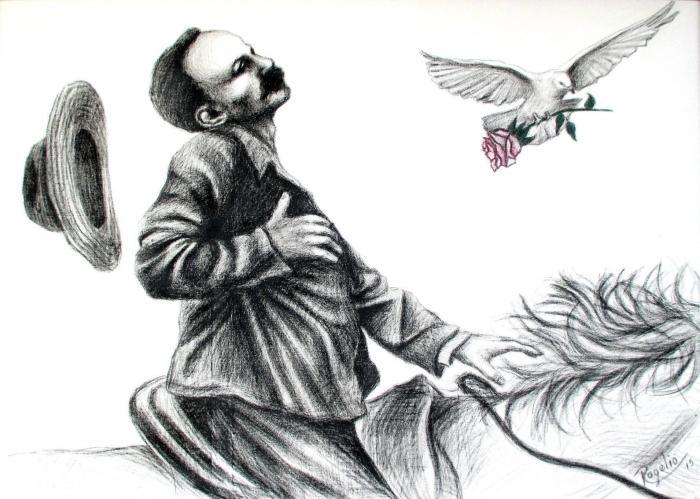
    Six and a half decades after one of the most defining opening acts of Cold War tensions in the Caribbean, Cuba’s official newspaper Granma has revisited the haunting, inspiring story of Eduardo García Delgado, the young revolutionary militiaman killed in pre-invasion air strikes that paved the way for the failed Bay of Pigs invasion. The commemoration centers on a historic page from the 1961 revolutionary newspaper *Revolución*, published on April 17 that year as a tribute to García Delgado, who lost his life just two days prior in coordinated bombings of Cuban airports. Before drawing his final breath, the young fighter scrawled a single name in his own blood across a surface: Fidel, a reference to revolutionary leader Fidel Castro. Granma’s tribute, published ahead of the 65th anniversary of the invasion in April 2026, republishes a moving poetic tribute to García Delgado that captures the raw ideology and sacrifice of the early Cuban Revolution. The verse honors García Delgado as a young working-class patriot who staked his future on the promise of a new sovereign Cuba: “He was young, in his hands lay the future of a new land. He was poor, he knew the sweat that is reaped with a weary back and empty pockets. He was a patriot; Cuba, the Revolution, were for him a reality.” The poem confirms the circumstances of his death, noting he “died torn apart by Yankee shrapnel At dawn on April 15.” The historic newspaper page holding this tribute comes from Granma’s institutional archives, retained as a permanent record of the human cost of the 1961 conflict between the Castro revolutionary government and U.S.-backed opposition forces that launched the Bay of Pigs invasion. The 1961 pre-invasion bombings targeted Cuban air infrastructure to weaken the revolutionary government’s defenses ahead of the amphibious landing by CIA-trained Cuban exiles on April 17. García Delgado’s final act, immortalized in the commemorative reporting, has become a lasting symbol of revolutionary loyalty and personal sacrifice in Cuban national memory. The image of the original 1961 *Revolución* newspaper page, preserved in Granma’s archives, accompanies the new tribute to the fallen militiaman.

  • Dominican Republic and Suriname advance energy and hydrocarbon cooperation

    Dominican Republic and Suriname advance energy and hydrocarbon cooperation

    In a recent high-level diplomatic gathering held in Santo Domingo, senior officials from the Dominican Republic and Suriname have moved forward with collaborative discussions focused on expanding joint work in hydrocarbon development and the broader energy sector. The meeting brought together Joel Santos, the Dominican Republic’s Minister of Energy and Mines, and Melvin Bouva, Suriname’s Minister of Foreign Affairs, where parties centered their dialogue on opportunities for joint oil and gas exploration, as well as potential partnerships in mining and large-scale energy initiatives. These talks unfold against a backdrop of rapid transformation in the Caribbean and Latin American regional energy landscape, where nations are actively reworking their energy strategies to balance security needs, climate goals, and economic growth.

    During the discussions, Minister Santos shared key updates on the Dominican Republic’s domestic energy plans, confirming that the country will launch its second competitive oil exploration bidding round this coming November. The initiative is designed to draw foreign and domestic investment into the country’s energy sector, shore up long-term national energy security, and deliver more comprehensive data on the full scope of the Dominican Republic’s untapped hydrocarbon reserves. Crucially, the bidding round will be structured to adhere to strict sustainable development practices and full transparency requirements, aligning with global standards for responsible resource extraction.

    Beyond non-renewable resource development, Santos also highlighted the Dominican Republic’s significant progress in transitioning to a cleaner energy system. He noted that renewable energy sources now account for more than one-quarter of the country’s total electricity generation, a milestone that has helped build a more diverse, climate-resilient national energy mix that reduces reliance on imported fossil fuels.

    Both delegations reaffirmed their shared commitment to deepening bilateral relations beyond the energy sector, with plans to explore expanded cooperation across a range of strategically important areas. In addition to energy and mining, the two governments are looking to advance collaboration on sustainable development priorities, with cross-ministerial participation from officials overseeing transport, tourism, digital communications, and international trade. This broad-based approach to partnership reflects both nations’ desire to unlock mutual economic benefits and strengthen their positions in the evolving regional and global energy market.

  • USA : Minister Paulemon presents Haiti’s vision for its healthcare system

    USA : Minister Paulemon presents Haiti’s vision for its healthcare system

    In a keynote address delivered at George Washington University on April 14, 2026, Sandra Paulemon, Haiti’s Minister of Planning and External Cooperation, laid out the Caribbean nation’s ambitious blueprint for transforming its healthcare system during an academic exchange hosted by the university’s Institute for African Studies. The event centered on critical intersections between public health outcomes and sustainable public financing strategies for vulnerable nations grappling with widespread instability.

    Paulemon opened her presentation by painting an unflinching picture of Haiti’s current health landscape, detailing long-standing structural barriers that have left millions without reliable access to care. She outlined the Haitian government’s incremental but ongoing work to expand, strengthen, and sustain healthcare access, with a deliberate focus on reaching marginalized and low-income communities that have historically been excluded from comprehensive services. At the core of the government’s agenda, she emphasized, is a deep-seated commitment to building a healthcare system that is resilient to ongoing shocks, equitable across all population groups, and fully sovereign, while upholding fundamental human dignity and advancing social justice for all Haitians.

    A major focus of the minister’s remarks centered on the disproportionate crisis facing women and girls in Haiti, who face widespread threats of sexual violence, exploitation, and coercion at the hands of active armed gangs operating across the country. Paulemon drew international attention to the acute vulnerability of displaced women who have fled their homes amid ongoing violence: many have survived severe abuse, carry deep psychological trauma, and face almost insurmountable barriers to accessing routine medical care, specialized psychosocial support, and formal protection services. She also noted the parallel crisis facing young boys in affected communities, who are regularly targeted for forced recruitment by gangs, robbing them of their childhood and eliminating any clear path to a stable, hopeful future.

    Against this backdrop of ongoing crisis, Paulemon argued that the domestic mobilization of resources for public health takes on urgent new meaning. She explained that sustained domestic investment would allow the Haitian state to expand its core capacity to protect, treat, and support the nation’s most vulnerable groups, including survivors of violence, at-risk children, and entire communities displaced by ongoing insecurity. Far from being a narrow social policy concern, she framed health financing as a foundational tool for advancing national stability, expanding social protection, and strengthening the nation’s overall resilience to overlapping crises.

    Paulemon also outlined the central coordinating role of her Ministry of Planning in aligning disparate resources from national, bilateral, multilateral, and humanitarian partners into a single cohesive strategy aligned with the Haitian government’s stated strategic priorities. She stressed that a core mandate of her department is to improve alignment between external donor funding, national public health priorities, and sector-specific strategies led by relevant Haitian state institutions, most notably the Ministry of Public Health and Population. This coordination, she argued, is critical to reducing fragmentation and ensuring that all invested resources advance national, rather than external, goals.

    Throughout her address, the minister reaffirmed the Haitian government’s commitment to collaborative partnership with both domestic stakeholders and international allies to build a healthcare system that can meet the population’s evolving needs, particularly for the most marginalized groups. She emphasized that this work must be rooted in the principles of national sovereignty, coordinated action, and effective public service delivery. A key long-term goal, she added, is to gradually reduce Haiti’s overreliance on external aid, building a self-sustaining health system that can address ongoing gaps with a targeted focus on survivors of gender-based violence and vulnerable youth.

    In closing, Paulemon underscored the urgent need to expand access to integrated physical and mental health care, scale up psychosocial support for violence survivors, and strengthen protection and economic reintegration programs for affected communities. Ensuring that no Haitian is left behind, ignored, or forgotten amid ongoing crisis is not only a core responsibility of the Haitian state, she argued, but a shared global commitment. “Together, through alignment, coordination, and unwavering commitment, it is possible to guarantee genuine protection, effective access to care, and tangible dignity for the Haitian people,” she concluded.