分类: world

  • Dominican Republic : Births by Haitian mothers down 41%

    Dominican Republic : Births by Haitian mothers down 41%

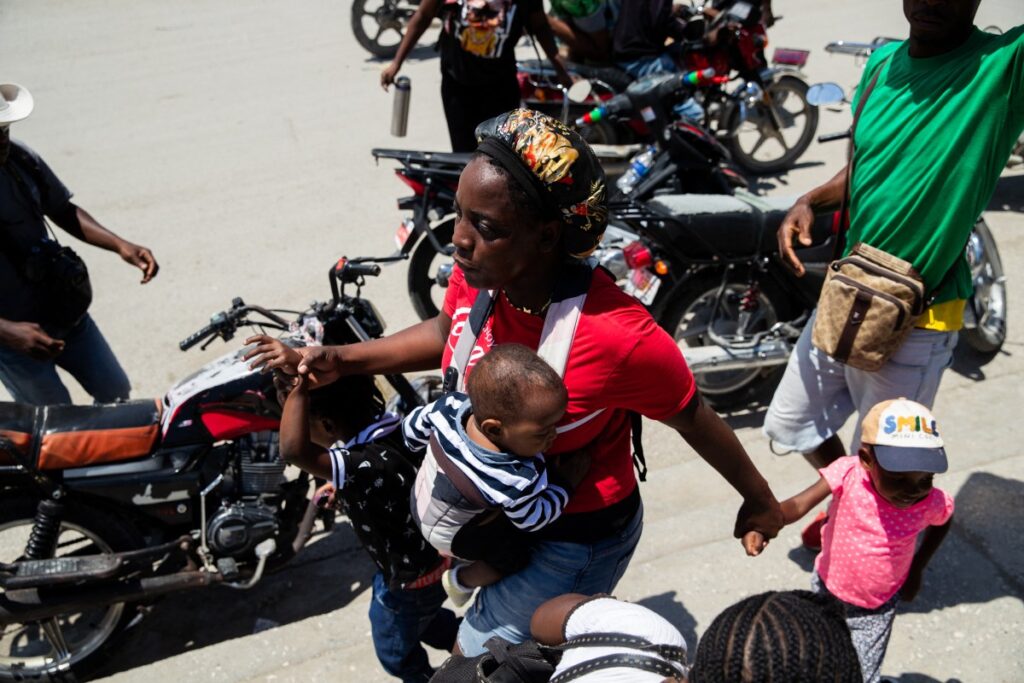
    A stringent immigration verification protocol implemented by the Dominican Republic has precipitated a dramatic 41% reduction in births to Haitian mothers within its public healthcare facilities. Enacted on April 21, 2025, the policy mandates status checks in hospitals, fundamentally altering access to maternity services for the Haitian community.

    Official data reveals a stark decline from 32,967 recorded births to Haitian mothers in 2024 to just 19,434 in 2025. This represents a drop of 13,533 births across the nation’s 33 public hospitals. The policy’s impact was immediate and profound; within its first full month of implementation (May 2025), births plummeted to 849, a figure that remained consistently low throughout the year. Monthly totals for the remainder of 2025—including 886 in June, 902 in July, and a peak of just 1,430 in September—demonstrated a reduction of more than fifty percent compared to pre-protocol figures.

    The downward trajectory has persisted into 2026. January 2026 saw 1,114 births, a number drastically lower than the 3,048 recorded in January 2024 and also below the 3,023 births that had been projected for that month prior to the policy’s enactment.

    Geographic analysis of the data indicates a concentration of remaining births in border regions experiencing significant migration flows. Hospitals in Verón (La Altagracia province) recorded 628 Haitian births, followed by Rosa Duarte in Elías Piña (406), and Elio Fiallo in Pedernales (342). Conversely, numerous provinces—including La Vega, María Trinidad Sánchez, Monte Plata, and Santo Domingo—now report very low rates of births to Haitian mothers, signaling the widespread effectiveness of the border control measure.

  • Op-ed: Latin America and the Caribbean advances in the fight to eradicate hunger: a challenge that admits no pauses

    Op-ed: Latin America and the Caribbean advances in the fight to eradicate hunger: a challenge that admits no pauses

    The Latin America and Caribbean region has achieved a remarkable milestone in its ongoing battle against food insecurity, with undernourishment rates declining for the fourth consecutive year according to the latest United Nations data. The 2025 Regional Overview of Food Security and Nutrition reveals that hunger affected just 5.1% of the population in 2024, a substantial improvement from the 6.1% recorded in 2020. This progress translates to 6.2 million people escaping the grip of hunger over this period.

    René Orellana Halkyer, Assistant Director-General and FAO Regional Representative for the region, emphasized that this achievement demonstrates how strategic policy interventions can generate tangible improvements in food security. The progress stems from comprehensive approaches including economic recovery measures, enhanced social protection systems, support for family farming, agricultural innovation, and the promotion of agrifood trade.

    Despite these encouraging developments, significant challenges persist. More than 33 million people across the region still experience hunger, while approximately 167 million face food insecurity. An alarming 181 million cannot afford a healthy diet, and obesity affects 141 million adults, creating a complex double burden of malnutrition.

    The region faces the world’s highest cost for a healthy diet at $5.16 per person daily (PPP), which remains a primary barrier to nutritional security. This economic challenge is compounded by climate extremes that disrupt food systems and limited access to fresh, nutritious foods.

    The upcoming 39th FAO Regional Conference for Latin America and the Caribbean (LARC39) will serve as a critical platform for addressing these persistent issues. Priority actions include strengthening sustainable production systems, expanding school feeding programs with locally sourced ingredients, implementing targeted subsidies for vulnerable populations, and modernizing food supply chains.

    FAO continues to support member states through its Strategic Framework 2022-2031, focusing on the ‘Four Betters’ approach: Better Production, Better Nutrition, a Better Environment and a Better Life. The organization emphasizes that continued collaboration and investment in resilient agrifood systems are essential to maintain momentum toward complete hunger eradication.

  • Dominican Republic celebrates 182 years of independence

    Dominican Republic celebrates 182 years of independence

    The Dominican Republic’s journey to sovereignty represents a pivotal chapter in Caribbean history, born from a determined resistance against Haitian occupation that began in 1822. The movement’s architect, Juan Pablo Duarte, established La Trinitaria—a clandestine organization composed of young patriots dedicated to reclaiming their nation’s autonomy. This secret society became the catalyst for a revolutionary campaign that would ultimately reshape the region’s political landscape.

    The defining moment of independence occurred at Santo Domingo’s Puerta del Conde, where Founding Father Matías Ramón Mella fired his trabuco (blunderbuss) into the night sky. This symbolic shot, known historically as the ‘trabucazo,’ served as the prearranged signal announcing the commencement of the independence struggle. The audacious act demonstrated the revolutionaries’ unwavering commitment and immediately set in motion the events that would establish the Dominican Republic as a sovereign state.

    Nearly two centuries later, this historic event remains deeply embedded in the national consciousness. The anniversary each February 27th is marked by extensive commemorations including presidential ceremonies, floral tributes at the Altar of the Fatherland, and vibrant military parades. Educational institutions participate through student processions while cultural activities across the country highlight the historical significance of the independence movement. The ‘trabucazo’ has evolved into one of the nation’s most emblematic historical moments, symbolizing both the courage of the founding generation and the enduring spirit of self-determination.

  • OP-ED: Latin America and the Caribbean advances in the fight to eradicate hunger – a challenge that admits no pauses

    OP-ED: Latin America and the Caribbean advances in the fight to eradicate hunger – a challenge that admits no pauses

    A new report from the United Nations Food and Agriculture Organization (FAO) reveals substantial progress in combating hunger across Latin America and the Caribbean. The 2025 Regional Overview of Food Security and Nutrition indicates that undernourishment has declined for the fourth consecutive year, dropping to 5.1% of the population in 2024 from 6.1% in 2020. This improvement represents 6.2 million people who have escaped hunger through targeted interventions.

    The progress demonstrates that strategic public policies can generate tangible transformation when national authorities demonstrate strong political commitment. Key successful measures have included economic recovery programs, social protection systems, support for family farming, productive innovation, and the promotion of agrifood trade.

    Despite these achievements, significant challenges remain. More than 33 million people in the region still suffer from hunger, while approximately 167 million face food insecurity. An additional 181 million cannot afford a healthy diet, and 141 million adults live with obesity, creating a complex paradox of malnutrition where undernourishment coexists with overweight problems.

    The high cost of healthy eating remains a critical barrier, with a healthy diet priced at $5.16 PPP dollars per person daily—the highest rate globally. This economic challenge is compounded by limited access to fresh, nutritious foods and the increasing impacts of extreme climate events on agrifood systems.

    The upcoming 39th FAO Regional Conference for Latin America and the Caribbean (LARC39) presents a crucial opportunity for dialogue and decision-making. Priority actions include strengthening family farming and sustainable production systems, expanding school feeding programs, implementing targeted subsidies for vulnerable populations, and improving urban food environments.

    Additional strategies involve modernizing food supply systems, fostering agrifood trade, expanding social protection programs, investing in innovation and digitalization for climate resilience, and mobilizing large-scale investments through initiatives like the Hand-in-Hand Initiative.

    FAO continues to support member states through data generation, technical cooperation, and investment mobilization, implementing its Strategic Framework 2022–2031 through four Regional Priorities aligned with the ‘Four Betters’: Better Production, Better Nutrition, a Better Environment and a Better Life.

  • Foreign Affairs ministry urges Jamaicans to avoid travel to Middle East

    Foreign Affairs ministry urges Jamaicans to avoid travel to Middle East

    KINGSTON, Jamaica — The Jamaican Ministry of Foreign Affairs and Foreign Trade has issued an urgent travel advisory strongly discouraging all citizens from traveling to Middle Eastern territories following significant military escalation between the United States, Israel, and Iran this past Saturday.

    The governmental body confirmed it is actively monitoring developing military hostilities throughout the region. Officials have specifically instructed Jamaican nationals currently residing in or visiting Middle Eastern countries to exercise extreme vigilance and prepare to shelter in place as security conditions deteriorate.

    The advisory comes in direct response to coordinated US-Israeli aerial strikes targeting Iranian military assets, which both nations justified as necessary defensive measures against perceived Iranian threats. Iran subsequently launched retaliatory missile volleys targeting both Gulf states housing US military installations and Israeli territories.

    In a previously recorded video statement, former US President Donald Trump explicitly characterized the military operation’s objectives as the comprehensive dismantling of Iran’s military infrastructure and the removal of the political leadership established after the 1979 revolution.

    Jamaican citizens requiring consular assistance or facing emergencies abroad are directed to contact the Ministry’s dedicated crisis response channels at consular@mfaft.gov.jm or the emergency hotline: +1 876 391 8105.

  • Foreign Affairs issues Middle East travel advisory amid escalating conflict

    Foreign Affairs issues Middle East travel advisory amid escalating conflict

    The Bahamas Ministry of Foreign Affairs has issued an urgent travel advisory cautioning its citizens against travel to volatile regions in the Middle East following a significant escalation of military hostilities involving the United States, Israel, and Iran. Released on February 28, the advisory highlights deteriorating security conditions and the potential for rapid deterioration that could cause immediate travel disruptions including flight cancellations and airspace closures.

    Officials explicitly warned against all travel to Israel, Palestine, and Iran, describing security environments as highly unpredictable. The ministry strongly recommended that Bahamian nationals currently in these areas consider departing via commercial routes if safe to do so, while maintaining close communication with local authorities and airline operators.

    This advisory follows reports from the Associated Press detailing a large-scale offensive by U.S. and Israeli forces targeting Iranian military and government installations. Iranian state media confirmed nationwide strikes, including areas near the offices of Supreme Leader Ayatollah Ali Khamenei. Subsequently, former U.S. President Donald Trump claimed on social media that Khamenei had been killed, describing it as a pivotal opportunity for Iranian regime change—though Iranian officials have not verified these claims.

    In response to initial attacks, Iran launched retaliatory missile and drone strikes toward Israeli territory and U.S. military bases in the region. The Bahamas’ advisory further categorizes Syria, Iraq, and Yemen as destinations to ‘Avoid Non-Essential Travel,’ while urging heightened caution in Gulf states including the UAE, Qatar, Kuwait, Oman, and Bahrain. Bahamians in those nations are advised to shelter in place and limit non-essential movement.

    The ministry emphasized the importance of monitoring official government updates, adhering to directives from local authorities, and verifying flight statuses directly with airlines amid the rapidly evolving situation.

  • Mexico sends more aid to Cuba

    Mexico sends more aid to Cuba

    HAVANA, Cuba — In a significant display of international solidarity, two Mexican naval vessels arrived in Havana harbor on Saturday carrying nearly 1,200 tons of humanitarian supplies for the Cuban population. This marks the second such delivery within a month as the island nation faces mounting economic pressure from the United States.

    The Papaloapan and Huasteco ships, dispatched by Mexican President Claudia Sheinbaum’s administration earlier this week, delivered 1,193 tons of essential aid including 23 tons of food donations contributed by Mexican citizens through a national relief drive. This follows a previous shipment on February 12 that delivered 814 tons of critical supplies including dairy products, meat, grains, and hygiene items.

    The aid arrives amid heightened tensions between Cuba and the United States, where the Trump administration has explicitly pursued policies aimed at restricting Cuba’s access to energy resources. Following the US military intervention that ousted Venezuelan leader Nicolás Maduro—formerly Cuba’s primary oil supplier—President Trump vowed to ‘starve Cuba of oil.’

    While the US administration recently modified its energy blockade to permit some oil shipments to private Cuban companies, restrictions remain firmly in place against government and military entities. This has created severe shortages across the island, with power plants struggling to maintain electricity and critical shortages affecting medicine, fuel, and food supplies.

    The situation represents an escalation of the long-standing US trade embargo against Cuba, in effect since 1962. Secretary of State Marco Rubio, whose Cuban heritage informs his policy stance, along with President Trump have openly expressed their objective of precipitating regime change in Havana, with Trump declaring the communist nation ‘ready to fall.’

    With Venezuela’s oil shipments curtailed and Mexican energy exports threatened by US tariff policies, Cuba’s 9.6 million residents face their most severe economic crisis in decades, potentially pushing the nation toward complete energy collapse.

  • EU urges ‘maximum restraint’ as US-Iran conflict broadens

    EU urges ‘maximum restraint’ as US-Iran conflict broadens

    BRUSSELS — The European Union has issued a forceful appeal for de-escalation and initiated the withdrawal of non-essential personnel following a dangerous escalation of hostilities between Israel and Iran. The urgent call for ‘maximum restraint’ came after a series of reciprocal airstrikes between the nations raised alarm across international capitals.

    European Commission President Ursula von der Leyen characterized the rapidly evolving situation as ‘greatly concerning,’ emphasizing the critical importance of maintaining nuclear safety and upholding the global non-proliferation framework. In a joint statement with European Council President Antonio Costa, von der Leyen stressed that ‘all parties must exercise maximum restraint, protect civilians, and fully respect international law.’

    The crisis intensified when Israel and the United States launched targeted strikes against Iranian positions on Saturday, with reports indicating that Supreme Leader Ayatollah Ali Khamenei was among the intended targets. Iran responded with missile barrages directed toward Gulf states hosting US military installations and toward Israeli territory.

    The reverberations of the conflict were felt across the region, with explosions reported in the capital cities of Saudi Arabia, Bahrain, Qatar, and the United Arab Emirates. Residents in Jerusalem also reported hearing blasts overhead as the conflict expanded geographically.

    EU foreign policy chief Kaja Kallas confirmed the bloc’s consular network is actively facilitating the departure of EU citizens from the region while non-essential personnel are being withdrawn. Kallas noted she has maintained communication with Israeli Foreign Minister Gideon Saar and other regional counterparts to coordinate response efforts.

    ‘The latest developments across the Middle East are perilous,’ Kallas stated via social media. ‘Iran’s regime has killed thousands. Its ballistic missile and nuclear programmes, along with support for terror groups, pose a serious threat to global security.’

    The EU’s Aspides naval mission in the Red Sea remains on high alert, prepared to assist in keeping critical maritime corridors open amid the growing instability. EU member state representatives are scheduled to convene for emergency talks in Brussels on Sunday, with Cyprus—holding the rotating EU presidency—confirming the urgent meeting. An additional commission discussion is planned for Monday to address the continuing crisis.

  • UN chief condemns Mideast ‘escalation’ as Security Council to meet

    UN chief condemns Mideast ‘escalation’ as Security Council to meet

    UNITED NATIONS — Secretary-General Antonio Guterres issued a forceful condemnation of military escalation in the Middle East following coordinated strikes by the United States and Israel against Iranian targets, prompting an emergency session of the UN Security Council on Saturday.

    In an official statement, Guterres emphasized that recent attacks—including Iran’s retaliatory measures—severely jeopardize international peace and security. ‘I call for an immediate cessation of hostilities and de-escalation,’ he declared ahead of his scheduled address to the Council at 4:00 pm EST (2100 GMT).

    The extraordinary meeting was convened following formal requests from five nations: France, China, Russia, Bahrain, and Colombia, according to diplomatic sources. The Russian mission to the UN characterized the US-Israeli operations as an ‘unprovoked act of armed aggression’ against Iran and stated it would demand that both countries ‘immediately cease their illegal and escalatory actions.’

    In parallel communications, Iranian Foreign Minister Abbas Araghchi submitted a letter urging the Security Council to take immediate measures against what he termed ‘illegal aggression’ by the US and Israel. Araghchi warned that both nations ‘shall bear full and direct responsibility for all ensuing consequences,’ including potential escalation resulting from their actions.

    The military confrontation escalated sharply when US and Israeli forces conducted strikes citing perceived threats from Iran, which responded with missile volleys directed toward Gulf states hosting US military installations and toward Israeli territory.

  • Dominican Republic to build ‘economic wall’ on border with Haiti

    Dominican Republic to build ‘economic wall’ on border with Haiti

    SANTO DOMINGO, Dominican Republic – In a landmark address marking the nation’s 182nd Independence anniversary, President Luis Abinader unveiled a transformative infrastructure initiative: a network of dry ports along the volatile border with Haiti. Declaring it the most ambitious logistics project in regional history, Abinader framed the development as a dual-purpose strategy to bolster national sovereignty and stimulate economic growth.

    The project, fueled by an estimated US$300 million in private investment, will operate under a free trade zone framework. President Abinader characterized this as a strategic state decision designed to enhance development and competitiveness. He positioned the dry ports as an ‘economic wall’—a complementary structure to the recently constructed border wall. This economic barrier aims to revitalize impoverished border provinces, streamline formal trade channels with Haiti, and decisively dismantle pervasive smuggling networks.

    Citing successful precedents in Mexico and the United States, Abinader emphasized that the dry port model has proven effective for centralizing customs operations, normalizing cross-border commerce, and converting peripheral regions into dynamic hubs of development. He further elaborated that true border stability cannot exist amidst widespread informality, asserting that security is achieved not merely through surveillance but via job creation, organized trade, and the generation of tangible economic opportunities.

    Functioning as inland logistics platforms connected to maritime ports via rail or road, dry ports provide comprehensive services including customs clearance, storage, and container transshipment. This system is engineered to alleviate congestion in coastal port areas and efficiently channel goods to inland consumption and production centers.