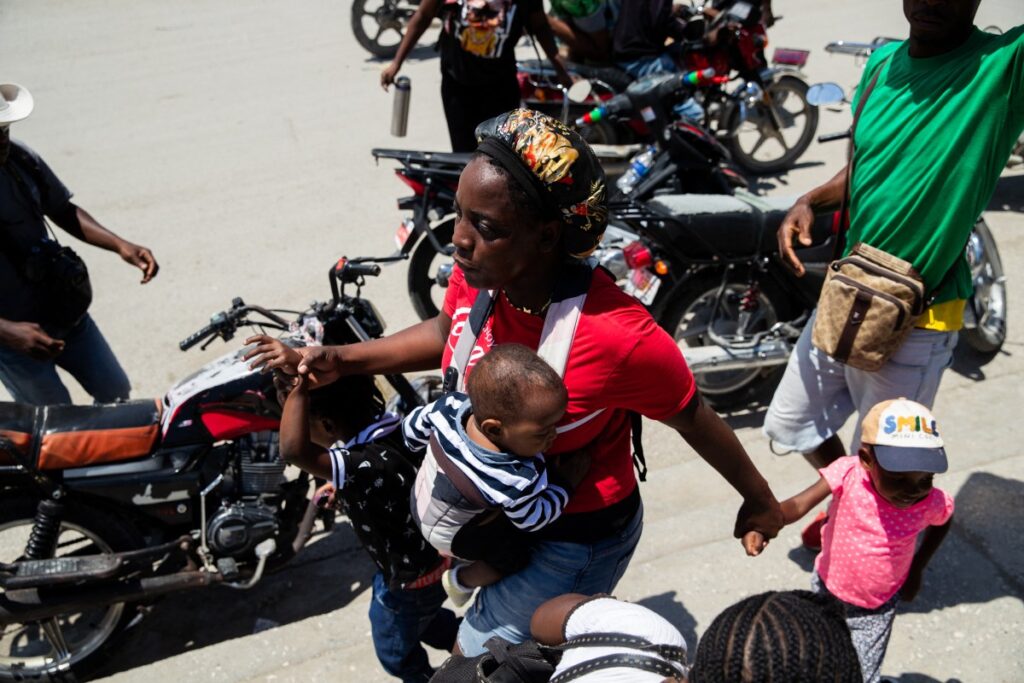
Amid a years-long deepening humanitarian crisis in Haiti, fresh outbreaks of armed violence in the country’s northern Artibonite department have driven more than a thousand people from their homes, piling additional strain on already overstretched and vulnerable local communities, United Nations officials confirmed in a Monday briefing.
Speaking to reporters at the UN’s daily press briefing, spokesperson Stéphane Dujarric outlined the latest humanitarian fallout from the May 26 attack in the commune of Petite Rivière de Bayonnais. Data collected by the International Organization for Migration (IOM) confirms that at least 1,100 residents have been displaced by the violence, with nearly all of those forced to flee seeking shelter with host families in the nearby regional hub of Gonaïves.
Dujarric emphasized that the sudden influx of new arrivals has stretched the already limited, threadbare resources of Gonaïves’ communities to breaking point. For many of those displaced by the recent attack, this is not the first time they have been forced to leave their homes: repeated cycles of violence have left hundreds of thousands of Haitians in constant, dangerous movement across the country.
The scale of unmet need among newly displaced people stretches far beyond basic survival supplies, Dujarric explained. Alongside critical urgent needs for shelter, clean drinking water, and food, displaced residents also require access to life-saving medical care, psychosocial support, and dedicated protection services — particularly for survivors of gender-based violence, a crisis that has reached catastrophic levels across Haiti amid ongoing instability.
“While we and our humanitarian partners continue to respond under challenging conditions, the pace and the scale of needs are rising rapidly,” Dujarric told journalists.
To meet the growing demand for emergency aid, a cross-organizational humanitarian consortium called REZILYANS AYITI has launched a large-scale multi-sector emergency response targeting three of Haiti’s worst-affected departments: West, Central, and Artibonite. The initiative, which is backed by funding from the Regional Humanitarian Fund for Latin America and the Caribbean, brings together five leading global and local humanitarian organizations: Plan International, Haiti’s Centre for Rural Development and Community Action (CAPAC), Mercy Corps, the Norwegian Refugee Council (NRC), and Save the Children.
Over the course of the project, which runs through October 2026, the consortium aims to deliver life-saving support to more than 400,000 people impacted by escalating armed violence and mass population displacement across the three regions. The initiative will operate in 10 target communities, delivering multifaceted support to both displaced households and the local communities that have opened their homes to those fleeing violence. Core programming includes flexible cash and financial assistance to boost household stability, as well as targeted interventions to strengthen food security, expand access to clean water, improve hygiene and sanitation infrastructure, and scale up nutrition services.
A key focus of the nutrition component is expanding access to prevention, early screening, and treatment for global acute malnutrition, a growing threat across displacement camps and overstretched host communities. The response also integrates dedicated child protection services, including psychosocial support, individual case management, and community outreach, to safely identify at-risk children and connect them to the essential services they require. Particular priority is given to supporting girls and other marginalized, vulnerable groups that face disproportionate risk amid Haiti’s ongoing crisis.
The new response comes as the overall humanitarian situation in Haiti continues to deteriorate at an alarming rate. Current UN data shows that roughly 6.4 million Haitians — more than half of the country’s total population — require urgent humanitarian assistance. An April update from the Integrated Food Security Phase Classification (IPC) found that 5.8 million people across the country are currently at high risk of life-threatening acute food insecurity.