分类: world

  • CCJ Reinstates Manslaughter Convictions in Hilberto Sotz Case

    CCJ Reinstates Manslaughter Convictions in Hilberto Sotz Case

    In a landmark judicial reversal, the Caribbean Court of Justice (CCJ) has reinstated manslaughter convictions against two Belizean law enforcement officers, Leonard Nunez and Hallet King. This decisive ruling came in response to a Crown appeal challenging the Belize Court of Appeal’s prior decision to overturn the convictions.

    The legal proceedings featured Director of Public Prosecutions Cheryl Lynn Vidal, supported by Maria L. Santana, advocating for the Crown, while defense attorney Arthur Saldivar represented the convicted officers.

    The appeal centered on a critical legal technicality regarding the appellate court’s application of Section 216(1) of the Senior Courts Act. This provision enables courts to dismiss appeals if no substantial miscarriage of justice is deemed to have occurred, even when technical legal points might favor the appellant.

    In a unanimous decision, the CCJ’s five-judge panel declared: “We have arrived at consensus. The appeal is allowed. The convictions of the two respondents are reinstated. The matter is remitted to the Court of Appeal for the hearing and determination of the appeal by the Crown on sentencing.”

    The case traces back to 2015 when 18-year-old Hilberto Sotz died under suspicious circumstances while in police custody on Caye Caulker. Initially facing murder charges, the officers saw their charges reduced to manslaughter during trial proceedings. The original case hinged on forensic uncertainty, as post-mortem examinations could not definitively establish whether Sotz’s death resulted from an accidental fall or deliberate blunt force trauma, with no weapon ever identified as causative.

    Despite their 2019 sentencing to time served—which allowed their immediate release—the officers now face renewed legal accountability following the CCJ’s intervention.

  • Strong Winds, Dangerous Seas to Affect Antigua and Barbuda This Week

    Strong Winds, Dangerous Seas to Affect Antigua and Barbuda This Week

    The northeastern Caribbean region is on alert this week as meteorological authorities issue warnings for deteriorating marine conditions and intensified wind patterns. A significant weather system is expected to generate powerful easterly winds accelerating through Tuesday night into Wednesday, with sustained speeds potentially reaching 41 km/h and powerful gusts approaching 63 km/h.

    Mariners in Antigua and Barbuda and adjacent islands have been advised to exercise extreme caution as these conditions develop. While gradual easing is anticipated later in the week, meteorological models indicate winds will persist above seasonal norms throughout the weekend.

    The most severe marine impacts will concentrate in open Atlantic waters where wave heights are projected to reach approximately 3.4 meters, with occasional swells surging to 4.3 meters. Coastal zones and sheltered areas are expected to experience comparatively milder effects, though still above normal conditions.

    Local authorities have initiated small craft advisories, strongly recommending that operators of smaller vessels remain in port or maintain proximity to safe harbors. Residents throughout the affected regions are encouraged to secure outdoor items susceptible to high winds and maintain vigilance through official weather monitoring channels as the situation evolves.

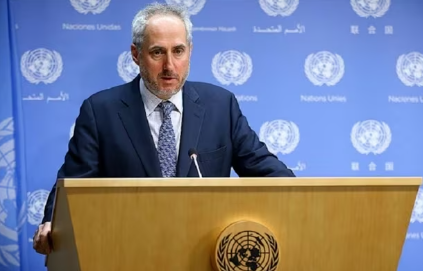
  • UN denounces attack on Palestinian Refugees Agency

    UN denounces attack on Palestinian Refugees Agency

    Israeli military forces surrounded and subsequently demolished a United Nations facility in East Jerusalem on Tuesday, an act the head of the UN’s Palestinian refugee agency has condemned as an unprecedented violation of international law. According to reports from the Palestinian news agency Wafa, the operation began with troops cordoning off the area before bulldozers moved in to dismantle the structure.

    Philippe Lazzarini, Commissioner-General of the United Nations Relief and Works Agency (UNRWA), stated via social media platform X that Israeli soldiers raised their national flag within the UN compound during the operation. He characterized the demolition as a deliberate breach of international obligations that protect UN facilities from such actions.

    Lazzarini emphasized that Israel, like all UN member states, is legally bound to respect the inviolability of UN operations and property. This incident represents the latest escalation in measures taken against UNRWA, following recent Israeli decisions to shutter a health center operated by the agency and cut essential utilities including water and electricity to its facilities.

    The UN official contextualized these actions within what he described as a broader campaign of attacks and disinformation against UNRWA. He noted these measures directly contradict the International Court of Justice’s October ruling, which affirmed Israel’s obligation under international law to facilitate rather than obstruct the agency’s humanitarian operations. The court specifically reiterated that Israel holds no jurisdictional authority over East Jerusalem.

    Lazzarini issued a stark warning that today’s targeting of UNRWA establishes a dangerous precedent that could tomorrow affect any international organization or diplomatic mission, whether in occupied Palestinian territories or elsewhere globally. He called the demolition a wake-up call for the international community regarding the protection of multilateral institutions.

  • Holness expresses condolences to Spain after deadly train crash

    Holness expresses condolences to Spain after deadly train crash

    KINGSTON, Jamaica — Jamaican Prime Minister Andrew Holness has publicly conveyed profound sympathies to the Spanish government and its citizens after a catastrophic railway incident resulted in significant casualties. The tragic event occurred on Sunday evening near Adamuz in the Andalusia region, claiming 41 lives and prompting international expressions of solidarity.

    In an official statement released via social media platform X, Holness emphasized the profound impact of the disaster, noting that the scale of loss transcends national boundaries. The collision involved a passenger service traveling from Malaga to Madrid, which derailed and subsequently collided with an oncoming train, causing both to overturn.

    Prime Minister Holness drew parallels between Spain’s current tragedy and the support Spain provided Jamaica during the aftermath of Hurricane Melissa, which resulted in over 50 Jamaican fatalities. This historical context underscored the mutual solidarity between the two nations.

    Holness expressed particular empathy for bereaved families and those injured in the accident, assuring them of Jamaica’s spiritual support during Spain’s declared period of national mourning. He concluded his message with a traditional benediction for the deceased.

    This incident represents the first of two recent railway emergencies in Spain, with a subsequent commuter train accident on Tuesday resulting in additional fatalities and injuries when infrastructure failure caused a collision in Barcelona.

  • Passports, visas, and access to the world

    Passports, visas, and access to the world

    In an era of rapidly shifting global dynamics, Caribbean nations are confronting a fundamental transformation in how they perceive travel documentation. What was once considered mere paperwork for occasional journeys has evolved into critical instruments of global access and economic resilience.

    The geopolitical landscape has undergone profound changes, with borders tightening, immigration policies becoming increasingly selective, and international relations growing more complex. Small island developing states like Trinidad and Tobago find themselves particularly vulnerable to these shifts, often experiencing the downstream effects of decisions made thousands of miles away.

    Recent developments underscore this new reality. Throughout 2025, significant policy changes emerged: the United States increased visa application fees, suspended immigrant visa processing for 75 countries, and most notably for Trinidad and Tobago, the United Kingdom implemented new visa restrictions. These moves represent more than bureaucratic adjustments—they signal a fundamental restructuring of global mobility access.

    Modern passports and visas now function as keys to multiple dimensions of international participation:

    Financial System Access: Certain visas unlock banking relationships and financial infrastructure. The US B1/B2 visa, for instance, enables professionals to establish non-resident bank accounts requiring physical presence verification. Estonia’s innovative e-Residency program allows entrepreneurs to register EU-based companies and access fintech platforms remotely.

    Global Connectivity: Transit and multi-entry visas maintain crucial connections through major international hubs. These documents facilitate movement to educational opportunities, medical care, business conferences, and cultural exchanges that would otherwise become prohibitively expensive or inaccessible.

    Talent Mobility: Nations worldwide are actively competing for skilled professionals through specialized visa programs. Technology experts, healthcare workers, engineers, and creative professionals now have pathways to global engagement that don’t necessarily require permanent relocation.

    Lifestyle Flexibility: Long-term residency options are emerging across Asia, Europe, and Latin America, offering individuals and families alternatives beyond traditional employment-based migration.

    This paradigm shift demands a strategic reevaluation from Caribbean citizens and policymakers alike. Rather than viewing travel documents as symbols of migration, they should be understood as tools for risk diversification and opportunity access. In an increasingly volatile global environment, multiple access points create resilience against economic shocks, political instability, and sudden policy changes.

    The contemporary approach to international documentation isn’t about abandonment of home countries, but about building adaptive capacity for individuals, families, and businesses operating in an interconnected world.

  • Cuban government riaffirms gratitude to China for rice donation

    Cuban government riaffirms gratitude to China for rice donation

    In a significant demonstration of international solidarity, Cuba has formally received the initial shipment of a 30,000-ton cereal donation from China. The arrival of the aid was officially confirmed during a reception ceremony held on Monday, attended by high-ranking officials from both nations.

    Cuban Foreign Minister Bruno Rodríguez Parrilla publicly acknowledged the contribution on social media platform X, characterizing it as a profound symbol of the ‘close brotherhood and historical ties of friendship’ that bind the two countries. The humanitarian assistance is specifically designated to bolster Cuba’s basic food basket, addressing critical nutritional needs of the Cuban population.

    Cuban Vice Prime Minister Oscar Pérez-Oliva provided operational details during the reception, confirming that two initial deliveries totaling 2,400 tons had already arrived through the Mariel container terminal and the port of Santiago de Cuba. He further announced that two additional shipments are scheduled to reach the island during the first half of the year, completing the full donation pledged by Chinese authorities and its people.

    The ceremony featured remarks from Chinese Ambassador to Cuba Hua Xin, who emphasized the strategic importance of the bilateral relationship. Ambassador Hua noted that the cereal donation ‘not only embodies the deep bonds of special friendship between both nations, but also demonstrates the unwavering commitment to remain united even in difficult times,’ highlighting the resilience of Sino-Cuban relations amid global challenges.

    This substantial food aid package arrives as Cuba continues to navigate complex economic circumstances, with the cereal shipment representing both practical support and diplomatic reinforcement of the longstanding partnership between the two socialist nations.

  • Israel begins demolishing UNRWA complex in occupied Jerusalem

    Israel begins demolishing UNRWA complex in occupied Jerusalem

    Israeli military forces have conducted a controversial operation at a United Nations facility, according to reports from the Wafa news agency. The incident involved multiple military units establishing a security perimeter around the area before deploying bulldozers that proceeded to demolish structures within the compound.

    In a particularly symbolic act, soldiers reportedly raised the Israeli flag inside the headquarters of the United Nations Relief and Works Agency (UNRWA) during the operation. This event represents the latest escalation in a longstanding conflict between Israel and the UN agency that dates back to 2014, when the Israeli government passed legislation effectively banning UNRWA from operating within both Israel and the occupied Palestinian territories.

    UNRWA has served as a critical humanitarian provider for decades, delivering education, healthcare, and essential aid services to millions of Palestinian refugees across the Gaza Strip, West Bank, Lebanon, Syria, and Jordan. The current tensions stem from Israeli allegations that the agency employed Palestinian militants who participated in the October 2013 strike against Israel. These claims have been subsequently refuted by United Nations investigations, though they continue to fuel diplomatic friction.

    The demolition operation and flag-raising incident have drawn international attention, reviving concerns about the delicate relationship between humanitarian operations and political conflicts in the region.

  • US seizes sanctioned tanker in Caribbean crackdown

    US seizes sanctioned tanker in Caribbean crackdown

    In a significant maritime enforcement operation, US military forces successfully boarded and seized the oil tanker Veronica in Caribbean waters on January 16th. The coordinated mission involved tactical teams from US Southern Command and the US Coast Guard, with additional support provided by marines and sailors deployed from the aircraft carrier USS Gerald R. Ford.

    Authorities confirmed the operation concluded without incident, with released footage showing special forces fast-roping onto the tanker’s deck. The vessel, which had last transmitted its automated position on January 3rd while anchored off Aruba, was carrying a partial load of crude oil at the time of interception.

    Homeland Security Secretary Kristi Noem publicly announced the action through social media channels, characterizing the seizure as part of an intensified campaign to enforce international sanctions against Venezuela’s petroleum exports. US officials emphasized their commitment to denying safe passage to vessels transporting Venezuelan crude in violation of restrictions.

    The Veronica represents at least the sixth interdiction of sanctioned or suspect tankers since December 2025, according to US officials and public records. Legal authorities have assumed custody of both the vessel and its crew, with warnings that seized personnel could face prosecution. Specific criminal charges and final dispositions regarding the cargo and crew remain undisclosed at this time.

    Maritime registry data reveals inconsistent flag and identity documentation for vessels operating in this trade network, with the Veronica’s flag status itself being disputed in public accounts. This operation follows separate US enforcement actions earlier in January that removed the Aframax tanker Olina from service—a vessel appearing in maritime records under previous names and different flags.

    The enforcement measures are producing immediate commercial consequences within the shadow fleet operations. Industry monitors report a measurable deterrent effect on Venezuelan oil shipments, manifested through reduced visible loadings and more circuitous tanker routing. This increased opacity elevates transaction risks for buyers and shippers, subsequently driving higher insurance premiums, charter rates, and costs associated with clandestine transfers.

    Geopolitically, the enforcement campaign unfolds against a complex backdrop. US officials maintain these measures aim to compel lawful commercial access to Venezuela’s petroleum reserves while disrupting sanctions evasion channels. Russia has previously criticized such interdictions as violations of maritime norms, and broader diplomatic tensions potentially complicate cooperative enforcement efforts at sea.

    Long-term implications suggest sustained interdictions could accelerate existing trends in the tanker market, including increased use of flags of convenience, frequent vessel renamings, and growth of intermediary trading hubs. These adaptations may ultimately constrain buyers of Venezuelan crude, reduce realized prices, and potentially depress government revenue in Caracas. While the immediate supply impact on global markets remains limited given Venezuela’s current production levels, persistent enforcement adds new volatility layers to an already complex oil market.

  • Brazil agriculture minister says country is ready to increase collaboration with IICA and member states

    Brazil agriculture minister says country is ready to increase collaboration with IICA and member states

    Brazil has expressed strong confidence in Muhammad Ibrahim’s new leadership role at the Inter-American Institute for Cooperation on Agriculture (IICA), highlighting his extensive expertise in agricultural management and innovation-driven competitiveness. The endorsement came during Ibrahim’s swearing-in ceremony in San José, Costa Rica, where he officially began his four-year term as Director General.

    Cleber Soares, Brazil’s Deputy Minister of Agriculture and Livestock, represented Minister Carlos Fávaro at the ceremony and emphasized Ibrahim’s comprehensive understanding of both opportunities and challenges facing agricultural systems across the Americas. Soares confirmed Brazil’s commitment to collaborative efforts with IICA member states under Ibrahim’s guidance.

    The newly appointed Director General, a distinguished Guyanese agronomist, was elected by the continent’s agriculture ministers in November, succeeding Argentina’s Manuel Otero who completed two terms. Soares revealed that preliminary discussions with Ibrahim are already underway to facilitate knowledge sharing, particularly regarding Brazil’s advancements in tropical agriculture.

    Brazil’s remarkable agricultural transformation serves as a model for technological progress in the sector. Once a major food importer, the nation has emerged as a global agricultural powerhouse through research-driven innovations that significantly boosted productivity and sustainability.

    Looking forward, Soares identified IICA’s critical mission: strengthening partnerships between major food-exporting nations like Brazil and import-dependent countries, especially in Central America and the Caribbean. A key challenge involves integrating small-scale farmers into modern agricultural systems through sustainable technologies and value-added approaches.

    ‘Our objective extends beyond production techniques,’ Soares explained. ‘Producers require comprehensive support in farm management, marketing strategies, distribution networks, input procurement, and climate adaptation. Additionally, we must address the resurgence of plant and animal diseases that transcend national borders—an area where IICA’s coordination role becomes essential.’

    The deputy minister also emphasized two fundamental pillars for continental agricultural sustainability: accessible credit and agricultural insurance. He noted that without credit facilities, many smallholders cannot sustain their operations, while insurance protection remains particularly crucial in tropical regions vulnerable to production losses.

  • STATEMENT: Ministry of Foreign Affairs on allegations referencing U.S. national on remand

    STATEMENT: Ministry of Foreign Affairs on allegations referencing U.S. national on remand

    ROSEAU, DOMINICA – The Dominican Ministry of Foreign Affairs, International Business, Trade and Energy has issued an official statement countering what it describes as malicious social media speculation regarding the detention of American national Jonathan Scott Lehrer. The Ministry emphasized that while it typically refrains from addressing unfounded rumors, it felt compelled to correct misinformation being circulated by political opposition groups.

    The Ministry confirmed that Lehrer is one of two U.S. citizens currently held on remand at Dominica State Prison. Contrary to suggestions of irregular proceedings, authorities detailed the established consular protocols that have been consistently followed since November 2024.

    In accordance with the Vienna Convention on Consular Relations, the U.S. Embassy in Bridgetown formally requested and received permission for consular access to both detained nationals. The Ministry clarified that such consular assistance represents standard diplomatic practice when citizens are detained overseas, subject to the host nation’s procedures.

    The request was processed through proper channels: received by the Foreign Ministry via diplomatic note, confirmed by the Ministry of National Security, and subsequently approved to the U.S. Embassy. The most recent virtual meeting occurred on January 14, 2026, with an in-person meeting scheduled for February 2026, pending final confirmation from security officials.

    The Dominican government asserted its commitment to maintaining the highest standards of integrity, fairness, and respect in handling all detainees. The statement strongly rejected characterizations that consular access negotiations represented any form of special arrangement with U.S. authorities, labeling such suggestions as deliberately misleading.

    The Ministry concluded by urging the public to allow the judicial process to proceed without interference and refrain from making statements that could potentially prejudice ongoing legal proceedings.