分类: technology

  • LIVE: Official Opening of Grand Bay Carnival

    LIVE: Official Opening of Grand Bay Carnival

    A groundbreaking technological innovation is poised to dismantle global language barriers forever. A newly developed AI-powered headset has demonstrated the remarkable capability to translate spoken foreign languages instantaneously during live conversations, effectively creating real-time bilingual dialogue between speakers of different languages.

    The sophisticated device represents a monumental leap in artificial intelligence and speech recognition technology. Unlike previous translation tools that required sequential speaking or text input, this headset processes natural speech patterns seamlessly, allowing for fluid and uninterrupted conversation. The system utilizes advanced neural networks that have been trained on millions of hours of multilingual audio data to achieve unprecedented accuracy in both translation and speech synthesis.

    Early demonstrations show the technology successfully facilitating complex conversations between English, Mandarin, Spanish, and Arabic speakers with minimal latency. The implications for international business, diplomacy, tourism, and cross-cultural communication are profound, potentially eliminating the need for human interpreters in many scenarios and creating new possibilities for global connectivity.

    Industry experts are hailing the development as potentially more transformative than the advent of the internet for global communication. The technology could fundamentally reshape how people from different linguistic backgrounds interact, collaborate, and understand each other, making truly borderless communication an attainable reality for the first time in human history.


  • LIVE from 2:30PM: Inter-Secondary Schools Debating Competition Knock-Out Round 2026

    LIVE from 2:30PM: Inter-Secondary Schools Debating Competition Knock-Out Round 2026

    Microsoft has achieved a significant milestone with its AI-powered Bing Chat service, surpassing 100 million daily active users according to a recent announcement. This rapid adoption represents a substantial challenge to Google’s long-standing dominance in the search engine market.

    The conversational AI assistant, powered by advanced language models, has transformed the traditional search experience by providing direct answers, creative content generation, and interactive dialogue capabilities. The service’s growing popularity demonstrates a shifting user preference toward more intuitive and comprehensive information retrieval systems.

    Microsoft’s strategic integration of AI technology across its product ecosystem, including the Edge browser, has contributed significantly to Bing Chat’s expanding user base. Industry analysts note that this represents the most serious competition Google Search has faced in over a decade, potentially signaling a new era in the search engine landscape.

    The company’s substantial investment in artificial intelligence infrastructure and partnerships has positioned it at the forefront of the AI revolution. This user growth metric suggests that conversational AI interfaces may fundamentally reshape how people interact with information online, moving beyond the traditional list-of-links approach that has characterized search for decades.

  • LIVE: Inter-Secondary Schools Debating Competition 2026 Knock Out Round 22nd January 2026

    LIVE: Inter-Secondary Schools Debating Competition 2026 Knock Out Round 22nd January 2026

    The corporate landscape is undergoing a profound transformation as artificial intelligence transitions from an experimental technology to a core component of workforce architecture. A new generation of AI-driven ‘digital employees’ is emerging, capable of performing complex cognitive tasks that were previously exclusive to human workers.

    These sophisticated AI systems represent a significant evolution beyond basic automation tools. They can process natural language, analyze complex datasets, make evidence-based decisions, and adapt to dynamic work environments. Companies implementing these solutions report substantial improvements in operational efficiency, with some departments achieving productivity increases of 30-40% while reducing error rates to near-zero levels.

    The implementation of digital workforce solutions spans multiple industries including financial services, healthcare diagnostics, customer experience management, and research development. Early adopters are reporting not only cost reductions but also enhanced capability to scale operations rapidly without proportional increases in human resources.

    This technological shift is prompting organizations to reevaluate their human capital strategies. Rather than simply replacing workers, forward-thinking companies are developing integrated models where AI handles repetitive analytical tasks while human employees focus on creative problem-solving, strategic planning, and emotional intelligence-dependent roles.

    Workforce analysts suggest that successful implementation requires comprehensive retraining programs and organizational restructuring. The most effective transformations occur when companies view AI as collaborative partners rather than mere tools, creating symbiotic relationships between human and digital workers.

    As this trend accelerates, it’s creating new specializations in AI management and digital workforce coordination. The companies leading this transformation are those that recognize the strategic importance of balancing technological adoption with human capital development, ensuring both technological and human elements evolve in concert.

  • Trinidad and Tobago partners with OpenAI for education programme

    Trinidad and Tobago partners with OpenAI for education programme

    Trinidad and Tobago has emerged as a strategic partner in global artificial intelligence advancement through a groundbreaking collaboration with OpenAI. Public Administration and Artificial Intelligence Minister Dominic Smith announced the nation’s selection as one of six countries worldwide to pilot OpenAI’s Education for Countries initiative during a post-Cabinet media conference at the Diplomatic Centre in St Ann’s on January 22.

    The partnership places Trinidad and Tobago alongside Estonia, Greece, Jordan, Kazakhstan, Slovakia, and the United Arab Emirates in testing this transformative educational framework. The initiative aims to revolutionize national education systems by integrating advanced AI tools directly into academic institutions, from primary schools to universities.

    Minister Smith emphasized that this collaboration represents a pivotal milestone within the government’s official policy framework, positioning Trinidad and Tobago as a regional leader in AI integration. “OpenAI is globally recognized for its mission to ensure advanced intelligence benefits all of humanity,” Smith stated, referencing the company’s creation of ChatGPT, which has significantly enhanced global productivity and problem-solving capabilities.

    The partnership focuses on three core pillars aligned with the ministry’s vision: digital services enhancement, smart government efficiency, and progression toward a fully realized digital nation. Through the introduction of capabilities like ChatGPT Edu, the initiative seeks to personalize learning experiences, reduce administrative burdens on educators, and equip the workforce with essential AI-related skills.

    Concurrently, the ministry is conducting a comprehensive AI readiness assessment in collaboration with the United Nations Development Programme (UNDP) and UNESCO, utilizing their specialized assessment methodologies. Additionally, a three-day Data to Policy workshop running from January 21-23 is equipping senior public servants with practical skills in integrating data and AI into policy development.

    Addressing concerns about job security amidst AI adoption, Minister Smith affirmed the government’s position that “technology should not replace people” but rather augment human capabilities. The ministry has implemented numerous human development initiatives through partnerships with global leaders in ethical AI implementation to prepare workers for technological transformation through retooling and upskilling programs.

    Regarding remote work policies initiated by the previous administration, Smith confirmed the government is actively analyzing the framework through inter-ministerial collaboration, particularly with the Labour Minister, with plans to share further developments publicly once assessments are complete.

  • Enhancing traveller experience at Trinidad and Tobago airports

    Enhancing traveller experience at Trinidad and Tobago airports

    A technological transformation is sweeping global border security systems with over 178 nations, including most Caribbean Community (CARICOM) states, now implementing electronic passport systems. This shift toward automated border control represents a fundamental reimagining of international travel security, combining advanced technology with operational strategies to streamline legitimate travel while maintaining rigorous security protocols.

    The International Civil Aviation Organization (ICAO) has established comprehensive standards through Annex 9 of the Chicago Convention, mandating global interoperability for travel documents. Since January 1, countries issuing e-passports must implement Password Authenticated Connection Establishment (PACE) security protocols. This advanced encryption technology creates secure communication channels between passport chips and border control systems, replacing older Basic Access Control methods and providing robust protection against data skimming and eavesdropping.

    Modern e-passport systems extend beyond physical documents, with capabilities to integrate with passengers’ mobile devices enabling seamless travel experiences with minimal physical touchpoints. The implementation of electronic gates and kiosks that authenticate documents and verify biometric data has significantly reduced processing times at border control checkpoints worldwide.

    While this global transformation advances, Trinidad and Tobago’s implementation has encountered significant obstacles. The Airports Authority of Trinidad and Tobago (AATT), an active member of Airports Council International, initially awarded a contract to NOVO Technology Incorporation Limited in December 2017 for automated border control systems at both Piarco and ANR Robinson International Airports. The system was partially commissioned in July 2018 with 12 automated kiosks at Piarco International Airport.

    However, in May 2019, the newly appointed National Security Minister Stuart Young raised concerns about “red flags” in the contracting process, leading to an investigation headed by retired judge Rolston Nelson. Despite the investigation finding no breaches of AATT’s Act or tender rules, the Cabinet suspended the contract, creating questions about executive overreach.

    Contrasting with Trinidad’s stalled progress, NOVO Technology has successfully implemented a comprehensive nationwide border control management system in Guyana. The system allows passengers to complete immigration forms online before departure and clear biometric e-gates at Cheddi Jagan International Airport in under 20 seconds. Guyana’s participation in ICAO’s Public Key Directory further enables its citizens to access e-gates worldwide, dramatically reducing processing times.

    As a signatory to the Chicago Convention, Trinidad and Tobago maintains international treaty obligations to comply with Annex 9 standards, yet the nation continues to lag in implementing automated border control systems that would enhance security while improving passenger experiences at ports of entry.

  • Flow Wraps Up a Season of Joy with Major Apple Bundle Giveaway and Community Impact

    Flow Wraps Up a Season of Joy with Major Apple Bundle Giveaway and Community Impact

    Flow has culminated its celebratory ‘Season of Joy’ initiative with a spectacular finale, headlined by a major technology giveaway and a series of impactful community engagements. The campaign, which spanned several weeks, was designed to foster goodwill and directly reward participants during the holiday period.

    The centerpiece of the finale was a high-value Apple product bundle giveaway. The prize package, a highly coveted collection of the tech giant’s latest devices, was awarded to a selection of lucky winners. This grand gesture served as the capstone to a season filled with promotions and smaller-scale giveaways, generating significant consumer excitement and brand engagement across Flow’s digital and physical platforms.

    Beyond the consumer-facing giveaway, Flow emphasized its commitment to corporate social responsibility. The company orchestrated a substantial outreach program, directing resources and support to various community organizations and charitable causes. This dual approach of rewarding customers while strengthening community ties highlights a modern corporate strategy that blends commercial activity with genuine social impact.

    Analysts view this integrated campaign as a strategic masterstroke in brand positioning. In a competitive telecommunications market, such initiatives are crucial for building long-term customer loyalty and enhancing public perception. By aligning festive celebration with technological innovation and community support, Flow successfully demonstrates how corporations can play a positive and integral role in the societies they serve.

  • MOCA strengthens digital forensics muscle

    MOCA strengthens digital forensics muscle

    Jamaica’s Major Organised Crime and Anti-Corruption Agency (MOCA) is undergoing a significant technological transformation to counter the escalating threat of cyber-enabled financial crimes. During the Jamaica Observer Monday Exchange, MOCA Director General Colonel Desmond Edwards revealed that traditional forensic capabilities have become inadequate against sophisticated digital criminal enterprises.

    The agency has recognized that virtually all modern criminal operations—from money laundering to human trafficking—now incorporate cyber methodologies. This realization has driven MOCA to develop advanced analytics systems capable of processing over 17 terabytes of digital evidence. Specialized staff now employ cutting-edge software to navigate immense data volumes and extract crucial evidence for prosecutions.

    Colonel Edwards emphasized the distinction between pure cybercrimes (ransomware, malware attacks) and cyber-enabled crimes where digital tools facilitate traditional offenses. Financial forensics has become particularly critical since most investigated crimes demonstrate financial motivations.

    Beyond internal capacity building, MOCA has established strategic partnerships with multiple agencies including the Jamaica Customs Agency, Registrar General’s Department, and Financial Investigations Division. This collaborative network enables real-time intelligence sharing about emerging cyber threats and criminal techniques.

    The agency’s approach extends beyond enforcement to prevention through educational initiatives. MOCA conducts school outreach programs teaching vulnerable youth about responsible digital citizenship and the permanent consequences of online actions.

    Complementing these efforts, Senior Director Nigel Parke disclosed proactive threat assessment services for government agencies and institutions handling sensitive data. MOCA’s cybersecurity experts identify vulnerabilities in systems and procedures that could be exploited by phishing scams and other digital threats.

    Despite the overwhelming volume of digital evidence in modern investigations, MOCA leadership expressed confidence in their evolving capabilities to maintain superiority over cybercriminals in Jamaica’s rapidly changing technological landscape.

  • Dominican engineer develops autonomous sargassum-collecting machine

    Dominican engineer develops autonomous sargassum-collecting machine

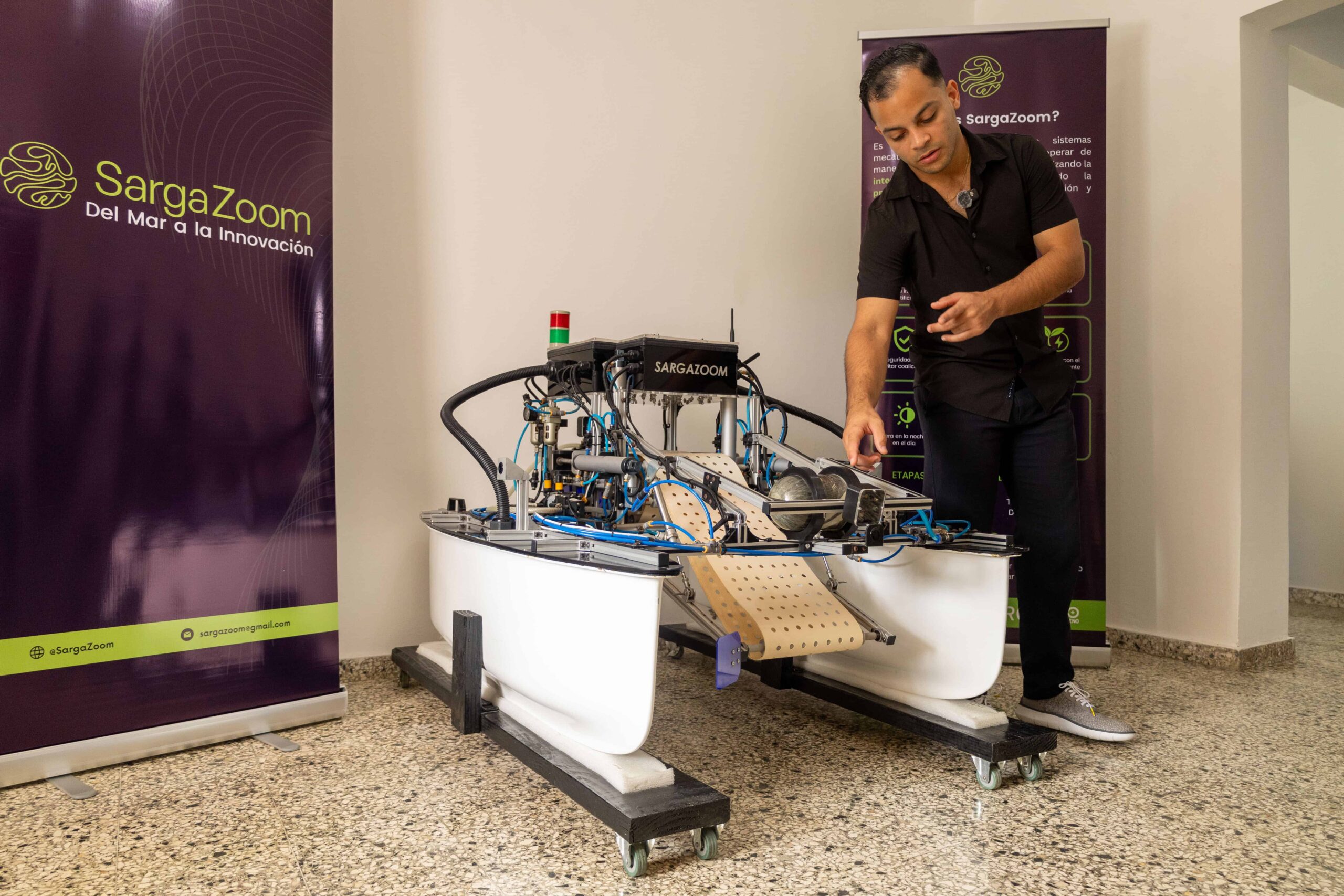
    A groundbreaking autonomous marine vehicle named SargaZoom has been unveiled in the Dominican Republic, representing a significant technological leap in the battle against coastal sargassum invasions. Developed by Dominican mechatronics engineer Rómulo Pérez, a graduate of the Technological Institute of Santo Domingo (INTEC), this innovative machine is engineered to collect seaweed at sea before it reaches shorelines, where it typically causes severe environmental degradation and economic damage to tourism-dependent communities.

    The SargaZoom system operates without any onboard human intervention, utilizing an advanced array of cameras, sensors, and GPS technology to independently navigate, detect, and harvest sargassum masses. Its catamaran-style hull design provides exceptional stability and enhanced cargo capacity while maintaining the structural integrity of the collected seaweed. This preservation method prevents premature decomposition, keeping the organic material in optimal condition for subsequent industrial applications.

    According to its creator, the system requires only a single activation command to begin operations, strategically intercepting algae before it contaminates coastal areas. This proactive approach addresses the critical issues of foul odors, ecosystem damage, and financial losses historically suffered by hotels and coastal enterprises.

    Beyond its immediate cleanup function, SargaZoom enables the transformation of a environmental nuisance into valuable economic resources. When properly harvested, sargassum can be processed into multiple commercial products including biodiesel, sustainable construction materials, leather alternatives, and components for pharmaceutical and cosmetic manufacturing.

    The innovation has garnered institutional support from INTEC’s Center for Entrepreneurship and Innovation and is currently undergoing patent processing with the National Office of Industrial Property (ONAPI). The technology is designed for scalable deployment, with capability for multiple units to coordinate across extensive coastal territories. This fleet approach allows for comprehensive coverage of vulnerable coastlines during peak sargassum seasons.

    Pérez emphasizes that the project not only addresses an urgent environmental challenge but also demonstrates local technological capability, reducing dependence on imported solutions while showcasing Dominican innovation in sustainable marine technology.

  • THE CHOSEN: Twenty for the 2026 calypso semifinals

    THE CHOSEN: Twenty for the 2026 calypso semifinals

    SenseTime, a leading Chinese artificial intelligence enterprise, has officially launched its groundbreaking multimodal large language model, the ‘Book of Time’ (Ri Yue Da Zao), marking a significant leap in the global AI race. This sophisticated AI system demonstrates exceptional capabilities in processing and generating content across text, images, and potentially other data formats, positioning itself as a formidable competitor to established Western models like OpenAI’s GPT-4.

    The development represents a crucial milestone in China’s pursuit of technological sovereignty and innovation in generative AI. SenseTime’s breakthrough centers on the model’s advanced architecture, which enables more seamless understanding and creation of complex, multi-format content. This technological advancement potentially bridges communication gaps between different media types, offering more intuitive and comprehensive AI interactions.

    Industry analysts highlight the strategic importance of this development amid growing global competition in AI supremacy. The ‘Book of Time’ not only showcases China’s rapidly advancing capabilities in artificial intelligence but also signals intensified competition in the commercial AI sector. This launch may trigger accelerated innovation and potentially reshape market dynamics as technology companies worldwide strive to achieve superior multimodal integration.

    The introduction of this model coincides with increasing focus on AI governance and ethical considerations globally. SenseTime’s advancement contributes to the diversification of AI development pathways, potentially offering alternative approaches to responsible AI implementation while addressing unique linguistic and cultural contexts specific to Eastern markets.

  • Flow launches voice over Wi-Fi calling to customers nationwide

    Flow launches voice over Wi-Fi calling to customers nationwide

    KINGSTON, Jamaica—Flow Jamaica has significantly expanded its telecommunications offerings by enabling Voice over Wi-Fi (VoWiFi) capabilities for a majority of its mobile subscribers. This innovative feature allows customers to place and receive calls utilizing any secure Wi-Fi network without incurring additional charges.

    The service, initially deployed in December, represents a strategic advancement in Flow’s ongoing commitment to technological innovation and enhanced user connectivity. By leveraging Wi-Fi networks to supplement traditional mobile coverage, the company addresses common connectivity challenges while improving call reliability.

    Danielle Savory, Senior Communications Manager at Flow, emphasized the transformative potential: “VoWiFi provides our customers with superior reliability and expanded connectivity options. As Jamaica continues its digital transformation journey, Flow is dedicated to deploying technologies that empower individuals and facilitate seamless communication.”

    This technology offers particular benefits in areas with limited mobile reception, including structures with dense building materials, remote geographical locations, and underground facilities. The service operates transparently, automatically switching between mobile and Wi-Fi networks to maintain optimal call quality without user intervention.

    Internationally, the service enables subscribers to make and receive calls from global locations using Wi-Fi connections, with all calls billed as standard domestic calls when using Jamaican numbers.

    Activation requires three components: a VoWiFi-compatible device, an active Flow LTE SIM card, and access to a secure Wi-Fi network. Android users can enable the feature through Settings > Network & Internet > Mobile Network > Wi-Fi Calling, while iPhone users navigate to Settings > Phone > Wi-Fi Calling. Successful activation is indicated by a VoWiFi or Wi-Fi Call icon in the device’s status bar.