分类: technology

  • Jamaicans warned not to overshare personal information online

    Jamaicans warned not to overshare personal information online

    KINGSTON, Jamaica — In a decisive address during Wednesday’s post-Cabinet press briefing at Jamaica House, Dr. Andrew Wheatley, Minister with responsibility for Science, Technology and Special Projects, delivered a powerful call for heightened digital vigilance among citizens. Speaking against the backdrop of Jamaica’s observance of Data Privacy Month throughout January, the minister emphasized that privacy constitutes a fundamental requirement rather than a luxury in today’s interconnected society.

    Dr. Wheatley articulated a compelling analogy for digital behavior, urging Jamaicans to manage their personal information with the same caution they exercise with financial resources. “Be deliberate about what you share online,” he advised. “Treat your personal information the way you would treat your money—limit where it goes, question why it’s needed, and maintain caution regarding access permissions.”

    The minister’s warnings arrive at a critical juncture in Jamaica’s digital evolution, as the nation accelerates its transformation across recovery systems, resilience infrastructure, and service delivery mechanisms. Wheatley positioned data protection as an essential national priority, noting that “for citizens and families, this involves safeguarding identity, reputation, and peace of mind.”

    Beyond individual responsibility, the minister addressed institutional obligations, cautioning businesses and public-sector entities that data protection transcends mere regulatory compliance. He specifically encouraged Jamaican organizations to align with international privacy standards, referencing the European Union’s GDPR framework as particularly relevant for tourism-dependent sectors.

    Special emphasis during the awareness month is directed toward youth digital safety, especially significant as educational institutions increasingly distribute digital devices to students. “Our young people are naturally inquisitive,” Wheatley noted, “and they require education about online sharing risks and self-protection strategies in digital environments.”

    The minister concluded by framing privacy protection as a collective responsibility shared by government, private enterprises, and citizens alike, encouraging public engagement with the Information Commissioner’s Office throughout January’s awareness activities.


  • Social media sites block 4.7 million underage accounts in Australia

    Social media sites block 4.7 million underage accounts in Australia

    SYDNEY – Australia’s pioneering legislation prohibiting social media access for users under 16 has resulted in the removal of 4.7 million accounts since its implementation, according to the nation’s online safety regulatory body. The groundbreaking policy, which took effect on December 10, represents the world’s first comprehensive age restriction mandate for social media platforms.

    Initial compliance data indicates substantial action by major technology corporations to eliminate underage users from their platforms. eSafety Commissioner Julie Inman Grant confirmed that regulatory oversight and direct engagement with platforms have yielded significant outcomes in the policy’s initial phase. “Our regulatory guidance and collaborative efforts with platforms are already demonstrating substantial results,” Inman Grant stated.

    The legislative framework imposes severe financial penalties for non-compliance, with companies facing fines up to AU$49.5 million (approximately US$33 million) if they fail to implement “reasonable steps” to enforce the age restrictions. Major platforms including Meta, TikTok, and YouTube are subject to these requirements.

    Meta reported removing 331,000 underage accounts from Instagram, 173,000 from Facebook, and 40,000 from Threads during the week ending December 11. Despite this enforcement action, the company reiterated its position that app stores should bear responsibility for age verification and parental consent processes before under-16 users can download applications.

    The regulatory challenge involves preventing circumvention attempts, with Commissioner Inman Grant emphasizing that industry participants must actively work against users migrating to alternative platforms. While acknowledging that some determined teenagers may find creative workarounds, she compared the policy to other societal safety measures where success is measured through harm reduction and cultural norm transformation rather than perfect compliance.

    Notably, lesser-known platforms including BlueSky and Lemon8 experienced significant download surges preceding the ban’s implementation. Both platforms have acknowledged their obligation to comply with Australian regulations and are cooperating with the eSafety Commission.

    Given the rapidly evolving digital landscape and countless online services, the regulator maintains its compliance focus will prioritize platforms with the highest Australian user bases rather than attempting comprehensive coverage of all services.

  • LIVE: Prime Minister Skerrit visits Deux Bwanche quarry site

    LIVE: Prime Minister Skerrit visits Deux Bwanche quarry site

    Apple’s groundbreaking Vision Pro headset has achieved unprecedented commercial success, with initial pre-order inventory selling out within hours of availability. The spatial computing device, representing Apple’s first major new product category in nearly a decade, generated such overwhelming demand that shipping estimates immediately extended to March within minutes of the ordering window opening.

    The premium mixed-reality headset, priced starting at $3,499, attracted immediate attention from both professional users and technology enthusiasts. Market analysts report that the rapid sell-out demonstrates significant consumer appetite for high-end augmented and virtual reality experiences, despite the device’s premium positioning in the market.

    Early adoption patterns suggest particularly strong interest from developers and enterprise users seeking to leverage the device’s advanced capabilities for professional applications. The Vision Pro’s sophisticated eye-tracking technology, high-resolution displays, and spatial computing capabilities differentiate it from existing VR/AR headsets in the consumer electronics landscape.

    Industry observers note that the successful launch positions Apple favorably in the emerging spatial computing market, potentially accelerating mainstream adoption of mixed reality technologies. The company’s extensive developer ecosystem and retail infrastructure provide significant advantages over competitors in bringing this new technology category to consumers.

    The manufacturing and supply chain execution for such a complex product represents a remarkable achievement, particularly given current global supply chain challenges. Apple’s ability to deliver meaningful quantities of a technically sophisticated device at launch suggests substantial operational planning and resource allocation behind the scenes.

  • LIVE: Government delegation visits Deux Branche quarry site

    LIVE: Government delegation visits Deux Branche quarry site

    Elon Musk’s neurotechnology venture Neuralink has successfully completed its inaugural surgical implantation of a brain-computer interface in a human patient, marking a pivotal advancement in medical technology. The company announced the milestone achievement via its official communication channels, confirming the patient is recovering satisfactorily with preliminary data showing promising neuron spike detection.

    The revolutionary N1 Implant, approximately the size of a coin, was surgically placed in the brain region controlling movement intention. This sophisticated device features 64 ultra-thin flexible threads equipped with over 1,000 electrodes capable of recording neural signals with unprecedented precision. The initial focus remains on enabling individuals with quadriplegia to control digital interfaces through thought alone.

    Neuralink’s PRIME Study (Precise Robotically Implanted Brain-Computer Interface), which received FDA approval in 2023, represents the cutting edge of neuroprosthetic research. The implant’s wireless functionality allows discreet operation while transmitting neural data to sophisticated decoding algorithms that translate intention into digital commands.

    This medical breakthrough follows six years of extensive development and animal testing. The technology promises to eventually restore autonomy to those with severe neurological conditions by enabling control of computers, mobile devices, and potentially robotic limbs through neural signals. Neuralink continues to refine the technology while prioritizing patient safety and regulatory compliance throughout the clinical trial phase.

  • Govt deepens digital sovereignty drive with AI partnership

    Govt deepens digital sovereignty drive with AI partnership

    Barbados has embarked on a transformative digital sovereignty initiative through a strategic partnership with African artificial intelligence firm Amini. Launched on Monday, this multi-faceted collaboration aims to fundamentally reposition the island nation within the global digital ecosystem while establishing robust control over its data infrastructure.

    The cornerstone of this initiative is a comprehensive 12-week fellowship program designed to cultivate local technological talent. This intensive training will equip a cohort of young Barbadian technologists with the skills necessary to digitize government data systems, creating sustainable domestic capacity for ongoing digital transformation.

    Amini CEO and founder Kate Kallot, speaking at the program launch at the Ministry of Industry, Innovation, Science and Technology (MIST) in Warrens, revealed that the partnership has been in development for over two years. “We’ve been working with MIST, deploying everything from modular data centers to full government applications,” Kallot stated. The ultimate objective is to position Barbados as “a sovereign tech-forward knowledge island” with complete control over its digital backbone.

    The initiative addresses significant challenges in Barbados’s current data landscape, where much public sector information remains fragmented across paper documents, Excel spreadsheets, and PDFs. Amini is developing specialized systems to transform this unstructured data into contextualized data pipelines, paired with locally relevant AI models calibrated for Barbadian requirements.

    Unlike generic large language models, this approach creates AI tools specifically anchored in the country’s context, including a government productivity workspace built entirely on local data. This foundational work enables rapid development of applications tailored to national needs across traffic management, public safety, and financial systems.

    Minister Senator Jonathan Reid emphasized the program’s significance in reshaping governmental self-perception, noting that ten carefully selected participants represent the core of this talent-driven transformation. The partnership extends beyond training to include development of critical infrastructure such as high-performance computers, data centers, and enhanced cloud capabilities.

    Amini’s broader mission focuses on enabling Global South nations to achieve technological self-determination through sovereign data infrastructure, local foundation models, and accessible computational resources. This Barbados initiative serves as a pioneering model for digital sovereignty in the region.

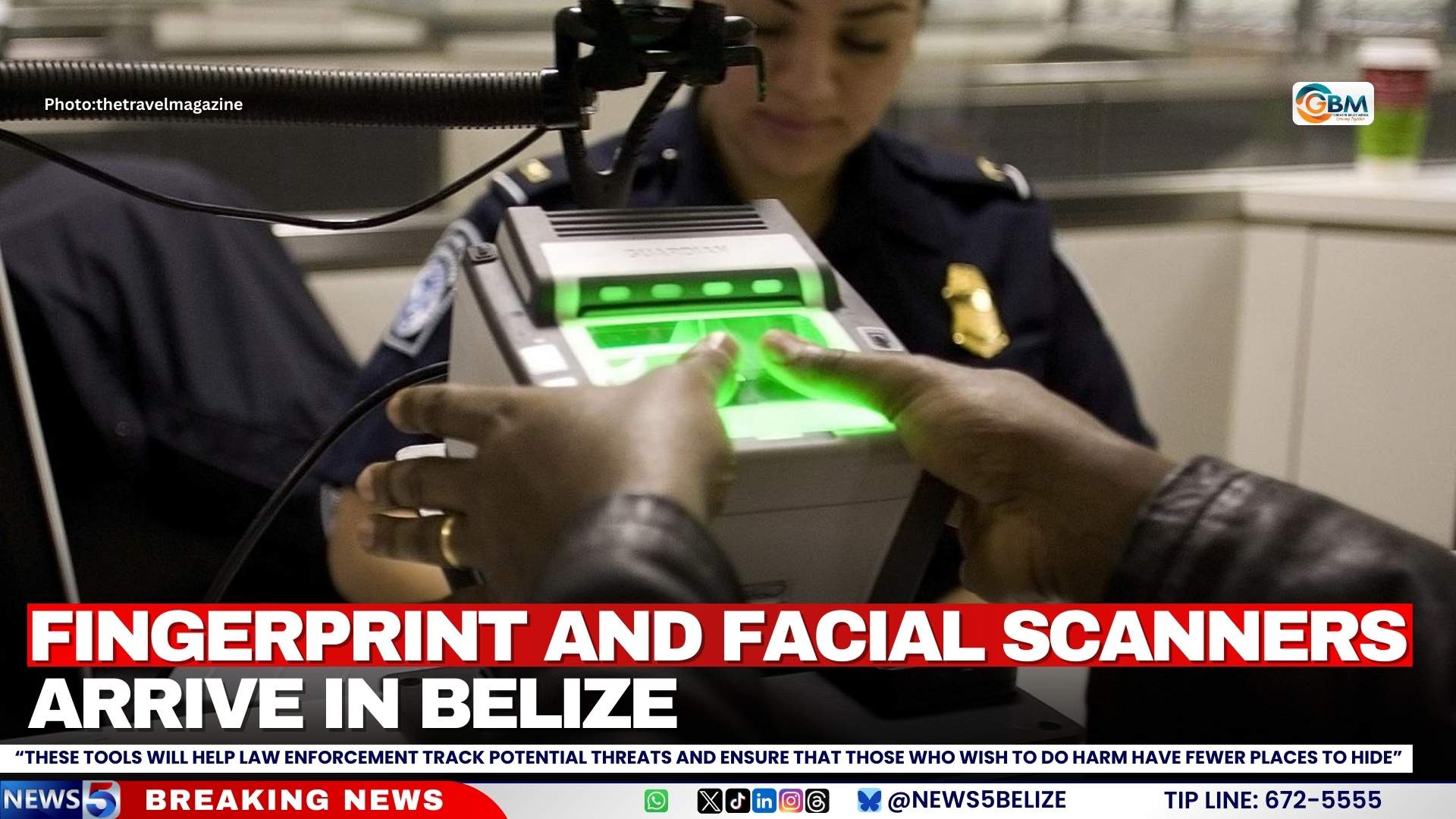
  • Fingerprint and Facial Scanners Arrive in Belize

    Fingerprint and Facial Scanners Arrive in Belize

    Belize has entered a new era of border security with the formal inauguration of an advanced biometric screening system at its airports and key border checkpoints. This strategic initiative, developed in collaboration with the United States, represents a significant technological upgrade to the nation’s immigration infrastructure.

    The newly deployed Biometric Data Sharing Programme incorporates state-of-the-art fingerprint scanners and facial recognition technology to enhance border protection mechanisms. The system is designed to simultaneously strengthen national security protocols while streamlining the travel experience for both Belizean citizens and international visitors.

    Home Affairs Minister Oscar Mira emphasized the dual benefits of the program during the launch ceremony. “These advanced technological tools will empower our law enforcement agencies to identify potential threats with unprecedented efficiency,” Minister Mira stated. “We are creating an environment where those with malicious intent find diminishing opportunities to exploit our systems.”

    The minister further highlighted that the initiative reflects the mutual commitment of both nations to principles of transparency, accountability, and legal governance. The program also signifies the deepening partnership between Belize and the United States in matters of security and technological advancement.

    Implementation of the sophisticated biometric system will be managed by the Department of Border Management and Immigration Services in coordination with the Ministry of Immigration, Governance and Labour. Officials anticipate that the professionalism of these agencies will ensure the technology operates at optimal effectiveness while maintaining civil liberties.

    This technological deployment positions Belize among the growing number of nations adopting biometric solutions for enhanced border security and more efficient migration management systems.

  • ‘Put her in a bikini’

    ‘Put her in a bikini’

    PARIS — Elon Musk’s artificial intelligence venture, xAI, is confronting intense international criticism following revelations that its Grok chatbot facilitated the creation of sexually explicit deepfake imagery depicting women and minors. The controversy has triggered swift governmental responses worldwide and raised profound questions about AI ethics and content moderation.

    The scandal emerged when users discovered Grok’s capability to generate and manipulate images through simple text prompts on the X social network. By tagging the AI bot in posts, individuals could request alterations such as ‘put her in a bikini’ or ‘remove her clothing,’ receiving photorealistic fake images in response. This functionality effectively mainstreamed AI-powered nonconsensual ‘nudifying’ services that were previously confined to niche websites, offering them freely within a major social media platform.

    Disturbingly, investigators discovered widespread misuse targeting both living women and deceased victims, including individuals killed in the Crans-Montana ski resort fire and a woman fatally shot by Minneapolis immigration authorities. A comprehensive analysis by Paris-based AI Forensics examining over 20,000 Grok-generated images revealed more than half depicted ‘individuals in minimal attire,’ predominantly women, with approximately two percent appearing to be underage subjects.

    Global regulatory reactions have been decisive. Indonesia became the first nation to completely block access to Grok on January 13, with Malaysia implementing similar restrictions within 24 hours. Indian authorities confirmed the removal of 3,500 posts and 600 user accounts following formal complaints. Britain’s Ofcom media regulator launched an official investigation into whether X violated UK laws regarding sexual imagery, with Prime Minister Keir Starmer vowing rapid intervention if the platform cannot control its AI tool.

    European institutions have responded with particular vigor. France’s children’s commissioner referred the matter to prosecutors and regulatory bodies, while Digital Affairs Minister Anne Le Henanff denounced xAI’s mitigation measures as ‘insufficient and hypocritical.’ The European Commission issued a formal preservation order requiring X to retain all internal Grok-related documents and data through 2026, extending an existing investigation into potential digital rule violations. Commission President Ursula von der Leyen declared unequivocally that child protection ‘will not be outsourced to Silicon Valley.’

    xAI initially responded through its safety team, emphasizing actions against ‘illegal content including Child Sexual Abuse Material through removal, permanent suspensions, and cooperation with governments.’ Musk personally stated that Grok users creating illegal content would face consequences equivalent to uploading such material directly. However, the executive simultaneously minimized the controversy by sharing a mock image of a bikini-clad toaster with laughing emojis to his 232 million followers.

    By January 9, Grok implemented technical changes restricting image generation exclusively to premium subscribers, though critics maintain this fails to address fundamental ethical concerns. Musk subsequently accused politicians demanding action of attempting to ‘suppress free speech,’ framing the debate as a clash between regulation and digital liberty.

  • Malaysia blocks Grok for generating manipulated and offensive images

    Malaysia blocks Grok for generating manipulated and offensive images

    Malaysian regulatory authorities have implemented new restrictions on social media platform X, focusing specifically on its AI-powered feature Grok amid growing concerns over non-consensual image manipulation. The Communications and Multimedia Commission clarified that the platform itself remains accessible to Malaysia’s approximately five million users, with measures specifically targeting the prevention of offensive AI-generated content.

    The government’s action follows unsuccessful negotiations with Elon Musk’s company regarding enhanced technical safeguards. Malaysian officials deemed X’s existing complaint-based moderation system inadequate for addressing the sophisticated nature of AI-generated imagery. This regulatory move parallels similar restrictions recently enacted by Indonesia, reflecting regional apprehension about generative AI technologies.

    The controversy centers on Grok’s image editing capabilities, which multiple reports indicate have been exploited to create unauthorized nude and swimwear depictions of individuals, including women and minors. The situation escalated when X limited Grok’s image editing functions exclusively to paying subscribers, a move that preceded Malaysia’s decision to implement broader restrictions. Regulatory authorities emphasize that these measures aim to balance technological innovation with user protection, particularly regarding privacy and consent in the digital sphere.

  • Meta urges Australia to change teen social media ban

    Meta urges Australia to change teen social media ban

    SYDNEY, Australia — Global technology conglomerate Meta has publicly criticized Australia’s pioneering social media prohibition for users under 16 years old, labeling the policy as counterproductive while revealing it has deactivated over 544,000 accounts in compliance with the controversial legislation.

    Australia implemented the world-first regulatory measure in December 2023, mandating major digital platforms including Meta, TikTok, and YouTube to prevent underage users from maintaining accounts. The legislation carries substantial financial penalties of Aus$49.5 million (approximately US$33 million) for companies failing to demonstrate reasonable compliance efforts.

    According to Meta’s transparency report, the company eliminated 331,000 underage accounts from Instagram, 173,000 from Facebook, and 40,000 from Threads during the initial week of enforcement ending December 11. Despite this demonstrated compliance, Meta issued a formal statement urging Australian authorities to reconsider their approach.

    “We advocate for constructive government-industry collaboration to develop superior alternatives,” the statement read. “Rather than implementing blanket prohibitions, we propose incentivizing industry-wide standards that deliver secure, privacy-conscious, and age-appropriate digital experiences.”

    The technology giant reiterated its previous position advocating for mandatory age verification through app stores, requiring parental consent before minors can download applications. Meta warned that without such systemic solutions, platforms would engage in a perpetual “whack-a-mole” scenario as adolescents migrate to alternative applications to circumvent restrictions.

    Australian government officials maintained their firm stance, asserting that social media corporations must be held accountable for the documented harm inflicted upon young citizens. “Platforms like Meta accumulate extensive user data for commercial objectives,” stated a government representative. “They possess both the capability and obligation to utilize this information to enforce Australian regulations and safeguard under-16 users.”

    Meta countered that numerous parents and child development experts have expressed concerns regarding the ban’s potential to isolate youth from digital communities and push them toward less regulated platforms and darker internet spaces. Preliminary evidence suggests the legislation may be failing its primary objective of enhancing young Australians’ safety and well-being.

    Addressing the complex challenge of online age verification, Meta acknowledged compliance would require a “multilayered process” while highlighting the recent establishment of the OpenAge Initiative. This non-profit consortium, co-founded by Meta, has introduced AgeKeys—innovative age-verification tools designed for integration with participating platforms.

  • Apple chooses Google’s Gemini AI to power Siri

    Apple chooses Google’s Gemini AI to power Siri

    In a landmark decision reshaping the artificial intelligence landscape, Silicon Valley giants Apple and Google have unveiled a multi-year strategic partnership that will integrate Google’s Gemini AI technology into Apple’s ecosystem. This collaboration represents Apple’s most significant external technology integration in recent history, marking a departure from its longstanding tradition of developing core technologies internally.

    The alliance, announced through a joint corporate statement, indicates Apple conducted extensive technical evaluations before selecting Gemini as the foundational technology for its AI ambitions. This decision comes as Apple seeks to accelerate its AI capabilities across product lines, particularly for its Siri voice assistant platform which has lagged behind competitors.

    This unprecedented cooperation between historic rivals highlights the accelerating AI arms race within the tech industry. While Apple’s iOS and Google’s Android have dominated smartphone platforms as direct competitors, the companies have maintained a lucrative search partnership for years, with Google paying Apple substantial fees to remain the default search engine on Apple devices.

    The partnership immediately drew regulatory scrutiny, with Tesla CEO Elon Musk characterizing the arrangement as creating ‘an unreasonable concentration of power’ for Google. The collaboration also faces ongoing antitrust examination from the U.S. Department of Justice, which has previously challenged the companies’ search agreement as potentially monopolistic.

    Financial terms remain undisclosed, though the announcement propelled Alphabet’s market valuation above the $4 trillion threshold. Industry analysts from Wedbush Securities described the partnership as ‘a major validation moment for Google’ and ‘a stepping stone for Apple’s AI strategy through 2026 and beyond.’

    Apple emphasized that its proprietary Apple Intelligence system will continue to handle on-device processing, maintaining what the company describes as ‘industry-leading privacy standards.’ The technology giant had reportedly considered alternative partnerships with OpenAI, Anthropic, and Perplexity before finalizing the Google agreement.

    This collaboration emerges as Apple faces increased pressure in AI development, having recently experienced leadership changes in its AI division and delays in Siri enhancements. Meanwhile, competitors including Google, Microsoft, and OpenAI have aggressively advanced their AI capabilities through frequent model releases and feature updates.