分类: sports

  • Roach creates history in huge West Indies test win

    Roach creates history in huge West Indies test win

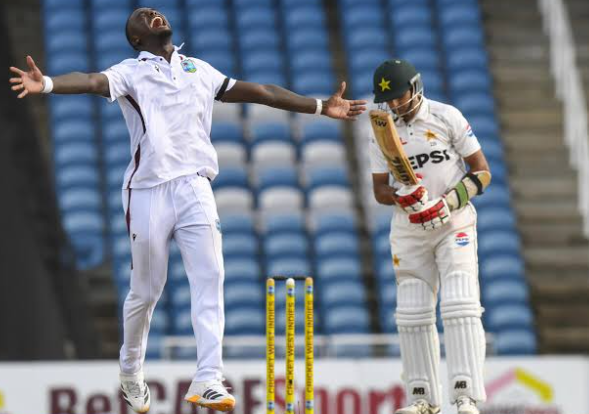
    West Indies secured a comprehensive victory over Sri Lanka, wrapping up a convincing innings-and-217-run win in the opening Test match at Antigua’s Sir Vivian Richards Stadium, with veteran fast bowler Kemar Roach delivering a career-defining performance. Roach finished with four wickets for just 51 runs, headlined by his milestone 300th Test wicket – a historic achievement that places him among an elite group of West Indian bowling legends.

    Roach is now only the fifth West Indian bowler in cricket history to cross the 300-wicket threshold in Test match cricket. He follows all-time greats Courtney Walsh, who holds the regional record with 519 career Test wickets, Curtley Ambrose (405), Malcolm Marshall (376) and Lance Gibbs (309), who is the only other West Indian bowler to have recently held the 300-wicket benchmark above Roach.

    The historic win also carries extra significance for the West Indies side: it marks their first Test victory in the new ICC World Test Championship cycle, and the first international win for new skipper Roston Chase at the helm of the national team, along with head coach Andre ‘Sammy’ Adams.

    Going into the final day of the match, Sri Lanka resumed their second innings at 15 for one wicket, tasked with chasing an improbable target after West Indies had declared their mammoth first innings at 626 for nine. The visiting batting line-up collapsed consistently against West Indies’ hostile pace attack, and were bowled out for just 101 runs before lunch on day four.

    Roach was not the only standout bowler for the home side: young fast bowler Jayden Seales picked up three wickets for only 14 runs, while Shamar Joseph claimed two wickets for 19 runs and Alazarri Joseph chipped in with one wicket for 11 runs to complete the rout. Sri Lanka’s captain Dinesh Chandimal finished as the visitors’ top scorer with 42 runs, the only batsman on the side to reach double figures in the collapse.

    In post-match interviews, Roach emphasized that the team result took priority over his personal milestone, saying the win was what mattered most to him. “So well done to the team, Roston Chase with his first win as captain, Sammy for his first win as coach. I would not be here without all these guys and everyone supporting me,” Roach shared after the game.

    He extended his gratitude to his loved ones and local fans, adding: “To my family, I know my mom is watching, to my kids, all my friends at home I know everyone is watching, I also want to thank all the Antiguan fans for coming out and supporting the team.”

    When asked about whether he would consider retiring from international cricket after hitting the 300-wicket milestone, Roach declined to share any firm future plans, saying he would focus on celebrating the win first. “Check me in the morning, check me in the morning. Right now, I just want to celebrate this win and then discussions will be had,” he said.

  • Here’s Who Made It and Who Didn’t in the FIFA World Cup Round of 32

    Here’s Who Made It and Who Didn’t in the FIFA World Cup Round of 32

    After weeks of tense group-stage action across North America, the 2026 FIFA World Cup has moved past its opening round, with the full lineup of the expanded 32-team knockout stage now confirmed. The world’s biggest football tournament is entering its first elimination round, where every match will bring win-or-go-home stakes as sides battle to advance to the Round of 16.

    All of the pre-tournament favorites have lived up to expectations to secure their place in the knockouts. Defending 2022 champions Argentina finished atop Group J, joined by co-hosts the United States and Mexico, and traditional global powerhouses Brazil, France and Germany. Beyond the elite sides, a crop of surprise underdog qualifiers has already cemented this tournament as one of the most unpredictable in recent memory.

    Individual performances have also captured global football fans’ attention throughout the group stage, with three star attackers standing out above the rest. Argentina’s captain Lionel Messi made history during his side’s final group match against Austria, netting two goals to push his career World Cup goal total to 18, making him the tournament’s all-time leading scorer. France’s Kylian Mbappé has matched Messi’s red-hot form, notching four goals across just two group matches to keep Les Bleus as clear title favorites alongside Argentina.

    The breakout star of this year’s group stage, however, is Norway’s Erling Haaland. The elite club striker has exploded onto the World Cup scene in his first tournament appearance, scoring four goals in two group matches. This achievement makes Haaland only the second player in the last half-century to score twice in each of his opening two World Cup matches, a feat last achieved by England’s Harry Kane in 2018, and has sparked a massive wave of global support for Norway’s deep tournament run.

    The biggest story of the 2026 group stage, though, is the unprecedented success of African nations. For the first time in World Cup history, seven African sides have advanced to the knockout round. South Africa has reached the Round of 32 for the first time in its history, while Cape Verde qualified in its World Cup debut. Both DR Congo and Egypt have also booked their first ever spots in the knockout stage, with 2022 semi-finalists Morocco, plus Ivory Coast, Senegal, Ghana and Algeria rounding out the continent’s qualified sides. Analysts widely describe this as the strongest group-stage performance by African nations in World Cup history.

    Not every side walked away from the group stage with a positive result, however. Former 2022 host Qatar suffered a disappointing early exit, finishing the group stage with just one point to crash out before knockouts. Iran, Scotland and South Korea all finished third in their respective groups, but failed to accumulate enough points to claim one of the spots for highest-ranked third-place teams, sending all three home early.

    The single-elimination Round of 32 kicks off June 28 and will run through July 3, with the winner of each matchup moving on to the Round of 16 as the tournament narrows its path to the 2026 World Cup final.

  • Derde helft WK 2026: Negen Afrikaanse landen naar knock-outfase WK

    Derde helft WK 2026: Negen Afrikaanse landen naar knock-outfase WK

    The 2026 FIFA World Cup has moved past the group stage, with the full schedule for the knockout round of 32 now finalized, kicking off Sunday with an opening matchup between South Africa and Canada at Los Angeles Stadium in California.

    This opening fixture marks just the second ever meeting between the two sides. Their only previous encounter was a 2007 friendly held in Durban, where South Africa (nicknamed Bafana Bafana) secured a 2-0 victory. For Canada, the matchup presents an opportunity to break an unfortunate historical trend: the North American side has lost both of its previous official matches against African opponents, falling 2-0 to Cameroon at the 2001 Confederations Cup and 2-1 to Morocco at the 2022 Qatar World Cup. Despite this history, bookmakers and analysts currently favor Canada to claim a win in regulation. If the two sides cannot be separated after 90 minutes, the match will advance to extra time followed by a penalty shootout if needed to determine a winner.

    The full confirmed schedule for the remainder of the round of 32 is as follows:
    Monday, June 29: Brazil vs Japan at Houston Stadium, Texas (14:00 local time); Germany vs Paraguay at Boston Stadium, Massachusetts (17:30 local time); Netherlands vs Morocco at Monterrey Stadium, Mexico (22:00 local time)
    Tuesday, June 30: Ivory Coast vs Norway at Dallas Stadium, Texas (14:00 local time); France vs Sweden at New York/New Jersey Stadium (18:00 local time); Mexico vs Ecuador at Mexico City Stadium, Mexico (22:00 local time)
    Wednesday, July 1: England vs DR Congo at Atlanta Stadium, Georgia (13:00 local time); Belgium vs Senegal at Seattle Stadium, Washington (17:00 local time); USA vs Bosnia and Herzegovina at San Francisco Bay Area Stadium, California (21:00 local time)
    Thursday, July 2: Spain vs Austria at Los Angeles Stadium (16:00 local time); Portugal vs Croatia at Toronto Stadium, Ontario (20:00 local time); Switzerland vs Algeria at BC Place Vancouver, British Columbia (00:00 Friday local time)
    Friday, July 3: Australia vs Egypt at Dallas Stadium (15:00 local time); Argentina vs Cape Verde at Miami Stadium, Florida (19:00 local time); Colombia vs Ghana at Kansas City Stadium, Missouri (22:30 local time)

    Off the pitch, one major late development from the group stage saw Iran eliminated from the tournament, knocked out in dramatic fashion on the final matchday. Iran’s hopes of advancing depended on the result of Group J’s closing fixture between Austria and Algeria: Iran would only miss out on the cut for best third-placed teams if the match ended in a draw. The fixture finished 3-3, pushing Algeria into the final available round of 32 spot with four points as one of the eight best third-placed finishers, eliminating Iran from the competition.

    The biggest story of the 2026 World Cup group stage is the historic breakthrough by African nations, which have set a new tournament record for progression. A total of 10 African teams qualified for the expanded 48-team 2026 World Cup, and nine of those have advanced to the round of 32 – the highest number of knockout-stage qualifiers from any single continent in World Cup history. The nine advancing sides are Algeria, Cape Verde, DR Congo, Egypt, Ghana, Ivory Coast, Morocco, Senegal and South Africa, with Tunisia the only African nation to exit at the group stage.

    This milestone builds on the growing strength of African men’s football, which began with Morocco’s historic run to the 2022 World Cup semi-finals. As more African sides consistently challenge traditional football powerhouses, the continent has secured its strongest ever showing at the men’s World Cup.

    For football fans around the globe, one highly anticipated storyline remains alive: a final showdown between global superstars Lionel Messi and Cristiano Ronaldo is still possible, should both captains lead their nations all the way to the July 19 final. With the knockout bracket now finalized, Argentina (led by Messi) and Portugal (captained by Ronaldo) are on opposite halves of the draw, which rules out the widely hoped-for quarter-final meeting between the two icons. That leaves the final as the only possible stage for the legendary rivals to face off in what would be one of the most iconic matches in football history.

  • Derde helft WK 2026: Spanning tot het einde; 3-3 Thriller in Groep J

    Derde helft WK 2026: Spanning tot het einde; 3-3 Thriller in Groep J

    Kansas City hosted one of the most thrilling group stage matches in recent tournament memory on June 28, as Algeria and Austria battled to a chaotic 3-3 draw that secured both nations a spot in the knockout round, eliminating Iran in heartbreaking fashion.

    The entire contest carried high stakes from kickoff: the two sides went into the final group fixture locked in a direct battle for second place, where a loss for either would end their tournament run. A draw, however, would see both advance – Austria as group runners-up courtesy of a superior goal difference, and Algeria locking in third place.

    Austria controlled possession in the opening exchanges, pressing high and probing Algeria’s defensive block for early gaps, though clear-cut chances remained elusive. In the 9th minute, Xaver Schlager tried his luck from long range, but his effort lacked both power and placement to trouble Algerian goalkeeper Abderrahmane Benbot. Two minutes later, veteran striker Marko Arnautovic picked up an early yellow card that kept him on thin ice for the rest of the match.

    For the opening 15 minutes, Austria maintained sustained ball control, but Algeria’s backline held firm to block every attempted breakthrough, forcing a mid-quarter hydration break amid the intense Kansas City conditions with the score still locked at 0-0.

    The deadlock finally broke in the 28th minute, when Arnautovic ran onto a perfectly weighted through ball, kept his cool under pressure, and slid the ball calmly under Benbot to put Austria 1-0 up. At that point in the virtual table, Austria looked set to advance, while Algeria sat on the brink of elimination.

    Algeria responded quickly to going behind. After Rafik Belghali wasted an early equalizing chance, the North African side found the net just before halftime. A clever passing sequence down the right flank sent the ball bouncing off the corner flag back into play, and Belghali cut inside before unleashing a powerful left-footed strike into the near corner to level the score at 1-1.

    After four minutes of stoppage time, Austria pushed one last time for a halftime lead, but Algeria held firm, and the two sides went into the break level – a result that all but guaranteed both would move on to the knockout stage.

    Austria made three substitutions to start the second half, while Algeria opted to keep its starting XI on the pitch. The pace of the match slowed considerably, as a draw remained a mutually acceptable result for both camps.

    That lull was broken in the 56th minute, when Konrad Laimer delivered a pinpoint cross to Marcel Sabitzer, who struck a controlled, firm finish past the goalkeeper to put Austria back in front 2-1. Once again, Algeria slipped into a virtual elimination spot.

    Just as they did in the first half, Algeria fought back immediately. Five minutes after falling behind, Riyad Mahrez – the team’s star playmaker – scored a clinical equalizer after a clever build-up from Houssem Aouar, firing an unstoppable shot into the near corner to make the score 2-2.

    Play settled back into a steady rhythm after the second equalizer, though Algerian substitute Rayan Ait-Nouri created several dangerous moments down the left flank. A second hydration break was called halfway through the second half to let players recover from the heat.

    As the match entered its final minutes, both sides began pushing for a winning goal that would secure a higher knockout stage seeding, and it looked like the game would end with the score level – until Mahrez struck in the third minute of stoppage time. Combining once again with Aouar, Mahrez slotted home his second goal of the game to put Algeria ahead 3-2. The late strike sent Algeria’s fans into delirium, as the result would have eliminated Austria and sent Iran through to the knockout round in their place.

    Algeria’s joy lasted less than three minutes. In the 96th and final minute of stoppage time, Austrian substitute Saša Kalajdžic rose above the defense to power a header into the back of the net, leveling the score at 3-3 and capping off one of the most dramatic finishes in tournament history. The late equalizer secured advancement for both Algeria and Austria, sending Iran home.

    Mahrez was named Man of the Match for his two-goal performance that dominated the entire contest. Following the result, Austria will face Spain in their upcoming knockout round fixture, while Algeria will take on Switzerland.

  • Derde helft WK 2026: Argentinië met volle winst naar eliminatiefase

    Derde helft WK 2026: Argentinië met volle winst naar eliminatiefase

    DALLAS — World Cup debutant Jordan faced off against defending champion Argentina in a packed Dallas stadium on matchday three of Group J play. Heading into the fixture, Argentina had already secured back-to-back wins in their first two group matches, sitting comfortably atop the group standings with six full points. For Jordan, the encounter offered little at stake: the side had failed to pick up any points across their earlier two outings, and were playing just to fulfill their final group stage obligation.

    Looking ahead to the knockout round, Argentine manager Lionel Scaloni opted to field a completely changed starting lineup, giving his star core much-needed rest after two intense opening matches. With talisman Lionel Messi having been responsible for almost all of Argentina’s goals in the tournament to date, many pundits and fans questioned whether the rotated side would still find the back of the net. Another storyline heading into kickoff was Argentina’s unbroken defensive record: the defending champions had not conceded a single goal through the first two matches, and Jordan was determined to become the first side to breach that line. Romanian referee Istvan Kovacs took charge of the contest.

    The opening half got off to a fast start, with Giovani Lo Celso seeing an early goal ruled out for offside. The Tottenham midfielder did not let the setback slow him down, and in the 19th minute, he converted a perfectly placed free kick to put Argentina ahead 1-0, earning a nod of approval from Messi watching from the bench. In the 28th minute, Julian Alvarez was struck in the face after looping a header over Jordan’s goalkeeper, and a VAR review awarded Argentina a penalty. Inter striker Lautaro Martínez stepped up and buried the spot kick to double Argentina’s lead to 2-0 heading into halftime. Controversy struck before the break, however: VAR failed to award Jordan a penalty for a handball by Lo Celso inside his own penalty area, leaving Jordan trailing at the break without the chance to pull a goal back.

    After halftime, Jordan emerged reinvigorated, carving out several clear scoring chances that failed to find the mark in the final third. In the 55th minute, Musa Al-Taamari became the first player at the 2026 World Cup to beat Argentine goalkeeper Emiliano Martínez, slotting home a consolation goal to cut the deficit to 2-1. Just over five minutes later, with the game still in the balance, Messi was brought off the bench to steady the ship and bring control back to Argentina’s play. In the 80th minute, after being fouled just outside Jordan’s penalty area, Messi stepped up to take the resulting free kick. He curled a clinical effort past goalkeeper Yazeed Abulaila to restore Argentina’s two-goal lead, extending his historic record by becoming the first player in men’s World Cup history to score in seven consecutive tournament matches.

    The full-time whistle left Argentina with a 3-1 win and a perfect three wins from three group stage matches, securing their place in the knockout round where they will face World Cup underdog Cape Verde. The result confirms that even without Messi starting every match, Argentina has enough depth in attack to pick up results, with other talented players stepping up to contribute goals in the star’s rested absence. For Jordan, Al-Taamari’s goal proved that Argentina’s previously unbeatable defense is not unbreachable, giving the debut nation a historic milestone to take home from their first ever World Cup campaign.

  • Derde helft WK 2026: Colombia neemt groepswinst, Portugal treft Kroatië

    Derde helft WK 2026: Colombia neemt groepswinst, Portugal treft Kroatië

    A tense, tightly-contested Group K World Cup clash between Colombia and Portugal at Miami Stadium ended in a scoreless 0-0 draw on June 27, locking in both teams’ knockout stage positions: Colombia finished the group stage undefeated to claim the top spot, while Portugal settled for second place and will face Croatia in their upcoming round of 16 matchup.

    The match kicked off with immediate attacking pressure from Colombia, who produced the first dangerous chance of the game just two minutes in, firing a shot over Portugal’s goal. Portugal responded quickly, with Ruben Neves testing the Colombia defense with a long-range attempt that went off target. João Félix played a cross toward Pedro Neto at the far post, but the ball rolled past the byline before Neto could connect. After a frantic opening 10 minutes, the pace of the game settled slightly as both teams adjusted to the intense heat and physicality of the contest.

    Colombia remained a constant offensive threat, with striker Jhon Córdoba and winger Luis Díaz stretching Portugal’s backline with repeated runs into dangerous areas. In the 17th minute, Portugal goalkeeper Diogo Costa pulled off a spectacular save to deny a powerful close-range effort from Córdoba, keeping the game scoreless. Midway through the first half, Portugal earned a well-placed free kick just outside the 18-yard box, but Cristiano Ronaldo’s strike was comfortably caught by Colombia goalkeeper Camilo Vargas.

    A mandatory hydration break brought a pause to the action halfway through the first half, and it was during this stoppage that a notable milestone was highlighted: Colombia captain James Rodríguez was playing his 11th World Cup match, a remarkable achievement for the veteran playmaker. The atmosphere inside the packed stadium was heavily influenced by a raucous crowd of Colombian supporters, who brought loud, vibrant South American energy to every attacking moment.

    In the 32nd minute, Ronaldo was played through on goal by a long pass, but the offside flag went up – marking the 22nd time the Portuguese star had been caught offside in World Cup matches, an unusual record for any player at the tournament. The two sides remained deadlocked through the remainder of the half: just before halftime, Bruno Fernandes saw his close-range effort saved by Vargas, while Ronaldo missed the target with an acrobatic bicycle kick attempt. Ruben Neves launched another long-range shot in stoppage time, but it sailed over the crossbar to keep the score 0-0 at the break.

    Portugal made two attacking adjustments at halftime, bringing on João Neves and Diogo Dalot to replace Ruben Neves and João Cancelo, while Colombia opted to keep their entire starting lineup on the pitch, content with how their first-half performance had shaped up. Portugal immediately pushed for an opening goal after the restart, but Ronaldo struggled for early rhythm, giving away possession in a promising attacking position. Dalot delivered a pinpoint cross to João Félix minutes later, but the winger’s header went just over the crossbar.

    Colombia continued to create chances of their own, with Jefferson Lerma and Jhon Arias both testing Costa from outside the box, but the Portugal goalkeeper held firm to keep the clean sheet intact. Portugal had a golden opportunity to break the deadlock when Ronaldo found himself one-on-one with Vargas, but the five-time Ballon d’Or winner pushed his shot just wide of the far post, and a later attacking run from the forward was ruled out for offside.

    Colombia made their first two substitutions just past the hour mark, bringing on Richard Rios and Luis Suárez to replace Lerma and Córdoba. Suárez made an immediate impact, getting a shot off in the penalty area that was blocked by the Portugal defense before it could reach the goal. Portugal responded with two substitutions of their own, bringing on Samu Costa and Rafael Leão to freshen up their midfield and attack. Later in the half, Colombia appealed for a penalty after Suárez went down under a challenge from Nuno Mendes inside the box, but the referee correctly waved away the calls after a quick on-pitch check.

    In the final 10 minutes of regulation, Diogo Dalot fired a long-range effort that went just inches wide of Vargas’ goal, leaving the packed crowd roaring as they waited for a late winner. Tension built steadily through the five minutes of stoppage time, with both teams throwing players forward in search of a late goal that would earn them the group’s top spot.

    Colombia came closest to a dramatic late winning goal in stoppage time, with Suárez forcing two outstanding saves from Diogo Costa in quick succession. A late header from defender Davinson Sánchez appeared to give Colombia the win, but after a lengthy VAR review, the goal was disallowed by the narrowest of offside calls, keeping the scoreline intact.

    When the final whistle blew, the 0-0 result confirmed Colombia’s undefeated run in the group stage to finish top of Group K, while Portugal will advance to the knockout stage as group runners-up, set to face Group J winners Croatia in the first knockout round.

  • Derde helft WK 2026: Congo verslaat Oezbekistan, 3-1 en mag hopen op plek als beste derde

    Derde helft WK 2026: Congo verslaat Oezbekistan, 3-1 en mag hopen op plek als beste derde

    In a dramatic Group K World Cup clash on June 27, the Democratic Republic of Congo pulled off a spectacular second-half comeback to defeat Uzbekistan 3-1, keeping their knockout stage qualification dreams alive while eliminating their Central Asian opponent.

    Uzbekistan got off to a flying start in the first half, capitalizing on DR Congo’s lack of attacking sharpness to take a 1-0 lead into the halftime break. At that point, the Asian side looked on course to pull off a major upset against their Central African opponent, with their first-half performance putting them in a strong position to claim their first points of the group stage.

    But DR Congo emerged from the locker room a transformed side after the break. upping their pressing intensity, showing greater attacking courage, and introducing more dynamic movement up front that gradually pushed Uzbekistan deeper and deeper onto the back foot. The turnaround was fully deserved: where the Congolese side had wasted their few first-half openings, they converted their chances clinically in the second 45 minutes, turning a one-goal deficit into a comfortable 3-1 win. Uzbekistan could not cope with the sustained pressure, watching their halftime advantage slip away to a defeat that ended their tournament.

    The final Group K standings confirm Colombia as group winners with seven points, followed by Portugal in second place on five points. DR Congo finishes third with four points, while Uzbekistan closes out the group winless and point less, bowing out of the competition.

    For DR Congo, the third-place finish puts them firmly in the race to advance as one of the best third-placed teams across all group stages. With four points and a positive goal difference, the Leopards hold a strong position ahead of final group results from other pools, as many other third-placed sides currently sit below DR Congo on points or goal difference.

    Uzbekistan’s World Cup campaign ends in disappointment, with the side falling to three defeats from three group matches despite entering the final fixture with a chance to pick up points. Still, their participation at this World Cup marks a key milestone for the development of football in Central Asia. The country has invested heavily in youth development and gaining international experience for its players over recent years, though this tournament has shown that the squad still needs further improvement to compete consistently at the highest global level.

    DR Congo’s comeback, by contrast, reaffirms the strength and resilience that modern African football has become known for. The Leopards boast a mix of physical power, pace, and experience gained from players plying their trade across top European leagues. After an opening defeat to Colombia and a hard-fought draw with Portugal, their knockout stage hopes looked hanging by a thread heading into the final group match – but they delivered when it mattered most.

    This 3-1 victory is far more than just three points for DR Congo. It is a lifeline in one of the tournament’s toughest groups, drawn alongside two European and South American heavyweights. While DR Congo is not yet guaranteed a spot in the knockout round, their current standing puts them in pole position to advance as one of the best third-placed teams.

  • Football : Coach Migné clarifies his intentions regarding his future

    Football : Coach Migné clarifies his intentions regarding his future

    Following Haiti’s landmark appearance at the 2026 FIFA World Cup, French head coach Sébastien Migné has broken his silence on widespread speculation about his future, confirming he is eager to remain at the helm of the Caribbean nation’s men’s national team and honor his existing contract with the Haitian Football Federation (FHF).

    Migné took over the Grenadiers, Haiti’s senior national side, in March 2024. In just over two years on the job, he led the program to one of its most historic achievements: qualification for the 2026 World Cup, only the second time the country has ever earned a spot at the global tournament. Haiti’s first and only previous appearance at the World Cup dated all the way back to 1974, making Migné’s qualification run a milestone moment for Haitian football.

    Despite the historic success, uncertainty around Migné’s future grew quickly after Haiti exited the tournament in the group stage. Ranked 83rd in the FIFA global rankings, Haiti was drawn into one of the competition’s toughest groups, facing three elite opponents: 42nd-ranked Scotland, sixth-ranked Brazil, and seventh-ranked Morocco. Haiti dropped narrow-to-moderate losses in all three matches, falling 1-0 to Scotland, 3-0 to Brazil, and 4-2 to Morocco, ending their tournament run early and fueling questions about whether the FHF would opt to make a leadership change.

    In a press briefing addressing the speculation, Migné made his position clear. The French coach said he remains fully committed to his professional duties with the FHF and intends to see out his current contract. He acknowledged the significant resource gaps his program faces when competing against top-tier football nations, noting that while his squad was able to create pressure against their World Cup opponents, small individual errors at the highest level of the sport lead directly to costly outcomes.

    Migné added that while he wants to stay on, any final decision about his position rests exclusively with the FHF. For his part, he said his full focus remains on advancing the development of Haitian football and building on the momentum and experience the squad gained during their 2026 World Cup run.

    International football analysts widely back Migné remaining in the role, noting that retaining his leadership would provide the program with much-needed stability as the team prepares for upcoming regional qualifying tournaments. Consistent leadership is widely seen as critical to building on the progress Haiti has made under Migné’s tenure.

    To date, the FHF has not released any official statement on the future of the Grenadiers’ coaching staff. Federation leadership has indicated it will conduct a full, comprehensive review of the team’s 2026 World Cup performance before announcing any final decisions. While Migné has made clear he is prepared to continue leading the Haitian national side into its next chapter of international competition, the final call will be made by federation leadership.

  • Three-time champs meet Country Meet Town in F15 finals

    Three-time champs meet Country Meet Town in F15 finals

    The F15 Softball Cricket Tournament 4.0 reached a pivotal turning point in its 12th week, hosting the final set of preliminary round matches and the tournament’s first two semi-finals at the iconic Richmond Hill Playing Field. The packed match schedule delivered another weekend of high-stakes, edge-of-your-seat cricket action that set the stage for the upcoming championship decider.

    The first two preliminary matches of the weekend both ended in walkover victories for BOSVG All Stars. In Match 39 against Kentish Jacobs Prime Consulting Marriaqua C.C., the opponent side failed to assemble a team to take the field, handing BOSVG All Stars an automatic default win. The side’s fortunes repeated just hours later in Match 40 against East Kingstown United, who also were unable to appear for the fixture, giving BOSVG All Stars their second unopposed win of the day and a spot in the semi-final draw.

    The first semi-final of the tournament pitted three-time consecutive defending champions RS Production Kombat Warriors against two-time tournament finalists Fairban United, in what became a tightly contested thriller that lived up to pre-match expectations. Kombat Warriors captain won the pre-game toss and opted to bat first, posting a formidable total of 116 runs for the loss of 5 wickets across their allotted 15 overs. Top-order batsman Roderick John anchored the entire innings with a masterful, unbeaten knock of 62 runs off just 40 deliveries, a performance that earned him the Man of the Match honor. For Fairban United, the bowling unit put up a solid fight to limit the damage: Lenroy Dalzell finished with 1 wicket for only 7 runs across his 3 overs, while Akron Walker picked up 1 wicket for 10 runs in his 3-over spell.

    Chasing a target of 117 runs to claim a spot in the final, Fairban United put up a brave resistance, but they were eventually bowled out for 97 runs in the 14th over (13.5 overs to be exact). Dillon Douglas was the standout performer with the bat, scoring a well-crafted 40 runs off 27 deliveries, but he received too little consistent support from the rest of the batting order as Kombat Warriors’ bowlers tightened their control of the match. The defending champions’ bowling attack was near-unstoppable: Kamal Jackson claimed 3 wickets for 17 runs in 3 overs, Donaldson Harry took 2 wickets for just 6 runs in his 3 overs, and Ian Gonsalves picked up 2 wickets for only 7 runs in less than an over. With this 19-run victory, RS Production Kombat Warriors have secured a spot in their fourth consecutive F15 Softball Cricket Tournament final, earning the chance to defend their three-time championship title once again.

    The second semi-final brought together BOSVG All Stars and Country Meet Town Outah Trouble, who fought for the second remaining spot in the grand finale. Country Meet Town Outah Trouble won the toss and elected to field first, and their disciplined, well-coordinated bowling performance restricted BOSVG All Stars to 103 runs for 5 wickets at the end of 15 overs. Asquith Mapp led the scoring for BOSVG with a polished 34 runs off 27 balls. For the bowling side, Asif Hooper was the standout, taking 2 wickets for 23 runs in 3 overs, while Travis Cumberbatch supported with 1 wicket for 10 runs across 3 overs.

    In response, Country Meet Town Outah Trouble chased the target with confidence, reaching the required 104 runs for the loss of 6 wickets in 13.5 overs to secure a well-earned victory and a spot in the championship match. Captain Asif Hooper led from the front, scoring an unbeaten match-winning 29 runs off 19 deliveries, a performance that earned him the Man of the Match award. For BOSVG All Stars, Orlando Lavia turned in an impressive bowling display, claiming 2 wickets for only 7 runs in 1.5 overs, while Kody Horne picked up 2 wickets for 22 runs in 2 overs.

    Now, the stage is set for the grand final: three-time defending champions RS Production Kombat Warriors will go head-to-head with Country Meet Town Outah Trouble, as the former goes for a historic fourth consecutive title, while the challengers will aim to dethrone the reigning champions and claim the F15 Softball Cricket Tournament 4.0 crown for themselves.

  • Derde helft WK 2026: Kroatië kaatst Ghana terug en pakt tweede plek

    Derde helft WK 2026: Kroatië kaatst Ghana terug en pakt tweede plek

    A decisive Group L World Cup clash between Croatia and Ghana at Philadelphia Stadium delivered late drama, as Croatia held on for a 2-1 victory that sealed their second-place finish in the group, behind already-confirmed winners England. The result also sees Ghana progress to the knockout stage as one of the best third-placed teams, bringing an early end to Scotland’s tournament, as the side failed to qualify for the elimination round.

    The match kicked off in a low-tempo fashion, with neither side creating clear-cut goal-scoring chances in the opening exchanges. Croatia gradually asserted control of possession, patiently building attacks up the pitch, while Ghana set up in a deep defensive block, circulating the ball in their own half to avoid turning over possession early. The first major opportunity of the game fell to Croatia in the 16th minute: after Ghana lost the ball in a dangerous area, Nikola Vlašić found himself one-on-one with the goalkeeper, but his effort crashed off the woodwork, denying Croatia the opening goal.

    Croatia continued to probe the Ghana defense, with veteran playmaker Luka Modric – earning his 201st international cap, while defender Josip Gvardiol surprisingly started the match on the bench – orchestrating play from deep. Forward Ante Budimir appealed for a penalty after going down in the box, but the referee waved away the appeals. Shortly after, Modric delivered another dangerous set piece into the 18-yard box, with Ivan Perisic rising to head goalwards, only for Ghana goalkeeper Jojo Asare to make a sharp save to keep the score level. Remarkably, Ghana had still not registered a single shot on target by this point of the contest.

    Just after the 30-minute mark, Croatia finally broke the deadlock. Petar Sucic unleashed a powerful low strike from more than 30 yards out, curling the ball into the bottom left corner beyond the reach of Asare. This goal marked the first goal that Ghana had conceded in the entire tournament up to that point, and temporarily pushed Croatia above England into top spot in Group L.

    After falling behind, Ghana began to push further up the pitch, and Antoine Semenyo tested the Croatia defense with a shot that drifted just wide of the post, but the side still failed to create sustained attacking pressure. Before halftime, Croatia created another dangerous chance with a whipped cross into the box, but could not convert, and the score remained 1-0 at the break. Croatia went into the interval holding a deserved lead thanks to their controlled, clinical play, while Ghana struggled to find attacking inspiration.

    Ghana made two substitutions at the start of the second half, bringing on Abdul Fatawu and Kojo Peprah Oppong to inject fresh energy into their attack. The change worked immediately, as Ghana put sustained pressure on the Croatia defense, pushing the European side back into their own half. Semenyo found space to deliver several promising crosses into the box, but his teammates could not convert the chances, and Croatia saw much less of the ball in the opening 20 minutes of the half.

    After Ghana’s early storming spell, the pace of the game dropped again, returning to the slow, low-chance pattern of the first half. Croatia made their own change, replacing Budimir with Igor Matanovic, while Perisic was shown a yellow card for a foul. Ghana responded with two more substitutions, swapping Jordan Ayew and Kamaldeen Sulemana for Brandon Thomas-Asante and Ernest Nuamah to keep the pressure coming.

    In the 78th minute, Ghana got the equalizer their sustained pressure deserved. From a well-delivered free kick, Derrick Luckassen powered a header into the back of the net. A potential offside against Kwasi Sibo was ruled out by VAR, after officials confirmed Sibo was not involved in active play when the ball was played in, so the goal stood.

    Croatia responded swiftly to the equalizer with a substitution of their own, bringing on Mario Pašalić for Mateo Kovacic. Pašalić immediately tested Asare with a sharp effort, but the Ghana keeper pulled off an outstanding save to keep the score level. Just moments later, however, Asare could not stop Croatia from retaking the lead. From a Modric corner, Vlašić headed the ball goalward, which hit the post before bouncing over the goal line to put Croatia 2-1 up. The goal confirmed Croatia’s hold on second place in the group, pushing them ahead of England temporarily before the final group standings were confirmed.

    Ghana made one late change, bringing on Sibo for Caleb Yirenkyi in a final push to find an equalizer, but Croatia’s defense held firm through seven minutes of stoppage time. When the final whistle blew, Croatia held on for a 2-1 win.

    The final Group L standings confirm England as group winners, with Croatia finishing second to advance. Ghana’s third-place finish is enough to see them through to the knockout stage, but the result eliminates Scotland from the tournament, as the side did not finish among the best third-placed teams across all groups.