分类: sports

  • How Saint Lucia can qualify in cricket for the 2028 Olympics

    How Saint Lucia can qualify in cricket for the 2028 Olympics

    After 128 years away from the world’s biggest sporting stage, cricket is officially set to make its long-awaited comeback at the 2028 Los Angeles Olympic Games — a milestone that has sparked both celebration and a unique logistical puzzle for Caribbean cricket competitors.

    Cricket last featured at the Olympics back in 1900, when the Games were also hosted in Paris. Now, more than a century later, the International Cricket Council (ICC) and International Olympic Committee (IOC) have finalized the official qualification pathway for all teams aiming to compete in the LA 2028 tournament, laying out clear rules for nations around the globe. But for the iconic West Indies cricket side, a beloved composite team that unites players from a dozen small Caribbean nations under one ICC membership, the path to the Olympics is anything but straightforward.

    Unlike most ICC member teams, the West Indies side is not recognized as an official National Olympic Committee (NOC) by the IOC. That means the unified regional team cannot compete as a single unit at the Olympics, nor can it claim a collective quota spot for the 2028 Games. To resolve this unusual situation, governing bodies have designed a special regional qualification process exclusively for Caribbean cricket.

    Under the new rules, if the unified West Indies men’s team (the Men in Maroon) and women’s team (the Maroon Warriors) rank among the top eight unqualified ICC teams by the December 31, 2026 deadline, the ICC will organize a dedicated Caribbean Qualifier tournament. This event will determine which individual Caribbean nation’s NOC will earn the right to advance to the global ICC Olympics Qualifier in 2027, and ultimately represent the entire region at LA 2028. Only one Caribbean nation will get the opportunity to field a cricket team at the Games.

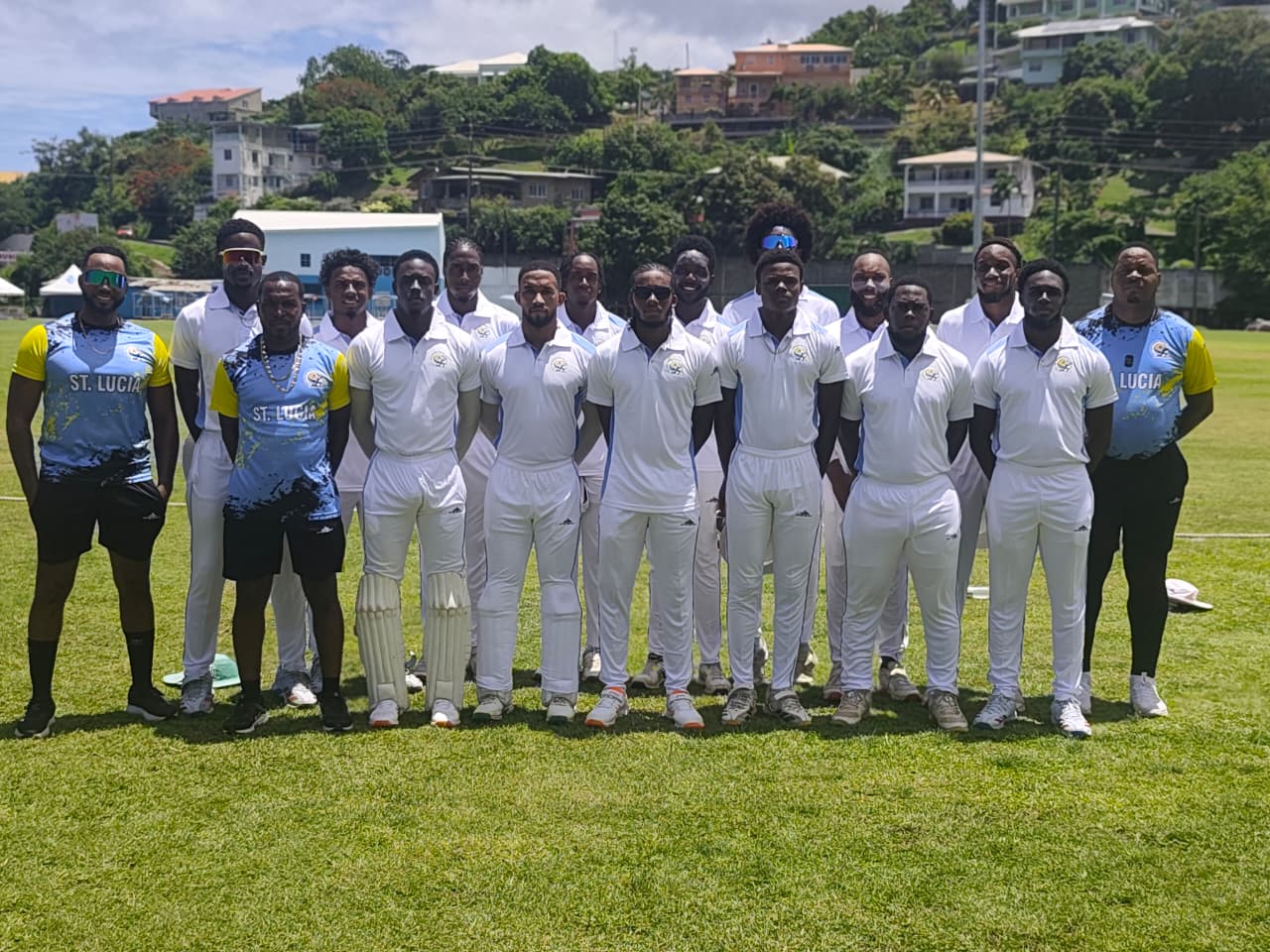
    Small Caribbean nations are already positioning themselves for this rare chance to compete on Olympic soil outside of traditional track and field events. For example, Saint Lucia is already identified as a potential candidate if the West Indies side advances to the regional qualifier, with local top players including Ackeem Auguste, Kimani Melius, and McKenny Clarke tipped to potentially represent the island nation if it secures the spot.

    For the global tournament, the qualification structure is already set for all other teams. Five quota spots in both the men’s and women’s Olympic competitions will be awarded based on results from existing ICC events and official T20I world rankings as of the 2026 deadline. The sixth and final spot in each draw will be decided through the new global ICC Olympics Qualifier tournament scheduled for 2027. As the host nation of the 2028 Games, the United States has already secured an automatic qualification spot for both its men’s and women’s teams.

    ICC Chairman Jay Shah called cricket’s return to the Olympic program a transformative milestone for the sport in an official statement. “Cricket’s return to the Olympic Games is a landmark moment for our sport and a powerful opportunity to showcase the very best of cricket to the world,” Shah said. “The confirmation of this qualification pathway is an important step towards Los Angeles 2028 and gives Members across the world a clear and exciting route to the Olympic stage.”

  • St Giles shine during EU/NSC Road Tennis competition

    St Giles shine during EU/NSC Road Tennis competition

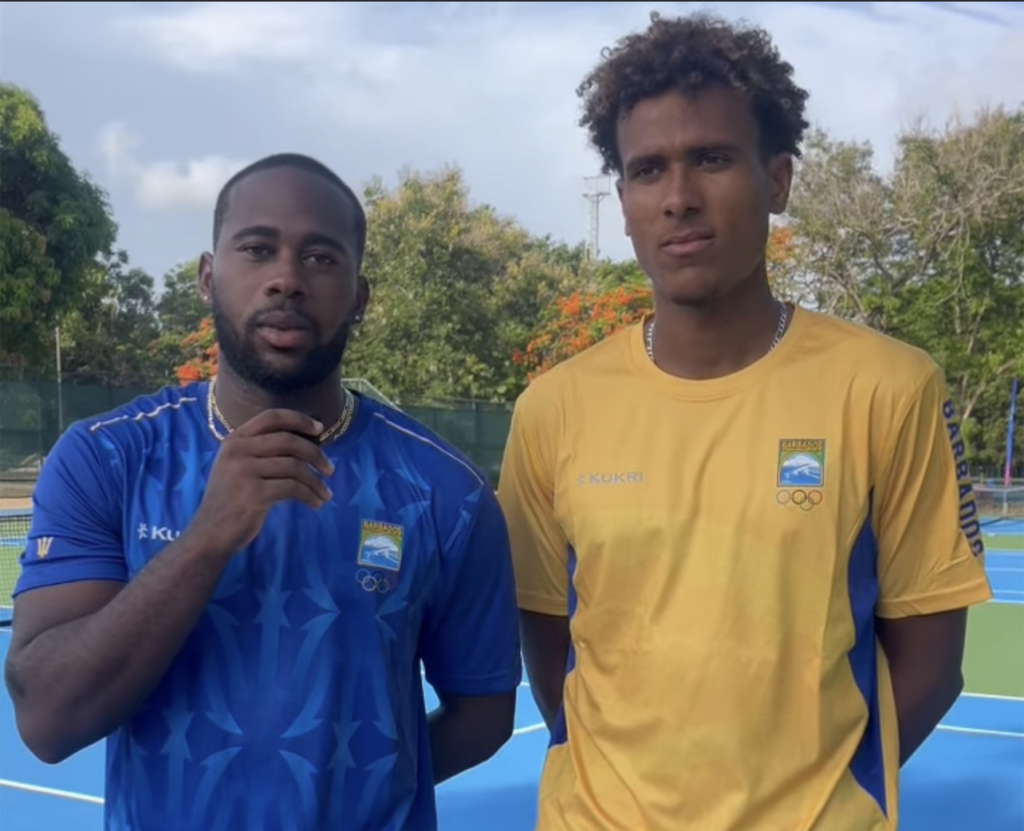
    The second iteration of the Primary School Road Tennis competition, backed by the European Union and organized by the National Sports Council, wrapped up with dramatic title battles on the outdoor courts of Barbados’ Garfield Sobers Gymnasium on June 27. The tournament brought together 20 competing primary schools from across the region, all of which walked away with custom road tennis kits to support ongoing development of the sport at the youth level.

    In the most anticipated clash of the boys’ singles draw, St Giles Primary’s rising star Nathan Stuart delivered a thrilling comeback victory against St Cyprians’ Giovanni Weir. After dropping the opening set 17-21, Stuart clawed his way back into the match, leveling the contest with a 21-18 win in the second set. The final set went down to the wire, with Stuart edging out Weir 22-20 to claim the individual gold in one of the tournament’s tightest matches.

    Stuart’s win was far from the only celebration for St Giles Primary. The school’s boys’ team overcame stiff challenge from two title contenders, Westbury Primary and Warrens Primary, to secure the boys’ team championship, completing a historic double for the institution.

    In the girls’ division, the spotlight fell on Charles F Broome Memorial’s Zabrina Greenidge, who put on a dominant display in the singles final to defeat Warrens Primary’s Nia Innis. Greenidge claimed victory in straight sets, 21-9 and 21-14, to take home the girls’ singles crown. For the girls’ team competition, Blackman & Gollop Primary emerged as the top team, finishing ahead of second-place St Giles Primary and third-place Charles F Broome Memorial to claim the team title.

  • Antigua and Barbuda U-20 Captain Reportedly Dropped from CONCACAF Squad for Disciplinary Reasons

    Antigua and Barbuda U-20 Captain Reportedly Dropped from CONCACAF Squad for Disciplinary Reasons

    The upcoming CONCACAF Under-20 Championship in Mexico is already facing a major shakeup for Antigua and Barbuda, with their star captain Keyonte George expected to miss the tournament following a disciplinary ruling that has cut him from the national squad.

    Unnamed sources with direct knowledge of the situation confirmed to local outlet NewsCo that the Germany-based striker, who was a key leader for the side during qualifying, will not be included in the 21-man roster set to be officially unveiled by the Antigua and Barbuda Football Association (ABFA) this week. The team is scheduled to depart for Mexico on Thursday, ahead of the tournament’s kickoff on July 24.

    The root of George’s exclusion traces back to a heated conflict that unfolded during a recent preparatory friendly match, sources explain. The disagreement broke out between George and U-20 head coach Schyan Jeffers, and the situation escalated dramatically when the captain walked off the playing field before the final whistle, pulling off his team jersey in a public show of frustration. The coaching staff subsequently pursued formal disciplinary action against the 20-year-old, resulting in his removal from the championship squad.

    George was the linchpin of Antigua and Barbuda’s successful qualifying run earlier this year. As skipper of the Young Benna Boys, he led the team to an undefeated stretch in Group C qualifying held in Costa Rica, topping the group to secure a hard-earned spot in the 20-nation CONCACAF championship tournament. His leadership and attacking prowess were seen as critical to the side’s prospects heading into the group stage draw, which placed Antigua and Barbuda in Group B for the month-long competition running through August 9.

    As of this report, neither the ABFA leadership nor George himself has released an official public statement addressing the reported altercation or his exclusion from the squad. Antigua and Barbuda football fans are now waiting for the official squad announcement to confirm the 21 players that will represent the nation in Mexico, with George’s absence creating a notable gap that the federation will need to fill ahead of their opening match.

  • Marileidy Paulino wins Paris Diamond League with season’s best time

    Marileidy Paulino wins Paris Diamond League with season’s best time

    On Sunday at the Paris Diamond League, Dominican Republic Olympic gold medalist Marileidy Paulino delivered yet another masterclass in the women’s 400-meter event, clocking a staggering world-leading time of 48.48 seconds to extend her undefeated streak at the start of the 2026 athletics season.

    Competing in front of a packed crowd of nearly 20,000 spectators at Paris’ iconic Charléty Stadium, Paulino seized control of the race from the very first step. She maintained a blistering, steady pace throughout all four laps of the track, and crossed the finish line with clear room to spare ahead of her closest competitors. Czech rising star Lurdes Gloria Manuel claimed second place, crossing the line in 49.37 seconds – a new personal best that marked a career breakthrough for the young runner. Jamaica’s Stacey Ann Williams rounded out the top three, finishing just behind Manuel with a time of 49.51 seconds.

    This latest victory marks Paulino’s 23rd career win on the Diamond League circuit, and her second triumph of the 2026 season. She kicked off her 2026 campaign with a win at the Doha Diamond League stop on June 19, and has not dropped a race since. In addition to extending her winning streak, Paulino’s Sunday run broke three significant records: it set a new meet record for the Paris Diamond League, a new all-time circuit record for the entire Diamond League series, and stands as the fastest women’s 400-meter time recorded globally in 2026 so far.

    The dominant win has widened Paulino’s already substantial lead in the 2026 Diamond League overall standings, and cemented her position as the overwhelming favorite to claim another overall series title this year. A native of Nizao, Dominican Republic, Paulino also shaved nearly half a second off her own previous 2026 season-best time of 48.91 seconds. As she continues to build competitive momentum ahead of this year’s major global athletics championships, her unbroken run of consecutive victories remains one of the most remarkable stories in elite track and field this season.

  • Derde helft WK 2026: Droom of drama? Brazilië, Duitsland en Oranje in actie

    Derde helft WK 2026: Droom of drama? Brazilië, Duitsland en Oranje in actie

    The 2026 FIFA Men’s World Cup enters its first day of Round of 32 action on Monday, June 29, with three high-stakes matches on the schedule headlined by global powerhouses Brazil, Germany, and the Netherlands, while off the pitch, Canada celebrates a landmark milestone in its men’s soccer history, and other nations grapple with heartbreak and organizational upheaval following early tournament exits.

    Five more spots in the Round of 16 will be claimed by the end of the day, joining Canada, which already locked in its place in the knockout stage over the weekend. Today’s fixture list kicks off at 14:00 local time at Houston’s NRG Stadium in Texas, where five-time World Cup champions Brazil face an up-and-coming Japan side. The second match of the day kicks off at 17:30 local time at Boston Stadium in Massachusetts, where Germany meets Paraguay, with Die Mannschaft desperate to end their streak of early World Cup exits dating back to their 2014 title win. The day’s action closes at 22:00 local time at Monterrey Stadium in host nation Mexico, where the Netherlands takes on North African side Morocco.

    Heading into their matchup with Japan, Brazil hold a clear historical upper hand over the Blue Samurai: across 14 previous meetings, Brazil have claimed 11 wins and suffered just one loss. The pair’s only prior World Cup meeting came 20 years ago, when Brazil secured a convincing 4-1 victory en route to their fifth title. However, Japan enters Monday’s clash with a boost of confidence, having overturned a 2-0 deficit to beat Brazil 3-2 in a friendly in Tokyo last October, snapping Brazil’s long unbeaten streak in head-to-head matchups between the two sides. Even with that upset in recent memory, Brazil remain the heavy favorites to advance to the next round.

    For Germany, their matchup against Paraguay marks just their third meeting across all competitions, and their first in a World Cup since the 2002 Round of 16. The most recent encounter between the two sides was a thrilling 3-3 draw in a friendly match back in 2013. Having failed to make it out of the group stage in both the 2018 and 2022 World Cups, Germany is hungry to end its drought of early exits and secure a place in the Round of 16, and is widely expected to get the win against Paraguay on Monday.

    The final match of the day between Netherlands and Morocco marks just the second ever World Cup meeting between the two nations, with their only prior tournament matchup coming in the 1994 group stage, where the Dutch claimed a 2-1 win behind goals from Dennis Bergkamp and Bryan Roy. Historically, the Netherlands has an unbeatable record against African opponents at the World Cup, remaining undefeated across six previous matches, with every win coming by a margin of at least two goals. Monday’s clash will however mark the Netherlands’ first ever knockout stage match against an African side. Morocco, for its part, enters the match full of confidence after a win over Scotland in the final group stage match, and is targeting back-to-back World Cup wins against European opposition to pull off an upset.

    Beyond the three matches scheduled for Monday, multiple key storylines unfolded across the tournament over the final days of group stage play. Leading off the off-field developments, Canada made men’s World Cup history, securing its first ever knockout stage win with a dramatic stoppage-time victory over South Africa that booked their spot in the Round of 16.

    The late match-winning goal from midfielder Stephen Eustaquio sparked wild celebrations across the Canadian camp, with co-host nation Canada celebrating the biggest milestone in the country’s men’s soccer history to date. Canadian head coach Jesse Marsch hailed his players, saying they had earned the title of “Canadian heroes” and already inspired a new generation of domestic soccer players across the country. Celebrations were made even more emotional by the presence of injured midfielder Ismael Kone, who was forced to withdraw from the tournament earlier after suffering a broken leg, but joined his teammates on crutches to celebrate the historic moment.

    In contrast to Canada’s joy, Iran’s World Cup campaign ended in devastating heartbreak, after the side missed out on a knockout stage spot by the narrowest of margins, becoming the first team in World Cup history to have three goals disallowed via VAR decisions. The dramatic late elimination sparked widespread emotional reactions across Iran and global soccer circles. Iranian head coach Amir Ghalenoei described his side’s bad luck as extraordinary. State media commentators in Iran also publicly questioned the circumstances of the elimination, while Austria head coach Ralf Rangnick rejected any suggestions of match fixing, noting that only “someone completely crazy” would believe the result was manipulated.

    In the wake of their own group stage elimination, South Korea has been thrown into soccer turmoil after head coach Hong Myung-bo stepped down from his role, facing heavy public and political criticism following the team’s underperforming campaign. South Korean President Lee Jae-myung launched a full investigation into the country’s national team program, calling the team’s early exit “deeply baffling” and openly questioning both the national team’s organizational structure and Hong’s appointment. Lee emphasized that personnel decisions ultimately determine on-pitch results, stating: “When loyalty and cronyism count for more than competence, and an unqualified person is put in a leadership position, the outcome is as predictable as fire.”

  • Blazers are back as KFC basketball champions

    Blazers are back as KFC basketball champions

    On Saturday night at Beausejour Gymnasium, the Bonne Terre Blazers delivered a masterclass in defensive intensity and long-range shooting to secure a 17-point comeback victory over two-time defending champions Soufrière Kings, claiming the Ricky “Skecky” Estwick Trophy 49-32 in the decisive third game of the 2026 KFC National Basketball League finals. This marked the Blazers’ second league title in four years, with standout forward Andre Louison leading his squad to a historic win after a tightly contested series.

    For the first time since the league’s revival in 2023, the championship series was pushed to a winner-takes-all final match, a testament to the two teams’ exceptional parity. After the first two games, the combined point difference between the squads stood at just six points, setting the stage for a dramatic deciding matchup. Reeling from a underwhelming performance in Game 2, the Blazers restructured their game plan heading into the decisive contest: they slowed the tempo to build a more structured offensive scheme and drastically ramped up their defensive pressure compared to their previous outing.

    Despite the Blazers’ adjustments, the defending champions got off to a fast start, taking control of the game early. Center Jayzee Saltibus dominated the interior rebounding, while guards Linzell Alcee and Kimani Charles ran efficient fast breaks that pushed the Kings to an 8-point lead, 20-12, early in the second quarter. What followed was a pivotal turnaround that shifted the entire momentum of the game.

    Midway through the second quarter, Andre Louison knocked down four consecutive free throws to spark an 11-0 Blazers run, which Kyanni Elwyn capped off with a key basket that put Bonne Terre up 21-20. Though Sidney Didier tied the game at 21 with a single free throw, Andre and his brother Troy Louison each connected on late-second-quarter scores to push the Blazers’ lead to four heading into halftime, with Bonne Terre holding a 31-27 advantage at the break.

    From halftime onward, the Blazers never surrendered their lead, locking in on defense to stifle the defending champions’ offense. Bonne Terre notched 28 second-half points while holding the Kings to just 15 total points after the break. In the fourth quarter, the Blazers sealed the win with red-hot three-point shooting: the squad finished the game with eight total three-pointers, two of which came from Andre Louison in the final frame, while the Kings managed only two long-range baskets across the entire 40 minutes of play.

    Andre Louison earned well-deserved Player of the Game honors after posting a near-triple-double: he finished with 32 points, 14 rebounds, three assists and three steals, cementing his legacy as one of the league’s top players. His brother Troy turned in an impressive all-around performance of his own, contributing 14 points, six rebounds, four assists and six steals to the championship win.

    For the defeated Soufrière Kings, Kimani Charles led the squad with 12 points, six rebounds, five assists and six steals, but was undone by a game-high nine turnovers that proved costly in the tight contest. Saltibus once again anchored the Kings’ interior, putting up 10 points and 14 rebounds, while Didier and Clayton William carried the team’s offensive production in the early going.

    Parity defined the entire series, and the decisive third game was no exception. For the third consecutive matchup, the two teams finished with identical rebounding totals, 36 apiece, though Bonne Terre held a clear advantage on the offensive glass that generated extra scoring opportunities.

    Three key statistical differences separated the winner from the loser on Saturday night. After a sloppy opening, the Blazers cleaned up their ball handling, finishing with 20 turnovers compared to the Kings’ 26 unforced errors. At the free throw line, both teams finished with nine made shots, but the Blazers converted 9 of 13 attempts (a 69% success rate) while the Kings only managed 9 makes from 16 trips to the line. Most impactful of all was the Blazers’ three-point shooting, which outpaced the Kings’ long-range production by a four-to-one margin.

    This championship series went down as one of the most competitive in the past four years, producing a deserving champion in the Bonne Terre Blazers. For the Soufrière Kings, the defeat ends their bid for a third consecutive title, and the squad will almost certainly be gunning for revenge when the next season tips off. For the Saint Lucia Basketball Federation, three consecutive close, high-stakes, exciting games provided the perfect opportunity to grow the popularity of basketball across the island and draw new fans to the sport.

  • SVG Men’s Senior Basketball Team to compete in FIBA tourney in Guyana

    SVG Men’s Senior Basketball Team to compete in FIBA tourney in Guyana

    After more than six years away from official international competition, the small Caribbean nation of St. Vincent and the Grenadines is poised to make its return to elite regional basketball, with the St. Vincent and the Grenadines Basketball Federation (SVGBF) officially naming its 20-member delegation for the upcoming FIBA AmeriCup 2029 Caribbean Pre-Qualifiers. The tournament, which brings together 10 top national men’s squads from across the Caribbean region, will run from July 6 to 13 in the host city of Georgetown, Guyana.

    This appearance marks a long-awaited milestone for Vincentian men’s basketball: it will be the senior men’s national team’s first outing at an international FIBA tournament since the 2018 event held in Suriname. The team has set its sights on securing a spot in the next qualifying round of the FIBA AmeriCup, which is scheduled to take place in November 2026.

    In a statement released by the federation, organizers revealed a key logistical challenge that the team has had to overcome ahead of the tournament: St. Vincent and the Grenadines currently lacks an indoor wooden basketball court that meets all of FIBA’s international competition standards. To address this gap, the entire national delegation will hold its pre-tournament training camp in neighboring Trinidad and Tobago. The squad is set to depart St. Vincent and the Grenadines this Friday, July 3, for the three-day intensive training camp in Trinidad, before traveling directly to Guyana on July 5 to prepare for their opening matches.

    The 10 participating nations have been split into two groups of five teams for the pre-qualifiers, with only the top finisher from each group earning a promotion to the next round of the qualifying campaign. St. Vincent and the Grenadines (SVG) has been drawn into Group B, where they will face off against regional rivals Barbados, Grenada, Haiti and the Cayman Islands. Group A is made up of Bermuda, Antigua and Barbuda, Dominica, the Turks and Caicos Islands, and tournament host Guyana. Team SVG will compete in a round-robin format against every other team in their group, fighting to claim one of the two available qualification slots for the next stage.

    The 13-player roster for SVG features a mix of emerging young talent and experienced veteran players: Sean Baptiste, Opong Bramble, Shamore Charles, Tyler Fraser, Darreo Glasgow, Jermaine John, Elton Joseph, Phillip Lawrence-Ricks, Hosea Martindale-DeFreitas, Brendon Smart, Steveon Taylor, Chrisford Telesford and Shad Thomas.

    The 7-person supporting staff delegation is led by Suzette Jackson, president of the SVGBF, who serves as Head of Delegation. Sabrina Mitchell takes on the role of Team Manager and Chef de Mission, while Justin Scott is the team’s head coach, supported by assistant coach Randolph “Sticky” Williams. Rounding out the staff are Social Media Manager Ella Mitchell-Sutton, Team Physiotherapist Shirnan Jacobs, and Team Doctor Dr. Rico Audain.

    Team SVG has released its full match schedule for the group stage of the tournament: they will open their campaign against Grenada on Wednesday, July 8 at 3 p.m. local time, followed by a match against the Cayman Islands on Friday, July 10 at 3 p.m. They will then face Haiti on Saturday, July 11 at 3 p.m., before wrapping up their group stage play against Barbados on Sunday, July 12 at 12:30 p.m.

  • Column: Dromen onder druk, het Iraanse elftal in de schaduw van politiek

    Column: Dromen onder druk, het Iraanse elftal in de schaduw van politiek

    For Iran’s men’s national football team, the 2026 World Cup is far more than a global athletic competition. It is the story of a people navigating crippling hardship, who have turned to the shared dream of international football to reclaim a sense of hope and national pride. Every pass, every tackle, every sprint up the pitch carries the weight of personal stories from players who are not only competing against opposing teams on the field, but also fighting against the heavy burden of political tensions that have complicated their entire journey to the tournament.

  • Derde helft WK 2026: De kinderen naast de sterren

    Derde helft WK 2026: De kinderen naast de sterren

    Before the opening kickoff of every high-stakes World Cup match, when broadcast cameras are rolling, national anthems are poised to play, and superstars step out of the tunnel toward the pitch, they do not walk alone. Clasped in each player’s hand is the small hand of a child, a tiny figure standing shoulder to shoulder with sporting legends, where childhood dreams meet the reality of the world’s biggest football stage. For one brief, shining minute, the World Cup feels less like a spectacle of multi-million dollar contracts, packed stadiums and global superstars, and more like a moment for children to step into the center of the football world they love.

    These children are officially known as player escorts, the young guests who accompany players onto the pitch before matches, stand beside them during pre-match national anthem ceremonies, and then exit the field to make way for the game. That short appearance masks a carefully structured program with a meaningful global legacy, rooted in a partnership between FIFA and UNICEF that brought this tradition to worldwide attention during the 2002 World Cup. Launched as part of the landmark “Say Yes for Children” campaign, the initiative carried a simple but powerful message: football should use its global platform to advocate for children’s rights, access to healthcare, education, and safe recreation around the world. Ever since that 2002 tournament, child escorts have become a permanent, beloved pre-match fixture at top international football competitions.

    For the 2026 World Cup, co-hosted across the United States, Mexico and Canada, hundreds of child escorts are being selected through grassroots youth and community programs run across the host nations. In the U.S. and Canada, recruitment is led in part by global social sport organizations Quaker and Common Goal, working in close collaboration with local football governing bodies. Unlike common misperceptions that spots are only awarded to competition winners or children from wealthy backgrounds, the 2026 program intentionally prioritizes kids from underprivileged communities, giving them a once-in-a-lifetime chance to walk onto the World Cup pitch alongside their football idols. Most candidates are nominated by local football clubs, non-profit organizations, schools, and youth development programs, and many of the selected children already participate in local football or community initiatives focused on sport, health, nutrition, and personal growth. Far from being a commercial perk sold to wealthy parents, the escort program at the 2026 World Cup is an intentional component of the tournament’s broader social outreach mission.

    The age range for participants varies by tournament and program, but most selected children fall between 6 and 12 years old, with a small number of programs allowing slightly older participants. Before match day, all escorts complete pre-event training to learn the protocol: how to walk in line with players, where to stand during anthems, when to release players’ hands, and how to exit the pitch safely and efficiently after the pre-match ceremony. Every step is carefully planned, as the entire player procession is broadcast live to a global audience and forms an official part of match protocol.

    After their on-pitch appearance, most escorts stay in the stadium for the full match, accompanied by adult chaperones before being reunited with their families or guardians. Many get to watch the entire World Cup match from their seats, and for a large share of these children, this marks the very first time they have ever attended a professional football match or any major sporting event in a stadium.

    Alongside player escorts, the 2026 World Cup features another young participant that often catches viewers’ attention: the child who walks out ahead of the referee carrying the official match ball. This role is distinct from that of a player escort, as this child is officially titled the Match Ball Carrier, tasked with carrying the game’s official ball onto the pitch and presenting it to the head referee before kickoff, a symbolic act that formally marks the start of the match. At this year’s tournament, the official match ball carrier program is supported by long-time FIFA partner Kia.

    The funding structure for pre-match child participation programs varies widely across leagues and countries. At some club competitions in Europe, parents can pay hundreds of euros to secure a mascot spot for their child on matchday. But for major tournaments like the World Cup, the model is entirely different: all costs related to uniforms, chaperoning, and event organization are covered by tournament sponsors, FIFA partners, and the event organizing committee, with no out-of-pocket costs passed on to participating children or their families.

    Still, the tradition has faced occasional criticism. Critics argue that when sponsors hold influence over participant selection, questions remain about equitable access, and whether marginalized children are still locked out of these life-changing opportunities. That said, the 2026 World Cup program has been explicitly designed to counter this gap, prioritizing outreach to children from low-income neighborhoods and marginalized backgrounds who would otherwise never get the chance to stand on a global football stage.

    For star players, this pre-match walk may feel like routine: shake a small hand, walk onto the pitch, stand for the anthem, then focus on the game ahead. But for the children who participate, it is a memory that will last a lifetime. They get to stand shoulder to shoulder with the legends they have only seen on television – names like Harry Kane, Kylian Mbappé, Lionel Messi, and Cristiano Ronaldo. They hear the roar of 80,000 fans echoing through the stadium, feel the buzz of anticipation in the tunnel before kickoff, and experience firsthand that football is far more than what they see on a screen – it is the smell of fresh-cut grass, the buzz of pre-match nerves, the bright glow of stadium lights, and the roar of the crowd that vibrates in your chest.

    That is what makes that small pre-match moment so powerful. It reminds the whole world that football is about far more than final scores, trophies, or transfer fees. While adults debate tactics, prize money, VAR calls, group stage standings, and multi-million transfers, these children walk onto the pitch as a quiet, powerful reminder that this beautiful game ultimately belongs to the next generation too.

    The World Cup does not begin when the referee blows the first whistle. It begins when a young carrier carries the official match ball onto the pitch. It begins when small hands clasp the hands of superstars, walking out into the light to say, quietly but clearly: this dream is ours too.

  • Derde helft WK 2026: Canada bereikt historische achtste finale

    Derde helft WK 2026: Canada bereikt historische achtste finale

    The 2026 FIFA World Cup’s first Round of 32 clash kicked off at Los Angeles’ iconic stadium, co-hosted between the tournament’s co-host nation Canada and African side South Africa, helmed by Portuguese referee João Pinheiro. What unfolded was a tense, hard-fought 90-plus minutes of football that ended in dramatic fashion, with Stephen Eustáquio’s last-gasp goal securing a 1-0 victory for Canada and eliminating South Africa from the global tournament.

    Both nations entered the knockout round of the 2026 World Cup with historic momentum, as this marked the first time both squads have advanced past the group stage in a men’s World Cup. Their paths to the knockout round followed remarkably similar trajectories: both finished the group stage with four points to claim second place in their respective groups. South Africa opened its campaign with a loss, drew its second match, and secured a vital win in its final group game to clinch progression. Host nation Canada, meanwhile, opened with a draw, earned three points in its second fixture, dropped its final group match, and lost home advantage for this knockout fixture as a result. With knockout football on the line, only one side could move forward to the next round, setting the stage for a do-or-die clash.

    Canada came out of the gate flying, pressing high and pinning South Africa deep in its own half for the opening stretch of the first half. The first clear-cut chance came in the 17th minute for Canadian striker Jonathan David, but his tight-angled shot whistled just wide of the post. Five minutes later, defender Derek Cornelius failed to convert from close range, leaving the score still locked at 0-0. Though South Africa worked its way into the match gradually, the side could not find a decisive final pass or finishing touch to trouble Canada’s backline, allowing the hosts to clear away danger easily. In the 44th minute, Moïse Bombito nearly put Canada ahead, but South Africa’s Aubrey Modiba cleared the goal-bound effort off the line to keep the match level. No additional goals came before halftime, sending both sides into the locker room with a 0-0 draw.

    The second half mirrored the first’s pattern of play for much of the opening, with Canada holding the majority of possession but South Africa defending resolutely and growing into the game as the minutes ticked by. South Africa’s first clear opening came in the 63rd minute through Oswin Appollis, but he misfired badly, sending his shot well wide of the Canadian goal. Just a few minutes later, Tani Oluwaseyi’s effort ricocheted off Canadian goalkeeper Ronwen Williams straight into the path of David, who looked set to tap into an open net – only for defender Mbekezeli Mbokazi to pull off a miraculous last-ditch block to keep the score level.

    By the 75th minute, South Africa had another promising opportunity to break the deadlock, but a sloppy final pass let the chance go begging, and the follow-up shot sailed wide of the target. Star winger Alphonso Davies was introduced into the match as Canada pushed for a winning goal, and the hosts quickly reclaimed the upper hand, creating a string of good chances that David and Bombito just could not convert. Canada kept pressing, opening up gaps that South Africa looked to exploit on the counter-attack, but the African side could not find its finishing touch, squandering every opening that came its way.

    The decisive moment finally came in the second minute of stoppage time. A sloppy South Africa clearance out of central defense landed directly at the feet of Stephen Eustáquio, who hit a stunning first-time strike into the bottom left corner of the net, leaving the South African goalkeeper with no chance. The late goal secured a 1-0 win for Canada, sending the co-host nation through to the next round of the tournament, while South Africa’s historic World Cup run comes to an end. Canada will next face the winner of the Round of 32 clash between the Netherlands and Morocco as it continues its historic 2026 World Cup campaign.