分类: sports

  • Column: Voeg de daad bij het woord: Kraka Green Guardians baka!

    Column: Voeg de daad bij het woord: Kraka Green Guardians baka!

    A recent 1-0 defeat for NAC Breda at the hands of Go Ahead Eagles has sparked widespread upheaval across Dutch football, with what began as an isolated relegation-battle eligibility dispute quickly escalating into a systemic crisis touching dozens of players, two national football associations and club immigration policies.

    The controversy centers on the eligibility of players representing Suriname’s senior men’s national team, the Green Guardians. What started as a challenge over one reportedly ineligible player in NAC Breda’s squad expanded dramatically, with multiple Suriname international players plying their trade in the Dutch club system facing severe disciplinary action from their employers. For some players, the situation has escalated beyond internal club discipline, requiring them to apply for new work permits just to retain access to club facilities and their playing contracts, creating profound uncertainty over their professional and immigration status in the Netherlands.

    For the players caught in the crossfire, the past weeks have been fraught with confusion and frustration. Many in the Dutch football ecosystem have rushed to judgment without examining the core facts of the case, including one glaring question that has yet to be answered: why is this eligibility issue being raised more than six years after the players first represented Suriname?

    The response from key stakeholders has only deepened the chaos. The Royal Dutch Football Association (KNVB) has adopted a hands-off approach, declining to issue formal sanctions or guidance on the dispute. In contrast, Dutch clubs holding contracts with Suriname internationals have implemented harsh, immediate measures. Several players returning from international duty with Suriname were barred from club training and facilities upon their arrival back in the Netherlands. In the most extreme cases, players were referred to the Immigratie en Naturalisatie Dienst (IND), the Dutch immigration service, with their right to reside and work in the Netherlands called into question – even for players who previously held Dutch nationality.

    Most notably, the Surinaamse Voetbal Bond (SVB), the national governing body of Suriname football that has been hardest hit by this controversy, has remained completely silent on the issue more than two weeks after the dispute first erupted. The SVB’s failure to issue a clear public stance has only amplified uncertainty for all involved. Recent observations that Suriname fielded only locally based players for a recent women’s international match has fueled widespread speculation that the SVB may abandon its longstanding policy of calling up Suriname-born professional players based in European leagues, including the Netherlands, moving forward.

    For Dutch clubs, the outcome so far has delivered an unintended win: the dispute has effectively halted the SVB’s practice of calling up players based in the Netherlands, a policy that had frustrated clubs for years due to the long-haul travel required for international fixtures, which left players fatigued and unavailable for club commitments.

    If the SVB continues to refrain from addressing the crisis publicly, the future of its “New Style National Team” project – built around integrating Europe-based Suriname-origin players – will be left hanging by a thread. While thorough investigation of the dispute takes time, a two-week silence rooted in the hope that the controversy will simply fade away is not a viable strategy. No stakeholder benefits from prolonged uncertainty, and even after this crisis resolves, professional players of Suriname origin will almost certainly think twice before agreeing to represent the Green Guardians going forward.

    The SVB does not just owe a public stance to the football community: it has a responsibility to support the players caught in this difficult situation and deliver clear, accurate information to fans and stakeholders. The association needs to match its slogan “w’e kraka Green Guardians baka” with action, rather than hiding from scrutiny. Instead of delivering unchallenged monologues to select media outlets, the SVB must organize a public press conference to provide much-needed clarity on an issue that has divided football communities across the Netherlands and Suriname for weeks.

  • Abinader and Carolina Mejía inaugurate Santo Domingo Sports Boardwalk

    Abinader and Carolina Mejía inaugurate Santo Domingo Sports Boardwalk

    Santo Domingo, Dominican Republic – Top government and municipal leaders have officially opened the capital’s first ever Sports Boardwalk, a landmark coastal redevelopment project that is set to reshape a long-overlooked stretch of shoreline into a world-class public recreational and athletic hub.

    Led by Dominican President Luis Abinader and National District Mayor Carolina Mejía, the opening ceremony marked the completion of the nearly two-kilometer Malecón Deportivo, a sprawling development that spans roughly 90,000 square meters along the city’s southern waterfront. The project forms a core component of the broader Integrated Plan of Santo Domingo, a city-wide urban initiative centered on advancing sustainable development, upgrading mobility infrastructure, and driving modernization across the capital.

    Crafted by prominent local architect Luis Alejandro Pérez and delivered with a total investment of 333 million Dominican pesos, the new waterfront corridor integrates continuous, connected spaces for athletics, leisure, commerce, and green landscaping, all linked by dedicated pedestrian paths and routes designed for alternative, low-carbon mobility. Unlike the disconnected, underused stretch of coast that previously occupied the site, the new boardwalk creates a unified public space intended to serve as a central gathering spot for residents and visitors to engage in physical activity, enjoy coastal leisure time, and build community connections.

    Mayor Mejía emphasized that the project delivers far more than new recreational amenities: it advances ongoing urban revitalization efforts, expands social inclusion by opening coastal access to all community members, boosts public safety in the previously neglected area, and reestablishes a bond between Santo Domingo’s residents and their natural waterfront.

    The Sports Boardwalk is organized into four distinct functional zones, packed with a diverse range of facilities to serve athletes, families, and casual visitors of all ages. Amenities include an internationally certified skate park, professional-standard beach volleyball courts, 3×3 basketball courts, a seven-a-side football pitch, a fully equipped outdoor fitness gym, paddle tennis courts, age-appropriate children’s play areas, dedicated food and beverage zones, and off-street parking for up to 130 vehicles.

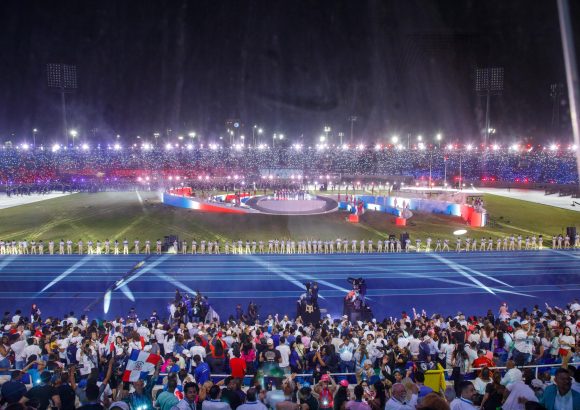
    Officials also noted that the development is a key piece of infrastructure being upgraded and prepared ahead of the 2026 Central American and Caribbean Games, which Santo Domingo is set to host. The new boardwalk will not only serve as a competition venue for multiple events during the games but will also leave a lasting public legacy for the city’s residents long after the closing ceremony.

  • Barbados Pride and Jamaica Scorpions share thrilling draw

    Barbados Pride and Jamaica Scorpions share thrilling draw

    A pulsating second-round domestic cricket encounter between Barbados Pride and Jamaica Scorpions ended in a hard-fought draw on Wednesday, after the Barbados side fell just short of pulling off a dramatic upset victory, with the Jamaicans clinging on to secure a share of the points.

    Going into the final day of play, an outright win appeared far out of reach for either side. The Pride held only a narrow three-run advantage from their first innings, and resumed their second innings at 460 for five. Batting partners Kyle Mayers and Leniko Boucher stretched their unbeaten stand to 104 runs, pushing the visitors’ total to 542 for five before any further damage. Mayers, who had adopted a cautious, slow-burning approach on Tuesday’s penultimate day, shifted gears dramatically once his side targeted quick runs to set a challenging target. He bludgeoned six fours and five towering sixes on his way to a 130-ball knock of 84, injecting urgent momentum into the Pride’s innings.

    Medium pacer Odean Smith eventually broke the partnership for Jamaica, dismissing Mayers with a well-judged catch. Just 10 runs later, he claimed a second scalp, removing Boucher for 24 to move the score to 552 for seven. Lower-order batsmen Johann Layne and Shamar Springer then extended the innings further: Layne struck an unbeaten 31-ball 43, featuring three sixes and three fours, while Springer contributed 36 runs. The pair carried the Pride to a total of 626 before the dismissal of Springer prompted an immediate declaration from the visitors, setting the Scorpions a target of 169 runs to win within the remaining overs.

    Jamaica’s chase got off to a disastrous start immediately after the break. Kyle Mayers removed in-form opener Kirk McKenzie for a duck with just seven runs already on the board. Just one run into the next over, the Pride missed a golden chance to ramp up the pressure: Shamar Springer dropped a caught opportunity at third slip off pacer Johann Layne, gifting reprieve to batsman Javelle Glenn. The drop did not prove costly for the Pride in the end, however, as Layne secured a simple caught-and-bowled dismissal of Glenn after the tea interval, leaving the Scorpions reeling at 22 for two wickets down.

    When new batsman Brad Barnes fell to a spectacular diving catch from Jair McAllister, running in from fine leg off Layne’s bowling, Barbados began to sense they could force an unlikely win. Barnes’s dismissal brought injured captain John Campbell to the crease, who was already nursing a leg injury sustained during fielding. Left-arm spinner Jomel Warrican further consolidated the Pride’s position, claiming the wicket of Carlos Brown with a masterful delivery that spun away from the right-hander and clipped the edge of the bat through to wicketkeeper Boucher, leaving Jamaica struggling at 46 for four wickets. That put the Barbados side firmly in the ascendancy, with victory suddenly in sight.

    Against all odds, the injured captain Campbell survived a series of close calls to remain unbeaten at the end. He compiled a gritty 91-ball 42, and shared a crucial late stand with Romaine Morris, who held out for a patient 5 runs from 62 deliveries. By the time the two sides agreed to terms for a draw, the Scorpions had reached 90 for four, enough to hold on for a share of the contest. Campbell survived two major scares during his knock: he was dropped on 8 by McAllister, who could not hold a looping catch from a sweep shot running in from fine leg, and he also survived a close caught-behind appeal off Warrican, when replays suggested the ball had clipped his bat on its way to the wicketkeeper.

  • Commonwealth Sport officials tour Barbados

    Commonwealth Sport officials tour Barbados

    On a packed Wednesday in Barbados, top leadership from Commonwealth Sport got an up-close, immersive look at the island nation’s iconic sporting landmarks, natural attractions and one-of-a-kind local athletic tradition, wrapping up a day of cultural engagement after a series of formal governance meetings and government discussions.

    The itinerary, organized by the Barbados Olympic Association (BOA), took the 26-member executive delegation beyond standard sports industry site visits to highlight what makes Barbados unique. Stops included the world-famous Kensington Oval, a historic cricket ground that has hosted some of the biggest matches in international cricket, and Harrison’s Cave, a stunning natural geological formation that showcases the island’s commitment to preserving and showcasing its natural heritage. The day’s activities culminated at the BOA’s Wildey headquarters, where the group was treated to a showcase of road tennis, Barbados’ homegrown athletic discipline.

    What made the showcase particularly memorable was the opportunity for participating executives to step onto the court themselves. Commonwealth Sport President Dr Donald Rukare joined other board members for casual, friendly matches against local coaches and young student players, getting a first-hand feel for the fast-paced, accessible sport that has grown in popularity across the island. Even informal moments throughout the day, including a light-hearted exchange with Barbados’ Minister of Sport Charles Griffith, underscored the warm welcome extended to the Commonwealth delegation.

    For Sandra Osbourne, BOA President and Commonwealth Sport vice-president, the visit marked a meaningful milestone for the small island nation. Osbourne explained that while Barbados harbors long-term ambitions to host major Commonwealth Games events in the future, the current visit offered an accessible, important opportunity to welcome the broader Commonwealth sport family even as the country builds its capacity for larger competitions.

    “As a small Commonwealth sport association, stepping up to host major games comes with unique challenges,” Osbourne noted. “But even if we aren’t ready for a full games right now, hosting the executive board meeting let us open our doors and share all that Barbados has to offer. This week has gone extraordinarily well, with productive formal meetings yesterday followed by today’s cultural immersion that let us show off more than just our sporting facilities.”

    Unlike many visits that focus exclusively on sports infrastructure, Osbourne said the planning team intentionally prioritized showcasing Barbados’ full range of offerings. By including both natural and cultural landmarks, the delegation got a holistic view of what the island can offer to future sporting and community events. The choice to highlight road tennis, an unaffiliated indigenous sport that Barbados has actively promoted globally, aligned with that goal: the BOA converted two parking lot courts to host the showcase, giving young local players a chance to share their sport with international leadership.

    Founded back in 1930, the Commonwealth Sport Movement unites 74 independent nations and territories across the globe, building a connected community of more than 2.5 billion people — roughly one-third of the world’s total population. The Barbados visit is part of the organization’s ongoing work to engage member associations of all sizes, support small island nations in growing their sporting sectors, and celebrate the unique athletic and cultural traditions that make each member community distinct.

  • Belizean Team Competes in World Fishing Championship

    Belizean Team Competes in World Fishing Championship

    For the first time, a Belizean competitive sport-fishing squad is set to make its mark on one of the sport’s most celebrated global stages this week, carrying national pride into the 2026 Costa Offshore World Championship.

    Known as “Team Catchin A Buzz,” the four-person angling team has already been competing off the coast of Quepos, Costa Rica, since the tournament kicked off earlier this week, with the final round of competition and award ceremony scheduled for April 23, 2026.

    The Belizean team secured its coveted spot in the global tournament after delivering a standout performance at the Grand Caribe Deep Sea Classic, a regional tournament that recently earned official designation as a qualifying event for the world championship. This new status opens the door for more Central American teams to compete on the global offshore fishing circuit in future years.

    Widely nicknamed the “Olympics of offshore sport fishing,” the annual Costa Offshore World Championship draws the most elite competitive anglers from more than 40 nations across every inhabited continent. This year’s installment draws hundreds of registered participants, all testing their skill against some of the most sought-after game fish in the world—including sailfish and blue marlin—in nutrient-rich Pacific waters off Costa Rica’s western coast.

    Unlike casual fishing competitions, the tournament adheres to rigorous, globally recognized sport-fishing regulations set by the International Game Fish Association, with mandatory video verification for every catch to ensure fair play and compliance with conservation guidelines. Beyond high-stakes competition, event organizers emphasize the tournament’s core mission: building cross-cultural connection and shared camaraderie among the global recreational fishing community.

    For Team Catchin A Buzz, the opportunity extends far beyond chasing the world champion title. Competing at the tournament represents a milestone for Belize’s growing sport-fishing community, giving the small Central American nation international recognition in the competitive offshore fishing space and highlighting its vibrant recreational fishing industry to a global audience.

  • Blackheart shifts to U20 format, with $60,000 up for grabs

    Blackheart shifts to U20 format, with $60,000 up for grabs

    For nearly three decades, the Blackheart Football Tournament has stood as a cornerstone of senior-level competitive football across Saint Lucia. But in a landmark break from its 29-year history, the 2026 edition of the tournament will welcome only under-20 players, marking a transformative pivot designed to grow the next generation of football stars on the Caribbean island.

    Organized by tournament sponsor Blackheart, the format change responds to a critical unmet need in Saint Lucia’s local football ecosystem. Since the tournament launched as a senior competition back in 1997, grassroots youth football has long lacked the structured support and high-profile showcase opportunities available to established senior players. For Blackheart Chief Executive Officer David “Shakes” Christopher, the decision to restructure the tournament was not just a change of rules—it was a necessary investment in the future of the island’s sport.

    “Youth athletes have far more foundational needs than senior players who have already built their careers,” Christopher explained in comments ahead of the tournament kickoff. “Young players need dedicated support systems to grow, and that’s exactly what this new format is designed to deliver.”

    This year’s restructured tournament has also raised the bar for incentive, offering a total prize pool of $60,000 to competing teams. The breakdown of rewards allocates $30,000 to the first-place squad, $15,000 to runners-up, $10,000 to the third-place team, and $5,000 to the fourth-place finisher. All prize winnings are earmarked to further ongoing youth football development initiatives across the island, extending the event’s impact far beyond the final whistle.

    Yet for Christopher, the value of the new under-20 format extends well beyond the financial rewards on offer. Organizers have already held preliminary discussions to create clear development pathways for standout participating teams and players, including opportunities to compete in higher-profile regional tournaments—most notably competitive events hosted in Guyana.

    “This isn’t just about taking home a cash prize,” Christopher noted. “Young players get the chance to go up against top regional talent in Guyana, test their skills against some of the best young players in the area. That opportunity to take a small first step and turn it into a big leap in their career is the real reward here. It gives them a foothold to grow that they wouldn’t get anywhere else.”

    For local football fans eager to see the new format in action, the event will officially get underway with a pre-tournament warm-up festival on May 1 at the popular Marchand Grounds venue. Following the opening celebration, round-robin and knockout fixtures are scheduled to run from May 16 through to the final championship match on June 20, giving weeks of high-stakes youth football action for supporters across the country.

  • Youth talent to take spotlight in All-Star Jamaica showdown

    Youth talent to take spotlight in All-Star Jamaica showdown

    KINGSTON, Jamaica — Jamaican youth football is gearing up for a major showcase of emerging homegrown talent this Sunday, April 26, when the annual All-Star Jamaica youth showcase kicks off at Ashenheim Stadium, located on the campus of Jamaica College.

    Organized around a crowd-pleasing North versus South divisional format, the one-day event will shine a spotlight on the most promising young players across two age brackets: Under-14 and Under-16, all drawn from competitive urban school football circuits across the island.

    The marquee matchup of the afternoon will pit the North Urban All-Star Under-16 squad against their counterparts from South Urban, with organizers and fans alike anticipating a tightly contested, high-energy clash between the country’s top teenage prospects.

    Conceptualized by sports developer Leighton Davis, the showcase was built around a core mission: to identify, elevate, and create exposure for standout youth talent coming up through Jamaica’s schoolboy football system, the backbone of the island’s football development pipeline.

    What began as a local talent exhibition has evolved into a critical bridging platform, connecting grassroots youth players with structured, long-term development pathways. These include expanded opportunities in elite school competitions and direct pathways into Jamaica’s national youth football training programs, opening doors for young athletes who might otherwise go unseen by program scouts.

    All players selected to compete in this year’s showcase hail from high schools that participate in the Inter-secondary Schools Sports Association (ISSA) Under-14 and Under-16 leagues, Jamaica’s primary organized youth school football competitions. The selection process follows a structured, merit-based system: team coaches first nominate their top performing players, after which event organizers review all nominees to finalize the All-Star squads for both divisions and age groups.

    Industry observers and development leaders frame the showcase as a particularly vital milestone for Under-16 athletes, who are at a critical transition point in their careers. This age group is just beginning to make the jump from youth level competition to higher-stakes senior and semi-professional play, making targeted exposure critical for unlocking future athletic and academic opportunities.

    The event will be structured as a double-header, with the opening Under-14 All-Star clash scheduled to kick off at 2:15 p.m. local time. The featured Under-16 main matchup will follow immediately after, getting underway at 4:00 p.m. Stadium gates are set to open to the public one hour ahead of the first match, at 1:00 p.m.

  • Penn Relays high school girls’ 4x400m final promises fireworks

    Penn Relays high school girls’ 4x400m final promises fireworks

    PHILADELPHIA – As the 130th annual Penn Relays Carnival enters its final stretch at the historic Franklin Field, the stage is set for a potentially legendary finish to day two’s competition: the High School Girls’ 4x400m Championships of Americas final, which has already turned heads thanks to an unprecedented performance by Jamaican programs in Thursday’s preliminary rounds. In an outcome that has shocked track and field observers, three separate Jamaican squads all clocked times under the 3-minute 40-second barrier during qualifying — a mark that few elite high school relay teams ever hit, let alone multiple squads from a single country in the same competition. Leading the pack is Hydel High School, the pre-meet favorite chasing an unprecedented fourth consecutive Penn Relays title in the event. Hydel’s team posted a blistering qualifying time of 3:39.55, edging out fellow Jamaican powerhouse Edwin Allen High by just one hundredth of a second. Edwin Allen clocked 3:39.56, while third-ranked Jamaican entry Holmwood Technical rounded out the sub-3:40 trio with a time of 3:39.82. The dominant showing by Jamaican programs puts the top United States contender, Bullis School from Potomac, Maryland, in an underdog position heading into Friday’s final. Bullis posted the fourth-fastest qualifying time overall at 3:40.24, just narrowly missing the sub-3:40 mark that three Jamaican teams easily cleared. Joining Bullis and the four Jamaican squads (Alphansus Davis High also advanced with a 3:44.81 clocking) in the final are Bishop McNamara, another Maryland-based program, which ran 3:43.33 to qualify. The remaining eight spots in the 12-team final went to Immaculate Conception (3:47.08), St Elizabeth Technical (3:47.44), Sydney Pagon STEM Academy (3:47.92), William Knibb Memorial (3:48.77), Manchester High (3:51.63), Alpha Academy (3:54.72) and Port Antonio High (3:59.83). Track analysts note that the preliminary performance cements Jamaica’s reputation as a global powerhouse for youth sprinting, and Friday’s final is already being billed as one of the most competitive high school sprint relay events in the 130-year history of the Penn Relays, one of the oldest and most prestigious track and field meets in the United States.

  • Treasure Beach swap relegation spot with Harbour View after upsetting Waterhouse

    Treasure Beach swap relegation spot with Harbour View after upsetting Waterhouse

    In a thrilling matchday of the Jamaica Premier League at Drewsland, a series of unexpected results have upended both the relegation battle and playoff contention in the third round of fixtures on Thursday. The most dramatic storyline came from the clash between Treasure Beach and top-flight side Waterhouse FC, where the underdog Treasure Beach pulled off a stunning 2-1 upset that lifted them out of the relegation zone – at least for the time being.

    Treasure Beach entered the match mired in a nine-match winless drought, the worst slump in the league this season. But Karim Bryan broke the deadlock for the side in the 26th minute, and Jaheim Harris doubled their advantage just after the hour mark in the 64th minute. While Waterhouse forward Javane Bryan netted a late consolation goal in second-half stoppage time, the club missed a subsequent penalty that would have earned them a shared point, leaving the upset result intact. The three points lifted Treasure Beach to 34 total points, pushing them one point clear of Harbour View, who slipped back into the relegation zone after a lopsided defeat earlier in the day’s doubleheader.

    That opening fixture of the Drewsland doubleheader saw Dunbeholden FC run riot over Harbour View, securing a dominant 4-0 win that ended their own two-match winless skid. The win was anchored by a first-half brace from Odane Samuels, who found the back of the net in the 35th and 40th minutes. Shakeen Powell extended the lead in the 71st minute, and Marlon Allen put the finishing touches on the rout seven minutes later to cap off the lopsided result.

    Elsewhere at the Anthony Spaulding Complex, Arnett Gardens dealt a major blow to defending champions Cavalier SC’s bid for playoff qualification, earning a critical 2-1 win that tightens the race for the postseason. Kevaughn Wilson was the star of the contest, scoring a first-minute opener and adding his second just after halftime in the 47th minute. Though substitute Adrian Reid pulled one back for Cavalier in stoppage time to give the champions hope of a late equalizer, Arnett Gardens held firm to secure the full three points. The result leaves sixth-place Cavalier with 52 points, holding just a three-point advantage over seventh-place Arnett Gardens, with the gap between the two playoff contenders closing significantly.

    At Drax Hall, Mt Pleasant FA put an end to their own three-match winless drought with a dominant 5-2 victory over Chapelton Maroons, after the two sides entered halftime deadlocked at 2-2. Raheem Edwards got Mt Pleasant on the board first in the third minute, only for Robino Gordon to equalize for Chapelton in the 32nd minute. Daniel Green restored Mt Pleasant’s lead six minutes later, but Leaunghn Williams once again drew Chapelton level right before the halftime whistle. The second half belonged entirely to Mt Pleasant, however: Kimoni Bailey reclaimed the lead for the side in the 56th minute, Jabarie Howell extended the margin to 4-2 in the 84th minute, and a late own goal by Chapelton in the ninth minute of stoppage time closed out the scoring. Chapelton, who have now dropped back-to-back matches, slipped to ninth place in the league table following the defeat.

    In the final fixture of the round, Portmore United secured a narrow 1-0 win over Spanish Town Police at Royal Lakes, despite being reduced to 10 men just after the hour mark. Nickoy Gayle was sent off in the 52nd minute, forcing Portmore to play a man down for more than 30 minutes. Tarick Ximines provided the decisive moment for Portmore, scoring the match’s only goal in the 63rd minute to hold on for the full three points despite the numerical disadvantage.

  • Preparation is key

    Preparation is key

    Jamaica’s senior women’s national football team, the Reggae Girlz, stands on the cusp of making regional history, but two former top team leaders are emphasizing that meticulous, long-term preparation will be the key to locking in qualification for both the 2025 FIFA Women’s World Cup and the 2028 Los Angeles Olympics later this year.

    Currently, the Reggae Girlz are just one win away from booking their spot in a third consecutive World Cup. After dominating Group B of the Concacaf Women’s Championship qualifiers with a perfect 4-0 record — highlighted by a 2-0 victory over Guyana at Kingston’s National Stadium last Saturday — the team will face Costa Rica in the tournament’s quarter-finals this November, hosted in Texas. A win against the Central American side will not only secure Jamaica’s place at next year’s World Cup in Brazil but also open the door to the country’s first ever Olympic women’s football appearance.

    Charles Edwards, who served as the Reggae Girlz’s head coach from 2007 to 2008, called a third straight World Cup qualification a milestone that would cement the program’s legacy as one of the strongest in the Caribbean region. “I think for the Girlz to make it a three-peat would be a significant accomplishment,” Edwards shared in an interview with the Jamaica Observer. “That has never been done in the English-speaking Caribbean, and I think all of Jamaica would be so excited — especially after the men’s team failed to qualify for the World Cup. When you look at it, a three-peat this side of the world — even some of the Spanish-speaking Central Americans and all of these countries, I don’t know if anyone has ever made it a three-peat so it’s a very great accomplishment for us, and to make the Olympics would be great.”

    Andrew Price, who was an assistant coach for Jamaica’s groundbreaking first World Cup appearance in 2019, echoed that excitement, noting the program has grown by leaps and bounds since its first historic qualification run. He pointed to the team’s depth of professional talent as a major advantage going into the November match: many of the squad’s players compete in top European and American club leagues, and even star players Jody Brown and Konya Plummer were absent from the final qualifying round, a testament to the team’s depth. “They are now going to be three World Cups older, more experienced, and I believe that will serve its weight in gold when they go to the Concacaf Women’s Championships,” Price said. “I’m expecting the game against Costa Rica to be a difficult game but it’s a game that the Reggae Girlz can win. They have beaten Costa Rica in the past at the Women’s Championship, and I believe that once they go in there mentally and physically prepared they should be able to overcome them.”

    With seven months remaining before the do-or-die match against Costa Rica, both former coaches laid out clear plans to maximize preparation time. Price argued that the Jamaica Football Federation (JFF) should take advantage of the June and October international match windows to schedule friendlies against high-caliber opponents from Europe or Asia, to help the team adapt to different playing styles including organized defensive setups and fast counter-attacking transitions.

    Edwards agreed that competitive friendlies are important, but added that targeted pre-tournament training camps are also critical. He proposed holding two camps in the United States, ideally near the match venue in Texas, to let the full squad acclimatize to the local environment and build on-field chemistry ahead of the November fixture. “Another big plus for us, it’s going to be over the summer when all the international players should have time to be together to work so I’m looking at camps — maybe two camps somewhere in the US and maybe within the area where they’re going to play the games (Texas) — so that they can acclimatise and get accustomed to all of that environment,” Edwards explained. “So a lot of simulation will have to take place and a lot of fine-tuning. It’s like an engine — you’re going to fine-tune it now, you want it running at maximum, you want to be going top speed. So [it’s] the coaches’ responsibility and the JFF, coupled together, and I think they have been doing a pretty good job so far and should be able to get us in good stead going forward into the game.”

    Current head coach Hubert Busby has already confirmed that the technical staff is moving forward with preparation plans, matching the ex-coaches’ focus on the June international window. “We’re turning to what happens within the June window and looking to maximise those two games in terms of preparations,” Busby said last Saturday after the win over Guyana. “I think it is really important for [the players], when they go back into their environment, that they are playing, they’re doing well, and continuing to push the level. We’ll have the chance to take this week and look at our reflection in terms of coaching staff and what we need to do to keep on improving as well so we can improve the group.”

    Notably, the Reggae Girlz have beaten Costa Rica in qualification matches on their way to securing spots at both the 2019 and 2023 World Cups, giving the team a historic edge ahead of the November showdown.