分类: sports

  • Tributes, tears, a 19-gun salute mark Sobers’ last journey

    Tributes, tears, a 19-gun salute mark Sobers’ last journey

    On a somber, rain-dappled Wednesday in Barbados, one of the greatest figures in cricket history, Sir Garfield St Auburn Sobers, received a full state funeral to mark his final passage, concluding with interment at Coral Ridge Memorial Gardens — a resting place reserved for the nation’s most revered icons and legends. The five-hour ceremonial procession wove through the heart of the country, drawing crowds of respectful onlookers who paused their daily routines to honor the man who rose from humble origins in the small village of Bayland to become a global sporting giant.

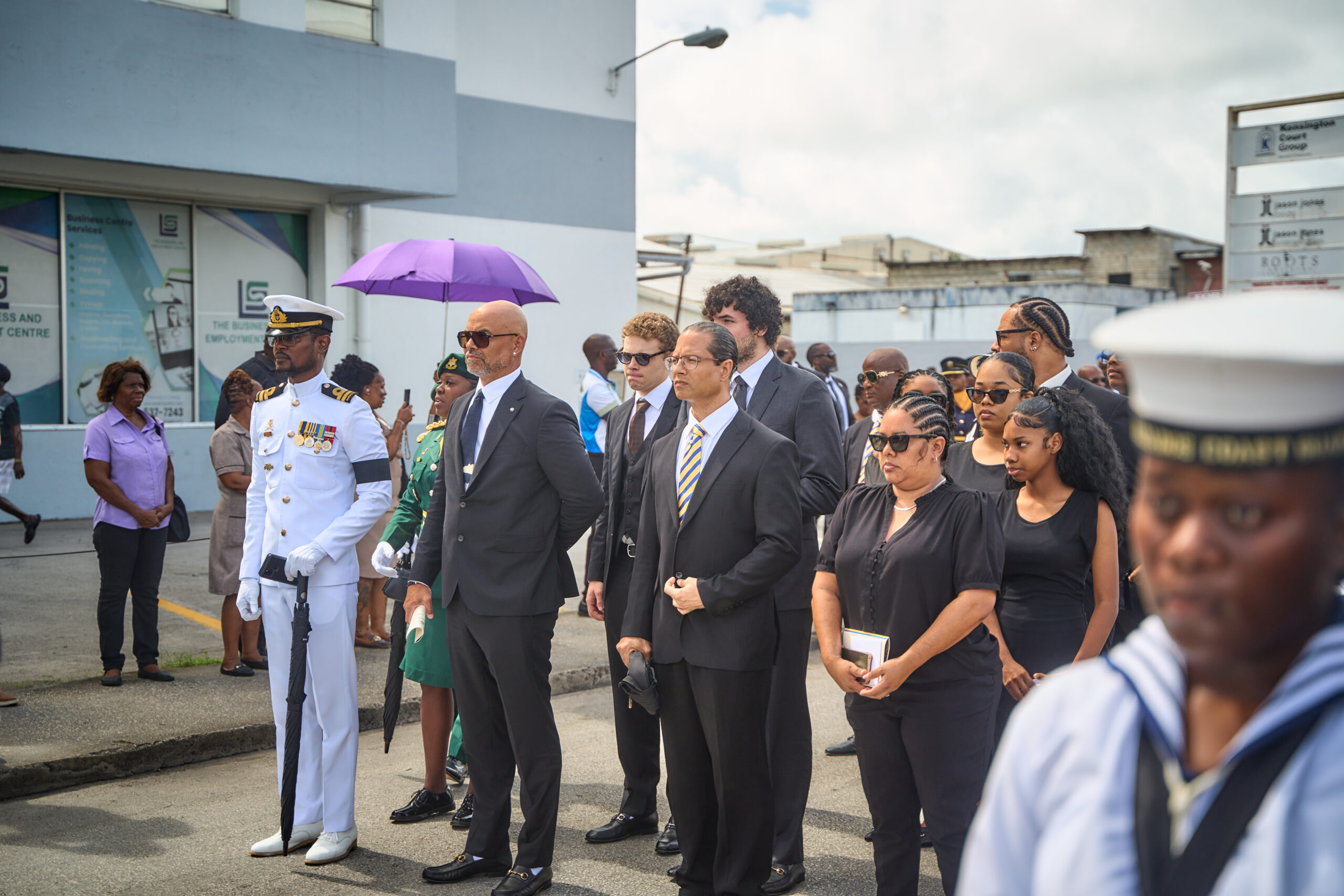
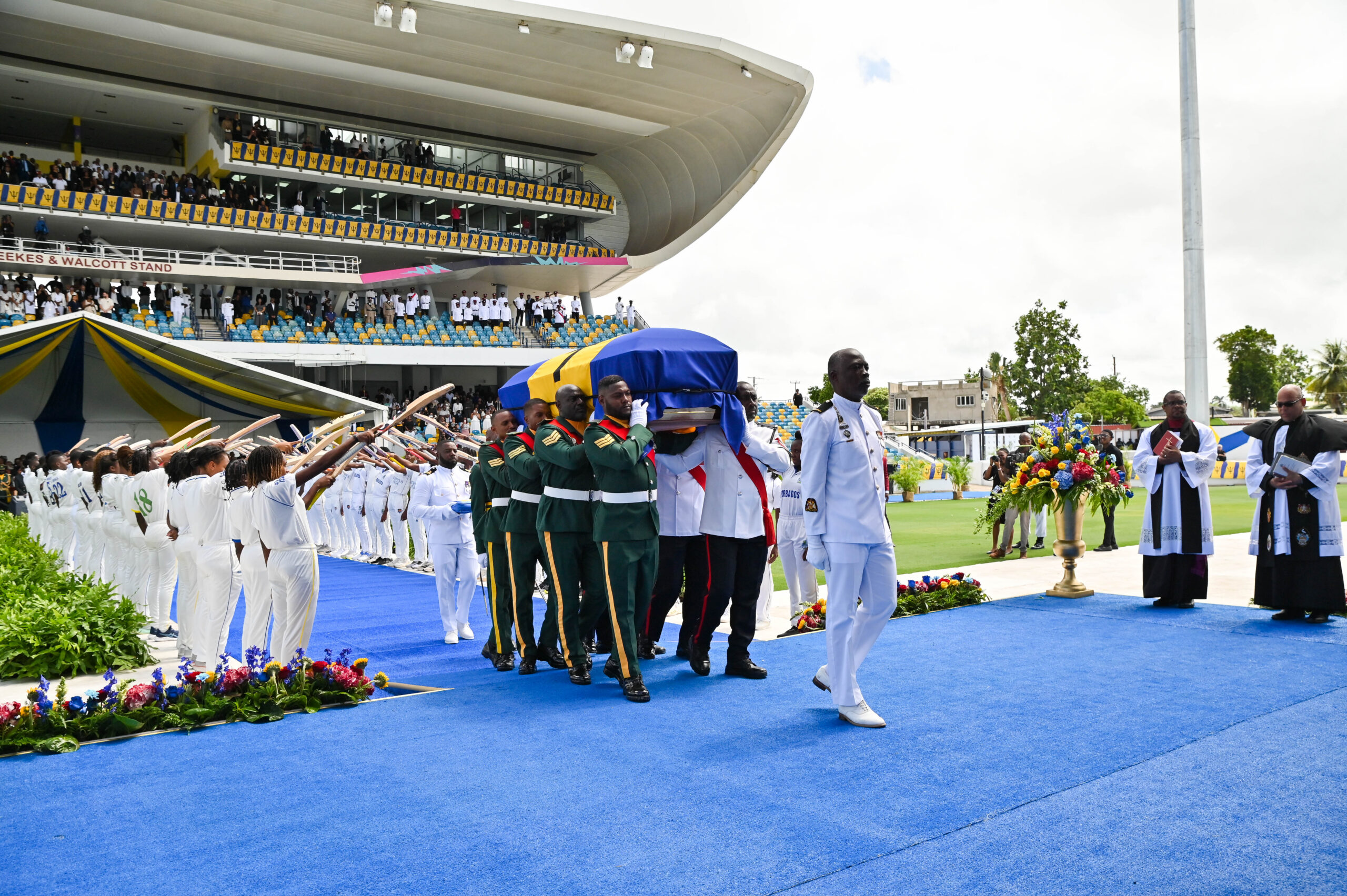
    The procession began at Lyndhurst Funeral Home on Passage Road, making scheduled stops at the Parliament Buildings and Heroes Square before arriving at Kensington Oval, widely known as cricket’s Mecca, for a moving service of thanksgiving. Under overcast skies that spilled intermittent showers — a moment many in attendance described as the heavens mourning the loss of a national treasure — a Land Rover-drawn gun carriage carried Sir Garry’s casket, draped in Barbados’ national flag. Formal military and police escort was provided by units of the Barbados Police Service and Barbados Defence Force, with the procession joined by Sir Garry’s grieving family, members of the Barbadian Cabinet led by Prime Minister Mia Mottley, and dozens of international and regional dignitaries. Hundreds of residents and visiting cricket fans lined the route through Bridgetown, standing in quiet respect to catch a final glimpse of the legendary all-rounder.

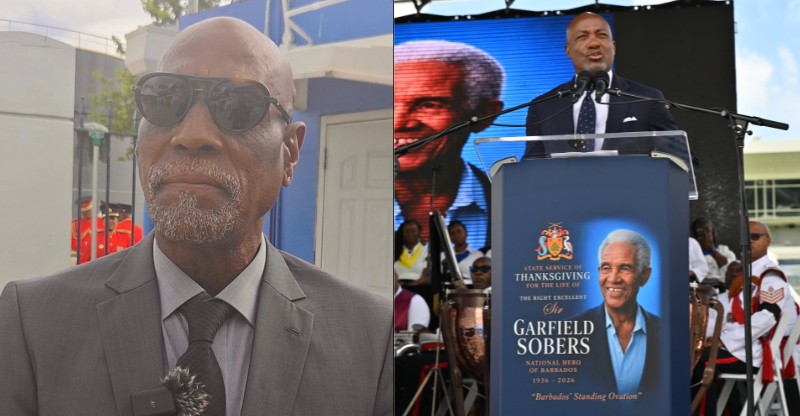
    Thousands of mourners packed Kensington Oval by 7:30 a.m., eager to pay their final respects, with tributes pouring in through poetry, song, speeches and musical performances. The gathering blended shared grief, warm anecdotes that sparked laughter, and deep reflection on Sir Garry’s life and legacy. Among the high-profile attendees were Barbados’ only surviving living National Hero, global music icon Robyn Rihanna Fenty, dressed in a respectful all-black ensemble and sunglasses; Barbados President Jeffrey Bostic; Chief Justice Leslie Haynes; CARICOM Chairman and Saint Lucia Prime Minister Philip J Pierre; and fellow West Indies cricket legends Sir Clive Lloyd, Sir Vivian Richards, Sir Wes Hall, and Brian Lara.

    One of the most emotionally charged tributes came from Brian Lara, who broke Sir Garry’s 36-year world record for the highest individual Test score of 365 runs in 1994. Fighting back tears, Lara recalled the moment Sir Garfield walked onto the Antigua Recreation Ground to embrace him immediately after the record-breaking innings, describing the legend as “my mentor, my dad, my friend”. Lara told the packed stands and global broadcast audience that any similarity between the two ended with the record, emphasizing that Sir Garry’s impact extended far beyond his on-field stats. Recalling years of coaching and guidance, Lara joked that on multiple occasions when his batting form faltered, “the genius fixed me again”. He closed his address by calling on regional cricket authorities to launch a formal Sir Garfield Sobers initiative, with the goal of lifting West Indies cricket back to the top of the global game by the 100th anniversary of Sir Garry’s birth in 10 years’ time.

    Sir Clive Lloyd, who played under Sir Garry’s captaincy and became one of his closest lifelong friends, echoed Lara’s praise, framing the legend as a formative mentor who built confidence in generations of young cricketers. “He was somebody I looked up to. He was a kind and generous person. He would give you his last dollar,” Lloyd said. He also joined the call for institutionalizing Sir Garry’s teachings and values, urging officials to embed the legend’s approach to the game and sportsmanship into youth development and academic programs to create new opportunities for emerging Caribbean cricketers.

    Personal, reflective tributes were also delivered by Sir Garry’s children and by Prime Minister Mia Mottley. As the casket was carried to the main stage of the Oval by an eight-person detachment of police and military bearers, a group of young emerging cricketers formed an honor guard, holding their bats aloft in tribute. Upon arrival at Coral Ridge Memorial Gardens, Sir Garry was honored with a 19-gun salute before interment. The national flag that had draped the casket was carefully folded and presented to his eldest son, Matthew, by a serving member of the Barbados Defence Force. The haunting notes of *The Last Post* rang out as the casket was lowered into the ground, bringing an end to the final innings of a man universally celebrated as the embodiment of sporting excellence, humility, and fair play.

    Wreaths were laid by family members and senior dignitaries, including Prime Minister Mottley, President Bostic, Sport Minister Charles Griffith, Rihanna, Cricket West Indies President Dr Kishore Shallow, and Prime Minister Pierre. While the formal ceremony has concluded, tributes to Sir Garfield Sobers will endure in the collective memory of the global cricket community. Iconic songs honoring the legend, recorded by legendary calypsonian the Mighty Sparrow and late Barbadian musical icon Sir Emile Straker, will continue to resonate in the hearts of his family, friends, fans, and teammates across the world.
  • Team Belize Falls Short, But Makes a Statement

    Team Belize Falls Short, But Makes a Statement

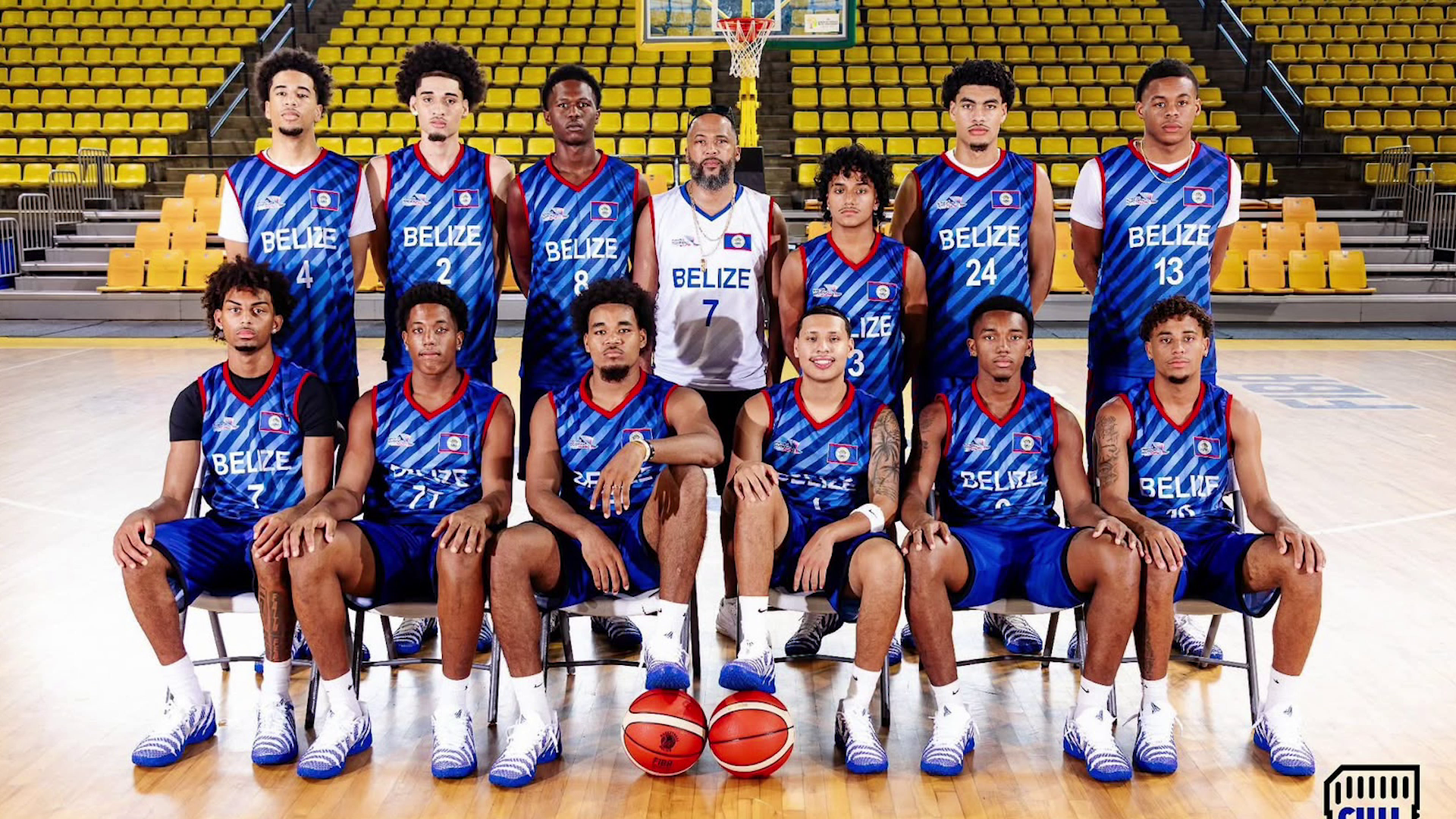
    The 2026 Central American and Caribbean Games delivered one of its most talked-about underdog stories on July 28, when Belize’s unheralded national men’s basketball team pushed heavily favored host Dominican Republic to the final seconds before a narrow 78-75 defeat. While the loss sparked polarized debate among Belizean fans on social media, basketball insiders and program leaders frame the matchup as a landmark milestone for the tiny Caribbean nation’s growing sports program.

    After a sluggish opening quarter that saw Belize trailing the Dominican side, the underdog squad rallied to put the regional powerhouse on the defensive for the rest of the match. For nearly three full quarters, Belize matched Dominican Republic possession for possession, staying within striking distance until the final play of the game, ultimately falling just three points short of what would have been one of the biggest upsets in the tournament’s history.

    Three years prior, a similar Belizean roster (without star player Josiah Mosley) lost to the Dominican Republic by a 17-point margin on Belize’s home court. This year, playing in the Dominican capital of Santo Domingo, Belize held its own against the heavily favored opponent until the final buzzer, a jump in performance that program leaders say did not happen by accident.

    Jacob Leslie, president of the Belize Basketball Federation, explained that the tight final score is the culmination of four years of intentional program building focused on developing team chemistry, gaining international competition experience, and building a culture of belief among young players. “I think what you’re seeing is a culmination of what we’ve been doing over the past four years, and I think Belize should be proud of these young men,” Leslie said in an interview with News Five’s Shane Williams. “Every time they have showed up they have demanded the respect of their opponents. Regardless of the outcome, we should be proud of them because they play together, they play with heart, and they are very aware of what it means to put Belize across their chest. And so they play with pride.”

    The gap in resources between the two national programs makes Belize’s performance even more striking. Belize counts a total population of fewer than 430,000 people, compared to the Dominican Republic’s 11.6 million residents. The financial disparity is even wider: Belize’s total annual budget for all national sports programs sits at roughly $2.5 million, combining core government allocations of $500,000 and an additional $2 million in lottery revenue. For comparison, the Dominican Republic allocated $370 million specifically for its 2026 Central American and Caribbean Games programs alone.

    Despite the massive gap in population and funding, Belize’s team stood toe-to-toe with one of the tournament’s top title contenders. Leslie pushed back against the critical commentary that emerged on social media after the loss, noting that negative feedback disproportionately impacts young athletes, and called on the Belizean public to offer consistent encouragement instead of condemnation.

    “I hope that the Belizean public can be supportive of them. And when they’re commenting on social media, always try to show that support and love for them because they’re still young and sometimes the negative feedback does impact them,” Leslie said. “We try our best to keep them focused and locked in but I would encourage our Belizean people to be supportive of these young men because they have always represented us and they will continue to do so.”

    For this young Belizean squad, every match at the tournament carries meaning beyond the final scoreboard. While the result will officially be recorded as a loss, program leaders argue that the team achieved something far more valuable: proving it belongs among the region’s top basketball competitors. Respect, they note, is not only earned through wins, but through the courage and grit to compete with far better-resourced opponents. Belize is set to return to the court on July 31 for its next group stage match against Guatemala.

  • Tuach surfs to Barbados’ second silver at CAC Games

    Tuach surfs to Barbados’ second silver at CAC Games

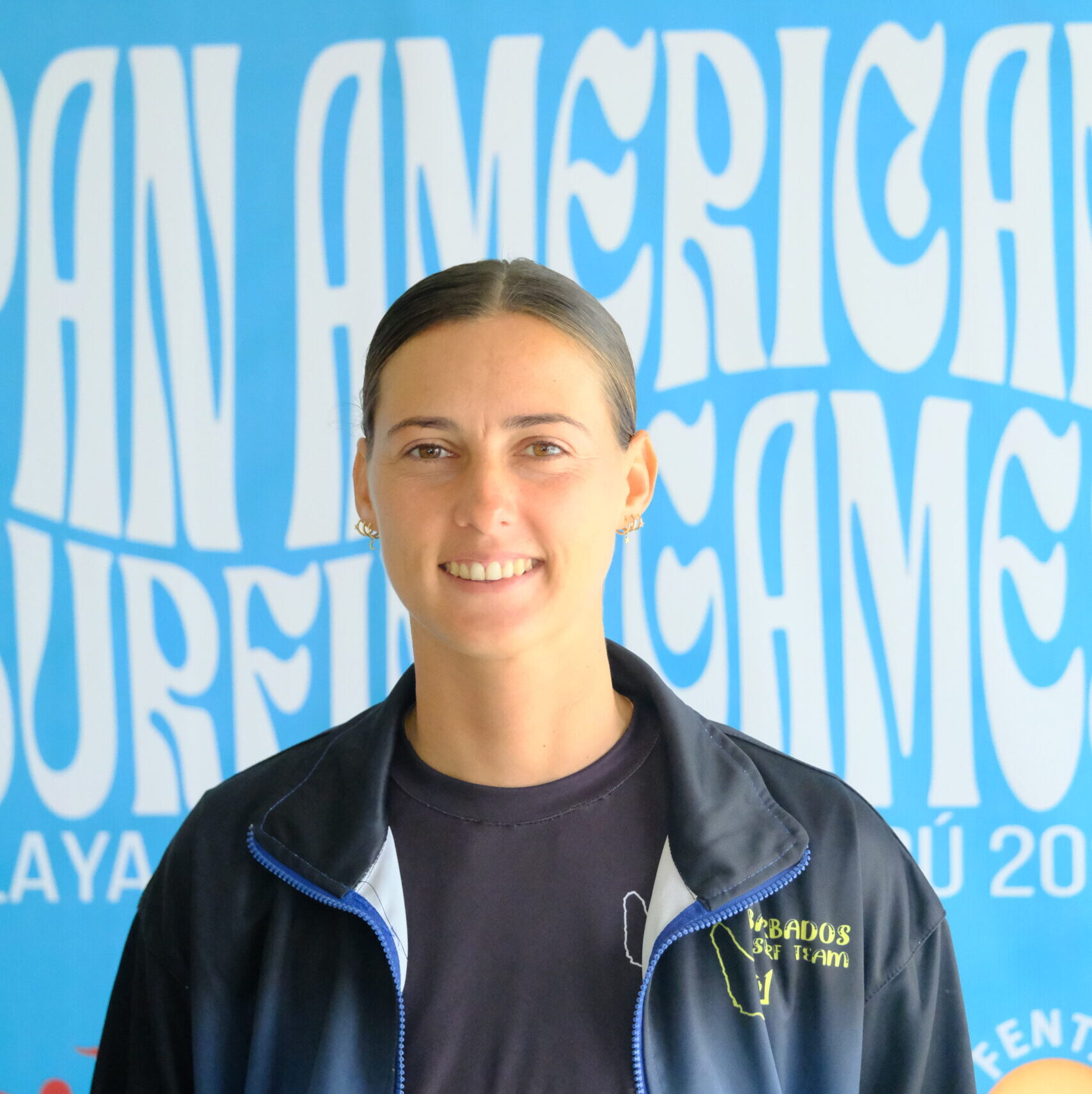
    At the ongoing Central American and Caribbean (CAC) Games hosted in the Dominican Republic, Barbadian athlete Chelsea Tuach delivered a standout performance on Wednesday, securing the island nation’s second medal of the regional competition with a silver finish in the women’s shortboard surfing final. Competing through unusually challenging surf conditions marked by extremely small, inconsistent waves, Tuach earned a final score of 7.33 points, putting her just behind Costa Rican contender Rachel Aguero, who claimed the gold medal with an dominant 10.50-point performance. Tuach’s silver medal follows closely on the heels of Barbados’ first medal of the Games, also a silver, won earlier by men’s doubles tennis pair Stephen Slocombe and Kaipo Marshall. Stewart Stoute, president of the Barbados Surfing Association, offered high praise for Tuach’s grit and achievement in the difficult final, noting that while she managed to lock in one high-scoring wave, she was never able to find a second solid wave to build on her lead. Despite the challenging conditions, Stoute emphasized that Tuach’s performance has made the entire nation proud. “We could not ask for more from her in securing the silver medal at the CAC Games,” Stoute said. “I would say she has definitely been our most consistent surfer, and she has given everything that she’s had for the sport.” Beyond Tuach’s podium finish, Stoute also highlighted the strong efforts of Barbados’ two other surfing delegates, Jacob Burke and Lewis St John, who also turned in credible performances against the same tricky small-wave conditions. In an early head-to-head matchup, Burke claimed victory over St John in the first round, advancing to the quarterfinal stage where he faced another demanding heat. Like Tuach, Burke managed to secure just one high-performing wave but could not find consistent scoring opportunities, ultimately exiting the competition after giving his full effort. Alongside the surfing competition, Wednesday’s CAC Games action featured results across multiple other sports for Barbadian delegates. In men’s field hockey, Trinidad and Tobago defeated Barbados by a score of 5-0. In women’s cycling sprint, Barbadians Arielle Greaves and Amber Joseph both successfully navigated the first round of the competition to advance, but both were eliminated in the second round: Greaves fell to Colombia’s Valeria Hernandez, while Venezuela’s Carliany Martinez claimed a win over Joseph. In the pool, Barbadian swimmers turned out solid results across multiple qualifying heats. Heidi Stoute clocked a time of 57.24 seconds to take third place in Heat Three of the women’s 50-meter freestyle, while teammate Danielle Treasure finished sixth in the same heat with a time of 59.15 seconds. In the men’s 100-meter freestyle opening round, Amani Miller posted a time of 53.27 seconds to secure second place in his heat, and Jake Chee-A-Tow finished second in Heat 1 of the men’s 200-meter butterfly with a time of 2:11.02.

  • More Money for Football, But at What Cost?

    More Money for Football, But at What Cost?

    A sweeping new commercial initiative from global football governing body FIFA has ignited fierce debate across the international football community ahead of a critical vote by member associations, with small federations like Belize’s facing a high-stakes choice between massive new funding and protecting the sport’s long-term independence.

    The plan, which asks for backing from FIFA’s 211 global member groups, would establish a new commercial entity called FIFA Forward Enterprise. Under the terms of the proposal, FIFA would sell a 20% non-controlling minority stake in the new subsidiary to private investors, a move the organization projects will generate more than $4.2 billion in new revenue in 2026 alone. For national federations, the windfall would translate to drastically increased funding over four-year funding cycles: Belize’s program, for example, currently receives just 8 million Belize dollars over a four-year period, and would see that sum jump to 20 million Belize dollars, equal to 10 million U.S. dollars annually, if the plan moves forward. That additional funding would be earmarked for critical development priorities including new field infrastructure, youth training programs, coaching education and expansion of women’s football.

    But the promise of new cash has come with sharp pushback from major regional governing bodies and football leaders, who warn that opening the sport’s commercial operations to outside private investors carries irreversible risks. European football’s governing body UEFA has led the criticism, arguing that bringing private equity into FIFA’s core commercial structure threatens the long-standing independence of global football. Concacaf, the governing body for North, Central American and Caribbean football, has also raised red flags, citing a lack of transparent due process in how the proposal was developed and circulated to members.

    In an interview with local Belizean media, Sergio Chuc, president of the Football Federation of Belize (FFB), shared his frank perspective on the unexpected proposal, which he only received via email late last week. Chuc noted that he initially mistook the communication for a hoax, given that FFB had no advance warning of the plan before the document landed in his inbox. FFB’s executive committee has been holding urgent discussions to formulate an official position, but has not yet finalized whether it will support or oppose the measure at the upcoming vote.

    Chuc acknowledged the proposal is an enticing offer for small, cash-strapped federations like Belize’s, calling the increased funding a “carrot they have dangled in front of our eyes and all small member associations.” Still, he argued that FIFA has alternative paths to increasing member funding that do not require ceding a stake in the sport’s commercial future to outside mutual fund and equity investors. Chuc made his core stance clear: “What I want to state categorically is that football will never be for sale once I am in charge here in Belize. My country will not mortgage the future of our children for a quick buck.”

    Critics of the plan have also pointed to FIFA’s current structure as a non-profit association registered under Swiss law, noting that the shift toward private investment would create inherent pressure to prioritize shareholder profit over the core values of sportsmanship and open access to the game. As member associations continue to review the full terms of the proposal, the vote on FIFA Forward Enterprise remains one of the most consequential decisions facing global football in recent years.

  • Sir Garfield Sobers remembered as humble father, national inspiration

    Sir Garfield Sobers remembered as humble father, national inspiration

    Barbados gathered on Wednesday to bid a final, heartfelt farewell to its most beloved sporting icon, national hero Sir Garfield Sobers, at a state funeral held at the iconic Kensington Oval — the ground where the cricket legend wrote many of his most unforgettable chapters of history. Family members took center stage to share emotional, deeply personal tributes that celebrated not just Sobers’ unparalleled athletic legacy, but the humility, generosity, and quiet kindness that defined his life off the pitch.

    In his moving address to the crowd packed into the historic stadium, Matthew Sobers, Sir Garfield’s eldest son, opened with a lighthearted anecdote that cut through the grief of the occasion: challenging his father to a game of table tennis, he recalled, always ended in the same lopsided result. “The gap between his talent and my ability was simply too great,” Matthew joked. But he quickly emphasized that while Sir Garfield was born with extraordinary natural ability across every sport he touched — from cricket to golf to casual backyard basketball with neighborhood children — those athletic gifts were never what made him extraordinary.

    “As I grew older, I realised his greatest gifts had very little to do with sports, but everything to do with the way he lived,” Matthew told the assembled guests. Reflecting on his father’s origins, he noted that Sir Garfield was born into a Barbados still grappling with the lingering legacy of colonial rule and plantocracy, a time when opportunity was severely limited for most Black Barbadians. Against that backdrop, Matthew said, his father did not just win cricket matches — he rewrote global expectations of what a young man from the island could achieve.

    “A boy from Bayland became respected by kings, prime ministers, and world leaders across every continent,” Matthew said. “He gave generations of Barbadians something priceless: belief. Belief that excellence had no postcode. Belief that character mattered as much as talent. Belief that humility can stand beside greatness.” That legacy, he argued, was Sir Garfield’s greatest contribution: inspiring children to reach for bigger dreams, giving adults renewed confidence, and proving to the world that world-changing excellence could come from Barbados.

    Matthew also highlighted his father’s consistent, unwavering respect for every person he met, regardless of status. “Whether he met a head of state, taxi driver or small child wanting an autograph everyone received the same smile, the same respect, the same kindness,” he said. “Titles never impressed him. Character did.” He closed by noting that while athletic records are eventually broken and trophies fade, the kindness Sir Garfield showed to thousands of people would outlive any statistical legacy. “Records will be broken, trophies gather dust. Statistics become history, but kindness never grows old. Respect never goes out of style. And the way you make people feel, that lives on. I believe that’s what immortality really is… Dad, thank you.”

    Daniel Sobers, Sir Garfield’s younger son, shared his own tender memories, pulling out a birthday card he had purchased for his father just a month before Sir Garfield passed away. He remembered his father’s iconic, charming gap-toothed smile, and a quiet warmth that could fill any room he entered. Recalling a round of golf they played together three years ago — which Sir Garfield won, despite being fully blind in one eye — Daniel reaffirmed just how naturally gifted his father was at every sport he tried.

    “My father passed away peacefully and with dignity. He is now with the Creator, in the arms of his beloved Jackie,” Daniel said. “Cricket was what my father was known for, but to me he was more than cricket. He was my dad. My hero. Dad and we thank you for making the world a better place. You truly did master the gentleman’s game. Not just on the field, but beyond the boundary.” He also extended gratitude to the medical team that cared for Sir Garfield through the final 18 months of his life, as well as to all those who traveled to Barbados to pay their respects and supported the family through their loss.

    Natisha Sobers, Sir Garfield’s niece, read a tribute on behalf of her father Cecil Sobers, Sir Garfield’s brother, reflecting on the close bond shared by the six Sobers siblings. She highlighted the tireless work of their mother, who raised the children alone after the early death of their father, keeping the family close through hardship. “We remained a close knit, fun loving family because of her,” the tribute read. “As a result, your commitment to the team always shone through. My brother today we say goodbye. Rest well, knowing that we are happy to have been a part of your first team.”

    The service was marked by full military honors, with uniformed troops escorting the casket during the procession to Kensington Oval. After the service, Sir Garfield was laid to rest at Coral Ridge Memorial Gardens, with a wreath-laying ceremony led by Daniel Sobers. At the conclusion of the service, a military officer presented Matthew Sobers with the Barbadian national flag that had draped his father’s casket, a final mark of the nation’s respect for one of its greatest heroes. Multiple official photos from the service, credited to photographer Shamar Blunt of Barbados TODAY, document the day’s events.

  • West Indies cricket royalty turns out in full force at Kensington Oval

    West Indies cricket royalty turns out in full force at Kensington Oval

    On a solemn yet celebratory Wednesday at Bridgetown’s historic Kensington Oval, multiple generations of West Indian cricket royalty came together to bid a final goodbye to one of the sport’s most transformative figures, the Right Excellent Sir Garfield Sobers. The gathering of greats read like a who’s who of West Indian cricketing history: former world champion captains Sir Vivian Richards, Sir Clive Lloyd and Brian Lara; Sobers’ own original teammates Sir Charles Griffith and Sir Wesley Hall; legendary opening batsmen Sir Gordon Greenidge and the Most Honourable Desmond Haynes; and powerhouse fast bowler Sir Curtley Ambrose all joined to honor the icon’s legacy.

    Opening tributes to Sobers, Sir Vivian Richards reflected on the unparalleled impact the all-rounder had on his own career and generations of young Caribbean cricketers who came after him. Calling the farewell a landmark moment for the global cricket community, Richards expressed deep honor at being able to attend the service. “He meant so much to all of us growing up. As a young player, his inspiration was immeasurable — you cannot put into words what this man meant for West Indian cricket,” Richards said. “I’ve always said that when you talk about building something great, you have to start with the people who laid the foundation. Sir Garry was one of those people who built the platform that all of us got to stand on.” He added that he hoped young emerging cricketers aiming to represent the West Indies would carry forward the standard Sobers set, remembering the pioneers who built the region’s cricketing identity.

    In a fitting act of tribute, the current full West Indies test squad, led by captain Roston Chase, made a last-minute trip to Barbados to attend the funeral fresh off a landmark victory. The side had secured a 90-run win over Pakistan in the opening test at Trinidad’s Brian Lara Cricket Academy on July 28 — which would have marked Sir Garry Sobers’ 90th birthday. After flying into the island overnight Tuesday, the current team was publicly recognized by Barbados Prime Minister Mia Mottley during her address at Kensington Oval, drawing a warm standing ovation from the packed crowd.

    For Brian Lara, one of the modern era’s greatest batsmen, Sobers was far more than a legendary predecessor: he was a mentor, coach, and constant supporter through every high and low of his 17-year international career. Lara told the gathering that despite the sorrow of saying goodbye, the day was meant to be a celebration, not a mourning. “Sir Garfield coached and inspired generations of players long after he retired from international cricket,” Lara said. “I spent days struggling to find the right words for today, but now that I’m here, I know this isn’t a sad moment. This is a moment to celebrate the extraordinary life of the greatest all-rounder to ever pick up a cricket bat. We have so much to celebrate here at this beautiful ground that he graced so many times. Today we honor a man who could do it all.”

    Lara recalled one of the most memorable moments of his own career, when he broke Sobers’ long-standing record for the highest individual score in test cricket in Antigua. He said the sight of Sobers walking out onto the ground to congratulate him was a moment he would never forget. “To have my mentor, the man who always believed in me, there to share that moment was something truly irreplaceable,” he said. Lara also shared a personal story of Sobers’ unwavering support during a difficult stretch of his career: when Lara called from Jamaica struggling with his batting form, Sobers did not hesitate to drop everything to help. “He listened for a few minutes and just said, ‘I’ll get on a plane tomorrow and come see you.’ True to his word, he showed up at our practice session the next day and walked me through adjustments to get my game back on track,” Lara said.

    Reflecting on Sobers’ lifelong devotion to West Indian cricket, Lara called on cricketing authorities to honor his legacy with a permanent initiative to nurture the next generation of Caribbean talent. He proposed that the 100th anniversary of Sobers’ birth, a decade from now, be marked by a celebration of a revitalized West Indies cricket, built on the foundation the icon laid decades ago.

  • Full circle: Kurt Felix returns to Commonwealth Games

    Full circle: Kurt Felix returns to Commonwealth Games

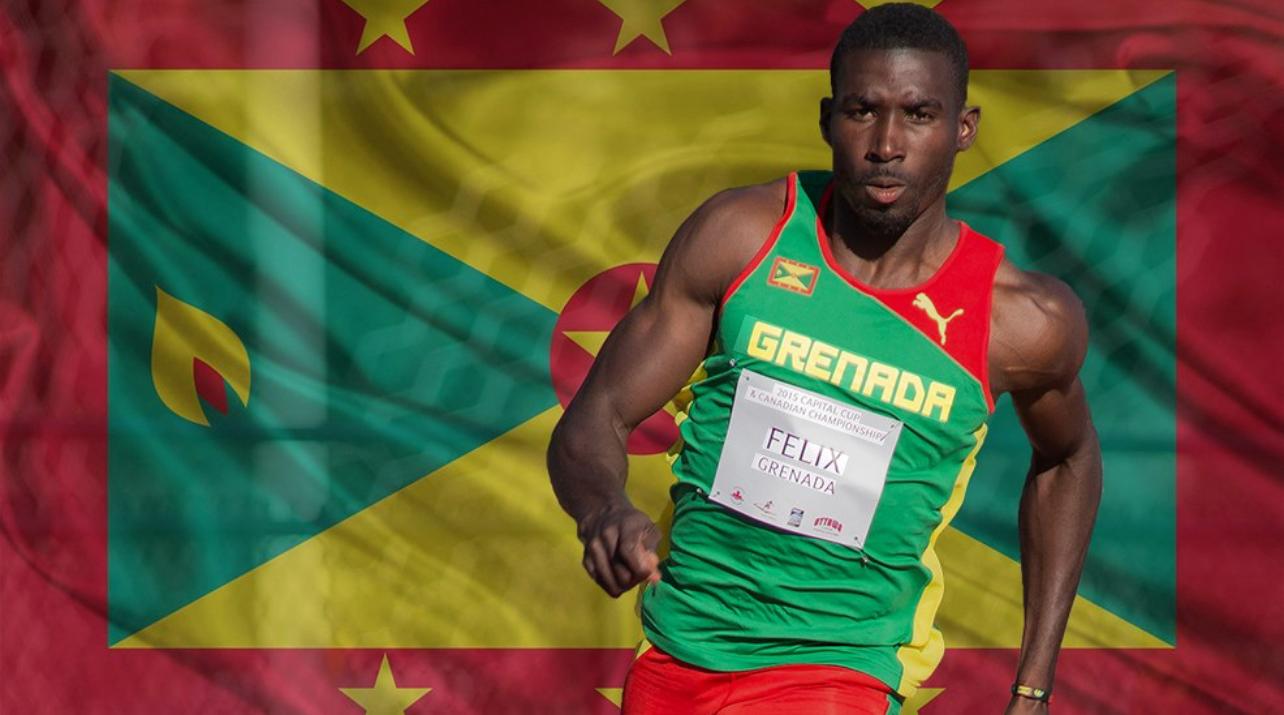
    Twelve years ago, under overcast, damp skies at Glasgow’s Hampden Park, Grenadian decathlete Kurt Felix crossed the finish line of a grueling 1500-meter race, wiped stinging sweat from his eyes, and turned toward the stadium scoreboard. When the final total of 8,070 points illuminated the display, it confirmed more than a bronze medal win: it marked the first senior international multi-event medal in Grenada’s history, proving that a small Caribbean nation long celebrated for its individual sprinting talent could produce a world-class decathlete.

    “It represented pride,” Felix reflected on that landmark podium moment. “It represented years of sacrifice, discipline, and resilience through one of the toughest events in athletics. The decathlon demands excellence across 10 different events over two grueling days, and every point is earned through hard work. It was proof that as a small nation we can compete with the best in the world.”

    Now, as the 2026 Commonwealth Games return to Glasgow, Felix is back on the Scottish ground where his international career launched. The former NCAA champion and two-time Olympian now serves as Team Grenada’s official multi-event coach, ready to guide a new cohort of combined-events athletes on the exact stage where he once made history.

    Felix’s path to decathlon stardom was never a planned route, rooted instead in schoolboy camaraderie and unexpected setback at Grenada Boys’ Secondary School (GBSS). Long before Grenada gained recognition as a combined events contender, decathlon was virtually uncharted territory in the southern Caribbean. Local track culture centered on explosive sprints, 400-meter races, and successful throwing events, while the 10-discipline decathlon requires a rare mix of speed, strength, technical precision, endurance, and mental toughness that few in the region pursued.

    “During my tenure at the GBSS, it was more about fun with friends,” Felix recalled with a smile. “It was always who could run the fastest, jump the highest, throw the furthest. I actually used to hate running.”

    Even so, his natural athletic versatility stood out immediately. At his 2004 CARIFTA Games debut in Bermuda, he followed the path of many Grenadian athletes before him, taking gold in the under-17 javelin throw with a 50.29m mark and bronze in the high jump at 1.80m. But an unexpected finger injury forced a career-altering shift to multi-events, as he adjusted his training to secure a spot on the national team.

    “The heptathlon medals came after a finger injury which led me to the multi,” Felix explained. “I felt like that could have gotten me on the team.” The strategic gamble paid off immediately: he claimed bronze in the under-20 heptathlon in Guadeloupe in 2006, followed by gold at the same age category in the 2007 Turks and Caicos CARIFTA Games with 4,675 points.

    A scholarship to study and compete in the United States turned Felix’s raw natural talent into polished world-class technique. At Central Arizona College, he earned two NJCAA national decathlon titles while making his senior international decathlon debut at the 2008 Pan American Combined Events Championships in Santo Domingo, scoring 6,946 points. A transfer to Boise State University elevated his performance to elite NCAA Division I standards, and on June 7, 2012, at the NCAA DI Outdoor Championships in Des Moines, Iowa, he delivered a historic performance. Backed by a 4.60m pole vault clearance and a 41.51m discus throw, he scored 8,062 points to claim the NCAA national decathlon title, becoming the first Grenadian athlete ever to win an NCAA multi-event championship.

    Yet for years after turning professional, Felix stood alone as the only active decathlete representing Grenada on the global stage. Being the lone pioneer brought a mix of isolation and quiet determination to build a legacy for future athletes.

    “At the time, we were never known for the decathlon, so it took a while for people to understand the events, and it didn’t carry the hype as the sprinting events,” Felix said. “It drove me to want to show that as a small nation we can compete and stand out on the big stage. I felt like there were bigger talents than I was at the junior level that would have been great decathletes. We dominated on the CARIFTA level, so why not the world stage?”

    Fresh off his 2012 NCAA victory, Felix launched an extraordinary 5-year run of consistent top performances on the global stage. He made his Olympic debut at the 2012 London Games just months after winning his NCAA title, followed by his breakthrough 2014 Commonwealth Games bronze in Glasgow. He took silver at the 2015 Pan American Games in Toronto with 8,269 points, notching personal bests in the 100m (10.91s) and shot put (15.23m), and placed 8th at the 2015 World Championships in Beijing with a total of 8,302 points and a lifetime best 14.58s in the 110m hurdles. He finished 6th in the indoor heptathlon at the 2016 World Indoor Championships in Portland, then posted an impressive 9th-place finish at the 2016 Rio Olympic Games with 8,323 points, highlighted by a 69.92m javelin throw.

    That Rio result was overshadowed by a far more meaningful milestone: competing alongside him in the decathlon was his younger brother, Lindon Victor. For two brothers from an island nation of just 110,000 people to compete side-by-side in an Olympic decathlon remains one of the rarest family achievements in modern track and field, and it served as clear proof that Felix’s pioneering work to put Grenadian decathlon on the global map was already bearing fruit.

    Felix hit the peak of his competitive career on June 25, 2017, at the prestigious Ratingen Mehrkampf-Meeting in Germany, where he scored a personal best 8,509 total points and set a meeting record with a massive 72.80m javelin throw. He followed that with a 7th-place finish (8,227 points) at the 2017 London World Championships, capping a career that included five World Championship appearances and multiple top-eight finishes against the world’s best.

    Returning to Glasgow in 2026 as part of Team Grenada’s coaching staff marks a profound shift for Felix. For two decades, he controlled his own performance and outcomes across 10 events; stepping into a sideline role requires an entirely new kind of discipline.

    “The hardest part of transitioning from competing on the track to guiding from the sidelines has been learning that I no longer control the outcome,” Felix admitted candidly. “As an athlete, especially as a decathlete, I knew that every result came down to the work I put in the early mornings, the injuries, the countless hours mastering ten different events. Now I have to channel that into others to get them to buy into what it takes. Oftentimes we hear young ones talk about competing at the highest stage and don’t necessarily want to put in the work required.”

    Felix brings the same unwavering dedication to mentorship that he brought to his own training. If he could speak to the young GBSS student who first wore a national singlet at the CARIFTA Games, he said his message would be simple: “Don’t worry about disappointments along the way. Stay hungry and driven and focus on the process. The journey is its own reward. There will be ups and downs, but there are moments that make it all worth it.”

    For Kurt Felix, the journey has come full circle. He now serves as the foundation on which Grenada’s current and future decathlon stars will build, carrying forward the path he blazed as a one-of-a-kind pioneer. Though his role has shifted from competitor to coach, his core goal remains the same: keeping the door he unlocked for Grenadian decathletes wide open for generations to come.

  • Table tennis preps for CAC Games with National League

    Table tennis preps for CAC Games with National League

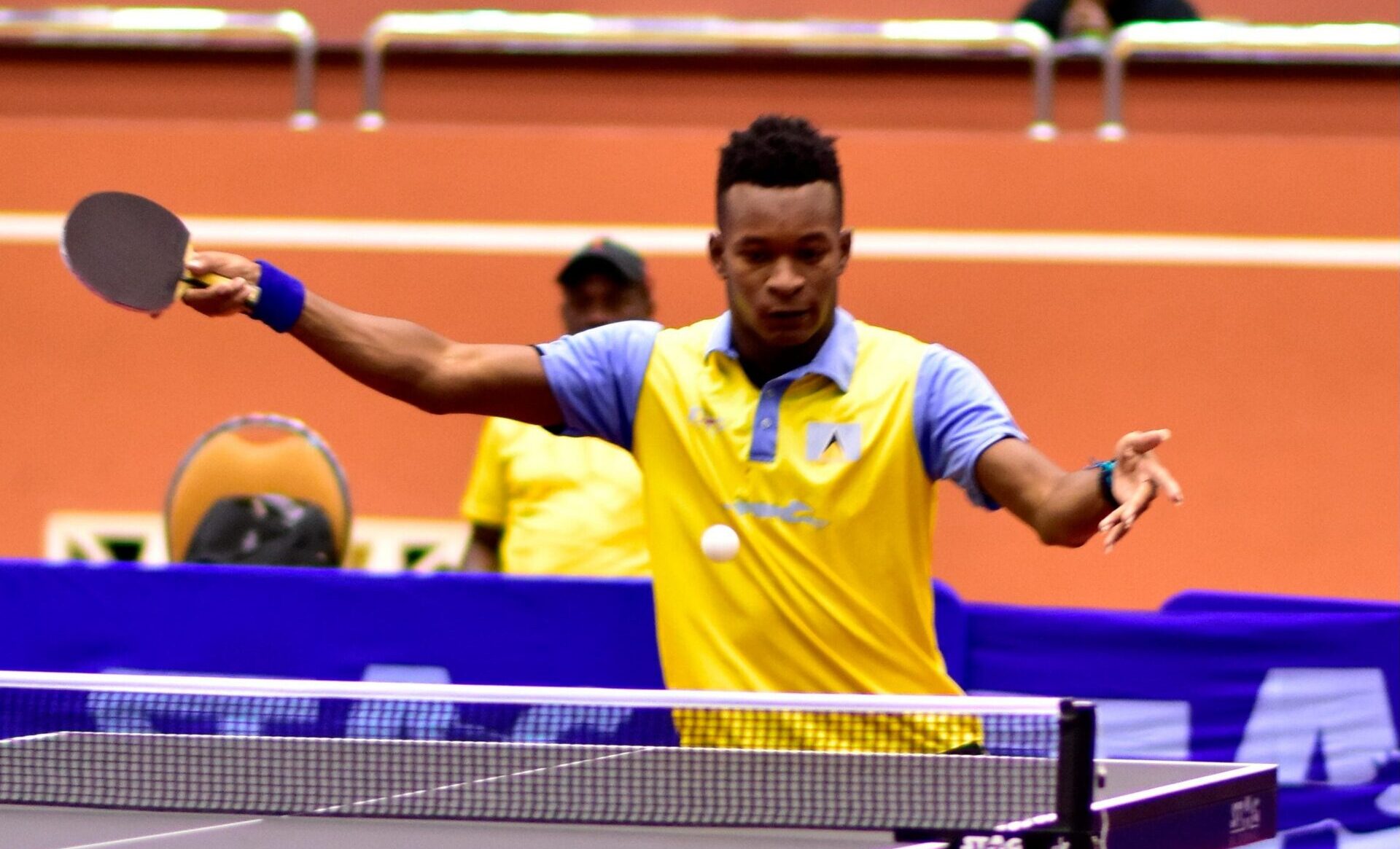
    As the 2026 Central American and Caribbean (CAC) Games draw near, Saint Lucia’s national table tennis squad has wrapped up a months-long preparation campaign anchored by two high-stakes domestic competitions: the National Premier League and the National Championships.

    Running from February through July 2026, the National Premier League brought seven teams together for intense, consistent play, and included every athlete selected to represent Saint Lucia at the August 1–8 CAC Games in Santo Domingo, Dominican Republic. The men’s roster for the regional event features DeAndre Calderon, Manie Eleuthere and Leshon Francis, while Shatal Charles, Zarianne Anthony and Cherese Darcheville will compete in women’s events – all three of whom led the Blazers to the title of the league’s most competitive women’s side.

    In the men’s playoff bracket, Rising Stars turned in an undefeated postseason run to claim the national crown, a result head coach Chris Wells credits heavily to the late addition of DeAndre Calderon to the squad. Led by Calderon and key contributor Khamari Harris, Rising Stars swept defending champions Eagles 3-0 in the championship match. The undefeated run included dominant wins over Tigers, Challengers and Warriors en route to the title, with the roster also featuring coach Wells and teenage talent Daniella Symphorien. Eagles, who entered the final as the regular season’s most consistent side after posting four straight 5-0 wins against Challengers, Blazers, Tigers and Lucian Strikers, counted CAC-bound athletes Eleuthere and Francis alongside Leonardo Bovell on their roster.

    Following the domestic events, individual honors went to Calderon as the top male performer, while Charles took home the title of best female singles player, solidifying her standing among Saint Lucia’s top table tennis talent.

    Beyond the domestic titles, Wells emphasized that the two competitions serve as an invaluable preparation step for the upcoming CAC Games. The extended five-month league schedule gave athletes repeated opportunities to test the technical and tactical skills they refined in training against a diverse range of opponents and match scenarios, helping build critical decision-making abilities, match management skills and mental resilience under pressure.

    For the coaching staff, the league also provided a unique opportunity to track performance patterns over time, spot persistent weaknesses, and adjust training plans ahead of the regional qualifier and main CAC Games event.

    The National Championships, which hosted women’s team, women’s doubles, mixed doubles, men’s doubles and men’s and women’s singles events, further elevated preparation by creating a high-pressure tournament environment matching what athletes will face in Santo Domingo. The event also acted as a final assessment tool for the technical staff to evaluate athlete form, physical readiness and ability to execute game plans against the nation’s toughest competition.

    With preparations complete, Wells says the program’s core goal has been to get athletes peaking at the right time for the CAC Games. He expects his squad to compete fearlessly, leave everything on the table, and put into practice all the skills and experience gained from the domestic season. While each athlete enters the regional competition with their own individual targets, Wells will be watching closely to see how competitors execute their tactical game plans, maintain mental focus and lean into their well-honed physical abilities in Santo Domingo.

  • Greaves, Seales bowl Windies to 90-run win in first Test

    Greaves, Seales bowl Windies to 90-run win in first Test

    International cricket delivered a gripping opening chapter of a two-match Test series in Trinidad and Tobago this week, as the West Indies men’s side claimed a memorable four-day victory over Pakistan at the Brian Lara Cricket Academy to take an early 1-0 series advantage. The landmark win carried extra emotional weight for the home side, coming on what would have been the 88th birthday of legendary West Indies cricketer Sir Garfield Sobers, just one day before the cricket icon’s state funeral.

    From the first ball, the match ebbed and flowed with both sides trading periods of dominance on a tricky pitch that challenged batters and rewarded disciplined bowling. The West Indies got off to a solid start in their first innings, thanks to a critical 91-run partnership between captain Shai Hope and all-rounder Kavem Hodge that lifted the hosts to a total of 311. Hodge anchored the innings with a polished 84, while Hope fell just eight runs short of a century with 92. Fast bowler Shamar Joseph added explosive late-order hitting, smashing 23 runs off only 13 deliveries to push the total past 300.

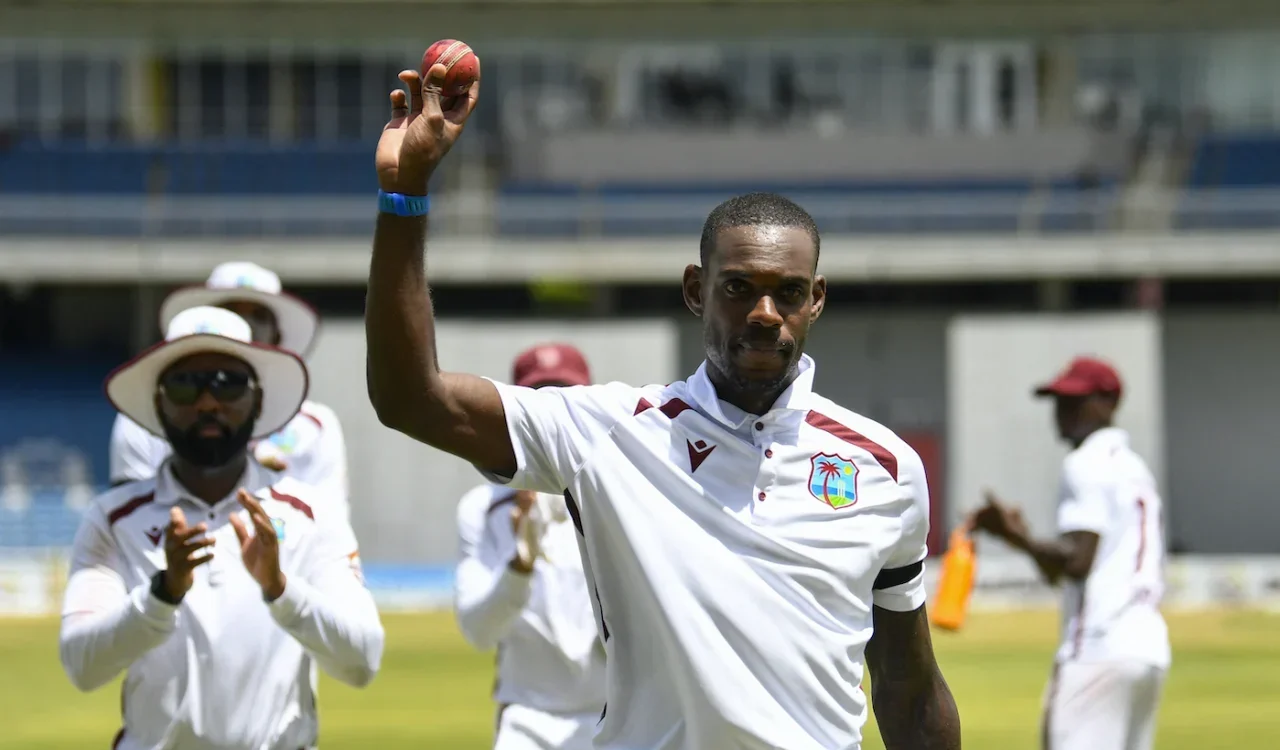
    Pakistan responded with a fast start to their first innings, with openers Shan Masood and Imam-ul-Haq hitting boundaries in quick succession to put the West Indies attack under pressure. Masood went on to score the match’s only century, finishing with 109, while Imam contributed 63, but the home bowlers dug in to restrict Pakistan’s total and secure a narrow 29-run first-innings lead. The standout performance of the innings came from seamer Justin Greaves, who not only claimed his first career five-wicket haul with figures of 5 for 27, but made cricket history by taking five wickets in five consecutive wicket maidens — the first player ever to achieve the feat at international Test level.

    The West Indies stumbled in their second innings, being bowled out for 181, with Pakistan’s Mohammad Abbas claiming his own five-wicket haul, finishing with 5 for 22. Once again, Joseph provided a vital late cameo, hitting 36 quick runs to push the West Indies’ combined lead past 200, setting Pakistan a manageable target that would require a strong batting performance to chase.

    When Pakistan took to the pitch for their final innings, the West Indies pace attack stepped up once again to seal the win. Spearheaded by Jayden Seales, who took five wickets, the home seamers bowled Pakistan out for just 120, securing the win by a comfortable margin. A remarkable statistical footnote of the match saw all 40 wickets fall to pace bowlers, a rare occurrence in modern Test cricket that highlighted the quality of the fast bowling on display from both sides.

    With the series already in their grasp, the West Indies will now turn their focus to securing a series sweep when the second Test gets underway on August 2. A win would give the Caribbean side consecutive Test series victories, capping a successful run of form for the rebuilding side.

  • Urs 8th at CAC Golf

    Urs 8th at CAC Golf

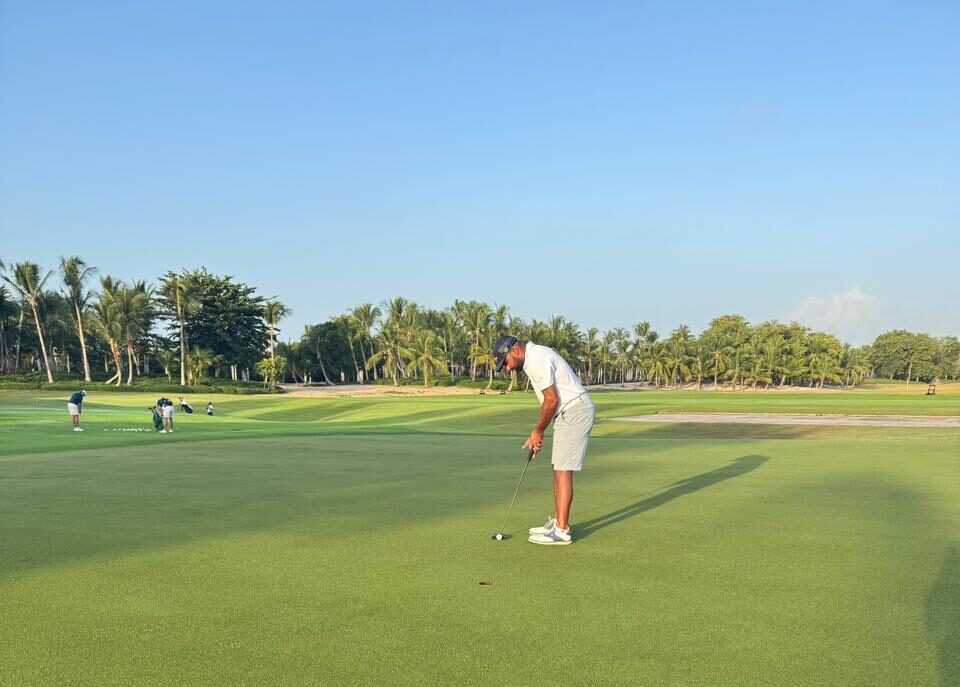
    Fresh off turning professional and earning a prestigious collegiate golf honor, 23-year-old Saint Lucian golfer Yadhu Urs has turned heads at the 2026 Central American and Caribbean Games, securing an eighth-place finish in the men’s individual competition that marks one of the strongest results by an English-speaking Caribbean competitor at the event. Held at the scenic Corales Golf Course in Punta Cana, Dominican Republic, the four-day tournament brought together top amateur and professional golf talent from 14 nations across the Central American and Caribbean region, creating a high-stakes test of skill and mental resilience for all participants. Urs ultimately carded a four-round total score of 294 (+6), ending the competition in a three-way tie for eighth alongside Costa Rica’s Elias Alejandro Mardeni and Jeronimo Esteve of Puerto Rico. Among all Caribbean-born golfers competing in the tournament, Urs ranked as the second-highest finisher from an English-speaking Caribbean nation, outperforming a stacked field of regional rivals to claim the impressive top-10 result. Tournament champion José Manuel Toledo Novales of Guatemala finished with a 17-under-par total, 13 strokes ahead of Urs, while bronze medalist Guillermo Pumarol of the Dominican Republic and shared fifth-place finisher Juan Jose Guerra, also from the Dominican Republic, finished ahead of Urs in the overall standings. A graduate of Ohio Dominican University and the reigning 2024-2025 Great Midwest Athletic Conference (G-MAC) Men’s Golfer of the Year, Urs showed steady improvement throughout the tournament that highlights his growing maturity as a professional competitor. After a challenging opening round that saw him card a four-over-par 76, Urs steadily lowered his scores with each subsequent round, finding his competitive rhythm in the tournament’s second half. He followed his opening round with a two-over 74 in round two, then closed out the competition with back-to-back even-par 72s in the third and fourth rounds, a consistent performance that lifted him up the leaderboard. Golf Saint Lucia Inc. has officially congratulated Urs on his standout performance at the multi-sport games, noting that the top-10 finish against elite regional competition marks a major milestone in his early professional career. Urs only turned professional earlier this year, and has already begun competing on the European professional circuit, with the Central American and Caribbean Games marking one of his first major multi-national professional events. Analysts of regional golf note that Urs’ result signals his rising potential as one of the next standout talents from the Caribbean, with his steady improvement over the four rounds demonstrating the consistency and mental toughness required to compete at the highest levels of professional golf.