分类: sports

  • CWI president salutes Windies Women

    CWI president salutes Windies Women

    After the West Indies Women’s cricket team bowed out of the ICC Women’s T20 World Cup in the semifinal stage on Tuesday, Cricket West Indies President Dr. Kishore Shallow has issued a public statement celebrating the team’s determined performance throughout the global tournament, even in the face of an early exit.

    Dr. Shallow extended commendation not only to the entire playing squad but also to head coach Shane Deitz and every member of the team’s backroom support staff. While he openly acknowledged that the team’s failure to advance to the tournament’s final has left fans and cricket stakeholders across the region disappointed, he emphasized that the side has every reason to take pride in their accomplishments.

    “Reaching the semifinals of a World Cup is a significant achievement that reflects the talent, commitment, and fighting spirit that this team has consistently displayed throughout the tournament,” Dr. Shallow noted in his statement. “It further confirms that we remain one of the elite competing nations in global women’s cricket.”

    The president reserved special praise for skipper Hayley Matthews, highlighting her steady and effective leadership across every match of the campaign. He also called out the critical contributions of every player in the squad and support team, stressing that competitive success at the international level is always the product of collective work. This run of form, he argued, is further proof of the strong, positive culture that is taking root in West Indies women’s cricket.

    Looking ahead, Dr. Shallow reaffirmed Cricket West Indies’ unwavering commitment to investing in the ongoing growth and development of the regional women’s cricket program. The governing body’s priority, he said, will continue to be providing elite players with all the resources, training, and opportunities they need to compete consistently for top international honors.

    Dr. Shallow closed by thanking the team for serving as outstanding ambassadors for the Caribbean region, adding: “The entire Caribbean stands with you today, just as we have throughout this campaign, and we look forward with great optimism to what lies ahead.”

  • TDC continues to honour the legacy Runako Morton through Youth Cricket

    TDC continues to honour the legacy Runako Morton through Youth Cricket

    On July 1, 2026, youth competitive cricket returned to Charlestown, Nevis’ iconic E T W Park with the launch of the annual Runako Morton TDC Primary Schools Cricket Tournament, backed for another year by lead sponsor St. Kitts Nevis Anguilla Trading and Development Company Limited (TDC).

    Now a staple of Nevis’ local youth sports calendar, the tournament was created and sustained to honor the memory of Runako Morton, one of Nevis’ most celebrated and accomplished professional cricketers, whose career left an indelible mark on the island’s sporting culture. Beyond organizing competitive play for young talent, the annual event is designed to carry Morton’s legacy forward, offering school-aged aspiring cricketers a structured platform to hone their technical skills, build on-field confidence, and internalize the core values that define competitive sport.

    Unlike many youth competitions that focus solely on winning, this tournament prioritizes character development alongside athletic growth, aiming to instill lifelong values including teamwork, discipline, mutual respect, leadership, resilience, fair play and good sportsmanship in all participating young players – values that translate to success off the cricket pitch in academics, personal growth and community life. This year, eight primary schools from across Nevis will compete for the title: St. Thomas’ Primary, Charlestown Primary, Voilet O Jeffers Nicholls Primary, Maude Crosse Primary, Ivor Walters Primary, Elzabeth Pemberton Primary, St. James’ Primary and Joycelyn Liburd Primary. All teams will compete in a welcoming yet competitive environment built to showcase emerging young talent across the island.

    Ernie France, Head of TDC’s Nevis Operations, reaffirmed the company’s long-term commitment to the tournament in his opening remarks, noting that youth investment remains a core priority for the local business. “At TDC, we believe that investing in our youth is one of the most meaningful investments we can make,” France said. “The Runako Morton Primary Schools Cricket Tournament not only celebrates athletic excellence but also helps shape future leaders by teaching the values of commitment, discipline, teamwork, and perseverance. We are proud to continue supporting this outstanding initiative and to honour the enduring legacy of Runako Morton, whose passion, determination, and achievements continue to inspire our young cricketers on Nevis.”

    Organizers and sponsors alike note that the tournament fills a critical role in Nevis’ broader cricket ecosystem: it acts as an early scouting platform to identify and nurture the next generation of professional cricketing talent from the island, while reinforcing the deep sporting heritage that defines Nevis’ local community. For participating students, it is more than a school competition – it is a chance to connect with one of the island’s greatest sporting heroes while building skills that will serve them for life.

  • Antigua and Barbuda Names 16 for 2026 ANOCES Track & Field Championships

    Antigua and Barbuda Names 16 for 2026 ANOCES Track & Field Championships

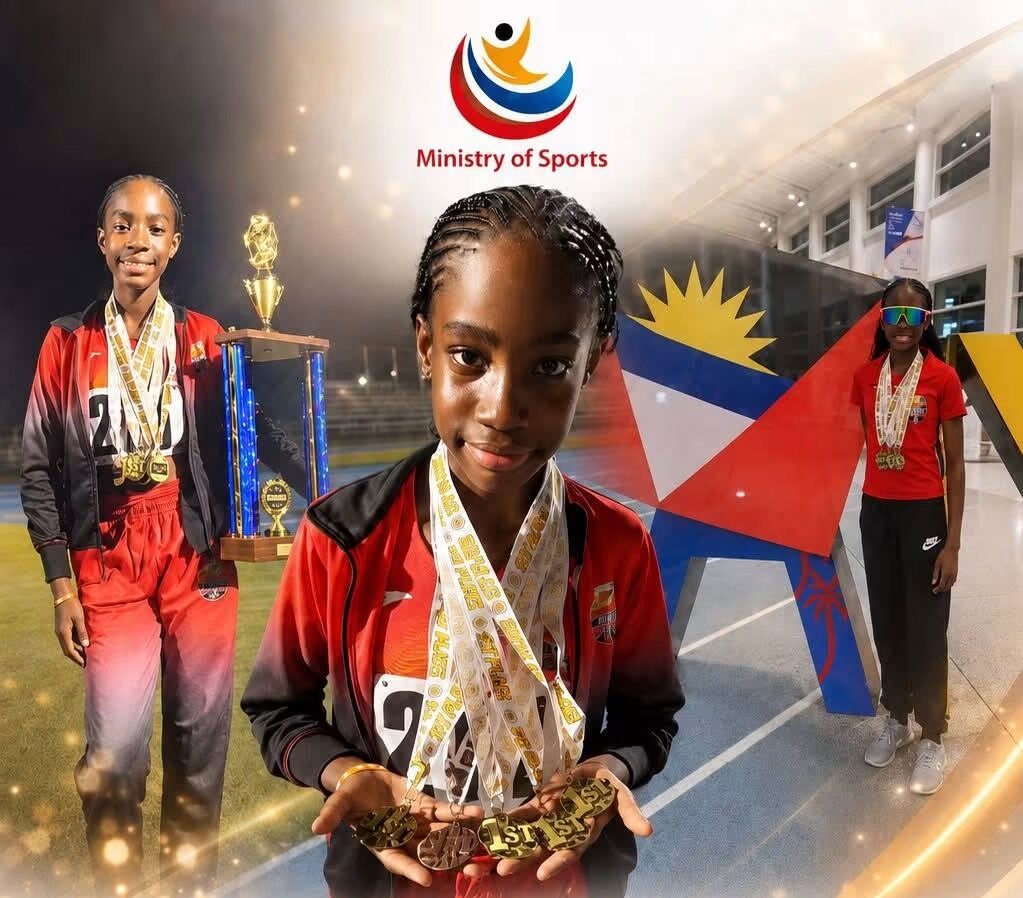
    Ahead of the highly anticipated 2026 ANOCES Track and Field Championships scheduled to take place in St. Kitts from July 4 to 5, 2026, Antigua and Barbuda has finalized a competitive 16-athlete roster that will carry the nation’s flag at the regional sporting event. This championship participation comes as part of a broader regional development initiative backed by Panam Sports, which has partnered with the Association of National Olympic Committees of the Eastern Caribbean (ANOCES) and local National Olympic Committees to elevate competitive sports across the Organization of Eastern Caribbean States (OECS). The collaboration extends beyond track and field, with targeted support for five key disciplines: swimming, table tennis, 3×3 basketball, athletics, and beach volleyball, all aimed at strengthening grassroots and elite sporting ecosystems across the region. The Antigua and Barbuda track and field delegation features a mix of decorated veteran competitors and rising young talents who have already proven their skill at regional competitions. Headlined by national 100m and 200m champion Geolyna Dowdye, the women’s squad also includes CARIFTA silver medal javelin thrower Zonique Charles, sprinters Soniya Jones, 400m specialists Kettia Ambrose and Shenika Bentick. On the men’s side, the roster boasts CARIFTA bronze medal javelin thrower Maliek Francis, alongside sprinters Jalen Dyett and Kadeem Campbell, 400m runners Cleon Joseph and Dion Shaw, 400m hurdler Craig Prendrgast, 100m standout Amori Jules, long jumper Terrance Thomas, shot putter Christopher Johnson, and 1500m runners Shawn-ze Joseph and Devon James. In addition to individual events across sprints, middle-distance races, jumps, throws and hurdles, Antigua and Barbuda will also field teams for three relay competitions: the mixed 4×400m relay, men’s 4×100m relay, and women’s 4×100m relay, bringing additional opportunities for podium finishes. In an official statement marking the team announcement, Cliff Williams, Secretary General of the Antigua and Barbuda National Olympic Committee (ABNOC) and sitting ANOCES Board Member, expressed gratitude for the ongoing institutional support that makes this regional competition participation possible. “We are grateful to Panam Sports and ANOCES for their continued support of regional programmes that strengthen competition across the OECS, and to the Antigua and Barbuda Athletics Association for their leadership in assembling this team, and the ABNOC, who lead this charge,” Williams said. “I wish our athletes every success and encourage all Antiguans and Barbudans to rally behind them as they compete with pride on behalf of our nation.” Beyond official team delegation duties, Williams will also take on additional responsibilities during the St. Kitts event, participating in planning discussions for future ANOCES competitions and attending the organization’s upcoming congress. The 16-member athletic delegation will be led by veteran sporting officials Heather Samuel-Daley, Kesswin Anthony, and former elite sprinter Daniel Bailey, who will guide the team through preparations and competition in St. Kitts.

  • Derde helft WK 2026: Mexico rekent af met Ecuador, 2-1 en gaat naar volgende ronde

    Derde helft WK 2026: Mexico rekent af met Ecuador, 2-1 en gaat naar volgende ronde

    The 2026 FIFA World Cup knockout stage got off to a dramatic start for CONCACAF hosts Mexico, who secured a dominant 2-0 victory over Ecuador to book their place in the tournament’s round of 16. The encounter at Mexico City’s iconic Azteca Stadium was overshadowed by severe weather before kickoff, with thunderstorms and lightning forcing organizers to delay the start of the match by more than an hour. Once play finally got underway, it took Mexico just 31 minutes to put the result beyond doubt, with two early goals from forwards Julián Quiñones and Raúl Jiménez sealing their win.

    El Tri came out of the gates flying, putting Ecuador under relentless pressure from the opening whistle. Both sides committed to an up-tempo, attack-focused style of play that produced an entertaining, end-to-end first half, but it was Mexico that held all the momentum. The host nation controlled proceedings through sharper combination play, solid midfield possession, and lightning-quick transitions when they won back the ball, creating the majority of dangerous scoring chances in the opening 45 minutes.

    Mexico’s early pressure was rewarded in the 22nd minute, when Roberto Alvarado played a perfectly timed pass to put Quiñones in a prime scoring position, and the forward coolly finished off the well-crafted attacking move to open the scoring. Less than 10 minutes later, the hosts doubled their advantage, with Quiñones turning provider this time to set up Jiménez, who fired home to put Mexico up 2-0 before the half-hour mark.

    Ecuador pushed hard for a response, with star players Enner Valencia, Moisés Caicedo and teenage prospect Kendry Páez leading the charge to get back into the game. But Mexico’s organized defense held firm, conceding very few clear-cut opportunities. While Ecuador put in plenty of effort in the attacking third, they lacked the final precision needed to trouble Mexico’s backline and force a change in the game’s trajectory.

    After halftime, Ecuador continued to push for a much-needed connection goal to get back into contention, but Mexico maintained calm control of the match. El Tri dropped into a compact defensive shape, closed off all passing lanes, and sat back to threaten on the counterattack without taking unnecessary risks that would leave them exposed. As the clock ticked down, Ecuador’s growing frustration boiled over into disciplinary trouble: the side picked up multiple yellow cards in the closing stages, and defender Piero Hincapié was sent off with a straight red card deep in stoppage time for a brutal late tackle. Alan Franco and Moisés Caicedo also received cautions for their side.

    For Mexico, the win keeps alive their long-held dream of breaking a decades-long tournament curse. As one of three co-hosts of this year’s World Cup, El Tri is desperate to end what is commonly known as the “fifth game syndrome”: since the 1986 World Cup, which Mexico also hosted, the national side has never advanced past the round of 16 to the quarterfinals, despite qualifying for the knockout stage on multiple occasions. Wednesday’s win extended Mexico’s perfect tournament run so far: they won all three of their group stage matches without conceding a single goal, carrying that dominant form into the knockout round.

    For Ecuador, the 2026 World Cup run comes to an end, despite a respectable and impressive campaign. The South American side qualified for the knockout stage as one of the stronger third-place teams, and they earned widespread praise for their upset win over Germany in the group stage. However, they were ultimately outmatched by a clinical, mature Mexican side that took its chances and closed out the win comfortably.

    Mexico will now turn its attention to its next challenge: in the round of 16, they will face off against the winner of the final group stage match between England and DR Congo.

  • Derde helft WK 2026: Frankrijk voetbalt met gemak langs Zweden naar achtste finales

    Derde helft WK 2026: Frankrijk voetbalt met gemak langs Zweden naar achtste finales

    France has secured a convincing place in the World Cup Round of 16 after a commanding 3-0 victory over Sweden, with star forward Kylian Mbappé once again stealing the spotlight by scoring two crucial goals. The French attacking line, featuring Michael Olise, Bradley Barcola and Ousmane Dembélé, proved far too quick, technically gifted and dangerous for Sweden’s backline to handle. Sweden struggled to break France’s relentless pressure throughout the 90 minutes, while Les Bleus controlled the match with mature composure and advanced to the knockout stage without any major scares.

    The first dangerous attempt of the match came from Sweden’s star striker Alexander Isak, but it quickly became clear that France was on track to clear this hurdle with ease. The French side dominated possession, pushed Sweden all the way back into their own penalty area, and launched a sustained offensive barrage. France’s first shot on goal arrived in the 15th minute from left back Lucas Digne, but Sweden goalkeeper Jacob Zetterström made a comfortable save. A minute later, Zetterström easily gathered another effort from Mbappé, with no trouble keeping the score level.

    In the 19th minute, Bradley Barcola charged toward goal on a dangerous break, but fired an uncontrolled shot over the crossbar. Just 60 seconds later, Mbappé appeared to slip past Sweden’s offside trap and beat Zetterström to the ball, only for his goal to be ruled out for offside. The flurry of early chances France created served as a clear wake-up call for the Swedish side, and the upcoming water break was a welcome relief for Sweden’s fatigued players, as well as an opportunity for their coaching staff to rearrange tactics and reverse the match’s momentum.

    Immediately after the water break, France kept up the intense pressure on Sweden’s goal, though the Scandinavian side’s defense held firm for the time being. Minutes later, Mbappé looked set to open the scoring after receiving a through ball from Jules Koundé, but his effort clattered off the goalpost. Chances continued to come thick and fast for Les Bleus: a spectacular overhead kick from Michael Olise also bounced off the post, and Dembélé’s follow-up shot drifted wide of the target. On Sweden’s rare counterattacks, the duo of Anthony Elanga and Isak reminded the crowd that the match was not one-way traffic, but they also failed to find the back of the net. Olise saw another 44th-minute attempt go unrewarded, until Mbappé outwitted the Swedish defense in first-half stoppage time to put France ahead.

    After the halftime break, France picked up right where they left off, continuing to pile relentless pressure on Sweden’s vulnerable defense. Off a pinpoint assist from Olise, Barcola doubled France’s lead to 2-0, breaking the last of Sweden’s resistance. After going down two goals, Sweden could only muster a few scattered attacking moves and never seriously threatened to get back into the game. France continued to create additional scoring opportunities, but it was not until the 74th minute that Mbappé put the match completely out of reach, slotting home his second of the game to make the final score 3-0.

    Late in the match, Sweden’s Viktor Gyokeres had a golden opportunity to grab a consolation goal from close range, but he failed to convert. With this dominant victory, France books their place in the knockout stage of the World Cup, while Sweden’s tournament run comes to an end. With his two goals against Sweden, Mbappé now draws level with Lionel Messi as the tournament’s joint top scorer, with both players having netted six goals so far.

    By Mireille Hoepel

  • Derde helft WK 2026: Noorwegen met 2-1 over Ivoorkust nog net naar volgende ronde

    Derde helft WK 2026: Noorwegen met 2-1 over Ivoorkust nog net naar volgende ronde

    A dramatic late finish at the men’s World Cup saw Norway secure a spot in the round of 16 on Monday, courtesy of a late match-winning goal from star striker Erling Haaland that sealed a 2-1 victory over Ivory Coast. With the fixture seemingly on course to go to extra time after both sides had settled into a 1-1 draw, Haaland struck with just four minutes left on the clock to break Ivory Coast’s brave resistance and book his nation’s place in the knockout stage.

    From the opening kickoff, Ivory Coast dominated possession and put together sharp, organized build-up play that forced Norway to drop deep into their own half to avoid conceding an early opener. The African side wasted no time creating their first clear chance: as early as the 7th minute, Nicolas Pépé found himself unmarked behind Norway’s defensive line, but he stumbled the opportunity after being caught off guard by the space he had been afforded. In the 21st minute, Ghislain Konan had another promising opening to put Ivory Coast ahead, but his effort drifted just wide of the right post.

    After the mandatory hydration break, Pépé was handed another golden opportunity, this time from a perfectly weighted through ball by Yan Diomandé. Once again, the winger failed to convert, letting Norway off the hook. Norway’s first clear chance did not come until the 37th minute, when Alexander Sørloth picked out Haaland inside the box, but the Manchester City striker’s header lacked the power needed to beat Ivory Coast goalkeeper Yahia Fofana. Two minutes later, Antonio Nusa broke the deadlock with a well-placed diagonal shot that beat Fofana at his near post, putting Norway ahead 1-0. Haaland thought he had doubled Norway’s lead just moments before halftime, but Ibrahim Sangaré made a critical goal-line block to keep the scoreline at 1-0 going into the break.

    In the second half, Ivory Coast continued to push for an equalizer, and came close in the 55th minute when Pépé’s shot was blocked by Norway’s goalkeeper. The African side finally got their equalizer in the 74th minute, when substitute Ahmad Diollo pulled off a spectacular individual run before finishing with a clinical strike to level the score at 1-1. Over the following 12 minutes, both sides traded half-chances but neither could find a decisive breakthrough, leaving most observers expecting 30 minutes of extra time to decide the winner.

    That was until the 86th minute, when Haaland – who had been largely quiet throughout the match up to that point – was on hand to tap home a low cross from close range, securing a 2-1 win for Norway. The result means Norway progresses to the tournament’s round of 16, while Ivory Coast, despite a valiant and energetic performance, exits the competition, punished for their profligacy in front of goal that saw them waste multiple clear chances throughout the 90 minutes.

  • Windies Women exit after semifinal defeat

    Windies Women exit after semifinal defeat

    West Indies’ run at the 2024 ICC Women’s T20 World Cup came to an end at the semi-final stage on Tuesday, as defending champion Australia secured an emphatic eight-wicket victory over the Caribbean side at London’s iconic Oval ground.

    West Indies won the coin toss and opted to bat first, getting off to a blistering start in the mandatory opening Powerplay. By the end of the six overs, the side sat comfortably at 35 runs for no loss, with skipper Hayley Matthews cruising on 28 not out and opening partner Quianna Joseph yet to be dismissed on six. The tone of the innings shifted dramatically in the first ball of the ninth over, however, when Matthews was sent back to the pavilion for a 28-ball 30.

    What followed was a dramatic collapse for the Caribbean outfit: from 47 for one after Matthews’ dismissal, West Indies slumped to 83 for six by the 16th over, reawakening long-standing concerns over the team’s inconsistent middle-order batting. Among the underperforming batters, Joseph managed only 16 runs after her strong start, Chinelle Henry added just 10, and established stars Stefanie Taylor and Jahzara Claxton both recorded ducks.

    The game took an alarming turn before the first ball was even bowled, when veteran all-rounder Deandra Dottin suffered an unexpected medical issue immediately following the national anthem, requiring assistance from teammates to be carried off the field. After receiving extensive on-site medical care, Dottin returned to the dugout by the end of the 14th over, and was able to step out to bat at number eight when West Indies lost their sixth wicket. In a display of remarkable toughness, Dottin hit an unbeaten 26 runs off just 16 deliveries, anchoring a late lower-order recovery that lifted West Indies to a final total of 125 for seven off their full 20 overs. Shemaine Campbelle contributed 22 runs to the final total, while Jannillea Glasgow remained unbeaten on 13 at the other end.

    For Australia, the bowling attack was evenly spread, with Sophie Molineux, Ashleigh Gardner and Georgia Wareham each claiming two wickets apiece to dismantle the West Indies batting line-up.

    Chasing a modest target of 126 for a place in the final, Australia dominated the chase from the outset. The Southern Stars reached the required total in just 13 overs, finishing at 127 for two to seal the win. Opener Beth Mooney led the charge with an unbeaten 61 runs off 36 balls, while all-rounder Gardner – named Player of the Match for her contributions with both ball and bat – hit 35 runs off 20 deliveries. Hayley Matthews and Karishma Ramharack took one wicket each for West Indies, but could not slow Australia’s momentum.

    The result books Australia a spot in an eighth consecutive Women’s T20 World Cup final, extending their unprecedented streak of dominance in the tournament’s modern era.

    In post-match comments, Matthews reflected on West Indies’ campaign, acknowledging the side never found their top form throughout the knockout stage. The Caribbean team won their opening three group-stage matches before dropping their final three group games to scrape into the semi-finals. The captain added that Dottin’s pre-match medical incident was deeply unsettling for the entire squad.

    “To see her almost passing out during the national anthems was a bit scary. But yeah, she was able to come back and also play like that – it speaks volumes to her character,” Matthews said. The skipper explained that the last-minute uncertainty over Dottin’s availability disrupted the team’s batting strategy: “We wanted to put Australia under pressure early, but we weren’t sure if she would be able to bat, so we had to adjust our plan to take the innings deep. It was a difficult situation to navigate.”

    Despite the semi-final exit, Matthews said the squad could leave the tournament with pride. “To get to the semi-finals when we didn’t have any super standout individual performances shows we all chipped in as a team. We have a lot more players stepping up into key roles, and this experience will only make us better going forward,” she added.

  • Paraguay Knocks Out Four-Time World Cup Champions Germany

    Paraguay Knocks Out Four-Time World Cup Champions Germany

    In one of the most shocking upsets in modern World Cup history, unfancied Paraguay has pulled off a legendary victory, knocking out four-time tournament winner Germany in a tense penalty shootout to book a spot in the World Cup quarter-finals on June 30, 2026.

    The two sides battled through 120 minutes of full-tilt football, ending regular time and extra time locked in a 1-1 draw, forcing the clash to be decided from the penalty spot. When the final kick landed, Paraguay held a 4-3 advantage on penalties, capping off one of the most memorable David-and-Goliath results in recent World Cup memory.

    Going into the high-stakes group stage finale, Paraguay entered as massive underdogs on paper. Ranked 41st in the FIFA global rankings, the side sat 31 spots below the football powerhouse Germany. The South American nation had struggled for offensive consistency during World Cup qualifying, averaging fewer than one goal per match, and had not qualified for a World Cup finals since 2010. None of these pre-match statistics would end up mattering when the final whistle blew.

    The decisive moment came when striker Jose Canale stepped up to take Paraguay’s final penalty, hammering the ball into the back of the net to seal the win. What followed was unbridled, emotional celebration from the Paraguayan squad and their supporters, many of whom struggled to process the upset they had just witnessed.

    After the final whistle, Paraguayan defender Gustavo Gómez highlighted the team’s resolve and collective character in an post-match interview. “We showed what we are made of, we never gave up, and we dedicate this incredible result to every single person in Paraguay,” Gómez said.

    Within hours of the historic winning goal, Paraguay’s president announced that the country would observe a national holiday to celebrate the team’s groundbreaking achievement. Football fans across the globe have already hailed the match as an instant World Cup classic, a reminder that rank and reputation count for nothing once a match kicks off on the world’s biggest football stage.

  • Derde helft WK 2026: Verrassingen die het WK schudden, Paraguay’s zege pijnigt Duitsland opnieuw

    Derde helft WK 2026: Verrassingen die het WK schudden, Paraguay’s zege pijnigt Duitsland opnieuw

    The 2026 FIFA World Cup has already delivered no shortage of unexpected results across its group stage, and the knockout round has kicked off with one of the most stunning upsets the tournament has ever seen. On June 30, 2026, Paraguay pulled off a historic victory, eliminating four-time world champion Germany from the round of 16 via penalty shootout to add a new entry to the long list of shocking results in World Cup knockout stage history.

    After a rocky start to the tournament that saw the South American side suffer a lopsided opening defeat to the United States, few analysts gave Paraguay any chance against a four-time champion Germany. But guided by manager José Canale, the team fought through 120 minutes of goalless play to force penalties, ultimately securing a 4-3 shootout win that sent them through to the next round and sent one of the tournament’s most dominant nations packing early. Defender Gustavo Gómez, who netted his side’s decisive penalty, led the celebrations after the final German attempt was saved, securing Paraguay’s place in World Cup folklore.

    This upset is far from the first time a heavy pre-tournament favorite has fallen to an underdog in the World Cup knockout round. To put Paraguay’s shock win in context, here are the five biggest knockout stage upsets in World Cup history, now headlined by the 2026 result:

    1. Germany vs Paraguay (2026): As the latest and one of the most staggering upsets, this result tops the list. A four-time world champion coming into the tournament as a top contender, Germany was widely expected to ease past a Paraguay side that only just scraped out of the group stage. Instead, Canale’s disciplined defensive performance held Germany’s high-powered attack scoreless through extra time, and cool finishing from the penalty spot secured a win that will be remembered by soccer fans for decades.

    2. Germany vs Bulgaria (1994): Germany has been on the wrong end of major knockout upsets before. At the 1994 World Cup hosted by the United States, Bulgaria, making just its second ever World Cup finals appearance, pulled off a shock 2-1 quarter-final win over defending champion Germany. Yordan Letchkov scored the iconic winning goal that sent Bulgaria through to the semi-finals, and the result remains one of the biggest upsets of 1990s World Cup soccer.

    3. Italy vs South Korea (2002): Co-hosts South Korea delivered a fairytale run at the 2002 World Cup, and their most famous result came in the round of 16 against 1998 runners-up Italy. After Italy took an early lead through Christian Vieri, South Korea equalized late through Seol Ki-Hyun to force extra time. Ahn Jung-Hwan then scored a golden goal to send the co-hosts through, on their way to a historic fourth-place finish that remains the best ever result by an East Asian nation at the men’s World Cup.

    4. Brazil vs Germany (2014): The 7-1 semi-final defeat Brazil suffered on home soil at the 2014 World Cup remains one of the most humiliating results in international soccer history. Missing star striker Neymar through injury, the host nation collapsed against a clinical German side, conceding five goals in the first 30 minutes of the match. A late consolation goal from Oscar did little to soften the blow, with Brazil manager Luiz Felipe Scolari calling it “the worst day of my life.” Germany went on to win the tournament, lifting the trophy a week later.

    5. Morocco vs Portugal (2022): Morocco cemented its reputation as a giant-killer at the 2022 Qatar World Cup, becoming the first African and Arab nation to reach the World Cup semi-finals after a 1-0 quarter-final upset over Portugal. Led by their fearless defensive organization, the Atlas Lions held off a Portuguese side led by star striker Cristiano Ronaldo, even playing the final stages with 10 men after a second-half red card. The result sent shockwaves around the world, and confirmed Morocco as one of the most exciting underdog stories in modern World Cup history.

    With the 2026 World Cup already matching and exceeding the string of surprises that marked its group stage, Paraguay’s historic win has set the tone for a knockout round that continues to defy expectations, proving that no favorite is ever safe in the world’s biggest soccer tournament.

  • Team Saint Lucia set for Pan Am Swimming in Colombia

    Team Saint Lucia set for Pan Am Swimming in Colombia

    As the second edition of the PanAm Aquatics Swimming Championships approaches, the Saint Lucia Aquatics Federation has announced its competitive roster: an eight-member delegation of talented swimmers primed to compete against the region’s best at the Hernando Arbeláez Jiménez Olympic Swimming Pools in Ibagué, Colombia. Running from July 8 to 12, this year’s tournament has attracted more than 500 athletes from 31 countries and territories across the Americas, marking one of the largest regional aquatics competitions on the 2026 calendar.

    Saint Lucia’s participation in the championships has grown dramatically since the island nation made its debut appearance in 2025. That year, then-rookie Jayden Xu made history by claiming a bronze medal in the men’s 50-meter backstroke, becoming the first Saint Lucian to podium at the event. Just 12 months later, the country’s national team has more than doubled in size, a shift that reflects growing investment and rising interest in competitive swimming across the island.

    For 2026, Xu returns to the championship looking to improve on his 2025 result, where he finished fourth in the 100m backstroke after his opening bronze. He will compete in the 50m and 100m backstroke, 200m backstroke, and 400m freestyle. Joining Xu on the men’s roster are Olympian Mikaili Charlemagne, CARIFTA gold medalist Tyler Dantes, Jase Daniel, and Caden Calderon, each bringing a diverse range of strengths across multiple strokes and distances.

    Charlemagne, who represented Saint Lucia at the Olympic Games, will focus on sprint events: the 50m and 100m freestyle and butterfly. Dantes, a rising young talent, carries the busiest individual schedule of any team member, with races scheduled in the 50m and 100m freestyle, 50m butterfly, and all three backstroke distances (50m, 100m, and 200m). Daniel will contest four freestyle events spanning 50m to 400m, plus three butterfly races from 50m to 200m, while Calderon will compete across freestyle, butterfly, breaststroke, and backstroke, closing out his individual schedule with the 200m individual medley.

    The women’s side of the delegation features three of the Caribbean’s most promising young swimming stars, all gold medalists from the recent CARIFTA Aquatics Championships: Sapphire Parks, Maya Andrew, and Fayth Jeffrey. At just 12 years old, Parks has already established herself as one of the region’s top young competitors, earning back-to-back high point honors in the 11-12 girls division at CARIFTA. For the PanAm Championships, she will compete in six events: 100m and 200m backstroke, 100m and 200m butterfly, 200m breaststroke, and both the 200m and 400m individual medley.

    Andrew will turn her focus to sprint freestyle and butterfly, plus multiple breaststroke distances, racing the 50m freestyle, 50m butterfly, and 50m, 100m, and 200m breaststroke. Jeffrey, who trains based in the United States, will compete in the 50m and 100m divisions of both freestyle and breaststroke.

    Beyond individual events, Saint Lucia will field two mixed relay squads for the tournament. Parks, Andrew, Dantes, and Daniel will team up for the 4x100m mixed medley relay on July 9, followed by the 4x100m mixed freestyle relay on July 11. Leading the delegation is head coach Brian Charles, supported by assistant coach Jonathan Calderon and chaperone Sariah Daniel, who will oversee the team’s preparations and logistics throughout the championship. For a small island nation with a fast-growing aquatics program, this year’s expanded roster represents a major milestone, with fans across Saint Lucia eager to see how their young athletes perform against elite regional competition.