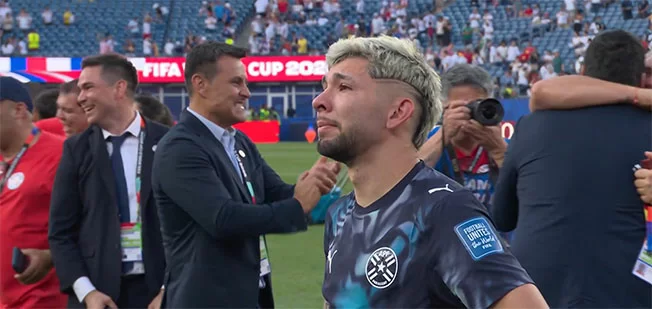
The 2026 FIFA World Cup has already delivered one of its most stunning upsets, as underdog Paraguay ousted four-time tournament champion Germany from the Round of 32 on Monday evening, securing a historic 4-3 penalty shootout win after 120 minutes of play ended in a 1-1 draw. The result sends the unheralded South American side through to the quarter-finals, while bringing an unexpectedly early tournament exit for one of men’s football’s most decorated powerhouses. Long after the final whistle, Paraguayan star Julio César Enciso, a player celebrated for his tireless work ethic, could not contain his tears of joy, a raw, unfiltered reaction to the achievement that will go down in World Cup folklore. This upset is exactly why the World Cup remains widely regarded as the most captivating sports tournament on the planet. Every four years, smaller footballing nations earn the chance to test themselves against the sport’s established heavyweights. On paper, Germany boasts far more individual quality, deeper squad depth, and a far richer footballing legacy than Paraguay. But 90 minutes, or in this case 120 minutes of regulation and extra time, does not care for historical prestige, budget size or established reputation. Out on the pitch, only effort, tactical discipline, collective belief, and a willingness to fight for every inch of grass count – and that is exactly what Paraguay demonstrated from the final whistle. From the opening kickoff, Paraguay made clear they had not traveled to Boston to simply make up the numbers. With a tightly organized defensive structure, relentless aggression in duels, and dangerous counter-attacking transitions, they grabbed a surprising 1-0 lead before halftime. Germany, which entered the knockout stage as Group E winners, struggled from the start to break down Paraguay’s compact defensive block. After halftime, Germany ramped up the pressure, keeping the ball almost exclusively on Paraguay’s half of the pitch for long stretches, and eventually earned an equalizer that leveled the score. The four-time champions sensed momentum and looked poised to turn the match around in their favor, but Paraguay held firm. The two sides remained deadlocked even after extra time, with the match hanging on a knife edge through both additional 15-minute halves. In the first period of extra time, Germany thought it had netted the go-ahead 2-1 goal, but their celebration was cut short when VAR intervened to disallow the strike. The decision kept Paraguay in the match, and the underdog drew new confidence from the call. After the first five penalty kicks for each side failed to produce a winner, with both teams converting three and missing two, the shootout moved to sudden death. It was there that fortune turned against Germany. A German player missed from the spot, and Paraguay’s next taker kept his cool to slot home the decisive penalty. At that moment, wild celebrations erupted for the Paraguayan camp, while the German players collapsed on the pitch, stunned by their early exit. For Paraguay, this victory means far more than just a spot in the next round. It once again proves that nations not traditionally counted among the global elite can defeat the biggest footballing powerhouses when they play as a cohesive unit, stick to their game plan, and refuse to quit. The World Cup remains the ultimate stage where underdog dreams can become reality, and the line between favorite and outsider can be surprisingly thin. For Germany, however, the early exit brings profound disappointment. The side fought back to level the match in the second half, and even had what looked like a winning goal in extra time before the VAR call, but ultimately saw a campaign that began with sky-high expectations end in heartbreak during a tense penalty shootout. Paraguay now prepares for its historic quarter-final, while Germany is left with the painful realization that even the most decorated football powerhouses are not immune to the magic of the underdog at a World Cup.
Derde helft WK 2026: Voetbalreus Duitsland uitgeschakeld na zenuwslopende strafschoppenserie