分类: sports

  • Fatima Parish Father vs Son Football Match

    Fatima Parish Father vs Son Football Match

    The small, tight-knit community of Fatima Parish is gearing up for one of its most anticipated annual sporting traditions: the Father vs. Son Football Match. This long-running event, which brings together multiple generations of local families, has grown far beyond a simple recreational game to become a beloved cornerstone of the parish’s social calendar.

    Every year, players of all ages sign up to take the pitch—teenage sons hungry to prove their speed and strength against their dads, and middle-aged and even older fathers eager to hold their own against the younger generation, leaning on years of experience and local football know-how. The match draws hundreds of spectators from across the parish, with families spreading out blankets along the sidelines, cheering on their loved ones and enjoying a day of community connection.

    Organized by volunteer leaders from the Fatima Parish sports ministry, the event is designed to foster intergenerational bonding, encourage healthy physical activity, and raise small funds for parish youth programs. While the scoreboard keeps track of goals throughout the afternoon, organizers emphasize that the real win is the chance for fathers and sons to share the field, create lasting memories, and strengthen the ties that hold the community together. After the final whistle, both teams and attendees gather for a community picnic, where stories from the match are shared and new rivalries for next year’s game are already teased.

  • CWI names squad for T20 Series against Sri Lanka

    CWI names squad for T20 Series against Sri Lanka

    Cricket West Indies (CWI) has announced a reshuffled 15-player squad for the upcoming three-match Twenty20 International (T20I) series against Sri Lanka, bringing three uncapped or emerging talents into the fold while moving aside three players who featured in the team’s recent ICC Men’s T20 World Cup campaign. Young prospects Shamar Springer, Jewel Andrew and Ackeem Auguste have earned their call-ups to the senior national side, replacing Johnson Charles, Quentin Sampson and Jayden Seales – all of whom were part of the West Indies squad for the World Cup held in India late last year.

    One key absence from the T20I roster is experienced fast bowler Alzarri Joseph, who has been rested from the short-format series as part of CWI’s structured workload management strategy. Instead of competing in the T20Is, Joseph will dedicate this period to focused training and preparation for the two-match Test series that will follow the T20I leg, scheduled to be hosted in Antigua.

    Another fast bowler, Shamar Joseph, departed the West Indies camp early ahead of the third One Day International (ODI) against Sri Lanka for personal matters. CWI confirmed that the paceman is on track to rejoin the squad ahead of the T20I series, which gets underway at Kingston’s iconic Sabina Park on June 11. The team will begin formal pre-series preparations on June 9.

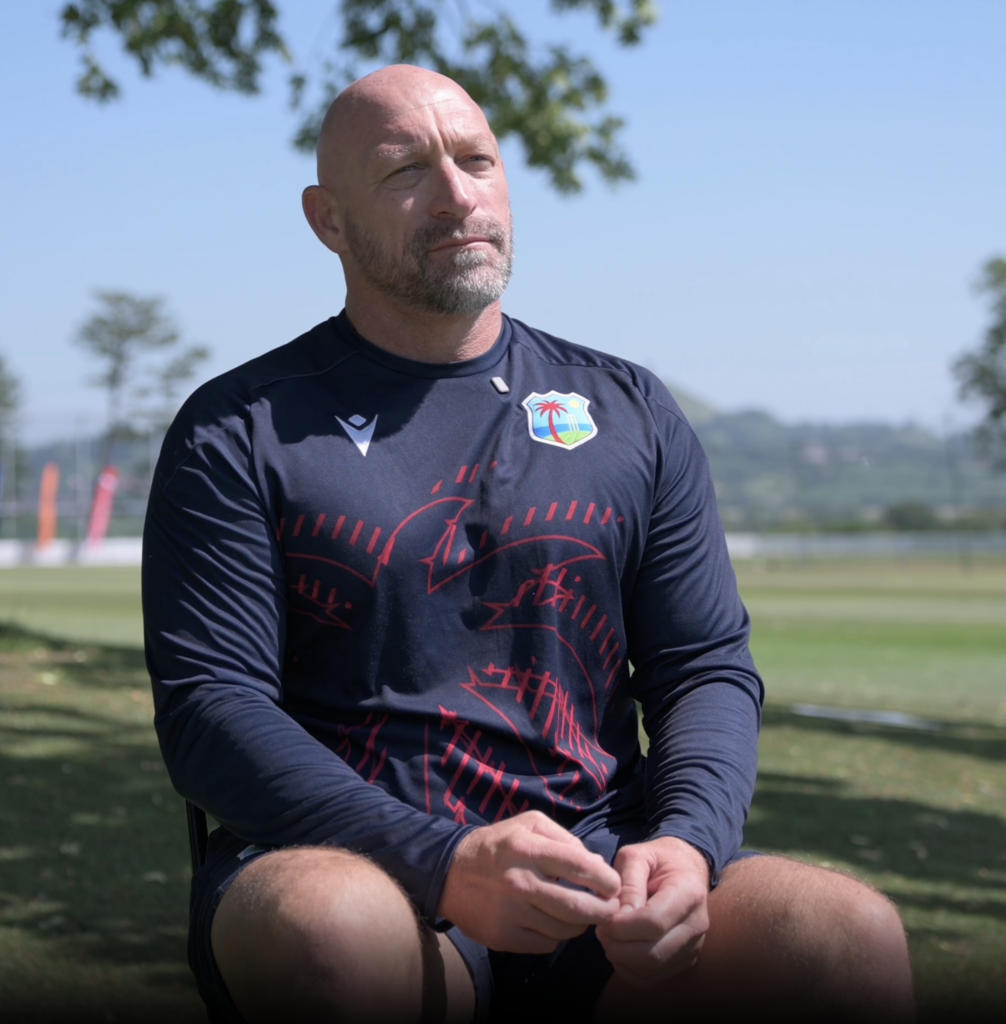
    West Indies head coach Daren Sammy framed the upcoming series as a critical milestone for the side in their post-World Cup rebuilding phase. He emphasized that the matches will give the newly adjusted squad a valuable chance to connect with home fans and deliver the dynamic, engaging brand of cricket that the region is known for globally. “This series is our first major assignment on home soil since the World Cup in India, where our side showed the passion, fight and collective spirit that has always been the backbone of West Indies cricket,” Sammy shared in an official statement released by CWI. “Our priority right now is to build on the strong foundations we laid at the World Cup, keep developing our cohesion as a unit, and make our supporters proud with the intensity and heart we bring against Sri Lanka.”

    The full finalized T20I squad for the series against Sri Lanka is: Shai Hope (captain), Jewel Andrew, Ackeem Auguste, Roston Chase, Matthew Forde, Shimron Hetmyer, Jason Holder, Akeal Hosein, Shamar Joseph, Brandon King, Gudakesh Motie, Rovman Powell, Sherfane Rutherford, Romario Shepherd, and Shamar Springer.

  • CARICOM athletes to gather in St Lucia for 19th Road Run/Walk focused on health and unity

    CARICOM athletes to gather in St Lucia for 19th Road Run/Walk focused on health and unity

    Thousands of athletes and casual participants from across the Caribbean Community (CARICOM) are gearing up to converge on the northern coast of Saint Lucia for the 19th iteration of the organization’s iconic Road Run/Walk, a flagship regional event timed to precede the bloc’s annual leadership summit. Scheduled to kick off at 6:30 a.m. EST on Sunday, July 5, 2026, the entire race route will center on the popular Rodney Bay tourist district, with both the starting line and finish line located adjacent to the Darren Sammy Cricket Ground, which will serve as the main staging hub for all event activities.

    Organizers have designed an inclusive lineup of race categories to accommodate competitors of all skill levels and backgrounds, building on the event’s longstanding mission to expand access to recreational physical activity across the region. Elite professional runners representing CARICOM member states will compete in the headline 10-kilometer elite race, while amateur and recreational participants can register for the open 10-kilometer run, open 5-kilometer run, or open 5-kilometer walk. In a push for greater accessibility, event organizers have explicitly confirmed that athletes with disabilities are invited and encouraged to join the 5-kilometer run and walk competitions.

    More than just a sporting competition, the 2026 Road Run/Walk is a key pre-summit outreach event tied to the 51st Regular Meeting of the CARICOM Conference of Heads of Government, which will be hosted by Saint Lucia under the chairmanship of the island nation’s Prime Minister, the Honourable Philip J. Pierre. The event itself is rooted in a 19-year-old regional health commitment that dates back to 2007, when CARICOM leaders formally adopted the Port-of-Spain Declaration, a landmark policy agreement that centered on tackling the growing public health crisis of non-communicable diseases (NCDs) across the Caribbean.

    That framework laid out a coordinated, cross-sector strategy for NCD prevention and treatment, calling for unified action from national governments, private sector stakeholders, civil society organizations, and international development agencies to address what remains one of the most pressing public health threats in the region. Speaking ahead of the 2026 event, CARICOM Secretary-General Dr. Carla Barnett emphasized that the Road Run/Walk serves as a tangible demonstration of the bloc’s collective commitment to this shared goal.

    “ The CARICOM Run/Walk demonstrates our collective commitment to healthier lifestyles. By choosing nutritious foods and staying active, we can confront the shared challenge of non-communicable diseases and create a healthier, more resilient Caribbean for all,” Dr. Barnett said.

    To reward top competitors, organizers have put together a lineup of competitive prizes for top finishers across all categories. Both the men’s and women’s champions of the Elite 10K will take home a $1,000 USD cash prize, with additional cash awards going to second and third place finishers in both gender divisions. For the 5K events, trophies will be presented to the top three finishers in the men’s, women’s, and athletes with disabilities divisions. Event organizers will also honor the oldest and youngest male and female participants who successfully cross the finish line to complete their course.

    The 18th edition of the CARICOM Road Run/Walk was hosted in 2025 by Jamaica, where the event was held in Rose Hall, Montego Bay, continuing the tradition of rotating the annual event across CARICOM member states to expand regional engagement.

  • Haiti hoping to do their country proud and upset odds at World Cup

    Haiti hoping to do their country proud and upset odds at World Cup

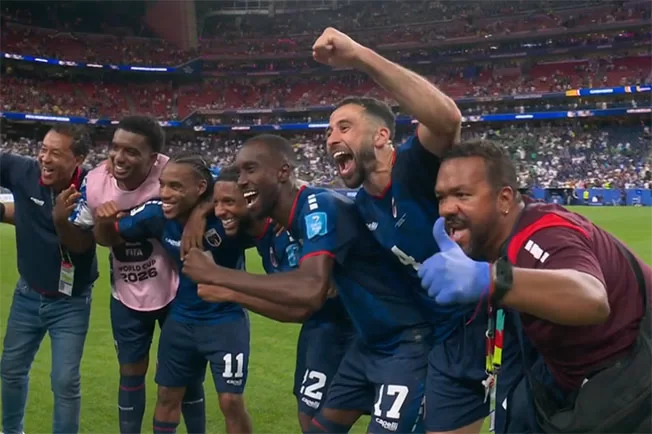
    In the soft hum of training drills at Stockton University’s Galloway campus, tucked away near New Jersey’s Atlantic City, Haiti’s men’s national soccer team is chasing a historic milestone that transcends the sport. For a nation grappling with years of crippling political instability, rampant gang violence that has displaced nearly 1.5 million people, and widespread global narratives focused only on its crises, this year’s World Cup run represents far more than 90 minutes of play on grass.

    It has been 50 long years since Haiti last graced a World Cup pitch. Back in 1974, the side exited the tournament without a single point, conceding 14 goals across three matches. Now, 5 decades later, the Grenadiers — as they are nicknamed — are gearing up for their opening Group B clash against Scotland in Boston this Saturday, with subsequent matches against global powerhouse Brazil in Philadelphia on June 19 and Morocco in Atlanta on June 24. Ranked 83rd in the FIFA global rankings, they enter the tournament as clear underdogs in one of the competition’s toughest groups, but that label has only fueled their quiet confidence that they can pull off one of the tournament’s biggest upsets.

    Much of Haiti’s qualifying success rested on the shoulders of players born outside the Caribbean nation, who carry deep ancestral and familial ties to their homeland. Star midfielder Jean-Ricner Bellegarde, a 27-year-old veteran of three seasons in England’s Premier League with Wolverhampton Wanderers, was born in the suburbs of Paris. He played a pivotal role in Haiti’s surprise qualifying campaign, where the side finished above 2014 World Cup quarter-finalists Costa Rica to secure their spot.

    Standing on the training pitch, with young local fans and members of the U.S.-based Haitian diaspora watching on, Bellegarde spoke of what this moment means for a nation that rarely gets to celebrate global achievement. “I feel such overwhelming pride for the Haitian people. The world often carries a narrow, negative image of our country, focused only on the problems we face. But this journey will bring so much joy to the country, to all our people, and to our families,” he told AFP. “This is a huge celebration for everyone back home, and we are all here to savor every second of it.”

    Like many of his teammates, Bellegarde takes the tournament one match at a time. “We’re just focusing on the next game, giving everything we have, and seeing where that effort takes us,” he added.

    The harsh reality of life back in Haiti has cast a quiet shadow over the team’s World Cup run. A U.S. travel ban means no fans can make the trip from Haiti to cheer the side on in person, and ongoing security chaos forced the team to play all their qualifying matches on neutral ground, far from home fans. But the large, vibrant Haitian diaspora across the United States has stepped in to fill that gap, turning out in huge numbers for two warm-up friendlies in Florida last week, where the side cruised to a 4-0 win over New Zealand — a result that served as a warning shot to their upcoming World Cup opponents.

    Derrick Etienne, a 29-year-old winger with Major League Soccer’s Toronto FC, was born in Richmond, Virginia, but retains close family ties to Haiti. He was part of the 2019 Haitian side that reached the semi-finals of the Concacaf Gold Cup, also hosted in the U.S., and he says the outpouring of support from the diaspora has already made the World Cup journey feel special. “The Haitian community here always shows up for this team. When we played in Fort Lauderdale and Miami last week, everyone got to see the incredible support we had and the electric atmosphere they created,” Etienne explained. “It’s obviously really difficult not being able to play in front of home fans in our own country, but at the end of the day, we came here to do something for Haiti. We want to shine a light on what’s happening there, and change the narrative that surrounds our nation.”

    For Etienne and his teammates, the goal is simple: to secure Haiti’s first ever World Cup win, a milestone that would make history for the small Caribbean nation. “We’re trying to do something that no Haitian team has ever done before,” he said. “We know it’s an incredibly tough challenge, but we believe in ourselves. We don’t have anything to lose, and everything to gain — that’s the mindset we’re bringing into every match.”

    That confidence is boosted by the presence of 25-year-old Sunderland striker Wilson Isidor, a new addition to the national side who scored six goals in the English Premier League last season. Born in France, Isidor made his Haiti debut in March, honoring his father’s home country, and Etienne says the pacey, clinical forward is a game-changing weapon for the side. “He’s direct, strong, technically brilliant, and he can finish really well. Having a player of his quality with us is incredible,” Etienne said.

    Speaking after a training session, while taking a break from signing autographs for fans, Isidor echoed his teammates’ sentiment. “I’m so proud to represent the country my dad comes from,” he said. “I hope we have some amazing adventures together on this stage. We came here to deliver a message: we are not just a small nation that only deals with trouble. We are here to compete.”

  • Jordan Scott rebounds to win triple jump at Oslo DL

    Jordan Scott rebounds to win triple jump at Oslo DL

    OSLO, Norway — At the sixth leg of the 2024 Wanda Diamond League held at Oslo’s iconic Bislett Games, Jamaica’s rising triple jump star Jordan Scott delivered a career-defining performance, bouncing back from his first season defeat to claim the top spot on the men’s triple jump podium. The Jamaican posted a wind-aided mark of 17.66 meters with a 2.6 m/s tailwind, securing his first major Diamond League win just weeks ahead of the Jamaica Athletics Administrative Association (JAAA) National Championships, scheduled to kick off on June 18.

    Scott’s path to victory was not without early missteps: he fouled his opening attempt, notched a 16.96m jump with a headwind of 1.8 m/s in the second round, and matched his personal best to seize the lead in the third round, ultimately holding off top competition to finish first. Only two of his six attempts fell within legal wind parameters, but his best jump was enough to outperform the field that included the athlete who had defeated him just weeks earlier.

    It was Italy’s Andy Diaz Hernandez, who upset Scott at the previous Diamond League stop in Rome, who claimed second place in Oslo, matching his own season best with a 17.59m jump in legal wind conditions. Algeria’s Yasser Mohammed Triki rounded out the top three with a wind-assisted 17.43m. Jamaican rising star Jaydon Hibbert, another entrant in the men’s triple jump, also fouled his opening attempt but logged two jumps over 17.00m, finishing fifth with a season best of 17.17m.

    Joining Scott on the podium was fellow Jamaican Rushell Clayton, a two-time World Athletics Championships 400m bronze medalist and World Athletics Indoor Championships silver medalist, who took second place in the women’s 400m hurdles. After finishing third in her two prior Diamond League outings this season, Clayton clocked 53.50 seconds, falling just short of winner Emma Zapletalova of Slovakia, who notched her third consecutive Diamond League victory with a 53.13-second finish. American Jasmine Jones took third with a time of 54.09 seconds.

    Ackelia Smith, making her 2024 season debut in the triple jump after focusing on long jump competitions earlier in the year, finished fourth with a mark of 14.50m in legal wind conditions. The event was won by Cuba’s Davisleydi Valazco, who posted a wind-aided 14.85m, while Senegal’s Saly Sarr claimed second with a personal best 14.75m, and another Cuban, Leyanis Perez Hernandez, took third with a 14.60m wind-assisted jump.

    In the women’s 400m, Jamaica’s Nickisha Pryce finished fifth with a time of 50.39 seconds. The home crowd had reason to celebrate, as Norway’s Henriette Jaeger took gold with a season best 49.52 seconds, followed by Lurdes Gloria Manuel of Czechia (50.13) and Poland’s Natalia Bukowiecka (50.34).

    Jamaica’s veteran shot putter Danniel Thomas-Dodd placed sixth with a throw of 18.83m, in an event headlined by a historic performance from American Chase Jackson. Jackson broke a 13-year-old Bislett Games meet record previously held by New Zealand legend Valerie Adams, tossing a season best 20.74m to claim gold. World leader Jessica Schilder of the Netherlands took second with a 20.11m throw, while Canada’s Sarah Mitton rounded out the top three with 19.89m.

    Scott and Clayton’s podium finishes mark the only top-three results for Jamaican athletes at the final major Diamond League event before Jamaica’s national qualifying championships for the upcoming global athletics championships, giving the pair momentum as they prepare to defend their national titles and secure spots on Jamaica’s global roster.

  • KFC signs Reggae Boyz captain Andre Blake for World Cup campaign

    KFC signs Reggae Boyz captain Andre Blake for World Cup campaign

    KINGSTON, Jamaica — As the global football community counts down to the 2026 FIFA World Cup, fast food giant KFC Jamaica has launched its national marketing push by signing Andre Blake, captain and starting goalkeeper of Jamaica’s men’s national football team the Reggae Boyz, as the lead ambassador for its upcoming World Cup campaign. This collaboration extends far beyond traditional advertising, integrating brand outreach with Blake’s own philanthropic foundation to advance youth development, community empowerment and grassroots sports work across the island nation.

    Blake is the latest addition to KFC Jamaica’s roster of homegrown athletic brand ambassadors, joining an elite group of Jamaican sports stars that include Aston Villa winger Leon Bailey, national women’s football standout Khadija “Bunny” Shaw, and world champion triple jumper Jaydon Hibbert.

    Andrei Roper, Marketing Manager at KFC Jamaica, explained that Blake was chosen for the lead role in the campaign due to his proven on-field leadership, consistent elite performance, and deep rooted connection to Jamaican communities and national identity. “Andre Blake is a true reflection of excellence, discipline and national pride. He has represented Jamaica with distinction, carried himself with humility and professionalism, and consistently shown what it means to lead at the highest level,” Roper shared in a statement announcing the partnership. “For KFC, this partnership is about more than working with a great athlete. It is about aligning with someone whose values, work ethic and impact reflect the very best of what our brand stands for,” he added.

    For Blake, the collaboration opens a new avenue to engage with Jamaican audiences beyond the pitch, turning a brand deeply embedded in local culture into a platform for broader social good. “KFC is a brand that has always been part of my household and a big part of Jamaican culture, so I’m excited to be on board,” Blake said. “Throughout my career, representing Jamaica has always meant a lot to me, whether it’s wearing the national colours, playing professionally, or supporting others through my foundation. This partnership with KFC gives me another opportunity to connect with fans and continue making a positive impact across Jamaica.”

    As one of the most decorated athletes in Jamaican football history, Blake has built an extraordinary legacy both for his country and at the club level. He has represented the Reggae Boyz in six editions of the Concacaf Gold Cup, leading Jamaica to tournament finals in both 2015 and 2017, and claiming the competition’s Golden Glove award for the best goalkeeper in 2017. At the club level, Blake plies his trade for Major League Soccer side Philadelphia Union, where he made history as the first ever goalkeeper to be selected first overall in the MLS SuperDraft, and has earned multiple MLS Goalkeeper of the Year honors for his standout performances.

    The new partnership between KFC Jamaica and Blake forms part of a broader industry trend, as consumer brands across North America and the Caribbean align their marketing strategies with the build-up to the 2026 WorldCup, which will be co-hosted by the United States, Canada and Mexico. For KFC Jamaica, the campaign continues a longstanding brand tradition of centering beloved Jamaican sports figures in its major national marketing initiatives.

  • Tharp breaks 110m hurdles world record in NCAA prelims

    Tharp breaks 110m hurdles world record in NCAA prelims

    In a stunning upset that has sent shockwaves through the global track and field community, 19-year-old Auburn University athlete Ja’Kobe Tharp delivered a history-making performance on Wednesday at the NCAA Outdoor Track and Field Championships held in Eugene, Oregon. Competing in the preliminary round of the men’s 110m hurdles — a stage where many athletes hold back to conserve energy for the later, high-stakes final — Tharp defied all expectations and crossed the finish line in a wind-legal 12.75 seconds, with a tailwind reading of +1.0m/s that meets international track and field standards for record validation.

    This blistering time lowers the previous men’s 110m hurdles world record, marking one of the most unexpected record-breaking feats in recent NCAA athletics history. Prior to this race, Tharp was not widely ranked as the favorite to claim a world record, making his preliminary round achievement even more surprising to fans and analysts alike.

    By securing his spot in the event’s final with his historic run, Tharp now has a rare opportunity to cap off his already groundbreaking achievement with an NCAA national title. Track and field fans around the world are already turning their attention to the upcoming final, waiting to see if Tharp can repeat his dominant performance and further cement his place in athletics history.

  • World Cup nears kick-off after pre-tournament turbulence

    World Cup nears kick-off after pre-tournament turbulence

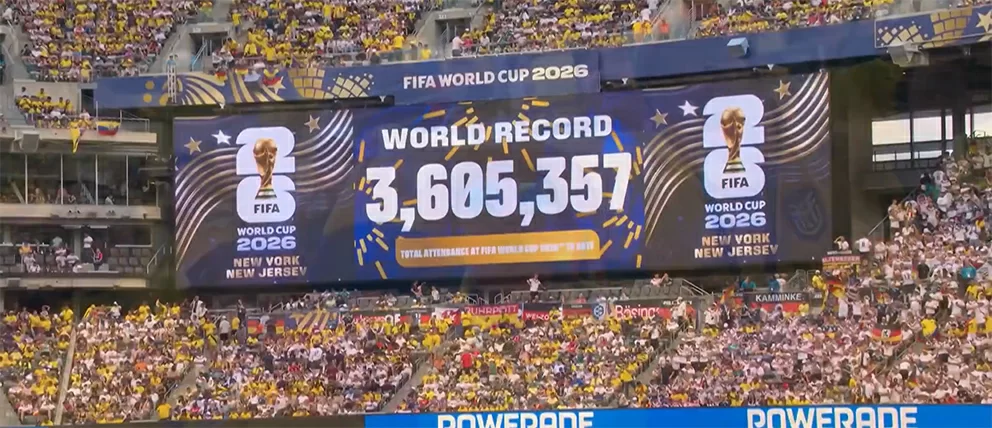
    MEXICO CITY — As the 2026 FIFA World Cup prepares to kick off Thursday, global football’s governing body is betting the tournament’s timeless global appeal will overcome mounting public anger over exorbitant ticket costs, tense political currents in the United States, and the lingering shadow of Middle East conflict. This edition makes history as the first World Cup co-hosted by three countries — the United States, Canada, and Mexico — drawing a record 48 competing nations and expected to attract millions of traveling fans. It is also the largest and most logistically challenging iteration of the tournament ever organized.

    The opening match will kick off at Mexico City’s legendary Estadio Azteca, where co-host Mexico will face South Africa to launch the nearly six-week event. The tournament will conclude with the final match on July 19 at MetLife Stadium, the 82,500-seat venue in New Jersey.

    Football fans around the world are already fixated on the season’s biggest unanswered questions. Will 38-year-old Lionel Messi cement his widely debated legacy as the greatest player of all time by leading Argentina to a back-to-back World Cup title? Can his long-time rival 41-year-old Cristiano Ronaldo defy age to lift Portugal to its first-ever World Cup championship? Or will Harry Kane lead England to end a 60-year drought, delivering the nation’s second major international title following its solitary 1966 World Cup win?

    FIFA President Gianni Infantino has aggressively promoted the tournament, touting it as “the greatest show that the planet has ever seen”. But his unbridled optimism has collided with fierce public skepticism in the months leading up to kickoff, as persistent concerns over affordability, political friction, and global conflict have overshadowed pre-tournament celebrations.

    The most dramatic point of contention has been the unprecedented spike in ticket prices, which sparked a widespread global backlash that has left FIFA and Infantino struggling to defend their pricing model to the public. For comparison, the highest face-value ticket for the 2022 World Cup final hovered around $1,600. For 2026, FIFA’s priciest face-value final ticket reaches a staggering $32,970. This dramatic price inflation runs across all 104 tournament matches: despite widespread reported demand for the event, many seats remain unsold on secondary resale platforms.

    Even Donald Trump, the U.S. president and a public ally of Infantino, has publicly pushed back on the costs. He expressed surprise when informed that tickets for the U.S. men’s national team’s opening match against Paraguay — the first World Cup match to be held on U.S. soil — carry a $1,000 price tag. “I wouldn’t pay it either, to be honest with you,” Trump told the *New York Post*.

    Beyond sticker shock for fans, critics have raised alarms that the tense political climate in the United States could cast a pall over the global tournament. Human Rights Watch argues that Trump’s administration’s crackdowns on immigration, public protest, and press freedom could shape this World Cup as an event defined by “exclusion and fear”.

    Those concerns gained new traction this week when FIFA removed Somali referee Omar Artan from the tournament roster after U.S. authorities denied him entry to the country. Artan was set to make history as the first Somali match official to officiate at a World Cup finals, but he was turned away upon arrival at Miami International Airport Saturday. FIFA confirmed it could not reverse the decision and announced Artan would be cut from the 52-person referee team.

    The February joint U.S.-Israeli military strikes against Iran have also created ongoing uncertainty, as Iran is scheduled to play three group stage matches in the United States, starting with an opener against New Zealand on June 15. Trump initially prompted outcry by suggesting Iran should withdraw from the tournament for their own “life and safety”, before later walking back the controversial comment.

    In response to the tensions, Iran has relocated its team base camp from Tucson, Arizona to Tijuana, Mexico, where the squad arrived early Sunday. While Iranian players retain the right to travel in and out of the U.S. for their scheduled matches, approximately 15 Iranian administrative and management staff have been denied visas by U.S. authorities. Iranian officials have decried the move as “deliberate and discriminatory treatment”.

  • The first 48-team World Cup — more opportunities, less jeopardy?

    The first 48-team World Cup — more opportunities, less jeopardy?

    When the 2026 FIFA World Cup kicks off across North America, it will make history as the first edition of football’s biggest global tournament to welcome 48 competing nations. The expansion, a years-long flagship pledge of FIFA President Gianni Infantino dating back to shortly after he took office in 2016, is reshaping the very fabric of the World Cup — opening doors for long-overlooked underdog nations while sparking fierce debate over whether the changes will erode the high-stakes tension that has defined the competition for decades.

    Infantino has long framed the expansion as more than a simple adjustment to tournament format: it is a mission to turn the World Cup into a truly inclusive global celebration, rather than a competition dominated by a handful of traditional powerhouses. For most of the tournament’s history, that criticism has held weight. From its early decades through the 16-team era, European and South American nations monopolized nearly all qualifying spots, leaving African, Asian and North American confederations with barely any representation. Even after expansion to 24 teams in 1982 and 32 teams in 1998, the imbalance persisted: 13 European nations qualified for the 2022 Qatar World Cup, while just five African nations secured spots, despite Africa being home to more than 50 FIFA member associations.

    The new 48-team format rebalances distribution of spots without stripping places from existing European qualifiers, boosting Europe’s total from 13 to 16, while Africa now claims 10 spots, Asia nine, South America and the North/Central American and Caribbean Confederation (Concacaf) six each, plus an additional spot for Oceania representative New Zealand. Most notably, the expansion clears a path for dozens of smaller nations to qualify for their first ever World Cup finals, opening a once-in-a-generation opportunity that many could only dream of before.

    Among these first-time qualifiers is tiny Caribbean island nation Curaçao, home to a population of just 160,000 — less than the capacity of many large European club stadiums. “Once every decade or every four years, a small country gets to spring a surprise,” said Curaçao head coach Fred Rutten, who told reporters he is already planning to pull off major upsets against the tournament’s traditional giants. Cape Verde, Jordan and Uzbekistan will also make their World Cup debuts in 2026, and the new format even gives these underdogs a far better shot at advancing beyond the group stage.

    Under the revised structure, the 48 teams are split into 12 groups of four, with the top two from each group plus the eight highest-ranked third-place teams advancing to a new 32-team knockout round. That means a single win in the group stage can often be enough to progress, a far lower bar than the 32-team format where only group winners and runners-up moved on. It is this change that has ignited the fiercest criticism from long-time football observers.

    Proponents, including FIFA’s head of global football development Arsène Wenger, argue the expansion is a natural step for a sport that continues to grow across every continent. “It’s a natural evolution. We want to make football global all over the world,” Wenger stated late last year, noting that 48 teams still represent less than 25 percent of FIFA’s 211 member associations, making it a far from unmanageable expansion.

    But critics warn the lower bar for advancement will eliminate the do-or-die tension that has produced some of the World Cup’s most iconic moments. In the 2022 Qatar World Cup, eventual champion Argentina suffered a shocking opening defeat to Saudi Arabia, throwing the team into a panic that turned into one of the most dramatic title runs in tournament history. Similarly, traditional giants Germany were eliminated in the group stage in both 2018 and 2022, producing heart-stopping drama for fans. Many analysts argue these upsets and early exits will become a thing of the past, as big teams can afford an early loss and still advance comfortably.

    Beyond the lost tension, the expanded format also adds extra strain on players, who already navigate a packed calendar of club and international competitions. The tournament now requires any team that wins the title to play eight matches, one more than the seven required under the 32-team format, with the 2026 tournament set to be played in the heat of a North American summer, raising the risk of fatigue and injury for top players who already compete dozens of times a season for their clubs.

    “The biggest problem with this is not really the quality, it’s the dilution of spectacle in the first round with eight third-placed teams to go through,” explained Jonathan Wilson, acclaimed author of *The Power and the Glory: A New History of the World Cup*, arguing the longer group stage could test fans’ patience and encourage more conservative, defensive play as top teams look to avoid injury and secure advancement without risk. Despite the criticism, top managers including England head coach Thomas Tuchel say teams are already adjusting to the new format, focusing primarily on navigating the expanded group stage safely to reach the knockout rounds.

    As the 2026 tournament approaches, the debate continues: is this the moment the World Cup finally becomes the truly global event it has always claimed to be, or has FIFA traded the competition’s signature drama for broader representation? Only matches on the pitch will answer that question.

  • FIVE-YEAR PUSH

    FIVE-YEAR PUSH

    Jamaica has launched a transformative five-year strategic framework to overhaul and grow women’s football across the country, with key leaders optimistic that the initiative will build a more robust, inclusive ecosystem for the sport by 2031 — the year Jamaica is set to co-host the FIFA Women’s World Cup.

    Unveiled this Monday in Kingston, the plan is a collaborative effort between the Jamaica Football Federation (JFF), global governing body FIFA, and Professional Women’s Football Jamaica Limited. Beyond outlining clear development targets, the strategy opens the door for Jamaica to access fully resourced support programs from FIFA to kickstart and implement each phase of the work.

    The strategic plan is structured around seven core focus areas: governance and leadership, grassroots youth development, competitive pathways for emerging players, technical skill building, national team advancement, long-term commercial sustainability, and workforce capacity building alongside athlete welfare.

    Carlene Edwards, who chairs the JFF’s Projects Committee for Women’s Programmes, has led much of the plan’s development. Edwards, a respected figure in Jamaican women’s football who previously served two years as chair of the Jamaica Women’s Premier League’s Marketing and Commercialisation Affairs Committee, was appointed to FIFA’s own Women’s National Competitions Committee in October 2024. She says a December 2024 FIFA Council meeting in Qatar was the catalyst that pushed her and JFF President Michael Ricketts to prioritize a comprehensive local strategy.

    “While working with the Jamaica Women’s Premier League, I realized we were not tapping into the full range of development programs FIFA offers,” Edwards explained in an interview with the Jamaica Observer. “I told Ricketts I would lead this work because strengthening the national strategy will directly lift up our domestic league too.”

    Edwards expressed visible enthusiasm for the milestone, noting that the plan incorporated feedback from a broad range of stakeholders during a dedicated workshop held weeks before the launch, with FIFA encouraging and pushing for the official public rollout. “To see this work go from initial documentation to a public launch has been incredibly rewarding,” she said.

    Across its seven pillars, the plan includes more than 50 distinct actionable initiatives, with three headline targets to achieve by 2031: a 50% increase in the number of registered female players nationwide, licensing for more than 200 new female coaches, and official qualification for 120 new female referees.

    Edwards acknowledged that systemic gaps remain — particularly a lack of age-group competitions that create a clear pathway for young female players to transition to the senior national level. But she emphasized that FIFA’s support, which includes direct funding for programs, removes many of the financial barriers that have held back development in the past. She also pointed to growing private sector engagement as a positive sign, noting that corporate sponsors have increasingly reached out to support the domestic women’s league following recent improvements. “It’s still challenging, and we are not where we need to be yet,” Edwards said. “But step by step, we will get there.”

    In total, Jamaica is set to receive more than US$265,000 in funding from FIFA through its targeted women’s development programs, a major injection of resources for the initiative. Andres Portabella, a FIFA consultant supporting the plan, expressed full confidence in Jamaica’s ability to meet its ambitious targets after meeting with local stakeholders.

    “What makes the difference here is people — you can see a dedicated team ready to leverage FIFA’s development programs and turn this strategy into real action,” Portabella said. “They are ready to turn this moment into impact for the domestic league, for grassroots players, and for coaches across the country. More women will get more opportunities, and over time we will see a far stronger women’s football ecosystem in Jamaica.”

    Elaine Walker-Brown, JFF Vice-President and Head of Women’s Football, has issued a call to action for all Jamaican football stakeholders to prioritize women’s development. Many volunteers leave the sport because it does not pay a full salary, Walker-Brown explained, noting that she herself works out of passion for the game. “Our parish associations already run men’s football effectively with volunteer leaders — there is no reason they cannot do the same for women’s development in every parish,” she said. “I am counting on local leaders to step up, and the JFF will hold parishes accountable for contributing to the growth of women’s programs.”

    To keep implementation on track, the JFF has announced plans to appoint a dedicated head of women’s football development before the end of the calendar year, who will oversee day-to-day execution of the 2026-2031 strategic plan.