分类: society

  • Youth in Dominica encouraged to see agriculture as a pathway to success

    Youth in Dominica encouraged to see agriculture as a pathway to success

    Against a backdrop of shifting global career trends and growing demand for sustainable food systems, a senior Dominican agricultural official is pushing to reframe agriculture as an attractive, forward-looking career for young people across the island nation.

    Lakeyia Joseph, Parliamentary Secretary within the Ministry of Agriculture and Fisheries, Blue and Green Economy, delivered this call to action during the National Association of Youth in Agriculture (NAYA)’s Annual General Meeting, which was hosted recently at the Roseau Fisheries Complex.

    Speaking directly to the young agricultural stakeholders in attendance, Joseph challenged outdated perceptions of farming and agribusiness as a last-resort occupation for those who cannot secure other work. “To the young people here today, I want to encourage you to see agriculture differently—see it not as a fallback option, but as a pathway to success,” Joseph said in her address. “See it not as a limitation, but as an opportunity.”

    Joseph expanded on this framing, highlighting the multifaceted power of the agricultural sector to drive broad-based national progress: beyond feeding local communities, the industry acts as a powerful engine for wealth creation, new job generation, and the development of robust, shock-resistant local communities. That said, she was clear that building a successful career or business in agriculture is not without requirements, noting that long-term success in the sector depends on intentional vision, consistent discipline, and an unwavering commitment to delivering high-quality work.

    Joseph reaffirmed the Dominican government’s commitment to removing barriers for young people entering the agricultural space. “As a ministry, we remain committed to supporting you on this journey. We are here to provide technical support, training opportunities, and the policy environment necessary for you to succeed,” she explained. “But we also need you to step forward, take ownership, and fully embrace the opportunities that exist within the sector.”

    She also laid out clear expectations for NAYA’s newly elected executive board, urging incoming leaders to govern with radical transparency and integrity, pursue ambitious, forward-thinking strategies, and build on the progress established by previous leadership teams. “Strengthen the organization, expand its reach, and ensure that more young people are brought into the movement,” she stated.

    Joseph did not leave the contributions of outgoing NAYA leadership unrecognized, extending sincere gratitude to the board members transitioning out of their roles. “To those of you who have served, we say thank you. Your work has contributed to the growth of NAYA and to the development of agriculture in Dominica,” she said.

    Closing her remarks, Joseph reaffirmed the critical, enduring importance of NAYA’s core mission. “Your impact will continue to be felt, and the mission of NAYA remains as relevant today as it was at its inception,” she said. “It is about empowering youth in agriculture, advocating for their needs, and creating pathways for sustainable growth and success.”

  • KFC drive-thru scare as car catches fire

    KFC drive-thru scare as car catches fire

    A quiet Sunday afternoon trip to pick up fast food took an unexpected turn at the Trincity Mall KFC drive-thru, when a sedan burst into flames following a low-speed fender bender, local authorities confirmed. No people were hurt in the incident, though the vehicle was completely destroyed by the blaze.

  • Head, arms, legs missing: Burnt body found

    Head, arms, legs missing: Burnt body found

    On a Sunday afternoon, authorities made a grim discovery in a sparsely populated, isolated region of Arouca: heavily burnt skeletal human remains, local law enforcement confirmed. The incident unfolded shortly after 3:30 p.m., when members of the Arouca Police District received an urgent request for support from Captain Vallance Rambharat, a lead official with the Hunters Search and Rescue team. Rambharat’s team, which specializes in searching hard-to-reach terrain, guided responding police officers to an unpaved access track branching off Zircon Circular in the Bon Air West neighborhood. The site sits roughly a quarter of a mile away from the area’s main paved road, tucked away from frequent public access. Upon arriving at the marked location, first responders located the partial remains in an open natural drainage channel that runs parallel to the remote track. Initial on-site examinations conducted by law enforcement have confirmed that multiple key body parts are missing from the remains. The absent sections include all limbs below the elbows, all lower leg segments below the knees, and the full skull. As of the latest updates, police have not released any information on the potential identity of the deceased, nor have they shared details on possible causes of death or timelines for when the remains may have been deposited at the site. Investigations into the discovery are still ongoing, with law enforcement expected to conduct further forensic testing to shed light on the case.

  • Bus conductor in video assaulting schoolgirls in police custody

    Bus conductor in video assaulting schoolgirls in police custody

    KINGSTON, Jamaica — A public transit bus conductor, whose violent confrontation with two female high school students spread widely across social media in recent days, has been placed into official police custody following a multi-day investigation. The Jamaica Constabulary Force (JCF) confirmed that the suspect was processed at the Kingston Central Police Station on Tuesday, April 28, 2026, after being formally transferred to the investigative team assigned to the assault case.

    Investigative sources report that the conductor voluntarily turned himself in at the Half Way Tree Police Station after being contacted directly by law enforcement officials. Preliminary forensic and witness analysis has already confirmed that the man in custody matches the individual seen in the viral footage, which depicts a physical altercation between the conductor and the two underage students aboard a moving public passenger bus.

    The clip has circulated rapidly across local and international social platforms since it was first posted, sparking widespread public outcry over the treatment of young people in public transit and the prevalence of violence involving minors in Jamaica. As investigators continue to interview witnesses and collect evidence to build their case, the JCF has issued a public appeal for any member of the community who holds additional details about the incident to step forward and assist with the probe.

    In an official statement, the JCF emphasized that the agency views all violent incidents, especially those involving minor students, as an urgent priority requiring the full attention of law enforcement. The agency also urged the general public to prioritize legal, non-violent methods for resolving interpersonal conflicts, and asked for continued community cooperation as the investigation moves forward.

  • Crime down in Kingston Central as police cite Project STAR’s impact

    Crime down in Kingston Central as police cite Project STAR’s impact

    KINGSTON, Jamaica — In a remarkable shift for a region long marred by persistent gang violence and public safety crises, the Jamaica Constabulary Force (JCF) has announced dramatic declines in criminal activity across the Kingston Central Division, including a historic milestone: zero violent incidents have been recorded in neighborhoods like Rose Gardens since the start of 2025. The groundbreaking progress was unveiled during a recent Project STAR community town hall held at Pentab High School, where senior law enforcement outlined how cross-sector collaboration has turned once-troubled communities into models of public safety innovation.

    Divisional Commander Superintendent Mishka Forbes framed the achievement as nothing short of a transformative turnaround for the area, which has struggled with chronic violent crime for decades. “This is no small feat; it represents years of intentional work from every stakeholder invested in this community,” Forbes stated during the meeting. “These results do not happen by accident. They are the product of consistent partnership between frontline police, local residents, and dedicated social intervention organizations.”

    Law enforcement attributes the steep crime drop to three core pillars of the community safety strategy: sustained, trust-centered engagement between officers and residents, monthly coordinated meetings of the specialized Community Intervention Team, and aligned action across a network of partners that includes Project STAR, the national restorative justice program, Crime Stop, and the Domestic Violence Intervention Unit. Most notably, the strategy has shifted from a purely enforcement-focused model to one that centers community voice: Forbes emphasized that local residents have increasingly stepped forward to co-create solutions to longstanding systemic challenges that fuel crime, moving from passive observers to active leaders in public safety.

    Official JCF data underscores the steady, consistent progress that has led to this year’s historic zero-violence milestone. Major crimes — a classification that includes murder, shootings, robbery, breaking and entering, and rape — fell from 25 total incidents in Rose Gardens in 2023 to 14 in 2024, and dropped again to just 9 incidents across all of 2025. That trajectory has now extended into the new year with no violent crimes recorded to date.

    Ambassador Alison Stone Roofe, Permanent Secretary for Jamaica’s Ministry of National Security and Peace, praised the community’s progress during the town hall, noting that the Kingston Central results validate the government’s approach to public safety: pairing robust law enforcement with intentional social and economic transformation. “Our ministry’s core mission is to support communities to reintegrate and collaborate from within, to build safety that comes from the ground up,” Stone Roofe explained. “Partnering with Project STAR, our goal is to build stronger, safer communities where people are proud to live, build careers, and raise their children.” She urged residents to maintain their active participation, stressing that long-term, sustainable public safety can only exist when communities take ownership of their own progress.

    Keith Duncan, sponsor of Project STAR, highlighted that the outcome would not have been possible without long-term commitment and intentional trust-building between all partners. “What we have achieved alongside the community and the JCF is truly extraordinary,” Duncan said. “You cannot walk into a vulnerable community, implement a quick fix for a year, and leave. Sustained change requires showing up, staying rooted, and working shoulder-to-shoulder with the people who call this place home.”

    Duncan added that the Rose Gardens model is already being studied as a replicable framework for other high-need communities across Jamaica. With continued investment from both the government and the private sector, this collaborative approach could be scaled nationwide to address chronic crime in other vulnerable regions. JCF officials echoed that assessment, noting that the results in Kingston Central prove that combining targeted policing with social intervention, economic support, and community leadership creates lasting change — an approach that can reshape public safety in high-risk communities across the island.

  • How To Plan Your Wedding Budget

    How To Plan Your Wedding Budget

    For many engaged couples, mapping out a wedding budget ranks among the most overwhelming parts of wedding planning. But industry experts frame this foundational document not as a set of rigid restrictions, but as a guiding blueprint that shapes every element of your big day, from the venue you book to the closing track that wraps up your reception. When approached with intentional strategy and personalized priorities, a budget shifts from a source of stress to a tool that helps you invest in what matters most to you as a couple. Instead of automatically asking “Can we afford this item?”, you start asking “Does this align with what we value most?” — that shift in perspective is where the magic of intentional wedding planning begins.

    One of the most effective frameworks for keeping spending on track is breaking the total budget into clear percentage-based allocations. While every couple can adjust these numbers to match their unique priorities, event management professional Shikima Hinds, Managing Director of Jamaica-based Shikima Hinds Events Concierge, has shared a balanced guideline tailored specifically for Jamaican weddings, where guest experience is the top priority.

    According to Hinds, the largest share — 40 to 50 percent of the total budget — should go toward venue, catering and bar services. This category forms the core of your celebration, and it is the area where guests will most clearly notice and benefit from your investment. Next, 10 to 15 percent is allocated to hiring a professional wedding planner or coordinator. Hinds notes that the peace of mind a skilled planner brings is worth every penny, as they oversee seamless execution of every timeline and detail, freeing couples to enjoy their engagement and big day.

    Design and decor, which includes florals, furniture rentals, lighting, and all the small details that turn an empty space into a personalized wedding experience, also gets a 10 to 15 percent allocation. For preserving memories long after the final dance ends, Hinds recommends allocating 10 to 12 percent of the budget to photography and videography, an investment that ensures your most cherished moments are captured authentically and beautifully. Entertainment, which covers everything from DJs and live bands to surprise performance acts, fuels the energy of your celebration and should take up 8 to 10 percent of the total budget.

    Attire and beauty, from the wedding gown and groom’s formal wear to hair, makeup, and grooming services, makes up another 8 to 10 percent, a allocation that ensures you feel your absolute best in the moment and in photos. Stationery and invitations, which create your guests’ first impression of your big day and now include digital invites and custom wedding websites alongside traditional paper goods, take up a smaller 2 to 4 percent. For Jamaican weddings in particular, transportation and logistics are a critical 2 to 5 percent expense: coordinating guest travel between hotels and ceremony/reception venues can make or break the flow of the day, and planners recommend not overlooking the costs of parking and on-site security. Miscellaneous items and guest favors, including welcome gifts and personalized small touches that elevate the overall guest experience, account for 2 to 3 percent. Finally, a non-negotiable 5 to 10 percent contingency fund acts as a financial safety net, because unexpected costs always arise during wedding planning, and you will be grateful to have set aside funds to cover them.

    Beyond the percentage framework, Hinds emphasizes that the real success of a wedding budget depends on how couples approach their spending choices. The first step is to sit down together as a couple and identify your top three priorities. Is farm-to-table catering the most important element for you? Do you dream of a designer decor scheme, or is a high-energy all-night dance party your top goal? Once you are clear on what matters most to you, you can confidently allocate more funding to those areas and cut back on elements that are less important to you as a pair. A wedding does not need every element to be top-of-the-line to feel luxurious — balance is the key to a successful, fulfilling celebration.

    Hinds also warns couples not to overlook the impact of small, practical details: seamless transportation, clear parking arrangements, welcome gifts, and a curated itinerary for wedding weekend guests all leave a lasting positive impression, and these are the details that turn a standard wedding into a memorable experience for everyone in attendance. She also cautions against falling into the common “Pinterest trap”: it is easy to fall in love with hundreds of gorgeous ideas when scrolling social media and inspiration boards, but not every trending idea will align with your budget or your personal vision for the day. Impulsive, last-minute additions to your vendor list or design plan are some of the most common causes of budget overages, so staying focused on your original priorities and trusting your experienced event team is key.

    Above all, Hinds encourages couples to have open, honest conversations about money from the very start of the planning process. A clear, agreed-upon budget reduces planning stress, prevents awkward misunderstandings between couples and families, and allows your planner and vendors to guide you effectively toward your goals. The point of budgeting for a wedding is not to restrict spending — it is to help you spend well, on the things that actually matter to you.

    At the end of the day, a thoughtfully allocated budget does not limit your wedding vision — it empowers it. It lets you create a celebration that feels intentional, elevated, and most importantly, completely true to you as a couple.

  • Many four-year-olds not developmentally ready for formal education, says Crawford

    Many four-year-olds not developmentally ready for formal education, says Crawford

    Jamaica’s early childhood education system is facing systemic, widespread shortcomings that leave tens of thousands of young children unprepared for formal primary schooling, according to the country’s opposition education spokesperson Damion Crawford. Crawford laid out the details of these gaps during his scheduled contribution to the annual Sectoral Debate held in Jamaica’s House of Representatives on Tuesday.

    Drawing from 2024 developmental assessment data, Crawford broke down troubling statistics that highlight the scale of the crisis. Out of the nearly 29,729 four-year-olds that officials did manage to assess this year, just 54.4 percent successfully hit all age-appropriate developmental milestones. Even more alarmingly, 19 percent of four-year-olds already enrolled in early childhood programs received no developmental screening at all. When the data is adjusted to account for the total population of four-year-olds across the country, that share drops to just 37 percent of all children in the age cohort that meet all expected developmental benchmarks.

    Crawford emphasized that these gaps do not reflect inherent biological differences among children, but rather stem from systemic and environmental failures that have left the early childhood sector chronically underresourced. The end result, he argued, is that the system is failing young Jamaican children before they ever step foot into a formal primary school classroom.

    Access to affordable, quality early childhood programming is particularly scarce for children under the age of four, Crawford explained. Most early childhood services are currently run by private providers or community groups, meaning access to consistent, structured care is directly tied to a family’s ability to pay tuition and related fees. This creates significant barriers for low-income households that are already most likely to face systemic disadvantages.

    Beyond access gaps, the sector struggles with low regulatory compliance and chronically insufficient government funding. Only around 15 percent of all early childhood institutions across Jamaica hold full operating certification from national regulators. Government investment in the sector currently sits at just 0.24 percent of the country’s gross domestic product, a figure that falls far short of the international recommended benchmark of 1 percent of GDP. Compounding these challenges is a widespread gap in educator qualification: fewer than 19 percent of early childhood teachers in Jamaica hold a minimum of a bachelor’s degree in the field, a standard that is required to deliver high-quality developmentally appropriate care.

  • Renowned philanthropist and blogger ‘Big Stone’ has died

    Renowned philanthropist and blogger ‘Big Stone’ has died

    KINGSTON, Jamaica — Jamaica’s political community and grassroots activists are grieving the loss of Claude “Big Stone” Sinclair, a prominent YouTube blogger and dedicated philanthropist, following a lengthy battle with advanced illness. Opposition Leader Mark Golding confirmed the news in an official statement shared to his social media channels early Tuesday, opening a flood of tributes from across the island for the community-focused content creator.

    In his heartfelt remembrance, Golding framed Sinclair as a steadfast advocate for marginalized Jamaican communities, describing him as a “true son of the community” whose life’s work centered on lifting up unheard voices. A caring figure with an unshakable commitment to justice, Sinclair built his public platform around amplifying the struggles of vulnerable groups that too often fall outside the scope of mainstream media coverage.

    Through his documentary-style content and on-the-ground reporting, captured through his camera lens and shared to his growing online audience, Sinclair brought critical overlooked social issues to public attention. He never backed down from advocating for what he viewed as right, and his magnetic personal presence drew diverse groups of people together to push for tangible change. Golding emphasized that Sinclair’s legacy will endure long after his passing, living on in the countless lives he impacted and the progress he helped achieve.

    Sinclair’s health had declined over a period of years: he first received a diagnosis of stage four prostate cancer, which he managed while continuing his advocacy work. In 2024, he suffered a bad fall that left him with a serious back injury, requiring invasive surgical intervention that worsened his overall health. Prior to his passing, a public appeal for blood donations was issued on Sinclair’s behalf to support his ongoing medical care, a call that drew widespread response from his supporters across Jamaica.

  • Bus Strike Paralyzes Commute

    Bus Strike Paralyzes Commute

    On the morning of April 27, 2026, thousands of daily commuters across northern Belize woke up to widespread travel chaos after the Belize Bus Association (BBA) launched a planned strike over a long-running unresolved fuel subsidy disagreement with the national government.

    The industrial action, which the BBA had threatened weeks prior, came to fruition after negotiations between the group and state authorities failed to produce a mutually acceptable agreement. According to BBA representatives, the latest subsidy proposal put forward by the government failed to cover critical high-demand routes, most notably frequent intercity services connecting to Belize City, the country’s largest urban center. The association pinned full responsibility for the breakdown of talks on Belize’s Ministry of Transport, accusing the department of ignoring the pressing cost burdens facing private bus operators.

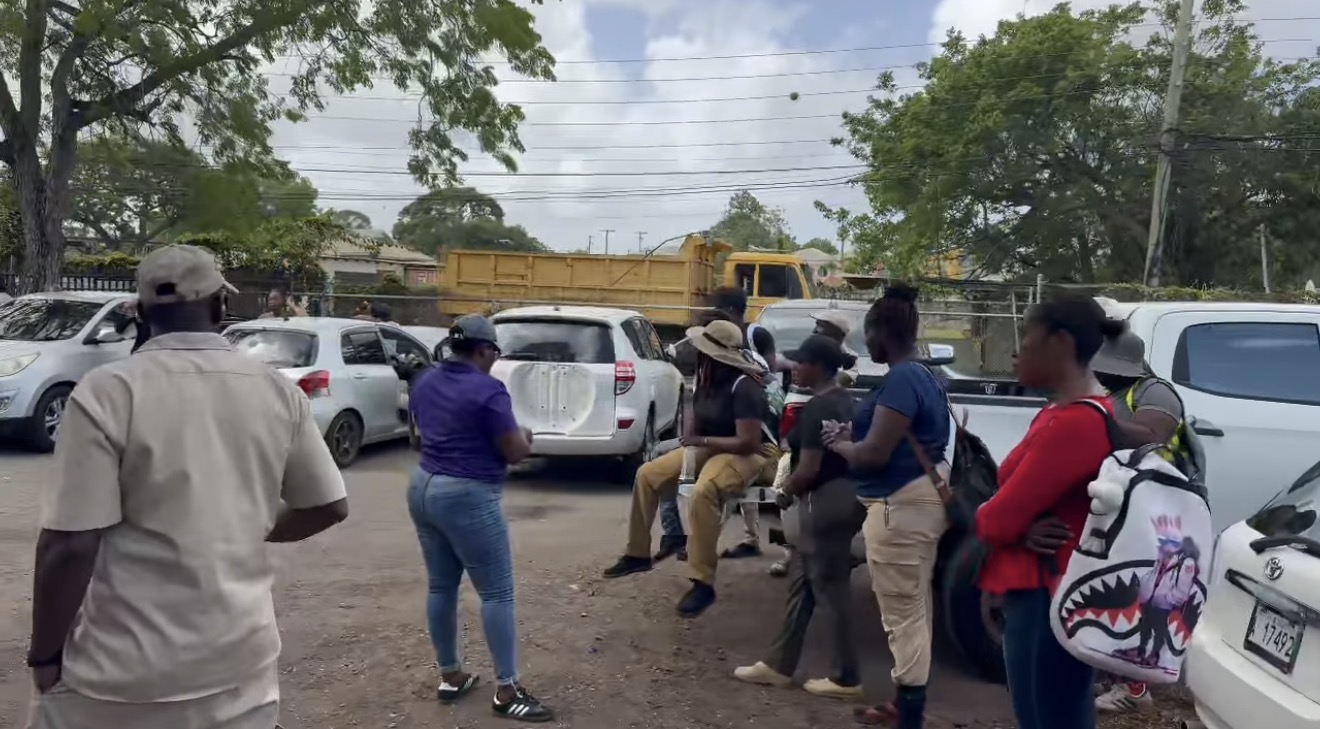
    As the strike got underway, participating operators escalated their demonstration by blocking the major Toll Bridge crossing in Orange Walk Town, a key transport artery connecting northern districts to the rest of the country. The blockade brought motor vehicle and pedestrian traffic to a complete standstill, leaving hundreds of workers, students, and residents stranded for hours as they attempted to reach their daily destinations. Local authorities finally cleared the blockage from the bridge structure shortly after 8:30 a.m. that same morning.

    In an official statement responding to the crisis, Prime Minister John Briceño acknowledged the severe disruption the strike had inflicted on everyday Belizeans, while tracing the root of the conflict to skyrocketing global crude oil prices that have driven up operational costs for transport providers across the country. “We recognize that there is a crisis… the price of fuel has been going up dramatically,” Briceño noted, adding that government negotiating teams had worked through the entire preceding weekend to craft a compromise proposal that would address operators’ concerns without placing undue burden on passengers.

    Under the framework the government put forward, subsidies would be extended to cover all inter-village, inter-town and intercity bus routes, paired with a controlled, modest increase in passenger fares to help operators offset remaining costs. Briceño emphasized that finding a balanced solution was critical to protecting both sides: “We have to find a balance. Operators are struggling with higher costs, but passengers also cannot absorb steep fare hikes.”

    The Prime Minister confirmed that immediate de-escalation efforts were already underway to end the standoff, including appointing a dedicated government negotiator to resume talks with BBA leadership. He reiterated that the immediate priority was reopening key transport infrastructure to restore normal movement for the public, noting that he had already received official confirmation that the Toll Bridge blockade had been removed. Negotiations between BBA representatives and the government are scheduled to continue the same day in the capital city of Belmopan, as both parties work toward a lasting resolution to the dispute.

  • WATCH: Azille says Antigua and Barbuda has seen “tremendous” progress in education but more needs to be done

    WATCH: Azille says Antigua and Barbuda has seen “tremendous” progress in education but more needs to be done

    In a recently aired public address that has drawn widespread attention across the twin-island nation, Education Minister Daryll Matthew Azille has publicly acknowledged the extraordinary strides Antigua and Barbuda has made in expanding access to and improving the quality of its national education system, while also stressing that critical gaps remain to be addressed to meet the evolving needs of 21st-century learners.

    Azille made the remarks during a televised engagement that was streamed widely across social media platforms, allowing residents across both main islands and the diaspora to tune in to the update on education policy. The minister pointed to a series of tangible wins over recent years, including a significant rise in primary school enrollment rates that have nearly reached universal access, major infrastructure upgrades to aging school facilities that once posed safety risks to students, and the introduction of new scholarship programs that have opened up post-secondary education opportunities for hundreds of low-income and first-generation college students.

    He also highlighted the progress made in training new cohorts of qualified teachers, a reform that has helped reduce long-standing staff shortages in rural and underserved communities across the country. These gains, Azille noted, have not come without sustained investment and collaborative effort from government agencies, education stakeholders, non-profit partners, and international donor organizations that have supported the nation’s education reform agenda.

    Despite these “tremendous” gains, which the minister emphasized should not be overlooked, Azille made clear that the work to build a world-class, inclusive education system is far from over. He outlined several key priority areas that require continued focus and additional investment moving forward. Among the most pressing challenges are the need to integrate modern digital learning tools into every classroom, address persistent achievement gaps between students from different socioeconomic backgrounds, and expand vocational training programs to align the education system with the growing needs of Antigua and Barbuda’s key economic sectors, particularly tourism and hospitality, renewable energy, and digital services.

    Azille also called for continued collaboration between all stakeholders, saying that transforming education is a collective responsibility that requires buy-in from policymakers, educators, parents, and private sector leaders to ensure that every child in Antigua and Barbuda has the opportunity to develop the skills they need to thrive in a rapidly changing global economy. The address comes as the government prepares to release its new five-year national education strategy, which is expected to outline concrete funding commitments and policy targets for the sector over the coming term.