On October 30, legal scholar and veteran judicial professional Sharitadevi Ramlall-Baldeorai officially launched her new landmark publication, *Surinaams Referentiemodel voor Straftoemeting (SRS) – Methodische benadering voor transparante strafbepaling in de praktijk*, in a public ceremony that marked the culmination of more than 25 years of hands-on experience across Suriname’s criminal justice, judicial practice, legislative drafting, and prison administration systems.
The core of the newly developed SRS framework is designed to demystify the sentencing decision-making process for all stakeholders, without encroaching on the longstanding independence and discretionary judgment of presiding judges. Unlike rigid mandatory sentencing guidelines, the model operates by first anchoring calculations to the legal maximum penalty for a given offense as a baseline numerical starting point, then systematically integrating contextual factors including the defendant’s personal circumstances, unique details of the specific criminal case, and established legal precedents to walk practitioners through a structured, auditable sentencing calculation process.
Alongside the printed book, Ramlall-Baldeorai also unveiled a custom-built companion software application during the launch event, which allows legal professionals to test the SRS methodology in real-world case scenarios and visualize every step of the structured calculation workflow. The author has repeatedly emphasized that the SRS is not a binding regulatory mandate, nor is it intended to replace the independent judicial assessment of case specifics. Judges retain full, uncompromised authority and professional responsibility to evaluate all unique circumstances of each case and deliver fully motivated, legally sound sentencing decisions as they see fit.
Ramlall-Baldeorai’s decades of cross-sector experience laid the full foundation for the framework’s design: her early training as a judicial officer and subsequent tenure as a criminal case legal drafting specialist at the Suriname Court of Justice gave her unparalleled insight into the layered tradeoffs judges navigate when setting and justifying sentence lengths, while her later work in the national prison system deepened her expertise in custodial sentence implementation, correctional management, and offender resocialization pathways. This rare combination of frontline judicial, legislative, and penitentiary experience ensured the SRS model was built to reflect on-the-ground realities of Suriname’s criminal justice ecosystem, rather than abstract theoretical legal principles.
In a distinctive supplementary section of the book, Ramlall-Baldeorai also draws on her years of independent study of Vedic numerology and Vedic astrology, presenting findings from a small exploratory study that analyzed potential numerological patterns across the birth dates of 50 convicted violent offenders in Suriname, as a secondary, non-binding exploratory research component.
Rather than positioning the SRS as a definitive, final solution to all longstanding questions around fair sentencing, Ramlall-Baldeorai framed her publication as an open invitation for cross-sector professional dialogue. She has extended a call to all legal practitioners, sitting members of the judiciary, legislative experts, criminal justice academics, and other professionals working across Suriname’s entire criminal justice chain to review the framework, share feedback, and contribute critical observations and recommendations that can refine and expand the SRS methodology over time — all while upholding existing national legal frameworks and the fundamental independence of the judicial branch. The initiative aims to spark a sustained, collaborative industry conversation to make Suriname’s sentencing processes more accessible, consistent, and transparent for the public and legal stakeholders alike.
分类: society
-
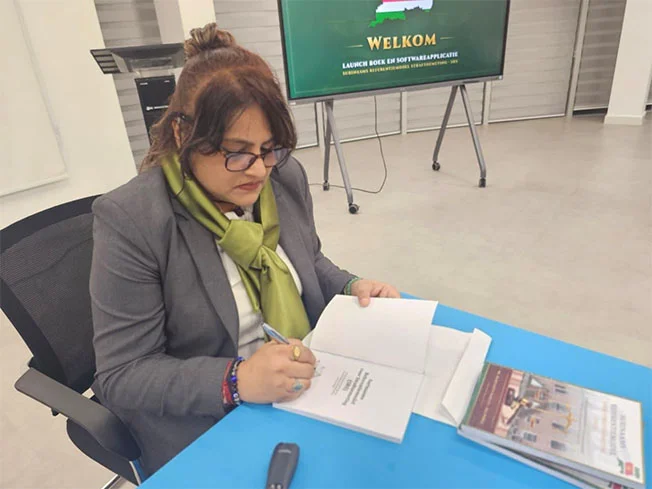
Jurist Ramlall-Baldeorai presenteert nieuw model voor straftoemeting
-
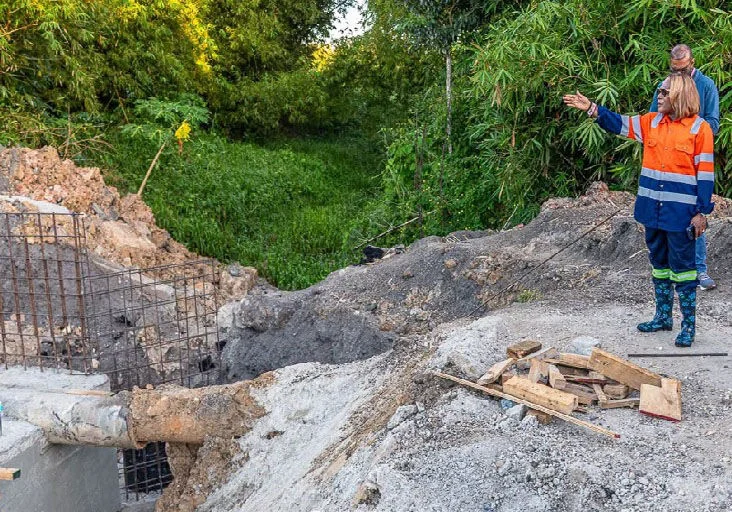
Jearlean cuts out ‘massive wastage’
Trinidad and Tobago’s Minister of Works and Infrastructure Jearlean John has announced a sweeping operational realignment across her portfolio, addressing longstanding systemic flaws that have drained public resources and driven steady decline in the country’s national road network. During a press briefing responding to media queries from the Express regarding the future of the Programme for Upgrading Roads Efficiency (PURE) Unit and the recent termination of the unit’s deputy director Hayden Phillip, John confirmed that the restructuring drive is already underway, with no pause to ongoing critical infrastructure works. The minister did not elaborate on the specific circumstances of Phillip’s dismissal, but framed the broader overhaul as a direct response to years of fragmented governance of road maintenance duties. Currently, national road infrastructure responsibilities are split across three separate state entities: the National Infrastructure Development Company Ltd (Nidco), which manages major highways, bridge construction and slope stabilization projects; the Highways Division, which supports the Highways Authority in maintaining Trinidad and Tobago’s primary road network; and the PURE Unit, originally launched to address widespread pothole repairs before expanding to oversee local road maintenance under regional corporation jurisdiction. John noted this tripartite division of labor has created crippling operational gaps: rampant duplication of work streams, severe underutilization of skilled full-time government tradespeople already on the public payroll, and persistent waste of taxpayer funds, all of which have accelerated the decay of roads across the twin-island nation. She acknowledged that ordinary citizens have repeatedly and justifiably voiced frustration over deplorable road conditions, including shoddy repair workmanship, multi-week delays for basic maintenance, and potholes that reappear within days of being patched. “These public concerns align directly with the ministry’s own internal assessments, which make clear that we have lacked sufficient oversight and accountability mechanisms across every stage of roadwork planning, execution and post-completion monitoring,” John stated. The core goals of the ongoing realignment are to consolidate overlapping responsibilities, deploy the full expertise of underused in-house skilled workers, eliminate redundant spending, and deliver faster, longer-lasting road repairs for communities nationwide. John emphasized that no PURE Unit frontline staff have been laid off as part of the restructuring, and all existing PURE personnel will be integrated into expanded ministry operations wherever possible to boost overall workforce capacity and productivity. She stressed that the overhaul has not interrupted any active road maintenance projects, and will not do so moving forward. Recent ongoing works include culvert replacement along the 7.5-kilometre stretch of Western Main Road, and a full cylinder crossing rebuild at the 13-kilometre mark in Las Lomas, alongside widespread daily patching and paving operations across all regions of the country. John released verified performance data for the 2026 operational period, noting that between February and September of this year, the ministry resolved 4,036 separate road defects, while the Highways Division patched 335 kilometres of roadway spanning 40,410.48 square metres, consuming 5,343.5 tonnes of asphalt. Looking ahead to the 2027 fiscal year, the government will scale up its national road rehabilitation programme with 57 high-priority infrastructure projects targeted for communities across south, central, east and north-west Trinidad. Complementing road works, the ministry is rolling out an ambitious nationwide drainage improvement initiative designed to mitigate chronic flooding risks and prevent water-related damage to newly repaired roads. Priority zones for desilting and structural upgrades include the flood-prone Caroni, North Oropouche and South Oropouche river basins. Planned works include full upgrades to the Williams Street Pump Station in El Socorro South and the Bamboo No 3 Pump Station, design and construction of new sediment traps on the St Joseph and Arima rivers, and maintenance dredging of the lower Caroni River. Seven active drainage projects are on track for completion in the 2027 fiscal year, with additional planned works covering channel reshaping, river bank stabilization, reinforced channel linings and retaining walls, rehabilitation of failed drainage structures, and critical outfall drain upgrades. John concluded that the full suite of integrated infrastructure interventions is designed to maximize value for every dollar of public spending, deliver durable, high-standard public assets, reduce recurrent flood damage to communities, and reverse decades of underperformance in the national road network.
-
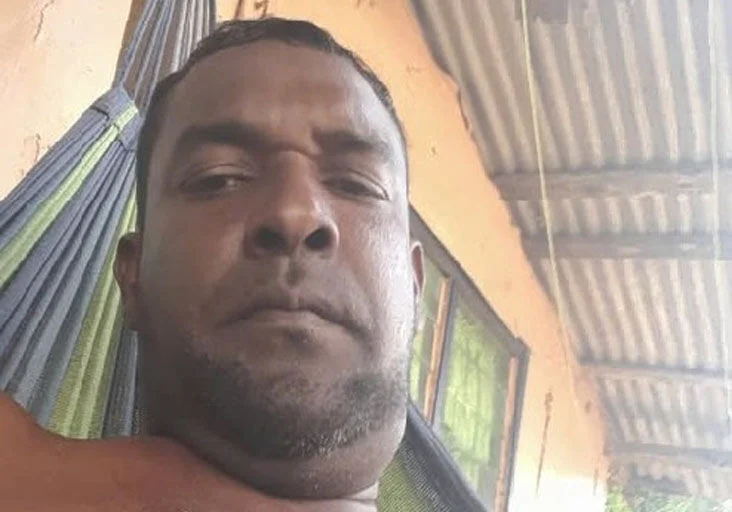
Cops kill cutlass man
A 41-year-old man wanted in connection with a reported home invasion assault was killed in an officer-involved shooting at a residential property in the Hindustan, Princes Town area of Trinidad and Tobago on Sunday morning, according to official statements from the Trinidad and Tobago Police Service (TTPS).
The suspect, identified by law enforcement as Timmon Francios of Naggee Road, Hindustan, New Grant, was the target of an active manhunt launched after a 41-year-old woman filed a home invasion report on Saturday at approximately 1 p.m. from the Indian Walk neighborhood. The victim told responding officers that an unidentified male intruder armed with a cutlass forced his way into her private residence, physically assaulted her, and fled the scene before authorities arrived.
Following leads gathered over the course of the investigation, a team of officers assigned to the case traveled to a Naggee Road address shortly after 10 a.m. Sunday, where intelligence indicated Francios was staying. Upon approaching the property and clearly identifying themselves as law enforcement personnel, the officers encountered Francios who was in possession of a cutlass. Per the TTPS official media statement, Francios became immediately hostile, disregarded multiple explicit verbal orders to surrender his weapon, and moved directly toward the officers while swinging the bladed implement. Facing what they assessed as an imminent, life-threatening danger, the on-scene officers discharged their service weapons, striking Francios.
Emergency medical teams transported Francios to a nearby healthcare facility for urgent care, but he was pronounced dead a short time later on Sunday. In line with standard national law enforcement protocol for all police use-of-force incidents, the shooting has been formally referred to the independent oversight investigative body, with full open inquiries currently underway to review the sequence of events.
Trinidad and Tobago Police Commissioner Allister Guevarro used the incident to issue a public advisory to all citizens, emphasizing that unprovoked aggression or violent resistance toward officers performing their official duties creates unnecessary, fatal risk for all parties involved. “When law enforcement officers clearly identify themselves and issue lawful, reasonable instructions, members of the public are obligated to comply to avoid tragic outcomes,” Guevarro stated. “Anyone who chooses to threaten, assault, or advance on officers with a deadly weapon puts every bystander, every officer, and themselves in mortal peril, creating scenarios where officers have no choice but to deploy force to preserve human life.” The TTPS reaffirmed its public commitment to full, impartial, transparent reviews of every incident that involves lethal force deployed by on-duty officers, noting that the latest fatality pushes the total number of people killed in police-related confrontations across the country to over 32 so far this calendar year. -

Slain lawyer ‘speaks’ at funeral
An overwhelmed, distraught mourner, understood to be a close relative of 53-year-old murdered attorney Taradath Singh, broke down in uncontrollable sobs beside Singh’s flower-adorned dark wooden casket during his recent funeral, recounting that he had repeatedly warned the legal practitioner that hostile parties were closing in on him. Clasping his head in his hands as he gazed down at Singh’s remains, the mourner wailed publicly through tears, “I talked to you, brother, I begged you. I told you they were coming. You’ve broken this old man’s heart.” He went on to laud Singh’s sterling professional reputation, insisting no local lawyer matched his genuine, unselfish dedication to his clients, before stumbling away from the casket past crowds of other grieving attendees, a parked hearse, and a marked police patrol vehicle stationed outside the service held at Singh’s Penn Trace, Enterprise home. The casket was decorated with vibrant red roses, alongside clusters of white and yellow blooms, while a large memorial banner emblazoned with Singh’s portrait hung on a nearby exterior wall to honor his memory. Singh was gunned down in a brazen targeted attack shortly after leaving the Power House Gym at the intersection of Caroni Savannah Road and ASJA Avenue in Charlieville at 6:25 p.m. last Tuesday, roughly one month after his BMW vehicle was shot at while he was arriving home. Dressed in a blue coverall, a masked assailant approached Singh and opened fire multiple times; the attorney managed to run a short distance toward the nearby ASJA compound before collapsing, and was pronounced dead minutes later. Singh’s brother Percival, who officiated the funeral service, shared a deeply poignant final voice note that Singh recorded just days before his death, in which he reflected on the universal ups and downs of human life, urged struggling loved ones to stay resilient through hardship, and prioritized collective peace, joy, and mutual love over calls for retribution. “Life is a mix of joy, sorrow, crying, and pain — it is all part of the package of living and dying. No hard moment lasts forever. Stay strong, enjoy each day, love the people around you, and work hard,” Singh stated in the recording. Percival emphasized that his brother had clearly sensed the looming threat against his life, made peace with his fate through his Christian faith, and intentionally left the message to guide his family and community rather than demanding justice for himself. He called on attendees to honor Singh’s legacy by practicing forgiveness, and urged the unknown perpetrators to seek repentance for their crime. During a press conference held the day after the homicide, Deputy Commissioner of Police Suzette Martin confirmed that active investigations were underway for both the fatal shooting and the earlier September 28 attack on Singh’s BMW, but declined to share details on potential suspects or possible links to Singh’s active legal caseload, citing the sensitive, early stage of the probe. WPC Mohammed of the Homicide Bureau of Investigations remains the lead officer assigned to the case. Following the emotional home funeral service, Singh’s remains were transported to and interred at the Waterloo Cremation Site.
-
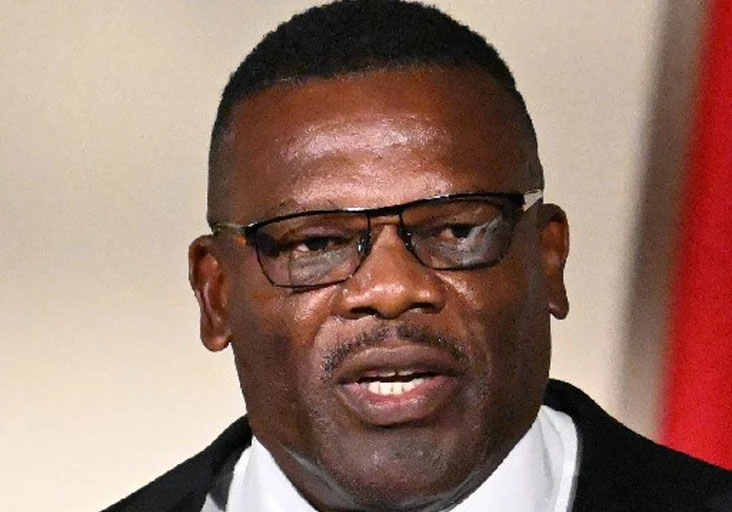
Alexander warns of inside jobs
During a guest appearance on TTT’s Focus public affairs program this past Saturday, Minister of Homeland Security Roger Alexander issued a formal public call for all local financial institutions to conduct a full top-to-bottom review of their operational and customer safety frameworks, in response to a sharp, documented rise in violent robberies targeting individuals immediately after they complete large cash withdrawals. Alexander laid out two distinct, verified vectors that criminal networks are exploiting to target victims, the first being visible surveillance of bank premises by operatives posing as routine customers, and the second, far more concerning risk of insider information leaks from bank staff who have been cultivated by criminal groups to share sensitive transaction details. Citing recent public data compiled by the Sunday Express, the minister noted that at least seven separate targeted robbery incidents have been reported so far this year, with a combined total of $380,500 stolen from assaulted victims. The two most recent high-profile cases saw female customers attacked and robbed shortly after completing large cash withdrawals at separate bank branches in Maraval and Trincity, with law enforcement confirming preliminary investigations indicate both women were identified inside their respective branches and followed by assailants who struck as soon as they exited the premises. To curb the risk of on-site surveillance, Alexander mandated that banks immediately relocate all cash-counting machines away from public corridors and high-foot-traffic customer areas, where bystanders can easily view the exact sums of money customers are handling. He also emphasized that banks must implement stricter access controls to ensure all transaction-related customer data is restricted exclusively to authorized staff directly involved in processing the account activity, eliminating exposure to unauthorized personnel or external visitors. Addressing the insider leak risk, the minister stressed that financial institutions bear full responsibility for vetting staff access to sensitive customer records and upholding the highest standards of data integrity for employees entrusted with private financial information, noting that criminals have demonstrated a pattern of recruiting insiders to share advance details of planned large deposits and withdrawals that allow them to target victims with near-perfect prior knowledge of the cash they are carrying. Beyond institutional reforms, Alexander laid out a suite of targeted guidance for the public and business community to reduce their personal risk. He strongly encouraged widespread adoption of online and digital banking tools to eliminate the need for customers to carry large sums of physical cash entirely, noting that while elderly users and other less digitally literate groups may require dedicated onboarding support to use these platforms safely, electronic fund transfers drastically cut the risk of violent robbery during transit. For businesses that still need to handle large volumes of cash for operational purposes, Alexander recommended that larger enterprises with sufficient budgets contract licensed private security firms for cash pickup and transport services, while acknowledging that small and medium-sized businesses with limited resources would need to explore alternative mitigation steps. He also advised all regular banking customers to avoid establishing rigid, predictable routines for their bank visits, such as travelling to the branch at the exact same time on the same day every week, as this pattern allows criminal surveillance teams to easily anticipate their movements. Finally, he urged local business owners to build collaborative, proactive relationships with their neighborhood police divisions, to streamline access to timely security support and rapid response in the event of suspicious activity related to their banking trips.
-

Traditional growers must not become spectators in ganja industry — Bruce
Delivering a keynote address at the 2026 CannaBiz SVG Festival hosted by the country’s Medicinal Cannabis Authority in Kingstown, Israel Bruce — who serves dual roles as Minister of Agriculture and Minister of Forestry and Rural Transformation — laid out a vision for the nation’s burgeoning medicinal cannabis sector that centers the legacy of longstanding local marijuana cultivators rather than sidelining them as the regulated industry scales. Held over three days from Thursday to Saturday, the festival operated under the theme “Cultivating Strategic Partnerships for Cooperation and Trade”, and featured a full lineup of activities including a medicinal cannabis industry conference, a cross-sector trade exhibition, and a National Youth Symposium dedicated to addressing substance misuse prevention, mental health support, youth resilience, and evidence-based healthy decision-making.
Bruce stressed that the decades-long contributions of traditional cultivators, who sustained local cannabis growing through years of unregulated, high-risk operation, must not be erased as the sector moves into formal, legal commercial status. “We must not allow the people who carried the industry through its difficult years to become spectators in its successful years,” he told assembled industry stakeholders, government officials, and community members. For the sector to deliver on its promise of broad-based economic growth, he argued, success metrics cannot be limited to foreign direct investment figures or corporate expansion milestones. Instead, progress must be measured by the tangible opportunities extended to local Vincentian producers, new skill development for rural communities, local job creation, and the share of industry revenue that stays within the national economy rather than flowing out to external corporate actors.
To deliver on this inclusive vision, Bruce outlined five clear, actionable priorities for coordinated stakeholder action across the public and private sectors. First, he called on traditional cultivators to formalize their collective voice by forming a unified national representative association, which would empower them to negotiate on equal footing with government regulators, financial service providers, and large licensed cannabis enterprises. Second, he highlighted the soon-to-launch National Development Bank as a critical mechanism to break down longstanding barriers to affordable financing for small-scale local growers looking to enter the regulated space, noting that targeted support for agricultural insurance products would also reduce the risk of crop loss that often pushes small operators out of viable commercial activity. “If we want our farmers to enter the formal economy, we must make the formal economy more accessible to our farmers,” Bruce emphasized.
Third, the minister laid out plans to expand targeted, practical technical training for traditional growers to ensure they can meet rigorous international standards for product quality, traceability, and regulatory compliance required for medicinal cannabis markets. Fourth, he urged all licensed industry operators — including CANA SVG, Medicinal and other registered enterprises — to build transparent, mutually beneficial commercial partnerships that connect local cultivators directly to formal supply chains, local processing facilities, global distribution networks, and specialized technical expertise. Finally, Bruce noted that all stakeholders must collaborate to build integrated local ecosystems that link smallholder production, domestic value-added processing, academic research and development, and access to legitimate international medicinal cannabis markets, rather than relying on a model that imports processed products or exports raw unprocessed cannabis at low margins.
Throughout his address, Bruce repeatedly underlined that public health safeguards, strict regulatory adherence, and full product traceability are non-negotiable foundations of the sector’s long-term credibility, as St. Vincent and the Grenadines positions itself as a responsible, competitive player in the fast-growing global medicinal cannabis market. Closing his remarks, he framed the collective mission as far broader than agricultural production alone: “We must not simply cultivate cannabis. We must cultivate opportunity.”
-

Column: Is vrijwel iedereen in Suriname corrupt?
A recent sweeping claim from Surinamese parliamentarian Steven Reyme that nearly every citizen in the country is corrupt has sparked urgent public reflection on how the South American nation frames, addresses, and combats its long-documented systemic corruption challenges. Published in a November 2 analysis by local commentator Indra Toelsie, the debate pushes back against the harmful overgeneralization that conflates distinct tiers of corrupt behavior, while acknowledging the deep, pervasive grip of unethical practice across public and private life. There is no meaningful dispute that corruption represents a stubborn, multi-layered crisis in Suriname: it permeates multiple sectors, operates at every administrative level, and has steadily eroded public trust in state institutions for decades. Yet to paint the entire population with the same broad brush erases critical, nuanced distinctions between three distinct groups: public officials who deliberately abuse their formal positions of power for personal financial or political gain, actors who knowingly participate in and prop up corrupt systems for sustained benefit, and ordinary citizens who are trapped in bureaucratic quagmires where they see no viable path to access basic public services without making compromises. While that final category of action is never morally defensible, it demands a far more granular, fair assessment of individual responsibility than a blanket accusation of mass corruption. Corruption never emerges in a social vacuum: it thrives in fertile conditions created by opaque administrative procedures, weak independent oversight, systemic political favoritism, unregulated conflicts of interest, and a near-total absence of meaningful consequences for unethical conduct. When rules are not applied equally to all citizens, a pervasive cultural shift takes root: the public begins to believe that personal connections and backroom deals matter far more than formal legal rights and official protocols. For an ordinary resident attempting to secure a building permit, a land title, or any other routine government service, endless unresponsive bureaucratic delays can quickly create the perception that following official channels yields no results, while someone with the right political or personal connections can resolve their request in days. This dynamic gradually crowds out formal, transparent public service delivery, replacing it with a shadow economy of unofficial favors, unregulated middlemen, and political patronage. Notably, Reyme’s accompanying policy proposal to simplify permitting and land application procedures offers a pragmatic, actionable starting point for reform: the core goal of ensuring all citizens can navigate administrative processes independently, without relying on political intermediaries for basic access to services, is a widely acceptable baseline principle, as public institutions are fundamentally designed to serve the public rather than force residents into dependency on powerful figures. That said, elected parliamentarians hold a unique, elevated position that places them far outside the ranks of ordinary bystanders: they control the legislative, oversight, and policy levers required to dismantle corrupt systems, and carry a corresponding responsibility to move beyond merely identifying problems to delivering tangible, measurable reform that residents can experience in their daily lives. True anti-corruption work requires far more than a blanket declaration that the problem is universal: it demands targeted, specific action to identify which procedures need overhaul, where oversight gaps exist, who is accountable for deliberate rule-breaking, and what consistent, proportional consequences will be enforced for public officials who misuse their positions for personal or partisan gain. Making the lazy claim that “everyone is corrupt” carries severe, long-term risks: it normalizes unethical conduct by framing it as an unavoidable, universal feature of daily life, which erodes the incentive for honest people to act with integrity. If the public accepts that every single person is already corrupt, there is no remaining motivation to reject unethical choices, and the millions of law-abiding citizens, conscientious public servants, and people who refuse to trade their principles for personal gain are erased from public view, their contributions unrecognized and dismissed by a sweeping unfair generalization. Elected representatives do have both the right and the democratic duty to hold up an uncomfortable mirror to society to highlight systemic failures, but such far-reaching public statements require clear, evidence-based justification, paired with concrete policy pathways for improvement. Effective, sustainable anti-corruption efforts do not start by treating every citizen as a suspect: they begin by rebuilding public trust, enforcing rules equally for all people regardless of status, embedding full transparency into every administrative process, and consistently holding to account the small group of powerful actors who deliberately misuse their public responsibilities. Instead of debating the false question of whether nearly every Surinamese person is corrupt, the nation’s policy makers and public would be far better served asking a far more useful question: what structural changes can be made to eliminate the systemic gaps that create space for corrupt practice to take root and flourish? As long as public discourse remains focused on blaming the entire population, there is a critical risk that no specific group will ever take meaningful ownership of solving the crisis.
-

FGM calls for judicial inquiry into death of police detainee
Georgetown, Guyana – November 1, 2026: The opposition Forward Guyana Movement (FGM) has issued a formal call for Guyana’s police force to immediately halt its internal investigation into the recent in-custody death of 32-year-old labourer Gavin Kennard Douglas, and instead transfer oversight of the case to a magistrate-powered coroner’s inquest to guarantee full impartiality. Douglas, a resident of Crane Housing Scheme on West Coast Demerara, was taken into custody on Saturday, October 31, 2026, as part of a probe into an alleged armed robbery that took place three days prior at New Road, Vreed-en-Hoop. According to official police statements, he was escorted to the Vreed-en-Hoop police station at 11:36 a.m., became aggressive while being placed in a holding cell roughly 24 minutes later, and was physically restrained by on-duty officers. During a routine cell check at 12:45 p.m., staff found Douglas foaming at the mouth, and he was pronounced dead shortly after being rushed to the West Demerara Regional Hospital for emergency care. FGM leader Amanza Walton-Desir, a practicing attorney, laid out a series of non-negotiable demands in a Sunday night statement, including mandatory immediate securing of all Vreed-en-Hoop station CCTV footage, official lockup logs and administrative diaries, full access for the Douglas family to an independent pathologist during the upcoming post-mortem, immediate reassignment of the officers involved to non-frontline posts pending probe results, and full public disclosure of all final investigative findings. She emphasized that the full legal onus to account for Douglas’s death rests with the state, not his grieving family, arguing that allowing the Guyana Police Force’s internal Office of Professional Responsibility (OPR) to lead the investigation represents a fundamental conflict of interest. As the OPR falls under the same command structure as the officers whose conduct is under scrutiny, Walton-Desir noted that “police investigating police” can never deliver conclusions the public or the Douglas family will trust. She further anchored her demand in national constitutional provisions, citing Article 154A which mandates all state agencies uphold international human rights treaties Guyana has ratified, including the International Covenant on Civil and Political Rights – which enshrines the fundamental right to life under Article 6 – and the Convention against Torture, which requires prompt, impartial investigations into all credible allegations of cruel, inhuman, or degrading treatment under Articles 12 and 16. Walton-Desir went on to sharply criticize Home Affairs Minister Oneidge Walrond’s earlier Sunday public remarks, noting that the minister with formal political oversight of the Guyana Police Force failed to announce any concrete, proactive steps to secure evidence, reassign implicated officers, or move the probe outside police control, instead delivering a vague, accountability-evading statement. Adding cross-opposition support for independent oversight, We Invest in Nationhood (WIN) parliamentary representative Dr. Gordon Barker noted that a widely circulated emotional video statement from Douglas’s father, paired with disturbing leaked imagery of the deceased man’s body, has raised deeply troubling unanswered questions that cannot be addressed via internal police processes. Barker warned that any confirmed wrongdoing must result in full, uncompromising legal accountability for all implicated parties, with zero preferential treatment or institutional protection, to prevent a dangerous culture of impunity from taking root in Guyana’s law enforcement bodies. Both opposition figures highlighted that Douglas was legally presumed innocent at the time of his arrest, and the state bore an explicit legal duty to protect his safety and human rights while he was in official custody.
-

Column: Borrelpraat no. 948
A widely circulated casual public discussion published on 01 November via Suriname’s Starnieuws platform, under the pen name Rappa, lays bare widespread public frustration with decades of systemic mismanagement, corruption, and unequal governance dating back to the country’s 1975 independence. The conversation opens with a scathing reference to recent allegations from lawyer Fij-rah, who accuses the Surinamese state of operating under mafia-style practices: arbitrary arrests, detentions without formal charges, and under-the-table deportations that include minors and infants. The two conversationalists note that such abuses of power are far from unprecedented, and have grown steadily worse since the country gained independence, while access to justice and factual accountability have remained consistently out of reach for ordinary citizens. The discussion turns to a recent viral social media post from a public figure named Robbie Makkaanse, who posed a populist, attention-seeking question on his Facebook page asking who was responsible for pushing Suriname into decades of widespread hardship. The pair note that the vast majority of unvetted, low-level responses to the post incorrectly blamed the National Democratic Party (NDP) – a party that did not even exist at the time of 1975 independence – alongside the older National Party of Suriname (NPS), while ignoring the role of the Progressive Reform Party (VHP), which boycotted independence negotiations under the pretense of pushing for more thorough national preparation. Both conversationalists agree that none of the major political factions of the era prioritized the needs of ordinary Surinamese residents, and instead escalated their partisan battles to the brink of full-scale ethnic civil war between the country’s two largest demographic groups, to safeguard their own narrow political interests. The pair also highlight the largely uncelebrated role of late politician George Hindori, who secured a critical one-vote parliamentary majority to end the destructive partisan deadlock, a move that earned him widespread public adoration as he paraded through the capital’s Waterkant district in an open-top car surrounded by cheering residents. The discussion goes on to argue that the root cause of Suriname’s decades of economic and social collapse traces to the 3.5 billion guilders in post-independence development aid gifted to the country by the Netherlands, which both domestic political elites and Dutch corporate actors (including Dutch industrial firm Werkspoor) looted systematically via schemes such as inflated over-invoicing. The speakers note that the Netherlands made a catastrophic policy error by transferring the full sum directly to Suriname’s political class, rather than investing the funds in a low-risk interest-bearing account where the annual returns – estimated at 350 million guilders per year, equivalent to 700 million euros in current value – could be governed collectively for public benefit. They warn that the exact same pattern of looting is already unfolding in the country’s emerging oil sector, where weak regulatory frameworks and vague local content rules are poised to allow connected elites to siphon off new resource wealth before it can benefit the public. The conversation then addresses the recent high-profile detention and deportation of Mennonite residents, who the speakers note were targeted after overlapping, uncoordinated government departments including the Ministry of Agriculture, Land Affairs, and the Immigration Service engaged in widespread corruption, embezzling fees paid by the community before arbitrarily labeling them as high-risk criminals and detaining them in isolation without formal charges. The speakers draw parallels between this heavy-handed treatment and authoritarian, fascistic practices, pointing out the stark double standard: the government rushed to implement sudden new visa requirements for nationals of Mexico and Bolivia (the original home countries of many of the deported Mennonites) while quietly securing visa-free travel to the European Union for connected political elites. They further note that selective enforcement of immigration rules allows illegal gold miners to clear vast swathes of old-growth rainforest and poison Suriname’s rivers with toxic mining chemicals, while hardworking, legally established Mennonite communities are targeted for expulsion. The pair conclude with a weary observation that Surinamese citizens have tolerated 50 years of elite plunder and misgovernance by choice, and that political dynasties and corrupt officials – both old guard and young, newly elected figures – remain focused on personal enrichment rather than public service, even as the ruling coalition prioritizes political survival over equal enforcement of the law. They end on a note of cautious optimism, referencing rising youth-led protest movements across the global that are demanding accountability, and noting that public awareness of systemic corruption will eventually reach a tipping point for Surinamese society.
-

Fire engulfs house in Pares Village
Emergency fire response teams rushed to Pares Village on Sunday evening after reports of a rapidly spreading residential blaze that fully engulfed a standalone private home. On-scene citizen and first responder footage captured towering orange flames licking through the home’s roofline and spreading across the entire structure, as firefighters deployed hoses and coordinated suppression tactics to contain the inferno before it could spread to adjacent neighboring properties. A crowd of concerned local residents gathered at a safe perimeter near the incident site, observing the response effort and checking in to confirm no community members were trapped inside the burning building. Initial preliminary accounts shared with local emergency services indicate the residence was vacant when the fire broke out, though independent verification of this status has not yet been completed by on-scene investigators. As of the immediate post-response window, official fire marshals have not released a formal determination of what sparked the blaze, nor have they published a full assessment of the total structural and property damage sustained at the site. Local public safety authorities note that additional verified details, including potential witness accounts, origin findings, and damage valuation, will be released to the public as soon as their ongoing fact-gathering process is finalized.