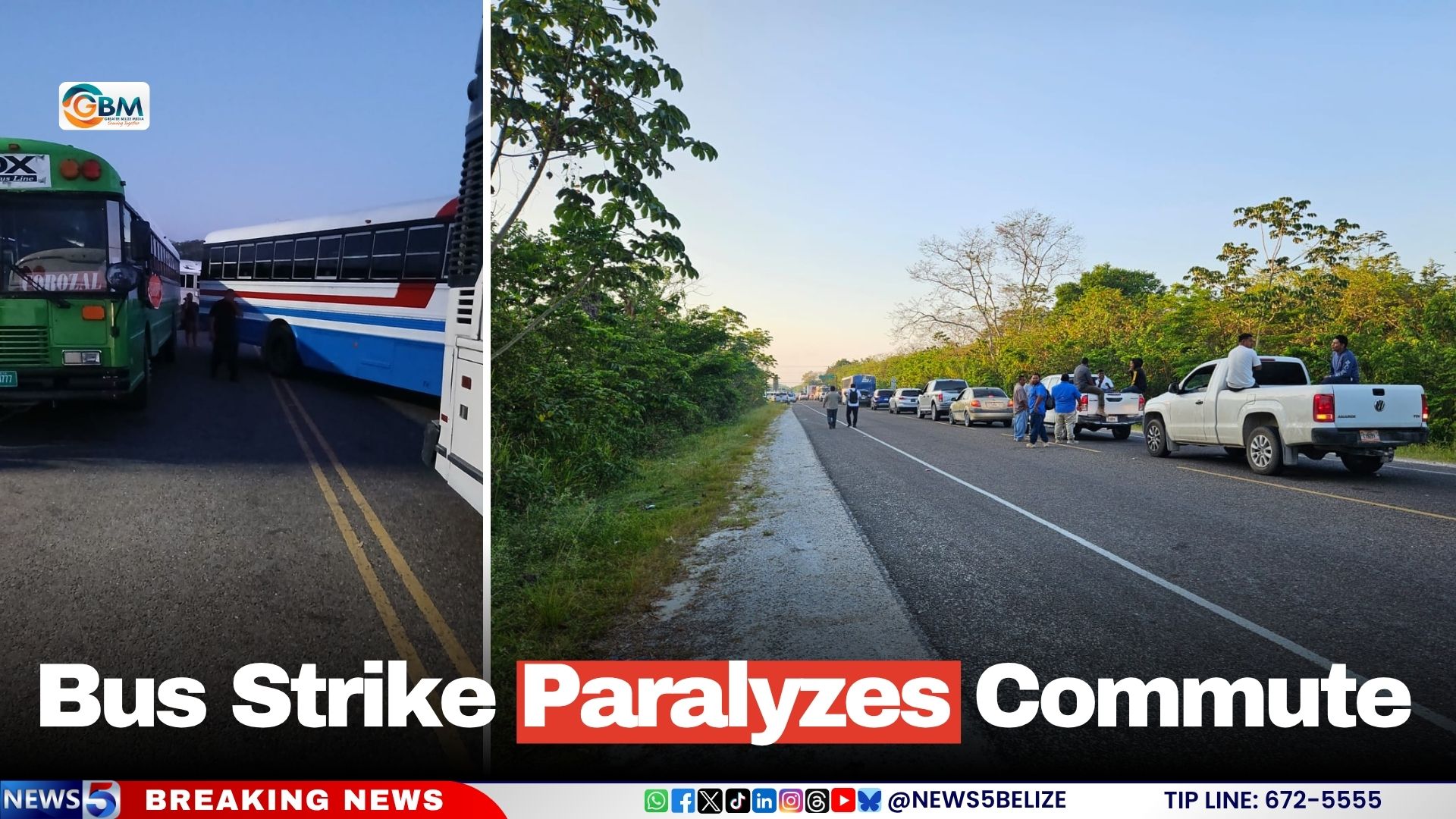
On the morning of April 27, 2026, thousands of daily commuters across northern Belize woke up to widespread travel chaos after the Belize Bus Association (BBA) launched a planned strike over a long-running unresolved fuel subsidy disagreement with the national government.
The industrial action, which the BBA had threatened weeks prior, came to fruition after negotiations between the group and state authorities failed to produce a mutually acceptable agreement. According to BBA representatives, the latest subsidy proposal put forward by the government failed to cover critical high-demand routes, most notably frequent intercity services connecting to Belize City, the country’s largest urban center. The association pinned full responsibility for the breakdown of talks on Belize’s Ministry of Transport, accusing the department of ignoring the pressing cost burdens facing private bus operators.
As the strike got underway, participating operators escalated their demonstration by blocking the major Toll Bridge crossing in Orange Walk Town, a key transport artery connecting northern districts to the rest of the country. The blockade brought motor vehicle and pedestrian traffic to a complete standstill, leaving hundreds of workers, students, and residents stranded for hours as they attempted to reach their daily destinations. Local authorities finally cleared the blockage from the bridge structure shortly after 8:30 a.m. that same morning.
In an official statement responding to the crisis, Prime Minister John Briceño acknowledged the severe disruption the strike had inflicted on everyday Belizeans, while tracing the root of the conflict to skyrocketing global crude oil prices that have driven up operational costs for transport providers across the country. “We recognize that there is a crisis… the price of fuel has been going up dramatically,” Briceño noted, adding that government negotiating teams had worked through the entire preceding weekend to craft a compromise proposal that would address operators’ concerns without placing undue burden on passengers.
Under the framework the government put forward, subsidies would be extended to cover all inter-village, inter-town and intercity bus routes, paired with a controlled, modest increase in passenger fares to help operators offset remaining costs. Briceño emphasized that finding a balanced solution was critical to protecting both sides: “We have to find a balance. Operators are struggling with higher costs, but passengers also cannot absorb steep fare hikes.”
The Prime Minister confirmed that immediate de-escalation efforts were already underway to end the standoff, including appointing a dedicated government negotiator to resume talks with BBA leadership. He reiterated that the immediate priority was reopening key transport infrastructure to restore normal movement for the public, noting that he had already received official confirmation that the Toll Bridge blockade had been removed. Negotiations between BBA representatives and the government are scheduled to continue the same day in the capital city of Belmopan, as both parties work toward a lasting resolution to the dispute.