分类: society

  • Search shifts to dump after tip-off

    Search shifts to dump after tip-off

    The multi-day search for missing two-year-old Angelo Tobias Plaza in Tobago has entered a devastating new phase, after law enforcement officials received an anonymous tip via WhatsApp that the young boy’s body may have been dumped at the Studley Park landfill in the days following Mother’s Day. This development comes as the investigation into the toddler’s unexplained disappearance continues to unfold, gripping the entire nation of Trinidad and Tobago.

    As of yesterday, the toddler’s 22-year-old mother Kalifah Tobias and her partner Shannon Miller, who is identified as Angelo’s stepfather, remained in police custody as detectives work to piece together the timeline of the child’s disappearance. Investigative efforts are being led by a cross-regional team of law enforcement, including officers from the Special Victims Department, the Homicide Bureau, and personnel from Trinidad, operating under the command of Assistant Commissioner of Police Rishi Singh.

    Nisha Sookram-Loutan, an inspector and legal officer with the Special Victims Department assigned to the Tobago-based case, reaffirmed law enforcement’s unwavering commitment to the investigation in an interview with the *Express* on Thursday. “We are committed to pursuing every possible lead to bring this case to closure,” she stated, confirming the multi-unit structure of the investigative team.

    Detectives are currently analyzing CCTV footage that captures Tobias and Miller near a Goodwood neighborhood supermarket just before 8 p.m. on the Monday Angelo was reported missing. The footage confirms the couple was alone at the time, with no sign of the toddler, a detail that has drawn additional scrutiny from investigators.

    Following the new tip, large-scale coordinated search operations have been launched at the Studley Park landfill. Multiple agencies have joined the effort, including the Trinidad and Tobago Police Service (TTPS), the Tobago Emergency Management Agency (TEMA) which deployed its Unmanned Aerial Vehicle unit for aerial reconnaissance, and the volunteer Hunters Search and Rescue Team. Search teams are carrying out systematic sweeps of sections of the site, combining aerial surveys, on-foot ground searches, and evidence recovery work to locate any trace connected to the missing child.

    Angelo was first reported missing last Monday, after relatives discovered he was unaccounted for at the family’s Goodwood home. Since that announcement, law enforcement and volunteer teams have carried out extensive land, sea, and air searches across multiple regions of Tobago, all launched in the hope of bringing the toddler home safely.

    The case has sent profound shockwaves through the small island community, with Tobago House of Assembly Chief Secretary Farley Augustine publicly addressing the widespread grief and anger surrounding the disappearance in a social media statement released yesterday. “This disappearance has shaken Tobago to its core. Every parent, every grandparent, every decent citizen feels the weight of this tragedy,” Augustine wrote. “Tobago is hurting, and we refuse to stay silent.”

    Augustine shared that the case has weighed heavily on him since his first public remarks, noting that “All of last night this child was on my mind.” He acknowledged the extraordinary effort that ordinary citizens, first responders, and volunteers have put into the search effort over the past week, including fishermen, hunters, village residents, and protective service personnel who have combed every corner of the island for any sign of Angelo.

    While he thanked all who have joined the search in solidarity with the child and his extended family, Augustine did not hold back on calling out the many unresolved questions surrounding the case. “Too many questions remain unanswered. The public outrage and heartbreak we are seeing across Tobago and Trinidad right now are completely justified. We have every right to be deeply angry about how this is unfolding and the unconvincing stories that are being circulated,” he said.

    Augustine emphasized that the situation has left the national conscience deeply unsettled, and the public is demanding full accountability. “A two-year-old child does not simply vanish without explanation. Toddlers do not climb through ditches and cross rough terrain to reach the ocean in complete darkness,” he argued. “Tobago will not accept the disappearance of a child as a normal event.”

    He called on every relevant national agency, including the TTPS, Homicide Bureau, and Child Protection Unit, to treat the investigation with the extreme urgency and seriousness it demands. “Leave no stone unturned. Every lead must be followed, every inconsistency must be examined, and every person with any information must cooperate fully with authorities,” Augustine said.

    He went on to stress that any negligence or wrongdoing must be brought to light: “If there has been negligence, it must be exposed. If there has been criminal activity, those responsible must face prosecution. Anyone holding information needs to understand that silence in a case involving a child is completely unacceptable.”

    Beyond the immediate investigation, Augustine said the tragedy must push Trinidad and Tobago as a society to reflect on our shared responsibility to protect children. “Too often, after these incidents, we move on too quickly. We cannot do that. Protecting children is not optional – it is a sacred responsibility,” he said. “Today, Tobago stands with Angelo. We stand with the people of Goodwood crying out for justice. We stand with every citizen demanding the truth. We hold onto the belief that this child matters. A nation is judged by how it protects its most vulnerable members. There can be no peace, no comfort, and no closure until we get answers.”

  • Government Continuing Repiping Programme as Drought Pressures Water Supply, PM Says

    Government Continuing Repiping Programme as Drought Pressures Water Supply, PM Says

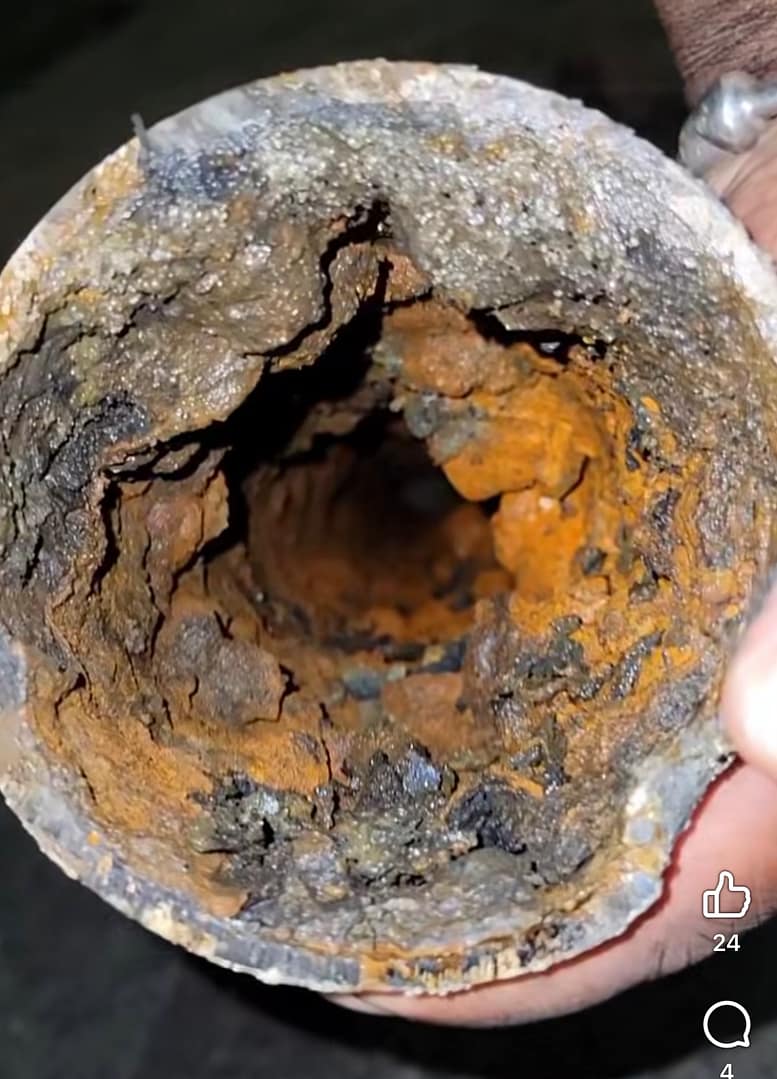
    As Antigua and Barbuda grapples with increasingly severe drought conditions and a century-old crumbling water distribution network, Prime Minister Gaston Browne has confirmed that the administration is pressing forward with a sweeping national initiative to replace outdated pipes and modernize critical water infrastructure. In an interview aired on local radio station Pointe FM, Browne laid out the urgent scope of the project, explaining that large swathes of the country’s underground pipe network have deteriorated so significantly that massive volumes of treated water are lost to leaks before ever reaching residential and commercial consumers.

    “We have systematically been rolling out pipe replacement projects across every region of the country,” Browne stated during the discussion of the ongoing infrastructure drive. The core goals of the program, he emphasized, are to bring the country’s water system into the 21st century and cut down on the crippling non-revenue water loss that has strained supply for years.

    The prime minister tied the country’s mounting water challenges to two interconnected factors: prolonged dry spells that have become far more frequent, and shifting climate patterns that are disrupting rainfall across not just Antigua and Barbuda, but the entire Caribbean basin. “We are actively confronting persistent drought conditions right now,” Browne said, noting that well below average rainfall over recent months has added unprecedented pressure to a system already operating beyond its designed capacity.

    To address immediate supply gaps alongside long-term resilience, the government is also ramping up production at reverse osmosis desalination facilities, which convert saltwater from the surrounding ocean into potable water for domestic use. Browne added that utility managers have implemented a key coordination strategy to avoid unnecessary disruption and waste: all water infrastructure upgrades are being timed to align with planned road repair and reconstruction projects across the country. This integrated approach eliminates the costly and frustrating scenario of resurfacing a road only to dig it up again weeks later to access and replace underground pipes. “There is no logic in completing road repairs, then turning around and digging up fresh pavement to access pipe lines,” Browne explained of the coordinated planning.

    For years, intermittent water supplies and outright shortages have been a top complaint for residents in communities across Antigua and Barbuda, with problems intensifying during seasonal droughts and peak tourist seasons when demand for water surges. According to government statements, the ongoing multi-million dollar investments in desalination expansion, network repiping and utility modernization are designed not just to address current shortages, but to build long-term water security and strengthen the country’s ability to withstand the growing climate impacts that threaten small island developing states across the Caribbean.

  • OPINION: Embracing the Bilingual Antiguan and Barbudan

    OPINION: Embracing the Bilingual Antiguan and Barbudan

    In the sun-drenched archipelago of Antigua and Barbuda, a rich linguistic tapestry has woven itself into the very fabric of national identity – one that blends the country’s official English with the creole language spoken and cherished by generations of locals. This natural bilingual dynamic is not a flaw to be corrected or a barrier to be overcome, as some historical narratives have suggested; it is a remarkable cultural asset that deserves full recognition and celebration across all sectors of national life.

    For much of the modern history of Antigua and Barbuda, dominant discourse has positioned standard English as the only legitimate language of education, government, and professional advancement, often sidelining the locally developed creole as a backward or unrefined form of speech. This subtle stigma created unnecessary divides, pushing many residents to hide their fluency in creole in formal settings, eroding a core part of their cultural heritage in the process. But shifting attitudes over the past two decades have begun to unlock the true value of the island nation’s bilingual tradition, challenging old stereotypes and highlighting the social and cognitive benefits that come with growing up navigating two linguistic worlds.

    Bilingualism, as decades of global linguistic research confirms, delivers measurable cognitive advantages: it boosts problem-solving skills, enhances creative thinking, and improves working memory among people who grow up speaking two languages from early childhood. For Antiguans and Barbudans, this innate cognitive advantage is paired with a deep cultural connection: creole carries the collective memory of the islands, from stories of resistance and resilience passed down through generations to the playful turns of phrase and community inside jokes that bind local societies together. At the same time, fluency in standard English opens global doors, enabling participation in international trade, global education networks, and the thriving tourism industry that forms the backbone of Antigua and Barbuda’s economy.

    Far from being mutually exclusive, these two linguistic traditions complement one another perfectly. There is no need to choose between elevating standard English for formal and global engagement and embracing creole as a core part of national identity. Forward-thinking education policy across the islands has begun to reflect this reality, with more educators supporting bilingual learning approaches that allow students to build fluency in standard English while retaining and celebrating their native creole. This approach not only improves educational outcomes by making students feel more seen and supported in the classroom, it also strengthens national cohesion by honoring the linguistic heritage that makes Antigua and Barbuda unique.

    As Antigua and Barbuda continues to navigate the opportunities and challenges of a globalized world, embracing its natural bilingual identity will be key to balancing global connectivity with local cultural sovereignty. By celebrating both of its linguistic traditions, the nation can equip its people with the skills to succeed on the global stage while preserving the cultural heritage that makes it distinct. Bilingualism is not a burden for Antigua and Barbuda – it is one of its greatest strengths, and one that future generations should be able to embrace fully and without stigma.

  • Official launch in Haiti of the rehabilitation works on the RD205

    Official launch in Haiti of the rehabilitation works on the RD205

    On May 16, 2026, Haitian officials gathered to mark the official kickoff of a major infrastructure overhaul for departmental road RD205, a critical transport artery linking the southern coastal city of Les Cayes to the commune of Torbeck. The launch ceremony was led by Joseph Almathe Pierre Louis, Haiti’s Minister of Public Works, and attended by the country’s tourism minister, agriculture minister, and senior local leaders from both Les Cayes and Torbeck.

    For communities across Haiti’s Greater South region, this launch represents the long-awaited start of a project that promises to transform regional connectivity. Stretching far beyond the initial Les Cayes-Torbeck segment, RD205 functions as a primary strategic corridor that connects 12 separate communities along the southern coast, including Chantal, Arniquet, Saint-Jean-du-Sud, Port-Salut, Coteaux, Chardonnières, Roche-à-Bateau, Port-à-Piment, Les Anglais, and Les Irois.

    For years, the existing roadway has fallen into severe disrepair, creating daily crises for everyone who relies on it. The degraded surface generates thick, suffocating dust that plagues nearby residents and creates hazardous driving conditions, while constant potholes and uneven pavement cause persistent travel disruptions for daily commuters, commercial transporters, and small-scale agricultural producers who depend on the road to get their goods to market. Government planners have framed the rehabilitation project as a urgent intervention to unlock economic opportunity and improve access to services for the entire isolated southern region. In a complementary announcement aligned with the government’s broader connectivity goals, the Ministry of Public Works also revealed that feasibility and planning studies are already underway to extend the full rehabilitation work all the way to Port-Salut.

    The entire project is backed by funding from the World Bank, with engineering plans specifically adapted to address the unique challenges of the region’s wetland terrain and variable tropical climate. After assessing local hydrogeological constraints, technical project teams selected hydraulic concrete as the primary construction material, a choice that delivers long-term durability and resilience against frequent heavy rain and flooding. The completed modern roadway will feature two 3.5-meter-wide travel lanes, graded shoulders ranging from 1 to 1.5 meters along both edges, and a fully upgraded longitudinal drainage system reinforced with dedicated hydraulic crossing structures to improve water runoff and reduce flood-related damage.

    On-site construction is scheduled to begin this week, with an estimated total timeline of 10 months to complete the initial segment. Recognizing that construction activity will inevitably cause temporary travel disruptions for local residents and through traffic, the Ministry of Public Works has issued a public call for patience and understanding from the community. The ministry is also coordinating with the Haitian National Police (PNH) to provide on-site security and manage traffic rerouting during the construction period.

  • Long-delayed Grenadines desalination projects to be fast-tracked

    Long-delayed Grenadines desalination projects to be fast-tracked

    St. Vincent and the Grenadines is currently grappling with an unprecedented severe water shortage that has pushed the country’s smaller Grenadines islands into a state of emergency, prompting the newly sworn-in administration to fast-track a seven-year-stalled desalination initiative that was originally gifted by the Italian government.

    Health Minister Daniel Cummings, who holds oversight over the country’s potable water portfolio, launched sharp criticism at the former Unity Labour Party (ULP) government for the years-long delay of the Bequia desalination plant project. In an interview with NBC Radio this Wednesday, Cummings — who assumed his post in December following the New Democratic Party (NDP)’s victory in the November 25 general election — expressed deep frustration over the stagnant initiative. “It is extremely puzzling that for over seven years, a desalination plant donated by the Italian government for the people of Bequia has never moved past the planning stage. For whatever reason the project never got off the ground, and this is nothing short of a tragedy,” he stated.

    The planned facility, which will include dedicated storage infrastructure and distribution pipelines, is designed to convert treated seawater into safe drinking water for Bequia’s residential community. According to Cummings, the country’s Central Water and Sewerage Authority (CWSA) is now prioritizing the project to advance desalination access across most Grenadine islands, a long-term solution that will help ease chronic water scarcity across the region.

    Right now, the entire archipelago is reeling from a severe extended drought that has forced widespread water rationing even on mainland St. Vincent, which is naturally endowed with rivers, springs, and streams to support its municipal water network. The situation is far grimmer across the Grenadines chain, where rainwater harvesting remains the primary source of drinking and household water for most communities. Cummings labeled the current conditions across the Grenadines a “super critical” crisis, emphasizing that Bequia — the largest Grenadine island located just nine miles from the capital Kingstown — is no exception, despite its proximity to the mainland. The island is currently facing extreme water shortages that have disrupted daily life for residents.

    In the short term, authorities are pulling every lever to stabilize water supplies across the affected islands, leveraging a patchwork of existing and soon-to-be-activated private and resort-owned desalination facilities to fill gaps. On Union Island, a private desalination plant developed by a local investor has already been completed but has not yet entered operation. Cummings confirmed that ongoing conversations with the developer have put the facility on track to be commissioned in the very near future. Once operational, water from the plant will be transported by tanker to different parts of the island, as no permanent distribution mains have been constructed for the facility. On Canouan, residents have historically depended on excess water from the island’s resort-owned desalination plant, but the facility is currently struggling to meet its own operational demands, meaning it can no longer supply the same volume of water to local communities it once did. The small island of Mayreau has seen a modest reprieve recently after the Mustique Company installed a small-scale desalination plant in the island’s bay, though additional water still needs to be delivered by boat to meet full community demand.

    Looking toward long-term sustainable solutions, Cummings highlighted modern advances in desalination technology paired with solar energy that have transformed the feasibility of these projects compared to a decade ago. New solar-powered desalination systems cut reliance on expensive fossil fuels dramatically, harnessing renewable energy to treat water and pump it into elevated storage facilities. “The technology has improved dramatically on both fronts: modern desalination requires far less energy than it did 10 to 15 years ago, while solar power systems have become cheaper and far more accessible,” Cummings explained. The elevated storage design also guarantees consistent supply: when sunlight is unavailable after dark, gravity feeds stored water to residents, ensuring a continuous supply of high-quality drinking water across all Grenadine islands.

    Cummings reaffirmed that the new administration is prioritizing long-neglected water infrastructure projects across the Grenadines to address both the immediate crisis and future water security risks, with the Bequia desalination project at the top of the government’s implementation list.

  • 73-Year-Old Grandmother Loses Home in Bella Vista Fire

    73-Year-Old Grandmother Loses Home in Bella Vista Fire

    In the pre-dawn hours of a Sunday in Bella Vista village, Toledo, a sudden out-of-control fire has left a multi-generational family homeless and without their small livelihood, though all four residents managed to escape unharmed. The blaze broke out at approximately 4 a.m. on May 17, 2026, completely destroying the family’s residential property and the home-based business they operated out of the building.

    The head of the household, 73-year-old Felicita Ruiz, fled the burning structure alongside three family members: her daughter Zarahi Pineda, Pineda’s 8-year-old daughter, and son-in-law Greville Bonilla. In a stroke of luck, the family also acted quickly enough to pull all of their vehicles out of the property before the fire consumed the entire building, avoiding additional total loss.

    Ruiz, a well-known local vendor who sold household goods and apparel through regular Facebook Live sales, lost every piece of inventory and personal belonging she owned in the fire. Despite the devastating turn of events, relatives say the 73-year-old is maintaining a remarkably positive outlook. “My mother is okay and strong,” Maria Stephanie Mejia, another of Ruiz’s daughters, told local outlet News 5. “We know that God is strengthening us because my mother has a smile on her face.”

    Mejia, who was not at the property when the fire broke out, shared that the displaced family has already been overwhelmed by outreach from the tight-knit Bella Vista community, for which they are deeply grateful. As of the latest update, investigators have not yet determined what caused the fire. Community members and outsiders who wish to donate or offer support to the Ruiz family can reach out to the family through Facebook, by contacting either Felicita Caballero or Zarahi Pineda directly.

  • What causes victims to drop domestic violence complaints in the Dominican Republic?

    What causes victims to drop domestic violence complaints in the Dominican Republic?

    In the Dominican Republic, a groundbreaking new analysis from the Judiciary’s Gender Equality Commission has pulled back the curtain on the systemic and personal barriers that lead hundreds of thousands of gender-based violence survivors to abandon legal proceedings against their abusers each year. Led by Supreme Court Justice Nancy I. Salcedo Fernández, the research reviewed thousands of court rulings issued across a four-year window from 2020 to 2024, covering a wide spectrum of gender-based harm: domestic abuse, physical torture, brutal assault, and modern cyber-enabled violence, among other offenses.

    The study’s most striking finding centers on the deep structural and psychological challenges that force victims to step back from active participation in their own cases. Researchers identified five core drivers that push survivors to withdraw from legal processes: crippling fear of retaliation from abusers, persistent emotional dependence on perpetrators, overwhelming pressure from family members to drop charges, clinical depression stemming from prolonged abuse, and long-term trauma that leaves survivors unable to navigate the complexities of the legal system. When victims withdraw or limit their involvement, courts lose access to critical direct testimony, significantly weakening the state’s ability to prosecute and hold abusers accountable.

    To quantify this gap, the research team analyzed a sample of 20 recent domestic violence rulings, finding that only four victims chose to formally join proceedings as active plaintiffs. The vast majority of survivors participated only as witnesses, or opted out of any active role in the case entirely. The report also confirmed patterns long observed by anti-violence advocates: over 75% of all gender-based violence attacks are carried out by current or former romantic partners, most attacks take place inside the victim’s own home, and abuse is rarely an isolated incident, with most cases involving a repeated pattern of harm over months or years.

    Broader national data included in the report underscores the scale of the gender-based violence crisis in the Dominican Republic. Between 2020 and 2024, national authorities received more than 341,000 formal violence complaints across the country, and 77.5% of those complaints were tied to either gender-based violence or domestic abuse. The study did not limit its scope to physical violence alone; researchers also examined extreme, life-altering attacks involving corrosive substances that leave survivors permanently disfigured, as well as the growing threat of cyber violence, which includes digital harassment, stalking, and the non-consensual distribution of intimate images – a tactic increasingly used by abusers to control and humiliate their victims.

    The findings of the study fill a critical gap in local research on gender-based violence in the Dominican Republic, providing lawmakers and judicial leaders with actionable data to reform legal processes and better support survivors seeking justice.

  • Driver jailed in the UK for smuggling cocaine in shipment of Kim Kardashian underwear

    Driver jailed in the UK for smuggling cocaine in shipment of Kim Kardashian underwear

    LONDON (AFP) – In a major bust that exposed how organised criminal networks hide narcotics inside legitimate commercial shipments, a Polish truck driver has been handed a 13-and-a-half-year prison sentence for smuggling 90 kilograms of cocaine valued at over £7 million ($9.3 million) concealed within a shipment of Kim Kardashian’s popular shapewear brand Skims, the United Kingdom’s National Crime Agency (NCA) confirmed Monday.

    The smuggling operation was uncovered last September, when UK Border Force officers pulled over Jakub Jan Konkel, 40, after his heavy goods vehicle entered eastern England following a crossing from the Netherlands. A subsequent inspection of the lorry revealed that criminals had made deliberate modifications to the vehicle, building secret compartments within the inner lining of the trailer’s rear doors to hide the Class A drugs. At the time of the stop, the lorry was carrying 28 full pallets of Skims clothing, a legitimate global cargo that the criminal network had exploited to avoid suspicion.

    Following a months-long NCA investigation, Konkel was formally convicted and sentenced at a UK court this week. NCA operations manager Paul Orchard noted that the conviction and seizure mark a major blow to the organised crime group behind the plot. Criminal networks routinely rely on complicit drivers like Konkel to move high-value Class A drugs across European borders, hiding contraband in entirely legal commercial shipments to fly under the radar of border enforcement, Orchard explained.

    “Taking this large shipment of cocaine off the streets not only prevents the harm this drug would have caused to UK communities, it also deprives the criminal group behind the plot of millions in illicit profit,” Orchard said. “With Konkel’s conviction, they have also lost a key facilitator that helped them move their contraband across borders.”

  • Umbrella Group of Churches condemns ‘desecration’ of woman’s body by cops, calls for body-worn cameras,

    Umbrella Group of Churches condemns ‘desecration’ of woman’s body by cops, calls for body-worn cameras,

    KINGSTON, Jamaica — Jamaica’s most prominent umbrella faith organization, the Jamaica Umbrella Groups of Churches (JUGC), has publicly denounced what it describes as the shameful and dehumanizing mistreatment of Latoya Bulgin’s corpse by Jamaican law enforcement officers, following the woman’s fatal shooting by police over the weekend.

    In an official public statement released Monday, the interdenominational coalition confirmed it was deeply distressed by the killing, which unfolded in the Granville community of St James parish this past Sunday. The group’s statement draws heavily on widely circulated security camera footage of the incident that has spread across social media and local online platforms in recent days.

    “What the circulating footage appears to capture goes far beyond a simple breakdown of standard police procedure. What we see is a desecration of a human life. Every person is created in the image of God, and no one deserves to be treated in this way,” the JUGC governing council stated.

    The coalition acknowledged that the officer implicated in the incident has already been placed on interdiction, and that Jamaica’s Independent Commission of Investigations (Indecom), the country’s independent police oversight body, has launched a formal probe into the shooting and subsequent handling of Bulgin’s body. Even with these initial steps, the group stressed that the Jamaican public is owed a full, trust-building investigation that addresses all outstanding critical questions and delivers meaningful accountability for the life that was lost.

    Citing a passage from the biblical book of Amos 5:24 — which calls for justice to “roll on like a river, righteousness like a never-failing stream” — the organization noted the verse is not only a source of comfort for those grieving, but a mandate to hold powerful institutions to account.

    “Peace and justice cannot be separated, particularly here in Granville, where community calm is already fragile. We cannot accept a return to quiet that comes at the cost of ignoring the truth,” the statement read. The JUGC also pointed to the publicly circulating CCTV footage as clear proof of the urgent need for mandatory body-worn cameras for all Jamaican police officers. While the group acknowledged recent comments from the police commissioner about ongoing progress on rolling out the technology, it emphasized that the current moment demands a public, clear implementation timeline, binding accountability mechanisms, and measurable progress to deliver on the policy.

    The coalition also voiced deep, growing alarm over the steady rise in fatal police shootings across Jamaica in recent months. It stressed that all Jamaican citizens deserve full confidence that officers sworn to serve and protect the public consistently exercise restraint, disciplinary control, and every possible effort to preserve human life in the line of duty.

    “We are calling on churches, local community leaders, ordinary residents, and public officials across the country to collaborate to uphold the value of life, maintain equal rule of law, and deliver justice for every Jamaican,” the group said.

    It also issued a direct call to Prime Minister Andrew Holness to address the nation clearly, and give a public guarantee that allegations of unlawful killings and excessive force by state agents will not be normalized, excused, or buried to avoid scrutiny.

    Closing its statement, the coalition reaffirmed its commitment to seeing the process through: “The Church is watching, and we will not rest until we get answers that deliver full justice and complete transparency for this incident.”

  • Over 100 Salt Spring residents trained and employed through support from Project STAR

    Over 100 Salt Spring residents trained and employed through support from Project STAR

    ST JAMES, JAMAICA – A community-centered development initiative is creating tangible new opportunities for hundreds of residents in one of St James’ local neighborhoods, blending skills training, social support and youth engagement to uplift entire families. Project STAR, the multi-faceted community development program, has already equipped more than 140 Salt Spring residents with targeted professional training designed to raise employability in high-demand sectors ranging from hospitality to customer-facing services, according to Kelly Griffith, the project’s lead for training and job placement.