分类: society

  • Move beyond the pews

    Move beyond the pews

    On May 16, 2026, at the Seventh-day Adventist Church in Falmouth, Trelawny, a new chapter began for the North Jamaica Conference of Seventh-day Adventists (NJC). During the inauguration ceremony for the organization’s newly elected officers, directors, and executive committee members, newly sworn-in president Pastor Jermaine Johnson delivered a bold, mission-driven address challenging the conference’s congregations to step beyond traditional religious boundaries and pursue widespread transformational change across Jamaican society.

    Known affectionately to his peers and followers as Pastor JJ, Johnson brings a wealth of cross-sector leadership and public service experience to his new role. A native of Port Antonio, Johnson is an established motivational speaker, personal and professional development strategist, and justice of the peace for St Ann parish. He built his early foundation as a student at Titchfield High School, before going on to earn his degree from Northern Caribbean University. His long record of public engagement includes leading the National Youth Council of Jamaica, serving as an ambassador for the National Youth Service, and representing Jamaica at the Commonwealth Youth Parliament in Australia. A nationally celebrated communicator, Johnson is an award-winning toastmaster, recognized across the Caribbean for his dynamic oratory and leadership. He also composed the theme song for the Governor General’s I Believe initiative, and in 2023, he received the prestigious Governor General’s Gold Medal of Honour for his decades of work advancing social progress across the country. Johnson has also shared his leadership and faith frameworks through two published works: *The Seven Ps to Effective Church* and *Don’t Chicken Out*.

    In his inauguration address, Johnson emphasized that the event marked more than just a change in organizational leadership: it was a collective recommitment to the conference’s core mission. “If we are to achieve maximum impact for the Kingdom of God we must become intentional about engaging people everywhere they are — not for prestige, not for political advantage, but for transformational influence,” Johnson told attendees.

    He pushed back against the idea that the church’s role is only to maintain long-held traditions, arguing instead that the NJC has a duty to shape broader community life. “The NJC has not been called merely to preserve tradition, we have been called to transform communities, disciple nations, uplift families, engage institutions, and proclaim the everlasting gospel with urgency, fervency, and emergency,” Johnson said.

    Johnson outlined a radical expansion of what counts as the church’s mission field, rejecting the idea that faith work is confined to church buildings. “The time has come for us to think bigger, pray deeper, work smarter, and move boldly. The mission field before us is no longer confined to the four walls of the church. Our mission field is Parliament, the hospital, boardrooms, police stations, universities, the media landscape, the digital space, and every sphere where people seek hope, integrity, purpose, and truth,” he explained.

    Drawing inspiration from a quote by Seventh-day Adventist World Church President Pastor Erton Kohler, which states “A hopeless world is in desperate need of a hopeful church,” Johnson rooted his call for engagement in the example of Jesus Christ. “The church must not isolate itself from society while expecting to influence society, for we cannot impact that with which we are out of touch,” Johnson said. “Jesus did not merely preach in synagogues; He walked among the people; He entered cities; He engaged leaders; He transformed culture through compassion, truth, and service. We must let the world know that except God is placed in His rightful place, which is first place, things will always be displaced in this place.”

    Johnson was first elected to the NJC presidency during the conference’s Fourth Quadrennial Session, held April 20–21, 2026. He will lead the 85-congregation conference alongside Executive Secretary Pastor Carlington Hylton and Treasurer Pastor Onyeka Nevins. Covering the parishes of St Ann and Trelawny, the NJC currently counts more than 22,936 registered members across its faith communities.


  • WATCH: KSAMC continues removal of illegal signs across Corporate Area

    WATCH: KSAMC continues removal of illegal signs across Corporate Area

    On a recent Sunday, the Kingston and St Andrew Municipal Corporation (KSAMC) pressed forward with its sustained enforcement campaign targeting unauthorised signage and billboards, focusing its latest efforts on commercial plazas situated in the busy Half-Way-Tree district of Kingston, Jamaica.

    Robert Hill, chief executive officer of the KSAMC, reported that compliance with local signage regulations has climbed in recent months, reflecting growing awareness among business owners and signage operators across the parish. Between January and March, and through the subsequent enforcement phase, municipal officials observed a clear uptick in voluntary removal of unapproved structures, as stakeholders developed a clearer understanding of the regulatory requirements. Even with this progress, Hill noted that enforcement operations remain necessary, and the corporation will send formal notices to non-compliant business operators to urge resolution of outstanding regulatory violations. He expects compliance rates to climb further as ongoing enforcement reinforces public understanding of the initiative’s purpose.

    Hill emphasized that the campaign is a required statutory duty under Jamaica’s Town and Country Planning Act, meaning the KSAMC cannot pause its work despite disappointment that full voluntary compliance has not yet been achieved. “We are a little bit disappointed that we still have to be doing this, but we have our duties to do. The law requires us to carry out these duties, and we have to do it. Yes, we’d want a greater level of compliance and a greater level of recognition of why we’re doing this, but it is necessary,” Hill stated, reaffirming the corporation’s commitment to upholding its legal mandates moving forward.

    Beyond regulatory enforcement, the KSAMC has announced a major accessibility investment to improve public spaces for disabled residents across Kingston and St Andrew. The corporation has earmarked $10 million in earned revenue to upgrade ramps, sidewalks and driveway access points, making public and commercial spaces easier for disabled people to navigate. To ensure the upgrades align with best practices for disability inclusion, the KSAMC is partnering with the University of the West Indies Centre for Disability Studies on the project. Hill framed the investment as a core public safety and equity initiative, designed to prioritise the safety and access needs of vulnerable disabled community members.

    The dual announcements mark the KSAMC’s ongoing work to both enforce local planning rules and advance equitable infrastructure development across the capital parish, addressing two key public priorities simultaneously.

  • What causes victims to drop domestic violence complaints in the Dominican Republic?

    What causes victims to drop domestic violence complaints in the Dominican Republic?

    In the Dominican Republic, a groundbreaking new analysis from the Judiciary’s Gender Equality Commission has pulled back the curtain on the systemic and personal barriers that lead hundreds of thousands of gender-based violence survivors to abandon legal proceedings against their abusers each year. Led by Supreme Court Justice Nancy I. Salcedo Fernández, the research reviewed thousands of court rulings issued across a four-year window from 2020 to 2024, covering a wide spectrum of gender-based harm: domestic abuse, physical torture, brutal assault, and modern cyber-enabled violence, among other offenses.

    The study’s most striking finding centers on the deep structural and psychological challenges that force victims to step back from active participation in their own cases. Researchers identified five core drivers that push survivors to withdraw from legal processes: crippling fear of retaliation from abusers, persistent emotional dependence on perpetrators, overwhelming pressure from family members to drop charges, clinical depression stemming from prolonged abuse, and long-term trauma that leaves survivors unable to navigate the complexities of the legal system. When victims withdraw or limit their involvement, courts lose access to critical direct testimony, significantly weakening the state’s ability to prosecute and hold abusers accountable.

    To quantify this gap, the research team analyzed a sample of 20 recent domestic violence rulings, finding that only four victims chose to formally join proceedings as active plaintiffs. The vast majority of survivors participated only as witnesses, or opted out of any active role in the case entirely. The report also confirmed patterns long observed by anti-violence advocates: over 75% of all gender-based violence attacks are carried out by current or former romantic partners, most attacks take place inside the victim’s own home, and abuse is rarely an isolated incident, with most cases involving a repeated pattern of harm over months or years.

    Broader national data included in the report underscores the scale of the gender-based violence crisis in the Dominican Republic. Between 2020 and 2024, national authorities received more than 341,000 formal violence complaints across the country, and 77.5% of those complaints were tied to either gender-based violence or domestic abuse. The study did not limit its scope to physical violence alone; researchers also examined extreme, life-altering attacks involving corrosive substances that leave survivors permanently disfigured, as well as the growing threat of cyber violence, which includes digital harassment, stalking, and the non-consensual distribution of intimate images – a tactic increasingly used by abusers to control and humiliate their victims.

    The findings of the study fill a critical gap in local research on gender-based violence in the Dominican Republic, providing lawmakers and judicial leaders with actionable data to reform legal processes and better support survivors seeking justice.

  • Driver jailed in the UK for smuggling cocaine in shipment of Kim Kardashian underwear

    Driver jailed in the UK for smuggling cocaine in shipment of Kim Kardashian underwear

    LONDON (AFP) – In a major bust that exposed how organised criminal networks hide narcotics inside legitimate commercial shipments, a Polish truck driver has been handed a 13-and-a-half-year prison sentence for smuggling 90 kilograms of cocaine valued at over £7 million ($9.3 million) concealed within a shipment of Kim Kardashian’s popular shapewear brand Skims, the United Kingdom’s National Crime Agency (NCA) confirmed Monday.

    The smuggling operation was uncovered last September, when UK Border Force officers pulled over Jakub Jan Konkel, 40, after his heavy goods vehicle entered eastern England following a crossing from the Netherlands. A subsequent inspection of the lorry revealed that criminals had made deliberate modifications to the vehicle, building secret compartments within the inner lining of the trailer’s rear doors to hide the Class A drugs. At the time of the stop, the lorry was carrying 28 full pallets of Skims clothing, a legitimate global cargo that the criminal network had exploited to avoid suspicion.

    Following a months-long NCA investigation, Konkel was formally convicted and sentenced at a UK court this week. NCA operations manager Paul Orchard noted that the conviction and seizure mark a major blow to the organised crime group behind the plot. Criminal networks routinely rely on complicit drivers like Konkel to move high-value Class A drugs across European borders, hiding contraband in entirely legal commercial shipments to fly under the radar of border enforcement, Orchard explained.

    “Taking this large shipment of cocaine off the streets not only prevents the harm this drug would have caused to UK communities, it also deprives the criminal group behind the plot of millions in illicit profit,” Orchard said. “With Konkel’s conviction, they have also lost a key facilitator that helped them move their contraband across borders.”

  • Umbrella Group of Churches condemns ‘desecration’ of woman’s body by cops, calls for body-worn cameras,

    Umbrella Group of Churches condemns ‘desecration’ of woman’s body by cops, calls for body-worn cameras,

    KINGSTON, Jamaica — Jamaica’s most prominent umbrella faith organization, the Jamaica Umbrella Groups of Churches (JUGC), has publicly denounced what it describes as the shameful and dehumanizing mistreatment of Latoya Bulgin’s corpse by Jamaican law enforcement officers, following the woman’s fatal shooting by police over the weekend.

    In an official public statement released Monday, the interdenominational coalition confirmed it was deeply distressed by the killing, which unfolded in the Granville community of St James parish this past Sunday. The group’s statement draws heavily on widely circulated security camera footage of the incident that has spread across social media and local online platforms in recent days.

    “What the circulating footage appears to capture goes far beyond a simple breakdown of standard police procedure. What we see is a desecration of a human life. Every person is created in the image of God, and no one deserves to be treated in this way,” the JUGC governing council stated.

    The coalition acknowledged that the officer implicated in the incident has already been placed on interdiction, and that Jamaica’s Independent Commission of Investigations (Indecom), the country’s independent police oversight body, has launched a formal probe into the shooting and subsequent handling of Bulgin’s body. Even with these initial steps, the group stressed that the Jamaican public is owed a full, trust-building investigation that addresses all outstanding critical questions and delivers meaningful accountability for the life that was lost.

    Citing a passage from the biblical book of Amos 5:24 — which calls for justice to “roll on like a river, righteousness like a never-failing stream” — the organization noted the verse is not only a source of comfort for those grieving, but a mandate to hold powerful institutions to account.

    “Peace and justice cannot be separated, particularly here in Granville, where community calm is already fragile. We cannot accept a return to quiet that comes at the cost of ignoring the truth,” the statement read. The JUGC also pointed to the publicly circulating CCTV footage as clear proof of the urgent need for mandatory body-worn cameras for all Jamaican police officers. While the group acknowledged recent comments from the police commissioner about ongoing progress on rolling out the technology, it emphasized that the current moment demands a public, clear implementation timeline, binding accountability mechanisms, and measurable progress to deliver on the policy.

    The coalition also voiced deep, growing alarm over the steady rise in fatal police shootings across Jamaica in recent months. It stressed that all Jamaican citizens deserve full confidence that officers sworn to serve and protect the public consistently exercise restraint, disciplinary control, and every possible effort to preserve human life in the line of duty.

    “We are calling on churches, local community leaders, ordinary residents, and public officials across the country to collaborate to uphold the value of life, maintain equal rule of law, and deliver justice for every Jamaican,” the group said.

    It also issued a direct call to Prime Minister Andrew Holness to address the nation clearly, and give a public guarantee that allegations of unlawful killings and excessive force by state agents will not be normalized, excused, or buried to avoid scrutiny.

    Closing its statement, the coalition reaffirmed its commitment to seeing the process through: “The Church is watching, and we will not rest until we get answers that deliver full justice and complete transparency for this incident.”

  • Over 100 Salt Spring residents trained and employed through support from Project STAR

    Over 100 Salt Spring residents trained and employed through support from Project STAR

    ST JAMES, JAMAICA – A community-centered development initiative is creating tangible new opportunities for hundreds of residents in one of St James’ local neighborhoods, blending skills training, social support and youth engagement to uplift entire families. Project STAR, the multi-faceted community development program, has already equipped more than 140 Salt Spring residents with targeted professional training designed to raise employability in high-demand sectors ranging from hospitality to customer-facing services, according to Kelly Griffith, the project’s lead for training and job placement.

  • Taxi operators await transport minister meeting outcome amid strike threat

    Taxi operators await transport minister meeting outcome amid strike threat

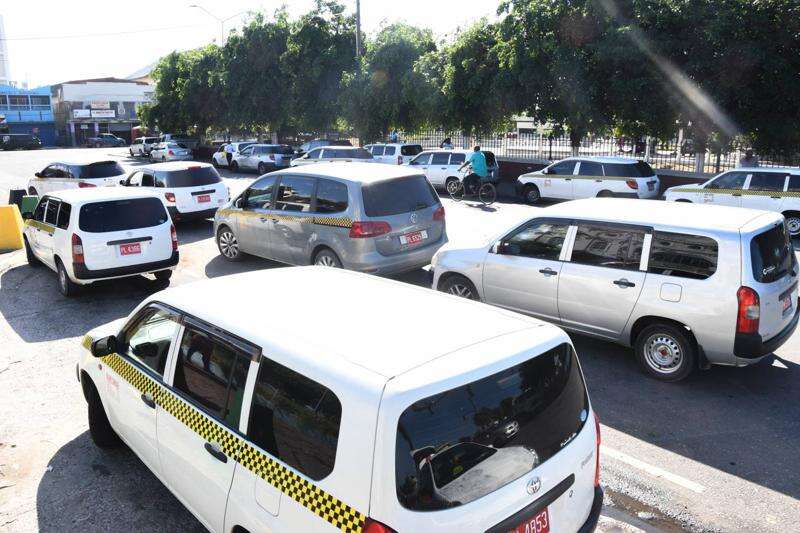
    ST ELIZABETH, Jamaica — Frustration is running high among hundreds of Jamaican taxi operators, who have agreed to pause planned nationwide industrial action only until the outcome of a scheduled Monday meeting with Transport Minister Daryl Vaz, according to Charles Powell, president of the Southern Taxi Association.

    Powell told reporters on the day of the meeting that the minister’s invitation to bring together all island-wide taxi association heads has convinced drivers to hold off on strike plans for the moment. “If he had not extended this invitation to talk, our members would have already walked off the job across every corner of Jamaica,” Powell explained. “Right now, we are simply holding our breath to see what concessions, if any, come out of this discussion.”

    The high-stakes gathering was set to kick off at 10:00 a.m. on May 18, 2026, at the Half-Way-Tree transport hub in St Andrew.

    Powell’s association alone counts roughly 300 drivers, all of whom are deeply discontented with a trio of long-running issues: unaddressed demands for a fare hike, steadily climbing fuel prices, and shockingly poor road infrastructure across southern parishes.

    At the top of the list of grievances is a 16% fare increase approved for operators more than two and a half years ago that has yet to be implemented. Second is the abysmal state of roads across Manchester, Clarendon and St Elizabeth, which Powell says has sent vehicle maintenance costs skyrocketing. He also pushed for greater leniency in government roadside vehicle inspections, arguing that it is unfair to penalize drivers for wear and tear directly caused by crumbling road surfaces.

    “You can’t expect our vehicles to stay in perfect condition when we’re navigating roads pocked with unmaintained manholes and broken pavement that local representatives have ignored for years,” Powell said, calling out specific stretches including the route from Mandeville to Alligator Pond down Spur Tree Hill, and the Santa Cruz to Black River corridor through Holland Bamboo. “The road is so bad that replacement costs for front-end vehicle parts have tripled. Keeping a taxi on the road is more expensive than it’s ever been.”

    Compounding these infrastructure-driven costs, Powell noted, is the relentless rise of global fuel prices, which has eaten away most of drivers’ daily earnings. He estimates that more than 60% of a typical taxi operator’s daily income now goes directly toward covering fuel costs, a burden so heavy that many drivers can no longer afford to keep their vehicles on the road, leaving many taxis parked at garages or stranded mid-route from running out of gas.

    “Operating a taxi is simply no longer financially viable under current conditions,” Powell said. He went on to criticize Minister Vaz for delaying the already approved fare hike, arguing that the government has dragged its feet on the issue for so long that the original adjustment is already outdated. “The government keeps telling us this deal is still on the table, but at this point, that table’s got mildew growing all over it. It’s been so long that we’re already due for another round of fare negotiations just to keep up with rising costs.”

  • WATCH: Residents block roads in Granville as situation escalates

    WATCH: Residents block roads in Granville as situation escalates

    In the tight-knit community of Granville, St James, Jamaica, simmering public anger boiled over into civil unrest on Sunday, after 43-year-old community resident Latoya Bulgin was fatally shot by an on-duty officer from the Jamaica Constabulary Force (JCF) during an alleged confrontation. According to official accounts and verified surveillance footage, Bulgin was behind the wheel of a Toyota Voxy, transporting a group of fellow residents to a planned community protest, when the encounter unfolded in the town’s central square. She was rushed to a local hospital for emergency care after the shooting, but medical staff were unable to save her, and she was pronounced dead shortly after arrival.

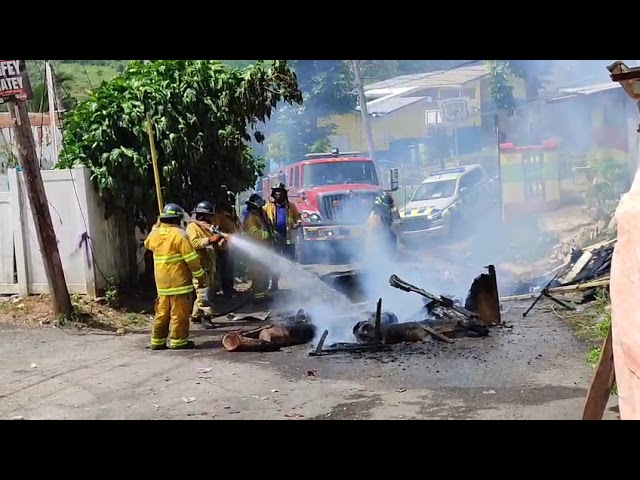
    Within hours of the news of her death spreading, furious residents took to the streets to block key intersections across Granville. Protesters repurposed discarded household appliances, fallen tree trunks, and other debris to build solid barricades across major throughfares, and set large open fires at several blockage sites to signal their outrage over the killing. The unrest has disrupted normal daily life across the community, cutting off access to local businesses, schools, and emergency services for many residents.

    In response to the blockade, a joint team of JCF officers and Jamaica Fire Brigade personnel has been deployed to the area to clear the blocked roadways and restore traffic flow. A heavy, visible police presence remains in Granville as authorities work to de-escalate tensions. In an immediate administrative move, the Police High Command has placed the officer involved in the shooting on interim interdiction, pending the outcome of official investigations. Two independent oversight bodies—the Independent Commission of Investigations (Indecom), and the Inspectorate and Professional Standards Oversight Bureau (IPROB)—have launched parallel probes into the incident to determine whether the use of lethal force was justified, and whether any misconduct occurred.

  • Taxi association boss calls strike notice ‘premature’

    Taxi association boss calls strike notice ‘premature’

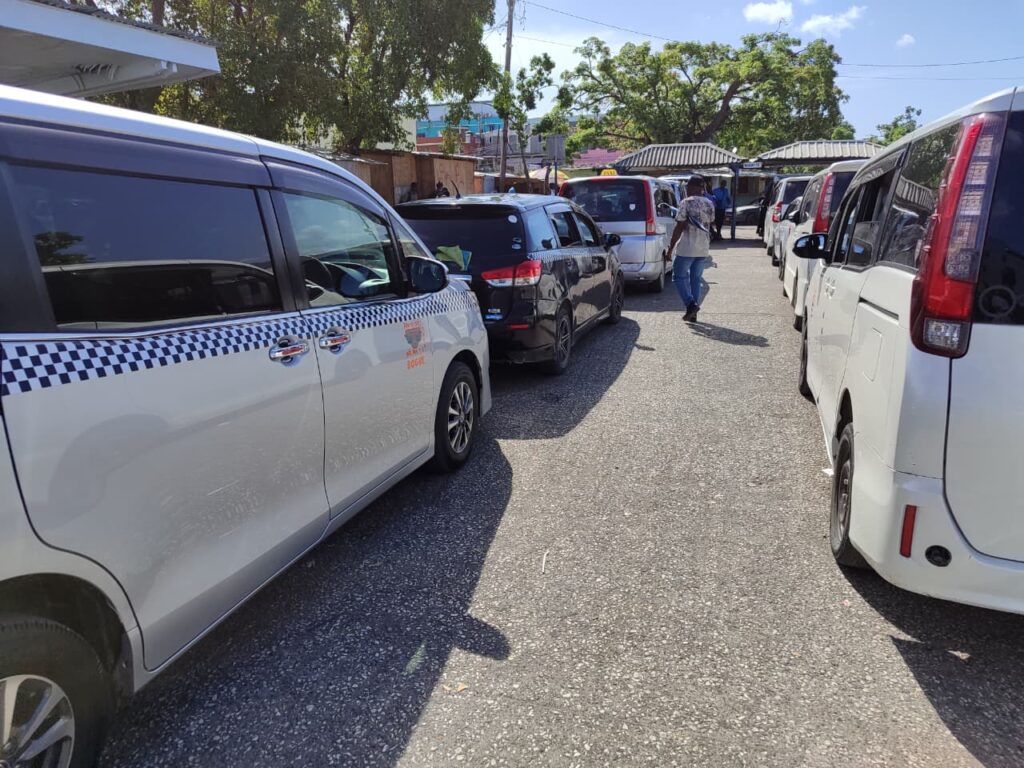
    Amid circulating social media speculation of an imminent taxi fare protest set to launch Monday morning, the top leader of Jamaica’s St James Taxi Association has pushed back against the claims, labeling the viral announcement as premature and uncoordinated.

    Dion Chance, president of the local association, told local media outlet Observer Online that the unapproved strike notice originated from an individual based in the southern parish of St Elizabeth, not from authorized industry leadership in St James. As of Sunday, the Jamaica Constabulary Force had issued an internal advisory to its personnel alerting them to potential disruptions tied to the rumored strike, which was framed as a push for increased taxi fares.

    Contrary to the viral warning, public transit operations across St James continued to run normally on Monday with no work stoppages reported. Chance emphasized that organized industry action does not happen spontaneously. Any official strike would require advance notification to all association members, exhaustive exploration of all negotiation channels with relevant stakeholders, and deliberate planning to ensure any protest is effective. “Our members know full well that they would receive formal, advance communication before any industrial action. We do not just call a strike overnight,” he explained.

    Chance confirmed that industry leaders are already in the process of addressing fare increase demands, with a scheduled meeting of all taxi association presidents from across Jamaica set for Thursday this week. This gathering follows an initial meeting held last week to discuss the issue. Following Thursday’s discussions, leadership will finalize a formal plan of action based on the meeting’s outcomes, Chance added.

  • Firefighters host charity car wash for community safety

    Firefighters host charity car wash for community safety

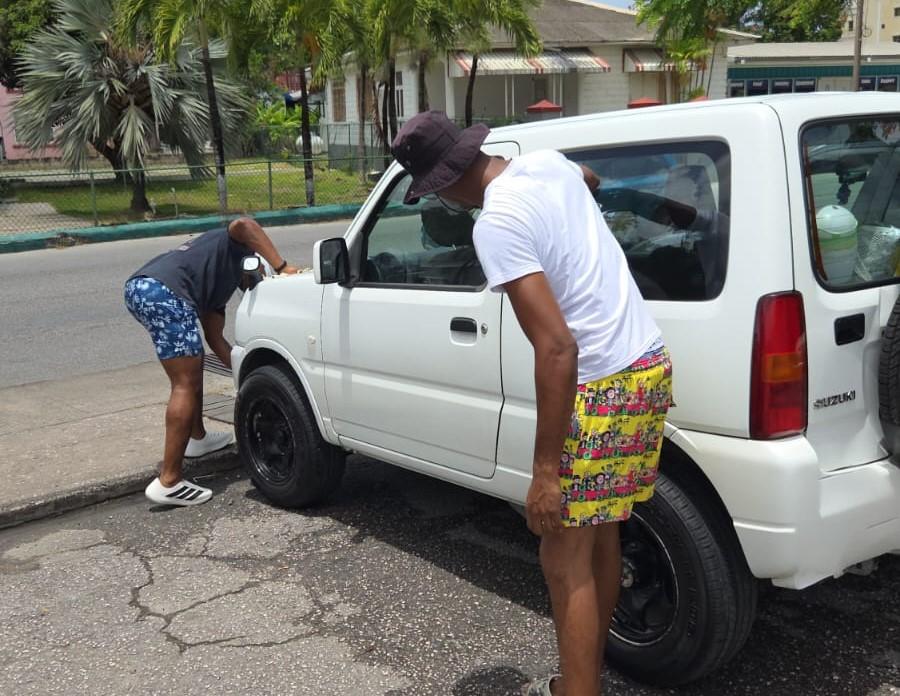
    On a lively Saturday in the coastal community of Worthing, Barbados, the Bajan Firefighters Network rolled out a creative new charity fundraiser that blended fun, practical service, and public good: a ‘sexy car wash’ designed to refill the organization’s coffers for its ongoing community-focused safety initiatives.

    Local firefighters and volunteer supporters set up their operation steps from the area’s post office, greeting motorists looking for a car deep clean while raising the critical donations the grassroots non-profit depends on to keep its programs running. Beyond washing vehicles, the event also doubled as a recruitment drive for the Barbados Builder Identifier, a new digital tool developed by the network to help first responders quickly and accurately locate homes calling for emergency assistance, cutting down response times in life-threatening situations.

    Krystal Penny Bowen, the network’s public relations officer and a long-time volunteer, explained that the lighthearted, accessible event grew out of a goal to rebuild in-person connections with local residents after the organization paused in-person fundraising events for a period. “Our charity has been serving Barbadian communities for several years, but we hadn’t hosted an in-person fundraising gathering in quite some time,” Bowen shared in an interview at the event. “We wanted something straightforward and useful that the public would actually engage with. People always need their cars washed, so it made perfect sense to bring together firefighters and volunteers to pull this off.”

    While the playful theme created a high-energy, upbeat atmosphere that drew crowds of locals to the site, the work behind the fundraiser is rooted in serious, life-saving public safety work. The Bajan Firefighters Network is entirely dependent on public donations to support its free community outreach programs, the most prominent of which is a free smoke alarm installation service for vulnerable residents. The group prioritizes installing and maintaining life-saving smoke alarms for low-income, elderly, and disabled Barbadians who often cannot afford the equipment or do not have anyone to help them install it properly. In addition to this core program, the network regularly delivers free fire safety educational workshops to schools, neighborhood groups, and community centers across the island, helping reduce the risk of preventable fire-related injuries and deaths.

    Bowen emphasized that all funds raised from the car wash event will go directly to program costs: the money will be used to purchase new smoke alarms for upcoming installation drives, fund future community outreach and education activities, and recognize the hard work of the organization’s volunteer members who give their time to keep communities safe.