St. Vincent and the Grenadines is currently grappling with an unprecedented severe water shortage that has pushed the country’s smaller Grenadines islands into a state of emergency, prompting the newly sworn-in administration to fast-track a seven-year-stalled desalination initiative that was originally gifted by the Italian government.
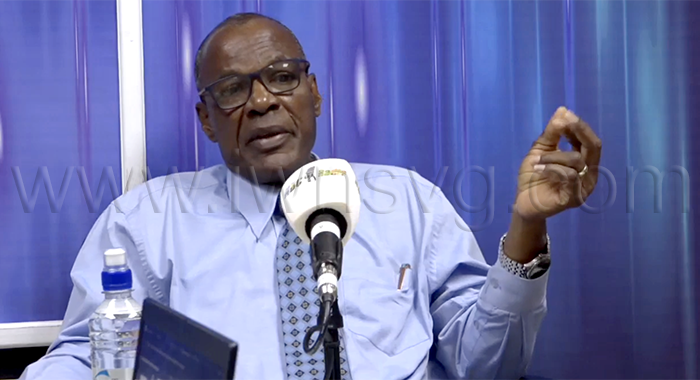
Health Minister Daniel Cummings, who holds oversight over the country’s potable water portfolio, launched sharp criticism at the former Unity Labour Party (ULP) government for the years-long delay of the Bequia desalination plant project. In an interview with NBC Radio this Wednesday, Cummings — who assumed his post in December following the New Democratic Party (NDP)’s victory in the November 25 general election — expressed deep frustration over the stagnant initiative. “It is extremely puzzling that for over seven years, a desalination plant donated by the Italian government for the people of Bequia has never moved past the planning stage. For whatever reason the project never got off the ground, and this is nothing short of a tragedy,” he stated.
The planned facility, which will include dedicated storage infrastructure and distribution pipelines, is designed to convert treated seawater into safe drinking water for Bequia’s residential community. According to Cummings, the country’s Central Water and Sewerage Authority (CWSA) is now prioritizing the project to advance desalination access across most Grenadine islands, a long-term solution that will help ease chronic water scarcity across the region.
Right now, the entire archipelago is reeling from a severe extended drought that has forced widespread water rationing even on mainland St. Vincent, which is naturally endowed with rivers, springs, and streams to support its municipal water network. The situation is far grimmer across the Grenadines chain, where rainwater harvesting remains the primary source of drinking and household water for most communities. Cummings labeled the current conditions across the Grenadines a “super critical” crisis, emphasizing that Bequia — the largest Grenadine island located just nine miles from the capital Kingstown — is no exception, despite its proximity to the mainland. The island is currently facing extreme water shortages that have disrupted daily life for residents.
In the short term, authorities are pulling every lever to stabilize water supplies across the affected islands, leveraging a patchwork of existing and soon-to-be-activated private and resort-owned desalination facilities to fill gaps. On Union Island, a private desalination plant developed by a local investor has already been completed but has not yet entered operation. Cummings confirmed that ongoing conversations with the developer have put the facility on track to be commissioned in the very near future. Once operational, water from the plant will be transported by tanker to different parts of the island, as no permanent distribution mains have been constructed for the facility. On Canouan, residents have historically depended on excess water from the island’s resort-owned desalination plant, but the facility is currently struggling to meet its own operational demands, meaning it can no longer supply the same volume of water to local communities it once did. The small island of Mayreau has seen a modest reprieve recently after the Mustique Company installed a small-scale desalination plant in the island’s bay, though additional water still needs to be delivered by boat to meet full community demand.
Looking toward long-term sustainable solutions, Cummings highlighted modern advances in desalination technology paired with solar energy that have transformed the feasibility of these projects compared to a decade ago. New solar-powered desalination systems cut reliance on expensive fossil fuels dramatically, harnessing renewable energy to treat water and pump it into elevated storage facilities. “The technology has improved dramatically on both fronts: modern desalination requires far less energy than it did 10 to 15 years ago, while solar power systems have become cheaper and far more accessible,” Cummings explained. The elevated storage design also guarantees consistent supply: when sunlight is unavailable after dark, gravity feeds stored water to residents, ensuring a continuous supply of high-quality drinking water across all Grenadine islands.
Cummings reaffirmed that the new administration is prioritizing long-neglected water infrastructure projects across the Grenadines to address both the immediate crisis and future water security risks, with the Bequia desalination project at the top of the government’s implementation list.