分类: society

  • Cop shooting rage

    Cop shooting rage

    MONTEGO BAY, Jamaica — A thick cloud of anger, sorrow and trepidation settled over the tight-knit community of Granville in St James parish on Monday, as residents took to the streets to demonstrate against the fatal shooting of 47-year-old Latoya “Buju” Bulgin, who was killed by a single police bullet the day prior.

    Fear of retaliation has silenced many in the neighborhood, even as outrage grows over the killing. One resident, speaking to reporters only on the condition of anonymity after being guaranteed their identity would remain hidden, shared a firsthand account of the Sunday incident that has divided public opinion across the island nation. According to the witness, who was standing near Bulgin when the shot was fired, the encounter began when an officer pulled Bulgin over and requested her driver’s license. When Bulgin produced a license issued by another country, the officer continued to question her and press for additional documentation.

    The witness recounted that Bulgin exited her black Toyota Voxy minivan after the officer told her he would impound the vehicle and call a wrecker. As Bulgin moved to turn off the van’s engine, the vehicle shifted slightly — and the officer opened fire immediately. “It’s not like Buju was going to drive off or anything; the officer knew her personally,” the witness said, demonstrating how Bulgin clutched her chest and collapsed backward after being struck by the bullet. This account directly contradicts the official police narrative, which claims Bulgin threatened to run the officer over before she was shot.

    A local peace broker affiliated with the community-based Peace Management Initiative (PMI), who also requested anonymity, pushed back against widespread characterizations of Bulgin as a dangerous person. “Everybody knows Buju. We know she had a rough, ghetto-style demeanor, she was out of order sometimes, but she was not a criminal,” the broker insisted. “She never deserved to die this way.”

    The killing comes on the heels of a string of fatal security force shootings in Granville since the start of 2026, which have already eroded public trust in police. So far this year, five people in the community have been killed by law enforcement. On New Year’s Day, a 4-year-old child named Romaine Bowman was among three people killed during a joint operation by the Jamaica Constabulary Force and Jamaica Defence Force. Just two weeks before Bulgin’s death, on Mother’s Day, 17-year-old Tjey Edwards was shot and killed by police as they wrapped up an operation in the area. Bulgin was shot Sunday while helping transport protesters who had gathered to demand justice for Edwards’ killing.

    The Independent Commission of Investigations (Indecom), Jamaica’s independent police oversight body, has issued a public call for witnesses to come forward with information about the shooting. Local leaders have echoed that appeal, though they acknowledge widespread fear of retaliation keeps many silent. Granville Division Councillor Michael Troupe, of the People’s National Party, said a meeting with Indecom and senior police leadership is planned to address safety guarantees for witnesses. “They have to assure the people that it is safe for them to give statements. Let them share what they saw — that’s the only way we can get justice for this latest incident,” Troupe said from his party office, just steps from Granville Square where the shooting took place. Some residents have already given statements to Indecom, but the PMI peace broker said far more action is needed to repair broken community trust, including expanded community policing initiatives.

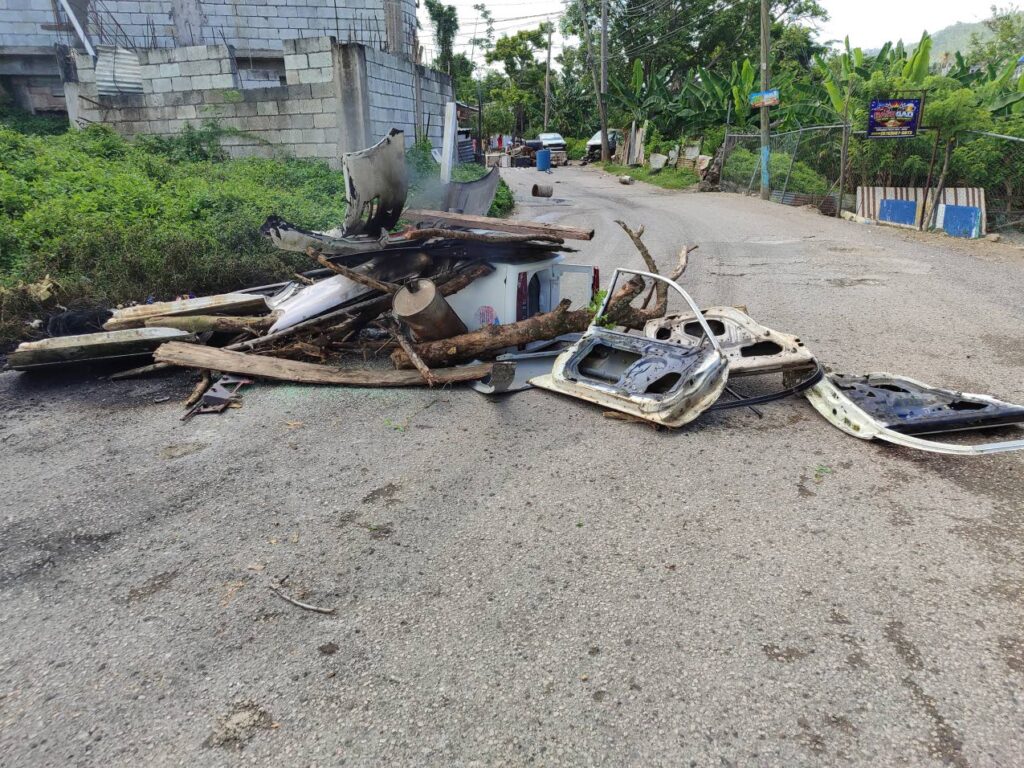
    On Monday, demonstrators erected burning roadblocks across key thoroughfares in Granville, including a heavily traveled route connecting multiple inland communities to Montego Bay. Firefighters were called in to extinguish the blazes, and police assisted with clearing the roadway to restore traffic flow.

    Security camera footage of the encounter has amplified long-simmering national concerns about the rising toll of fatal police shootings across Jamaica. In an official press release, Indecom confirmed that Bulgin’s death marks the 15th fatal shooting of a civilian by security forces in May 2026 alone. The most recent prior fatal shooting occurred on May 16 in Hague, Trelawny, where two men were killed by police. Year-to-date, 130 civilians have been fatally shot by Jamaican security forces, compared to 129 during the same period in 2025 — a slight increase that has alarmed civil society groups.

    A key detail that has drawn renewed criticism from advocacy groups is that none of the three officers assigned to crowd control duties at the protest the day Bulgin was killed were wearing or issued body-worn cameras. The absence of body cameras has been a persistent point of contention between civil society and Jamaican law enforcement for years, with activists arguing mandatory body cam use increases transparency and accountability.
  • JTA workers protest for long-overdue pay

    JTA workers protest for long-overdue pay

    A new layer of labor tension has emerged in Jamaica, as the Jamaica Teachers’ Association (JTA) — already locked in a public pay disagreement with the national government — now confronts an internal protest from its own non-teaching staff over nearly a decade of unpaid and improperly calculated wages.

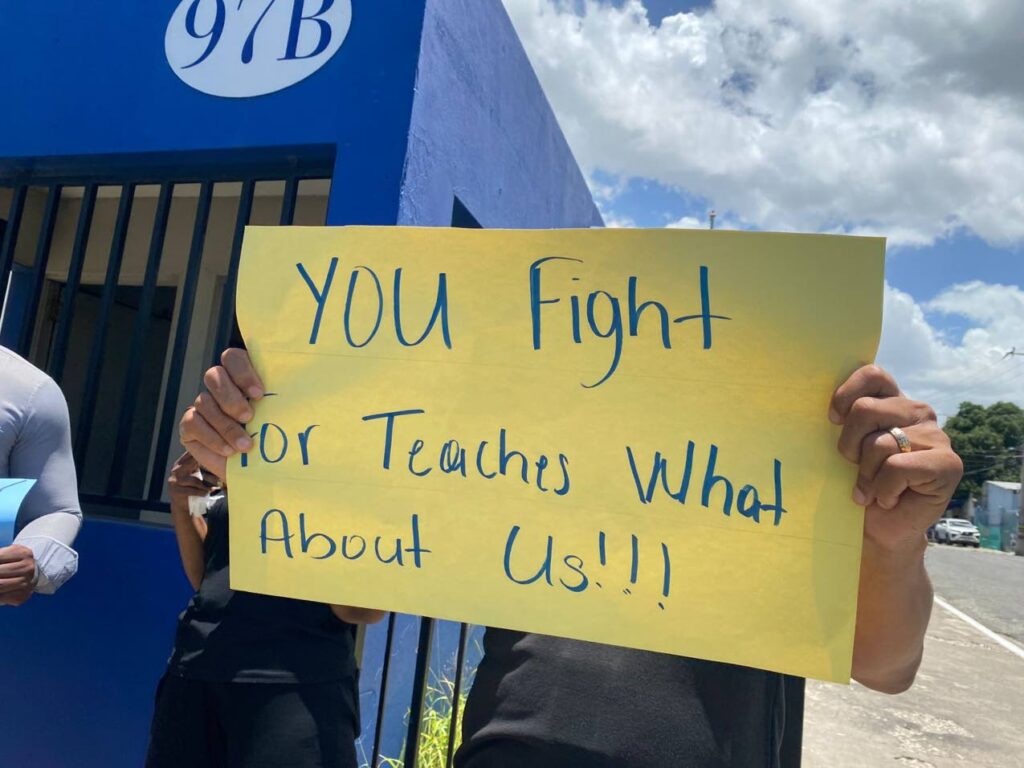
    On Monday, dozens of disgruntled JTA employees took to the streets outside the union’s downtown Kingston headquarters on Church Street. Dressed all in black and holding hand-painted placards, the workers demonstrated their mounting frustration over pay issues that have remained unaddressed since 2015.

    The employees are represented by the Bustamante Industrial Trade Union (BITU), one of Jamaica’s most prominent labor organizations. BITU Vice-President Rudolph Thomas laid out the full scope of the grievances in an official statement shared with media outlets. According to Thomas, the core of the conflict dates back to 2017, when the JTA first failed to provide transparent breakdowns for incremental and seniority-based salary adjustments that staff were contractually owed. Union representatives have repeatedly flagged calculation discrepancies and requested formal clarification, but no resolution has been forthcoming.

    Thomas added that the situation has deteriorated sharply in recent months. The JTA has not completed negotiations for wage and fringe benefit packages covering the 2024 to 2026 period, even though the prior agreement has already expired. Compounding this, the union says the JTA has unreasonably delayed the launch of a market-aligned salary restructuring that was scheduled to take effect at the start of 2024.

    The BITU represents a range of non-teaching staff at the JTA headquarters, including security officers, support and maintenance workers, accounting personnel and clerical employees. Thomas emphasized that the prolonged inaction from JTA leadership violates existing collective bargaining agreements between the two groups. “This is effectively a refusal to pay our members the fair wages they have earned through their work,” Thomas said in the release. “Workers have run out of patience after years of broken promises and empty delays.”

    Thomas warned that the protest will escalate if JTA management does not immediately agree to meet with union representatives and set binding, clear timelines to resolve all outstanding issues. He added that previous commitments to resolve the dispute, reached during mediation at Jamaica’s Ministry of Labour, have already been broken, leaving workers with no other option than to take public action.

  • Reggae Jammin Mathematics Marathon delivers confidence boost before exams

    Reggae Jammin Mathematics Marathon delivers confidence boost before exams

    KINGSTON, Jamaica — Ahead of critical national examinations, over 90 Jamaican high school students converged on the University of the West Indies campus recently for the one-day Reggae Jammin Mathematics Marathon, a community-focused academic support initiative designed to demystify a notoriously challenging subject and build student confidence. Unlike traditional high-pressure exam cram sessions, the full-day event was structured to foster encouragement over stress, combining structured guided tutoring, hands-on interactive problem-solving workshops, and one-on-one targeted support for students grappling with tricky mathematical concepts.

    This event is the latest in a series of education-focused outreach efforts from Reggae Jammin, a brand that frames its youth investment as extending far beyond traditional corporate sponsorship. In an official press statement released Tuesday, Reggae Jammin Brand Manager Navron Henry emphasized that the marathon was far more than a simple tutoring clinic. “At Reggae Jammin, we believe in supporting young people both inside and outside of the classroom,” Henry said. “The mathematics marathon was more than just a tutoring session. It was an opportunity to encourage students, build confidence and remind them that they are capable of achieving great things. We are proud to play a role in empowering the next generation through education.”

    Leading all instructional sessions was Demar Hemley, a veteran mathematics educator with 12 years of classroom and tutoring experience, and founder of Hemley’s Tutoring. The regional academic support organization, launched in 2021, was founded with the explicit goal of expanding accessible, high-quality academic tutoring across the Caribbean. For Hemley, who has organized independent exam preparation marathons for years, the chance to scale the initiative to reach more students through Reggae Jammin’s support was an immediate yes.

    “I always do marathons before major exams so when Reggae Jammin contacted me, I immediately said yes because this would help students on a wider scale,” Hemley explained. “The students were excited and encouraged throughout the day, and they willingly participated in the sessions. By the end of the marathon, you could see their confidence growing as they gained a better understanding of the areas they were struggling with.”

    That visible growth in student confidence did not go unnoticed by parents in attendance. Wesley Burger, a parent whose fifth-form daughter is preparing for upcoming exams at Jamaica’s prestigious Wolmer’s High School for Girls, praised the event’s timely arrival in the middle of exam preparation season. “It’s exam time, so practice, revision and clarity sessions are extremely helpful at this point,” Burger said. “The best part of the experience for me was knowing that the sponsors, Reggae Jammin, took the time to care.”
    Burger added that he plans not only to participate in future iterations of the Mathematics Marathon but also to actively recommend the program to other parents and students across the island. The event aligns with Reggae Jammin’s long-standing commitment to investing in Jamaican youth through sustained education support and community-centered engagement, with organizers signaling plans to host the initiative again ahead of future exam cycles.

  • Grange encourages Jamaicans to participate in Labour Day activities

    Grange encourages Jamaicans to participate in Labour Day activities

    KINGSTON, Jamaica — As the island nation gears up for its annual national Labour Day observance, Jamaica’s Minister of Culture, Gender, Entertainment and Sport Olivia Grange has issued a public call for widespread participation from Jamaicans across every corner of the country. The 2026 event will center on the unifying official theme: “One People, One Purpose, In All Things Jamaica Wins”.

    A minor adjustment has been made to the 2026 observance date. While Labour Day is traditionally marked on May 23 each year, the holiday will be celebrated on Monday, May 25 in 2026, as the standard date falls on a weekend this cycle.

    In an exclusive conversation with JIS News, Minister Grange emphasized that the chosen theme is far more than a slogan — it encapsulates the core national identity that has long defined Jamaican people. “It has a nice little rhyme, nice little rhythm to it, and it is the beating heart of who we are as Jamaicans,” Grange shared. “It captures our unbreakable resilience. It captures our unshakable unity and our fierce dedication.”

    She added that when the nation aligns behind a shared goal, no barrier is insurmountable: “When we stand together as one people with one purpose, there is no storm, no challenge, no obstacle too great for us to conquer.”

    Organizers have selected two flagship national projects to anchor this year’s Labour Day volunteer efforts. The first centers on the restoration and upgrade of Kingston’s iconic Sabina Park cricket complex, a landmark that is currently undergoing preparations to welcome back regional and international cricket matches, including upcoming fixtures of the Caribbean Premier League (CPL) T20 tournament.

    Grange explained the significance of selecting Sabina Park for national focus, noting the venue holds deep cultural and historical heritage for Jamaica. The government has maintained long-term investments in the site’s modernization, including a cooperation partnership with India that will deliver a new high-tech scoreboard and upgraded stadium lighting. These ongoing upgrades are all aimed at bringing the facility fully in line with international competition standards. On Labour Day, volunteers will mobilize to clean, repaint, and complete minor repairs across the park to support its upcoming reopening for major sports events.

    The second national project is based in Lewis Town, a community in the parish of St Elizabeth. Local teams and volunteers will focus on repairing and replacing the damaged roof of the Lewis Town Early Childhood Institution, which was severely harmed when Hurricane Melissa swept through the area.

    Per the event’s official schedule, Jamaican Prime Minister Dr Andrew Holness is scheduled to visit both flagship project sites on Labour Day to meet with volunteers and observe progress. Meanwhile, sitting members of parliament and local municipal corporations will lead community-level volunteer projects in every region across the island.

    A core priority for the 2026 Labour Day observance is the restoration and rehabilitation of shared community assets, Grange confirmed. These assets include early childhood education centers, neighborhood community centers, and local sports facilities that serve residents across the country.

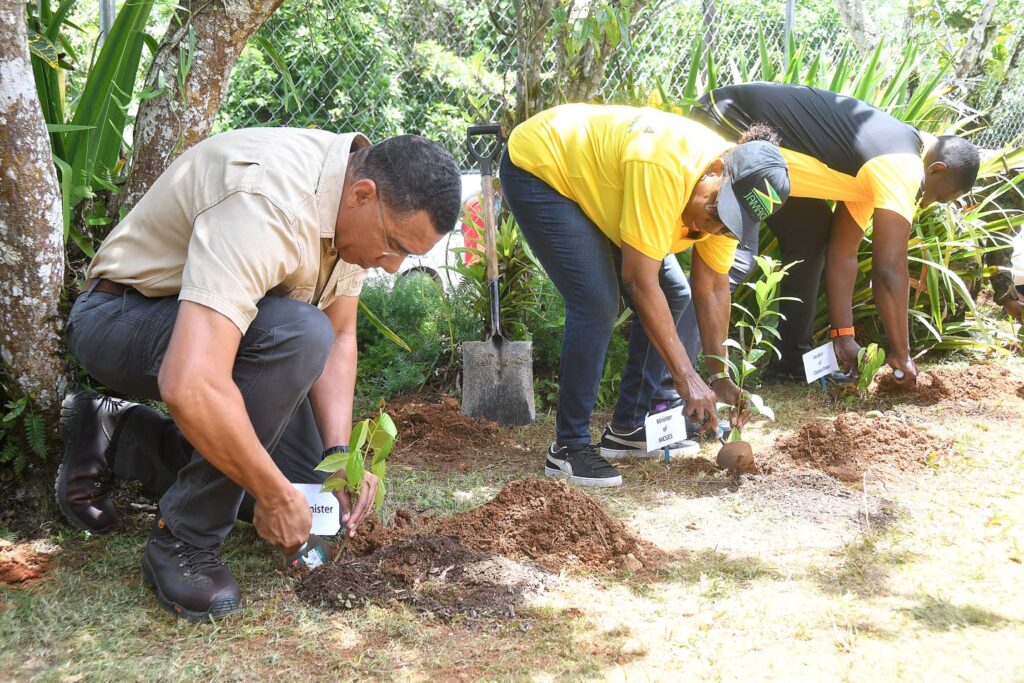
    “ I want everyone to go out on Labour Day to show that together, as a united people, we will help those who are unfortunate. We will help our neighbours. We will help to restore community centres, early-childhood education institutions, and sports facilities. That is the focus this year,” Grange told JIS News.

  • Police Seize Firearm, Ammunition and Cannabis During Red Hill Raids

    Police Seize Firearm, Ammunition and Cannabis During Red Hill Raids

    In a coordinated early morning law enforcement operation targeting illegal contraband in Antigua and Barbuda’s Red Hill neighborhood, multiple specialized police units have seized an unregistered firearm, multiple ammunition magazines, and large quantities of cannabis, taking three suspects into custody, the Royal Police Force of Antigua and Barbuda announced in an official media release Monday. The operation, launched shortly before 5 a.m. on May 18, 2026, brought together teams from four key police divisions: the Criminal Investigations Department Task Force, the Gang and Guns Suppression Unit, the Special Services Unit, and the K-9 Unit, all deployed to execute multiple search warrants across separate residential properties and a vehicle in the community.

    The first search, carried out at one targeted property, yielded the biggest haul: one illegal firearm, two loaded magazines, multiple rounds of live ammunition, and a undisclosed amount of cannabis. A single male suspect was arrested on site following the seizure, facing three charges including unlawful possession of a firearm, unlawful possession of ammunition, and unlawful possession of cannabis.

    In a second, separate search of another nearby property in Red Hill, officers uncovered additional stockpiles of cannabis. Two more individuals were taken into custody from this location, both held on suspicion of unlawful cannabis possession. A subsequent search of a vehicle linked to the investigation also turned up a smaller portion of the controlled substance.

    All seized contraband and three detained suspects have been transported to the nearest local police station, where investigators are continuing to build their case and process evidence, according to the official statement. The operation marks the latest push by Antigua and Barbuda’s law enforcement agencies to crack down on illegal firearms trafficking and narcotics possession in residential communities, part of a broader ongoing initiative to reduce gang-related violence and street-level drug distribution.

  • Caridocs to Host Bulk Application Day for Jamaican Nationals in Antigua

    Caridocs to Host Bulk Application Day for Jamaican Nationals in Antigua

    For Jamaican citizens building lives in Antigua and Barbuda, a persistent bureaucratic barrier has long complicated their efforts to secure immigration status, residency, and other critical life milestones: accessing and processing official Jamaican documents for international use. For years, this community has grappled with a trifecta of challenges: exorbitant processing fees, extended waiting periods, and widespread confusion over official requirements that derail applications before they even reach the right authorities. Now, a regionally rooted support organization is stepping in to bridge the gap between frustrated applicants and official government institutions.

    Caridocs, a Caribbean-focused document processing and immigrant support service, has launched a targeted initiative designed to streamline the often-convoluted documentation process for Jamaican nationals based in Antigua. Operating not as a replacement for official government agencies, but as a dedicated intermediary, the organization focuses on closing gaps in communication and procedural guidance that leave countless applicants stuck in administrative limbo.

    Nevoy Morrison, principal consultant at Caridocs, explained that two core problems plague most applicants: prohibitive costs to obtain documents directly from Jamaica, and a widespread lack of clarity around mandatory authentication steps. One of the most commonly missed requirements is the apostille or legalization process, a mandatory step overseen by Jamaica’s Ministry of Foreign Affairs and Foreign Trade that confirms a document’s validity for use outside the country. Without this certification, documents are automatically rejected, forcing applicants to restart the entire process from scratch.

    “Many applicants don’t realize that documents must be apostilled before submission. As a result, they are sent back to restart the process, which creates unnecessary delays and expenses,” Morrison noted. These repeated setbacks do not just waste time—they add unplanned costs that put essential services out of reach for many community members.

    To solve this, Caridocs has developed a streamlined, affordable workflow that guides applicants through every step of the process correctly on their first attempt. By proactively clarifying requirements and coordinating between applicants and Jamaican official bodies, the service cuts down on common errors and drastically reduces processing wait times. The organization repeatedly emphasizes it remains strictly a facilitator: it does not issue official government documents, nor does it bypass official protocols. Its sole role is to ensure full compliance with all regulatory requirements and clear up miscommunication that often slows progress.

    To make its support more accessible to the community, Caridocs has scheduled a Bulk Application Day on June 5, 2026, running from 9:00 AM to 2:00 PM at the Villa Polyclinic Conference Room. During the session, Jamaican nationals in Antigua will be able to receive one-on-one guidance to understand eligibility requirements, review their application materials for completeness, and submit correctly prepared documents—eliminating the common delays that stem from incomplete or improperly prepared paperwork.

    In addition to offering legitimate support, Caridocs is issuing a public warning against unregulated “back door” services that claim to offer fast-tracked document processing. The organization stresses that these offerings are almost always fraudulent, and participants can face severe legal penalties for using unauthenticated, illegitimate documents. All valid, legally recognized documents for international use must go through official government channels and complete the required authentication process, the group confirmed.

    Jamaican nationals interested in accessing Caridocs’ services or learning more about detailed fee breakdowns and application requirements are encouraged to contact the organization directly by phone at (268) 780-8681 to schedule support or ask questions ahead of the upcoming Bulk Application Day.

  • LETTER: How Long Must Residents of Lightfoot Lane Suffer?

    LETTER: How Long Must Residents of Lightfoot Lane Suffer?

    What was supposed to be a routine, short-term infrastructure upgrade for a residential street in Antigua and Barbuda has devolved into a persistent daily crisis for the dozens of households living along Lightfoot Lane. For weeks, local residents have watched their road improvement project stall, leaving their neighborhood in a condition they unanimously call unsafe, unnavigable, and unworthy of a developed nation in 2026.

    While community members have long welcomed the planned road upgrade to improve local access and property values, the current uncompleted, unmanaged site has left them feeling abandoned by public works officials. Large swathes of Lightfoot Lane remain split between uneven half-laid pavement and exposed excavated dirt, littered with construction hazards ranging from loose gravel and protruding steel rods to pools of standing dirty water that have collected after recent rains. What was once a quiet residential street has been transformed into a dangerous obstacle course that tests even able-bodied residents just to travel between their homes and parked vehicles.

    The risks are disproportionately borne by the neighborhood’s most vulnerable residents: dozens of senior citizens and people with chronic medical conditions who call Lightfoot Lane home. With no clear path for vehicles to reach most driveways, these residents are forced to park hundreds of meters away from their properties, then trek across unstable, uneven terrain to reach their front doors. For people living with joint pain, limited mobility, and other physical disabilities, every trip outside becomes a painful, high-stakes endeavor that carries a constant risk of falls and serious injury.

    Beyond the daily danger of accessing their homes, residents face growing uncertainty around access to basic municipal services. Trash collection schedules have been disrupted, with locals unsure whether garbage trucks will be able to navigate the broken road to pick up waste. For vulnerable residents who cannot haul their own trash to a nearby collection point, this opens the threat of uncollected garbage piling up near their homes, creating sanitation risks and public health hazards.

    What frustrates residents most, however, is the lack of urgency, communication, and visible progress from project managers and government officials. The community is clear that no one expects major infrastructure work to be finished overnight; locals understand that road upgrades require time and planning to complete properly. What they cannot reconcile is how a residential street serving taxpaying, long-term residents can be left in a hazardous state for weeks on end, with no clear timeline for completion and no outreach from officials to address their safety concerns.

    Residents have also highlighted that many of those affected are long-time citizens of Antigua and Barbuda who have spent decades contributing to the country’s development through steady work, tax payments, and community service. After a lifetime of contributing to national growth, they say it is unacceptable that they now must navigate mud, construction debris, and exposed hazards just to enter their own homes.

    Beyond daily quality of life concerns, the stalled project has raised urgent questions about emergency access. Residents live in constant fear that a medical emergency, house fire, or other crisis would leave first responders unable to reach affected homes in time. What should be a routine public works project has now turned into a fight for basic safety, dignity, and quality of life for the Lightfoot Lane community.

  • Navy aviators eject safely after jets collide at Idaho airshow

    Navy aviators eject safely after jets collide at Idaho airshow

    A dramatic mid-air collision between two U.S. Navy electronic warfare aircraft unfolded over southern Idaho on Saturday during a public air demonstration, leaving aviation officials and spectators shaken but relieved after all crew members escaped to safety. Military spokespersons confirmed that the incident occurred at the Gunfighter Skies airshow, a popular annual aviation event hosted near Mountain Home Air Force Base, approximately 40 miles south of Idaho’s capital city of Boise. The two aircraft involved in the crash were identified as EA-18G Growler jets, specialized radar-jamming aircraft that are a core component of modern Navy carrier air wings. In the immediate aftermath of the collision, all four aviators assigned to the two jets successfully activated their ejection systems and parachuted out of the damaged aircraft before the craft crashed. As of the latest update from military command, no fatalities have been recorded from the incident. Officials have not yet released additional information regarding whether any of the ejected aviators suffered minor or major injuries, nor have they confirmed whether the falling wreckage caused any damage to nearby infrastructure or injuries to spectators and personnel on the ground. The Gunfighter Skies airshow, which draws aviation enthusiasts from across the Pacific Northwest each year, features both civilian aerobatic displays and demonstrations of U.S. military air capability. Organizers have not yet announced whether the remaining scheduled events for the show will be canceled following the collision. Military aviation accident investigators have launched a probe into the cause of the collision, with a preliminary report expected in the coming weeks.

  • Search shifts to dump after tip-off

    Search shifts to dump after tip-off

    The multi-day search for missing two-year-old Angelo Tobias Plaza in Tobago has entered a devastating new phase, after law enforcement officials received an anonymous tip via WhatsApp that the young boy’s body may have been dumped at the Studley Park landfill in the days following Mother’s Day. This development comes as the investigation into the toddler’s unexplained disappearance continues to unfold, gripping the entire nation of Trinidad and Tobago.

    As of yesterday, the toddler’s 22-year-old mother Kalifah Tobias and her partner Shannon Miller, who is identified as Angelo’s stepfather, remained in police custody as detectives work to piece together the timeline of the child’s disappearance. Investigative efforts are being led by a cross-regional team of law enforcement, including officers from the Special Victims Department, the Homicide Bureau, and personnel from Trinidad, operating under the command of Assistant Commissioner of Police Rishi Singh.

    Nisha Sookram-Loutan, an inspector and legal officer with the Special Victims Department assigned to the Tobago-based case, reaffirmed law enforcement’s unwavering commitment to the investigation in an interview with the *Express* on Thursday. “We are committed to pursuing every possible lead to bring this case to closure,” she stated, confirming the multi-unit structure of the investigative team.

    Detectives are currently analyzing CCTV footage that captures Tobias and Miller near a Goodwood neighborhood supermarket just before 8 p.m. on the Monday Angelo was reported missing. The footage confirms the couple was alone at the time, with no sign of the toddler, a detail that has drawn additional scrutiny from investigators.

    Following the new tip, large-scale coordinated search operations have been launched at the Studley Park landfill. Multiple agencies have joined the effort, including the Trinidad and Tobago Police Service (TTPS), the Tobago Emergency Management Agency (TEMA) which deployed its Unmanned Aerial Vehicle unit for aerial reconnaissance, and the volunteer Hunters Search and Rescue Team. Search teams are carrying out systematic sweeps of sections of the site, combining aerial surveys, on-foot ground searches, and evidence recovery work to locate any trace connected to the missing child.

    Angelo was first reported missing last Monday, after relatives discovered he was unaccounted for at the family’s Goodwood home. Since that announcement, law enforcement and volunteer teams have carried out extensive land, sea, and air searches across multiple regions of Tobago, all launched in the hope of bringing the toddler home safely.

    The case has sent profound shockwaves through the small island community, with Tobago House of Assembly Chief Secretary Farley Augustine publicly addressing the widespread grief and anger surrounding the disappearance in a social media statement released yesterday. “This disappearance has shaken Tobago to its core. Every parent, every grandparent, every decent citizen feels the weight of this tragedy,” Augustine wrote. “Tobago is hurting, and we refuse to stay silent.”

    Augustine shared that the case has weighed heavily on him since his first public remarks, noting that “All of last night this child was on my mind.” He acknowledged the extraordinary effort that ordinary citizens, first responders, and volunteers have put into the search effort over the past week, including fishermen, hunters, village residents, and protective service personnel who have combed every corner of the island for any sign of Angelo.

    While he thanked all who have joined the search in solidarity with the child and his extended family, Augustine did not hold back on calling out the many unresolved questions surrounding the case. “Too many questions remain unanswered. The public outrage and heartbreak we are seeing across Tobago and Trinidad right now are completely justified. We have every right to be deeply angry about how this is unfolding and the unconvincing stories that are being circulated,” he said.

    Augustine emphasized that the situation has left the national conscience deeply unsettled, and the public is demanding full accountability. “A two-year-old child does not simply vanish without explanation. Toddlers do not climb through ditches and cross rough terrain to reach the ocean in complete darkness,” he argued. “Tobago will not accept the disappearance of a child as a normal event.”

    He called on every relevant national agency, including the TTPS, Homicide Bureau, and Child Protection Unit, to treat the investigation with the extreme urgency and seriousness it demands. “Leave no stone unturned. Every lead must be followed, every inconsistency must be examined, and every person with any information must cooperate fully with authorities,” Augustine said.

    He went on to stress that any negligence or wrongdoing must be brought to light: “If there has been negligence, it must be exposed. If there has been criminal activity, those responsible must face prosecution. Anyone holding information needs to understand that silence in a case involving a child is completely unacceptable.”

    Beyond the immediate investigation, Augustine said the tragedy must push Trinidad and Tobago as a society to reflect on our shared responsibility to protect children. “Too often, after these incidents, we move on too quickly. We cannot do that. Protecting children is not optional – it is a sacred responsibility,” he said. “Today, Tobago stands with Angelo. We stand with the people of Goodwood crying out for justice. We stand with every citizen demanding the truth. We hold onto the belief that this child matters. A nation is judged by how it protects its most vulnerable members. There can be no peace, no comfort, and no closure until we get answers.”

  • A risk to justice system

    A risk to justice system

    As Trinidad and Tobago moves forward with a planned expansion of criminal courts to cut through a massive backlog of pending cases, a top regional security expert is sounding the alarm that crippling staffing constraints at the Office of the Director of Public Prosecutions (ODPP) puts both the nation’s justice system and overall national security at severe risk.

    Details of the staffing crisis first emerged over the weekend, when the Sunday Express reported that the ODPP has formally confirmed it cannot allocate prosecutors to the newly added court seats, despite the judiciary’s push to expand the High Court’s Criminal Division to tackle the growing backlog that has delayed justice for years. In a formal correspondence dated April 30 addressed to Kimberly Prescott, acting Registrar of the Supreme Court, ODPP Director Roger Gaspard, SC, made clear that the office lacks the prosecutorial workforce to support three to four additional High Court judges that were scheduled to begin hearing backlogged cases starting in early May.

    Speaking exclusively to the Express over the weekend, regional security consultant Dr. Garvin Heerah explained that the new court initiative was meant to be a landmark intervention to address rising crime, widespread criminal impunity, long-standing justice delays, and plummeting public trust in the country’s justice institutions. He emphasized that speeding up case prosecution, reducing judicial turnaround times, and strengthening the pathway to successful convictions are non-negotiable steps to rebuild public confidence in the rule of law across the twin-island nation.

    While Heerah commended the Trinidad and Tobago government for taking the critical step of expanding court capacity, he stressed that the operational and human infrastructure supporting the reform effort must also be upgraded to match. “Courts that operate without enough prosecutors, legal researchers, administrative support staff, digital case management systems, coordinated witness support, and dedicated security resources will never deliver on the promised outcomes,” Heerah argued. He added that meaningful justice reform depends on aligned investments in personnel, operational readiness, and strategic resource allocation, not just investments in physical court infrastructure.

    To address the growing gap between prosecutorial demand and available capacity, Heerah has called for urgent, targeted action. His proposed solutions include accelerated recruitment drives for new prosecutorial staff, temporary secondment programs to bring in additional prosecutorial support, targeted hiring for specialized legal roles, investment in improved case preparation protocols, and modernization of outdated operational systems.

    Beyond the immediate staffing crunch, Heerah also raised urgent alarms about operational security gaps for high-stakes cases, including prosecutions involving transnational organized crime, gang violence, public corruption, and intelligence-linked criminal activity. He noted that expanding the volume of court and prosecutorial work will increase the exposure of prosecutors, witnesses, investigators, digital evidence systems, and judicial officers to violent threats, intimidation campaigns, information leaks, and outside interference from criminal networks.

    “Proper Operations Security (OPSEC) protocols have to be built into the reform framework from the very start, not added as an afterthought once risks emerge,” Heerah said. He outlined key security measures that should be implemented immediately, including encrypted secure communication systems, controlled protocols for handling sensitive case documents, enhanced protection for digital evidence, restricted access to sensitive prosecutorial workspaces, improved intelligence coordination with security agencies, regular proactive threat assessments, strengthened support for witness protection programs, and upgraded physical security for both prosecutorial offices and court facilities.

    Heerah concluded that the long-term success of the court expansion initiative will hinge on whether the government grows prosecutorial capacity, personnel numbers, operational systems, and security infrastructure in lockstep with the broader justice reform agenda. “This is a defining moment for criminal justice reform in Trinidad and Tobago,” he said. “If we want to make real, lasting progress in the fight against serious crime, we have to approach this reform with strategic coordination, urgent action, and a focus on long-term sustainability.”

    Gaspard’s letter laid bare just how severe the staffing crisis has become over the past three years. He explained that the crisis has deepened after three deputy Directors of Public Prosecutions and two assistant deputy DPPs were promoted to judicial positions, leaving all deputy DPP roles completely vacant and only half of all assistant DPP posts filled. While recruitment falls under the purview of the Judicial and Legal Service Commission and the Office of the Attorney General, Gaspard noted that new appointments are still pending, and even newly hired prosecutors will require months of extensive training before they are qualified to handle complex serious criminal cases.

    Currently, Gaspard added, prosecutors already assigned outside of the Assize courts carry extremely heavy caseloads across district courts, children’s courts, masters’ courts, and bail courts, with each prosecuting attorney managing more than 70 active matters at any given time. He warned that shuffling already overstretched personnel to the new High Court seats would inevitably erode both the quality and timeliness of prosecutorial work across all other court levels, creating new delays even as the government tries to solve existing backlogs.