分类: society

  • Major work on minor roads coming

    Major work on minor roads coming

    Barbados is launching a massive infrastructure improvement initiative centered on long-overdue repairs to local residential roads, with a total investment of $32.5 million earmarked for the project, Senior Minister Kirk Humphrey has confirmed. Speaking at a branch meeting of the Barbados Labour Party held at St Leonard’s Boys School in St Michael West on Sunday, Humphrey laid out the full scope of upcoming work being rolled out by the Ministry of Transport and Works (MTW).

    To date, authorities have pinpointed nearly 50 residential roads in need of repairs, with an additional 30 historic cart roads currently under evaluation for inclusion in the project. Humphrey emphasized that while major highway expansion projects remain on the government’s agenda, upgrading the small, community-focused roads that residents use every day has been a top personal priority.

    “When you step out your front door, you shouldn’t land in a puddle – those corner roads, neighborhood access routes and cart roads are the ones I am most committed to fixing,” Humphrey said. The government has kept its promise to advance major infrastructure as well, he confirmed: planning is already underway to expand Highway 2A to four lanes, with construction set to break ground before the end of this year. Humphrey also invited residents to report poorly maintained small roads directly to the ministry, guaranteeing that reported routes will be added to the official work schedule.

    The residential road repair program is just one of several citizen-focused initiatives MTW is advancing in the coming months. Among the other urgent projects is a full overhaul of the neglected Constitution River Terminal, which Humphrey described as having fallen into unacceptable disrepair. Stagnant water pooling, unregulated encroachment, and overall dilapidation have left the terminal looking like a shantytown, he said, a situation unfit for Barbadian workers and commuters.

    “If we expect people to respect public spaces, we have to first provide them with safe, well-maintained spaces to live and work,” Humphrey noted. Along with physical upgrades, the ministry will deploy additional staff to the terminal to monitor public service vehicle operators and ensure compliance with traffic and route regulations. Humphrey stressed that effective management of van staging areas is critical to maintaining order across the entire road network, making on-site supervision a non-negotiable part of the terminal overhaul.

    With the Atlantic hurricane season set to begin in less than two weeks, MTW has already started clearing major drainage infrastructure across the island, and will ramp up clearing operations imminently. Humphrey called on local residents to share responsibility for flood risk reduction, urging homeowners and community groups to clear drains near their properties wherever possible to reduce the risk of flooding during storm events.

    The ministry also moved to address a longstanding public request: the installation of speed bumps in residential areas, particularly near schools, churches and crowded neighborhoods to protect child pedestrians and other community members from speeding traffic. Humphrey shared that he has long shared residents’ frustration over the previous MTW policy that blocked speed bump installation in most residential areas. While speed bumps are not appropriate for high-speed major highways, he explained, they are a critical safety measure in residential and community zones. He confirmed that internal discussions have already concluded, and residents can expect widespread speed bump installation to begin across the island’s communities in the near term.


  • Taxi operators livid

    Taxi operators livid

    For two years, Jamaican taxi operators have waited for the implementation of a promised 16 per cent fare increase. That patience snapped on Monday, when transport and finance officials asked for more time to deliver the unfulfilled commitment during a scheduled meeting at St Andrew’s Half-Way-Tree Transport Centre. Frustrated operators voiced fierce opposition to government proposals of a phased rollout of the hike, warning that rising operational costs driven by global and domestic shocks have already pushed many to the brink of financial instability.

    The 16 per cent increase was originally the second installment of a 35 per cent total fare adjustment approved by the Jamaican government back in October 2023. Only 19 per cent of that total was ever implemented at the time, with the remaining 16 per cent scheduled to take effect in April 2024. Multiple adverse economic and natural events have repeatedly delayed the adjustment, pushing any final decision to a parliamentary deliberation scheduled for June 1, 2026.

    Speaking on behalf of operators at the press conference, which was called ahead of threatened service disruptions over the delay, Fredrick Bryan, general secretary of the National Council of Taxi Associations, explained that runaway price growth tied to ongoing global geopolitical instability — specifically the Middle East conflict between the US, Israel and Iran — has made any further delay or staggered increase unacceptable.

    “We understand nobody anticipated a war, but as a result of the war, every single cost we face is accelerating. We work on the roads every day, we have families to support just like everyone else, and we feel these price hikes every single day,” Bryan told local outlet Jamaica Observer. He added that daily operating costs now consume more than 60 per cent of operators’ average daily income, leaving workers in an increasingly unsustainable financial position. “They’re proposing splitting the 16 per cent. That is a no-no. That doesn’t make any sense,” Bryan stressed, noting that the 16 per cent was already three years overdue by 2026, following an eight-year gap between the previous fare adjustment and the 2023 approved hike. By the time the government makes a final decision in June, operators should already be negotiating an entirely new fare increase to keep up with inflation, he argued.

    Egerton Newman, president of the Transport Operators Development Sustainable Services (TODSS), echoed Bryan’s rejection of a phased approach. Reports from the meeting indicated Finance Minister Fayval Williams had floated a plan to roll out the 16 per cent in two 8 per cent installments, an offer Newman flatly refused. “We have waited too long for this 16 per cent just to end up getting eight plus eight spread out over months,” Newman told ministers. “Everything has doubled, even tripled in price across the country, and that’s not just fuel prices. I cannot recommend accepting a staggered rollout at this time.”

    Transport Minister Daryl Vaz acknowledged the validity of operators’ frustration, admitting the wait for the second installment of the approved fare hike has been far longer than initially promised. He recognized that skyrocketing costs have placed immense financial pressure on the country’s taxi workforce, but defended the government’s request for more deliberation, pointing to a string of unforeseen crises that have upended the country’s economic planning over the past three years. These include lingering economic aftershocks from the COVID-19 pandemic, major damage from Hurricane Beryl in July 2024 and Hurricane Melissa in October 2025, and most recently, the ongoing conflict in the Middle East that has sent global energy prices soaring.

    Vaz explained that the Middle East conflict has already caused state-owned oil refinery Petrojam to absorb an estimated $4 billion in losses, as the government has capped weekly petrol price increases at $4.50 per litre to protect consumers. Without that cap, weekly price increases would have reached as high as $12.50 per litre, Vaz noted, meaning the government has had to absorb billions in subsidy costs to soften the blow of global energy volatility. “We are trying to balance a very delicate situation,” Vaz said. “Even though you have not received the 16 per cent increase yet, you have been cushioned by government policies that have kept fuel prices lower than they would otherwise be amid this crisis.”

    Not all operators accepted that justification. Charles Powell, president of the Southern Taxi Association in St Elizabeth, maintained that the full immediate 16 per cent increase is non-negotiable for operators struggling with rising costs. He did, however, express cautious hope that the June 1 parliamentary decision deadline represents a firm, trustworthy commitment from the government to finally resolve the years-long dispute.

  • Man dies after falling from Plaza Central parking structure in Santo Domingo

    Man dies after falling from Plaza Central parking structure in Santo Domingo

    On a Tuesday morning in Santo Domingo’s National District, a 49-year-old local business owner lost his life following a fall from the fourth floor of the parking garage at Plaza Central, a popular retail hub along 27 de Febrero Avenue. The Dominican National Police has confirmed the incident, which sent waves of alarm through the mall’s workers and visitors who were on site when it unfolded around 11 a.m.

    Authorities have formally identified the victim as Joselito del Rosario Paulino, the proprietor of Rapicell, a cell phone retail shop operating within the shopping complex. Known colloquially to many acquaintances by the nickname “El Siervo”, Paulino was remembered by fellow merchants in the mall as a soft-spoken individual deeply devoted to his Christian faith.

    First responders assigned to the 9-1-1 emergency system were dispatched immediately to the Plaza Central location after reports of the incident came in. Law enforcement teams have since launched a full inquiry to piece together exactly what led to Paulino’s death. According to police spokesperson Colonel Diego Pesqueira, investigative teams are currently working through two key lines of inquiry: analyzing security camera footage from the mall and parking structure, and collecting formal statements from witnesses who were in the area at the time of the fall.

    Early information from the investigation notes that a mall security guard told detectives he believes the fall may have been an intentional act by Paulino. However, law enforcement officials have stressed that no conclusions have been reached, and the case remains open and active as investigators work to confirm all circumstances surrounding the death.

  • Cop shooting rage

    Cop shooting rage

    MONTEGO BAY, Jamaica — A thick cloud of anger, sorrow and trepidation settled over the tight-knit community of Granville in St James parish on Monday, as residents took to the streets to demonstrate against the fatal shooting of 47-year-old Latoya “Buju” Bulgin, who was killed by a single police bullet the day prior.

    Fear of retaliation has silenced many in the neighborhood, even as outrage grows over the killing. One resident, speaking to reporters only on the condition of anonymity after being guaranteed their identity would remain hidden, shared a firsthand account of the Sunday incident that has divided public opinion across the island nation. According to the witness, who was standing near Bulgin when the shot was fired, the encounter began when an officer pulled Bulgin over and requested her driver’s license. When Bulgin produced a license issued by another country, the officer continued to question her and press for additional documentation.

    The witness recounted that Bulgin exited her black Toyota Voxy minivan after the officer told her he would impound the vehicle and call a wrecker. As Bulgin moved to turn off the van’s engine, the vehicle shifted slightly — and the officer opened fire immediately. “It’s not like Buju was going to drive off or anything; the officer knew her personally,” the witness said, demonstrating how Bulgin clutched her chest and collapsed backward after being struck by the bullet. This account directly contradicts the official police narrative, which claims Bulgin threatened to run the officer over before she was shot.

    A local peace broker affiliated with the community-based Peace Management Initiative (PMI), who also requested anonymity, pushed back against widespread characterizations of Bulgin as a dangerous person. “Everybody knows Buju. We know she had a rough, ghetto-style demeanor, she was out of order sometimes, but she was not a criminal,” the broker insisted. “She never deserved to die this way.”

    The killing comes on the heels of a string of fatal security force shootings in Granville since the start of 2026, which have already eroded public trust in police. So far this year, five people in the community have been killed by law enforcement. On New Year’s Day, a 4-year-old child named Romaine Bowman was among three people killed during a joint operation by the Jamaica Constabulary Force and Jamaica Defence Force. Just two weeks before Bulgin’s death, on Mother’s Day, 17-year-old Tjey Edwards was shot and killed by police as they wrapped up an operation in the area. Bulgin was shot Sunday while helping transport protesters who had gathered to demand justice for Edwards’ killing.

    The Independent Commission of Investigations (Indecom), Jamaica’s independent police oversight body, has issued a public call for witnesses to come forward with information about the shooting. Local leaders have echoed that appeal, though they acknowledge widespread fear of retaliation keeps many silent. Granville Division Councillor Michael Troupe, of the People’s National Party, said a meeting with Indecom and senior police leadership is planned to address safety guarantees for witnesses. “They have to assure the people that it is safe for them to give statements. Let them share what they saw — that’s the only way we can get justice for this latest incident,” Troupe said from his party office, just steps from Granville Square where the shooting took place. Some residents have already given statements to Indecom, but the PMI peace broker said far more action is needed to repair broken community trust, including expanded community policing initiatives.

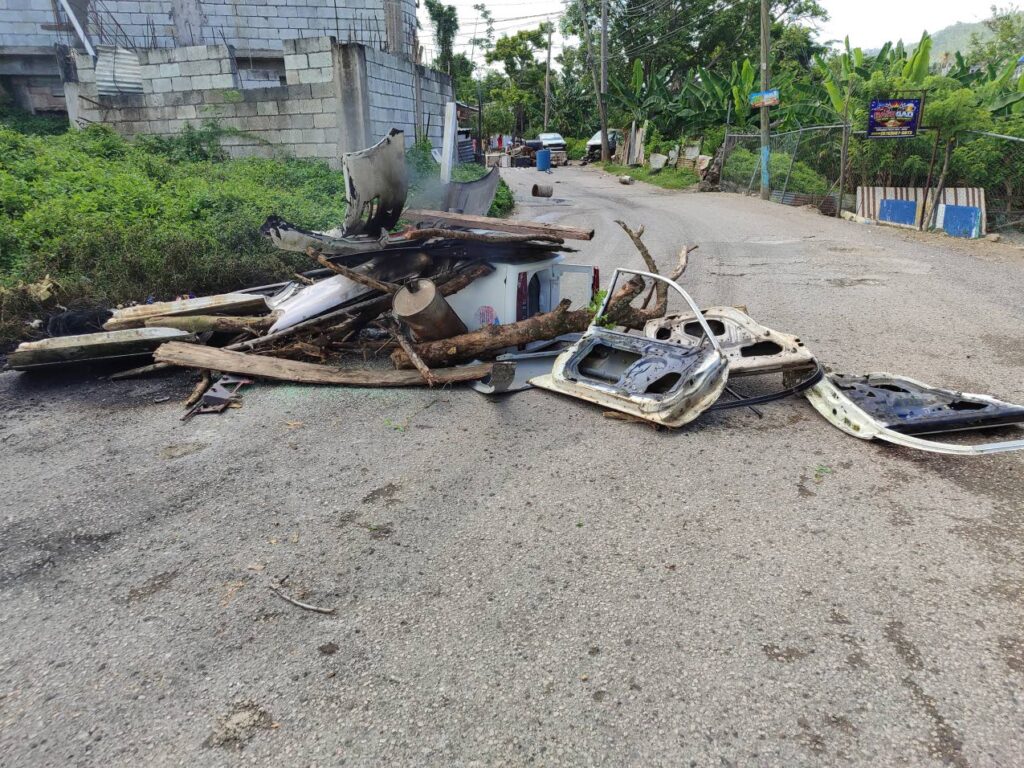
    On Monday, demonstrators erected burning roadblocks across key thoroughfares in Granville, including a heavily traveled route connecting multiple inland communities to Montego Bay. Firefighters were called in to extinguish the blazes, and police assisted with clearing the roadway to restore traffic flow.

    Security camera footage of the encounter has amplified long-simmering national concerns about the rising toll of fatal police shootings across Jamaica. In an official press release, Indecom confirmed that Bulgin’s death marks the 15th fatal shooting of a civilian by security forces in May 2026 alone. The most recent prior fatal shooting occurred on May 16 in Hague, Trelawny, where two men were killed by police. Year-to-date, 130 civilians have been fatally shot by Jamaican security forces, compared to 129 during the same period in 2025 — a slight increase that has alarmed civil society groups.

    A key detail that has drawn renewed criticism from advocacy groups is that none of the three officers assigned to crowd control duties at the protest the day Bulgin was killed were wearing or issued body-worn cameras. The absence of body cameras has been a persistent point of contention between civil society and Jamaican law enforcement for years, with activists arguing mandatory body cam use increases transparency and accountability.

  • JTA workers protest for long-overdue pay

    JTA workers protest for long-overdue pay

    A new layer of labor tension has emerged in Jamaica, as the Jamaica Teachers’ Association (JTA) — already locked in a public pay disagreement with the national government — now confronts an internal protest from its own non-teaching staff over nearly a decade of unpaid and improperly calculated wages.

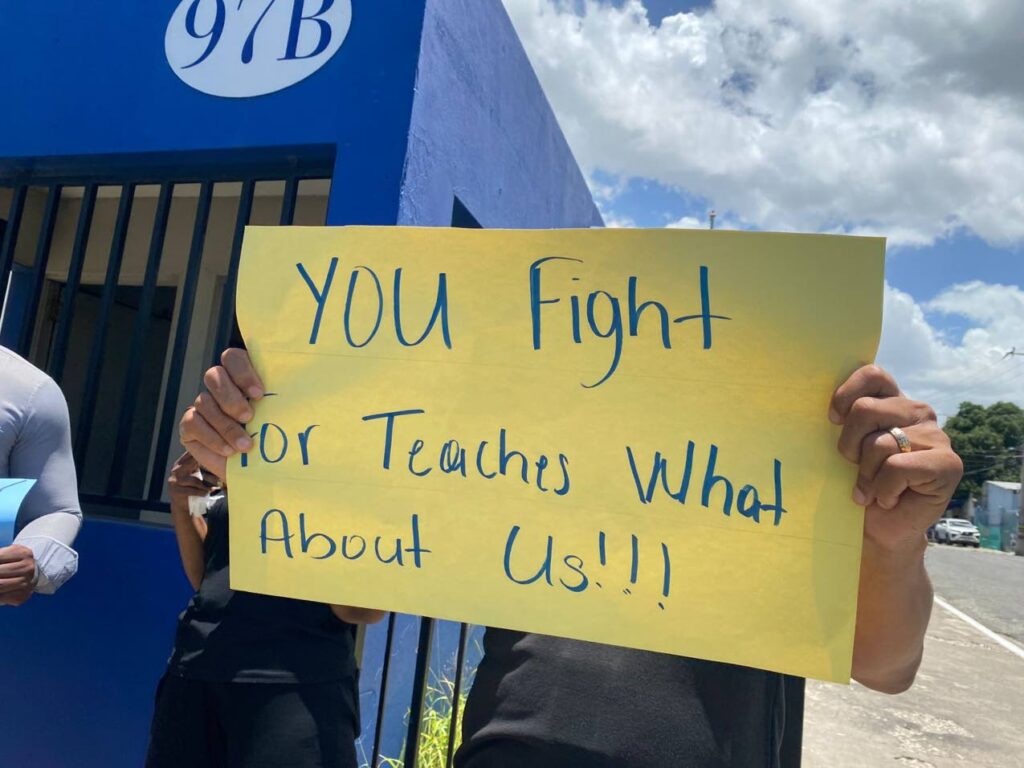
    On Monday, dozens of disgruntled JTA employees took to the streets outside the union’s downtown Kingston headquarters on Church Street. Dressed all in black and holding hand-painted placards, the workers demonstrated their mounting frustration over pay issues that have remained unaddressed since 2015.

    The employees are represented by the Bustamante Industrial Trade Union (BITU), one of Jamaica’s most prominent labor organizations. BITU Vice-President Rudolph Thomas laid out the full scope of the grievances in an official statement shared with media outlets. According to Thomas, the core of the conflict dates back to 2017, when the JTA first failed to provide transparent breakdowns for incremental and seniority-based salary adjustments that staff were contractually owed. Union representatives have repeatedly flagged calculation discrepancies and requested formal clarification, but no resolution has been forthcoming.

    Thomas added that the situation has deteriorated sharply in recent months. The JTA has not completed negotiations for wage and fringe benefit packages covering the 2024 to 2026 period, even though the prior agreement has already expired. Compounding this, the union says the JTA has unreasonably delayed the launch of a market-aligned salary restructuring that was scheduled to take effect at the start of 2024.

    The BITU represents a range of non-teaching staff at the JTA headquarters, including security officers, support and maintenance workers, accounting personnel and clerical employees. Thomas emphasized that the prolonged inaction from JTA leadership violates existing collective bargaining agreements between the two groups. “This is effectively a refusal to pay our members the fair wages they have earned through their work,” Thomas said in the release. “Workers have run out of patience after years of broken promises and empty delays.”

    Thomas warned that the protest will escalate if JTA management does not immediately agree to meet with union representatives and set binding, clear timelines to resolve all outstanding issues. He added that previous commitments to resolve the dispute, reached during mediation at Jamaica’s Ministry of Labour, have already been broken, leaving workers with no other option than to take public action.

  • Reggae Jammin Mathematics Marathon delivers confidence boost before exams

    Reggae Jammin Mathematics Marathon delivers confidence boost before exams

    KINGSTON, Jamaica — Ahead of critical national examinations, over 90 Jamaican high school students converged on the University of the West Indies campus recently for the one-day Reggae Jammin Mathematics Marathon, a community-focused academic support initiative designed to demystify a notoriously challenging subject and build student confidence. Unlike traditional high-pressure exam cram sessions, the full-day event was structured to foster encouragement over stress, combining structured guided tutoring, hands-on interactive problem-solving workshops, and one-on-one targeted support for students grappling with tricky mathematical concepts.

    This event is the latest in a series of education-focused outreach efforts from Reggae Jammin, a brand that frames its youth investment as extending far beyond traditional corporate sponsorship. In an official press statement released Tuesday, Reggae Jammin Brand Manager Navron Henry emphasized that the marathon was far more than a simple tutoring clinic. “At Reggae Jammin, we believe in supporting young people both inside and outside of the classroom,” Henry said. “The mathematics marathon was more than just a tutoring session. It was an opportunity to encourage students, build confidence and remind them that they are capable of achieving great things. We are proud to play a role in empowering the next generation through education.”

    Leading all instructional sessions was Demar Hemley, a veteran mathematics educator with 12 years of classroom and tutoring experience, and founder of Hemley’s Tutoring. The regional academic support organization, launched in 2021, was founded with the explicit goal of expanding accessible, high-quality academic tutoring across the Caribbean. For Hemley, who has organized independent exam preparation marathons for years, the chance to scale the initiative to reach more students through Reggae Jammin’s support was an immediate yes.

    “I always do marathons before major exams so when Reggae Jammin contacted me, I immediately said yes because this would help students on a wider scale,” Hemley explained. “The students were excited and encouraged throughout the day, and they willingly participated in the sessions. By the end of the marathon, you could see their confidence growing as they gained a better understanding of the areas they were struggling with.”

    That visible growth in student confidence did not go unnoticed by parents in attendance. Wesley Burger, a parent whose fifth-form daughter is preparing for upcoming exams at Jamaica’s prestigious Wolmer’s High School for Girls, praised the event’s timely arrival in the middle of exam preparation season. “It’s exam time, so practice, revision and clarity sessions are extremely helpful at this point,” Burger said. “The best part of the experience for me was knowing that the sponsors, Reggae Jammin, took the time to care.”
    Burger added that he plans not only to participate in future iterations of the Mathematics Marathon but also to actively recommend the program to other parents and students across the island. The event aligns with Reggae Jammin’s long-standing commitment to investing in Jamaican youth through sustained education support and community-centered engagement, with organizers signaling plans to host the initiative again ahead of future exam cycles.

  • Grange encourages Jamaicans to participate in Labour Day activities

    Grange encourages Jamaicans to participate in Labour Day activities

    KINGSTON, Jamaica — As the island nation gears up for its annual national Labour Day observance, Jamaica’s Minister of Culture, Gender, Entertainment and Sport Olivia Grange has issued a public call for widespread participation from Jamaicans across every corner of the country. The 2026 event will center on the unifying official theme: “One People, One Purpose, In All Things Jamaica Wins”.

    A minor adjustment has been made to the 2026 observance date. While Labour Day is traditionally marked on May 23 each year, the holiday will be celebrated on Monday, May 25 in 2026, as the standard date falls on a weekend this cycle.

    In an exclusive conversation with JIS News, Minister Grange emphasized that the chosen theme is far more than a slogan — it encapsulates the core national identity that has long defined Jamaican people. “It has a nice little rhyme, nice little rhythm to it, and it is the beating heart of who we are as Jamaicans,” Grange shared. “It captures our unbreakable resilience. It captures our unshakable unity and our fierce dedication.”

    She added that when the nation aligns behind a shared goal, no barrier is insurmountable: “When we stand together as one people with one purpose, there is no storm, no challenge, no obstacle too great for us to conquer.”

    Organizers have selected two flagship national projects to anchor this year’s Labour Day volunteer efforts. The first centers on the restoration and upgrade of Kingston’s iconic Sabina Park cricket complex, a landmark that is currently undergoing preparations to welcome back regional and international cricket matches, including upcoming fixtures of the Caribbean Premier League (CPL) T20 tournament.

    Grange explained the significance of selecting Sabina Park for national focus, noting the venue holds deep cultural and historical heritage for Jamaica. The government has maintained long-term investments in the site’s modernization, including a cooperation partnership with India that will deliver a new high-tech scoreboard and upgraded stadium lighting. These ongoing upgrades are all aimed at bringing the facility fully in line with international competition standards. On Labour Day, volunteers will mobilize to clean, repaint, and complete minor repairs across the park to support its upcoming reopening for major sports events.

    The second national project is based in Lewis Town, a community in the parish of St Elizabeth. Local teams and volunteers will focus on repairing and replacing the damaged roof of the Lewis Town Early Childhood Institution, which was severely harmed when Hurricane Melissa swept through the area.

    Per the event’s official schedule, Jamaican Prime Minister Dr Andrew Holness is scheduled to visit both flagship project sites on Labour Day to meet with volunteers and observe progress. Meanwhile, sitting members of parliament and local municipal corporations will lead community-level volunteer projects in every region across the island.

    A core priority for the 2026 Labour Day observance is the restoration and rehabilitation of shared community assets, Grange confirmed. These assets include early childhood education centers, neighborhood community centers, and local sports facilities that serve residents across the country.

    “ I want everyone to go out on Labour Day to show that together, as a united people, we will help those who are unfortunate. We will help our neighbours. We will help to restore community centres, early-childhood education institutions, and sports facilities. That is the focus this year,” Grange told JIS News.

  • IDAC opens applications for Aerodrome Controller training program

    IDAC opens applications for Aerodrome Controller training program

    SANTO DOMINGO — The Dominican Institute of Civil Aviation (IDAC) has opened a new career pathway for young Dominican residents through the launch of its competitive Aerodrome Controller training initiative, designed to cultivate next-generation professionals critical to global air navigation and national aviation safety. This full training program fills a growing demand for skilled air traffic management personnel in the Dominican Republic’s expanding aviation sector, giving motivated young people a rare chance to enter a stable, high-demand field without requiring prior industry experience.

    To qualify for the program, candidates must meet a clear set of eligibility requirements. All applicants must hold Dominican citizenship, be between the ages of 18 and 30, possess a valid national identification card, and have completed a full high school education. A core requirement for admission is proof of English language proficiency meeting or exceeding the International Civil Aviation Organization (ICAO) operational Level 5, a standard set to ensure clear communication in high-stakes aviation environments. While no prior professional experience in aviation is required to apply, candidates currently receiving any form of government pension are excluded from participating.

    Application submissions will be accepted exclusively through the online CONCURSA government portal, with the application window running from 8:00 a.m. to 4:00 p.m. local time between May 21 and May 27, 2026. In a formal statement on the initiative, IDAC Director General Igor Rodríguez Durán emphasized that the entire candidate selection process will uphold the strict ethical and professional standards mandated by the Dominican Ministry of Public Administration, with full transparency maintained at every stage from application submission to final admission decisions.

  • Dominican Republic’s population is aging rapidly, ONE Director says

    Dominican Republic’s population is aging rapidly, ONE Director says

    The Dominican Republic is currently navigating a defining demographic shift characterized by rapidly aging population and plummeting birth rates, new data from the country’s National Statistics Office (ONE) confirms. ONE Director Mildred Martínez has projected that the Caribbean nation’s total population will stabilize at approximately 12 million people in the coming years, capping decades of gradual population growth that is now slowing due to changing reproductive patterns.

    During an appearance on the digital current affairs program *La Esquina*, Martínez broke down key demographic shifts captured in recent census data. She highlighted that the share of Dominican residents aged 60 and older has jumped considerably over the past 12 years, rising from just 9% of the total population counted in the 2010 national census to 13% in the 2022 enumeration. This sharp four-point increase, Martínez emphasized, offers clear evidence that the country’s population aging trend is advancing faster than many observers previously anticipated. She traced the core driver of this shift to a nationwide trend of smaller family sizes, with Dominican women having far fewer children on average than generations before.

    Beyond the overall aging trend, the ONE director also drew attention to a persistent gender gap in life expectancy across the country. Data shows that Dominican women outlive men by an average of six years, with the average female life expectancy reaching 79 years, compared to 73 years for men. This puts the national average life expectancy across all genders at 76 years. Martínez explained that the six-year longevity gap stems from two key factors: a significantly higher rate of violent fatalities among working-age and young men, and a systemic pattern of lower utilization of preventive healthcare services by men across all age groups.

  • Labour ministry’s Early Stimulation Programme boosted by mobile units

    Labour ministry’s Early Stimulation Programme boosted by mobile units

    KINGSTON, Jamaica — Jamaica’s Ministry of Labour and Social Security is moving to dramatically expand its flagship early childhood development support program for disabled children, rolling out a new initiative called Access Jamaica that will bring specialized care directly to isolated rural populations through two custom mobile therapy units.

    Minister Pearnel Charles Jr. unveiled the expansion plan Tuesday while delivering his address during the annual Sectoral Debate in Jamaica’s House of Representatives, framing the move as a critical step toward closing the equity gap in social support services across the island.

    For years, the ministry’s Early Stimulation Programme (ESP) has served as a cornerstone of the country’s social protection infrastructure, delivering a full spectrum of therapeutic and developmental interventions to young people ages birth to six who live with cognitive, physical, or developmental disabilities. Currently, the program operates in partnership with private service providers, public early childhood education facilities, and faith-based community groups, already supporting more than 3,600 children across every region of Jamaica.

    But in recent years, demand for these life-changing early intervention services has skyrocketed. Minister Charles Jr. told legislators that new referrals to the ESP have jumped 33% since the start of 2023, pushing the program’s existing fixed-site assessment and treatment centers past their operational capacity. For families living in remote rural parishes, long travel distances and limited access to specialized care have meant even longer wait times and many children have gone without the support they need to thrive.

    To address this unmet need, the Access Jamaica expansion will deploy fully staffed mobile units that travel directly to rural communities, eliminating the barriers of distance and transportation that have locked many families out of care. The rollout will launch first in three underserved parishes: Trelawny, Westmoreland, and St Mary. Each mobile unit will carry a complete multidisciplinary clinical team, including board-certified behavior analysts, physiotherapists, early intervention specialists, and other clinical experts, who will provide on-site assessments, ongoing therapy, and support for caregivers.

    Minister Charles Jr. laid out clear, ambitious targets for the initiative’s first year of operation: cut wait times for rural families by 40%, and extend life-changing early intervention support to an additional 1,000 children who would otherwise have been stuck on waitlists or unable to access care.

    “No child should be left behind because of where they live,” Charles Jr. emphasized during his address. “With Access Jamaica, we are delivering hope, help, and high-quality interventions on the road.”

    The minister framed the ESP and its Access Jamaica expansion as far more than a social service: it is a long-term national investment in the dignity, potential, and future of Jamaica’s youngest vulnerable citizens. “In every child supported, every parent trained, and every life transformed, we reaffirm our commitment to inclusion, resilience, and opportunity for all,” he added.