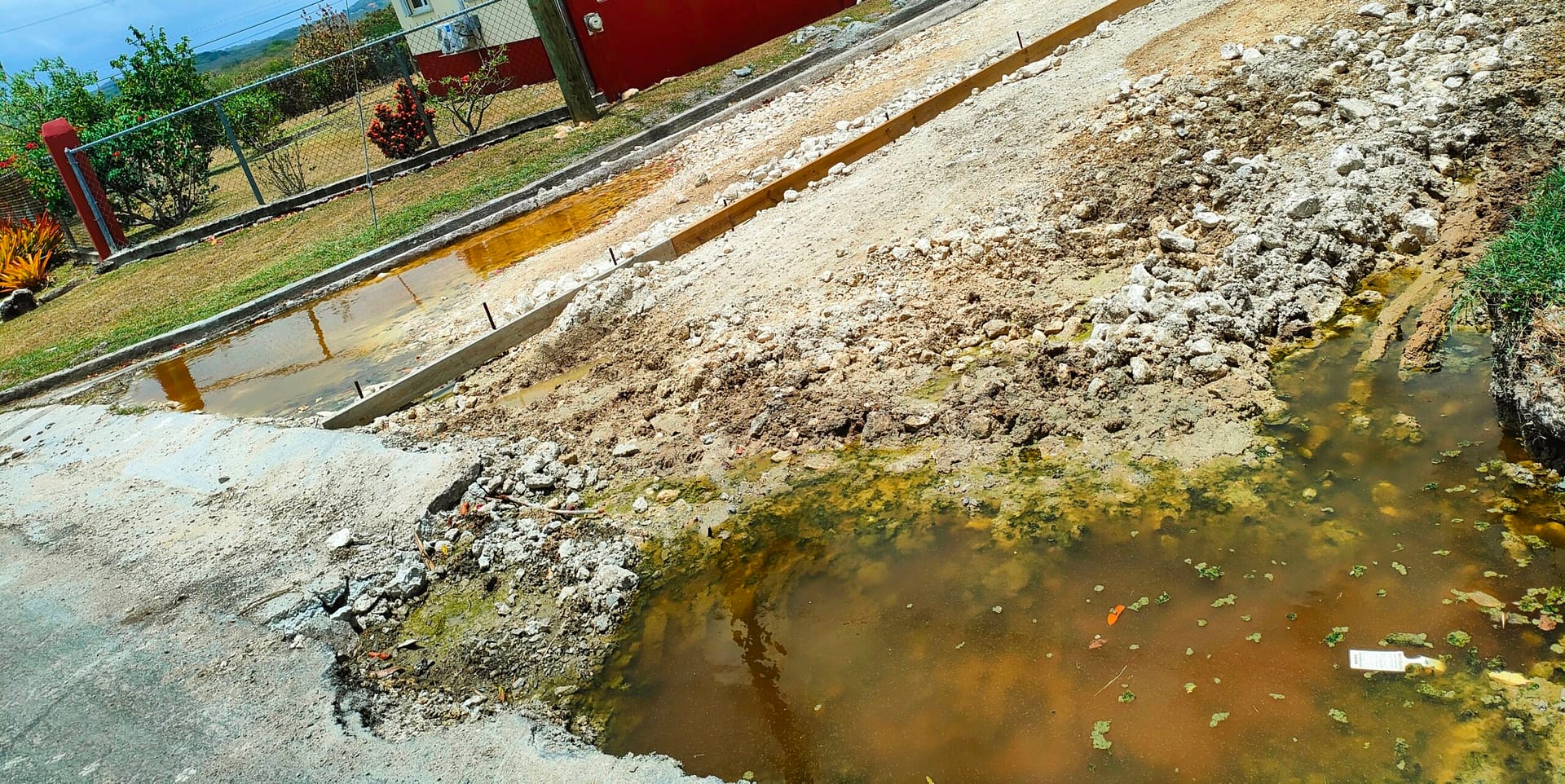
What was supposed to be a routine, short-term infrastructure upgrade for a residential street in Antigua and Barbuda has devolved into a persistent daily crisis for the dozens of households living along Lightfoot Lane. For weeks, local residents have watched their road improvement project stall, leaving their neighborhood in a condition they unanimously call unsafe, unnavigable, and unworthy of a developed nation in 2026.
While community members have long welcomed the planned road upgrade to improve local access and property values, the current uncompleted, unmanaged site has left them feeling abandoned by public works officials. Large swathes of Lightfoot Lane remain split between uneven half-laid pavement and exposed excavated dirt, littered with construction hazards ranging from loose gravel and protruding steel rods to pools of standing dirty water that have collected after recent rains. What was once a quiet residential street has been transformed into a dangerous obstacle course that tests even able-bodied residents just to travel between their homes and parked vehicles.
The risks are disproportionately borne by the neighborhood’s most vulnerable residents: dozens of senior citizens and people with chronic medical conditions who call Lightfoot Lane home. With no clear path for vehicles to reach most driveways, these residents are forced to park hundreds of meters away from their properties, then trek across unstable, uneven terrain to reach their front doors. For people living with joint pain, limited mobility, and other physical disabilities, every trip outside becomes a painful, high-stakes endeavor that carries a constant risk of falls and serious injury.
Beyond the daily danger of accessing their homes, residents face growing uncertainty around access to basic municipal services. Trash collection schedules have been disrupted, with locals unsure whether garbage trucks will be able to navigate the broken road to pick up waste. For vulnerable residents who cannot haul their own trash to a nearby collection point, this opens the threat of uncollected garbage piling up near their homes, creating sanitation risks and public health hazards.
What frustrates residents most, however, is the lack of urgency, communication, and visible progress from project managers and government officials. The community is clear that no one expects major infrastructure work to be finished overnight; locals understand that road upgrades require time and planning to complete properly. What they cannot reconcile is how a residential street serving taxpaying, long-term residents can be left in a hazardous state for weeks on end, with no clear timeline for completion and no outreach from officials to address their safety concerns.
Residents have also highlighted that many of those affected are long-time citizens of Antigua and Barbuda who have spent decades contributing to the country’s development through steady work, tax payments, and community service. After a lifetime of contributing to national growth, they say it is unacceptable that they now must navigate mud, construction debris, and exposed hazards just to enter their own homes.
Beyond daily quality of life concerns, the stalled project has raised urgent questions about emergency access. Residents live in constant fear that a medical emergency, house fire, or other crisis would leave first responders unable to reach affected homes in time. What should be a routine public works project has now turned into a fight for basic safety, dignity, and quality of life for the Lightfoot Lane community.