分类: society

  • Lethal force last resort

    Lethal force last resort

    A fatal police shooting that claimed the life of 43-year-old Latoya “Buju” Bulgin in the Granville community of St James, Jamaica, has sparked urgent calls for systemic reform within the Jamaica Constabulary Force (JCF), from one of the force’s most experienced retired leaders. With 42 years of decorated service under his belt, retired Senior Superintendent Steve McGregor has described the May 17 incident as deeply disturbing, and is pushing the national police service to overhaul its current approach to crime management and community policing, stressing that lethal force must only ever be used as a last resort in high-stakes encounters.

    The incident that ignited this national debate unfolded when Bulgin was transporting people to a protest over the recent police killing of 17-year-old Tjey Edwards, when officers stopped her Toyota Voxy in the Granville community square. Released closed-circuit television footage shows an officer firing directly at Bulgin while she remained seated behind the steering wheel. After she was shot, officers pulled her from the vehicle legs-first, dragged her across the ground, and unceremoniously threw her into the bed of a police pickup truck, with officers struggling to close the vehicle’s tailgate after loading her. Official police accounts claim Bulgin threatened to drive over the officer who opened fire, and the case is currently under investigation by the country’s Independent Commission of Investigations (Indecom), the independent body tasked with probing law enforcement misconduct.

    While McGregor has echoed widespread public frustration with the JCF’s pattern of deadly use of force, he is urging Jamaicans to avoid rushing to judgment and calling the involved officers murderers before all facts of the case come to light. He emphasized that justice cannot be built on raw emotion, and that full due process must be followed to uncover every detail surrounding the fatal encounter. In a public letter to the editor, McGregor noted that every loss of life at the hands of police should be a matter of national concern, requiring deliberate sensitivity, strict professionalism, and full accountability from law enforcement. He added that public trust in the JCF is already dangerously fragile, whether that trust gap is viewed as fair or unfounded, and rebuilding that public confidence must be treated as an urgent top priority for the force.

    McGregor argued that professionalism must be strengthened at every rank of the JCF, calling for divisional commanders to engage with community members far more regularly through press briefings, town halls, and open community forums. He noted that citizens need structured spaces to ask questions, voice their long-held concerns, and gain a clearer understanding of the challenges that frontline officers face, pointing out that democratic policing operates by public consent: when the relationship between police and communities breaks down, effective policing becomes exponentially more difficult.

    The veteran former officer also called for a renewed focus on ongoing training, direct supervision, structured mentorship, and intentional leadership development within the force. He raised concerns that younger officers today are not receiving the same high-quality preparation and guidance that veteran officers of his generation benefited from, noting that senior leaders once prioritized teaching not just law enforcement techniques, but also critical skills like exercising restraint, communicating with community members, and maintaining composure under extreme pressure. McGregor stressed that police cannot approach every interaction as a battle against crime; instead, the force must shift to a model of more intelligent, professional crime management that prioritizes de-escalation.

    “Every part of an officer’s conduct matters: the language they use, their tone, their overall attitude. Respect and consistent professionalism can often defuse tense encounters before they escalate into violent confrontation,” McGregor said. “Sensitivity is especially critical when women are involved in an incident. Regardless of what this investigation concludes, a woman is dead, and that reality alone should remind all of us how serious this matter is.”

    McGregor made clear he continues to stand behind the hardworking rank-and-file officers of the JCF, acknowledging the extraordinary danger and difficult conditions they work under every day. But he stressed that support for frontline officers cannot exist without simultaneous accountability for misconduct — the two principles are not mutually exclusive. Drawing on his decades of experience policing in Jamaica, he noted that he understands firsthand what it is like to work in a tense, often undisciplined society, never knowing if you will return home safely at the end of a shift. Even so, he emphasized, officers are specifically trained to handle these high-pressure encounters with professional restraint.

    “We train officers in conflict management, tactical response, de-escalation, and the progressive use of force. Lethal force is designed to be the last resort, not the first option when an interaction begins,” he said.

    McGregor also called for the Indecom investigation to proceed without social media trial-by-public-outcry or emotional hysteria. If criminal charges are warranted against any involved officer, he said, the case must be heard quickly and fairly in open court. But accountability should not end with the criminal probe, he added: if internal disciplinary breaches or operational failures are uncovered, the JCF must hold responsible parties accountable internally and be transparent with the public about what actions are taken.

    Key questions need clear answers, McGregor argued: Was there adequate supervision for the operation? Were standard operating procedures followed from start to finish? Was appropriate medical care provided to Bulgin immediately after she was shot? The JCF must reassure the public that rules governing police conduct are enforced fairly and consistently, he said, noting that transparency and accountability are non-negotiable if the force hopes to rebuild fractured public trust. He also reiterated longstanding calls from civil society to mandate body-worn cameras for all frontline officers, pointing out that the devices protect officers from unfair assumptions and incomplete narratives while providing critical context, transparency, and accountability for investigations.

    “Leadership at every level of the force must now step up to make difficult decisions, strengthen professional standards, improve training, and restore public confidence. If we are honest with ourselves, things are not working right now. We have to do better, my former colleagues. Jamaica deserves better from all of us,” he said.

    Latest data from Indecom shows that 133 people have been fatally shot by Jamaican security forces so far this year, a slight increase from the 129 people killed in the same period last year, with 18 fatal shootings recorded in May alone. Crucially, Indecom has confirmed that none of the three officers assigned to crowd control duties at the protest Bulgin was traveling to were issued or wearing body-worn cameras the day of the shooting — a gap that has been a core point of criticism from Jamaican civil society organizations for years.

    In response to the public outrage, Prime Minister Andrew Holness extended official condolences to Bulgin’s family, acknowledging that the incident has sparked widespread pain, anger, and deep concern across the country. Speaking at a graduation ceremony for the JCF’s 91st Staff & Junior Command Courses, Holness reminded new graduates that their core mandate is to preserve and protect human life, requiring them to rely on their training and professionalism to carry out all operations responsibly. The prime minister also issued a formal directive ordering the JCF to immediately review and reform its procedures for handling injured and deceased people at incident scenes, stressing that protecting and preserving human life must always be the force’s top priority.

    For his part, JCF Commissioner Dr. Kevin Blake addressed the growing national debate over police use of force in his recent *Commissioner’s Corner* public address, acknowledging the high-stakes nature of police decision-making. Blake noted that officers are often required to make split-second judgments under extreme pressure, with incomplete information, in rapidly changing dangerous situations. He stressed that while accountability is a core requirement of democratic policing, public assessments of officer actions must take into account the difficult operational conditions officers face, pointing out that critics often judge incidents with 20/20 hindsight that officers on the ground do not have.

    Blake also emphasized the critical importance of rigorous ongoing training, consistent professionalism, emotional resilience, and principled leadership, arguing that all police decisions should be guided by ethics, evidence, and the public good. “We must learn not to become paralysed by criticism nor intoxicated by praise. Good decision-making is not the absence of criticism; rather, it is the disciplined pursuit of what is lawful, ethical, and necessary despite criticism,” Blake wrote. He added that the force must prioritize cultivating officers who can think clearly amid uncertainty, and leaders who can act decisively when under pressure. “The nation depends on our judgement every day. Let us, therefore, strive to ensure that our decisions — whether operational, tactical, or strategic — are grounded in professionalism and wisdom,” he said.

    The shooting has already sparked two days of widespread public protests in Granville, with angry residents blocking major roads in the community and demanding accountability for Bulgin’s death, and a heavy police presence deployed to the area to respond to the unrest.


  • Authorities rescue 62 women from human trafficking network in Puerto Plata

    Authorities rescue 62 women from human trafficking network in Puerto Plata

    In a major coordinated crackdown on transnational human trafficking operating out of popular Dominican tourist destinations, law enforcement agencies have rescued 62 women who were being held as victims of commercial sexual exploitation. The targeted operation, which focused on the high-traffic coastal resort areas of Cabarete and Sosúa in the Puerto Plata province, unfolded this week as a joint effort between multiple specialized Dominican security and justice bodies.

    Leading the intervention was the Joint Specialized Investigation Unit Against the Illicit Trafficking of Migrants and Related Crimes, which partnered closely with the Puerto Plata Prosecutor’s Office and the country’s Department of Transnational Crimes Investigations, commonly abbreviated as DEIDET. Acting on intelligence gathered through months of investigation, the teams carried out seven court-sanctioned search warrants across properties linked to the alleged criminal ring, resulting in the arrest of six suspects tied to the exploitation network.

    The group of detainees includes three Dominican citizens: Franklin Alberto García Brito, Rosa Iris Almarante, and Belkis María Salas Díaz de Heinsen; a Dominican individual identified only as Lurdes or Louders; Haitian national Nehemie Granicher; and Spanish national Peter Granicher. All six face formal allegations of involvement in organized commercial sexual exploitation and illegal pimping, according to official statements from the lead agencies.

    Of the 62 women rescued from the network, 51 are Dominican citizens and 11 are Haitian migrants, a demographic that is particularly vulnerable to exploitation by criminal trafficking rings operating along border and tourist regions. Immediately following the rescue operation, all survivors were transferred to the victim assistance unit under the Attorney General’s Office, where they are now receiving specialized protection, trauma support, and social services to aid their recovery.

    The operation marks one of the largest anti-trafficking rescues in the region in recent months, shining a light on the persistent problem of sexual exploitation linked to transnational criminal networks that target vulnerable women in the Dominican Republic’s booming tourist sector. Law enforcement officials have indicated that the investigation into the full scope of the network remains ongoing, with additional potential arrests expected as evidence continues to be processed.

  • Five injured in crash on Punta Cana–Miches highway

    Five injured in crash on Punta Cana–Miches highway

    A serious roadway collision between two passenger vehicles left at least five people injured Saturday afternoon along a busy Dominican Republic highway, local emergency authorities confirmed. The crash unfolded on the Punta Cana–Miches corridor, just a short distance from the popular Hard Rock Hotel and Casino, a top tourist destination in the coastal resort region.

    Among those hurt was Yunior Bienvenido García Macea, the operator of a red Daihatsu GS. Macea’s vehicle flipped during the incident, coming to a rest upside down on the roadway. He suffered enough harm that responding teams transferred him to the Nuestra Señora de La Altagracia General and Specialty Hospital, located in nearby Higüey to receive urgent care.

    The driver of the second vehicle involved, Luis Aquino Ortiz, was also rushed to a local medical facility for evaluation and treatment, being admitted to the Punta Cana Medical Center. Three other people who were riding in the vehicles — Hitel Arias, Nadieli Aybar, and Naideli Adames — sustained non-life-threatening injuries and were transported to Verón Hospital to address their conditions.

    Preliminary official accounts place the time of the accident at approximately 4:45 p.m. local time. Multiple emergency response agencies, including the national 911 emergency dispatch service, the Dominican Republic Fire Department, RD Vial road management authority, and Digesett traffic police, were dispatched to the scene to clear the roadway, extract trapped occupants, and provide on-site first aid. As of the latest update, law enforcement and transportation officials are continuing their probe into what caused the collision, with no preliminary findings on fault or contributing factors released to the public yet.

  • Road deaths pass the 100 mark but big 28 per cent reduction recorded

    Road deaths pass the 100 mark but big 28 per cent reduction recorded

    Newly released crash data from the Island Traffic Authority (ITA) shows that total road traffic fatalities across the island have crossed the 100 threshold, reaching 105 confirmed deaths as of May 22 this year. While the triple-digit fatality count underscores the ongoing risks of road travel, the ITA’s latest statistics highlight a striking improvement in road safety when compared to the same period last year.

    This year’s fatalities represent a 28 percent decrease from the 2025 count for the same January-to-May window, meaning 41 fewer lives have been lost on the island’s roads compared to 12 months ago. The number of deadly crashes itself has also followed this downward trend: the 105 fatalities recorded this year stem from just 94 fatal collisions, which is also a 28 percent reduction year-over-year.

    Breaking down the demographic data reveals clear patterns in who is most at risk on the island’s roads. Since the start of the calendar year, motorcyclists have made up the largest single group of fatalities, accounting for 25 deaths, or 24 percent of the total 2026 toll. Private vehicle drivers follow closely behind with 22 fatalities, equal to 21 percent of all deaths, while private vehicle passengers account for 18 deaths, or 17 percent of the total. Pedalcyclists have recorded 5 fatalities so far this year, making up 5 percent of the overall fatality count.

    When aggregated, vulnerable road user groups—including pedestrians, pedalcyclists, motorcyclists, and motorcycle pillion passengers—account for more than half of all 2026 road fatalities, at 57 percent of the total. Gender breakdowns also show a stark gap in fatality risk: 84 percent of all road deaths recorded since January have been male, while female fatalities make up the remaining 16 percent.

    The ITA’s figures frame a mixed picture for the island’s road safety efforts: even as the total number of deaths remains a pressing public concern, the substantial year-over-year decline signals that current safety interventions are beginning to deliver measurable results.

  • Union leader warns motorcycle growth has become national security concern

    Union leader warns motorcycle growth has become national security concern

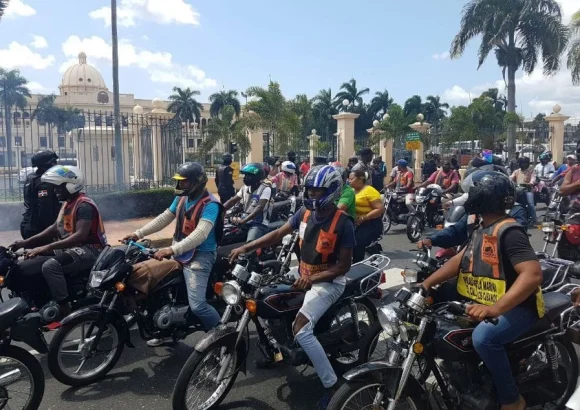
    In Santo Domingo, prominent union leader and legal practitioner Mario Díaz has issued a stark warning about the mounting public challenges created by the explosive expansion of motorcycle taxis and the overall surge in motorcycle ownership across the Dominican Republic. Díaz characterizes the unregulated growth of two-wheeled vehicles as a pressing national crisis that is severely undermining road safety, disrupting urban mobility flows, and eroding public security across the country. He is calling on the national Government’s Transportation Cabinet to implement immediate, targeted interventions to reverse the current trend.

    As a core component of a comprehensive regulatory strategy designed to curb rising traffic accidents and crack down on motorcycle-enabled criminal activity, Díaz has put forward a bold proposal: a two-year temporary moratorium on all motorcycle imports. He argues that the uncontrolled proliferation of motorcycles over recent years has directly fueled a cascade of public safety crises, including thousands of preventable road accidents, widespread disregard for traffic rules, chronic urban congestion, and a spike in criminal acts ranging from street robbery to more violent offenses that rely on motorcycles for quick getaways.

    Beyond the import ban, Díaz has laid out a suite of additional regulatory reforms. He is pushing for more stringent eligibility requirements for motorcycle driver licensing, the rollout of more robust and traceable vehicle registration systems, tighter ongoing oversight of commercial motorcycle taxi operations, and targeted restrictions banning motorcycle traffic on major national highways and other high-speed intercity roads.

    Díaz also emphasized the need for updates to the country’s existing traffic legislation, arguing that current laws fail to provide adequate legal protection for licensed four-wheel vehicle drivers who are involved in collisions caused by reckless and unqualified motorcyclists. He further stressed that sustained national public education campaigns on road safety, stepped-up targeted police enforcement of existing traffic rules, and harsher punitive penalties for repeat traffic violators are all critical to turning the tide. In closing, Díaz reiterated that the unregulated motorcycle taxi sector must be treated as a top national priority, as its impacts are deeply intertwined with public health outcomes, citizen safety, and the maintenance of orderly urban life across the Dominican Republic.

  • Dominican tourism journalists launch strategic overhaul to address AI and sustainability

    Dominican tourism journalists launch strategic overhaul to address AI and sustainability

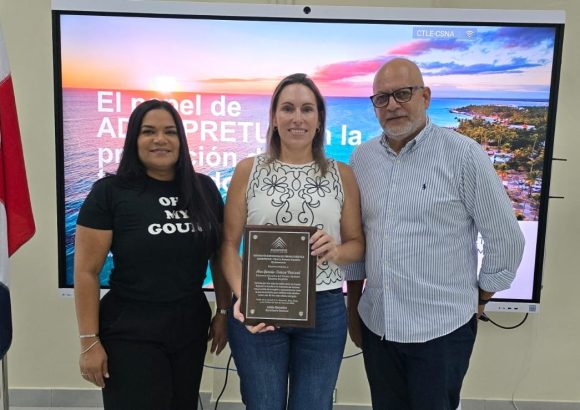
    In the Dominican province of La Romana-Bayahíbe, the Dominican Association of Tourism Press (Adompretur) has kicked off a series of regional workshops under the summit banner “Rethinking Adompretur”, bringing together seasoned media professionals and leading hospitality stakeholders to redefine the organization’s institutional mission and map out a decade-long strategic framework for tourism journalism across the Caribbean nation.

    Against a rapidly evolving media landscape reshaped by changing traveler behaviors and fast-paced technological innovation, Adompretur’s national president Sarah Hernández emphasized that the organization’s long-term relevance hinges on its ability to adapt to industry shifts. She noted that the association is intentionally refocusing its work to center three critical priorities: advancing sustainable tourism coverage, embracing digital transformation, and providing in-depth analysis of emerging industry trends.

    One of the core discussion topics at the summit was the growing integration of artificial intelligence into modern newsroom operations, and the non-negotiable need for robust content verification practices to uphold journalistic standards. Raysa Feliz, Adompretur’s regional affairs director, unpacked the dual nature of today’s cutting-edge digital reporting tools. While she recognized that AI can deliver tangible efficiency gains, streamlining content production and enabling faster, more dynamic news delivery, Feliz stressed that technological tools can never replace the value of human editorial oversight and core professional journalistic ethics. The organization reinforced that retaining public trust in tourism coverage demands unwavering commitment to factual accuracy and rigorous verification before content is published on any digital platform.

    The workshop also shone a spotlight on the increasingly important intersection between tourism journalism and environmental accountability. Institutional leaders argued that the success of the Dominican tourism sector can no longer be measured exclusively by metrics like hotel room occupancy rates. Instead, long-term success must also account for progress on social responsibility and natural resource conservation, making these key areas of focus for future tourism reporting.

    Attendees received detailed briefings on ongoing regional infrastructure and conservation efforts, including the La Romana 2026 strategic plan, presented by Ana García-Sotoca, executive director of the La Romana-Bayahíbe Hotel Association (AHRB). The municipal development plan outlines a range of proactive sustainability initiatives, from large-scale coral reef restoration projects and integrated coastal management programs to thoughtful land-use planning designed to accommodate growing tourist volumes without compromising local ecosystems.

    As Adompretur continues its strategic engagement tour across all of its regional chapters across the Dominican Republic, key insights and consensus outcomes from the La Romana-Bayahíbe summit will be integrated into the organization’s broader national constitutional update process to align its institutional structure with its new 10-year strategic goals.

  • WATCH: Woman in custody for suspected arson in St Mary

    WATCH: Woman in custody for suspected arson in St Mary

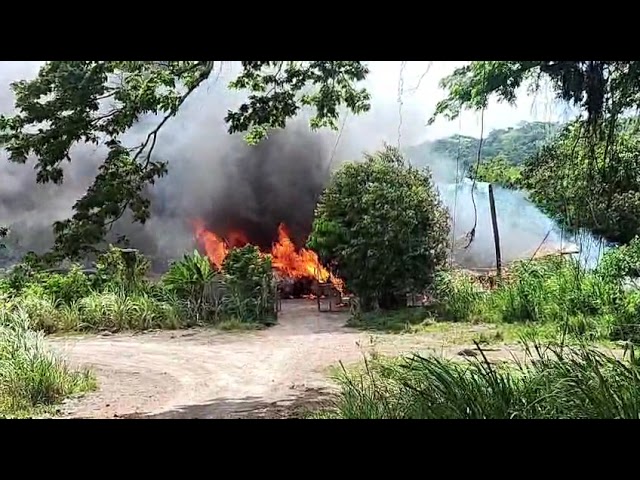
    A shocking act of alleged arson has rocked a rural community in St Mary, Jamaica, leaving a local industrial compound damaged and a 59-year-old woman in police detention. The incident unfolded at the Surrey and Aggregate premises in the Georgia district of the parish around 2:00 p.m. on Sunday, according to official law enforcement accounts.

    The compound’s on-site caretaker, who first encountered the woman before the fire broke out, told investigators she was behaving aggressively and disruptively on the property. After multiple attempts to convince her to leave the premises peacefully failed, the caretaker made the decision to travel to the nearest police station in Annotto Bay to file a report and request assistance.

    When the caretaker returned to the Surrey and Aggregate compound alongside law enforcement, they discovered both targeted office buildings were already engulfed in raging flames. In addition to the structural damage, two privately owned vehicles — a pickup truck and a standard passenger car — were also caught in the blaze, suffering significant damage.

    Emergency response teams from the Annotto Bay Police Department and the local fire service quickly deployed to the scene to contain the fire and begin documenting evidence. By the time first responders secured the area, the suspect 59-year-old woman was taken into custody without further incident. Authorities have confirmed that formal investigations into the motive behind the alleged attack are currently ongoing, with no additional details on potential charges released to the public as of the latest update.

  • Ferry Basic School gets major upgrade through UDC labour day initiative

    Ferry Basic School gets major upgrade through UDC labour day initiative

    KINGSTON, Jamaica — When students of Ferry Basic School in St Andrew step back onto campus for the new school term, they will be greeted by a fully renovated, safer, and more functional learning space, the result of large-scale improvement works completed by the Urban Development Corporation (UDC) and its partner stakeholders during this year’s national Labour Day.

    The comprehensive upgrade project addressed a wide range of longstanding infrastructure needs at the institution. Works carried out included critical roof repairs and structural reinforcement to shore up aging building sections, full demolition and reconstruction of the school’s non-functional kitchen, drainage system clearing and maintenance, and plumbing repairs across the campus. Additional upgrades covered landscaping and expansion of the school’s outdoor play area, installation of new playground equipment, construction of two new bathroom vanities, and fresh repainting of multiple school buildings. As a key safety addition, the UDC team also installed corrugated steel mesh covers over open drainage zones, eliminating a major hazard for young students and staff.

    In an interview with JIS News, UDC Customer Service Manager Diane Hanson explained that the renovation initiative forms a core part of the state agency’s annual corporate Labour Day community engagement program. The UDC invested approximately JMD $1.7 million into the remedial and upgrade works at Ferry Basic School.

    Hanson highlighted that one of the most impactful changes addressed a critical daily need for students. “When our team first conducted an assessment of the school, we found the existing small kitchen was completely non-functional. We know how important it is for children to access a hot, nutritious lunch every day, rather than relying only on cold snacks,” she noted.

    “What we delivered is a fully rebuilt kitchen with new cabinetry and all the necessary infrastructure to support daily meal preparation. Now, long after our team has left, the school will have a fully operational kitchen, and students will be able to enjoy warm meals every school day,” she added.

    Hanson also shared the reasoning behind selecting Ferry Basic School for this year’s Labour Day project: the institution’s close proximity to the Raintree Development Complex, one of the UDC’s flagship urban development projects, making the upgrade a natural part of the agency’s commitment to supporting surrounding local communities.

    Photos from the Labour Day work day show Hanson working alongside UDC technical staff — including Junior Civil Engineer Kuffy-Hi Smith and Landscape Supervisor Christopher Cole — to complete repainting work at the school on May 25. Ferry Basic School is just one of several educational institutions and community public spaces that benefited from UDC-led rehabilitation projects across Jamaica this Labour Day.

  • St James residents unite to restore Rose Heights Community Centre

    St James residents unite to restore Rose Heights Community Centre

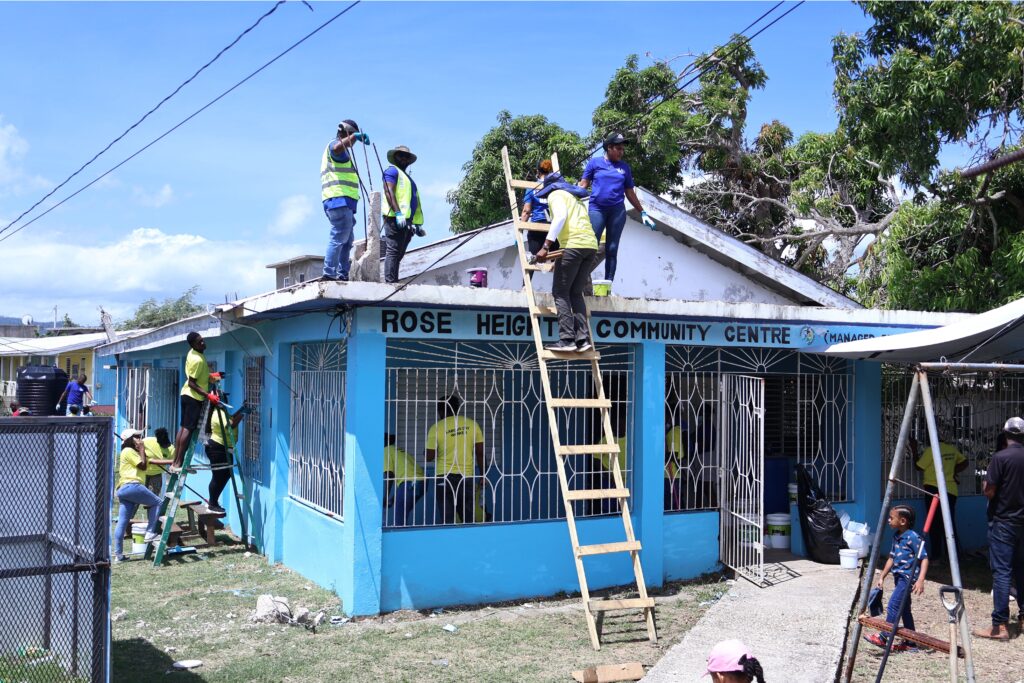
    In St James, Jamaica, a widespread collaborative effort between local residents, volunteer groups, and public and private sector stakeholders has breathed new life into the storm-ravaged Rose Heights Community Centre, marking a major milestone for this year’s Labour Day Parish Project.

    The community hub, which suffered extensive structural damage when Hurricane Melissa swept through the region, has received a full $3.8 million renovation. Works launched on May 22, progressing steadily to completion by the Labour Day holiday on May 25, and included comprehensive debris cleanup, full roof repairs, fresh interior and exterior painting, with plans already in place to establish a community garden on the facility’s grounds. For the more than 17,000 Rose Heights residents who rely on the centre for regular programming and gatherings, the restoration addresses a critical gap in local community infrastructure.

    Beyond reestablishing a central gathering space for neighborhood events, the upgraded facility will also serve a vital public safety function as a certified emergency shelter for future hurricane events. This upgrade comes as local authorities ramp up preparedness efforts ahead of the 2026 Atlantic Hurricane Season.

    Speaking exclusively to JIS News, Richard Vernon, Mayor of Montego Bay and St James Councillor, emphasized that the project delivers dual benefits for the parish: strengthening disaster readiness and building long-term community resilience. “As we approach the new hurricane season, it is critical that we repair existing damaged shelters and bring infrastructure back online to expand our capacity after the losses we sustained from Hurricane Melissa,” Vernon explained. “This project puts us in a far stronger position to protect residents when the next storm hits.”

    Vernon also highlighted the overwhelming community buy-in for the initiative, noting that the restoration has sparked widespread enthusiasm among local residents. “When I spoke with neighbors earlier this project, they told me this is a dream come true,” he said. “Out of the crisis of Hurricane Melissa, we’ve gotten renewal and rehabilitation, and the community is incredibly grateful for this investment.”

    Andrea Kerr Finakin, president of the Rose Heights Community Centre, echoed that gratitude, extending recognition to every stakeholder that contributed time, funding, and labor to the project. Finakin noted that the centre has long been the beating heart of the Rose Heights community, and she is thrilled to see it restored to its role as the neighborhood’s primary emergency shelter and event space.

    Volunteers made up a large portion of the renovation workforce, including a team from the University of Technology (UTech) Jamaica Circle K Club. Abisah Graham, one of the UTech volunteers, emphasized that the project exemplified the power of cross-community collaboration to drive meaningful change. “No matter what your background is, we can all come together to give back,” Graham said. “Our club brings together members from all walks of life, and we’re here to contribute however we can—whether that’s swinging a hammer for renovations, dropping off donations, or picking up a paint roller. This work is all about uniting as one to improve our community and make a real difference.”

    As the final touches are put on the renovation, the restored Rose Heights Community Centre stands as a testament to collective action and proactive disaster preparedness, ready to serve the St James community for years to come.

  • Women inmates transferred from Venezuelan prison after uprising

    Women inmates transferred from Venezuelan prison after uprising

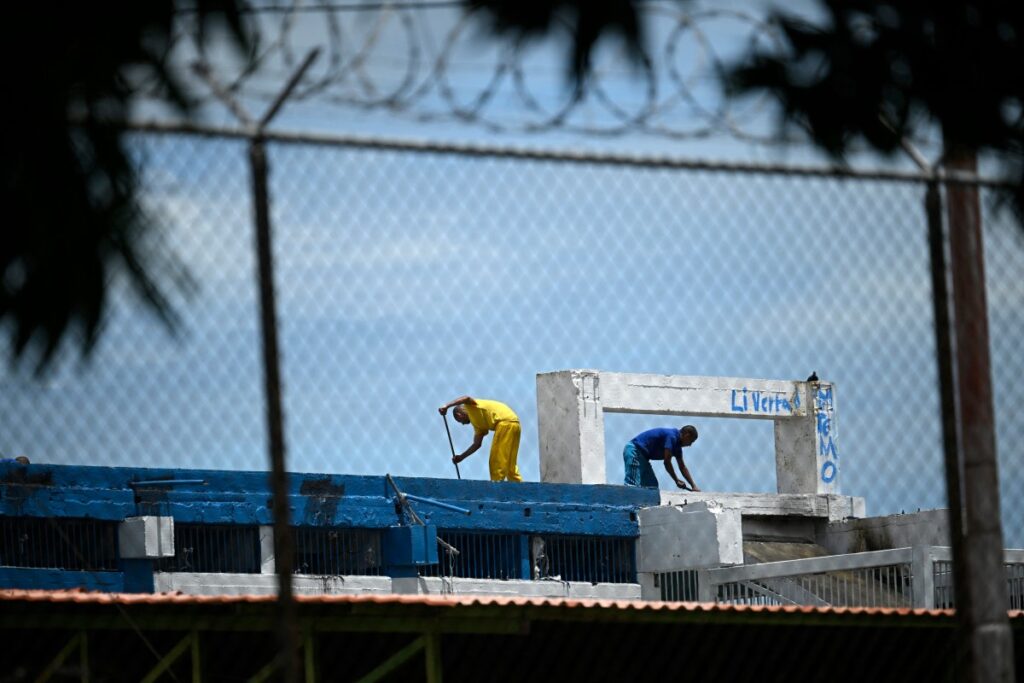
    A prison uprising at a detention facility in Venezuela’s western city of Barinas has prompted authorities to transfer more than 100 incarcerated women out of the complex, an independent prison monitoring group confirmed this week.

    The Venezuelan Prison Observatory (OVP), a non-governmental organization that tracks conditions across the country’s correctional system, announced Monday that a senior prison official had notified family members of the full evacuation of 112 female inmates. The official did not disclose the new location where the women would be held, the NGO added in a post on the social platform X.

    Per the OVP’s update, the official also outlined next steps for the facility: male prisoners at the Barinas complex will be eligible for voluntary transfer, and a joint working group made up of judges and prosecutors will be deployed to the site to conduct a full review of all inmates’ cases.

    The unrest unfolded Sunday, when 1,200 male and more than 100 female inmates at the prison—located roughly 500 kilometers from the capital Caracas—launched a coordinated protest over poor treatment. By Monday morning, hundreds of detainees had set fire to mattresses and bed linens, gathered on the prison roof, and unfurled large banners reading “No more torture.” The OVP confirmed that a small group of protesters remained stationed on the prison’s watchtowers at dawn. Dozens of anxious relatives gathered outside the facility’s gates throughout the day, waiting for updates on their loved ones.

    Inmates allege they have been systematically subjected to beatings and torture at the complex, OVP spokesperson confirmed. As of Tuesday, Venezuelan national authorities have not issued any public statement in response to the riot or the allegations of abuse.

    This uprising is the latest in a years-long string of crises to rock Venezuela’s correctional system, where activists and human rights groups have long decied chronic overcrowding, endemic violence, insufficient food rations, and near-total lack of access to basic medical care. Just months prior, in April, the government confirmed that five people were killed during a separate riot at the high-security Yare III prison outside Caracas.

    The unrest comes amid a period of major political transition in Venezuela. After U.S. special forces carried out a surprise raid that captured former autocratic leader Nicolas Maduro in Caracas on January 3, the country’s new government under President Delcy Rodriguez passed a landmark amnesty law in February under pressure from Washington. The legislation has paved the way for the release of hundreds of political detainees held under the Maduro regime. Even so, many Venezuelans have voiced public frustration over the slow pace of releases and broader prison reform, highlighting the gap between promised policy changes and on-the-ground conditions inside the country’s facilities.