Suriname’s government has moved quickly to confront escalating flood emergencies that have submerged residential and agricultural areas across Paramaribo, Wanica, Saramacca and multiple other districts, announcing the formation of a special interdepartmental crisis commission during an urgent press briefing held Monday.
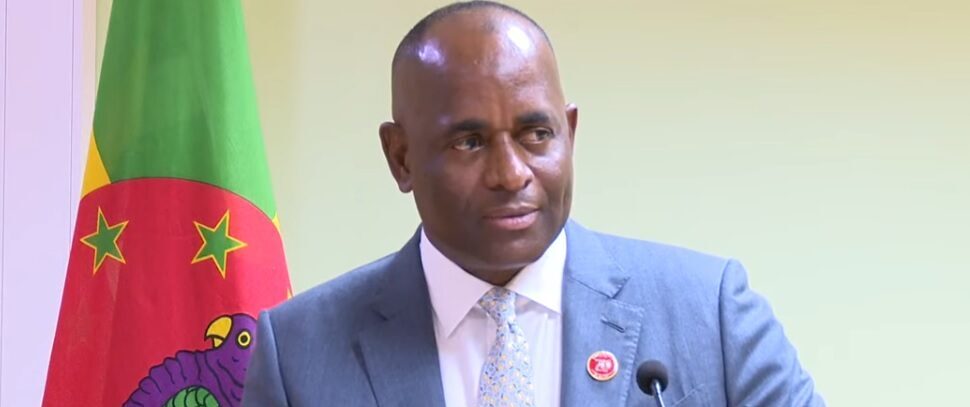
Public Works and Spatial Planning Minister Stephen Tsang outlined the multiple overlapping causes of the deepening crisis during the briefing, explaining that while unprecedented extreme rainfall triggered the current disaster, years of systemic neglect and decay of critical water management infrastructure created the conditions for widespread flooding. “We are not just fighting against extreme weather,” Tsang told reporters. “We are also fighting against illegal filling of drainage canals, unauthorized discharge networks and widespread dumping of solid waste that clogs our water systems.”
Tsang painted a grim picture of the state of the country’s flood management infrastructure, noting that government inspection teams found dozens of non-functional pumping stations, locks dating back to the colonial era that have been stuck shut for years, and roads that were constructed without any comprehensive drainage planning. The minister said he began touring key infrastructure sites as early as 5:00 a.m. Monday, and found that pumping stations along the Sommelsdijckkreek and Boomskreek had gone offline due to power outages operated by the national utility EBS. Other sites were facing outages caused by failed transformers and pump intakes blocked by accumulated debris. If all pumping infrastructure had been fully operational, Tsang confirmed, floodwaters in the northern districts would have already receded by Monday.
In addition to long-deferred maintenance, Tsang pointed to actions by private citizens that have directly exacerbated flooding risks. He cited a recent incident at the Clevia lock, where local residents forcibly opened a lock gate because they were unwilling to wait five minutes for the official operation, causing permanent damage to the structure. Illegal dumping, unauthorized filling of drainage trenches and unapproved construction along water channels all restrict water flow, turning routine rainfall into major flood events, he added.
The newly formed crisis commission brings together representatives from multiple government agencies including the Ministry of Public Works, Ministry of Agriculture, the National Coordination Center for Disaster Management (NCCR) and district-level commissioners. The body has been given an urgent mandate to address immediate flood threats and prepare formal policy recommendations for the Council of Ministers by Wednesday.
To ramp up immediate response efforts, all operational pumping stations are now running at full capacity. The government is also partnering with the private sector to source additional mobile pumps and excavation equipment, with local businesses already donating machinery and resources to the effort. Even prison inmates have been deployed to manually clear debris from clogged drains and drainage trenches. Tsang warned that the outlook for the coming days remains poor, with forecasters predicting another round of heavy rainfall on Thursday, May 14, driven by a strong El Niño pattern that is amplifying precipitation across the region.
The agricultural sector has already borne the brunt of the disaster, with Agriculture, Livestock and Fisheries Minister Mike Noersalim confirming that farmland across nearly every district has been inundated. Hard-hit areas include major agricultural regions in Saramacca, Nickerie, Commewijne and parts of the interior. Agricultural extension officers are currently conducting on-the-ground assessments to calculate the full scale of crop damage. Noersalim noted that many staple crops cannot survive more than 24 hours of continuous submersion, making rapid drainage improvements critical to preventing catastrophic, irreversible losses.
For rural communities in Suriname’s interior, the disaster risks escalating into a full food security crisis, according to NCCR. Flooding has already submerged subsistence farm plots in multiple southern Suriname villages, and officials warn that if flood waters do not recede soon, the country could face widespread food shortages within four to six weeks.
Beyond immediate emergency response, the government has announced plans to move beyond temporary fixes and implement long-term structural reforms to address repeated flooding. Tsang emphasized that the administration is developing a multi-year plan for a full overhaul of the coastal plain’s drainage system, which will consolidate existing fragmented plans into a single national master plan after a full review of current infrastructure gaps.
The government is also considering stricter enforcement measures and new legislation to crack down on pollution and unauthorized construction along drainage channels and canals. The proposed new rules will allow authorities to impose harsher penalties on individuals who block critical flood infrastructure or build without permits in designated drainage areas. Moving forward, all new land development projects will only receive government approval if they include modern, code-compliant drainage infrastructure, Tsang confirmed. The administration is also working to source affordable pumping stations for low-lying neighborhoods such as Sophia’s Lust, where flooding is a chronic recurring problem that cannot be solved by just clearing existing trenches.
To help residents access emergency support, the government has launched a dedicated hotline for acute flood emergencies at the number 844-2646. Residents can report severe flooding or situations requiring immediate intervention through the line. At the same time, the government is calling on residents to take personal responsibility by avoiding dumping waste in canals and drainage ditches, and taking proactive steps to limit damage to homes and personal property.