分类: society

  • Crumbling roads, flooding push Oakland Crescent residents to breaking point

    Crumbling roads, flooding push Oakland Crescent residents to breaking point

    For nearly two decades, residents of Oakland Crescent and surrounding neighborhoods in St Andrew South Western have navigated crumbling, flood-prone roads — and their patience has finally run out. The community is issuing an urgent, desperate plea to Jamaica’s National Works Agency (NWA) to intervene immediately, after years of stalled repairs under a national infrastructure initiative have left daily life all but unmanageable for locals.

    What makes the current crisis particularly acute, residents explain, is that even light rainfall turns the community’s main thoroughfare into a rushing makeshift river, thanks to an undersized, chronically clogged drain upstream that overflows with every storm. When floodwaters surge, they carry discarded household appliances, rotting dead animal carcasses and old mattresses downstream along the damaged road, leaving behind debris, foul odors and even more potholes that worsen the street’s decay.

    One long-term resident, who spoke on condition of anonymity, recalled that the road’s decline dates back at least to 2004, when Category 4 Hurricane Ivan tore through Jamaica, destroying the original road surface. While state crews have carried out patchwork repairs over the years, those temporary fixes never last, he said, and the road always reverts to its dangerous, impassable state within a short time.

    Beyond the flooding, the deeply pockmarked, uneven road has disrupted nearly every part of daily life for residents. Vehicle owners struggle to navigate the craters, taxi drivers refuse to enter the neighborhood, and essential service vehicles including garbage trucks and emergency vehicles are blocked from accessing most streets. Locals are forced to haul their household trash half a mile uphill to the main road for collection, visitors have no choice but to park on overcrowded sidewalks, and even construction supply trucks can’t reach properties to carry out home repairs. For the Bible Apostolic Church based in the community, the crisis has kept worshippers away: many congregants now refuse to travel to the church, instead parking at distant neighboring churches or skipping services entirely.

    Resident Kerry-Ann, who joked that the persistent flood pools on the road are big enough to turn into a fish pond, said locals held out real hope for change earlier this year when workers from China Harbour Engineering Company (CHEC) arrived to repair neighborhood sidewalks. CHEC is the primary contractor for the Jamaican government’s $45-billion SPARK (Shared Prosperity through Accelerated Improvement to our Road Network) programme, a national initiative managed by the NWA designed to rehabilitate Jamaica’s crumbling road network, upgrading both local community streets and major national highways to improve safety and accessibility across the island.

    But that hope quickly faded. Months after sidewalk work wrapped up, full road repairs have not started, and the road’s condition has only deteriorated. “When you take taxi, they don’t want to come on this road. When people are coming to you, they cannot access you. You have to drive on the sidewalk,” Kerry-Ann explained. “And then the main issue is the gully, when rain falls, all the water comes right down on this road. Everything floods out. It’s terrible.”

    Fellow resident Harrison said that while he understands the project is part of a larger infrastructure programme, the community can no longer wait for work to resume. “We want the road now, we really want it. Vehicles can barely enter my yard. I see my neighbour doing construction and the truck that’s carrying the material cannot make it inside the yard. It’s almost like the tyre was about to burst. We‘re asking the authorities to start the work now,” he said.

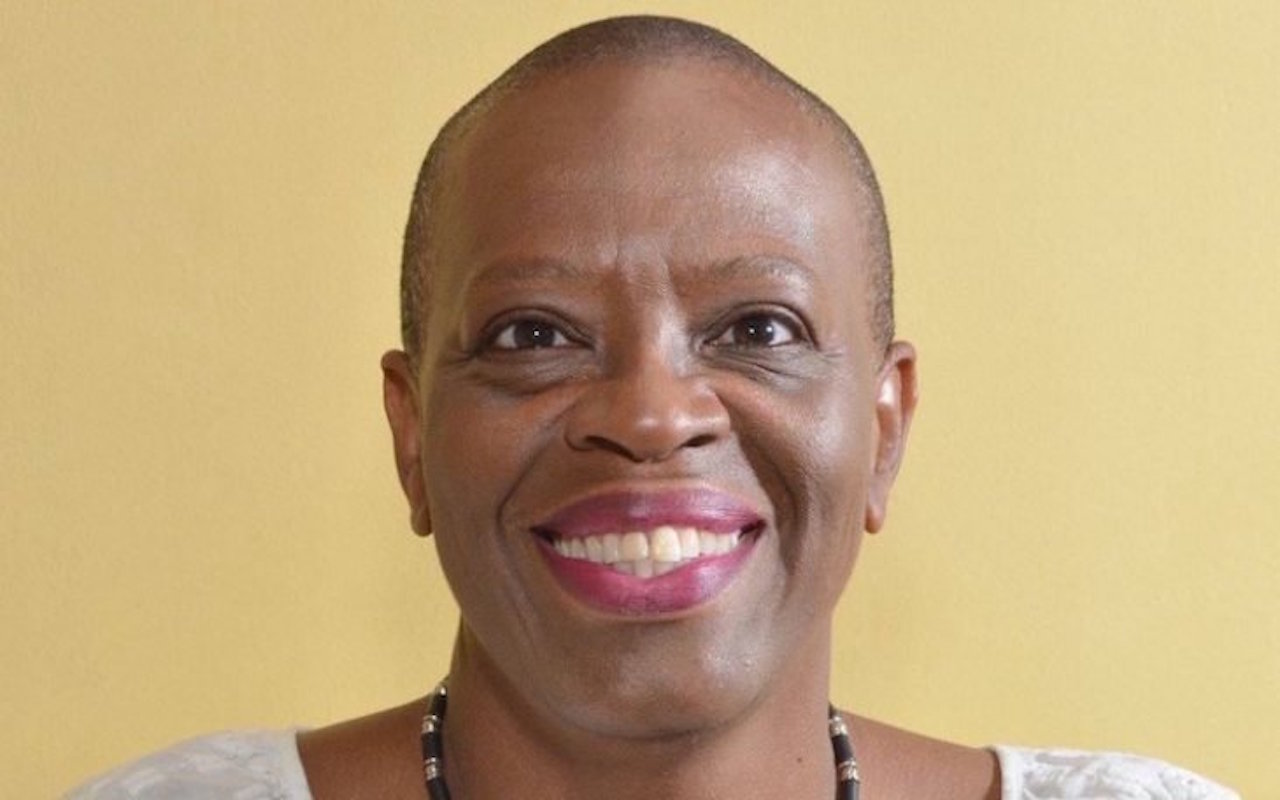
    Area Member of Parliament Dr. Angela Brown Burke, of the People’s National Party, told the Jamaica Observer she has repeatedly pushed the NWA for answers after the project stalled. After residents began raising alarms about worsening flooding and road conditions once preliminary work began, Brown Burke said she sent multiple formal inquiries to the NWA but has never received a formal response.

    “I was glad to see the road started because I know just how much persons in that area were looking forward to the work being completed,” Brown Burke said. “Several months later, they are nowhere because they basically abandoned the work as far as I am concerned; totally stopped the work and we cannot get a proper update.”

    Brown Burke criticized the government’s approach to the stalled project, saying officials appear to treat public infrastructure work as an arbitrary backyard project rather than a core responsibility to impacting residents’ daily lives and livelihoods. “It’s totally unacceptable,” she stressed. As of press time, repeated attempts by the Jamaica Observer to reach the NWA for comment on the stalled project and residents’ complaints have been unsuccessful.

  • Young Voices Engage Reparatory Justice as ABRSC Essay Competition Closes

    Young Voices Engage Reparatory Justice as ABRSC Essay Competition Closes

    The Antigua and Barbuda Reparations Support Commission (ABRSC) has formally concluded its landmark youth-focused essay competition, drawing nearly 20 original submissions from motivated secondary, college, and university students across the twin-island nation. Designed to spark critical dialogue around a pressing issue of regional historical and social importance, the competition centered on the theme “Reparatory Justice: Reflection and Projection,” which challenged participating students to explore the core meaning, ongoing relevance, and future trajectory of reparatory justice both within Antigua and Barbuda and across the broader Caribbean community.

    This initiative is one of many ongoing efforts by the ABRSC to advance its core mission: expanding public education, driving advocacy for reparations, and centering youth voices in conversations about historical justice. Commission leaders have expressed sincere encouragement over both the volume of participation and the depth of engagement young people demonstrated for a topic that shapes modern discussions of equity, national development, cultural identity, and redress for historical harms. All participants earned high praise from the ABRSC for investing the time to conduct independent research, reflect deeply on their own perspectives, and articulate thoughtful arguments around this complex social issue.

    At present, all submitted essays are undergoing evaluation by a diverse panel of judges assembled to ensure a fair and comprehensive review. The panel brings together cross-sector expertise, including academic researchers, long-time reparatory justice advocates, published writers, and creative practitioners. The ABRSC has noted that this broad, multidisciplinary makeup of the judging panel guarantees that all submissions will receive a balanced, thoughtful assessment that accounts for multiple perspectives on the topic.

    Per the competition timeline, winners will be officially announced on May 22, 2026, timed to align with commemorations of African Liberation Day, which is marked globally on May 25. A formal prize-giving ceremony to honor top-performing participants will follow one week later, scheduled for May 29, 2026.

    In closing, the ABRSC extended gratitude to all students who submitted entries, as well as to the educators and educational institutions that supported student participation and encouraged young people to engage with the topic. The commission reaffirmed its long-term commitment to building broader public awareness of reparatory justice, creating more accessible opportunities for public engagement, and cultivating inclusive spaces where young people can contribute their unique perspectives to this ongoing national and regional conversation.

  • Consider our people

    Consider our people

    By Adrian Joseph, DBA

    Every generation of Grenadians carries a core responsibility: to nurture a stronger, more equitable nation while acting as responsible stewards of the country’s natural and social fabric for those who will come after. This mission demands people-centered progress rooted in innovation, robust protection of human rights, unwavering commitment to environmental sustainability, and thoughtful management of the complex, fast-shifting social dynamics shaping modern Grenada.

    Crucially, development must never come at the cost of public health, community safety, environmental integrity, or the long-term economic well-being of ordinary citizens. Today, that principle is being put to the test in Beausejour and its surrounding neighborhoods, where local residents’ calls for the government to enforce proper planning rules, deliver meaningful community consultations, and uphold environmental standards have been dismissed.

    At the center of the conflict is the Rayneau Group of Companies’ asphalt production facility, sited directly within a densely populated residential zone and just meters away from critical community infrastructure. The plant sits a mere 143 meters from a public playing field, 300 meters from a pre-primary school, 500 meters from a secondary school, 151 meters from a Seventh-day Adventist Church, and less than 100 meters from a local river – creating immediate, severe risks of toxic chemical runoff that could contaminate local water supplies.

    Public health advocates warn that it is only a matter of time before the facility’s industrial activity triggers a major environmental disaster and widespread chronic health issues, particularly among the most vulnerable residents: the elderly, young children, and people living with pre-existing health conditions. Too often, the full negative impact of unregulated industrial development only becomes visible once irreversible harm has been done, yet some officials have chosen to ignore the risk, hiding behind outdated, industry-friendly justifications for inaction. While the mistakes of the past cannot be undone, Grenadians have a collective duty to act now to build a better future for all, regardless of political affiliation or socioeconomic status. Every person in this country has an equal right to live in a clean, healthy environment.

    The ongoing disregard for the rights of affected communities around the Rayneau plant runs counter to both Grenada’s national legislation and its binding international obligations. Multiple international human rights and environmental frameworks explicitly require signatory states to take proactive action to protect public health and prevent environmental harm. As a party to the International Covenant on Economic, Social and Cultural Rights, Grenada is legally obligated to uphold the right to the highest attainable standard of health – a right that international legal bodies have explicitly interpreted to include protection from environmental hazards like industrial air pollution and toxic exposure. Similarly, the International Covenant on Civil and Political Rights guarantees the fundamental right to life, which modern international jurisprudence has expanded to require protection from life-threatening environmental conditions. The United Nations Human Rights Council’s recent formal recognition of the universal right to a clean, healthy, and sustainable environment further strengthens this binding obligation.

    These human rights commitments are reinforced by multilateral environmental agreements including the Basel Convention and the Stockholm Convention, which mandate that member states regulate industrial waste, limit toxic emissions, and prevent harm to human health and ecosystems. The unregulated, potentially dangerous emissions from the Beausejour asphalt facility clearly fail to meet Grenada’s obligations under these agreements.

    A core contradiction lies at the heart of this crisis: Grenada’s leaders frequently deliver bold speeches about global climate action and environmental protection on the international stage, but fail to enforce those same standards at home. One of the most critical gaps in this case is the absence of a required Environmental and Social Impact Assessment (ESIA) – a mandatory step under Grenadian law designed to identify risks to communities and ecosystems, facilitate stakeholder engagement, and implement mitigation measures to protect affected populations. While an ESIA is not the only consideration for development projects, it must be a non-negotiable part of planning and regulatory review. Developers like Rayneau must not be allowed to flout ESIA requirements with impunity, as the long-term consequences for local communities and the environment can be catastrophic.

    This crisis raises deeper questions about political leadership and accountability in Grenada: do the government’s commitments to climate action and public health only apply to international speeches, or will they be enforced at home for ordinary Grenadian communities? Time and again, Grenadian ministers take global stages to warn of the urgent threat of climate change and environmental harm, yet back home their words ring hollow. Across local communities, unregulated development, weak regulatory enforcement, and systemic failure to manage environmental and public health risks have become the norm.

    The old African proverb says it takes a village to raise a child – and it takes an engaged, united village to build a just nation. Today, that village must stand with the Beausejour residents who breathe polluted air every day, the parents who worry about their children’s long-term health, and all citizens who believe Grenada’s communities deserve better. If we stay silent while this violation continues, our public health, our natural environment, and the future of generations to come will pay the price. We must demand immediate action to review and reverse the decision to allow the Rayneau facility to operate at its current residential location.

    This campaign is not anti-development. It is a demand that all development in Grenada be responsible, compliant with national law, and aligned with the fundamental right to health and dignity that every community deserves. I am calling for an immediate suspension of all operations at the Rayneau industrial facility, pending a full, independent assessment of its environmental impact, public health risks, and compliance with national regulatory requirements. No Grenadian should be forced to endure illegal, unregulated disregard for their health and well-being, left to wonder what toxins they are inhaling with every breath they take.

    *Disclaimer: NOW Grenada is not responsible for the opinions, statements or media content presented by contributors. In case of abuse, click here to report.*

  • Worker Reportedly Killed in Incident on All Saints Road

    Worker Reportedly Killed in Incident on All Saints Road

    A tragic workplace fatality has shaken a local community after a municipal waste management worker was killed by a passing bus Tuesday morning while performing routine grass-cutting maintenance along All Saints Road.

    The worker, who was contracted to the National Solid Waste Management Authority, was carrying out roadside vegetation trimming when the collision occurred, according to initial law enforcement accounts. Emergency responders who arrived at the scene confirmed the man suffered catastrophic, life-ending trauma in the incident and was pronounced dead immediately after the crash.

    As news of the sudden death spread across the neighborhood, colleagues who were working alongside the victim and local residents were left deeply disturbed by the traumatic event. Many on-site witnesses reported lingering shock in the hours following the collision, as the dangerous reality of roadside municipal work was brought into sharp focus.

    Local law enforcement officials and emergency service teams were dispatched to the crash location within minutes of the first 911 call, and have since cordoned off the section of All Saints Road to conduct forensic evidence gathering. Investigations remain active as authorities work to piece together the full sequence of events, including factors such as traffic conditions, visibility at the time of the collision, and whether any additional contributing elements led to the fatal incident.

    As of the latest media update, officials have not yet released the formal identity of the deceased worker, pending notification of next of kin. A content warning accompanies on-site footage of the crash, as the recorded material contains graphic imagery from the fatal accident scene that may cause distress to sensitive audiences.

  • Ella-Rose Charles wins National Tourism Youth Congress 2026

    Ella-Rose Charles wins National Tourism Youth Congress 2026

    A 14-year-old student from St Joseph’s Convent St George’s has stepped into the national spotlight as Grenada’s newest Junior Minister for Tourism, after claiming top honors in the final round of the National Tourism Youth Congress.

    Organized by Grenada’s Ministry of Tourism, the Creative Economy and Culture, this annual initiative serves a dual purpose: it engages young people in discussions about the country’s core tourism industry, and selects the national delegate that will represent Grenada at the Caribbean Tourism Organisation Regional Tourism Youth Congress, scheduled to take place in Guyana this coming October.

    In this year’s final competition round, 15-year-old Leah Charles of Happy Hill Secondary School secured the runner-up position, while 15-year-old Micah Purcell-Munroe, also a student from St Joseph’s Convent St George’s, finished in third place.

    Speaking to gathered delegates at the Kirani James Athletics Stadium last Friday, Tourism Minister Hon. Adrian Thomas framed the youth congress as far more than a simple contest, calling it “a national investment in young minds.” He pushed participating students to reframe their relationship to Grenada’s tourism sector, urging them to see themselves not just as casual beneficiaries of the industry’s success, but as its future leaders and creative innovators. “Tourism can open doors for you to become entrepreneurs, managers, chefs, tour guides, event planners, content creators, marine experts, cultural ambassadors, hospitality professionals, policy advisers and even tourism ministers,” Thomas told the assembled students.

    Permanent Secretary Desiree Stephen echoed this framing, choosing to reject the label of “competition” for the event entirely. “It is more of a coming together of great young minds to discuss and present suggestions and recommendations on issues that are critical to the development, enhancement and sustainability of our tourism sector,” she explained. Stephen also commended all students from the four participating secondary schools — St Joseph’s Convent St George’s, Happy Hill Secondary School, Wesley College, and St Andrew’s Anglican Secondary School — for stepping up to the challenge, noting their standout creativity and sharp insight into tourism sector challenges.

    Beyond the title of Junior Minister, winner Ella-Rose Charles will take home a range of additional rewards, including cash prizes, other recognition gifts, and ongoing mentorship opportunities through the Ministry of Tourism, the Grenada Tourism Authority and the Grenada Hotel and Tourism Association. Second and third place finalists also received cash prizes and other awards, while every participating competitor left with a certificate of recognition and branded merchandise, donated by the Ministry of Tourism and the Grenada Tourism Authority. St Joseph’s Convent St George’s, as the winning school, was also awarded a custom commemorative plaque.

    Other competitors that took part in this year’s final round included Makaylah Ramsey and Dwight Thomas — the competition’s only male contestant — both from St Andrew’s Anglican Secondary School, Kitalia Modeste of Wesley College, and Mia Clovey and Anaiah Phillip of St Joseph’s Convent St George’s.

    This year’s event marks the second consecutive year the Ministry of Tourism has hosted the National Tourism Youth Congress, after the initiative was put on a six-year hiatus. The first qualifying round of this year’s competition was held back in April, and Friday’s final proceedings were chaired by Kealah Baptiste, Grenada’s 2025 Junior Minister for Tourism, who closed the event by encouraging all participants to continue pushing for growth and engagement in the tourism sector.

  • Wie is schuldig aan wateroverlast?

    Wie is schuldig aan wateroverlast?

    Recent days of heavy downpour have laid bare once again the profound vulnerability of the nation to catastrophic urban flooding. Neighborhood streets have turned into rushing, unmanageable rivers, residential properties have been submerged, schools have suspended classes, working adults are trapped inside their homes, and local business owners face catastrophic threats to both their property and their regular income streams. Motorists who were forced to navigate submerged roadways are now left covering costly repair bills for water-damaged vehicles. Across affected areas, widespread frustration, anger, and a sense of powerlessness have taken hold. But as a society, we must confront one simple, unflinching question: who bears responsibility for this repeated water crisis?

    The answer is far from straightforward, because the unvarnished truth is that this is a collective failure of the entire society. There is no doubt that government holds significant responsibility for the current crisis, but ordinary citizens must also be willing to examine their own behavior honestly. We cannot continually point fingers at the national government when some among us brazenly dump discarded refrigerators, freezers, mattresses and other bulk waste in drainage ditches and storm sewers. We cannot reasonably complain about clogged drainage canals when members of our community casually toss empty bottles, plastic cups and other litter onto streets from car windows as if this careless behavior is socially acceptable.

    Flooding is not triggered by intense rainfall alone; it is also the direct product of harmful human behavior and decades of systemic neglect, a lack of individual discipline, collective accountability, and regulatory enforcement. That said, this shared responsibility does not absolve the national government and public authorities of their outsized responsibility to address the crisis. On the contrary: the core role of government is to set clear direction for society, develop proactive policy, enforce regulatory standards, and educate the public on the dangers of environmental pollution and poor spatial planning.

    So where is the structured, sustained public outreach to inform citizens that clogging drainage ditches and sewers with waste creates life-threatening risks? Where are the national public awareness campaigns to drive home this critical message? Where are the routine inspections and meaningful penalties for individuals and businesses that damage the nation’s critical drainage infrastructure? Why are violators almost never held accountable for their actions? Why are drainage canals not cleared and maintained on a regular, proactive schedule? Why do authorities only act when floodwater is already lapping at residents’ front doors — and in some cases, fail to act even then?

    A government should not only be visible during emergency press conferences or issuing after-the-fact statements. Good governance requires proactive planning, forward thinking, and preemptive action to stop small problems from escalating into full-blown national disasters. It is precisely on this core metric that the current government and public administration have failed.

    After nearly nine months in office, society is fully justified in asking tough questions about the policies of the Ministry of Public Works, Transport and Spatial Planning. Flooding is never just a natural disaster; it is also the outcome of flawed long-term planning, inadequate routine infrastructure maintenance, and a persistent lack of decisive policy action. The claim that “there is no money” can no longer be used as a shield when residents are literally drowning in floodwater in their own communities.

    If it is true that public funding for drainage infrastructure is truly insufficient, then the Ministry of Finance and Planning must also face rigorous scrutiny. How can core public services like functional drainage, resilient infrastructure and residential flood protection not be guaranteed when national budget priorities are set?

    Too often, current leaders blame the previous administration for skipping routine infrastructure maintenance. While that claim may hold a grain of truth, it has long since lost its persuasive power. The public voted for new leadership and gave this government a clear mandate to solve long-standing problems. When leaders accept the responsibility of governing, they also accept the obligation to fix the failures of past administrations, not just repeat them.

    It is easy to criticize from the sidelines. But once you take power and are forced to address pressing national challenges, the true weight of governing becomes clear. Even so, the inherent difficulty of the job can never be an excuse for inaction, negligence or a lack of long-term vision.

    The harsh reality we face is this: climate change will only make extreme rainfall more intense and more frequent in the coming years. Deforestation, destruction of natural green spaces, and lax environmental policy have eroded our natural flood buffer systems to a dangerous degree. If we fail to implement bold, decisive reforms today, the crisis will only grow far worse tomorrow. Repeated flooding will no longer be a temporary inconvenience; it will become an annual recurring national crisis. That is why this moment must serve as a critical wake-up call for every stakeholder: the national government, local public authorities, the private sector, and individual citizens.

    We must stop the pointless blame-shifting that has delayed action for decades. Individual citizens must take responsibility for protecting their shared living environment. The government must finally invest in sustainable policy, proactive infrastructure maintenance, regular inspection, and consistent enforcement. Penalties for illegal dumping and environmental pollution must be visible and impactful enough to deter bad behavior. Spatial planning must be treated as the critical public priority it is. Most of all, we need leadership that does not just name problems, but actually solves them. Because today, we are all drowning — both literally, in floodwater, and figuratively, in inaction.

    The damage already done to homes, vehicles, businesses and public infrastructure is substantial, and it will only grow without action. But the greater damage that is now unfolding is the erosion of public trust in the nation’s leaders. That core question remains unanswered: who is to blame for the recurring flooding crisis?

    Perhaps the most honest answer is that all of us share some responsibility. But that shared blame also means we must work together to find a shared solution.

  • AT&LU Offers 10 Scholarships for UWI Global Campus Short Courses

    AT&LU Offers 10 Scholarships for UWI Global Campus Short Courses

    A new opportunity for skills advancement has opened for members of Antigua’s oldest trade union, with the Antigua Trades and Labour Union (AT&LU) rolling out 10 full scholarships for continuing professional education courses hosted by the University of the West Indies (UWI) Global Campus Antigua and Barbuda.

    To qualify for the funding, applicants must hold active AT&LU membership with a tenure of at least two years, and satisfy all entry prerequisites set out by the UWI Global Campus administration. The scholarship covers all tuition costs for approved 10-week short courses, which are scheduled to kick off the week of May 25. Participants can select from a wide range of industry-relevant subjects tailored to both career growth and entrepreneurial ambition, spanning customer service management, effective leadership strategy, entrepreneurship and business development, financial management, human resource management, project management, supervisory management, real estate economics and appraisals, and community and family work.

    All course instruction will be delivered fully online to accommodate working professionals, offering flexible scheduling that aligns with members’ existing job responsibilities. Without the scholarship, individual course tuition would range from Eastern Caribbean $650 to Eastern Caribbean $800, varying based on the specific program selected.

    For union members interested in claiming this opportunity, the application deadline is set for May 15, 2026, giving interested candidates multiple years to prepare their submissions and confirm their eligibility with both the union and the university. This initiative marks a collaborative effort between the AT&LU and the UWI Global Campus to upskill the local workforce and expand professional access for working people across Antigua and Barbuda.

  • Community Policing Initiative promotes vaccination awareness in Tete Morne and Montin

    Community Policing Initiative promotes vaccination awareness in Tete Morne and Montin

    On Saturday, May 9, 2026, a collaborative public health outreach initiative led by the Commonwealth of Dominica Community Policing Initiative brought together multiple local agencies to advance immunization access and public education in two rural Dominica communities. Partnering with the Grand Bay Police Division, the Grand Bay Fire and Ambulance Service, and frontline health sector workers, the group organized a targeted student vaccination clinic at Tete Morne Primary School, while also leading outreach sessions to teach residents of Tete Morne and Montin about the critical importance and life-saving benefits of routine immunization.

    Unlike traditional conceptions of law enforcement work focused solely on crime intervention, this event put a spotlight on the expanded, community-centered mission of the Commonwealth of Dominica Community Policing Initiative. Organizational leaders note that their work extends far beyond crime reduction, with core priorities that include building trust between police and local residents, expanding access to public health and safety education, and lifting up overall community well-being.

    By embedding law enforcement and emergency response teams alongside public health providers in this outreach effort, the initiative worked to break down silos between government sectors and connect more closely with local residents. Project organizers emphasized that collaborative cross-sector action is the only sustainable way to protect both public safety and community-wide health, a core message that was reinforced throughout the day’s activities.

    Following the successful completion of the vaccination drive and education sessions, event organizers extended public gratitude to every group and individual that contributed to the outcome. Special recognition was given to the administration and staff of Tete Morne Primary School, participating parents, frontline healthcare personnel, responding firefighters, local police officers, and grassroots community members, whose collective participation and support turned the planned initiative into a tangible success for the region.

  • Paper or digital? Students on CXC exam shift

    Paper or digital? Students on CXC exam shift

    The 2024 May-June examination season has kicked off across the Caribbean, marking a key milestone in the Caribbean Examinations Council (CXC)’s gradual shift from traditional paper-and-pen assessments to fully digital testing. But as regional secondary schools rolled out the first wave of digital exams for this term, student opinion remains sharply divided on the transition, with conflicting views on convenience, reliability, and long-term implications for testing integrity and learning culture.

    For some learners, the shift to digital formats brings clear practical benefits that address longstanding flaws of traditional paper-based testing. Tai Gill, a Lower Sixth student at Barbados’ elite Harrison College, noted that digital assessments are far more streamlined for objective, multiple-choice question sections. Unlike paper answer sheets that can be blown away by open classroom drafts or smudged during bubbling, digital interfaces let students select and adjust answers with a single click, eliminating unnecessary disruptions.

    Gill also highlighted major improvements for audio-dependent subjects like Communication Studies. In traditional paper-based listening exams, students seated far from the classroom speaker or teacher’s audio setup often struggle to hear playback clearly, creating unfair disparities between students based on their seating position. With digital testing, every student gets their own personal headphones connected to a dedicated testing device, ensuring consistent audio quality for all participants. “It removes the unfairness of trying to listen to a teacher from afar,” Gill explained.

    Even with these benefits, Gill and many other students still favor paper for extended written response sections and science-based exams. They argue that traditional answer sheets remain far more reliable for longer form work, especially when examinees need extra space for working through equations, drafting essay outlines, or organizing multiple reference materials such as data booklets during testing. “Instead of having limited desk space when you have a laptop, your answer sheet, your data booklet all at once, paper gives you more room to work,” Gill said. He added that many students also find writing on paper more comfortable, resulting in neater handwriting and a more natural testing experience that reduces unnecessary stress.

    Other students are fully committed to retaining traditional paper exams, citing a mix of cultural, practical, and ethical concerns. Na’Zyia Clarke, a student at Christ Church Foundation School, argued that preserving paper assessments is a way to maintain longstanding educational traditions amid a wave of rapid digital transformation. “Everything is going digital and online. I think we need to keep it old time-ish. We should stick to paper,” Clarke said.

    Her biggest worries around digital testing center on testing integrity and the growing role of artificial intelligence in academic work. Clarke pointed out that connected digital devices open new opportunities for students to cheat, while the broader shift to AI-integrated digital testing risks eroding core human skills that traditional assessments are designed to measure. “And just like you losing humanity in general and AI taking over,” she noted.

    For other students like Sarah Francis of Springer Memorial Secondary School, the main concern is technical reliability. Francis said she leans toward paper exams primarily because of widespread reports of technical glitches during earlier digital testing trials, noting that an unexpected computer crash or internet outage could derail a student’s months of preparation. Even so, she added that she could adapt to either format if required.

    The debate comes as the CXC moves forward with plans to transition all secondary school assessments to fully digital formats within the next three to five years. The regional examination body launched its first large-scale trial of digital and hybrid assessments in January 2024, with more than 10,000 students across the Caribbean participating in the pilot. While the CXC later described the pilot rollout as broadly successful, parents and education advocacy groups across the region have already raised a host of ongoing concerns, including inconsistent internet connectivity at testing centers, delayed exam starts, and insufficient access to dedicated devices for students at under-resourced schools.

  • ABCAS Participants Return Home After UK Heritage Building Training

    ABCAS Participants Return Home After UK Heritage Building Training

    A cohort of vocational trainees from Antigua and Barbuda has completed an intensive specialized training course through the King’s Foundation Building Craft Programme in the United Kingdom, and has now returned to their home country ready to put their new expertise into practice. At the V.C. Bird International Airport, the returning group received a formal welcome from Dr. E. Jonah Greene, president of the Antigua and Barbuda College of Advanced Studies (ABCAS), the local institutional partner coordinating the skills initiative. As the trainees settle back into local life, they are preparing to roll out their updated competencies across heritage and construction projects across the twin-island nation.

    Per details shared by ABCAS, the UK-based training program was designed to immerse participants in two critical skill sets: time-honored traditional building crafts that are essential for restoring and maintaining historic structures, and cutting-edge climate-resilient construction techniques tailored to the unique environmental challenges facing small island developing states like Antigua and Barbuda. These skills directly address two long-term national priorities: preserving the country’s irreplaceable cultural heritage and building infrastructure that can withstand the growing impacts of climate change, including rising sea levels and more intense tropical storms.

    The training forms part of a sustained, coordinated national strategy to upskill local workers in high-demand specialized fields. By equipping Antigua and Barbuda residents with these niche construction and preservation capabilities, the initiative supports the country’s broader push to expand resilient infrastructure development and boost heritage tourism, a key economic driver for the nation. Moving forward, the newly trained cohort is expected to play a central role in advancing both conservation and sustainable development goals across Antigua and Barbuda.