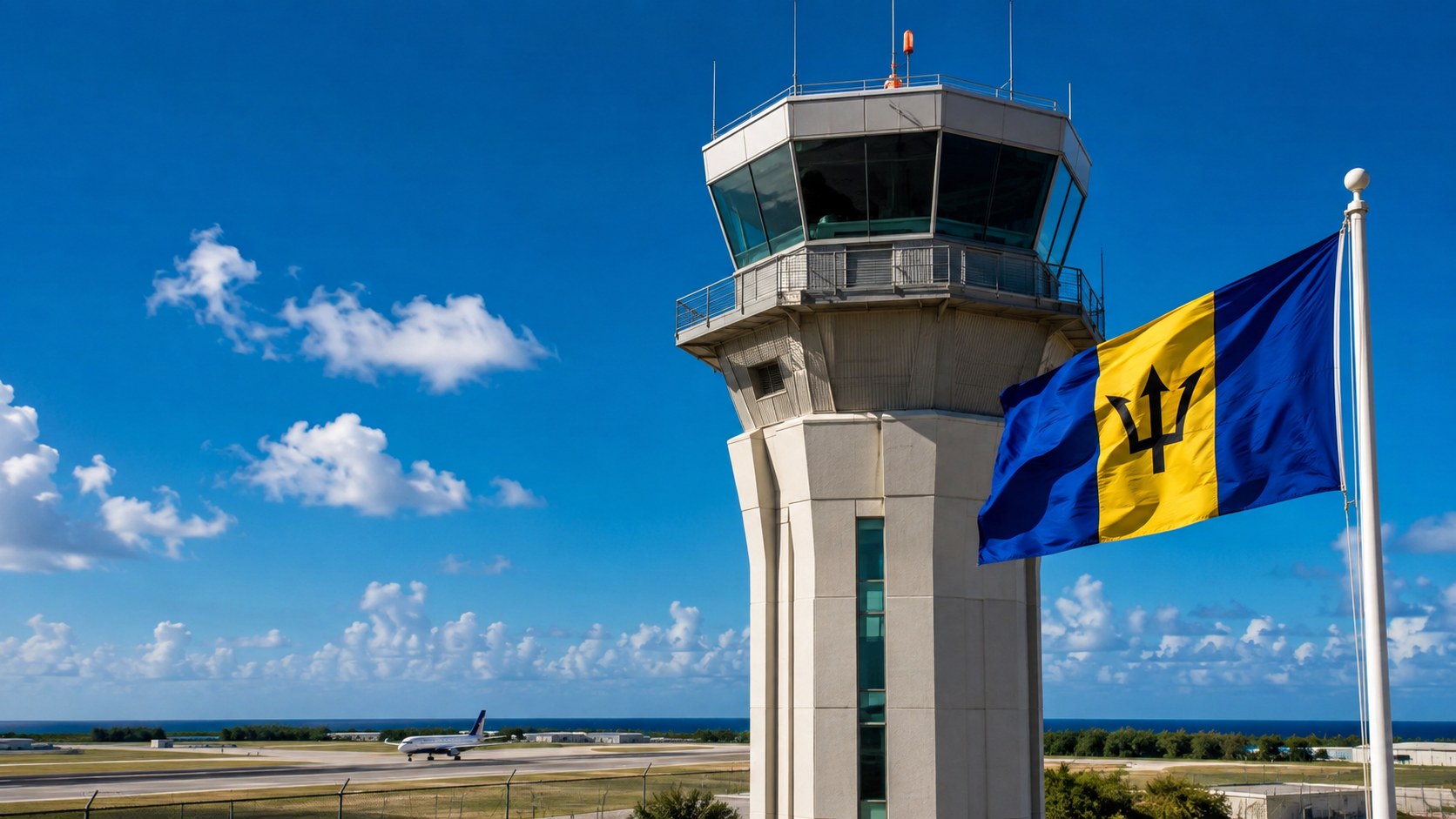
Barbados is at risk of losing its highly skilled air traffic controller workforce to higher-paying regional neighbors if urgent pay adjustments and improved professional recognition are not implemented, the National Union of Public Workers has cautioned. Acting general secretary Wayne Walrond recently emphasized that the specialized work carried out by Barbadian air traffic controllers, which forms the backbone of national aviation safety and the island’s $5.7 billion tourism industry, is drastically undercompensated compared to peers across the Caribbean. According to Walrond’s data, a typical air traffic controller in Barbados earns approximately $5,000 per month, a figure that pales in comparison to the $8,000 to $10,000 or more annual? No, monthly: the $8,000 to $10,000 or more monthly pay offered to qualified controllers at other Caribbean aviation facilities. Beyond the pay gap, Walrond underscored the extreme level of responsibility that comes with the role: every day, Barbadian controllers are tasked with managing the safe takeoff and landing of commercial and private aircraft carrying hundreds of domestic and international passengers, a single error in which could lead to catastrophic loss of life and irreversible damage to Barbados’ reputation as a safe travel destination. Walrond also used the address to draw attention to the undervalued role of aeronautical information service officers, whose behind-the-scenes work providing up-to-date, accurate flight and airspace data is critical to enabling smooth, efficient, and safe aviation operations across the country’s airports. The union’s warning comes as Caribbean nations increasingly compete for skilled aviation workers, with many neighboring islands offering more competitive compensation packages to attract qualified talent from smaller regional labor markets. Industry analysts note that a mass departure of experienced controllers would lead to flight delays, reduced airport capacity, and potential safety gaps, posing a direct threat to Barbados’ core tourism sector that supports more than 30% of the island’s domestic employment.
分类: society
-
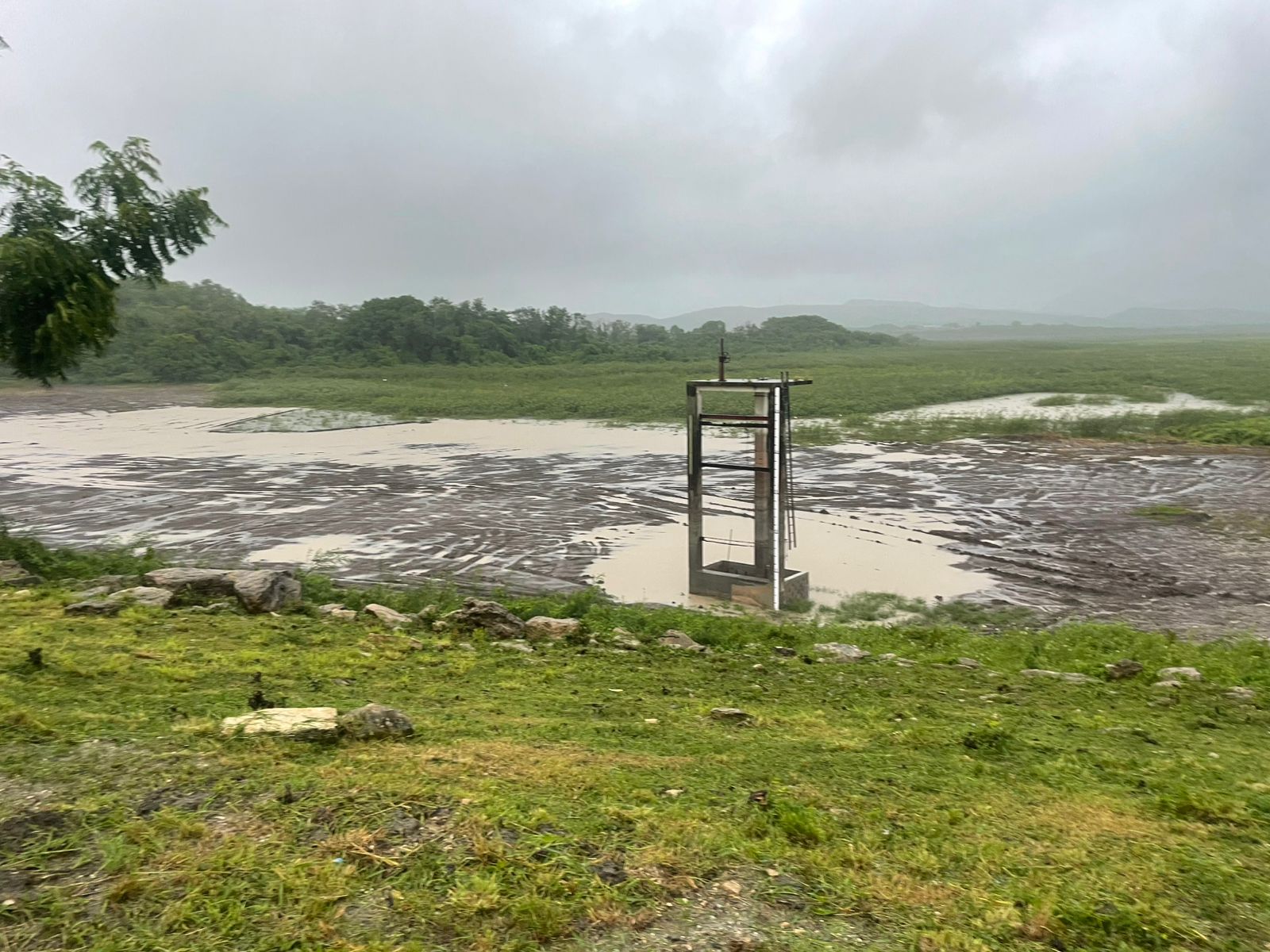
Engineering Plan Submitted to Repair Potworks Dam Leak
Antigua and Barbuda’s government has secured a detailed engineering proposal to fix a decades-long leakage issue at Potworks Dam, a critical water infrastructure project that stands to recover nearly 800 million gallons of lost storage capacity if the work moves forward.
Utilities Minister Melford Nicholas made the first public announcement of the completed assessment during the administration’s weekly “Taking Stock” radio broadcast on Tuesday evening, noting the disclosure qualified as breaking news because the final report had not yet been delivered to the national Cabinet for review.
According to Nicholas, the leakage problem has plagued the 320-acre dam for a quarter of a century, preventing the facility from ever reaching its maximum designed storage capacity of 2 billion gallons. The issue originates from undetected seepage under the dam’s southern spillway, which gradually eroded the supporting soil beneath the structure. Over time, this erosion weakened the secondary spillway construction built atop the foundation, leading to the persistent leak that has drained stored water for decades.
Technical specialists from Cuba carried out the full on-site assessment of the damage and submitted their final report, complete with detailed technical schematics and engineering recommendations, on August 17. Now that the assessment phase is complete, government officials will next calculate the full cost of executing the repair works to determine the project’s next steps.
Nicholas emphasized that the government intends to advance the project on an accelerated timeline, with the goal of completing all repairs before the region’s peak rainy season begins. Recovering the lost 800 million gallons of capacity would transform the dam’s ability to serve as a reliable water reserve for the country. At current daily depletion rates of roughly 1 million gallons, the additional storage would provide a substantial buffer against water shortages during prolonged dry spells, even after accounting for natural evaporation losses.
Beyond the recovered storage, Potworks Dam’s system is engineered to capture excess water that would otherwise be wasted. Of the dam’s two spillways, one routes overflow to a network of smaller dams in the Collins area, where the water is captured and retained for future use.
The Potworks Dam repair project is just one part of the government’s broader strategy to boost the country’s water security. Officials are also evaluating and developing additional new water catchment initiatives, all designed to strengthen Antigua and Barbuda’s resilience against extended drought conditions that increasingly threaten the nation’s water supply.
-
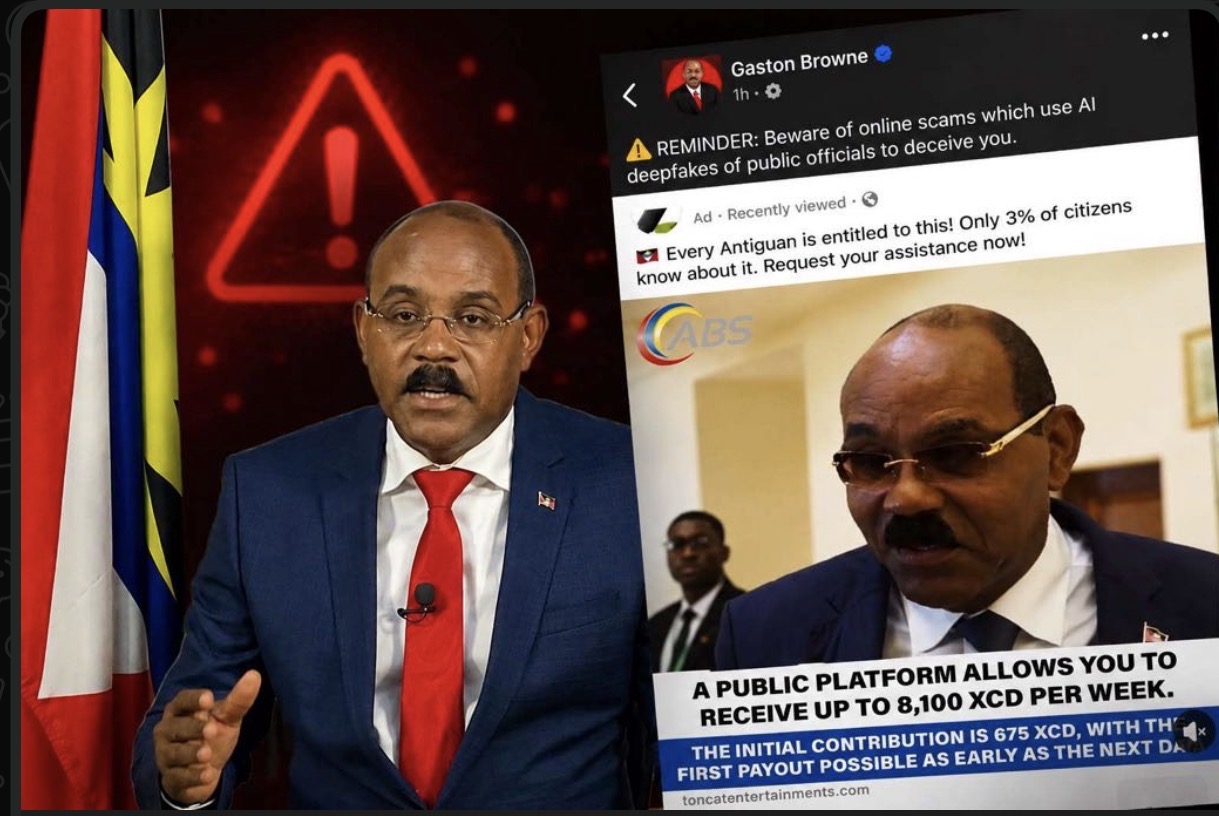
PM Browne Warns Public About AI Deepfake Scams Using Public Officials
Prime Minister Gaston Browne of Antigua and Barbuda has sounded a urgent alarm for the nation’s public, cautioning residents against a rapidly spreading wave of fraudulent schemes that leverage artificial intelligence deepfake technology to impersonate high-ranking public officials. In an official address delivered this week, Browne laid out clear details of how bad actors are now using cutting-edge AI tools to create hyper-realistic fake audio recordings and manipulated video content that mimics the voices and likenesses of sitting government ministers and other senior public servants.
The schemes, which Browne confirmed have already targeted a small number of unsuspecting residents, follow a familiar but increasingly dangerous pattern: scammers reach out to individuals via phone calls, social media platforms, or email, using deepfake-generated content to convince victims that they are speaking directly with a trusted public official. Once they have built a false sense of credibility, the fraudsters pressure targets into handing over sensitive personal information, such as bank account details, national identification numbers, or make fraudulent demands for immediate cash transfers under false pretenses—often claiming the funds are needed for an emergency government service, a supposed official grant processing fee, or a private matter involving the official’s family.
Browne emphasized that this type of AI-powered fraud marks a troubling new evolution in criminal activity, one that is far more convincing to the average person than traditional scam tactics. Unlike generic phishing emails or simple phone impersonation, deepfakes can replicate facial expressions, vocal inflections, and mannerisms so accurately that even people who follow public officials closely can struggle to spot the forgery. The prime minister stressed that the Antiguan and Barbudan public must remain constantly vigilant when contacted by anyone claiming to be a government official, noting that no legitimate government representative will ever demand personal financial information or request direct cash payments via unsolicited communication.
He went on to outline steps that the public can take to protect themselves: if an unsolicited contact makes any request for money or personal data, residents should immediately end the communication and report the incident to local law enforcement and the country’s cybercrime unit. Browne also confirmed that government agencies are currently reviewing new regulatory frameworks and public awareness campaigns to address the growing threat of deepfake-enabled fraud, as officials work to stay ahead of criminals adapting new AI tools for illegal activity.
Local law enforcement officials have echoed the prime minister’s warning, noting that cross-border scam operations are increasingly turning to AI to lower their operational costs and increase their success rate. They added that anyone who has already fallen victim to one of these deepfake schemes should contact authorities immediately to limit potential financial damage and help investigators track down the responsible criminal networks.
-

BACKPAY FRUSTRATION
A long-simmering wage dispute at Trinidad and Tobago’s ports is reaching a boiling point, as dockworkers continue to face crippling financial pressure despite a partial payment of overdue backpay issued in July. Michael Annisette, president of the Seamen and Waterfront Workers Trade Union (SWWTU), made the latest public remarks on the standoff during a recent interview with TV6’s Morning Edition, spelling out the union’s core grievances and warning of growing unrest among frontline port staff.
At the heart of the conflict is a years-long delay in updating collective pay agreements, which has left thousands of dockworkers earning salaries set according to 2014 pay scales, even as the cost of living has risen sharply across the country. Annisette emphasized that the dispute is rooted in a fundamental fight for workers’ rights, not political retaliation or alignment, rejecting widespread claims that the backpay delay stems from the union’s pre-election endorsement of the United National Congress. “This is not a question of political support or opposition,” Annisette stated. “It is a basic human rights issue: workers are forced to labor for pay that was set more than a decade ago, in a completely different economic climate.”
While the Port Authority of Trinidad and Tobago (PATT) released 20% of outstanding basic wage backpay to workers in July, Annisette confirmed that 80% of the total owed remains unpaid. When including standardized overtime payments that the union says are rightfully owed to staff, the total outstanding figure exceeds $337 million, up from an initial estimate of more than $330 million. The union has repeatedly pushed successive national administrations to resolve the dispute, most recently submitting a formal letter of concern to PATT leadership on July 24, and has already documented seven formal formal notices of grievance on file.
To move negotiations forward, SWWTU has put forward a concrete proposal: align pay scales for workers at the Port of Port of Spain with those at the Port of Point Lisas, where staff performing identical roles with identical equipment currently earn salaries that are 22 percentage points higher. Annisette noted that closing this pay gap is a critical first step to resolving outstanding collective agreements, after which both parties can shift focus to boosting productivity, efficiency, and adopting international best practices for port operations.
This reform carries national economic significance, Annisette argued: roughly 90% of Trinidad and Tobago’s total imports and exports flow through the country’s port network, making competitive, fair working conditions critical to retaining operational stability. He also added that the Port of Port of Spain’s strategic location along major global trade routes positions it to become a major regional transshipment and logistics hub, a goal that cannot be achieved with an unresolved, demoralizing wage dispute hanging over operations.
Annisette acknowledged that other major national unions, including the Public Services Association (PSA) and the National Union of Government and Federated Workers (NUGFW), are also engaged in separate talks with the government over their own outstanding payment disputes. He reaffirmed that SWWTU remains committed to resolving the issue through negotiated channels, but warned that delaying a resolution risks pushing the dispute into the hands of rank-and-file workers, with unforeseen consequences for port operations. When asked about potential protest action, Annisette noted that even with an existing industrial relations ban on official union action, workers still have mechanisms to express their deep dissatisfaction.
With growing financial strain pushing workers to their breaking point, Annisette said the union’s executive remains fully united in demanding a fair resolution. “It is completely unacceptable to expect workers to survive on 2014 salaries in 2026 while the cost of living continues to climb,” he said. “The union will continue pressing this case, and we are prepared to confront PATT leadership at every level to secure a fair outcome for our members.”
-
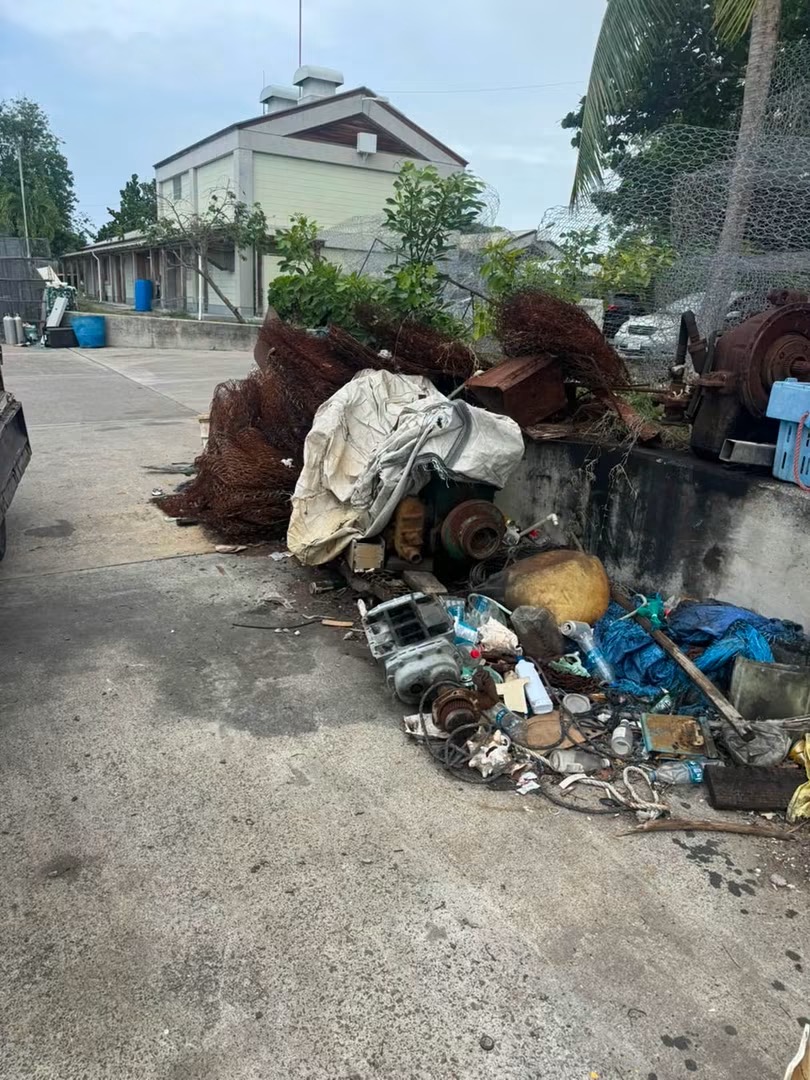
Parham Fisheries Complex Gets Major Clean-Up Through Joint Effort
A years-long problem of accumulated waste at the Parham Fisheries Complex has been addressed through a landmark collaborative clean-up initiative that brought together government fisheries officials, local parliamentary representatives, and inmate volunteers from His Majesty’s Prison. The targeted effort, which was led on the ground by the complex’s own manager Piet Jeffrey, marks the latest in a series of attempts to upgrade the popular fishing hub that serves dozens of local fishermen and industry workers daily. According to Randy Baltimore, the Member of Parliament for the St. Philip’s North constituency where the facility is located, the project brought together stakeholders from across the region to achieve a shared goal of revitalizing public space. When crews completed the multi-day work, photographs documented the massive haul of discarded fishing equipment, general debris and accumulated waste that was cleared out of underused and public areas of the complex. Baltimore, whose office coordinated part of the logistics for the initiative, offered high praise for every group and individual that contributed to the project’s success. He emphasized that the cross-sector partnership that made the clean-up possible stands as a powerful model for future community improvement projects across the constituency. Beyond clearing tons of unsightly and potentially hazardous waste, Baltimore noted that the project has transformed the complex into a far cleaner, more inviting space for working fishermen, on-site staff, and any other visitors who access the facility on a regular basis. “Thank you to Mr Jeffrey and everyone who rolled up their sleeves and got the job done,” Baltimore said in a statement following the completion of the work. The successful clean-up addresses longstanding community concerns that have been raised about waste accumulation and declining facility conditions at the complex over the past several years. Looking ahead, Baltimore confirmed that more infrastructure improvement and community-focused projects are planned for the St. Philip’s North constituency as local leaders continue to address resident needs and upgrade public assets.
-

LETTER: Who Is Responsible for Monitoring Heavy-Duty Truck Drivers?
A concerned member of the public has issued an urgent appeal to Antigua and Barbuda’s Ministry of Public Works, demanding immediate action to address the growing risk of reckless driving among operators of heavy-duty material haulage trucks. The question being pressed to transportation and public works regulators is clear: Which government body holds accountability for verifying that all drivers of large trucks transporting sand, construction aggregate and other bulk materials hold valid professional licensing, complete required safety training, and adhere to responsible road practices at all times?
Witnesses report that a number of these massive heavy vehicles have been observed operating in aggressively reckless patterns on public roads, creating a terrifying hazard for all other road users. Unlike standard passenger vehicles, these multi-ton haulage trucks carry enormous potential for catastrophic harm: even a minor collision involving one of these machines can result in severe infrastructure damage, life-altering injuries, and fatalities for anyone sharing the road.
The appeal lays out three critical accountability questions that regulators have yet to address publicly. First, is there consistent, formal monitoring in place to oversee the conduct of these truck drivers? Second, are routine checks conducted to confirm that every operator holds up-to-date licensing, completed mandatory safety training, and maintains a clean record of safe driving practices? Third, are meaningful penalties enforced when drivers are caught violating road safety rules, to deter future dangerous behavior?
The person raising the alarm emphasizes that this call for action is not an attack on individual drivers, but a grassroots push to protect general public safety across the nation’s road networks. They stress that waiting for a catastrophic fatal accident to occur before implementing oversight is an unacceptable approach that puts countless innocent lives at unnecessary risk.
In closing, the appeal urges the Ministry of Public Works to launch a full review of haulage truck driver oversight immediately, before preventable harm occurs. All road users, from pedestrians to passenger vehicle drivers, deserve equal access to safe public infrastructure — a right that is currently being undermined by unregulated dangerous operation of heavy commercial vehicles.
-
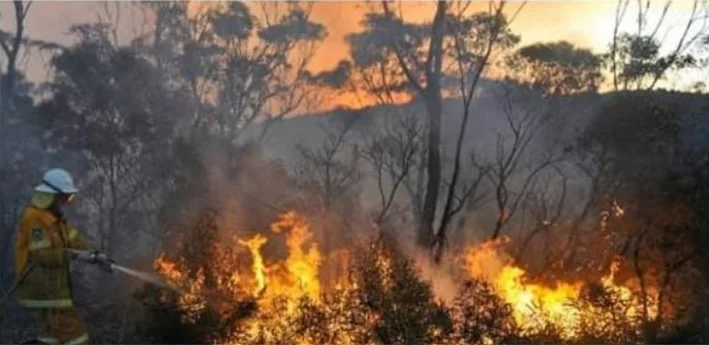
Brandweer verhoogt paraatheid voor extreme droogte
As Suriname prepares to enter its annual severe dry season, the Korps Brandweer Suriname (KBS), the country’s national fire service, has upgraded its operational readiness to counter elevated wildfire risks and is proactively planning for extended periods of extreme drought. The agency has deployed additional personnel to high-risk areas and activated its specialized biker unit for both preventive and response operations, amid growing concern over an unexpected early jump in grass and waste fires.
In an interview with Suriname’s Communication Service, KBS spokesperson Olton Pinas explained that the fire service has spent the past two to three months implementing targeted preparations for the dry season, after early data showed an alarming rise in fire incidents. “If we look at current statistics, we have already recorded almost the same number of grass and waste fires that we saw in December of last year, and the full dry season has not even officially begun,” Pinas noted.
High-density residential neighborhoods and districts with large expanses of unmaintained grass are marked as the highest risk zones. Parched dry vegetation ignites easily, and fires can spread rapidly to threaten nearby homes, putting lives and property at risk.
The KBS’s biker unit is set to play a central role in the agency’s dry season strategy. Team members will patrol neighborhoods door-to-door to distribute public safety educational materials, host awareness sessions, and respond immediately to small grass and waste fires. This setup eliminates the need to deploy large, resource-heavy fire trucks for every minor blaze, cutting operational costs while reducing response times. Public outreach efforts will also extend to vacation schools and rural regions across all four corners of the country, ensuring remote communities receive critical safety guidance.
Pinas emphasized that unauthorized waste burning remains the single leading cause of preventable fire incidents across Suriname, despite repeated public warnings. Many residents continue to burn household and yard waste illegally, a practice that has been banned nationwide in all settings, from roadside berms to backyard pits and containers. “There is a total ban on burning any waste, anywhere,” Pinas stressed. For households dealing with large volumes of accumulated waste, he recommended community collective funding to arrange for official transport to authorized public landfills, rather than illegal burning.
Beyond wildfire prevention, the KBS is issuing a series of public safety reminders for the upcoming vacation and dry season. The agency is calling on parents to prioritize child fire safety, urging caregivers to keep lighters and matches stored out of reach of young children, educate kids on the dangers of unregulated fire, and never leave minors unsupervised at home. “Children cannot supervise other children,” Pinas said. “If you need to leave, arrange for a trusted caregiver or enroll your children in a vacation school program.” The KBS also recommends all households install working smoke detectors, and advises that if a wildfire approaches a residential property, residents should first evacuate all household members to a safe location, call the emergency line 112 immediately, and only attempt to extinguish small fires if it can be done without putting themselves at risk.
The fire service also drew attention to health risks linked to extreme drought and heat, advising the public to stay hydrated, protect eyes from harmful UV radiation, and wear sun-protective head coverings when outdoors. For residents planning vacation outings, Pinas reminded parents to maintain constant supervision of children during swimming activities, and repeated a warning against the dangerous combination of alcohol consumption and driving: “If you have been drinking, don’t get behind the wheel – arrange for a designated driver instead.”
Across all its dry season initiatives, the KBS reiterated that proactive public prevention remains the most effective tool to minimize fire incidents and keep communities safe through the extreme weather period.
-

Tyrel Robinson Killed After Escaping Previous Shooting
On a Monday evening shortly after 5 p.m., a deadly shooting shattered the routine of Michael Finnegan Market in Belize District, leaving a beloved local worker dead and the entire vendor community demanding greater public safety. Twenty-seven-year-old Tyrel Robinson, who had already escaped one unharmed assassination attempt three years prior, was shot dead by an unidentified armed attacker while serving a customer at Jun’s Meat Shop, where he had worked for the past six months.
As of the latest reporting date of August 18, 2026, Belizean law enforcement has not made any formal arrests, and investigators remain working to unpack two critical unanswered questions: who carried out the attack, and what motive led the gunman to target Robinson at his place of work.
Robinson’s life story was a complex one marked by second chances. He had a criminal record dating back to 2019, when he was charged with theft, attempted theft and property damage following an alleged incident where he snatched a gold chain from Magistrate Tanisha Smith near the same market where he would later be killed. In 2023, he survived another attack when two men on bicycles ambushed him outside his Bocotora Street home, opening fire before Robinson managed to flee inside unhurt.
Despite his troubled past, Robinson’s employer Aaron Castillo gave him the job at the meat shop because he saw a young man eager to rebuild his life and leave his old habits behind. In an interview with News Five reporter Britney Gordon, Castillo described Robinson as a well-behaved, hardworking employee who treated customers with kindness and won widespread favor among regular market guests. “I watched him, and he looked like a young street kid looking for a way out, so I gave him a chance because he seemed ready to change his life,” Castillo said, recalling that Robinson had behaved well during his entire six months of employment. “He was a good man, he served people well, everyone liked him. He treated everyone with respect.”
The shooting has left the market’s entire vendor community shaken. Castillo was on-site serving another customer when the gunfire rang out, and he immediately took cover, uncertain of the attacker’s intent and worried that bystanders could be caught in crossfire. “When I heard the shots, I turned around and saw what had happened, and I ran out because I didn’t know what the gunman’s plan was, or who else he planned to target,” he explained.
In the wake of Robinson’s murder, vendors at Michael Finnegan Market are calling on local authorities to step up security measures to prevent further bloodshed. Witnesses noted that police responded quickly to the scene after the shooting, but the community now wants permanent, armed security presence at all three of the market’s entry points, along with rules barring visitors from entering with helmets or other face coverings that could help attackers hide their identities.
Robinson is survived by a young daughter, and his killing has left his loved ones, coworkers and regular customers grappling with grief and uncertainty over why a young man working to turn his life around was killed in cold blood.
-

San Andres Tomb Break-In Leaves Police Searching
Authorities in Corozal are working to unravel a shocking and disturbing case of grave desecration at San Andres Village Cemetery, where the final resting place of a 12-year-old boy has been deliberately broken open and disturbed. Cemetery caretakers made the grim find during their routine daily patrol on August 16, 2026, when they noticed the childhood tomb had been breached. Upon closer inspection, they discovered the child’s remains had been dragged out of the burial vault and scattered across the grave site, with his skull confirmed as missing, according to official police statements.
Investigators have narrowed the window for the incident to a six-day period between August 10 and August 16, after caretakers confirmed the tomb was fully intact during their previous check of the area on August 10. The boy’s original burial dates back to 2018, leaving law enforcement with little immediate clarity about the motive behind the unusual and disrespectful crime. Assistant Superintendent of Police Stacy Smith confirmed the active investigation in an official statement, noting that local officers have been assigned full-time to the case to identify the perpetrators and uncover their reasoning.
“I can confirm that officers in Corozal are actively investigating the illegal disinterment of remains at this cemetery,” Smith stated. “Caretakers made the discovery during their regular rounds on August 16, and confirmed the tomb had been undisturbed just six days prior. At this stage of the investigation, we still have few confirmed details about who is responsible or what prompted this act, but the case remains an active priority for our department.”
The deeply unsettling act has left local communities shaken, as grave desecration is widely considered one of the most violating cultural and criminal offenses across most communities. As of the latest update, no persons of interest have been named, and police have not confirmed whether the incident may be connected to any ritual activities, illegal artifact hunting, or other targeted malicious acts. Investigators are continuing to interview local residents and process evidence collected from the disturbed grave site in hopes of identifying those responsible.
-

Suarez Bros circus relocation linked to water protection – minister
A traveling circus has been forced to relocate from its original site in Barbados after operating without full regulatory approval in one of the nation’s most strictly protected drinking water zones, a senior government minister has confirmed. The controversy has also sparked a review of the country’s business approval processes, as officials work to balance supporting entertainment activities with protecting critical public infrastructure.
Marsha Caddle, Minister of Economic Affairs and Planning in the Prime Minister’s Office, outlined the details of the case during a press briefing on Tuesday, explaining that the Suarez Brothers Circus had set up its operations just 568 meters from the Belle Pumping Station, a facility that provides 25% of Barbados’ total drinking water from a underground aquifer. The site, located within the International Botanical Gardens, falls into Zone A — the highest-level protection classification for Barbados’ water catchment areas, which is managed by the Barbados Water Authority (BWA).
Caddle emphasized that the close proximity to the pumping station created unacceptable risks for the nation’s drinking water supply. Under Barbados’ water protection rules, only water production activities are generally permitted in Zone A. If any contaminants or bacteria were to leak into the groundwater from the circus site, Caddle explained, those pollutants would reach the pumping station in less than 90 days, creating a potential national public health disaster that would require urgent, large-scale intervention to offset.
Beyond the core water protection risk, two additional unapproved activities raised further red flags for regulators. First, circus workers typically reside on-site during the run of shows, which would generate domestic sewage and shower wastewater that could leach into the aquifer without proper treatment infrastructure. Second, the circus had begun operating before securing required food service and restaurant licenses from the Ministry of Health, and had not obtained an approved potable water connection from BWA.
The initial green light for the circus’ location came from the Ministry of Environment in late July, but Caddle clarified that site location approval does not equate to full operating approval across all required regulatory areas. After the circus held its first public show at the Belle site on August 7, regulators ordered a full shutdown just two days later over the missing approvals and public health risks.
Rather than permanently ending the circus’ run in Barbados — which had generated significant public interest — government agencies worked with circus operators to find a new, compliant location and guide them through the full approval process. Caddle noted that the government has deployed its full regulatory support network to help the operators resolve outstanding requirements, with the goal of allowing the circus to reopen at a new approved site as early as Friday, once all inspections and approvals are finalized.
Addressing questions about why multiple regulatory agencies failed to coordinate to prevent the misstep, Caddle acknowledged minor snags in the current process, but rejected claims that the incident represents a systemic failure of Barbados’ regulatory framework. She noted that the country has a long-standing, robust governance system focused on protecting public health and natural resources, and that missing steps in individual cases do not equal broader system failure.
Caddle added that the government usually advises foreign businesses operating in Barbados to retain a local agent or representative who is familiar with national regulations and approval requirements to avoid exactly this kind of misstep. Looking forward, the government is moving forward with amendments to the 2019 Planning and Development Act to implement a previously proposed “one-stop shop” approval system, which would centralize all required permit reviews for new businesses and events, streamlining the process and reducing miscommunication between agencies. Invest Barbados currently provides partial coordination services, but Caddle said a centralized triage point for approval requests would significantly improve the ease of doing business across the island.