分类: society

  • Vendor, construction worker prime suspects in thefts

    Vendor, construction worker prime suspects in thefts

    Authorities in Guyana have confirmed that two young local men are being held as prime suspects following a pair of related criminal offences committed earlier this month, regional outlet Demerara Waves Online News reported Saturday, with the information last updated at 19:38 local time on April 11, 2026.

    The two accused, a 22-year-old street vendor and a 21-year-old construction worker, both residents of Barnwell North in the Mocha community of East Bank Demerara, are linked to two distinct criminal incidents that took place on April 6, according to an official statement released by the Guyana Police Force.

    Investigators say the pair first carried out an armed robbery at a Chinese-owned supermarket located in Goed Fortuin, a community on the West Bank of the Demerara River. Later the same day, they allegedly committed a break-and-enter and larceny at a private residential property in Eccles, another settlement on East Bank Demerara.

    Following the crimes, law enforcement teams launched an immediate investigation that drew on key forensic evidence from both crime scenes. Investigators obtained and reviewed closed-circuit television footage captured at both locations, a step that significantly advanced the probe and helped lead investigators to identify the two suspects, police confirmed.

    After being identified, the pair were taken into custody and escorted to the Providence Police Station for formal questioning. They have since been remanded into continued custody as of Saturday’s update, and remain in detention while assisting law enforcement with ongoing inquiries into the offences.

  • NCCU investigates incident at  its ATM at cork street

    NCCU investigates incident at its ATM at cork street

    The National Co-operative Credit Union Ltd (NCCU) has launched an official investigation into a fire-related incident that impacted one of its automated teller machines located on Cork Street in Roseau. In a public statement released on Saturday, April 11, 2026, the financial cooperative confirmed that the affected site around the ATM is currently undergoing deep cleaning, while critical maintenance work is being carried out on the machine itself to guarantee the ongoing safety of the institution’s members.

    In the notice, NCCU appealed to customers for understanding as its technical teams work to restore full public access to the ATM in the shortest timeframe possible. The organization also extended heartfelt gratitude to local community members who stepped in to help contain the fire before emergency services arrived, crediting their quick action with preventing more extensive damage to the site.

    NCCU closed its statement by noting that additional updates will be shared promptly with the public as new details about the incident and repair progress emerge.

  • FLASH : Terrible tragedy 30 dead at the Citadelle Laferrière

    FLASH : Terrible tragedy 30 dead at the Citadelle Laferrière

    A devastating crowd crush at one of Haiti’s most iconic historical landmarks has left at least 30 people dead and dozens more injured, in what local authorities are calling one of the worst public safety disasters in the region in recent years. The tragedy unfolded on Saturday, April 11, 2026, at the Citadelle Laferrière in Milot, where thousands of attendees gathered for annual traditional cultural festivities that drew a far larger turnout than organizers had anticipated.

    Preliminary investigations from Haiti’s Civil Protection agency point to severe overcrowding at the UNESCO-recognized site, compounded by critical gaps in pre-planned crowd management protocols, as the root cause of the deadly stampede. When overcrowding reached a breaking point, the sudden surge of people triggered a chaotic crush that left numerous victims trapped, suffering from asphyxiation and trampling injuries. The provisional death toll was confirmed at 30 as of early Sunday morning, with dozens of injured survivors currently receiving emergency care at regional hospitals across northern Haiti.

    Civil Protection officials have warned that the final death toll is likely to rise, as dozens of people remain unaccounted for in the aftermath of the incident. Sacré-Cœur Hospital in Milot, the closest major medical facility to the site, has already received multiple bodies of young victims who were pronounced dead on arrival, and eyewitnesses on the scene told local reporters they expect the total number of fatalities could climb above 50 as search and recovery operations continue.

    Local authorities moved swiftly to launch rescue operations in the wake of the disaster. The Cap-Haïtien Municipal Commission activated its emergency response protocol immediately, dispatching ambulances, emergency response teams and relief supplies to the Citadelle Laferrière to support evacuation, search and victim care efforts. In an official statement, the municipal body praised the rapid mobilization of Civil Protection workers, medical staff and civilian volunteers who have worked around the clock in difficult conditions to assist survivors.

    The commission also released an official message of condolence, expressing its deepest sorrow for the lives lost and extending its full solidarity to all families impacted by the tragedy. Haiti’s national government has also formally responded to the disaster. In a public statement released Saturday evening, Prime Minister Alix Didier Fils-Aimé and his administration expressed profound dismay and overwhelming sadness over the loss of life.

    “We share the profound emotion and immense sadness of the Haitian people following this unthinkable tragedy,” the statement read. “The Government extends its sincere condolences to the bereaved families and assures them of our deep solidarity during this time of mourning and great suffering.” All relevant national and local authorities remain on high alert, with the government confirming that all necessary support and medical care is being provided to survivors and their families without delay.

    The government is closely monitoring the evolving situation as an official investigation into the exact circumstances of the tragedy gets underway. Officials have called on the public to remain calm and exercise caution while waiting for the investigation’s full findings, and reaffirmed the government’s unwavering commitment to supporting the affected community through this crisis.

  • ‘You want to replace Good Friday with J’ouvert Friday?’ — Leacock

    ‘You want to replace Good Friday with J’ouvert Friday?’ — Leacock

    Across St. Vincent and the Grenadines, a long-simmering shift in cultural and religious traditions has sparked a heated public debate over what role, if any, entertainment events should play on Good Friday – one of Christianity’s most sacred solemn holidays, marking the crucifixion of Jesus Christ. Deputy Prime Minister and National Security Minister St. Clair Leacock recently brought the discussion to the forefront during an interview on local outlet Boom FM, tying the growing presence of secular entertainment over Holy Week and Easter weekend to broader concerns about shifting social values in the majority-Christian nation.

    Leacock explained that he first encountered the conversation while listening to a separate radio program en route to his own interview. During that segment, event promoters who had suffered significant financial losses on their Easter weekend events argued that the Ministry of Tourism should provide greater financial support to boost future event turnout. Most strikingly, Leacock noted, the program concluded that hosting a raucous J’ouvert street celebration on Good Friday night was entirely appropriate.

    The comment did not sit well with Leacock, who warned that this framing represents a worrying erosion of the religious significance of the Easter period for Vincentians. “Easter is Easter, and Easter is a special day or week in the Christian calendar,” he said, questioning what message the normalization of secular large-scale parties on Good Friday sends to the public and what it means for the country’s collective social fabric. He added that declining reverence for the holy period is not a new, creeping trend – it is already deeply entrenched in SVG, where most residents identify as Christian but many openly disregard core tenets of the faith.

    His comments drew an immediate response during the same broadcast from Pastor Cecil Richards of Kingstown Baptist Church, who offered a counter perspective rooted in the country’s democratic principles. Richards, who lives near Good Friday event venues and personally witnessed the noise and activity, said he shared the shock of many religious residents, but also acknowledged that non-believers hold equal rights to live according to their own values in a pluralistic democracy.

    “Inasmuch as Christians and Bible-believing people have rights, there are people who don’t have that spectrum and base of belief, and they have freedoms too, and they have rights,” Richards explained. He argued that all groups must negotiate and respect differing value systems: while Christian congregations deserve full access to hold their solemn Easter worship services, secular residents have the right to host parties and celebrations if they so choose.

    Richards warned that restricting the rights of secular groups on religious grounds sets a dangerous precedent that could one day be turned against religious communities. “What is good for the goose is good for the gander,” he said. “Today, you might want to restrict those who are doing that but tomorrow, the very same principle can apply, where, instead of that group being subdued, it could very well be that the very laws and rules and regulations that you might put in place to restrict and subdue the freedoms of that group, it might turn around and bite you.” He drew a parallel to the broader debate over COVID-19 vaccine mandates, which centered on the same core question: how far can a state go to impose collective values on individual residents’ personal choices.

    Leacock pushed back on the framing that any restriction on Good Friday entertainment amounts to an undemocratic overreach. He argued sarcastically that open sales of strong rum and wet fetes on the holiday are not inherent democratic rights, noting that all functioning democracies build their laws around shared social parameters. “I don’t think democracy ever anticipated that society is to be sent to the point where you do what you like,” he said. “That’s why we have law and order and we have limitation, and we have consent of what we do, when we do, and where we do certain things.”

    The deputy prime minister added that most modern state legal frameworks are ultimately rooted in traditional religious moral templates, and growing deviation from those norms has led to widespread social turmoil and confusion across the country. He acknowledged that residents hold democratic rights protected by the SVG constitution, but argued that there remains a widely accepted set of normative social behaviors that the public has a right to defend when those norms are crossed.

    Closing the debate, Leacock appealed to faith leaders like Richards for collective action, noting that the problem of eroding social norms is a shared responsibility between government, law enforcement, and the Christian community. “It will be so helpful to me and to the police force if people like yourself, who I recognise as influencers in society, are on board and say that we are on this thing together,” he said.

  • Mastering Difficult Conversations: Carolyn Rose Miller leads initiative to strengthen professional and personal relationships

    Mastering Difficult Conversations: Carolyn Rose Miller leads initiative to strengthen professional and personal relationships

    Unresolved conflict is quietly eroding relationships across both workplaces and personal lives in Jamaica, leaving behind fractured teams, broken partnerships, and even dangerous societal outcomes. Now, a seasoned Jamaican communication and conflict resolution expert is stepping in to equip people with the actionable tools they need to reverse this harmful trend.

    Carolyn Rose Miller, a 15-year veteran marketing and communication specialist, certified mediator, Justice of the Peace, and experienced trainer who has worked with public, private, and micro, small and medium enterprise (MSME) sectors across the country, has announced the upcoming “Mastering Difficult Conversations” workshop scheduled for May 2. The interactive training session aims to address a gap Miller has observed throughout her decades of practice: widespread avoidance of tense conversations that leaves small conflicts to fester into irreversible damage.

    In an interview with Observer Online, Miller explained that avoiding tense discussions or handling them poorly always comes at a cost, derailing desired outcomes and damaging connections that might otherwise thrive. She has personally seen countless relationships collapse entirely because parties refused to confront underlying issues, with consequences ranging from crippling workplace inefficiency to a rise in intimate partner violence—a trend she calls deeply troubling.

    Against this backdrop, the workshop is designed to intervene early, teaching participants practical, evidence-based strategies to de-escalate tension, rebuild damaged trust, and cultivate more constructive dialogue between colleagues, team members, romantic partners and community members. Unlike generic public speaking or communication training, the program is rooted in formal mediation and conflict resolution frameworks, a tool Miller says is underutilized in Jamaican culture outside of court-appointed cases, despite its proven effectiveness.

    “Mediation and conflict resolution are key to creating a harmonious, cohesive relationship,” Miller noted. “I see an urgent need to share tips in employing proven and effective strategies to address conflicts… this should be at the forefront of everyone’s mind.”

    The training is open to any person navigating challenging conversations in either their personal or professional lives, with a focus on six key groups that regularly face high-stakes difficult dialogue: leaders and managers tasked with addressing performance gaps and guiding teams through conflict; human resources professionals responsible for disciplinary action and workplace dispute resolution; frontline staff who interact with upset clients and colleagues in high-pressure settings; community and church groups that depend on open communication to maintain unity; professionals and individuals who want to build confidence to address issues rather than avoid them; and anyone required to deliver bad or uncomfortable news with clarity, empathy and professionalism.

    Co-hosted by Adrian Atkinson, a veteran voice and speech coach and media practitioner, the workshop blends theoretical instruction with hands-on practical practice. Attendees will work through real-world case studies and simulate realistic difficult conversations in a low-risk, guided environment, integrating lessons on emotional intelligence into every module. Unlike passive training programs, all strategies shared are designed for immediate implementation back in participants’ daily lives.

    To incentivize early sign-ups, the first three people to register will receive a complimentary bonus one-on-one coaching session on the spot. The exact venue will be shared directly with registrants after sign-up is complete.

    Miller emphasized that what sets this workshop apart from generic communication courses is its focus on transformation, not just theory. “Participants are not just learning theory—they are being equipped with proven strategies to address issues, manage emotions, and resolve conflict effectively,” she explained. “This is not just about communication, it is about transformation: giving people the confidence, structure, and tools to handle difficult moments with confidence, empathy, and results.”

  • Man shot at Big Wall carnival party

    Man shot at Big Wall carnival party

    A violent shooting disrupted carnival celebrations at the Ranny Williams Entertainment Centre in St. Andrew on Sunday, leaving one man wounded after the gunfire broke out during the widely attended Big Wall party. Local news outlet Observer Online has confirmed that a well-known social media influencer is connected to the shooting incident, and the individual has since voluntarily turned themselves in to law enforcement officials for questioning. As investigations into the circumstances of the attack remain ongoing, the publication has announced it will release additional details on this developing story as new information becomes available to reporters. No further details about the victim’s condition, the motive for the shooting, or potential charges against the suspect have been released to the public as of the latest update.

  • From child apprentice to master craftsman

    From child apprentice to master craftsman

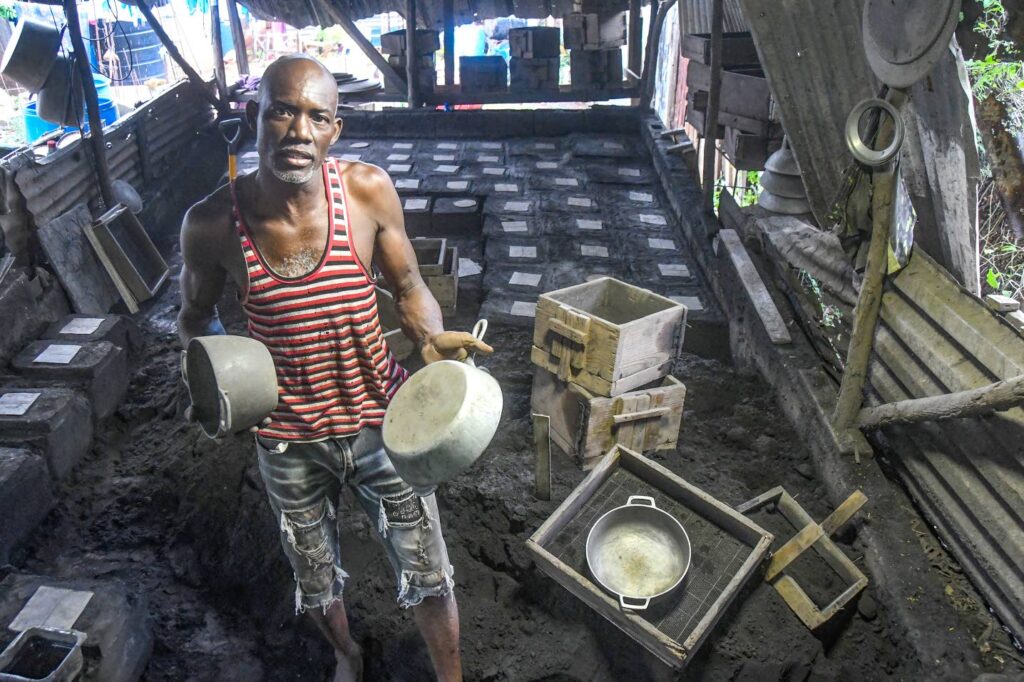
    More than four decades ago, a seven-year-old Kevin Campbell sat quietly among veteran craftsmen in the Frazer’s Content neighbourhood of Spanish Town, St Catherine, Jamaica, watching intently as they shaped handcrafted Dutch pots and coal stoves by hand. Now 52, Campbell has turned this childhood fascination into a thriving small business, producing more than 100 handcrafted aluminium pots per week — and he is on a mission to recruit a new generation to save the fading Jamaican tradition before it disappears entirely.

    Campbell recalls that metal pot and cookware crafting was once a booming trade that supported dozens of households across his community. But as the elder artisans who held the knowledge passed away or migrated abroad, the craft declined sharply. Today, only four people in the entire community still practice the traditional skill, and dwindling young interest has left Campbell deeply concerned about its future.

    “From the start, Campbell learned the craft from local artisans Kenroy Hylton and a craftsman known only as Culture, who brought the trade — a branch of a tradition originating in Waterhouse, St Andrew. The early exposure stuck with Campbell through decades of work. While many artisans abandoned the trade over the years due to its demanding nature, Campbell’s lifelong passion has kept him committed to the craft. Two years ago, he branched out to launch his own independent business, producing custom-made pieces ranging from small teapots to large soup pots, frying pans and traditional coal stoves in a full range of sizes.

    His durable handcrafted products are sold both wholesale and retail to local restaurants and households across St Catherine’s Linstead, as well as Mandeville and Christiana in Manchester, with prices ranging from JMD $1,700 to $20,000 depending on size, type and purchase volume.

    The craft is intensely labour-intensive, with each piece taking two to three full days to complete. Campbell crafts all his pots exclusively from aluminium for a smooth, polished finish. The traditional process starts with shaping moulds for both the pot and its lid from topsoil, followed by pouring molten aluminium into the dried mould. Once the metal sets, the raw pot is removed and carefully polished by hand.

    Campbell points to his first ever completed pot — a four-pound rice pot he made when he was 10 years old — as proof of his products’ longevity. His family still uses the pot regularly to this day. “It came out wonderful — nice, clean, and pretty. I felt so much joy when I saw that I had made something that turned out perfectly. There’s no feeling like that,” he told reporters, smiling as he held the well-worn piece.

    While demand for his traditional cookware has fluctuated over the decades, the craft has been a reliable livelihood that allowed Campbell to support his family and put all four of his children through high school. Though his children have pursued their own independent career paths, they all pitch in to help with the business side of the operation, handling marketing, transportation and sales. His daughter Lamoya has taken on day-to-day operational management, coordinating orders and transactions across the region.

    For Campbell, no other line of work can compare to the satisfaction of pot-making. He jokes he would live a million years if it meant he could keep crafting his wares. But he also knows he cannot carry the tradition on his own forever, which is why he is actively inviting young Jamaicans — even college students just curious about the process — to learn the craft from him for free. His contact information is posted on social media (876-435-4960 and 876-797-8623), and he says he is ready and willing to teach anyone who wants to learn.

    Campbell follows the example set by the artisans who taught him, who never closed the door to him when he was a curious child. “They could have hidden the knowledge from me, but they didn’t. They gave me the willingness to pass it on by showing me kindness when I wanted to learn,” he explained. “Even if someone just wants to learn the process and doesn’t want to build a whole business out of it, I’m still happy to teach them. Sharing this craft brings me joy.”

  • Sex crime silence: Yes or no?

    Sex crime silence: Yes or no?

    A fierce public debate over media and legal transparency in child sexual crime cases has erupted in Jamaica, sparked by a high-profile incest charge against a former ruling party politician, with advocates and media leaders clashing over conflicting priorities of victim justice and child protection. At the center of the controversy stands Joy Crawford, executive director of Eve for Life Jamaica — a non-profit dedicated to empowering vulnerable young mothers and survivors of sexual violence through mentorship, counseling, and policy advocacy. Crawford is demanding a fundamental shift in long-standing policy: once an individual accused of a sexual crime against a minor has been formally charged and arraigned in court, their identity should be released to the public.

    Crawford argues that the current practice of withholding accused names, which is most often justified as a measure to protect child victims, in reality silences survivors who have already chosen to come forward. When a victim summons the courage to publicly name their abuser and demand accountability, she says, that act of bravery should not be muted by excessive editorial caution. Continuing to grant anonymity to charged offenders, Crawford contends, risks emboldening repeat offenders and eroding public confidence in Jamaica’s justice system. She dismisses the claim that anonymity protects victims as a misplaced narrative, arguing that the policy instead protects societal discomfort, powerful connections, and outdated moral sensibilities rather than the survivors themselves. “When a victim works up the mental fortitude to come forward, name their attacker, and pursue legal action, we should not push them back into silence,” Crawford told the Jamaica Observer. “Victims have already counted the cost of speaking out. The discomfort with naming names is ours, not theirs.” Crawford also notes that anonymity is largely performative: in small local communities, word of an accused’s identity often spreads through informal channels anyway, leaving no real meaningful protection for victims while denying them the open justice they seek.

    The debate was triggered by a recent case involving a former Member of Parliament affiliated with the People’s National Party, who stands charged with raping a 13-year-old female relative. According to police reports, the former MP picked up the minor under the pretense of running errands in January 2024, before taking her back to his home and sexually assaulting her. The victim filed an official report with law enforcement, leading to the former MP’s arrest and charge. In line with standard practice, the accused’s name has been withheld to avoid indirectly identifying the underage survivor.

    Crawford’s call for transparency has drawn sharp pushback from Jamaica’s leading media and child protection organizations, who warn that abandoning anonymity rules would put child survivors at grave risk of further harm. Dashan Hendricks, president of the Press Association of Jamaica (PAJ), emphasized that media caution in these cases is never intended to protect offenders — it is a deliberate choice to prioritize the safety and privacy of child victims. In cases of incest or intra-family abuse, Hendricks explained, releasing the accused’s name almost always makes it simple for community members, neighbors, and classmates to deduce the victim’s identity, given the close family relationship between attacker and survivor. This exposure can subject child survivors to severe stigma, social shaming, and repeated trauma, compounding the harm they have already endured.

    Hendricks pointed out that this policy is not just an ethical choice for media outlets — it is a legal requirement under Jamaica’s Child Care and Protection Act. Sections 44 and 45 of the Act explicitly ban any reporting that reveals identifying details of a child involved in legal proceedings for sexual abuse, mandating that the best interest of the child must always be the paramount consideration. “Responsible journalism starts with compliance with child protection law,” Hendricks told the Sunday Observer. “If naming the accused creates a meaningful risk of identifying the child, media are right to withhold the name. Justice for a child cannot come at the cost of further harm.”

    Hendricks’ stance is backed by local and international child protection groups. The Fi We Children Foundation, a Jamaican youth empowerment organization, released a statement last week affirming that public demand for accountability must never override a child’s right to safety and dignity. International child protection standards and UNICEF guidelines, the group noted, strictly require that the identity of child abuse victims be protected at all times, even when that means withholding details that would lead to an offender’s identification. UNICEF’s framework mandates that journalists alter names, obscure visual identifiers, and omit any details that could lead to the recognition of a child victim, to prevent stigma, retraumatization, and ongoing risk to the survivor.

    While the number of officially reported incest cases in Jamaica has declined steadily over the past five years — dropping from 33 reports in 2019 to just eight as of mid-November 2024, according to Jamaica Constabulary Force data — researchers warn that this trend may not reflect a real drop in incidents. Official data from previous years recorded 30 cases in 2016, 29 in 2017, and 23 in 2018, but analysts have long noted that underreporting of sexual and incestuous abuse is widespread in Jamaica, due to stigma, family pressure, and lack of trust in official systems. The current debate has thrown a spotlight on the ongoing tension between survivor autonomy and child protection frameworks in the country, as stakeholders grapple with how to balance accountability for offenders with safety for the children who survive these crimes.

  • For the sake of our children and a brighter future

    For the sake of our children and a brighter future

    Investing in holistic, high-quality care for children is universally recognized as a foundational pillar of sustained social stability. Yet awareness alone has failed to resolve a growing crisis in Jamaica’s youth support system, where systemic gaps are leaving thousands of vulnerable children behind with consequences that ripple across the entire society.

    The grim reality is that hundreds of children with unaddressed behavioural challenges are being pushed into inappropriate state care pathways every year, a problem that two top Jamaican officials have recently brought to national attention during parliamentary review proceedings. Junior Justice Minister Marisa Dalrymple Philibert and Children’s Advocate Diahann Gordon Harrison recently presented their findings to Parliament’s Joint Select Committee, which is currently conducting a review of the 2018 Child Diversion Act. Their testimony has pulled back the curtain on long-standing systemic failures that demand urgent national action.

    According to the pair, children who have never committed any criminal offense, but struggle with behavioural issues, are increasingly being routed into the national child diversion program and placed in state-run children’s homes and correctional facilities. This practice not only overwhelms diversion programs designed for an entirely different population, it also directly violates the United Nations Convention on the Rights of the Child, an international treaty Jamaica ratified decades ago.

    Gordon Harrison clarified the core purpose of the child diversion system in her testimony, noting it was structured to support children who have already committed criminal offenses, connecting them with specialized care to prevent future reoffending. It was never intended to serve children who run away from home or are chronically truant from school, she emphasized.

    The children’s advocate traced the root of the crisis to a long-unaddressed gap in Jamaica’s youth care infrastructure: the complete absence of dedicated therapeutic care centers. These facilities, mandated under the country’s Child Care and Protection Act, are supposed to provide specialized, targeted support for children with behavioural challenges, but they have never been fully established or resourced. Gordon Harrison stressed that these centers must be made operational, staffed with trained personnel, and equipped with adequate resources as an urgent policy priority.

    Dalrymple Philibert, who also serves as the Member of Parliament for Trelawny Southern and is a former Speaker of Jamaica’s House of Representatives, offered full, unwavering backing for Gordon Harrison’s assessment. She confirmed that courts across the country are routinely sending these vulnerable children to general state children’s homes, which lack the training and resources to support children with complex behavioural needs. Speaking directly to Justice Minister Delroy Chuck, who chaired the committee meeting, Dalrymple Philibert drew on decades of personal experience to emphasize that this misplacement has plagued Jamaica’s child care system for generations. The centers mandated by law have never actually existed, she confirmed, and the status quo can no longer be ignored.

    Tackling this long-standing gap is no simple task, particularly in the wake of Hurricane Melissa, which has stretched Jamaica’s public resources to breaking point. Building out a national network of therapeutic care centers will require significant financial and human capital, resources that are already in short supply for the government in the aftermath of the devastating storm.

    Despite these fiscal challenges, the newspaper’s editorial argues that Jamaica cannot afford to set this issue aside as the country recovers. Investing in appropriate care for behaviourally challenged children is not just a moral obligation—it is a long-term investment in public safety. Over time, targeted early support will reduce the likelihood that these children turn to criminal or antisocial behavior later in life, ultimately reducing the massive public costs associated with crime control and the justice system. As Jamaica rebuilds after the storm, officials say protecting the country’s most vulnerable children must remain a core part of the nation’s vision for a more stable, prosperous future.

  • A ‘wow’ moment for our country

    A ‘wow’ moment for our country

    Across the globe, few nations can claim more than a handful of truly transformative, jaw-dropping ‘wow moments’ – achievements so unexpected, so extraordinary, that they redefine what a country believes it can accomplish. For Jamaica, these rare landmarks have long been tied to the dominance of its world-class athletes, from Usain Bolt’s record-breaking feats at the 2008 Beijing Olympics to the legacy of Shelly-Ann Fraser-Pryce, and an early upset win by the national combined martial arts team against top-ranked Japan. But for a nation that spent decades grappling with endemic gang violence and sky-high homicide rates, the most staggering ‘wow moment’ has arrived not on a track or mat, but in the crime statistics that are reshaping Jamaica’s global reputation.

    The first drop in homicides that shook veteran crime fighters last year was unprecedented enough to earn the ‘wow’ label. But no one, not even those who had spent a lifetime advocating for safer communities, predicted the follow-up: as of the end of the first quarter of this year, homicides have plummeted a further 30% from 2025’s already record low. Longtime crime researcher and former law enforcement insider describes the shift as nothing short of revolutionary – a outcome he never expected to witness in his lifetime.

    What makes this drop even more remarkable is the shift in policing strategy that has driven it. Where decades of crime-fighting focused on containing mass carnage and minimizing monthly murder counts, today’s force is deploying more than 100 officers to proactive operations in volatile communities to stop a single potential homicide before it occurs. This new level of preventative policing is bearing fruit across every division in Jamaica’s high-crime Area 5, which once included some of the country’s most dangerous killing zones – Spanish Town, Central Village, Grant’s Pen, Common, and 100 Lane.

    In St Catherine South, the division where the author works, just five homicides have been recorded in the first quarter, down from a high of 40 in a comparable quarter decades ago. Neighboring St Catherine North, long notorious for violence in Spanish Town, has recorded seven homicides, a 46% improvement over last year, and once recorded nearly 50 murders in a single first quarter. Most strikingly, Area 5 now holds the lowest homicide count of any police division in Jamaica – a first in recorded history, a milestone that once seemed impossible for a region synonymous with gang killings. The murder clear-up rate in St Catherine North already outpaces that of Queens, New York, and the St Andrew North division, also part of Area 5, reports zero homicides for the first quarter of 2026 – a rate matching the safest divisions in Sweden, one of the world’s safest countries.

    Criminologists will spend years unpacking the multiple factors that have driven this seismic shift, but the authors points to two core changes under current Police Commissioner Dr. Kevin Blake’s leadership. First, a new focus on micromanagement of crime prevention by commanding officers, paired with a push to promote young, frontline officers to leadership roles early in their careers, rather than waiting for their energy and drive to fade with age. Many of the current senior leaders cutting homicide rates cut their teeth on high-risk entry operations alongside the author, bringing on-the-ground experience to command positions and proving to young officers that there is no glass ceiling for frontline officers willing to take risks. Second, the force has seen a growing, critical role for female officers, with operational leadership regularly joining officers on the ground in harsh, high-risk conditions.

    The shift is not just structural: modern resourcing has also transformed policing, bringing the Jamaican force on par with North American departments in equipment. Officers now wear level-four protective vests, drive new vehicles, and work in a culture that recognizes individual effort and provides basic support like meals during long operations – a far cry from decades past when officers carried rifles older than themselves and wore outdated colonial-style uniforms. Most importantly, this progress has been achieved while upholding democratic values and human rights, with no indefinite detention and officers who break the law prosecuted internally by the force.

    If Jamaica can maintain the first quarter’s homicide rate for the rest of the year, the national annual rate will drop to 17 per 100,000 people – lower than the Pan-American average of 19 per 100,000. For St Catherine, which has a population of 500,000, the annual rate would drop to 9.6 per 100,000, nearly matching the rate of Miami-Dade County in the United States.

    The pressure to maintain this historic progress is high, falling heaviest on Commissioner Blake, who has earned global acclaim as one of the most successful criminal justice leaders of the modern era, equally praised for cutting homicides and upholding human rights. The author stresses that sustaining this progress requires collective national effort: political collaboration between the government and opposition to marginalize gangs, clear recognition from human rights organizations that gangs are the primary enemy of public safety, and protection of Jamaican sovereignty against unnecessary international interference in policing. Most critically, the author argues, the government must provide Blake with full resources and ensure he remains in post to cement this new, safer normal for Jamaica – a future that once seemed unthinkable, but is now within reach.